J. L. BELL is a Massachusetts writer who specializes in (among other things) the start of the American Revolution in and around Boston. He is particularly interested in the experiences of children in 1765-75. He has published scholarly papers and popular articles for both children and adults. He was consultant for an episode of History Detectives, and contributed to a display at Minute Man National Historic Park.

Subscribe thru Follow.it


•••••••••••••••••


Showing posts with label John Amory. Show all posts

Sunday, August 25, 2024

“A Committee exercising such extensive Powers as this”

In addition to the main protest against Boston’s committee of correspondence and Solemn League and Covenant boycott, quoted yesterday, there was also a shorter, milder protest signed by only eight merchants.

This was also dated 29 June 1774 and appeared in the same newspapers as the big one. In fact, the Boston Post-Boy printers ran it first, perhaps because it was easier to set in type.

That protest read:
WHEREAS at a Meeting of the Town of Boston, held at the Old-South Meeting-House on the 28th Instant, a Motion was made and seconded, That the Committee of Correspondence of said Town should be censured and dismissed, which being put to Vote passed in the Negative.

We the Subscribers, being Dissentients therefrom, do now enter our Protest, grounded on the following Reasons:

First, Because that notwithstanding we think that a Committee of Correspondence, constitutionally appointed, may at any Time be useful, provided it was under proper Restrictions, and that the Letters wrote by them previous to their being sent were duly considered and approbated by the Town; yet that a Committee exercising such extensive Powers as this has done, is of dangerous Tendency.

This Committee was appointed in November 1772, to state the Rights of the Colonists and of this Province in particular, with the Infringements and Violations thereof that have been, or from Time to Time may be made; and to publish the same to the World as the Sense of the Town; and likewise to request of the other Towns a free Communication of their Sentiments on this Subject; and to make Report of the same to this Town for their Approbation; and were not authorized to publish the same until it was approved, and the Letter accompanyed by the Town; and when this Business was done we apprehend the Committee was dissolved, or at furthest at the End of the Year; and as they have not been re-chosen, we are of Opinion they do not properly now subsist as a Committee.

Because the said Committee have lately, not only without the Knowledge and Approbation of the Town, but in a secret Manner, issued out to many Towns in the Province a Covenant for Non-Consumption of British Goods, accompanied by a Letter recommending the same, signed by their Clerk, which Covenant was of the highest Importance to the Town.

Because they have also, as a Committee of the Town, aspersed the Characters of many respectable Inhabitants of this Town, in Letters written by them to the Cities of New-York and Philadelphia.

Nothing less than a Sense of its being our Indispensable Duty, to defend the Characters of our Neighbours, when we think them injured, could have induced us to give this last Reason.——

We declare we have no private Pique against any one Gentleman of the Committee, but have an Esteem for some of them, and can readily do them Justice to say, that this Conduct is so far from being consonant to the Tenor of their Actions (as far as we have known them) in the common Occurrences of Life, that we were struck with the greatest Surprize at the Discovery.
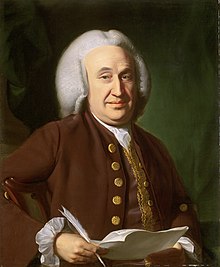
The men who signed this protest were Edward Payne, Thomas Amory (shown above), John Amory, Samuel Elliot, Caleb Blanchard, Frederick William Geyer, John Andrews, and Samuel Bradstreet. Some were future Loyalists, others moderate Whigs. Payne was even a victim of the Boston Massacre.

This document notably didn’t criticize the Solemn League and Covenant itself, only how the committee had promulgated it without running it by a town meeting first.

In fact, on 30 May the town had instructed the committee to write a non-consumption agreement and communicate it to other Massachusetts towns. The committee members evidently felt they didn’t have to go back to another meeting for approval of the final text.

TOMORROW: Behind the protests.

Saturday, July 13, 2024

“Many among us, who are for compromising matters”

John Andrews was another merchant who left a lively record of the discussions in Boston in spring 1774 as the business community grappled with the impending effects of the Boston Port Bill.

Andrews was more aligned with the Whigs than John Rowe, but still didn’t always see eye-to-eye with the radicals.

Andrews’s account appears in a series of letters to an in-law in Philadelphia, now in the collections of the Massachusetts Historical Society. On 18 May he wrote in the most dire tone:
Imagine to yourself the horror painted in the faces of a string of slaves condemn’d by the Inquisition to perpetual drudgery at the oar! Such is the dejection imprinted on every countenance we meet in this once happy, but now totally ruin’d town.
Andrews urged his correspondent to sign on to “an entire stoppage of trade, both to England and the West Indies, throughout the continent.” Any alternative would be to “acknowledge the right of parliament to d—n us whenever they please.”

Later that day Andrews added the news that “we have had advice from Salem, Newbury, etc’a., that they will haul up all their vessels, and stop every trade, provided it becomes general through the continent.”

If accurate, that news must have after the day’s town meeting session, where a committee reported merely that the selectmen of Marblehead and Salem had sounded sympathetic and promised to call meetings in their towns, too.

Note how the promise from those smaller Massachusetts ports was contingent on all the other ports in North America signing on to a boycott as well. That’s often how collective action has to be organized: promising party A that party B is ready to act if party A will, and promising party B that party A is ready to act if party B will.

Yet Andrews also reported some Boston merchants calling for a different approach:
At the same time, we have many among us, who are for compromising matters, and put forward a subscription to pay for the Tea.

George Erving has declar’d this day. that if it should be promoted, he is ready to put down two thousand pounds sterling towards it, and will take it upon himself to wait on Governor [Thomas] Gage and know what his demands upon us are—which circumstance Jno. Amory mentioned at ye. town meeting this day, which was in general rejected, though he urged the matter much.
George Erving (1738–1806) and John Amory (1728-1803, shown above) were both Loyalists during the war. Amory ultimately returned to Massachusetts, and Erving’s son became a U.S. diplomat.

Though the Boston Tea Party had cost the East India Company over £9,000, five merchants pledging the amount Erving promised would have been enough to cover that sum. But the community “rejected” that idea.

At that point in late May 1774, Boston’s committee of correspondence may well have felt they had solid popular support for promoting a general boycott to protest the Port Bill. But when the committee drafted its “Solemn League and Covenant” and sent it to other towns and provinces, its members may have overplayed their hand.

TOMORROW: Going too far?

Wednesday, July 03, 2024

For and Against the Committee of Correspondence

During Boston’s town meeting session on 27 June 1774, town clerk William Cooper didn’t record who spoke.

But the merchant John Rowe did.

In his diary, Rowe listed the defenders of the standing committee of correspondence as:
Aside from Kent, those names are familiar to Boston 1775 readers. They were most of the town’s most visible Whig leaders. All but Kent had been named to the committee of correspondence back in 1772.

Speaking “against the Behaviour of the Committee” were:
Those men were evidently representing Boston’s merchants, not the friends of the royal government. Most of them weren’t politically active. Only Harrison Gray, Green, and Goldthwait had signed the addresses to the royal governors that spring. Gray and Goldthwait did have major government appointments, but they tried to present themselves as moderate centrists serving both the people and the Crown.

We don’t know what paths Thomas Gray would have chosen when war broke out and when the British military left Boston because he died after a carriage accident in November 1774. But we do known the political choices of all the other men.

Harrison Gray, Amory, and Green left Boston with the redcoats, becoming Loyalists. Amory and Green eventually returned to Massachusetts, however.

Elliot, Barrett, Payne, and Goldthwait stayed in Massachusetts, some serving in civic offices under the new republican order. Barrett appears to have thrown in with the Patriots just a couple of months after this town meeting, participating in the Suffolk County Convention and taking on wartime tasks for the state. In contrast, Goldthwait retired from public life.

The argument of this group was likely that, while it was important to stand up for liberty and protest unjust laws, the Boston committee of correspondence’s methods had been too confrontational and led the town into trouble. It was time to back off, settle accounts for the Tea Party, and reopen for business.

John Rowe himself wrote privately: “the Committee are wrong in the matter. The Merchants have taken up against them, they have in my Opinion exceeded their Power.” But he didn’t speak up in the meeting himself.

COMING UP: Mutual resentments.

Tuesday, August 04, 2020

“Assertions that Salem, Marblehead and Newbury had departed”

On 31 July 1770, Faneuil Hall hosted another meeting of “The Trade and Inhabitants of the Town of Boston.” The group of people invited to participate had widened again to include not just businessmen but all “Inhabitants.”

Per the report in the 13 August Boston Gazette, the spur for this meeting appears to have been “some very positive Assertions that Salem, Marblehead and Newbury had departed from the Non-Importation Agreement.”

In his copy of that newspaper, Harbottle Dorr wrote that those assertions came from the merchant John Amory (1728-1803, shown here courtesy of the Museum of Fine Arts).

Amory and his brother Jonathan (1726-1797) had a mercantile house together. They hovered in the political middle—not taking strong stands, signing the non-importation agreement but not following it strictly, protesting against too much protest. Eventually John would be a Loyalist exile while Jonathan remained in America.

At this juncture, it appears, John Amory was telling his colleagues in the Boston business community that other ports in the province would soon be bringing in goods, so they might as well drop their boycott.

The meeting responded by appointing a committee of William Molineux, William Phillips, William Cooper, William Greenleaf, and, for diversity, Ebenezer Storer ”to repair forthwith to the Towns above said and Haverhill” and find out what was going on.

In addition, the Body named a larger group of top Whig politicians—John Hancock, Phillips, Samuel Adams, Molineux, Greenleaf, Dr. Joseph Warren, Dr. Thomas Young, John Adams, Josiah Quincy, Richard Dana, Henderson Inches, Thomas Cushing, and Jonathan Mason—“to consider what may be proper to be done toward strengthening a Union of the Colonies.”

On 7 August, the Molineux committee returned from Essex County and “reported that the Conduct of our Brethren in said Towns was honorable and sincere.” The Boston meeting that day “VOTED UNANIMOUSLY” to express their “utmost satisfaction” and “sincere Respect” for their colleagues to the north.

That gathering then appointed a similar committee—Molineux, Cooper, William Whitwell, Thomas Boylston, and Mason—to take the same message to “Providence and New Port in Rhode Island.”

Only after that 7 August meeting—two weeks after the initial 31 July response to Amory—did Edes and Gill report on these proceedings. The Boston Whigs had evidently been sitting on the story until they had good news to announce. It wouldn’t have helped the non-importation movement for other port to read any hint that some Massachusetts towns were dropping out.

TOMORROW: What really happened in Salem?