J. L. BELL is a Massachusetts writer who specializes in (among other things) the start of the American Revolution in and around Boston. He is particularly interested in the experiences of children in 1765-75. He has published scholarly papers and popular articles for both children and adults. He was consultant for an episode of History Detectives, and contributed to a display at Minute Man National Historic Park.

Subscribe thru Follow.it


•••••••••••••••••


Showing posts with label Richard Palmes. Show all posts

Wednesday, November 19, 2025

The Jury for the James Caldwell Inquest

As I wrote yesterday, I now lean toward housewright Thomas Crafts, Sr., being one of the Suffolk County coroners who responded to the Boston Massacre rather than his namesake son.

In fact, Thomas Crafts was apparently the first coroner to act. His date on the inquest into the death of James Caldwell is “the Fifth Day of March” in 1770. In other words, his jury convened, examined the evidence, and issued their determination in the immediate hours after the shooting.

Decades later, Benjamin Bussey Thacher interviewed the shoemaker George Robert Twelves Hewes about how the crowd on King Street had carried away Caldwell’s body:
Caldwell, who was shot in the back, was standing by the side of Hewes at that moment, and the latter caught him in his arms as he fell, and was one of those who bore him up to Mr. [Alexander] Young’s, the Jail-House in Prison Lane. He…was at this time second mate of a vessel commanded by Capt. Morton. This man lived in Cold Lane, and Hewes ran down directly to his house, from Young’s, and told him what had happened. The corpse soon followed him. . . . Morton…looked upon the dreadful object, and shouted like a madman for a gun, to run out “and kill a regular”…
The 12 March Boston Gazette reported that Caldwell was buried out of Faneuil Hall alongside Crispus Attucks as a “stranger,” a detail later histories repeat. But the 19 March issue said: “In the account of the funeral procession in our last, it should have been said, James Caldwell was borne from the House of Capt. Morton in Cold-Lane, instead of Faneuil Hall.”

Way back in 2006, the first year of this blog, I identified that sea captain as Thomas Morton. (Over a decade later came the Boston Massacre Sestercentennial commemoration in the Old South Meeting House. That was a weird event, on the lip of the pandemic shutdown when we were all wondering whether we should gather at all. But the weirdest moment for me was hearing a speaker identify Caldwell as Capt. Thomas Morton’s mate and flashing back to when I’d drilled down to find that name.)

I was therefore struck by seeing Thomas Morton’s signature among the members of the coroner’s jury examining James Caldwell’s body. Clearly he was emotionally involved in that death. Nonetheless, coroner Crafts made him part of the inquest. Maybe that was a way to calm Morton down, letting him respond to the young man’s killing in a productive way.

Other members of this jury were prominent Bostonians. The foreman was town treasurer David Jeffries. His son, Dr. John Jeffries, was a juror, months before he testified as a defense witness for the soldiers. William Dorrington, keeper of the smallpox hospital, was another.

Other members of this coroner’s jury included:
  • Samuel Gridley. In his testimony for the Short Narrative report, the apothecary Richard Palmes said he “followed Mr. Gridley with several other persons with the body of Capt. Morton's apprentice, up to the prison house.” Did that “Mr. Gridley” stay around to serve on the inquest jury?
  • Nathan Spear, whose younger brother Pool Spear was in the crowd on King Street and offered testimony against the soldiers.
  • Samuel Franklin (1721–1775), cutler. On 8 June, his first cousin once removed Benjamin Franklin wrote from London: “I received your kind letter of the 23d of March. I was happy to find that neither you, nor any of your family, were in the way of those murderers.” 
The verdict those fourteen men delivered to coroner Crafts: Caldwell was “murdered by a Musquet Ball shot thro’ his Body, & another Ball lodged in his Shoulder.” At first the men said the culprit was unknown, but then they revised the form to read “the Murderer a Soldier to us unknown.”

Monday, November 17, 2025

The Coroners Who Oversaw Inquests after the Boston Massacre

The most famous piece of coroners’ paperwork from the Boston Massacre is a verdict from the inquest into the death of Michael Johnson—or Crispus Attucks, as he was soon to be identified.

That document is in the collection of Revolutionary Spaces and has been on display in the Old State House. It’s been reproduced and transcribed in several places. Here’s an article about its conservation.

The coroner for that proceeding was Robert Pierpont, a Whig who lived at the far southern end of town.

I knew that the Boston Public Library’s Special Collections Department holds several more inquest documents. Mellen Chamberlain collected those papers for the library in the late 1800s, for both their historical value and their autographs.

Last last month, therefore, I made an appointment to look at the Chamberlain Manuscripts. I’ve done research at the B.P.L. for years, but the Special Collections Department upgraded its facilities and tightened its procedures since my last visit, so this required making an appointment and learning some new procedures.

I’m pleased to report that I found the verdicts of two inquests overseen by coroner Thomas Crafts. One examined the body of James Caldwell on 5 Mar 1770, and the second examined Samuel Maverick the next day.

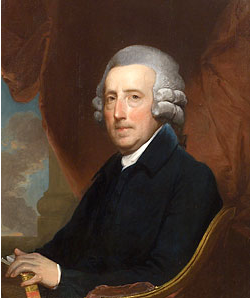
In addition, Chamberlain acquired verdicts from two inquests headed by Thomas Dawes (shown above). He handled the cases of Samuel Gray (6 March) and Patrick Carr (15 March).

The collection also includes testimony for the Gray inquest from Richard Palmes, Robert Goddard, Joseph Petty, and Richard Ward, plus a deposition about aggressive soldiers from John Leach, Jr., that Dawes took in on 6 March. All but one of those witnesses also testified for Boston’s Short Narrative of the Horrid Massacre report or the trials or both. (Frankly, they couldn’t shut Palmes up.)

Thus, we should list Thomas Dawes among the coroners who did the first investigations of the Boston Massacre. In fact, he did more than Pierpont, and more evidence from his inquiries survive.

TOMORROW: So am I satisfied that Thomas Crafts, Jr., was a coroner in 1770?

Thursday, February 09, 2023

Richard Palmes, Hot-Tempered Apothecary

One of the people of pre-Revolutionary Boston I’m collecting information on is Richard Palmes.

He was born and raised in New London, Connecticut, and moved to Boston as a young man to set himself up as an apothecary. That meant he had genteel status, but not at the top rank of society.

In the wake of Nathaniel Wheelwright’s financial failure [subject of the first essay made available to Boston 1775’s “Buff and Blue” supporters], Palmes declared bankruptcy. He had announced his business just a few months before, so he was not off to the best start.

The man was at the Boston Massacre, at the front of the crowd talking to Capt. Thomas Preston. In fact, some writers have misread the record of that event and blamed Palmes for starting the violence. Palmes was quite clear that he swung his cane around after some of the soldiers fired their guns. But he did swing his cane.

By “Palmes was quite clear,” I mean he testified about the Massacre in more venues than any other witness. He testified at a coroner’s inquest and both major trials. His words appeared in both the Short Narrative and the Fair Account. When he didn’t think the published trial transcript was accurate, he published his version of his own testimony in the newspapers over a year after the event.

During the war, Richard Palmes became an officer of the Continental Marines. Even by the challenging standards of American naval officers, he appears to have been quarrelsome and hard to work with.

After the fighting was over, Palmes settled in Charleston, South Carolina, and started a mercantile business there. He bought a black woman from New York named Elizabeth or Liss as a slave, contrary to the seller’s agreement with her former owner, Robert Townsend.

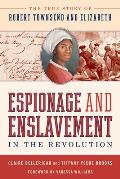
Palmes is thus a figure in Claire Bellerjeau and Tiffany Yecke Brooks’s book Espionage and Enslavement in the Revolution: The True Story of Robert Townsend and Elizabeth.

Bellerjeau will speak about that book on Sunday, February 12, as part of Fort Ticonderoga’s Author Series. This is an online event, free to members and $10 for other registrants.

Sunday, November 07, 2021

The Boston Massacre as Never Seen Before

The Museum of the American Revolution in Philadelphia just opened an exhibit of Don Troiani’s paintings of the conflict.

Troiani is not only a talented realistic artist but also one of the country’s most dedicated collectors of historical clothing, weapons, and other artifacts. His work reflects the best thinking about what things really looked like at momentous moments.

WHYY just ran an interesting story about how the museum is making its Troiani exhibit more accessible to people who can’t see those details in the paintings because of limited vision.

There’s a lot in the article, and this is just part of what it says about the presentation of one painting:
The tour at the museum started with Troiani’s painting of the Boston Massacre, the first episode of violence of the American Revolution in 1770 when British soldiers opened fire on an angry rally of Boston residents.

With the help of Trish Maunder, director of Philly Touch Tours, [testers] Mayeux and Bonenfant were first shown how large the painting is, roughly 2 feet by 3 feet. Walking along the width of the painting with their fingers on the frame, they feel in their paces the scale of the work. . . .

“We are standing in this painting behind a group of British soldiers, so imagine them in their bright red coats. There’s about six inches of snow on the ground,” said Tyler Putnam, the museum’s manager of gallery interpretation, describing the painting. “We’re looking at their backs and they are surrounded by a huge crowd.”

Because the perspective of the painting is behind the line of British soldiers, the viewer cannot see their faces in favor of the opposing colonists, whose panicked faces are lit by flashes of black gunpowder explosions.

Putnam then passed around the tactile graphic papers, so Mayeux and Bonenfant could feel the layout of the painting’s composition. Created by the Braille printhouse Clovernook, the paper had been embossed with different types of textures to indicate the surrounding brick buildings, the snow on the ground, and the flashes of gunpowder. A Braille legend in an upper corner identifies what the textures represent.

Although there are several dozen figures in the painting — the crowd of colonists reaches deep into the background of the canvas — the tactile graphic had to be greatly simplified so it could be coherent to fingertips. Only six figures are in the graphic. Most of the information Troiani had put in his painting was eliminated.
The picture above shows the graphic translation of Troiani’s Massacre scene, which folks can view here.

At the left is a sword-wielding civilian, possibly town watchman Benjamin Burdick, and then sentry Pvt. Hugh White in his overcoat. Then two of the seven grenadiers and Capt. Thomas Preston. At the right is another civilian, the apothecary Richard Palmes swiping at Preston with his cane. [Incidentally, Palmes is an important figure in the new book Espionage and Enslavement in the Revolution: The True Story of Robert Townsend and Elizabeth by Claire Bellerjeau and Tiffany Yecke Brooks.]

As the news story says, the tactile graphic leaves out a lot—most of the soldiers and all but two of the large crowd. The two visitors who tested this method of interpretation clearly preferred in-depth description and discussion, though of course most museums can’t provide that all the time.

As the article says, “The tactile graphics are in a trial phase.” As I think about this particular image, I think the layers might be the most important information—the line of soldiers in the foreground, then the first line of locals facing them, then the rest of the crowd, and finally the Town House and other buildings with their straight lines and angles in the background. That would require flipping through three or four tactile graphics. But it was a complex event, after all.

Thursday, October 29, 2020

The Case for Capt. Preston

On 25 Oct 1770, Capt. Thomas Preston’s attorneys began to make the case for his acquittal for murder after the Boston Massacre.

The defense team consisted of three men. Robert Auchmuty was a senior attorney allied with Lt. Gov. Thomas Hutchinson’s adminstration. John Adams appears to have called the first witnesses and started questioning them. The youngest team member, Josiah Quincy, Jr. (shown here), worked in a subordinate role, also posing questions.

The first defense witness was William Jackson, proprietor of the Brazen Head hardware store. His mother, Mary Jackson, had rented a room to Capt. Preston, and he testified about how soldiers had come to fetch the officer because of fighting on the street.

The defense called two more witnesses on 25 October, eighteen the next day, and one or two the day after that, in addition to the owner of an enslaved witness to testify to his veracity. (The prosecutors also called back one of their witnesses for brief testimony.) Among the eyewitnesses were:
  • Benjamin Davis, who lived directly across from the Customs house.
  • Richard Palmes, a hot-headed apothecary who said that at the first musket shot “I had then my hand on the Captains shoulder.” Then, in swinging his cane at a soldier poking at him with a bayonet, Palmes said, he accidentally hit Preston on his arm.
  • Andrew a Negro Servant” (i.e., slave) owned by the merchant Oliver Wendell.
  • “Jack Negro Servant to Doctr. [James] Lloyd.”
  • Jane Whitehouse, who married a solder between the shooting and her testimony.
  • Newton Prince, a free black man who later settled in London as a Loyalist.
  • Capt. James Gifford and Capt. Brabazon O’Hara of the 14th Regiment.
  • Hat merchant Thomas Handysyd Peck.
  • Harrison Gray, Jr., son of the provincial treasurer.
  • Lt. Gov. Hutchinson himself, reporting what he had found on the scene when summoned after the shooting and what little he could recall of his conversation with Preston.
None of these defense witnesses described hearing Preston give an order to fire. Some were certain he didn’t. (Palmes suggested he might have, but he was close enough to be touching the captain and heard nothing.) While some prosecution witnesses said Capt. Preston had ordered the soldiers to load their guns, one defense witness said that Cpl. William Wemms had made that call.

The main value of all this testimony was in building a picture of an angry crowd, verging on violence, and of confusion in the crush around the soldiers. Preston’s attorneys were laying the blame for the deaths on the mob or the soldiers, but not the captain. (The soldiers were afraid that would happen.)

There was also conflict within the defense team. According to Hutchinson, Adams and Quincy had “a difference in opinion…of the necessity of entring into the examination of the Conduct of the Towns people previous to the Action itself.” Was it necessary to portray the Boston crowd as habitually violent in order to get Preston off?

The Rev. William Gordon’s history of the Revolution later described the interaction this way:
Mr. Quincy pushes the examination and cross-examination of the witnesses to such an extent, that Mr. Adams, in order to check it, is obliged to tell him, that if he will not desist, he shall decline having anything further to do in the cause. The captain and his friends are alarmed, and consult about engaging another counsellor; but Mr. Adams has no intention of abandoning his client. He is sensible that there is sufficient evidence to obtain a favorable verdict from an impartial jury; and only feels for the honor of the town, which he apprehends will suffer yet more, if the witnesses are examined too closely and particularly…
Hutchinson likewise saw Adams as protecting Boston’s reputation: “he being a Representative of the Town and a great Partisan wishes to blacken the people as little as may be consistent with his Duty to his Clients.”

Adams himself responded to the passage in Gordon’s book by stating, “His Clients lives were hazarded by Quincy’s too youthful ardour.” It’s not clear what Adams had in mind here. Did he fear that Quincy would make the Suffolk County jury so resentful they’d vote to convict, or that he’d rouse the crowd outside against Preston?

The defense counsels rested their case on Saturday, 27 October. Under the custom of the time, they then made their closing arguments to the jury—first Adams, then Auchmuty. With darkness falling, the court adjourned for the Sabbath.

On Monday, 29 October, Robert Treat Paine summed up the prosecution case. Then Judge Edmund Trowbridge analyzed both the evidence and the law at length, followed by each of the three more senior judges. It wasn’t until 5:00 P.M. that the jurors retired to deliberate—all night if they had to.

TOMORROW: The first verdict.

Wednesday, November 13, 2019

“Pool Spear informs, that last Week he heard one Kilson a Soldier…”

I’ve been looking into Pool Spear, the Boston tailor accused of tarring and feathering sailor George Gailer in October 1769.

A little more than four months after that event, the young apothecary Richard Palmes met Spear near the center of town on the evening of 5 Mar 1770. Palmes had gone out as the alarm bells rang, learned there had been a brawl outside Murray’s barracks instead of a fire, and headed back home. He stated:
I then saw Mr. Pool Spear going towards the Townhouse, he asked me if I was going home, I told him I was; I asked him where he was going that way, he said he was going to his brother David’s. But when I got to the town-pump, we were told there was a rumpus at the Custom-house door; Mr. Spear said to me you had better not go, I told him I would go and try to make peace.
Palmes appears to have had a short temper, so he probably wasn’t the best person to pacify the situation that grew into the Boston Massacre. Indeed, after hearing a shot and seeing a man dead on the ground, Palmes started swinging his walking stick at soldiers and Capt. Thomas Preston.

It looks like Pool Spear took his own advice and didn’t stay to see what happened near the Customs office that night. But the next morning he went to Faneuil Hall, where there was supposed to be a town meeting, to share a story. The town meeting records say:
Mr. Pool Spear informs, that last Week he heard one Kilson a Soldier of Pharras Company say, that he did not know what the Inhabitants were after, for that they had broke an Officers Windows (meaning [landlord] Nathaniel Roger’s Windows) but that they had a scheeme on foot which would soon put a stop to our proceedure—that Parties of Soldiers were ordered with Pistols in their Pockets, and to fire upon those who should assault said House again, and that Ten Pounds Sterling was to be given as a Reward, for their killing one of those Persons, and fifty pounds sterling for a Prisoner—
Spear’s testimony wasn’t used in the town’s report or the trials as Palmes’s was, but it reflects the conviction of many Bostonians that the soldiers were eager to hurt people.

The next glimpse of Pool Spear that I’ve found comes from the siege of Boston. He and his wife Christiana were staying in her home town of Pembroke with six children. In March 1776, the Rhode Island Quaker philanthropist John Brown gave them £2 as charity.

The Spear family moved back into Boston after the British evacuation. Late that year Pool (now spelling his name “Poole”) was among scores of Bostonians who signed a petition on behalf of Hopestill Capen, a Sandemanian Loyalist who had helped to preserve their property during the siege but was locked up in the Boston jail on suspicion of disloyalty.

In 1779, the Boston town meeting elected Pool Spear, then forty-four years old, to be a constable. Often the meeting chose recently married young men for this office as a joke, and those men declined because they wanted to stay home. Spear accepted and was reelected in 1780 and later. The Fleets’ pocket almanac for 1782 lists him as a deputy sheriff of Suffolk County. Those jobs were more about delivering writs than patrolling the town, but it’s still a striking shift from being accused of tarring and feathering a man to working as a law-enforcement officer.

Also in 1779, the Independent Chronicle newspaper reported that the Spears were living in a house that the state was confiscating from the late Loyalist absentee John Borland. Six years later, Spear was in the Boston jail himself because of a debt to Borland’s estate, as brought to court by Richard Cranch. (See this note from the Adams Papers about Cranch’s tangled relationships with the Borland properties.) The court case may have involved that Boston house or Spear’s duties as a sheriff. In any event, the Massachusetts General Court passed a special law freeing Spear.

Pool Spear died in 1787, aged fifty-one. His widow Christiana helped to administer his estate. He didn’t leave her a lot of money, but he didn’t leave her in debt.

TOMORROW: The third tailor.

Tuesday, January 22, 2019

“By what Means this Riot was introduced”

While the king’s army held a public court of enquiry into the violence on the night of 20 Jan 1775, the Massachusetts civil authorities did the same.

Town watchmen swore out a legal complaint against certain army officers. According to John Eliot, witnesses “were examined in the Court House before Justice [Edmund] Quincey,” shown here. Or, as the 30 January Boston Gazette reported:
On Tuesday and Wednesday last there was a full and impartial Examination of Witnesses before the Worshipful Edmund Quincy and John Hill, Esquires, two of his Majesty’s Justices of the Quorum for this County.—
Back in 1768-70, the first time the army patrolled the streets of Boston, Justice Quincy became known for his hostility to any soldiers brought before him. Justice Hill had been one of magistrates most involved in collecting testimony for the town report on the Boston Massacre. So, despite the Boston Gazette’s assurances, friends of the royal government must have been dubious those men were conducting a “full and impartial Examination.”

The army board sat that whole week in “the New Court House,” according to John Andrews, so what “Court House” did these two justices of the peace use? The Town House had served as a courthouse for many years, so perhaps that’s what Eliot meant. It’s hard to imagine the two inquiries taking place side by side.

Edes and Gill published the outcome of the magistrates’ inquiry this way:
By the Evidence it appeared, that previous to the Riot the following Circumstances took place: A little after Ten o’Clock two young Men passing down Milk-Street, near the Entrance into Long Lane, they were accosted by an Officer, not in the English, but as they supposed in another Language, which they did not understand; they asked him what he meant; he said he meant to tell them to go about their Business.
That detail about the officer not speaking in English might have been a dig at Scotsmen in the army. Or he might just have been speaking in another language, or incoherently.
They said they were going, and passed along into Long-Lane. They had not gone far before the Officer called them to stop—they stopped till he came up to them, and angry Words ensued. The young Men, however, parted from him the second Time and went on their Way towards their Homes.

The Officer followed and overtook them near the Head of the Lane, and stopped them again, telling them he supposed they were stiff Americans; to which one of them said, he gloried in the Character.—Here again Words ensued, and the Officer drew his Sword, flourished it and struck one of the young Men on the Arm, who immediately seized him.—

At this Juncture, three or four of the Town Watch, who were upon the Patrole, came up and separated them, advising them to go Home. The two young Men did so, but the Officer refused, saying, he was the Prisoner of the Watch and would go with them; they told him he was not their Prisoner, but might go where he plea’d, and if he desired it, they would see him safe Home; but he insisted upon it, that he was their Prisoner ——

The Watchmen went down the Lane towards their Head Quarters in King-Street, where they had been going before, and the Officer accompanied them. In the Way they met with several Persons, whom they took to be Servants of Officers, who supposing this Officer to be in the Custody of the Watch, attempted to rescue him, but he insisted upon being a Prisoner, and said the Watchmen were his Friends, and he would go with them.

They then went forward, and in Quaker-Lane, which leads into King-Street, they were met and assaulted by more than twenty Officers of the Army, who took several of their Watch-Poles from them and wounded some of them.

We thought it necessary thus far to give a Detail of the Affair, that our Readers might know by what Means this Riot was introduced.——

The Particulars that happened afterwards are too many to be enumerated in a News-Papers. It is sufficient to say, that upon the Evidence the Justices thought proper to bind eight of the Officers, and a Sadler, named Sharwin, who had lived a few Years in Town, to answer for their Conduct at the Superior Court, and in the mean Time to be on good Behavior…
The newspaper clearly painted Sharwin the saddler as a troublemaking outsider. I just hunted for information about him and ended up tracking Richard Sharwin’s career over two decades, followed by his widow’s involvement in the sale of an enslaved woman that linked the Long Island spy Robert Townsend to the Massacre witness Richard Palmes. Someday I may tell that story.

As for the story of what happened on the night of 20 Jan 1775, Eliot supplied this understanding:
Betwixt ten & eleven in the evening an officer in liquor desired the watch to go home with him. A young gentleman of the town, seeing him with two men & thinking him abus'd, went to the British Coffee House, & acquainted the officers collected there that one of their companions was involuntarily led away & made prisoner by the watch. They rushed out, attacked the watchmen with drawn swords, & held the battle till orders were received from the Governor [Thomas Gage] to disperse.
Plus, at some point the main guard turned out under Capt. John Gore, though he was allegedly as drunk as any of the officers from the coffee-house or the first officer who kept cheerfully insisting he was a prisoner of his friends, the watchmen.

TOMORROW: The results of the two investigations.

Saturday, March 17, 2018

A Blanket the British Army Left Behind

Today is Evacuation Day, the anniversary of the day in 1776 when the British military left Boston.

Back in 2013, Patrick Browne wrote on his blog Historical Digression about something the British left behind, an artifact now at the Duxbury Rural and Historical Society:
A number of British regiments were camped upon Boston Common. When they departed, they left all manner of gear strewn across that open space. We can imagine curious Bostonians picking through the debris when the British were gone. Frugal Yankees, they must have scavenged a good number of useful items.

One such Bostonian was William Hickling [1742-1790], a merchant, roughly 30 years old. He was a patriot who had been out and about on the fateful night of the Boston Massacre back in 1770, though, according to the deposition of Richard Palmes, Hickling went home before the real trouble began. Hickling had been, according to family tradition, rather more active during the Boston Tea Party in 1773 as evidenced by the tea leaves that were found in his shoes the following morning.
According to his will, quoted here, Hickling was officially a distiller, but he sold other things besides rum. His father was also a distiller named William Hickling (1704-1774), and he had a son and a nephew of the same name, so there’s opportunity for a lot of confusion.

The name of William Hickling doesn’t appear on most lists of men involved in the Tea Party, even the expansive roster in Francis S. Drake’s Tea Leaves. The family tradition that he helped to destroy the tea was nonetheless in print by 1900.

Other sources do show William Hickling as a participant in Boston’s pre-Revolutionary politics. But which William Hickling attended the Sons of Liberty dinner in Dorchester in 1769? Which was renting rooms to Pvt. James Hartigan and his new wife Elizabeth in 1770? Which was a member of the North End Caucus in 1772? I’ll play the odds and say that Palmes encountered the younger William Hickling (and his brother John) on 5 Mar 1770, and that the younger William was also the caucus member, but I won’t hazard a guess about the other questions.

The William Hickling born in 1742 was almost certainly the man who joined the Ancient and Honorable Artillery Company in 1764 and served as paymaster of Col. John Brooks’s Continental Army regiment in 1777 and 1778.

But back to the spring of 1776 and Patrick Browne’s essay:
Foraging across Boston Common, Hickling probably picked up a number of things. One of them was the white woolen blanket of a British soldier. The “standard issue” blanket, bearing the royal symbol of the King’s Arrow and the initials “GR” for George Rex (or King George) eventually made its way to Duxbury, Massachusetts after William’s death when his widow moved in with her daughter [Sarah] and son-in-law, bringing a number of Hickling family objects with her. The son-in-law was Captain Gershom Bradford, a Duxbury master mariner. Fast forward to 1968, Gershom Bradford’s house, along with a vast number of family belongings, was donated to the Duxbury Rural and Historical Society by the captain’s great-grandsons.
It sounds like the blanket didn’t come with a provenance, not like the tea story. But it certainly appears to be a standard-issue British army blanket.

Saturday, March 02, 2013

The Distortions of Richard Palmes

As I’ve been describing, the Boston apothecary Richard Palmes was an important witness in the legal proceedings that followed the Boston Massacre. He was up at the front of the crowd, talking to Capt. Thomas Preston, when the soldiers began to fire. He put extra effort into making sure his version of what he saw got into the record.

The last decade hasn’t been kind to Palmes’s memory, however. In 2003, the Discovery Channel program Unsolved History ran a program about the Massacre, which included a reenactment. Just not an accurate one.

While describing the fight on King Street, the show’s narrator said: “The ugly demonstration became lethal when patriot Richard Palmes struck one of the soldiers, Private Hugh [actually Edward] Montgomery, with a stick.” Twice more the narration said Palmes struck that soldier before the first shot. The show replayed the footage several times, in the way that basic-cable documentaries do, filling up the hour.

Palmes’s testimony was very clear: he swung his cane after the first shot. Montgomery was hit by a stick or, Palmes insisted, ice that someone else threw from the crowd. Yet this television program basically blamed him for provoking the soldiers into using fatal force.

The John Adams miniseries from 2008 also included Richard Palmes, played by the actor John Bedford Lloyd (shown above). The character was written not as a genteel apothecary who testified over and over about the Massacre. Rather, he appeared as a lumbering, unshaven ropemaker whom Adams had to cajole into court.

What would the real Richard Palmes say if we showed him those television shows? Probably he’d ask how we got those paintings to move and talk, but that’s another question.

Richard Palmes is one of the characters who will appear at tonight’s annual reenactment of the Boston Massacre, starting at 7:00 outside the Old State House on State Street. And we try to do him right. Look for Palmes to swing his cane after the first shots.

Friday, March 01, 2013

Richard Palmes’s Last Word

As Neil L. York quotes in The Boston Massacre: A History with Documents, Richard Palmes published his own version of his testimony about the Boston Massacre in the 25 Mar 1771 Boston Gazette because “the sentiments of the People seems various concerning the Testimony I gave.”

That apparently meant that neighbors were accusing him of saying things that had helped to acquit Capt. Thomas Preston and most of the soldiers, and caused the last two soldiers to be convicted of manslaughter instead of murder. Specifically, Palmes took issue with the version of his testimony that shorthand expert John Hodgson had published in Boston early that year.

What are the important differences between the two versions of Palmes’s testimony? Aside from details of wording, they appear in these questions about Pvt. Edward Montgomery, the first soldier to fire. Hodgson’s version:

Q. Are you certain that Montgomery was struck and sallied back before he fired?
A. Yes.
Q. Do you know whether it was with a piece of ice or a club?
A. No.
And Palmes’s version:
Q. Are you sure Montgomery was struck and sallied back before he fired?
A. I tho’t he stept back when it hit him.
Q. Do you know whether it was a piece of ice, or a club?
A. It was something resembling ice.
Palmes wanted his neighbors to know that he did not say Montgomery “sallied back,” or staggered, but that he deliberately stepped back. He also said that private was most likely hit by ice rather than wood. In both details, Palmes downplayed the violence Montgomery had suffered.

Or rather, Palmes insisted that Hodgson had made him overstate that violence: “Mr. Hodgson confounds my remembrance in such manner, that I could not determine the difference between a piece of ice and a club, for what purpose this fetch, judge impartial reader!”

After Palmes’s testimony the court recalled another witness, James Bailey, and asked if he still believed that Montgomery fell down after being hit by the object. Bailey reaffirmed that he did. Palmes commented: “I imagine this evidence was bro’t to invalidate my declaration in court; but I assure the world upon the oath I then took, that Montgomery did not fall until he attempted to run his bayonet thro’ my body; which was about the time the last gun went off.”

Which version was accurate? In his earlier testimony Palmes had consistently spoken of “a piece of snow or ice” being thrown. Even someone taking notes for the Crown at the soldiers’ trial recorded that. So Hodgson’s report that Palmes said the object might have been a club seems suspect.

However, that anonymous note-taker also reported that Palmes had remarked about the ice hitting the soldier, “whether it staggered him back or he only stepd back I cant tell”—more doubt about Montgomery stepping back than Palmes himself later acknowledged.

In any event, by publishing his version of his testimony in the Boston Gazette, Palmes got the last word.

TOMORROW: Until the 21st century.

Thursday, February 28, 2013

Richard Palmes Gives More Testimony—and This Time It’s Personal

After providing testimony for an inquest on 6 Mar 1770, apothecary Richard Palmes testified four more times about the Boston Massacre:
  • He provided a deposition for Boston’s official report on the event, titled A Short Narrative of the Horrid Massacre.
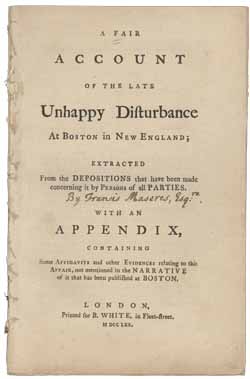
  • A polished version of Palmes’s inquest testimony, written in the week after the shootings, appeared in A Fair Account of the Late Unhappy Disturbance at Boston, printed in London in response to the Short Narrative. Palmes’s original text was broken up into sentences with standardized punctuation, but only one small detail was added.
  • Palmes was a (probably reluctant) defense witness at Capt. Thomas Preston’s trial.
  • He was a prosecution witness in the soldiers’ trial.
Furthermore, we have three versions of Palmes’s testimony at Preston’s trial:
Palmes formatted his account in question-and-answer form, like the recently published transcript of the soldiers’ trial, but that text also broke off for the note “as per Narrative,” referring to the Boston report. Thus, it’s unclear whether those questions and answers were really based on contemporaneous records or if Palmes wrote out what he remembered (or wanted to remember) months later. He didn’t present his whole testimony, just the portion about whether Preston might have ordered his men to shoot into the crowd.

As for the soldiers’s trial, the situation is even more complicated. Palmes’s testimony survives in four forms:
  • brief notes from the same report to London mentioned above.
  • trial notes from defense attorney John Adams.
  • the transcript of the proceedings by shorthand expert John Hodgson, published by John Fleeming.
  • Palmes’s own version, published in the 25 Mar 1771 Boston Gazette, with specific complaints about Hodgson’s accuracy.
There’s an old saying that a person with one watch always knows what time it is, and a person with two watches never does. A historian with one source can report what people said; a historian with two sources can’t.

TOMORROW: The points Palmes wanted to emphasize.

Wednesday, February 27, 2013

Richard Palmes’s Inquest Testimony

Richard Palmes had a front-row view of the Boston Massacre. He was close enough to Capt. Thomas Preston that, as he later said, “my left hand was on his right shoulder.” At Preston’s trial Palmes said, “The Gun which went off first had scorched the nap of my Surtout at the elbow.” He then laid about him with a “heavy [walking] stick,” knocking one soldier’s hand off his gun, before realizing it would be wise to run away.

The next day, Palmes provided a deposition for coroner Thomas Dawes’s inquest on the death of Samuel Gray. I’ve added paragraph breaks and included all interpolated text to make it easier to read, but there’s only so much I can do:

I Richd. Palmes of Boston Apoth’y [?] of Lawfull Age Testafieth & Sayeth, that about 9 oClock Last evening I heard one of the Bells Ring, which I Suppos’d was for fier, upon which I Went towards ware I supposed it was, I ask what the matter was, I was told that the Soldgers was abusing the Inhabetents, I ask ware the Soldgers was, and was told in King Street & that there was a Rumpus at the Custom-house Door,

assoon [sic] as I got their, I saw one Capt. Preson at the head of Six or Eight Soldgers, the Soldgers had their Guns Brest high, I went ameadiatly to the Sd. Capt Preson, I ask him if the Soldgers guns were Loaded his Reply was that they ware Loaded with Powder & Ball I then ask him if he intended they should fire his Answer was by no Means, but I Did not here him tell the men not to fire

I saw apice [sic] of Ice fall among the Soldgers Ameadiatly upon this the Soldger at his right hand fired his Gun that Instant I herd the word fire, but who said it I know Not; the Soldgers at his Left fired Next, and the others as fast as they Could one after the other, I turned my Self as Soon as I could & Saw one Lay Dead at my Left, upon wich I struck at the Soldger that fird the first Gun I hit his Left hand which maid his Gun fall, at which I made a Stroke at the offiser, & Struck him on the Arm at him, and thought I hitt his head, but sd. officer Preson Says I hitt his Arm, on my makg. the Strook I fell on my Right knee, the I then saw the Soldger that first fird, agoing to push his Bayanett at me, upon which I threw my Stick at his head, so he gave Back—and Gave me an Opportunity to Jump frome him, or I must Ben Run threw my Bodey,

Directly I past threw Exchange Lane, and so up the Next Lane by Mr. Kents office, & Saw the Bodey of three persons Laying on the Ground I followd the [body] of Capt. Mortons apprentice Carrg By [?] I followd it up to the parson house, and Saw he had a Ball, shot threw his Breast &c and further Sayeth not.
“Capt. Mortons apprentice” was victim James Caldwell; there’s a discussion of his body’s travels here. I tried to nail down Morton’s identity here. “Mr. Kent” was the Whig lawyer Benjamin Kent.

Palmes’s inquest testimony is preserved in the Boston Public Library’s Mellen Chamberlain collection.

TOMORROW: Richard Palmes gets the last word.

Wednesday, September 21, 2011

John Hodgson, court transcriber and bookbinder


Here is the advertisement for printer John Fleeming’s most famous publication: the transcript of the trial of soldiers after the Boston Massacre. Fleeming advertised that pamphlet on 27 Dec 1770, though it wasn’t available until 21 January.

The man who transcribed the proceedings was John Hodgson, an immigrant from Scotland like Fleeming. By the end of the trial his hands were so tired that he couldn’t get down Robert Treat Paine’s summary arguments for the prosecution. Some people—Richard Palmes, John Adams—complained that the printed transcript was inaccurate. But trial transcriptions were almost unheard of in America then, and Hodgson created the best record we have of that important event.

Isaiah Thomas later included Hodgson on his list of Boston booksellers, saying he had opened a shop on Marlborough Street (part of the town’s central artery) in 1762:

Hodgson…was bred to bookbinding in Scotland, and became a good workman. He was chiefly employed in this business, but sold a few books. By permission of the court, he took, in short hand, the trial of the soldiers who were concerned in the massacre at Boston, on the evening of the 5th of March 1770.
In the 2 Jan 1764 Boston Evening-Post, Hodgson advertised that he “Binds Books of all Kinds, gilt or plain,” and also “sells Books, Stationary, Plays, &c. &c.”

In October 1765, Hodgson was one of three trustees for the weaver Elisha Brown when he declared bankruptcy in a wave of insolvencies. Three years later, during a dispute over turning the Manufactory into barracks for the British army, Brown and his family defied the royal authorities by refusing to leave that building. By that point Hodgson was working for a bookseller and printer on the other side of the political divide.

According to Thomas, Hodgson “gave up his shop in 1768, and was, afterward, employed by John Mein,” yet another arrival from Scotland. Mein managed a bookstore, and partnered with Fleeming in publishing the Boston Chronicle. He was a loud and cutting opponent of the local Whigs, and in late 1769 a crowd of angry businessmen drove him out of town. Hodgson published one short letter in the 26 October Chronicle about that small riot, supporting Mein.

Eventually Hodgson went back out on his own, announcing in the 30 July 1772 Massachusetts Spy that he had moved into “the shop Mr. John Greenlaw lately improved.” His ad in the 18 Oct 1773 Boston Post-Boy says:
Bookbinding in its various Branches.

JOHN HODGSON
Hereby informs the Public,
That he carries on his Business of Bookbinding at his Shop, near Mr. Philip Freeman, jun. near LIBERTY-TREE.

ANY Orders Gentlemen in Town or Country may choose to favour him with, in the above Branch, he promises to execute as neat as any London Binding, and on the most reasonable Terms.

N.B. Gentlemens Libraries, or a single Book, regilt, cleaned and made look as well as new.—All Orders from the Country shall be strictly attended to.
TOMORROW: John Hodgson and the coming of war.

Sunday, February 07, 2010

The Picture For Liberty Leaves

Timothy Decker’s illustrations in For Liberty are in striking black and white, with hatching and patterns to produce the illusion of grays. The effect is in some ways reminiscent of eighteenth-century engravings.

Decker chooses dramatic visual angles, such as an overhead view of King Street immediately after the Boston Massacre, probably inspired by Paul Revere’s hand-drawn scene of the scene.

One spread uses a background of radiating lines to isolate our attention on a soldier firing his gun, a technique I think comes from Japanese comics. This illustration may be why the publisher classifies the book as “graphic fiction.” But really it’s a traditional picture book.

I saw one anachronistic mustache on a townsman, but the book sidesteps other common visual errors, such as the pre-Revolution French flag.

That said, the For Liberty illustrations reflect the same pro-Crown bias as the text, as I discussed yesterday. One picture and caption portray a leather-aproned apprentice throwing a snowball right into Pvt. Edward Montgomery’s chest and knocking him down. The next shows a man in the crowd holding a stick spiked with nails; some waterfront toughs brought sticks to King Street, but those were pieces of firewood the men had picked up along the way, not prepared weapons.

In contrast, another picture shows the soldiers just standing around, not pointing their bayonets out at the crowd as witnesses agreed they did. There’s no mention that Montgomery responded to being knocked down by shouting “Fire!” to his comrades.

I saw other misstatements and omissions in the text, some bearing directly on the Massacre:

  • The book dates the Seven Years’ War as “From 1753 until 1760.” The seven years of that war actually run from 1756 to 1763. Americans like to date its start from 1754, when George Washington led Virginia troops in a clash with the French at what he called Fort Necessity.
  • “Called the Sons of Liberty, they ruled the city through boycotts and riots.” I don’t think Sons of Liberty was really an organized group in Boston; it was a label for any men opposed to Parliament’s new taxes. Regardless, this statement ignores how opponents of the new Crown taxes really controlled the town of Boston: through a big majority in town meetings.
  • “A sentry saw Private White in distress and sought help...” Hugh White was the sentry outside the Customs House. The man who ran to the Main Guard for reinforcements was Thomas Greenwood, an employee in the Customs House.
  • “A moment of silence descended over the street” after the first shot. Some witnesses recalled such a pause, but most testified to “a space of some seconds,” in the words of merchant Richard Palmes.
  • “Turning, Captain [Thomas] Preston lost his footing. As he fell, he was struck by a club.” Actually Palmes, upset by the shooting, swung at Preston with his walking stick. And it wasn’t the captain who slipped, but Palmes, so his cane glanced against Preston’s arm.
  • “After a few minutes of chaos,...” Preston “shoved their musket barrels skyward.” This line and its position in the text implies Preston stopped the shooting. In fact, he testified to having knocked the barrels of his men’s guns up after the crowd had fallen back, the soldiers had reloaded, and a few men, led by watchman Benjamin Burdick, came forward to pick up the bodies.
  • “The soldiers were taken into custody and thus protected from the angry citizens.” The soldiers were taken into custody because they were accused of murder. On the night of 5 March, townspeople were angry (three dead and eight wounded tends to produce anger), but after promises of legal action from Lt. Gov. Thomas Hutchinson there was no attempt to attack the soldiers.
  • “Lawyers were hired to prove that the soldiers provoked the riot.” Boston hired lawyers to prove that the soldiers had committed murder (or manslaughter) by shooting into a crowd of civilians without legal authority. Politicians argued in print that stationing soldiers in the midst of a town was bound to produce violence, and they blamed the government in London and local appointees for that provocation, not the soldiers.
  • “The Boston Massacre was the first in a series of conflicts between the Sons of Liberty and the agents of the king.” This leaves out the Stamp Act protests of 1765, the standoff outside Capt. Daniel Malcom’s warehouse in 1767, the Liberty riot in 1768, the Neck riot of 1769, and the tar-and-feathering of Customs employees in 1769. The Massacre wasn’t even the first fatal conflict—that was the riot that ended in Christopher Seider’s death on 22 Feb 1770.
The book’s last page says:
John Adams foresaw a troubled future.

The lawless mob and the presence of soldiers were signs of a defective system of government. He understood that no nation held dominion over liberty, the protection of one person from the actions of another. He knew that liberty was precious and required wise, vigilant, and reasonable citizens to protect it, even, at times, from the ignorance of one’s own countrymen.
The implication of this text is that Adams was troubled by the riots. He was far more troubled by the London government using its army to force laws on a colony that had never approved them. That’s why Adams went on to lead the argument for independence. He didn’t like mobs, but For Liberty’s language of needing “reasonable citizens” to oppose “the ignorance of one’s own countrymen” is a profoundly conservative misreading of Adams’s position at this time.

But that fits with the book’s profoundly conservative distortion of the Boston Massacre. As in any conflict, there were two sides to the fatal confrontation on King Street in 1770. For Liberty consistently shows only one.

Saturday, March 22, 2008

John Adams on Trial

The big dramatic anchor of the first episode of the H.B.O. miniseries John Adams is the murder trial that followed the Boston Massacre. As this series tells the story, John Adams single-handedly defended Capt. Thomas Preston and his soldiers in the face of violent opposition, a heckling crowd, and reluctant witnesses. The lawyer cleverly elicits testimony from the witnesses and defendants that implicates the crowd, and one Son of Liberty in particular, in prompting the soldiers to fire. The jury then clears all the soldiers. Though his business suffers, Adams feels proud that he’s served justice.

How historically accurate is that scene? I’ll list differences between what plays out on screen and what the documents of the time tell us. Some of those changes must have been dictated by the need to keep the cast and sets limited, the story short and simple. Others reveal some misunderstandings of the eighteenth century, and then there might be unconscious ideological distortions. I’ll leave it up to you to decide which changes are trivial, which are significant, and whether there’s an overall bias in the portrayal. (Some of these deviations from the record have also been pointed out by Jeremy Stern at History News Network.)

  • Capt. Preston was tried separately from the eight soldiers. Their legal interests were, after all, different. His defense was that he’d never ordered those men to fire their weapons, which shifted the criminal onus onto them. Some of the soldiers petitioned to be tried at the same time as Preston, but were denied.
  • James Forrest wasn’t beaten up while trying to secure representation for Capt. Preston. After the war he wrote a petition to the Loyalists Commission detailing all he’d done and suffered for the British Empire, and made no remarks about such injuries. (In fact, Forrest didn’t even mention helping Preston find a lawyer.) Adams, the sole source for this conversation, wrote nothing about Forrest being hurt. Adams recalled Forrest weeping with emotion, as he supposedly often did, but the episode didn’t show a tear.
  • Adams wasn’t the only defense counsel. Much of the witness questioning was done by the junior member of the team, Josiah Quincy, Jr. The senior member, Robert Auchmuty, handled part of the summation for the jury.
  • Robert Treat Paine wasn’t the only prosecutor. Samuel Quincy, Josiah’s older brother, shared that job.
  • Jonathan Sewall, the royal Attorney General for Massachusetts, wasn’t observing the trial from a prominent window seat. In fact, he was supposed to be prosecuting it, but a combination of political distaste and (my theory) biological depression kept him from even coming into Boston for months. Also, Sewall didn’t offer Adams a major royal appointment right after the trial; he’d made that offer two years before.
  • Three judges presided over the trials, not just Benjamin Lynde. One of those judges, Peter Oliver, was a delightfully outspoken Loyalist who clearly leaned toward the defense.
  • Under British law, the defendants weren’t allowed to speak as witnesses on their own behalf. After all, they had an interest in the case.
  • The witness Richard Palmes wasn’t a lumbering, unshaven ropemaker. He was a genteel merchant who had tried to break up fights in the evening before the Massacre. He was at the front of the crowd because he was urging Capt. Preston to obey the law and not order his men to shoot. The stick Palmes carried was a walking-stick, and he swung it at soldiers only after they had started to fire their guns. He testified to a town committee and at both trials (once for the defense and once for the prosecution), so he wasn’t a reluctant witness.
  • The witness Robert Goddard did testify that he’d heard Capt. Preston give an order to fire; he said as much in three separate legal documents. He did not, however, state that he was in an alley behind the soldiers; there was no such alley since those men were backed up against a corner of the Customs house. I haven’t found evidence that Goddard was active in Whig politics.
  • Before the trial, the miniseries’s Samuel Adams criticizes his cousin’s decision to represent Preston and the soldiers, and declares that “a Boston jury” would never acquit the soldiers. In reality, Samuel Adams was among the Whig leaders who urged Quincy to work on the case. John never wrote of criticism from his cousin. The show doesn’t mention that all the jurors were chosen from parts of the county outside Boston in an attempt to avoid prejudice. (Furthermore, in The Boston Massacre Hiller B. Zobel presents evidence that Preston’s jury was stacked with men sympathetic to the royal authorities.)
  • Capt. Preston, as a gentleman, was probably jailed separately from his men and allowed to shave. The soldiers probably didn’t wear their full uniforms, including wigs, during the trial since one witness identified a soldier by his bald head. Most of the soldiers were grenadiers, whose uniforms were different from those of ordinary soldiers.
  • On television, the trial occurs so soon after the Massacre that one soldier still has bruises on his face from the riot. In fact, because of canny delays by the defense and sympathetic judges, the soldiers’ trial started more than eight months after the shootings, after passions had cooled a bit.
  • Pvt. Montgomery wasn’t a fresh-faced youth; he was a husband with three children. Pvt. Montgomery wasn’t the sentry at the Customs house; that was Pvt. Hugh White. Pvt. Montgomery wasn’t named Hugh; he was named Edward. (Okay, that last fact is a Boston 1775 exclusive; the Massachusetts court records say Hugh, but the army muster rolls in London say Edward.) Pvt. Montgomery wasn’t the soldier whom locals insulted by saying he should empty an outhouse; that was Pvt. Patrick Walker, three days earlier. Finally, the miniseries doesn’t mention that after the trial was over the real Pvt. Montgomery told one of his lawyers that he’d shouted “Fire!” to his fellow soldiers.
  • The crowd in the courtroom wasn’t a howling mob, according to even the most hostile observers, such as Justice Oliver. Dozens of Bostonians testified as defense witnesses, not a reluctant few.
  • It’s very hard to find evidence that John Adams’s law practice or political stature suffered as a result of his work defending Capt. Preston and the soldiers. Indeed, after he took their cases, Boston elected him to the Massachusetts General Court.
  • Adams’s final argument to the jury wasn’t simply that “Facts are stubborn things; and whatever may be our wishes, our inclinations, or the dictates of our passions, they cannot alter the state of facts and evidence,” as valuable as that statement is. He also played on the jurors’ prejudices by calling the crowd “a motley rabble of saucy boys, negroes and molattoes, Irish teagues and out landish jack tarrs.”
  • The jury in the soldiers’ trial voted to convict two soldiers—Montgomery and Pvt. Mathew Kilroy—of manslaughter, a potentially capital crime. They didn’t acquit all the men outright, as the television jury does. Under British law, those two men were sentenced to be branded on one thumb.
My favorite inaccuracy in the trial scene involves the witness whom Adams addresses as “Mr. Holmes.” He’s a black man with dark skin and an accent—obviously meant to be an African- or Caribbean-born worker. But gentlemen and the law didn’t grant the title “Mr.” to men of color. The first newspaper reports on the Massacre referred to all the adult victims as “Mr.” except Crispus Attucks.

The credits for this first episode of John Adams identify that witness as “Andrew Holmes.” That and his words reveal that this character was based on an enslaved man named Andrew who testified at length for the defense in both trials. The records refer to him consistently just by “Andrew.” Where did the surname “Holmes” come from? His owner was the merchant Oliver Wendell. Did screenwriter Kirk Ellis mix that man up with the baby named after him in 1809, the first Oliver Wendell Holmes?

Sunday, May 21, 2006

The shoemaker's memory

Mid-month, Prof. Al Young, author Ray Raphael, and I carried out a three-way investigation by email into a mysterious remark about the Boston Massacre from shoemaker George Robert Twelve Hewes.

As Al describes in his book The Shoemaker and the Tea Party, Hewes was a poor working-man in pre-Revolutionary Boston. At the end of the war for independence he moved to upstate New York. Hewes lived until the 1830s, when two writers discovered him and his store of patriotic anecdotes. Back in the Boston of 1773, he had been just one face in the crowd. (Well, he did inspire his own riot in 1774, but that's another story.) In 1834 and 1835, Hewes was one of a very few men claiming first-hand knowledge of what had happened at the Boston Massacre, the Boston Tea Party, and other events. But how reliable were his statements?

The question for us concerned a passage from Traits of the Tea Party, the second of the two books based on Hewes's memories. On the night of 5 March 1770 Hewes was in the crowd on King Street, surrounding a squad of British soldiers, when those soldiers started firing. Writer Benjamin Bussey Thatcher described how young sailor James Caldwell was shot and fell into Hewes's arms. Then the crowd supposedly carried Caldwell

up to Mr. Young’s, the Jail-House in Prison Lane. He had lived, formerly, next door to old Mr. Sumner’s, but was at this time second mate of a vessel commanded by Capt. Morton. This man lived in Cold Lane, and Hewes ran directly to his house. . . . The corpse soon followed him. . . . Morton…looked upon the dreadful object, and shouted like a madman for a gun, to run out "and kill a regular."
Very dramatic, but how accurate? Hewes was speaking of the Boston Massacre sixty-five years after the event. Did he really remember whom Caldwell worked for and even where that man lived? Did he and the crowd really take a wounded man to "the Jail-House," of all places? Perhaps they took Caldwell not to "Mr. Young," whoever he was, but to Dr. Young—physician Thomas Young, a top radical leader. Hiller B. Zobel's The Boston Massacre, still the most definitive study of the event, describes the confusion after the shooting but doesn't say what happened to Caldwell's body.

So we checked original sources, and the picture started to come together. First, I spotted the deposition from merchant Richard Palmes in Boston's report on the event, A Short Narrative of the Horrid Massacre. (As you can tell from that title, the town took a position against the shooting.) Palmes said:
I ran down Exchange lane, and so up the next into King street, and followed Mr. Gridley with several other persons with the body of Capt. Morton's apprentice, up to the prison house, and saw he had a ball shot through his breast.
So the crowd did take a wounded man to the prison. I also found a couple of references to Alexander Young as a jail-keeper in the 1760s. So there was our confirmation of "Mr. Young’s, the Jail-House in Prison Lane."

Ray checked his files and located this correction from the 19 Mar 1770 Boston Gazette:
In the account of the funeral procession in our last, it should have been said, James Caldwell was borne from the House of Capt. Morton in Cold-Lane, instead of Faneuil Hall.
That let us identify Caldwell as "Capt. Morton's apprentice," whose body Palmes saw taken to the jail. Hewes called him "second mate of a vessel commanded by Capt. Morton"—and indeed the Gazette had earlier identified Caldwell as "mate of Capt. Morton's." So even decades later Hewes was more accurate about another working-class man's employment status than Palmes was at the time. The newspaper correction also put Morton's house on Cold Lane—exactly as Hewes had remembered.

Score another point for the little shoemaker's memory.

ADDENDUM: Identifying Capt. Morton.