J. L. BELL is a Massachusetts writer who specializes in (among other things) the start of the American Revolution in and around Boston. He is particularly interested in the experiences of children in 1765-75. He has published scholarly papers and popular articles for both children and adults. He was consultant for an episode of History Detectives, and contributed to a display at Minute Man National Historic Park.

Subscribe thru Follow.it


•••••••••••••••••


Showing posts with label Samuel Winthrop. Show all posts

Thursday, February 05, 2026

“I fired two guns & my Master Mr. Manwarring fired one”

Another document related to the Boston Massacre in the collections of the Boston Public Library is catalogued as “Examination and answers of a servant of Edward Manwaring.”

Though his name doesn’t appear in the manuscript, that servant was Charles Bourgate, the “French boy.”

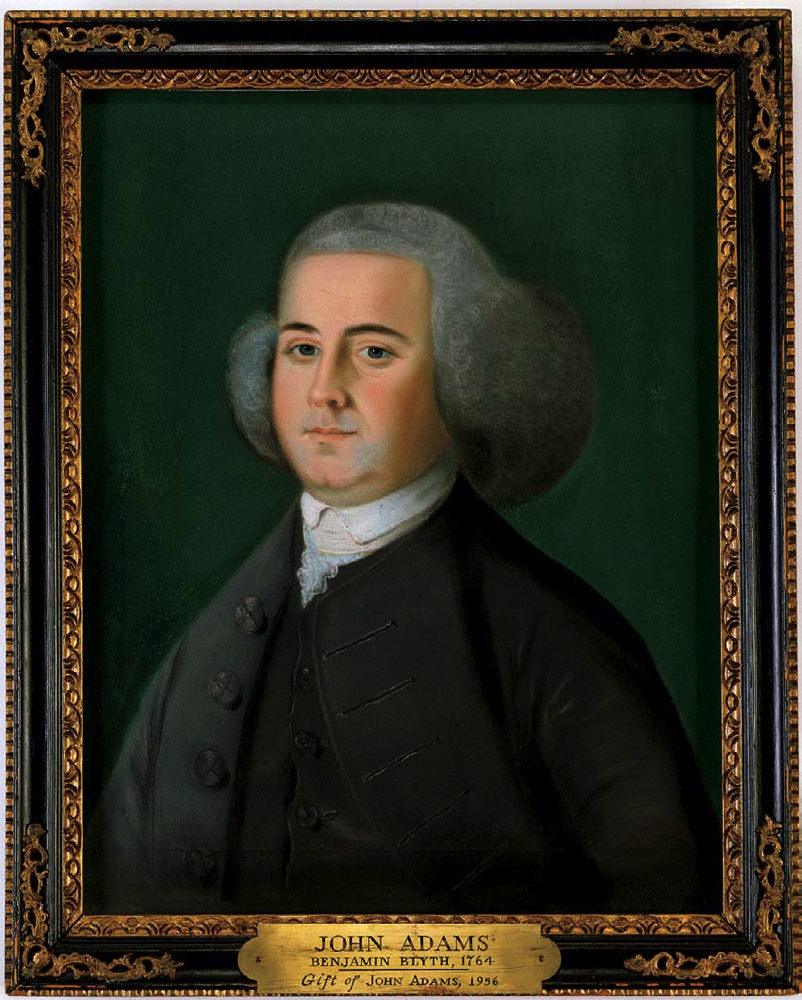
The handwriting identifies this document as having been made by Samuel Winthrop (1716–1779, shown here), long-time clerk of the Massachusetts superior court.

So far as I can tell, this text has never been published. It doesn’t contain information not found elsewhere—in fact, given that Charles Bourgate was lying, it doesn’t contain actual information at all. But here it is.
Q. was you at the Custom house in Boston on the Eveng. of the 5th. of March last
A. I was there

Q. at what time did you go there
A. I do not know at what hour I went there; it might be half an hour or an hour after Sunset

Q. how long did you stay there
A. after I got into the Custom house I staid there not quite half an hour

Q. Did you leave the Custom house before the firing was over
A. the guns were all discharged before he [sic] left the house

Q. was you at the Custom house at the time the bells rung for fire
A. I went there while the bells were ringing & staid there while the bells rang, when I came out of the house the bells had done ringing—

Q. do you know of any guns being fired out of the Custom house at that time
A. I fired two guns & my Master Mr. Manwarring fired one—

Q. Where were you when Mr. Manwarring fired
A. I was below. I had come from the Chamber down stairs I did not see him fire, I saw him direct the gun out of Window

Q. how came you to give those guns
A. my Master & the tall man ordered me

Q. What Chamber was those guns fired out of
A. Right over the Sentry box

Q. Whether when you went home you found Mr. Hudson & his Wife at home
A. I found them at home in the same Room where I left them when I went away—
There’s no date on this document, but I think it comes from the week after the Massacre. That was when Bourgate first told his story to legal authorities, but before John Munro came forward to provide an alibi for Edward Manwaring. Bourgate subsequently changed his story to accuse Munro as well, and a grand jury indicted both men and a couple more.

The indictment of Capt. Thomas Preston and the soldiers, also in the Boston Public Library, was written and signed by the Massachusetts attorney general, Jonathan Sewall. He then retired from the case. The indictment of Manwaring, Munro, and other men connected to the Customs service appears in Samuel Winthrop’s handwriting, based on Charles Bourgate’s testimony.

Tuesday, September 03, 2024

“Hostilitys have commenced at Cambridge”?

Here’s another primary source on the “Powder Alarm” of 1774 that I’ve quoted before, but only eight years ago.

These are two entries from the diary of the Rev. Ebenezer Parkman of Westboro.

Parkman really didn’t like conflict, so he hung back from political actions his parishioners and even his sons advocated. I recently traced his losing battle to keep people in town from committing to the Solemn League and Covenant boycott; that comes up here, too.

Naturally, Parkman was most uncomfortable with the idea of his farmworker, neighbors, son, and others marching off to confront the redcoats.

But the real story of these entries is how much misinformation and confusion the people of central Massachusetts were dealing with. The false rumor that the regulars had killed people in Cambridge on 1 September ended up reaching Westboro first as a false rumor that there was shooting on 2 September and “Some [victims] at least may be of Westborough.” That wasn’t completely refuted until the next day.
1774 September 2 (Friday). This morning was ushered in with Alarms from every Quarter, to get ready and run down to Boston or Cambridge. The Contents Magazine of Powder at Winter Hill had been carryed off — namely [550?] Barrells; by Treachery; etc. This is told as the Chief Affair.

72 of our Neighbours marched from Gales (tis said) by break of Day; and others are continuely going. My young man [Asa Ware] goes armed, with them.

About 5 p.m. Grafton Company, nigh 80, under Capt. Golding, march by us.

N.B. Squire [Francis] Whipple here. Says he is ready to sign [the Solemn League and Covenant] etc.

It is a Day of peculiar Anxiety and Distress! Such as we have not had — Will the Lord graciously look upon us; and grant us Deliverance — for we would hope and trust in His Name! We send for Mrs. Spring and her two Children to be here with us, while her husband is gone with the People. Breck [the minister’s son] returned from Lancaster.

At Eve we have most sorrowful News that Hostilitys have commenced at Cambridge, and that Six of our people are killed; that probably Some at least may be of Westborough. Joshua Chamberlin stood next (as it is related) to one that was slain. We have many Vague accounts and indeed are left in uncertaintys about Every Thing that has occurred.

Sutton soldiers — about 250, pass along by us — but after midnight are returning by reason of a Contrary Report. Mr. Zech. Hicks stops here. Breck is employed in the night to cast Bulletts. A Watch at the Meeting House to guard the Town stock etc. Some Towns, we hear, have lost much of theirs, as Dedham, Wrentham etc.
Westboro was using its meetinghouse as its militia armory, as Lexington would do in April 1775.
1774 September 3 (Saturday). Capt. Benjamin Fay came here between 2 and 3 o’Clock in the morn in much Concern and knew not what to do. After Light and through most of the forenoon, vague uncertain Reports. Sutton men that had gone to Deacon Wood, came back to go down the Road again.

My son Breck with provisions, Bread, Meat, etc., Coats, Blanket etc., for it was rainy, rides down towards Cambridge to relieve Asa Ware, Mr. Spring, and others who were unprovided.

About noon the Sutton Companys come back again and go home, Rev. [Ebenezer] Chaplin among them. So do the Grafton men.

Mr. Abraham Temple relates to me, that he, having been as far as to Cambridge and himself Seen many of the Transactions, that there were no Regulars there, no Artillery, no body Slain — but that Lt. Gov. [Thomas] Oliver, Messrs. [Samuel] Danforth, Joseph Lee, Col. [David] Phips (the high Sheriff) had resigned and promised that they would not act as Counsellors — that Mr. Samuel Winthrop computed there were about 7000 of the Country people had gathered into Cambridge on this Occasion — that it was probable, as he (Mr. Temple) conceived, that the Troubles would subside.

N.B. When the Sun run low, Our Company returned (consisting of Horse and Foot about 150). With them were my Son and my young man — all without any Evil Occurrance. To God be Praise and Glory! I Suppose Capt. [Jonathan] Maynard and those who were with him are returned also.
It’s also notable that the Sutton minister Ebenezer Chaplin accompanied men on this militia alarm. He was much more politically active than Parkman, chosen for the 1779 convention to write a constitution for Massachusetts and the 1788 convention to consider the new U.S. Constitition.

Chaplin also seems to have been a volatile man. In 1775 Isaiah Thomas declined to run some of his essays in the Massachusetts Spy, and the minister responded by preaching that the printer was an atheist and a Tory.

In 1791, the Rev. Mr. Chaplin locked up his daughter when she wanted to marry a popular young man. She died. The parish (which eventually became Millbury) dismissed Chaplin from their pulpit. Quite a change from seventeen years earlier, when they went off to possible war together.

Sunday, February 25, 2024

“I saw your Street door vomit forth a Crowd of Senators”

During its 1773–74 session, the Massachusetts General Court spent a lot of time complaining about Chief Justice Peter Oliver accepting a salary from tea tax revenues.

But it wasn’t clear what the legislature could do about that.

Until the lawyer John Adams had a bright idea. Or at least that’s how he described the situation in his post-presidential memoir. And in this case he may well be accurate.

According to the older Adams, he was motivated by fear of popular violence:
I fully expected that if no Expedient could be suggested, that the Judges would be obliged to go where Secretary [Andrew] Oliver had gone to Liberty Tree [in 1765], and compelled to take an Oath to renounce the Royal Salaries. Some of these Judges were men of Resolution and the Chief Justice in particular, piqued himself so much upon it and had so often gloried in it on the Bench, that I shuddered at the expectation that the Mob might put on him a Coat of Tar and Feathers, if not put him to death.
Adams had served one term in the General Court in 1770–71, representing Boston, and then retired to Braintree for a while. In 1773 he was splitting his time between the towns and edging back into politics.

Adams recalled:
I happened to dine with Mr. Samuel Winthrop at New Bost[on], who was then Clerk of the Superiour Court, in company with several Members of the General Court of both Houses and with several other Gentlemen of the Town. Dr. John Winthrop Phylosophical Professor at [Harvard] Colledge and Dr. [Samuel] Cooper of Boston both of them very much my Friends, were of the Company.

The Conversation turned wholly on the Topic of the Day—the Case of the Judges. All agreed that it was a fatal Measure and would be the Ruin of the Liberties of the Country: But what was the Remedy? It seemed to be a measure that would execute itself. There was no imaginable Way of resisting or eluding it. There was lamentation and mourning enough: but no light and no hope. The Storm was terrible and no blue Sky to be discovered.

I had been entirely silent, and in the midst of all this gloom, Dr. Winthrop, addressing himself to me, said Mr. Adams We have not heard your Sentiments on this Subject, how do you consider it? . . . What can be done?

I answered, that I knew not whether any one would approve of my Opinion but I believed there was one constitutional Resource, but I knew not whether it would be possible to persuade the proper Authority to have recourse to it.

Several Voices at once cryed out, a constitutional Resource! what can it be?

I said it was nothing more nor less than an Impeachment of the Judges by the House of Representatives before the Council.

An Impeachment! Why such a thing is without Precedent.

I believed it was, in this Province: but there had been precedents enough, and by much too many in England: It was a dangerous Experiment at all times: but it was essential to the preservation of the Constitution in some Cases, that could be reached by no other Power, but that of Impeachment.
No one mentioned the Massachusetts legislature’s attempt in 1706 to impeach some associates of Gov. Joseph Dudley, squelched by the privy council in London. But of course any good lawyer could argue the differences between the cases meant that precedent didn’t apply.

Adams continued in a common vein for him, saying that even his learned colleagues told him he was wrong, but he showed them he was right:
The next day, I believe, Major [Joseph] Hawley came to my House and told me, he heard I had broached a strange Doctrine. He hardly knew what an Impeachment was, he had never read any one and never had thought on the Subject. I told him he might read as many of them as he pleased. There stood the State Tryals on the Shelf which were full of them, of all sorts good and bad. I shewed him Seldens Works in which is a Treatise on Judicature in Parliament, and gave it him to read. . . . We looked into the Charter together, and after a long conversation and a considerable Research he said he knew not how to get rid of it.

In a Day or two another Lawyer in the House came to me, full of doubts and difficulties, He said he heard I had shown Major Hawley some Books relative to the Subject and desired to see them. I shewed them to him and made nearly the same comment upon them. It soon became the common Topick and research of the Bar. . . .

The Members of the House, becoming soon convinced that there was something for them to do, appointed a Committee to draw up Articles of Impeachment against the Chief Justice Oliver. Major Hawley who was one of this Committee, would do nothing without me, and insisted on bringing them to my house, to examine and discuss the Articles paragraph by Paragraph, which was readily consented to by the Committee. Several Evenings were spent in my Office, upon this Business, till very late at night. One Morning, meeting Ben. Gridley, he said to me Brother Adams you keep late Hours at your House: as I passed it last night long after midnight, I saw your Street door vomit forth a Crowd of Senators.
Benjamin Gridley was a fellow lawyer, but one who leaned toward the Crown and later became a Loyalist.

TOMORROW: Putting the plan into action.

Monday, September 03, 2018

The Powder Alarm Viewed from Westborough

Earlier in the summer I took note of the online edition of the diary of the Rev. Ebenezer Parkman of Westboro.

One of the events Parkman lived through and recorded was the “Powder Alarm” of September 1774. In fact, by writing down news at different times, the minister preserved the rumors that motivated that militia uprising.
1774 September 2 (Friday). This morning was ushered in with Alarms from every Quarter, to get ready and run down to Boston or Cambridge. The Contents Magazine of Powder at Winter Hill had been carryed off — namely [550?] Barrells; by Treachery; etc. This is told as the Chief Affair.

72 of our Neighbours marched from Gales (tis said) by break of Day; and others are continuely going. My young man goes armed, with them.

About 5 p.m. Grafton Company, nigh 80, under Capt. Golding, march by us.

N.B. Squire Whipple here. Says he is ready to sign etc. It is a Day of peculiar Anxiety and Distress! Such as we have not had — Will the Lord graciously look upon us; and grant us Deliverance — for we would hope and trust in His Name! We send for Mrs. Spring and her two Children to be here with us, while her husband is gone with the People.

Breck returned from Lancaster. At Eve we have most sorrowful News that Hostilitys have commenced at Cambridge, and that Six of our people are killed; that probably Some at least may be of Westborough. Joshua Chamberlin stood next (as it is related) to one that was slain. We have many Vague accounts and indeed are left in uncertaintys about Every Thing that has occurred.

Sutton soldiers — about 250, pass along by us — but after midnight are returning by reason of a Contrary Report. Mr. Zech. Hicks stops here. Breck is employed in the night to cast Bulletts. A Watch at the Meeting House to guard the Town stock etc. Some Towns, we hear, have lost much of theirs, as Dedham, Wrentham etc.
The initial report of the king’s soldiers taking hundreds of barrels of gunpowder from the provincial storehouse in Charlestown (shown above) on 1 September was correct. The later rumor of six men killed by those troops was entirely false. In his diary entry we can see Parkman struggling to make sense of the news he was hearing from different directions.

Many towns besides Westboro became anxious about their local supplies of gunpowder and other ordnance immediately after the alarm. After all, no one knew what would come next. The towns were preparing for war; descriptions like Parkman’s read very much like descriptions of the more famous Lexington Alarm of April 1775.

The next day the minister gradually realized the crisis had passed:
1774 September 3 (Saturday). Capt. Benjamin Fay came here between 2 and 3 o’Clock in the morn in much Concern and knew not what to do. After Light and through most of the forenoon, vague uncertain Reports. Sutton men that had gone to Deacon Wood, came back to go down the Road again.

My son Breck with provisions, Bread, Meat, etc., Coats, Blanket etc., for it was rainy, rides down towards Cambridge to relieve Asa Ware, Mr. Spring, and others who were unprovided.

About noon the Sutton Companys come back again and go home, Rev. Chaplin among them. So do the Grafton men.

Mr. Abraham Temple relates to me, that he, having been as far as to Cambridge and himself Seen many of the Transactions, that there were no Regulars there, no Artillery, no body Slain — but that Lt. Gov. [Thomas] Oliver, Messrs. [Samuel] Danforth, Joseph Lee, Col. [David] Phips (the high Sheriff) had resigned and promised that they would not act as Counsellors — that Mr. Samuel Winthrop computed there were about 7000 of the Country people had gathered into Cambridge on this Occasion — that it was probable, as he (Mr. Temple) conceived, that the Troubles would subside.

N.B. When the Sun run low, Our Company returned (consisting of Horse and Foot about 150). With them were my Son and my young man — all without any Evil Occurrance. To God be Praise and Glory! I Suppose Capt. Maynard and those who were with him are returned also.
The estimate of “7000 of the Country people” is high, but both Lt. Gov. Oliver and Dr. Thomas Young guessed there were 4,000 militiamen in Cambridge that day.

I started The Road to Concord with the “Powder Alarm” because it marked a turning point in Massachusetts’s conflict with the Crown. That was the moment that Gov. Thomas Gage lost control of most of the province, and the moment that people began to turn to military solutions for the political conflict.