J. L. BELL is a Massachusetts writer who specializes in (among other things) the start of the American Revolution in and around Boston. He is particularly interested in the experiences of children in 1765-75. He has published scholarly papers and popular articles for both children and adults. He was consultant for an episode of History Detectives, and contributed to a display at Minute Man National Historic Park.

Subscribe thru Follow.it


•••••••••••••••••


Showing posts with label James Lovell. Show all posts

Monday, December 02, 2024

Tracking the Lovells from Nova Scotia to Natchez

Continuing my exploration of the Creating a Federal Government website, I looked up another man active among Boston Whigs before the war who I knew received a federal appointment afterward: James Lovell.

I found him, but found that his name was amalgamated with his son’s. Poking around more, I saw a good genealogy website mixing that son up with another son.

At the same time, the Creating a Federal Government site has filled in some information about the Lovells that I didn’t have when I wrote about them back in 2008. So I’m going to try to sort things out.

James Lovell (1737–1814) was the respected usher, or assistant master, at Boston’s South Latin School in the 1760s and early 1770s. He delivered the first official oration in memory of the Boston Massacre. In the summer of 1775, the royal authorities arrested him for corresponding with Dr. Joseph Warren and at the end of the siege took him to Nova Scotia as a prisoner.

Released in an exchange, Lovell was chosen by the Massachusetts General Court to be a delegate to the Continental Congress. He was very active there, basically managing the diplomatic corps for a few busy years.

When Lovell went home to Massachusetts, the national government rewarded his service with an appointment which may not have required a lot of work: naval officer for the port of Boston. He kept that post until his death, through both Federalist and Jeffersonian administrations. In January 1809, for example, he placed an advertisement in the newspapers warning that he would follow his duty in enforcing the Embargo Act, unpopular or not. (It was about to be replaced, anyway.)

Lowell signed that advertisement with his full name: “James Lovell.” However, he’s been entered into the Creating a Federal Government website under the name of his son James S. (for Smith) Lovell (1762–1825).

James S. Lovell was a merchant in Boston, selling tobacco, sugars, alcohol, and other commodities from his shop on State Street and then beside the Town Dock. By the 1790s he was investing in ships. In February 1793 he was moderator for Boston’s Civic Festival supporting the French republic, and three years later on the committee of the chamber of commerce.

James S. Lovell’s most visible governmental appointment was a local one: Inspector of Police in 1798. In that capacity he made regular reports to the public about the yellow fever epidemic. The following year, the selectmen authorized him to deal with people who wanted to buy “the Manure, to be taken from the streets of Boston.”

But then in 1801 James S. Lovell was judged bankrupt. He kept a lower profile for several years. In 1820, according to the Creating a Federal Government website, Lovell was appointed gauger, weigher, and inspector in the Boston Customs office. Two years later someone signing himself (or herself) “Radical” in the Boston Courier reported the Customs department salaries, including “James S. Lovell, weigher and guager, [$]3466.99.” At that time Lovell was helping to sell a cotton factory in Connecticut, advertising that he could meet with people “at the Custom-House, Boston, or his residence, Newton Plain.”

James S. Lovell died in Newton in December 1825, described in Boston newspapers as “the eldest and only surviving son of the Hon. James Lovell, deceased.”

But that wasn’t true. James S. Lovell had an older half-brother still living, and to add to the confusion that man was also named James.

While he was a student at Harvard College back in the 1750s, the future schoolteacher James Lovell had fathered a child with the daughter of the college steward, Susanna Hastings. That boy was born in 1758 and grew up for several years in Cambridge as James Hastings. About 1770, he came into Boston, joined his father’s household, and assumed the Lovell surname.

The younger James Lovell graduated from Harvard College himself in 1776 and then joined the Continental Army. He served under Col. Henry “Light Horse Harry” Lee, gained the rank of major, and married Ann Reid, a rich South Carolina widow.

In 2008 I wrote that this James Lovell “lit out for New Orleans” when he couldn’t get his hands on his wife’s inheritance. His years in the new Louisiana Territory, from 1806 to 1811, exactly correspond to the tenure of a James Lovell in the Customs office at New Orleans. Newspapers confirm he was appointed Surveyor in May 1806, Inspector of the Revenue in 1807. So now we know how he supported himself.

The younger James Lovell went back to South Carolina in 1811, prompting his wife to take legal steps to preserve her property. Eventually they quarreled again, and he left. But he lived in Orangeburg until 1850, far outdistancing his younger half-brother.

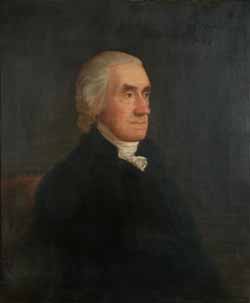
Finally, in researching these men, I came across information to fill another hole in my old post. The senior James Lovell had another son named John Middleton Lovell, born in 1763 and thought to have died around 1799 (shown above). I didn’t have much to say about him. Now I can report that he was also in business in Boston in the early 1790s, with a shop on Long Wharf; his brother James S. handled business for him while he invested in Dedham real estate.

In March 1795, John M. Lovell joined the U.S. Army as lieutenant and adjutant of the Corps of Artillerists and Engineers. That appointment is also noted at the Creating a Federal Government website. In that capacity he advertised for deserters in the Columbian Centinel and other New England newspapers. He administered a movement of troops from Pittsburgh to Fort Adams in the Mississippi Territory in 1798.

In March 1799 Lt. Lovell was still in the Mississippi Territory, negotiating an agreement with Manuel Gayoso de Lemos, Spanish governor of neighboring Louisiana, to discourage desertion. His commander, Gen. James Wilkinson, wrote to Alexander Hamilton to boast of the results.

On 7 Jan 1800 the Massachusetts Mercury ran this death notice:
At the Natchez, JOHN LOVELL, Esq. Aid-de-Camp to Gen. Wilkinson, and son of the hon. James Lovell, of this place.
According to a 21 Apr 1800 letter from Caleb Swan, paymaster general of the army, “Mr Lovell died on the 24 of October 1799.”

Monday, June 26, 2023

“This scheme was revealed to General Gage”

Yesterday I analyzed the untenable claim that John Adams told descendants of Samuel Swift how the man had tried to spark an uprising inside besieged Boston.

So let’s set aside the claim that Adams was the source of this claim. How does the story itself stand up on its own?

The version published in The Memoirs of Gen. Joseph Gardner Swift (1890) stated:
the zeal and resolution of Samuel Swift…caused many Bostonians to secrete their arms when Gov. [Thomas] Gage offered the town freedom if arms were brought in to the arsenal; and that Mr. Swift presided at a freemason’s meeting where it was covertly agreed to use the arms concealed, and, in addition, pitchforks and axes, if need be, to assail the soldiery on the common; which scheme was betrayed to Gage, causing the imprisonment of Swift and others.
That wording has led some authors to state that Swift died in jail. In fact, we have jailhouse diaries from John Leach and Peter Edes covering the period when he died, and they don’t mention the prominent lawyer being locked up with them.

Another version of the story, published in Teele’s History of Milton (1887) and reprinted in Roberts’s history of the Ancient and Honorable Artillery Company, said:
This scheme was revealed to General Gage, and Mr. Swift was arrested, he was permitted to visit his family, then at Newton, upon his parole to return at a given time. At the appointed time he returned, against the remonstrance of his friends, and so high an opinion of his character was entertained by General Gage that he was permitted to occupy his own house under surveillance. From disease induced by confinement, he died a prisoner in his own house…
Again, the military authorities were locking up people like Leach, Edes, and James Lovell for lesser threats, but this tale asks us to believe that not only did they not lock up Swift, they let him leave town.

And then Swift supposedly went back into Boston. Because, according to this lore, he was willing to lead an attack on soldiers with pitchforks and axes, but not to break his promise to Gen. Gage.

Even before that, the story is hard to believe. Swift was sixty years old, had no military experience, and had never been a militant political activist. It’s true he told Adams in October 1774, “I am no Swordsman but with my Gun or flail I fear no man…,” so it’s conceivable that he made similar boasts when the townspeople discussed turning over their weapons in late April 1775. But few Bostonians would have chosen Samuel Swift to lead an armed revolt.

No contemporaneous source mentions such an uprising. Gage, John Burgoyne, Peter Oliver, and other royal appointees wrote a lot about threats from Patriots, but none of them complained about Swift and an attack with pitchforks and axes. Samuel Swift was popular in Boston’s legal and mercantile circles, and no other American credited him with proposing an assault on the troops.

From early on, Swift’s widow and descendants perceived him to be a victim of Gen. Gage. Furthermore, they complained that Swift’s death led to the disappearance of the family wealth. (Though they also blamed “the unfaithfulness of his agent” for that.) They believed the fallout of his death meant his eldest son, fifteen-year-old Foster Swift, couldn’t follow his path to Harvard College. (In fact, by 1768 Foster had dropped out of the college-prep Latin School and was attending a Writing School; he went on to train in medicine under Dr. Joseph Gardner and had a long professional career.)

We don’t know why Samuel Swift didn’t receive a pass to leave Boston while his wife and children went out to Springfield. We don’t know what health issues contributed to his death on 30 Aug 1775. But the Swift family perceived great significance in how Samuel Swift died, and, at least in later generations, they wanted it to be significant for the nation as well.

TOMORROW: A debunking derailed.

Saturday, February 18, 2023

“Find out the Officer that gives intelligence to this Camp”

One of the most intriguing parts of Dr. Benjamin Church’s espionage letter on 24 Sept 1775 was his discussion of a possible American spy inside Boston.

The doctor’s contact, Maj. Edward Cane, had hunted such spies back in June, when he was involved in the arrest of schoolteachers James Lovell and John Leach.

In September Church wrote to him:
It has not yet been in my power to find out the Officer that gives intelligence to this Camp, and you must think me much Mistaken, that there is no such Man, but I am as Certain you have such a person as I am of my Existance, when ever there is an opportunity some one that is well knowing how things are like to go Convay it to General Washington by some person that is coming out of town, there was a letter came out last Saterday in a private manner that was instantainusly sent of to the General, the intimations given by one of the Communitty [committee?] concieved how, and from what Quarter it came, remember I now inform you of what you may know.
Evidently Dr. Church suspected an “Officer” in the British military was slipping useful information to Gen. George Washington, but Maj. Cane was skeptical. Was the doctor feeling a little paranoid, given his own situation as an informant? Was the major too quick to trust his fellow officers?

In fact, Gen. Washington had sent a secret informant into Boston in July. That was John Carnes, a former minister who had been running a store in the South End for a few years.

Church had even taken advantage of the communication channel to Carnes to slip his own note to his handlers. But he hadn’t used that message to expose the courier or spy; he probably just asked for money.

Carnes was still in Boston and sending out information as of mid-August. Perhaps he was also the source of the letter that “came out last Saterday in a private manner,” as Church wrote. Or perhaps Washington had other sources of information. Or perhaps that letter wasn’t what Church thought.

Carnes family tradition held that he came to be “suspected by General Gage” and expelled from Boston. Thomas Gage sailed for Britain in early October. If that tradition is true, therefore, Carnes’s espionage career was nearly over.

But so was Dr. Church’s.

TOMORROW: Final words.

Saturday, September 17, 2022

“The honest fervour which distinguished the friends of liberty in 1775”

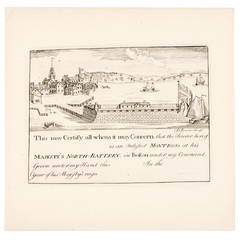
I want to complete the life story of Nathaniel Barber, captain of Boston’s North Battery in the years leading up to the war.

I discussed how Gov. Thomas Hutchinson gave him that militia assignment, which came with the title of major, back here. And also how that favor from the royal governor didn’t stop Barber’s political activity against the royal government.

During the war, Barber remained on Boston’s committee of correspondence. He also served as muster master for Suffolk County. In 1782 the Massachusetts General Court chose Barber to be the state navy’s agent in Boston.

In addition, Barber’s son Nathaniel, Jr., became a commissary of stores for the eastern department of the Continental Army from April 1776 to April 1781. The two men are sometimes amalgamated, but the father was supplying the navy, the son the army.

Barber held the naval title from 1782 to 1785. Then the legislature chose James Lovell. He did the job for two years before becoming collector of impost and excise for Suffolk County, which sounds more lucrative. At that point, in July 1787, the legislature hired Barber again.

But Barber didn’t last long in the job. He died in October 1787 at the age of fifty-nine. His remains were placed in the family tomb at Copp’s Hill Burying Ground. The Massachusetts Gazette called him: “An honest man, and a firm patriot.” The American Herald said he was “a staunch, sincere friend to his country, and an upright, honest citizen.”

And the Massachusetts Centinel for 20 Oct 1787 stated:
On the 13th instant died, very suddenly, in the fifty-ninth year of his age, and on Thursday last were respectfully deposited in the tomb of his ancestors, attended by the Honourable Members of the Senate and House of Representatives, and many of his fellow townsmen, the remains of NATHANIEL BARBER, Esq. Naval-Officer for the port of Boston.—

A numerous family mourn their loss—the publick regret their being deprived of a faithful and approved servant—and the friends of liberty could not but drop a tear over the grave of so known and tried a patriot—

His attention and integrity in the cause of his country, expressed in the most dangerous and trying moments, more especially as one of the committee of correspondence, of which he was always a member, marked his character—and it may be justly said, that the honest fervour which distinguished the friends of liberty in 1775, was retained by Col. Barber in its full warmth to the moment of his death.

Monday, October 04, 2021

“There to pursue their Studies of Latin and Greek”

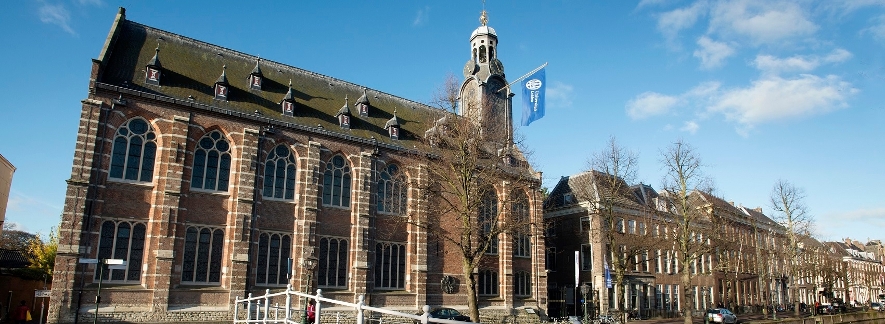
John Adams wasted no time in reacting to Benjamin Waterhouse’s 13 Dec 1780 letter about educational opportunities in Leyden, quoted yesterday.

Five days later, the American diplomat packed his eldest sons, John Quincy and Charles, off to that Dutch university town with their occasional tutor, John Thaxter.

Even before knowing that they had settled in, Adams wrote home to his wife Abigail in Braintree:
My dearest Portia

I have this morning sent Mr. Thaxter, with my two Sons to Leyden, there to take up their Residence for some time, and there to pursue their Studies of Latin and Greek under the excellent Masters, and there to attend Lectures of the celebrated Professors in that University. It is much cheaper there than here: the Air is infinitely purer; and the Company and Conversation is better.

It is perhaps as learned an University as any in Europe.

I should not wish to have Children, educated in the common Schools in this Country, where a littleness of Soul is notorious. The Masters are mean Spirited Writches, pinching, kicking, and boxing the Children, upon every Turn.
The last paragraph looks like a comment on the Latin School on the Singel, where John Quincy had had such a poor experience in September and October.

This letter is our first sign that part of the pedagogy, and part of the problem, at that school was corporal punishment. Or, probably more accurately, even more corporal punishment than a New England family like the Adamses thought was just.

As Adams wrote, he and his wife were staying on friendly terms with James Lovell, a former usher at Boston’s South Latin School whose method of beating boys on the hand with his ruler was legendary. But whatever happened in Amsterdam was supposedly worse.

Another implication of this letter is that John Adams had not told Abigail anything about John Quincy’s problems at the Latin School. She may never have learned about those difficult fifty days and how her eldest son reportedly misbehaved to force his removal.

Fortunately, John Quincy liked the new arrangements in Leyden. The day after the party arrived, he told his father, “we went to hear a Medicinal lecture by Professor Horn, we saw several experiments there. In the afternoon we went to Hear a Law lecture by Professor Pessel.” The next day he reported
I have this day seen the master who is to teach us greek and Latin. He is to come to us twice a day; from twelve to one oclock and from five to six in the afternoon, so that I shall be two hours occupied with our master an hour at each lecture is two more and the rest of my time I shall be writing from Homer, the Greek testament, of Grammar, and learning lessons for our Master.
Thaxter engaged this man, an usher at the town’s high school, for thirty Guilders per month. The lessons were in French, as the boys had prepared for.

In addition, in January 1781 the university registered Thaxter, John Quincy, and Charles as students, the first two to study law and the youngest to study letters. Thaxter reported: “Ils travaillent avec beaucoup d’ardeur, et ils avancent très bien.” They work with lots of ardor and they progress very well.

Thus ended the only significant blot on John Quincy Adams’s scholastic career.

Sunday, May 10, 2020

Studying the Schoolmasters’ Salaries

Toward the end of their 8 May 1770 town meeting, Bostonians turned to approving salaries for the town’s schoolteachers.

There were five town schools—two grammar or Latin schools and three writing schools. However, not all the teachers were compensated equally. Here are the salaries for the masters at each school:
Obviously, the town valued John Lovell’s services significantly more than any other master. There were a number of factors, including his long tenure at the South Latin School and how that school was twice as large as the North Latin School. But the town always spent more on the grammar schools.

The disparity was even more pronounced when we add in the salaries that the meeting approved for each assistant master or usher:
  • James Lovell, usher, South Latin School: £60, plus £40 “as an encouragement for him to remain and exert himself in the Service of the Town the ensuing Year.”
  • James Carter, usher, Queen Street Writing School: £50, plus £25 for encouragement.
  • Assistant for the South Writing School, to be named later: £50.
  • Assistant for the North Writing School, to be paid through Tileston: £34.
Tileston’s assistant was William Dall, who turned seventeen years old in 1770. He was still an apprentice and thus worth only two-thirds of a regular usher’s salary.

At the South Writing School, Samuel Holbrook had become master partway through the school year after the death of his uncle Abiah, but he’d taught at the Queen Street School years before. His assistant might have been John Fenno, born in in 1751 and thus also still under age.

James Carter was an experienced teacher who would take over the Queen Street Writing School in a couple of years, which is probably why the town offered him “encouragement” to stay on the job.

But Boston really encouraged James Lovell at the South Latin School, paying him as an usher as much money as every master but his father. He was a Harvard graduate working under his father, and people might have felt he was turning away better prospects. Indeed, later that year, the congregation at Christ Church invited Lovell to preach during a dispute with their pastor, the Rev. Mather Byles, Jr.

That disparity in spending on the different schools becomes even more stark when we look at the number of children each of those schoolteachers served. Here’s how many scholars a town committee found at each school a couple of months later in 1770:
  • South Latin School, 137 boys.
  • North Latin School, 56 boys.
  • South Writing School, 231 boys.
  • Queen Street Writing School, 268 boys.
  • North Writing School, 250 boys.
Even without an usher at the North Latin School, the town was paying £320 to give 193 boys a grammar-school education (or, really, part of one since about two-thirds of each entering class dropped out without finishing). That’s per-pupil spending of £1.66.

Meanwhile, the town was spending £459 to educate the other 749 boys in the practical skills of handwriting and arithmetic. That was £0.61 per pupil.

Clearly the system favored the students at the Latin Schools, most of them coming from the town’s richer families. Though Boston prided itself on its public schools, the system wasn’t equitable. (And about half of the boys in town of school age weren’t in the public schools at all. Not to mention no girls or black children.)

There was one more piece of business for Boston’s 8 May 1770 town meeting: to vote £100 to David Jeffries “for his Services as Treasurer of the Town the Year past, and for all his Expences in that Office.” Someone had to pay the schoolmasters.

Saturday, April 11, 2020

“The Town make choice of a proper Person to deliver an Oration”

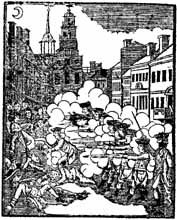
Yesterday I described how Bostonians commemorated the first anniversary of the Boston Massacre in 1771, including Dr. Thomas Young delivering a political oration in the Manufactory.

Six days later, on Monday, 11 March, Boston had its first town meeting of the year. As usual, attendees took up the first day with electing various officials, from the selectmen on down.

One agenda item on the second day was “Whether the Town will determine upon some suitable Method to perpetuate the memory of the horred Massacre perpetrated on the Evening of the 5. of March 1770—by a Party of Soldiers of the 29. Regiment.” Town leaders were getting on the commemoration bandwagon.

The meeting assigned that topic to a committee of active upper-class Whigs: John Hancock, Samuel Adams, Dr. Benjamin Church, Benjamin Kent, Richard Dana, Dr. Joseph Warren, and Samuel Pemberton. A second committee was chosen to vindicate the townspeople from “some partial and false publications” about the Massacre trials the previous fall.

The perpetuation committee returned on Tuesday, 19 March with this recommendation:
That for the present the Town make choice of a proper Person to deliver an Oration at such Time as may be Judged most convenient to commemorate the barbarous murder of five of our Fellow Citizens on that fatal Day, and to impress upon our minds the ruinous tendency of standing Armies in Free Cities, and the necessity of such noble exertions in all future times, as the Inhabitants of the Town then made, whersby the designs of the Conspirators against the public Liberty may be still frustrated–

And the Committee in order to compleat the Plan of some standing Monument of Military Tyrany begg’d to be indulged with further time
The meeting “Voted unanimously” to adopt that plan for an oration. (No “standing Monument of Military Tyrany” would be erected for more than a century.)

The next question was who should deliver the oration. Dr. Young already had a text, of course, but now that was old news, and possibly too radical as well. Instead, people proposed two possible orators:
  • Samuel Hunt, master of the North Latin School
  • James Lovell, longtime usher, or assistant master, of the South Latin School
The townspeople “as directed then withdrew and brought in their Votes.” Not only did James Lovell win, but he was “unanimously chosen.” (I wonder how Mr. Hunt took that. Maybe it was supposed to be an honor just to be nominated.)

The same committee, with the addition of Samuel Swift, was sent off to invite Lovell to speak at Faneuil Hall on Thursday, 2 April, at 10:00 A.M. In essence, this would be a special edition of the usual “Thursday Lecture,” or sermon, that one minister or another had delivered on Thursday mornings for years. But this oration would also be an official session of the town meeting.

As it happened, on 2 April such a big crowd came out to hear Lovell that the meeting had to officially adjourn from Faneuil Hall to the Old South Meeting-House, the largest enclosed space in town (shown above). Afterwards, the town asked for Lovell’s text so that it could print his oration and spread its message. You can read it here.

All of those steps became an annual ritual in Boston: the proposal in town meeting to commission an oration, the committee visiting a respectable young gentleman with a speaking invitation, the adjournment on 5 March (or 6 March if the anniversary fell on the Sabbath) to Old South, the town’s publication of the text. Even in 1776, when Boston was under siege, there was an oration for Bostonians in exile out in Watertown. That tradition lasted until 1783, after the Revolutionary War ended.

And it all started with the town meeting deciding to commemorate the Massacre one month after the first anniversary.

Tuesday, December 10, 2019

“Think/Write/Speak” Oration Workshop in Boston, 14 Dec.

On the first anniversary of the Boston Massacre in March 1771, Dr. Thomas Young delivered an oration about the event in the Manufactory building, site of a defiant stand-off against the royal army in 1768.

Boston’s political leaders liked that idea, but they preferred a speaker and venue more mainstream and respectable than Dr. Young in a weaving workshop.

The selectmen therefore asked South Latin School usher James Lovell to deliver a memorial oration at the Old South Meeting-House in April. The town then paid to publish Lovell’s speech. (Dr. Young’s speech, in contrast, has been lost.)

The town made the Massacre memorial oration an annual tradition until 1783, usually inviting a rising young gentleman to speak. After America’s victory in the Revolutionary War had brought sufficient retribution for the Massacre, the town shifted the date of the annual oration from the 5th of March to the 4th of July.

Massachusetts nurtured some of the most celebrated orators of the nineteenth century, including Daniel Webster, Edward Everett, and Frederick Douglass. Whenever a monument or statue was dedicated in the city, or a major historical anniversary commemorated, an orator was on the program.

To revive “the tradition of public oration as a tool of civic action,” the Bostonian Society is teaming with Brown Art Ink, a “nomadic community incubator” for a series of free public programs starting this weekend. The press release about the Think/Write/Speak initiative says: “Participants in these workshops will be led by local artists in exercises to develop original orations to highlight issues important to their own communities.”

The first workshop session will take place from 3:00 to 4:30 P.M. on Saturday, 14 December, in the Commonwealth Salon at the central branch of the Boston Public Library. It is free and open to the public, but participants should register through the society’s website.

There will be two more such public workshops in early 2020. Select participants will be invited to perform their orations at a commemoration of the 250th anniversary of the Boston Massacre.

Monday, July 01, 2019

Schoolmasters with the Initials “J.L.”

As quoted yesterday, in the summer of 1775 London newspapers reported that letters found on the body of Dr. Joseph Warren after the Battle of Bunker Hill implicated some people in Boston as “spies.”

The newspapers disagreed on how many letters the royal authorities had found on Warren’s body—three or six. I don’t believe the text of any letter survives. But those documents prompted the arrest of schoolteachers James Lovell and John Leach on 29 June, twelve days after the battle.

This article from the Essex Institute Historical Collections shows James Lovell writing to friends outside the siege lines throughout May and June. In a 10 May letter, Lovell even told Oliver Wendell about the dangers of sharing sensitive information:
You must however give us no State Matters; for ’tis but “you are the General’s Prisoner,” and whip! away to the Man of War; as is the Case of poor John Peck. I carry’d him Breakfast to the main Guard yesterday, and again this Morning but he was carry’d off last Evening and put on Board Ship. Inquisitorial this!
The royal authorities released John Peck in a prisoner exchange on 6 June. However, the heavy losses at Bunker Hill made the royal authorities far less forgiving.

Lovell was a strong Patriot, known for orating on the memory of the Boston Massacre back in 1771. On 3 May he told Wendell that he was trying to get his wife and children out of Boston, but
I shall tarry if 10 Sieges take place. I have determined it to be a Duty which I owe the Cause & the Friends of it, and am perfectly fearless of the Consequences. An ill Turn, a most violent Diarhea, from being too long in a damp place, has confirm’d Doctr. [Joseph? Silvester?] Gardners advice to me not to go into the Trenches, where my whole Soul lodges nightly. How then can I be more actively serviceable to the Friends who think with me, than by keeping disagreeable post among a Set of Villains who would willingly destroy what those Friends leave behind them.
Lovell was probably writing in a similar vein to Dr. Warren and perhaps indeed sending out information useful to the provincial military. He took elementary precautions. As Sam Forman notes and the E.I.H.C. article shows, Lovell already often signed his letters with just his initials. In addition, he asked Wendell to be sure to seal all their correspondence. But there was no protection for the documents that Dr. Warren chose to carry onto the battlefield.

As for John Leach, he appears to have been dragged into this situation simply because he had the same initials as Lovell. It’s also possible that the letters mentioned teaching school. Boston had three schoolteachers with the initials “J.L.” One, John Lovell of the South Latin School, was a staunch Loyalist. The other two got hauled off to jail.

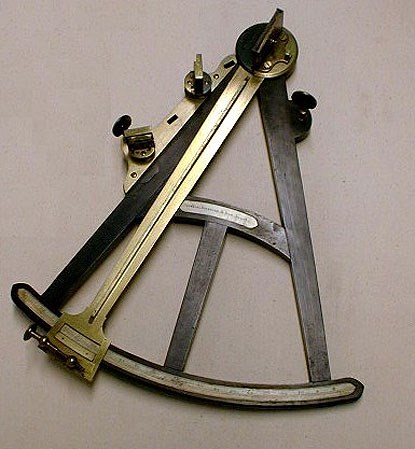
Then Leach’s specialty as a teacher of navigation became a liability. Lovell taught Latin and Greek—hardly sensitive subjects. But royal officers found “Drawings” in Leach’s home when they arrested him. Those probably included detailed nautical maps and sketches of the harbor.

On 19 July, after three weeks in jail, the schoolteachers and other prisoners were taken into a military court presided over by Maj. Thomas Moncrieffe. According to Leach, the proceeding confirmed how little evidence the authorities had on them:
Till this Time we did not know our Crimes, on what account we were committed, but now we found Mr. Lovell was charged with “being a Spy, and giving intelligence to the Rebels.” And my charge, “being a spy, and suspected of taking plans.” When Capt. [Richard] Symmes appeared, he knew so little of us, that he called me Mr. Lovell; he knew so little of us, that instead of being a just Evidence [i.e., witness], he appeared ashamed and confounded, and went off.
Nevertheless, Leach wasn’t released until 3 October.

In late August, Lovell told a friend “that he expects to be out soon, tryumphant over his Enemies,” and was ready to give up “idlely schooling the children of a pack of Villains” in Boston. Instead, the royal authorities kept him locked up through the end of the siege and then carried him off to Halifax. Eventually he was exchanged.

Lovell never did go back to teaching school. Instead, he became a delegate to the Continental Congress, where he managed the correspondence with America’s diplomats—this time using a code.

Sunday, June 30, 2019

“Letters were found in the Doctor’s pocket”

On 29 July 1775, the Middlesex Journal, a newspaper published in London, reported this tidbit about the Battle of Bunker Hill:
The day after the late battle in America, some of the Regulars searched the pockets of Dr. [Joseph] Warren, who was killed, and found three letters sent to him from some spies at Boston, which were immediately sent there, and the writers being soon discovered were sent to prison. 
On his blog about Warren, biographer Sam Forman quotes two more London newspapers running versions of the same news. From the 29 July Morning Chronicle:
A gentleman is arrived in town, who was present at the action on the 17th of June, at Charles Town, between the Provincials and the Regulars. . . . He further says, that the celebrated Dr. Warren, who commanded the Provincial trenches at Charles-Town, while he was bravely defending himself against several opposing Regulars, was killed in a cowardly manner by an officer’s servant, but the fellow was instantly cut to pieces; six letters were found in the Doctor’s pocket, written from some gentlemen in Boston, who were immediately taken into custody, and whose situations when he came away, were so perilous and critical, that their friends every moment feared their executions from some arbitrary and illegal sentence of the new adopted law martial.
And a number of early September newspapers reported this news from a recently arrived merchant vessel:
She sailed from Boston the 29th of July, but has brought no newspapers, and, we are well informed, that everything remained quiet, and would continue so till an answer was received by this ship. By the above ship we learn, that two persons have been taken up in consequence of some papers found in Dr. Warren’s pocket.
Those “two persons” were the schoolteachers James Lovell and John Leach, arrested on 29 June as described yesterday.

Only a month after those arrests, the London press was reporting on the letters in Warren’s pocket. Whatever ship first brought the news must have made a very fast passage—as fast as John Derby had sailed the Quero across the Atlantic in May to carry the Massachusetts Provincial Congress’s report of Lexington and Concord to London. An average voyage was closer to five weeks or more, as with the merchant vessel that left on 29 July and arrived in early September.

That speed suggests some captains were sailing as fast as possible to bring news from the new war to the Crown, and getting lucky with the weather, too.

TOMORROW: How the letters implicated Lovell and Leach.

Saturday, June 29, 2019

“Masters Leach and Lovell were brought to prison”

On 29 June 1775, John Leach, a mariner in Boston’s North End, began to keep a journal. He started it out of anger because he had just been arrested by the British military authorities and he wanted to document what was happening to him.

Leach wrote:
Memorandums, began Thursday, June 29th, 1775.—At 3 this afternoon, a few steps from my House, I was seized upon by Major [Edward] Cane, of the Regulars, accompanied by one [Joshua] Loring, who is lately made a Sheriff: they obliged mo to return to my House, where Major Cane demanded my Keys of my Desks, and search’d all my Drawings, Writings, &c, and told me I had a great deal to answer for.

I replyed, it was very well, I stood ready at a minute’s warning to answer any accusation; I had a drawn Hanger, I could have took hold of in a moment, and cut them both down. I had both Courage and inclination to do it, tho’ they had each their swords by their sides, but I suddenly reflected, that I could not escape, as the whole Town was a prison. God wonderfully restrained me, as I should have lost my Life, either by them, or some of their Companions.

They then conducted me from my House to the Stone Gaol, and after being lodged there 20 minutes, the said Cane and Loring brought in Master James Lovell, after searching his Papers, Letters, &c. as they had done mine.

Cane carried my drawings to show Gen. [Thomas] Gage, next day, and returned them.
Leach’s diary was printed in the New England Historical and Genealogical Record in 1864.

Already in the Boston jail since 19 June was eighteen-year-old Peter Edes, son of the radical printer Benjamin Edes. The elder Edes had slipped out of town just before the war began and set up a press in Watertown.

Peter was also keeping a diary, and on 29 June he wrote:
Masters Leach and Lovell were brought to prison and put into the same room with me and my companions.
Peter Edes’s diary, which shares text with John Leach’s, was published in 1901.

Leach and Lovell both received the title “Master” because they kept schools. Leach taught navigation and other skills privately in the North End. Lovell was actually the usher, or assistant teacher, to his father, Master John Lovell, at the South Latin School, but the town valued him enough to pay him far more than any other usher. Lovell had also delivered the first official town oration in memory of the Boston Massacre back in April 1771.

The imprisonment of Lovell and Leach is one more thread of the story of Bunker Hill. And not just because the officer who arrested them was being promoted to major in the 43rd Regiment only because Maj. Roger Spendlove had died in that battle. (Spendlove had survived wounds at Québec, Martinique, and Havana, but not Charlestown.)

Lovell and Leach were locked up after the battle because the British commanders thought one of them was a spy.

TOMORROW: Incriminating letters.

Tuesday, March 05, 2019

Ripples from the Boston Massacre

Normally around the 5th of March I write about the Boston Massacre, the events that led up to it and its aftermath. But I’ve been recounting a criminal trial from 1785 which is unconnected—or is it?

Several of the figures in that burglary trial have links to the Massacre, showing the small size of pre-industrial Boston and the big impact of the violence on King Street.

Robert Treat Paine, the Massachusetts attorney general in 1785, was a special prosecutor in the Massacre trials. The town of Boston hired him when the royal attorney general, Jonathan Sewall, was looking reluctant.

James Lovell, the victim of the 1784 robbery, was the first man invited by Boston to orate on the Massacre, in April 1771. (Dr. Thomas Young had spoken on the anniversary of the killing at the Manufactory, but that was unofficial. The town took up the idea and ran with it until 1783.)

Defense attorney William Tudor was one of John Adams’s clerks during the Massacre trials. He delivered the anniversary oration in 1779.

Bartholomew Broaders was an elected constable in 1784 who helped to investigate the burglary. Back in 1770, he was one of the barber’s apprentices who got into an argument with Pvt. Hugh White in front of the Customs office, the incident that ballooned into the shooting.

Archibald McNeal, a witness to the burglary in 1784, might also have been a witness to the events of 1770. An Archibald McNeil, Jr., testified for the town report:

that on Saturday the third instant, about half an hour after four in the afternoon, the deponent with two apprentices were spinning at the lower end of Mr. McNeil’s ropewalk, three stout grenadiers, armed with bludgeons, came to them, and addressing the deponent said, You damn’d dogs, don’t you deserve to be kill’d? Are you fit to die?
However, there was at least one other Archibald McNeal in pre-Revolutionary Boston, a baker who evacuated with the British troops in 1776, so this may not be the same man.

As for shopkeeper John Fullerton, also burglarized in 1784, he was one of the victims of the Great Fire of 1760. (Yes, I’ll get back to that story, too.)

Sunday, March 03, 2019

Questioning the Suspects

Yesterday we watched three men—William Scott, Thomas Archibald, and Nero Faneuilburgle the home of James Lovell in the early morning of 23 Nov 1784. Then they split up, Scott and Archibald taking the coins while Faneuil took care of the paper currency.

Scott and Archibald had talked about laying low outside of Boston. A man named John Vicker testified that they showed up at his house—I can’t tell where—about daybreak on 24 November. The men “wanted liquor,” three pennies worth, and “asked me to let them lay down 3 hours.” Vicker thought they seemed “worried in mind.” They also “ask’d for a Sling,” presumably to carry something away.

Thursday, 25 November, was a Thanksgiving holiday in Massachusetts, so nothing much happened.

Archibald and Scott were back on Boston on Friday, 26 November. Somehow Archibald provoked the suspicion of a man named Goodbread. John Ingersol, perhaps a tavern keeper, took both Goodbread and Archibald to the Lovells’ house.

As James Lovell recalled, Goodbread accused Archibald of the burglary. The suspect insisted “he lay in a Haybarn with a N. Engld. man Tuesday night.” But he couldn’t provide details about ”when he breakfasted, where he worked.” He mentioned how a ”Negro had helped him to work.”

Lovell fetched others. His neighbor Archibald McNeal came, looked at Archibald, and “took him to be the man” he’d seen during the nighttime robbery. Bartholomew Broaders, an elected constable, searched Archibald and “found a bag of 1/2 Crowns” in his footwear. Archibald insisted “he brought ’em from Phila[delphia].” But he gave inconsistent answers about how long he’d been in Boston. Broaders reminded the suspect “he had said he had no money wn. he came to Town.” Archibald then changed his story to say ”a blk man lent him the money.” That was all suspicious enough for the authorities to commit Archibald to jail.

That evening, Broaders “catched [William] Scot tapping at Nero [Fanueil]’s window 11 oClock.” John Middleton Lovell, the Continental agent’s son (shown above in a later portrait by Ralph Earl), and a man named Benjamin Homans recalled spotting Scott behind Faneuil’s house that afternoon as well.

The authorities found coins on Scott and questioned him. At first he too insisted that he had brought the money from Philadelphia. He said he “had pd. for a W[eek’]s. board, brough 6 or 7 doll[ar]s into Town, & had been 2 or 3 Women parted the value of 4 or 5 dolls out of his Fob 5 1/2 Crowns.”

But Scott got too clever. As Broaders kept questioning him, Scott “said he would not tell unless he could be an Evidence [i.e., witness] and then he would bring out the whole.” John M. Lovell recalled “he would not tell any thing unless he cd. receive some advantage.” Instead, Scott went into the jail for the night, too.

The next morning, it appears, James Lovell went to the jail and demanded that the suspects tell him where his papers were. He heard Scott answer that “the negro was the only person who could give me informn. of my papers.”

The Lovells visited Nero Faneuil, who recalled that “Mr. Lovel told me if I wd. Confess I should be a Witness.” So Faneuil started to cooperate. According to the younger Lovell, “Nero carried me to the place where the money was & confessed he took it.” The case was solved.

John M. Lovell also reported, “Scot found fault that he was not called out instead of the Negro”—which sounds like he regretted not cooperating at the first opportunity. Both Archibald and Scott tried to point the authorities to Faneuil, a black man, but he had the advantage of being known in town.

The following Monday, according to the newspapers, officials found evidence from the robbery of John Fullerton’s shop and charged Nero Faneuil with that crime. It’s conceivable that Faneuil had confessed and told people where to find the stolen goods. Curiously, Fullerton was also a witness at the trial for the robbery of Lovell’s house, testifying about finding coins on one of the suspects.

The state brought Archibald and Scott to trial on 3 March 1785.

TOMORROW: A last-ditch defense.

Saturday, March 02, 2019

“If I would go with them to commit this Robery”

As I said yesterday, the only reason we know more than perfunctory details about the trial of two men for stealing a chest from James Lovell in 1784 is because Massachusetts attorney general Robert Treat Paine took notes.

Those notes aren’t word-for-word transcriptions of the testimony, and they leave lots of mysteries. Which makes me all the more grateful for the scholars behind the Massachusetts Historical Society’s publication of Paine’s papers. I mean, just look at the handwriting in his notes from a 1780 trial.

Here’s my best recreation of how the burglary took place, based on the testimony at the February 1785 grand jury session and the 3 March trial.

Thomas Archibald and William Scott appear to have been strangers to Boston. A woman named Flora Fanueil testified that “abt. a Week before the Theft they were at our house.” This was probably Nero Faneuil’s wife, and her remark shows that the black couple had their own residence.

About seven o’clock on the evening of Monday, 22 November, James Lovell made an accounting of the Continental notes and loan certificates entrusted to him. He filed those papers in a large chest, a yard long and weighing 168 pounds. Then he “threw in money half Crowns French” and his pocket book. Mary Capen, likely a maid in the Lovell house, said, “I barr’d that window where the chest was & locked it, I went to bed abt. 11 oClock.”

Meanwhile, Archibald and Scott had returned to Nero and Flora Faneuil’s house, as confirmed by witnesses Prince Hitchborn and Jack Austin. Hitchborn had probably been enslaved by the Hichborn family. There was also a rich white family in Boston named Austin, and Jack Austin might have served them—or he might have been unrelated. About eight o’clock, Flora Fanueil said, Archibald and Scott went away.

Nero Faneuil testified:
they asked me if I would go with them to commit this Robery, they said they would come again at 11 oClock or 12. I went to bed abt. 11; got up & saw them about the house: at 12 oClock we were by Mr. Lovels & it struck 12.

Archebald opned the Window as high as he could lift, he pressed & found the bar, he pushed it in with his foot he pulled off his shoes & got in, Scot came to the Window and told Scot to come in, Scot pulld off his Shoes & got it, the Clock struck one…
A neighbor named Archibald McNeal, living about “170 yds. off,” reported that “abt. 2 oClock [he] heard a strange noise like stroks of a Maul.” Looking outside, he saw men “kept coming & going.” When “sparks of fire” threw light on the scene, he could make out one person who “had no hat on & short hair [and] chest thick.“

Archibald, Scott, and Faneuil carried the heavy chest away “to the new house,” the latter said. Then ”Archiebald got my ax [and] pryed open the chest.” Inside the men found some “hard money,” which Scott put “into his hat.” As for the papers, Archibald and Scott “said they would Separate the Bank bills & burn the rest.” According to Faneuil, his confederates
told me to take care of them [the bills] till the noise was over, they wd. go to Providence stay 2 or 3 mo. & then come back again

they tarried at my house till the Clock struck 6. they then went off.
On the morning of 23 November, Lovell stated, “abt. 7 oClock I found my Window open Shutters on the floor.” He was struck by the fact that “my plate was in the room, [but] they did not touch it.”

Outside, it appears, McNeal came across more evidence of the crime: ”next morning before sunrise I saw the Letters, Baggs marked wth. Mr. Lovells Name & the Chest marked.” But the money and, more important to Lovell, the official papers were missing.

TOMORROW: Returning to the scene of the crime.

Friday, March 01, 2019

The Trial of Nero Faneuil

Nero Faneuil was a black man who petitioned for an end to slavery in Massachusetts in 1777, as quoted here. It’s unclear whether he was enslaved at the time or advocating for the many other people who were.

Seven years later, Nero Faneuil (his surname pronounced and often spelled as “Funnel”) was locked up on suspicion of two robberies in Boston: of a chest containing important papers and cash from the house of Continental official James Lovell, and of dry goods from the shop of John Fullerton.

Of the two crimes, the first was far more serious. As the 2 Dec 1784 Massachusetts Spy said:
It is reported that two persons are taken up in Boston, and committed to gaol, on suspicion of breaking open the house of the Hon. James Lovell, Esq; Continental Treasurer, in this State, and robbing him of 25,000 dollars in Loan-Office certificates, &c. 
Faneuil was charged with that crime alongside two white men, Thomas Archibald and William Scott. For the other crime, of stealing from Fullerton’s shop, Faneuil was charged alone.

The attorney general of Massachusetts was Robert Treat Paine (shown above). His papers, as published by the Massachusetts Historical Society, are our fullest source on what happened next. At the grand jury proceedings in February 1785, all three men pled not guilty, and their trial was scheduled for 3 March.

Prospects looked bleak for Nero Faneuil. He was charged with two thefts instead of just one. Testimony established that “no part of the Property [from Lovell was] found on any but Nero.” And he was the only black man arrested.

But I think Faneuil also had an important asset: he was local. People in town knew him. According to Paine’s notes, Benjamin Hichborn testified, “Nero’s Character for Truth good.” [I think Hichborn was a slippery character himself, but he was a genteel, well-connected lawyer.] In contrast, Archibald and Scott had recently drifted into town from the south.

In addition, Faneuil seized an opening. Lovell was anxious to locate his stolen papers. He asked Scott on “the day after they were cmtted” where those were, and recalled that Scott answered “that the negro was the only person who could give me informn.” Lovell then went to Faneuil, who testified, “Mr. Lovel told me if I wd. Confess I should be a Witness.” Faneuil therefore turned state’s evidence against Archibald and Scott.

But first, Faneuil pled guilty to the Fullerton theft. The court sentenced him to be branded on the forehead with the letter “B” for “burglar.” It also ordered him to restore Fullerton’s goods and pay £84 as treble damages, which everyone must have known was beyond his means. Faneuil declared that he couldn’t pay, and the court sentenced him to serve Fullerton for seven years. He was thus thrown back into servitude.

TOMORROW: At the trial.

Thursday, February 28, 2019

A Break-in at James Lovell’s House

On 29 Nov 1784, the American Herald newspaper of Boston carried this crime report from the previous week:

The House of the Hon. JAMES LOVELL, Esq; was, on Tuesday night last [23 November], broke open, and an iron Chest, containing some valuable papers, and a little cash stolen.

And, the next Friday, three villains, viz. William Scott, Thomas Archbald and Nero Funnel, Negro, were apprehended, and the money being found upon them, they were committed to goal.
Lovell was an important man in Boston. Before the war he was an usher, or assistant teacher, under his father at the South Latin School, but then after the Battle of Bunker Hill the military authorities locked him up and then took him to Canada. That suffering provided the credentials for Massachusetts to elect Lovell to the Continental Congress in 1778. He was a delegate until 1782, at some points basically running American foreign policy because no one else was so interested.

In 1784 Lovell became collector of Continental taxes in Massachusetts. Thus, the “valuable papers” he had in a trunk in his home could have been quite valuable indeed.

The 1 December Massachusetts Centinel provided additional information that “part of the papers were recovered, tho’ a large amount are supposed to have been burnt.”

That newspaper also had this report about a related crime:
On Monday a quantity of dry goods were found concealed in a barrel near Mr. Calf’s tan yard; upon examination it appears that they were stolen from Mr. [John] Fullerton’s shop, by a negro fellow called Nero Funnel, one of the villains that stole Mr. Lovell’s chest.
The three suspects were kept in jail until the court session began in February.

TOMORROW: In court.

Monday, March 19, 2018

Orations at Old South, 21 Mar.

On Wednesday, 21 March, the Old South Meeting House will host “Speak Out!”, its fourth annual remembrance of the Boston Massacre orations.

From 1771 to 1783, Boston had a yearly town meeting to commemorate the fatal violence on King Street. The tradition was started by Dr. Thomas Young speaking at the Manufactory on 5 Mar 1770, and the town’s politicians decided the event was successful enough to make it an official occasion, not just a speech by a radical who wasn’t even from around here.

That year the town had assistant schoolmaster James Lovell speak in April. From then on, the orations were always on 5 March or, if that date fell on a Sunday, 6 March. The invited orator was usually a rising young politician. In order:
In 1783 Boston decided that remembering the Massacre was less vital now that Massachusetts was independent, and the town shifted its annual patriotic oration to the Fourth of July.

The Old South event focuses on the orations leading up to the war. The description says:
Join us to hear selected excerpts of these speeches, performed by an inter-generational group in the grand hall where the orations took place 240 years ago! Learn about the orations and their significance with special guests Bostonian Society Executive Director Nathaniel Sheidley, historian Robert Allison, and Dr. Joseph Warren biographer Dr. Samuel Forman. Audience members will also have the option to read from a selection of excerpts; prizes will be awarded to the most rousing orators in youth and adult categories!
This free event is co-sponsored by the History Department at Suffolk University, the Bostonian Society, and the Boston Public Schools’ Department of History and Social Studies.

All are welcome, but Old South asks people to please register in advance. The speeches start at 6:00 P.M. If the weather is bad, the event might be postponed for a week until 28 March.

ADDENDUM: This event has now been rescheduled for 28 March.

Saturday, December 19, 2015

Josiah Quincy’s “clouds which now rise thick and fast”

Eliza Susan Quincy concluded her 1874 account of her grandfather’s speech in Old South Meeting-House just before the Boston Tea Party with this passage:
While Mr. [Josiah] Quincy was speaking, the men dressed as Indians, who were going to the wharves to destroy the tea, came in, and he closed with the following sentence: “I see the clouds which now rise thick and fast upon our horizon, the thunders roll, and the lightnings play, and to that God who rides on the whirlwind and directs the storm I commit my country.”
As her source, Quincy offered this note:
Two contemporaries of Mr. Quincy repeated his words on this occasion. The name of one was not distinctly remembered by his son [Eliza Quincy’s father]; but, on the 18th of June, 1852, the venerable Daniel Greenleaf, of Quincy, Massachusetts, at the age of ninety years, gave the same account, and repeated the closing sentences. He said that he was a boy in the Latin School, in Boston. The master, John Lovell, was a Tory, but James Lovell, his son and assistant, was a Whig; and, whenever the school was adjourned in consequence of public excitement, he always told the boys to go to the upper gallery in the Old South. In 1852, Mr. Greenleaf was probably the only person living who distinctly remembered the 16th of December, 1773.
Daniel Greenleaf (1762-1853) was admitted into the Lovells’ South Latin School in 1770. He became known for telling such stories in old age, according to a family history: “His memory was very retentive; he could relate almost every transaction of his long life; was full of anecdotes of revolutionary events; being then a young and active lad in immediate contact with some of the prominent actors of those times.”

In 1826 Greenleaf was one of the appraisers of John Adams’s estate, and Eliza Quincy’s father was an executor along with John Quincy Adams. Clearly Greenleaf was part of the Quincy family’s circle on the South Shore. That might have tinged his memories over more than seventy-five years.

Our contemporaneous source, the person reporting on the meeting for the royal government, didn’t mention Quincy speaking that afternoon at all, nor “men dressed as Indians” who “came in” to the meetinghouse. He heard noises outside the building and saw men leaving.

So did Josiah Quincy, Jr., say those seemingly prescient words about “clouds which now rise thick and fast upon our horizon” in December 1773? All we can say for sure is that he did think a lot about clouds, particularly as a metaphor for political turmoil.

From his 15 Sept 1768 letter to the Rev. John Eagleson:
The present aspect of the day is gloomy indeed, yet we are far from despair. Though the clouds, full charged, rise thick and fast, the thunders roll, and lightnings play, nay, it is said, are just within striking distance, there are not wanting those among us, who believe that proper conductors will safely carry off all the political fluid, the clouds disperse, and the sky soon become calm and serene.
From an essay signed “Hyperion” in the 3 Oct 1768 Boston Gazette:
British taxations, suspensions of legislatures, and standing armies, are but some of the clouds, which overshadow the northern world. Heaven grant that a grand constellation of virtues may shine forth with redoubled lustre, and enlighten this gloomy hemisphere!
From the journal of his mid-1773 sea voyage to the southern colonies:
What a transition have I made and am still making! was the exclamation of my heart. Instead of stable earth, the fleeting waters: the little hall of right and wrong is changed for the wide-expanding immeasurable ocean: instead of petty jars and waspish disputations; waves contend with waves, and billows war with billows: seas rise in wrath and mountains combat heaven; clouds engage with clouds and lightenings dart their vengefull corruscations; thunders roll and oceans roar: all other flames and distant shores, sea, air and heaven reverberate the mighty war and echo awfull sounds. . . .

Vast field for contemplation! Riches for mind and fancy! Astonishing monuments of wisdom; magnificent productions of power!
One possibility is that people assigned something Quincy often said about clouds on the political horizon to that dramatic moment on 16 Dec 1773. Another is that he really did say it (and his friends all thought, “Oh, Josiah’s going on about clouds again.”).

Saturday, March 19, 2011

“Do something for one of my old Jail Mates”

After Boston barber Richard Carpenter and Pennsylvania rifleman Walter Cruise got out of British custody around the turn of the year 1777, they went to Baltimore.

Why Baltimore? Because, with the British army cutting rapidly through New Jersey in the fall of 1776, the Continental Congress had moved south from Philadelphia. The political leaders didn’t realize, as so many American schoolchildren have learned since, that Gen. George Washington would win a battle at Trenton and decide the war. (At least that’s how it appears in capsule histories that skip rapidly through the battles from early 1777 through late 1781.)

On 13 Jan 1777 the Congress passed a special resolution about those two men:

That 100 dollars be paid to Walter Cruise, and 100 dollars to Richard Carpenter, who have been long detained prisoners by the enemy, and cruelly treated by them; and that they be recommended to General Washington to be employed in the service of the United States, in such way as he shall think proper.
John Hancock as president of the Congress sent that resolution to Washington in a brief note on 15 January. Nine days later, Washington wrote a couple of lines to Col. John Patton asking him to appoint Cruse to a position in the Sixth Pennsylvania Regiment. Cruse retired in June 1778 at the rank of captain.

As for Carpenter, he asked to serve in a Massachusetts regiment, so Washington wrote a letter about him to the Massachusetts Committee of Safety. He apparently carried it home to Boston in February 1777, and then became a second lieutenant in the 15th Massachusetts with his appointment back-dated to 1 January.

Unfortunately, Carpenter seems to have been unsuited for the position. On 5 Oct 1777 James Lovell, by then a Congress delegate, wrote to Gen. Horatio Gates about the man:
I wish for the Sake of a most deserving Woman & lovely young Children, you could contrive to do something for one of my old Jail Mates, now a Lieutenant in yr. Army—Richard Carpenter.

He is bold as a Lion in our Cause; but I have only my Wife's Assertion that he is intirely altered from what he appeared in the days of his Confinement, when non procul atrita pendebat Cantharus ansa [“not far away his flagon hung by its worn handle,” a quote from Virgil about being a heavy drinker—Lovell was a former Latin teacher, after all].

His Orthography is by no means his greatest Recommendation, as you will See by the inclosed. I have given you the only two unfavourable Hints I knew respecting him. If he proves my Wife's account true he is worthy of yr Notice, and I will own myself his Friend.
Evidently Carpenter had visited Mary Lovell to ask a favor from her husband for old time’s sake. But the barber ended up resigning from the Continental Army on 26 October.

TOMORROW: I wish I could say this ends happily.

Thursday, March 17, 2011

Richard Carpenter “apprehended and confined in irons”

Two hundred thirty-five years ago today, the British fleet pulled away from Boston’s wharves, carrying several thousand soldiers, about a thousand Loyalist refugees, and a few prisoners that Gen. William Howe deemed too valuable to leave behind.

The most prominent of those was James Lovell, former assistant teacher at the South Latin School. Letters from him were apparently found in Dr. Joseph Warren’s pockets after the battle of Bunker Hill. Lovell had been locked up since the summer of 1775, and had unsuccessfully pleaded with Gen. Washington to exchange him.

Another prisoner on the fleet was Richard Carpenter, the barber who swam from Boston to Dorchester and back in late July 1775.

Boston newspapers tried to keep track of men known to be prisoners (see the examples at Rag Linen), and they spread more news of Carpenter in late July 1776. Here’s the version that appeared in the Boston Gazette on the 29th:

Last Tuesday Evening came to town from Halifax, Lieut. Scott of Peterborough, in New Hampshire Government, who was wounded and taken Prisoner at the memorable Battle of Bunker Hill the 17th of June, 1775, and has been a Prisoner ever since.

He informed, That he with 13 others broke Goal about 5 Weeks ago, and betook themselves to the Woods where they separated; that Captain [Sion] Martindale and his first and second Lieutenants, John Brown, Rifleman, Leonard Briggs of Ware, and himself arrived at Truro at the head of the Cobbecut river, after a travel of 3 days, where they procured a boat and got to the Eastward;

that Richard Carpenter formerly Barber in this town, Philip Johnson Peak, David Kemp of Groton, and Corporal [Walter] Cruse of Virginia, and two others took the road to Windsor where they were apprehended and confined in irons;

that Benjamin Willson of Billerica, one of the Bunker Hill Prisoners died lately in goal; and that he left Master James Lovell still confin’d, in high health and spirits
On 18 September the Connecticut Journal had a long report on prisoners of war “still confined in one room at Halifax, among felons, thieves, robbers, negroes, soldiers, &c.” At the top of that long list were “James Lovil & Richard Carpenter of Boston.” Further down was “Col. Ethan Allen, of Bennington.”

The report concluded, “All in the goal but [Bunker Hill prisoner Daniel] Sessions, are well and in good spirits; but wishing greatly for an exchange.”

TOMORROW: Richard Carpenter free at last.