J. L. BELL is a Massachusetts writer who specializes in (among other things) the start of the American Revolution in and around Boston. He is particularly interested in the experiences of children in 1765-75. He has published scholarly papers and popular articles for both children and adults. He was consultant for an episode of History Detectives, and contributed to a display at Minute Man National Historic Park.

Subscribe thru Follow.it


•••••••••••••••••


Showing posts with label Bunker Hill. Show all posts

Sunday, June 28, 2026

“By dawn on June 18, 1775, nothing was left standing”

The current issue of Archaeology magazine includes a dispatch about the City of Boston’s Archaeology Department recent work in Charlestown, filed by a journalist with the almost-too-good-to-be-true named of Jason Urbanus.

Urbanus writes:
In early 1775, Charlestown was already almost 150 years old. It was a bustling settlement of between 1,500 and 2,000 people representing all walks of life—farmers, artisans, merchants, and mariners, including both free and enslaved Black people.

There were large landholders, such as 53-year-old distiller David Cheever, who owned multiple properties across the peninsula, and those who were less well-off, such as widow Elizabeth Moore, who rented a simple room in a neighborhood tavern. The town’s diverse population also included Margaret Thomas, who bought a humble home in 1773, likely making her the first free Black woman to own property in Charlestown. Among the wide array of craftspeople were goldsmith Nathaniel Austin, chaise maker James Frothingham, and Cato Hanker, a shoemaker. Hundreds of houses, workshops, and other buildings lined the town’s streets and wharves.

By dawn on June 18, 1775, nothing was left standing and everyone was gone. Less than 24 hours earlier, a brutal engagement, known as the Battle of Bunker Hill, had raged across the Charlestown Peninsula. . . . Townspeople were sent fleeing, and many never returned. Nearly all lost everything they owned. . . .

Many of Charlestown’s inhabitants had departed over the previous month amid increasing unrest, but those who remained were jolted from their homes. A widow named Relief Ellery and her 20-year-old daughter of the same name were among those who narrowly escaped the bombardment. The younger woman pocketed two valuable silver tablespoons from the kitchen table—the only things she had time to grab. When the pair returned to Charlestown, none of their property remained. “We have records of British troops coming back the next day and setting fire to any building that still stood,” says [City Archaeologist Joe] Bagley. “It was vindictive.” In a matter of hours, one of the oldest settlements in Massachusetts had ceased to exist. . . .

At the urging of a committee of Charlestown residents, more than 450 families submitted inventories of their lost possessions after the battle in hopes of receiving restitution. . . . Usually, when archaeologists excavate a residence, they record the artifacts that they uncover during the process. In this instance, they already have a list of everything that was in a house before beginning excavations. They know exactly what they might expect to find buried in dozens of backyards and basements.
Or, rather, buried underneath a dense modern city, or perhaps already dug up and tossed aside in construction projects over the past two and a half centuries. It seems unlikely that we’ll see a confluence of household inventory and newly dug artifacts. Still, the written record provides a lot for scholars of domestic material culture to work with.

No doubt Archaeology readers love ceramics, and another section of the article discusses Charlestown early pottery industry, which can also be dated with finality:
No commercial sector was hit as hard as Charlestown’s once-thriving ceramics industry. Although not well-known today, Charlestown had been among the largest pottery production centers in the northeast. That all changed on the day of the battle. With their workshops burned to the ground, Charlestown’s potters scattered throughout New England. “They lost everything—their kilns, all of their work tools—everything was gone,” says Bagley. “None of them came back.”
Pictured above is a milk pan from the site of the Parker-Harris Pottery, excavated during the Big Dig highway project a generation ago.

Tuesday, June 23, 2026

The Significance of Breed’s Hill Instead of Bunker’s

For one last posting on the label “Breed’s Hill,” I’ll share some thoughts on whether that label matters.

These days, it’s mostly useful as a fact that people (mostly of the male variety, to be frank) deploy to show they know more than average: ‘Well, actually, the Battle of Bunker Hill was fought on Breed’s Hill.”

Which is true, though:
Even more trenchant, what difference did that name make to the outcome of the battle? How did the “Breed’s Hill” label affect the seizure of the Charlestown peninsula? Or the deaths or wounding of nearly 1,500 men?

Well, actually, there’s an argument that Col. William Prescott’s insistence on fortifying Breed’s Hill before Bunker’s Hill, as he understood his orders to specify, did shape the outcome of the battle. Could the provincials have prevailed if they’d had a strong fallback position?

I’m dubious. The goal of the Massachusetts command—the committee of safety, Gen. Artemas Ward, and his council of war—was to keep the British army from seizing the Charlestown and Dorchester peninsulas, as intelligence said the Crown would soon try to do. The New England army’s countermeasure was to seize those positions first.

The real challenge, as Gen. John Thomas indicated from Roxbury, was holding those positions against a British counter-countermeasure. Thomas didn’t think that was feasible and declined to go onto Dorchester Heights that June.

The geography of Charlestown was more welcoming for such an advance from the mainland, but it doesn’t look like the New England army was truly prepared to hold that ground. With only a couple of days to get organized, the provincials didn’t have all the tools, artillery, and reinforcements lined up to fortify and stay on those high points. We see that from the limited support the front-line troops got during the battle.

Even beyond that, the crucial problem for the New England army turned out to be gunpowder. That would have been a problem no matter which hill they fortified.

To be fair to Gen. Ward, he was worried about a possible second British advance in Roxbury or elsewhere along the siege lines. He couldn’t throw all the provincial resources into Charlestown. But the Continental operation to fortify Dorchester Heights in March 1776 shows how effective preparation could overcome adverse conditions.

I even wonder if fortifying Bunker’s Hill might have changed the British commanders’ thinking in a way that would have produced a worse outcome for the provincials. Gen. William Howe saw a small redoubt on a relatively short hill that was close enough for cannon to reach Boston and thus worth cleaning out. He focused on that spot, with disastrous results.

If Howe had seen fortifications on Bunker’s Hill also or instead, he might have decided on a more cautious strategy, focused on cutting the provincials off at the neck. That might have produced many more rebel casualties and fewer British ones. The New Englanders could have ended the day more dismayed, the regulars more chuffed, with a consequent effect on the larger siege.

Monday, June 22, 2026

“Orders to march to Breeds Hill in Charlestown”

As I quoted yesterday, in July 1775 the Massachusetts Provincial Congress officially deemed the provincial fortification of Breed’s Hill in Charlestown to have been done “by some Mistake.”

Nine months later, Dr. Cotton Tufts echoed that assessment in a letter to John Adams: “Could a greater Blunder have been committed than that of Breeds Hill. Yet it finally has operated to our Advantage and trust will continue to do so.”

By then, New Englanders had decided that the Battle of Bunker Hill had worked out well because, even though they’d suffered hundreds of casualties and lost territory, the cost for the British army was catastrophic.

Who had made that fateful mistake? The report used the passive voice to avoid naming names, but everyone knew the battlefield commanders who’d overseen the building of the redoubt were Col. William Prescott, Connecticut general Israel Putnam, and Massachusetts colonel Richard Gridley of the artillery.

And the rumor I quoted here absolved Gridley, saying one of the top two infantry officers had insisted on Breed’s Hill. Or, to be exact, either Prescott or Putnam had insisted on digging the redoubt there before fortifying a fallback position on Bunker’s Hill, as the other two men thought wise.

Adams followed up the report from Massachusetts with some questions from Philadelphia. On 25 August, Prescott wrote back: “On the 16 June in the Evening I received Orders to march to Breeds Hill in Charlestown. . . . We arrived at the Spot, the Lines were drawn by the Enginier and we began the Intrenchmant…”

No written orders survive. If Gen. Artemas Ward and his council of war did indeed use the name “Breed’s Hill,” that would be our earliest confirmed example of that label, before the newspapers accounts I quoted here. But it’s also possible Prescott wrote “Breed’s Hill” in hindsight to reflect his understanding of those orders.

Prescott’s letter criticized some other officers. Gridley “the Enginier forsook me.” His “Field Officers being indisposed could render me but Little Service.” That makes it notable that Prescott didn’t complain about Putnam overruling his judgment and insisting on fortifying Breed’s Hill first. It thus seems clear that Prescott had been the officer sticking to that course.

Prescott didn’t take that position (figuratively and literally) because he deemed it more strategic for attacking Boston, as some analysts have argued. He declared that he was following instructions from his superiors. Perhaps those orders included some ambiguous term like “Charlestown Hill.” The memory of such a command probably empowered Prescott to convince Gridley to draw the entrenchment lines despite his and Putnam’s concerns—because that’s what they understood the council of war had told them to do.

TOMORROW: Why that mattered.

Sunday, June 21, 2026

“The detachment marched upon this design to Breed’s hill”

After the British army drove provincial troops off the Charlestown peninsula on 17 June 1775, the Massachusetts committee of safety proposed an inquiry into what happened.

Nominally the committee wanted to respond to statements from Gen. Thomas Gage. But I’m pretty sure those politicians were also wondering what factors led to losing the Battle of Bunker Hill.

On 6 July the committee urged the Massachusetts Provincial Congress to form a committee to write this report. The next day, the congress handed that responsibility back to the committee of safety.

The committee then commissioned three Patriot clergymen—the Rev. Peter Thacher (1752–1802, shown here), William Gordon, and Samuel Cooper—to produce the report. Thacher’s draft was published by the American Antiquarian Society. The final report, dated 25 July, appears in the Adams Papers.

The report says that the New England commanders’ plan was to fortify Bunker’s Hill, near the Charlestown neck:
Genl. Gage had issued Orders for a Party of Troops under his Command, to post themselves on Bunkers Hill, a Promontory just at the Entrance of the Peninsula of Charlestown; upon which it was determined, with the Advice of this Committee, to send a Party who might erect some Fortifications upon said Hill and defeat this Design of our Enemies.
But that’s not what happened.

Thacher’s draft is transcribed as:
about 9 o clock in the evening the detachment marched upon this design to Breed’s hill situated on the further part of the peninsula next to Boston, for by a mistake of orders this hill was marked out for the entrenchment instead of the other hill.
Thacher initially finished that sentence to “the hill behind, Bunkers,” a perspective that conflicted with his earlier “the further part of the peninsula.” And should “next to” be “west of,” as in the final report?

After editing for clarity and brevity, the final language was:
just before 9 oClock they left Cambridge, and proceeded to Breeds Hill, situated on the further Part of the Peninsula West of Boston, for by some Mistake this Hill was marked out for the Entrenchment instead of the other…
That report thus officially distinguished between Bunker’s Hill and Breed’s Hill. As laid out in previous postings, the term “Breed’s Hill” hadn’t appeared in print until shortly after the battle. This report deemed that distinction significant—indeed, a matter of life and death.

Thus, the name “Breed’s Hill” for that part of Charlestown’s geography was solidified by the battle fought there and the need to discuss it. Before June 1775, that might have been the local name, or one of the local names, but it wasn’t on any map, any official document, or any known letter. By the end of July, the “mistake” about Breed’s Hill was on its way to being notorious.

TOMORROW: What difference does it make? 

Saturday, June 20, 2026

“The engineer and two generals went on to the hill”

engraved portrait of Israel PutnamYesterday I quoted Samuel Gray’s 11 July 1775 description of the Battle of Bunker Hill, based on what he called “my own knowledge.”

Gray wasn’t in the battle—he was probably behind the lines in Roxbury—but he could describe the terrain and basic action.

Gray then went on to share a rumor that must have been going around the provincial camps, specifying that this wasn’t first-hand knowledge:

I am informed that, in a council of war, it was determined to intrench on Charlestown Hill and on Dorchester Hill the same night, but not till we were so supplied with powder, &c., as to be able to defend the posts we might take, and annoy the enemy; that on Friday a resolution was suddenly taken to intrench the night following, without any further council thereon; that the engineer and two generals went on to the hill at night and reconnoitered the ground; that one general and the engineer were of opinion we ought not to intrench on Charlestown Hill till we had thrown up some works on the north and south ends of Bunker Hill, to cover our men in their retreat, if that should happen, but on the pressing importunity of the other general officer, it was consented to begin as was done.
Gray didn’t name names. But “the engineer” was Richard Gridley, commander of the artillery regiment. The “two generals” were William Prescott (actually a colonel) of Groton and Israel Putnam from Connecticut (shown above).

A fair amount of ink has flowed out debating whether Prescott or Putnam was responsible for building the redoubt on Breed’s Hill (Gray’s “Charlestown Hill”) before fortifying portions of the taller Bunker’s Hill.

Some authors have written Putnam made that call, based on his higher rank; his image as fearless, aggressive fighter; and a conviction that he was in command of the provincial troops during that battle.

Others point out that Prescott oversaw the building of the redoubt and then its defense while Putnam was more focused on Bunker’s Hill, trying to get men to fortify there.

And of course there’s the possibility that Gray’s information was incorrect, that Gridley, Putnam, and Prescott did discuss where to fortify but didn’t divide so neatly, at least on that night.

This letter confirms that in the weeks after the battle people were asking why the provincials positioned themselves as they did. Because that was turning out to be a very big deal.

TOMORROW: Mistakes were made?

Friday, June 19, 2026

“Intrenched on the southerly part of Charlestown Hill”

In his History of the Siege of Boston, Richard Frothingham published a letter about the Battle of Bunker Hill written by Samuel Gray in Roxbury on 12 July 1775.

That letter was addressed to a “Mr. Dyer.” I agree with Bernard Knollenberg’s guess that Samuel Gray was from Windham, Connecticut, probably the man born in 1751 who served as a Continental Army commissary, and “Mr. Dyer” was his uncle Eliphalet Dyer, or another maternal relation.

Gray provided an account of the battle that gives us a different name for where the provincials dug their redoubt:
Friday night, after the 16th of June, a large part of the Continental army intrenched on the southerly part of Charlestown Hill, on the height toward Charles River. North of this hill lies Bunker Hill, adjoining East or Mystic River. Between these two is a valley. North of Bunker Hill is a low, flat, narrow neck of land, the only avenue to the hill and town. The low neck and the valley (both which must be passed in advancing to or retreating from the intrenchment) are exposed to a cross fire from the ships and floating batteries on each side, and the valley to the fire of the battery on Copps Hill, in Boston.

About sunrise, the 17th, our intrenchment was discovered, and a heavy fire immediately began from the ships and batteries, which continued with very little cessation till about one o’clock, when a large party of the ministerial troops landed on a point of land S. E. from the intrenchment, about 4 o’clock. The savages set fire to the town, beginning with the meeting-house. A heavy fire from the cannon and musketry was kept up on both sides till about five o’clock, when our men retreated:…
Gray thus referred the high spot above the Charlestown waterfront as “Charlestown Hill,” different from “Bunker Hill” to the north. And he apparently thought Dyer would recognize those designations.

I haven’t found “Charlestown Hill” in any newspaper, but some other eighteenth-century sources use the term:
  • Isaac Winslow, 10 July: “We were alarmed by the firing of guns the morning of the seventeenth of last month and found the country people had erected a work on Charlestown Hill.”
  • James Jeffry, 7 July, in Québec: “This day four or five topsail vessels arrived, a transport or two from Boston. The report off the Capt. of one of the transports is that the battle was at Charlestown hill; that a party of Provincials were on the evg. of the 17th. entrenching themselves there & a party of the Regulars were sent out to dislodge them.”
  • William Cooper, 3 Jan 1776 letter: “an attested Copy of the account of the Battle on Charlestown Hill”
But of course that nomenclature isn’t entirely clear for us. Decades earlier, Judge Samuel Sewall wrote in his diary on 5 Oct 1709, “As came homeward went over Charlestown Hill on the Neck of Land; and came into the Rode again by Mr Emerson’s.” That appears to use the same term to refer to Bunker’s Hill.

And in a 26 Jan 1776 letter from Boston, Lt. William Carter twice used “Charles-Town Hill” to mean Bunker’s Hill since he was writing about the promontory that the British army had fortified against the Continentals.

At the very least, these sources offer more evidence that “Breed’s Hill” hadn’t yet solidified as the name of the place where the provincials built their redoubt.

TOMORROW: The choice.

Thursday, June 18, 2026

“Breed’s Hill, about half a mile from the ferry”

Yesterday I started to dig into a recent social-media post by the City of Boston Archaeology Department about when the term “Breed’s Hill” arose.

The department has used claims from Charlestown residents seeking compensation for their damaged property in 1776 to produce a terrific website about the town one year earlier, just before it was destroyed in battle.

It looks like those locals didn’t label the height where the provincials dug their redoubt as “Breed’s Hill.”

The social-media posting went on to say: “It’s possible some may have called it Breed's at the time, but deeds & other official documents do not start using that name until the 1790s, long after the battle.”

Outside of legal documents, however, we do have examples of people describing the provincial redoubt as having been on “Breed’s Hill” very soon after the battle on 17 June 1775. Examples include:
  • Letter from Isaac Lothrop, delegate to the Massachusetts Provincial Congress from Plymouth, 22 June 1775, copied by Thaddeus Burr and published in Rivington’s New-York Gazetteer on 29 June: “took possession of Breed’s hill, about half a mile from the ferry”
  • Extract of a letter from Hartford, 23 June 1775, printed in the 28 June Pennsylvania Journal: “The Provincials were entrenched at Breed’s Hill, & were there first attacked;…the Regulars are entrenched at Bunker’s Hill”
  • Extract of a letter from Cambridge dated 12 or 21 or 22 July 1775 [the scan is blurry], printed in John Pinkney’s Virginia Gazette on 3 August: “The Enemy are situated on Bunker’s and Breed’s hills, both on the peninsula . . . every man in Boston, and at Bunker’s and Breed’s Hill must fall”
Thus, by the summer of 1775 some people were making a distinction between Breed’s Hill, center of the fighting on 17 June, and Bunker’s Hill, fortified afterward by the British army. None of those correspondents were from Charlestown, though. 

It’s notable that no newspaper in Boston or elsewhere mentioned Breed’s Hill by that name before the battle. There are some mentions of the Breed family of Charlestown, and of Samuel Swan, who owned part of the hill, sold wine, and hired out a horse. But the hill didn’t attract journalistic attention.

For that matter, neither did Bunker’s Hill. Not until war broke out and the British column ended their march there on the night of 19 Apr 1775. Then the newspapers referred to “Bunker’s Hill.”

But as to whether everyone agreed that that label did or didn’t also include what people would soon write about as “Breed’s Hill” is foggy.

TOMORROW: An alternative name.

Wednesday, June 17, 2026

“Ye pasture where ye fight was in June”

On this anniversary of the Battle of Bunker Hill, I’m taking note of a document the City of Boston Archaeology Department recently highlighted which touches on the term “Breed’s Hill.”

The department’s social media stated:
Samuel Swan, who owned the pasture where the battle took place, wrote in his claim for damages, “the Pasture where the fight was in June & pasture on Bunker’s Hill, breastwork on it & the ground almost all cut up within the breastwork.” The actual owner of the hill calls it Bunker’s Hill.
I was excited by this finding and was planning to simply pass on the news. But on digging down to the documents I’m not convinced.

The problem is that Samuel Swan owned three pastures on the Charlestown peninsula, according to his claim in March 1776. One was on the hill where the provincials built their redoubt, the focus of the 17 June battle. Swan’s larger tracts were to the west, near the neck. We can see all three on the map of 1775 Charlestown real estate that the department has created.

The department has shared a scan of Samuel Swan’s document about his pastures. I wish the wording, punctuation, and difference between “ye” and “&” were clearer, but I think it says:
Swans Act. of Trees Apple, Loacust, Button wood Pair [pear] in my 3 pastures. 250 at Least my son sett 200 Loacust & Aple trees—

Stone Walls [of ye?] 3 pastures Great part took away. all ye Rales Gone. ye Ground Cutt Great part of it ye pasture where ye fight was in June. ye pasture on Bunker hill Brest work on it & ye Ground almost all Cutt up within ye Brest work ye Loer part ye other Pasture Cutt up not much ye Well wholly Filled up—
It looks to me like Swan was distinguishing between “ye pasture where ye fight was in June” and “ye pasture on Bunker hill Brest work on it.” I think the latter phrase referred to the large fortification that the Royal Engineers built on Bunker’s Hill rather than to the provincials’ redoubt.

(As for Swan’s “other Pasture,” that sustained less damage because it was on lower ground, so neither the provincials nor the regulars built works there.)

By my reading of his claim, Swan referred to the promontory near the neck as “Bunker hill” and didn’t name the hill where the monument now stands at all.

TOMORROW: Words, not deeds.

Thursday, June 11, 2026

Remembering the Battle of Bunker Hill This Week

Next week brings the 251st anniversary of the Battle of Bunker Hill, and the Charlestown Historical Society and partner organizations have planned several events to commemorate it.

On Saturday, 13 June, there will be an Author & Historian Symposium in the lodge beside the Bunker Hill Monument. Among the scheduled speakers from 10 A.M. to 4:30 P.M. are:
  • Timothy Reardon on the Brothers of the Battle of Bunker Hill descendants group 
  • James Philbrick on his ancestor, David Howe
  • Joni and Christine Parker on their ancestor, Benjamin Parker
  • Christian Di Spigna on Dr. Joseph Warren
  • J. L. Bell on the “whites of their eyes” quotation
  • Joe Bagley on archeology in Charlestown, including the dig completed the day before
  • Julie Hall on how public relations shaped the American Revolution
Throughout the day family artifacts, letters, journals, ephemera, and other historic items will be on display for visitors. A musket demonstration by the National Park Service is scheduled for 4:30.

Charlestown’s annual Bunker Hill Day Parade will be on Sunday, 14 June, from 12:30 to 4:30 P.M. I understand through other sources that there will also be a sidewalk demonstration against White House censorship of signs quoting later generations on the monument inside the lodge, as discussed here.

On Tuesday, 16 June, the society, the city of Boston, and GBH will cohost a community viewing of the Bunker Hill portion of Ken Burns, Sarah Botstein, and David Schmidt’s documentary series The American Revolution. Some of the historians, archeologists, and descendants from Saturday will be on hand, as well as Donald R. Ryan, biographer of William Prescott. That discussion will take place from 6 to 8 P.M. in the street-level meeting room of the Bunker Hill Museum.

On Wednesday, 17 June, the Bunker Hill Monument Association will have its annual meeting at 11 A.M. in the museum. Prof. Robert Allison from Suffolk University will speak on “The Importance of the Left Flank and the Rail Fence.” This event is open to B.H.M.A. members and invited guests only.

Finally, from 3:30 to 5 P.M. that Wednesday, the annual Remembrance Ceremony on the monument grounds will be open to the public.

Sunday, June 07, 2026

A New Fight at Bunker Hill

With the anniversary of the Battle of Bunker Hill coming up on 17 June, the central office of the National Park Service has ordered Boston National Historical Park to remove much of a display of quotations of Americans commenting on the battle in the context of their times.

This incident began with the Trump administration ordering parks to post Q.R. codes to collect feedback from visitors in a new channel. This was clearly an attempt to trawl for political objections, but I heard that most of the comments were positive.

As reported by the Washington Post, “A visitor at the [Bunker Hill] site complained to park staff about a quote related to women’s suffrage as being ‘woke’ feminist ideology, the people familiar said, and the visitor later sent an email complaint.”

There appear to be two quotations on display that address the situation of American women in the late 1800s:
“The battle is celebrated for the justice of the cause, which, because it was just, was triumphant. The woman sufferance battle is like that of Bunker Hill—not won today, but sure to be later. Meantime, Bunker Hill Monument is our monument.”
—Lucy Stone, The Woman’s Journal, 22 June 1889

“Once, as we were passing by in the train, we saw the lofty shaft on Bunker Hill outlined against the sunset glow. [Lucy Stone] spoke eloquently of all it commemorates, and said in substance: ‘We are still battling for the principle it stands for. My spirit kindles whenever I see that monument. It is our monument.‘”
—Florence M. Adkinson, The Woman’s Journal, 1893
Stone’s claim on the monument probably derived from how women had been crucial to raising the funds to complete it in the early 1800s.

One might think that American women having the right to vote is no longer the sort of “corrosive ideology” that Trump’s appointees claim to oppose in federal historic sites and museums. They could read the U.S. Constitution and find it’s been part of our electoral system for over a century now.

Nevertheless, that visitor’s complaint cued “a wider review of material at the site.” N.P.S. officials in Washington ordered the removal of three quotations—though, ironically, not any about women.

The quotations in jeopardy are likewise all over fifty years old:
“As we drew near to Boston, there stood Bunker Hill Monument, towering up towards the heavens, as if in silent, bitter mockery of the millions of slaves guarded by the professed lovers of Liberty, who reared its lofty column.”
—G. F. Stebbins to William Lloyd Garrison, published in The Liberator, 22 May 1846

“Now that a public orator has declared that foreign-born men have no association with the men of the Revolution, it is our duty to show that in love of freedom and loyalty to the republic, the citizens of foreign birth take no second place…”
—“To Our Irish Societies,” The Pilot (published by Boston’s Roman Catholic archdiocese), 8 May 1875

“We find, upon reflection, that our duty to our country has not ended... We as Vietnam Veterans, strongly feel that the United States should cease to build memorials to death and begin to glorify life.”
—Arthur Johnson and Bestor Cram, Vietnam Veterans Against the War, published in the Boston Globe, 23 May 1971
Again, it’s hard to see what’s “corrosive” about supporting emancipation, immigrants showing loyalty to their new country, and life itself. But this is an administration now focused on observing the President’s birthday with gladiatorial games next to the ruins of the East Wing. They think in strange ways.

Thursday, June 04, 2026

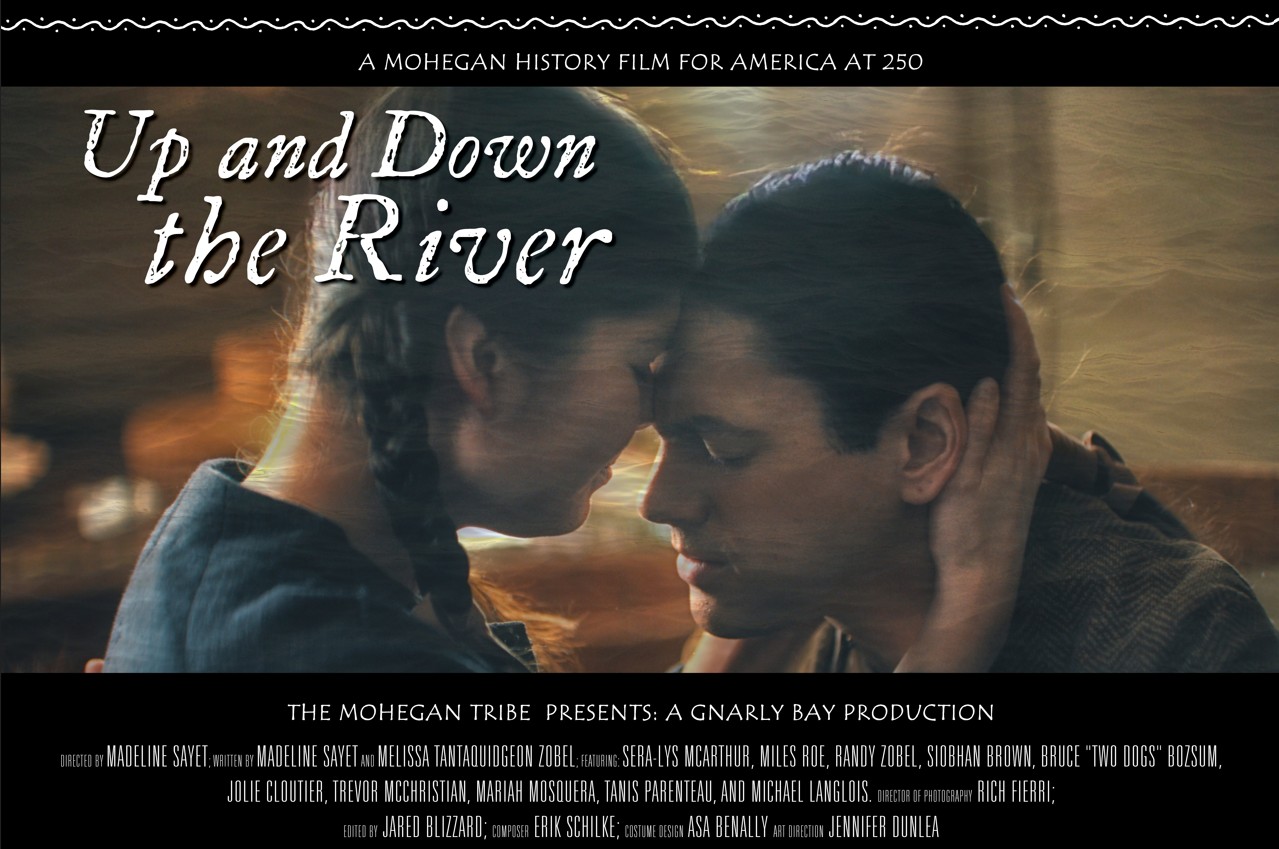
Up and Down the River Screening and Discussion in Charlestown, 11 June


On Thursday, 11 June, the National Parks of Boston and Bunker Hill Community College will host a screening and discussion of the new short film Up and Down the River, dramatizing the choices of Mohegan people during the American Revolution.

This movie was directed by Madeline Sayet and co-written by her and her mother, Melissa Tantaquidgeon Zobel, vice chair of the Mohegan Council of Elders. It stars several Native actors from the Mohegan and other communities.

The film description says:
Spanning the colonial and American Revolutionary eras, Up and Down the River delves into the difficult decisions made by members of the Mohegan Tribe at these pivotal periods in both tribal and U.S. history. Featured in this film is the Ashbow family, including Hannah and her son Samuel Ashbow, Jr. Choosing to fight alongside the American colonists, Samuel Ashbow, Jr., died at the Battle of Bunker Hill in 1775, becoming one of the first Indigenous soldiers to die in the American Revolution.
Ashbow’s father was the Rev. Samuel Ashbow (1718–1795) of New London, Connecticut.

After the film showing, there will be a reflective conversation between Zobel and endawnis Spears, Practitioner in Residence for Tribal Engagement at Brown University and Co-Founder and Director of Programming and Outreach at the Akomawt Educational Initiative.

This program will begin at 6 P.M., with doors open half an hour before. It’s scheduled to last ninety minutes. The showing and discussion are free to the public, but registration is required.

Wednesday, June 03, 2026

Archeological Investigation on Breed’s Hill This Month

For the next couple of weeks, the Boston City Archaeology Department will be conducting a dig on Breed’s Hill in Charlestown. The public can watch the investigation proceed while visiting the battle monument.

The program’s website explains:
There have been multiple archaeological surveys surrounding the Bunker Hill Monument, the site of the redoubt on Breed’s Hill and currently a National Park. These surveys have revealed the likelihood that the 1775 redoubt structure may still be identifiable under the current surface of the grassy hill.

Ground penetrating radar (GPR) and other non-invasive remote sensing techniques have been useful for finding earthworks, and a previous GPR survey on the monument hill in the 1990s had promising results suggesting an oval-shaped trench present on the hill.

Technology has significantly improved since this original survey and the City Archaeology Program is actively working with the National Park Service and other partners on a plan to re-survey the top of the hill to provide an even better underground snapshot of the location and condition of the 1775 redoubt.

A goal of the project is to accurately document the presence and location of the 1775 redoubt, including the potential for an archaeological trench across the original redoubt to reveal a section of the surviving fortification as part of the 250th celebrations in the summer of 2025.

In addition to the redoubt, the team is also actively working to use remote sensing techniques to identify areas of potential burials for the more than 300 individuals who lost their lives during the battle, including both colonial and British forces. The colonial forces included people of color and Native individuals from multiple Native nations. No burials will be disturbed as part of this work, but radar and documentary surveys may help to better protect these locations.
The department is working working with the National Park Service and American Veterans Archaeological Recovery with support from the Friends of Boston Archaeology.

The department shares lots of information from previous archival and geographical investigations of Revolutionary Charlestown on its webpage.

Friday, May 29, 2026

Meeting the Real Samuel McClellan

Yesterday’s post introduced Samuel McClellan (1730–1807) of Woodstock, Connecticut, the captain of a militia troop of horse in 1774.

McClellan was a shopkeeper and landowner in his small town. After the Revolutionary War he became a brigadier general in the state militia.

The McClellans remained locally important, and one of his great-grandsons was Gen. George B. McClellan of the Union Army and the 1864 Presidential race.

As often happens in that situation, Samuel McClellan’s descendants were influential enough to get their understanding of his role in the Revolution into local histories and biographical profiles when primary sources were hard to consult. For example, the 1902 National Cyclopedia of American Biography said:
On Oct. 13, 1773, he was commissioned captain of a fine troop of horse, raised in the towns of Pomfret, Woodstock, and Killingly, and led it Boston on receipt of the news of the battle of Lexington. He passed through the battle of Bunker hill uninjured, and in commemoration of that his wife planted three elm trees in front of residence, which attained great size and were standing when Gen. George B. McClellan visited Woodstock in 1884.
Ellen Douglas Larned’s History of Windham County, Connecticut: 1760–1880 says there were originally four elms.

The latest version of that lore is Samuel McClellan’s Wikipedia page, which as of this week says:
In 1775 Major Samuel McClellan led 184 men at the Battles of Lexington and Concord. He played a prominent role in the Battle of Bunker Hill, and after achieving the rank of lieutenant colonel in 1776, colonel in 1777, and brigadier general of the 5th Brigade in 1779, his regiment of the Connecticut Militia was stationed near New Jersey. McClellan was solicited by General George Washington to join the Continental Army and was offered a commission, but his domestic and business affairs compelled him to refuse.
That overstates the facts in multiple ways, starting with how McClellan wasn’t commissioned a major in the militia until October 1775.

News of the outbreak of war in Massachusetts didn’t reach Woodstock until 20 April, after the fighting was over, so there was no way men from that town were “at the Battles of Lexington and Concord.” Col. Israel Putnam was one of the first men from Connecticut to respond. On 21 April he wrote from Concord to say that the Massachusetts Provincial Congress hoped that Connecticut would send 6,000 men for “a standing Army.”

Putnam added as a postscript: “The Troops of Horse are not expected to come until further notice.” But Capt. McClellan had already led his 184 mounted men north into Massachusetts. That’s shown by Connecticut records of militia service, as tabulated here.

However, those same records also show that McClellan was paid for only eight days of service. Like most of his neighbors, he went home when it was clear the emergency had passed. Some men stayed or returned and enlisted in what became the New England army. McClellan didn’t.

There’s no evidence putting McClellan at the Battle of Bunker Hill or on the siege lines around Boston at the time. That undercuts the claim he “played a prominent role” in the battle, but it does explain how he remained “uninjured.”

Later in the war McClellan did mobilize with his militia regiment for short assignments in the Northern Department. He also served in the Connecticut assembly and as a commissary. In that last capacity his name comes up in Washington’s papers, but there’s no direct written solicitation from the commander for McClellan to join the Continental Army.

McClellan apparently left a fowling-piece, made by the Massachusetts gunsmith Joel White, equipped with a bayonet mount and bearing the initials “SMC.” That’s been displayed as a weapon from the Battle of Bunker Hill. McClellan may well have carried it during the Revolutionary War, but not at that fight.

Friday, May 22, 2026

A Long Line of Preserved Claps

Dr. Preserved Clap, the man who stepped forward to render Boston’s broken cannon useful again in the spring of 1776, came from a long line of Preserved Claps.

According to The Clapp Memorial (1876), the doctor’s ancestors Roger Clapp and Joanna Ford arrived in Massachusetts in 1630, settling in Dorchester.

(This genealogy preferred the spelling “Clapp,” even changing how the name appeared in the period sources it quoted.)

Those Clapps named their first children Samuel, William, and Elizabeth, but then went full Puritan for most of the rest: Experience, Waitstill, Preserved, Hopestill, Thanks, Desire, Thomas, Unite, and Supply.

Preserved Clapp (1643–1720) moved to Northampton and had a son named Preserved Clapp (1675–1757), who likewise had a son named Preserved Clapp (1705–1758). That last man moved to Hadley. He married Sarah West in August 1730, and they had their first son the following May: Preserved Clap (1731–1811).

Histories of Northfield and Deerfield say that in the fall of 1754 our Preserved Clap was in charge of a small force—nine or ten men—guarding the settlement of Huntstown, now Ashfield.

The genealogy above didn’t have this information, but more recent researchers have found that in 1756 this Preserved Clapp married Eunice Atherton of Lancaster, and they started having children by 1760. His name appears a couple of times in the Amherst town records in the following decade.

On 1 Jan 1770 the Connecticut Courant of Hartford ran this notice:
CLOCKS and Watches made in the best Manner, by
PRESERVED CLAP
of Amherst.

Likewise all Kinds of Instruments in Surgery.
That’s the first surviving sign that the latest Preserved Clap had ambitions to be more than a country farmer.

The Colonial Society of Massachusetts published the image of a clockface above in an article about the engraver Thomas Johnston (1708–1767). At the top it says: “Preserved Clapp / New England.”

Did Clap order this plate from Johnston for a clock he planned to build, or for one he planned to own? And did he pay for it? Johnston kept that sheet of copper and used the other side to engrave a musical score for his publication of Daniel Bayley’s A New and Compleat Introduction to the Grounds and Rules of Musick (Boston, 1766).

Massachusetts Soldiers and Sailors of the Revolutionary War records that in 1775 a man named Preserved Clap served a few months as a private in the company of Capt. Benjamin Hastings of Bolton. I haven’t found anyone else named Preserved Clap of military age at the time. But it seems unusual for a forty-three-year-old man with military experience, social ambition, and some connection to medicine to serve in the ranks. In any event, Hastings’s company saw action at Bunker Hill.

The next time Preserved Clap surfaces in the records I’ve found is the Rev. Dr. Samuel Cooper’s 29 Apr 1776 letter to Samuel Adams, which refers to him as “a Country Surgeon in our Army.” By this time he was evidently using those “Instruments in Surgery,” not just making them. However, I haven’t found any record of Clap being surgeon for a Continental regiment. Perhaps he had taken that role in one of the militia regiments that Massachusetts raised in early 1776.

TOMORROW: Claiming credit.

Monday, March 23, 2026

“The troops quitting the town was a beautiful sight”

From yesterday we continue with Robert Woolf’s reminiscence of being a teen-aged businessman caught in the siege of Boston in the spring of 1775:
I had not been many days settled with the family of a gentleman in the custom house when, early on the morning of June the 17th (1775), we were awakened by a smart cannonade from one of the ships of war!

This was no less than the prelude to the famous and bloody battle of Bunker’s Hill, so well recorded in all the public documents of the time that it requires no comment. I, however, lost a valuable friend, Major [John] Pitcairn, killed on the field, and the cries and groans of the great number of wounded brought into the town, as they passed our house, were heart-rending.

Affairs now remained quiet until the following year, the town strictly blockaded by the Americans, the troops and remaining inhabitants suffering many privations up to the beginning of March, 1776. Then began a heavy cannonade and bombardment, many of the shot falling so close to my quarters that we were obliged to remove to a more distant part of the town, and soon afterwards orders were issued by the Governor [actually Gen. William Howe] for the troops and loyal inhabitants to evacuate the place.

This was accordingly done without molestation by the enemy, and all embarked safely in transports provided for the occasion. The troops quitting the town was a beautiful sight, the whole coming off at one and the same time by signal!
I hadn’t seen anyone praise the British soldiers’ departure that way before. In fact, contemporaneous sources are clear that the some troops went on board ships days before others. Perhaps Woolf was remembering one particular day, such as the last embarkation on 17 March, and all the redcoats left in town at that time.
All then proceeded to Halifax, Nova Scotia, which, being a small place, caused no little confusion. The troops, however, remained but a few days [more like weeks] and then proceeded to attack the Americans at New York, leaving two battalions in Halifax, with whom I was stationed, and became one of the mess of the second battalion, and there I remained for two years, thus having an opportunity of exploring some parts of that wild and (at that time) unsettled country, the extensive and impenetrable woods coming within two miles of the town.

At last we embarked for England with part of the marines, and after a most boisterous passage (at one time being five days unable to carry any sail, or to cook any victuals) we landed safely at Plymouth, where I remained a week, and then, proceeding to Portsmouth, a few days more saw me safely set down again in London! October, 1778.
By 1779 Woolf moved on to India, eventually becoming accountant-general for the East India Company. He married Anna Maria Smart, whose father painted the miniature of her shown above. They had nine children.

In 1848 a granddaughter of the couple moved to the province of New Brunswick, bringing some family papers and art. That’s why the portrait is in the National Gallery of Canada and Woolf’s memoir was published by the Women’s Canadian Historical Society despite having no mention of women.

Saturday, November 29, 2025

Slocum’s “Authentic Narrative”

In 1844, John Slocum published An Authentic Narrative of the Life of Joshua Slocum: Containing a Succinct Account of His Revolutionary Services through a printer in Hartford.

This book fit into a growing genre: memoirs of unheralded Revolutionary War veterans looking back from old age. The most vital of these was Joseph Plumb Martin’s Narrative of Some of the Adventures, Dangers and Sufferings of a Revolutionary Soldier (1830), but I have a fondness for The Revolutionary Adventures of Ebenezer Fox, of Roxbury, Massachusetts (1838).

U.S. pension laws had encouraged veterans to write down their memories in order to authenticate their claims. I posit that that led men toward composing and then publishing these longer autobiographies. 

Joshua Slocum had died in 1816, at about the age of fifty-six, so he didn’t feel that impetus. Instead, his son John set down the veteran’s stories, shifting between third person, first person, and quoted documents.

Or so John Slocum claimed. He acknowledged pulling large sections of the book from other sources, such as the chapter on the capture of Fort Ticonderoga, which his father had no part in. But in truth he borrowed a great deal more. Over and over, the details in this Authentic Narrative just don’t add up, exposing a later perspective shaped by borrowed details and wishful thinking.

The book starts out by saying: “The subject of this sketch was born in the town of Franklin, Franklin county in the State of Massachusetts, in 1760.” The town of Franklin was never in Franklin County, and neither of those places legally existed in 1760. It’s possible Joshua Slocum was born in the town of Wrentham, which calved off Franklin during the war; there was a Slocum/Slocomb family there, but his birth doesn’t appear in the surviving vital records.

On the day after the town received news of the fighting at Lexington, the Authentic Narrative says, the “Franklin company” set out toward Boston. By the time those men made camp, “The intelligence of the surrender of Ticonderoga and Crown Point, with all their valuable stores, had already reached Roxbury.” That would mean the company took more than a month to travel fifty miles.

Somehow Joshua Slocum wrote a dramatic letter to his Loyalist father from Roxbury on 16 June 1775 but was also in one of the regiments based north of the Charles River that fought the Battle of Bunker Hill the next day.

In fact, Joshua was wounded—but he refused to leave his post! And a good thing, too:
Among the [British] killed was Major [John] Pitcairn, one of the flower of their army. I shall always believe that it was my rifle that sent him to his final account—for, as the enemy ascended the hill, I selected an officer answering his description, for a target, and as I took good aim, and my rifle seldom missing its object, I am very certain I killed him.
This account, then, is yet another claim to have killed Maj. Pitcairn. The narrator almost always refers to his weapon as a “rifle,” though such guns were almost unknown in New England at the time.

A month later, the narrator claims to have been about to volunteer for Col. Benedict Arnold’s expedition to Québec when he received a letter from a family friend dated 20 July. Since Arnold started to recruit in early September, that letter must have traveled even more slowly than the “Franklin company.”

The letter invited Slocum to leave the Continental Army camp, go out to the recruiting station at Worcester, and become a clerk in the friend’s company. Like most armies, the real Continentals frowned on soldiers deciding all by themselves where they’ll serve, but that’s what this account said Slocum did. 

And on it goes. Massachusetts Soldiers and Sailors of the Revolutionary War states that a Joshua Slocumb of Franklin served in the Rhode Island campaign of 1779–80. Ironically, the Authentic Narrative never mentions Rhode Island—most likely the one stint of military service by John Slocum’s father.

In 1882 Dr. Charles Elihu Slocum published A Short History of the Slocums, Slocumbs and Slocombs of America. Ordinarily such family histories are credulous toward sources that offer information and reflect well on members of the clan. But Dr. Slocum wrote of the Authentic Narrative:
This little book—of which but few copies can now be found—is written in a style interesting to the young, but it is open to criticism in some of its references to contemporaneous history.
In other words, don’t believe a word of it.

TOMORROW: The arrival of Washington through Slocum eyes.

Wednesday, October 08, 2025

Teachers’ Tour of the Siege of Boston, 4 Nov.

The Massachusetts Council for the Social Studies is offering a Sestercentennial tour of sites in the siege of Boston for teachers. I’ll be one of the folks riding along to talk about that history.

This tour will happen on Tuesday, 4 November, from 7:30 A.M. (when the bus is scheduled to pick up the first batch of participants) to about 4:30 P.M. That’s Election Day, when many schools close for staff training because the buildings are being used for voting.

Through site tours and rides, we aim to provide an overview of the siege from April 1775 to March 1776 that includes the perspectives of rank and file soldiers, free and enslaved Africans, Loyalists, and women.

After gathering at Castle Island, we plan to visit:
Three of those sites are part of the National Park Service, so access will be limited if the federal government is still shut down at that time. The grounds will probably be open but the buildings closed. We’re developing contingency plans to cover those sites or perhaps substitute others.

Registration cost is $30 for an individual, $100 for a team of four educators. Lunch will be provided. See this page for more information. Use this form to register.

Tuesday, August 12, 2025

“He hobbled into battle on his wooden leg”

Jacob Chapman’s 1882 Genealogy of the Folsom Family: John Folsom and His Descendants, 1615-1882 devoted an apprendix to Jonathan Folsom, sharing this bit of family lore:
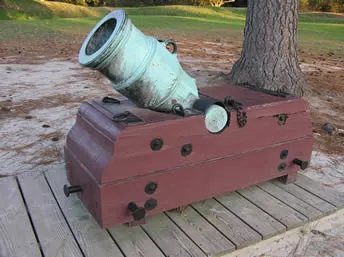
when the Revolutionary war commenced, he set out for another campaign, and found his way to Bunker Hill. Here he hobbled into battle on his wooden leg, and took charge of a mortar

It is said that at the second shot he threw a bomb upon the deck of a British man-of-war, which led her to draw off as soon as possible into safer quarters.
There’s no supporting evidence for this story. No other American account says the provincial forces at Bunker Hill had a mortar. (They had six four-pounder cannon, though only one trained gun crew at the height of the battle.)

No American veterans described a man with one leg amputated above the knee joining the fight. Nathaniel Folsom didn’t mention his brother in the letters he sent back to New Hampshire.

No British naval sources complained about provincial mortar fire or blamed a shell for pulling back from the battle.

One source for this tale, if not the only one, was Jonathan Folsom’s granddaughter Betsey, born in 1792. She could have known her grandfather directly since he died around 1800. Betsey Folsom married a man named Daniel Durgin and then outlived him by three decades, dying in 1878. Her son Mark William Franklin Durgin of Medford appears to have been one of Chapman’s sources on the family.

After the Chapman book, the story of Jonathan Folsom firing a mortar at Bunker Hill appeared in a few publications of the Sons of the American Revolution. Though Lt. Folsom’s service in the French & Indian War was well documented, descendants joining that organization needed to say he fought in the next war as well.

TOMORROW: Versifying.

Saturday, August 09, 2025

“Lt. Coll. Walcott now excuses it”

As I’ve been discussing, a British army court-martial ordered Lt. Col. William Walcott to be reprimanded on the Common in front of the second brigade of British troops in Boston on 17 Apr 1775.

Part of that ceremonial punishment might have been for Ens. Robert Patrick, the young officer Walcott had yelled at and struck, to draw his hand across the regimental commander’s face, thus making things even.

Though a couple of other young officers, Lt. John Barker and Lt. Frederick Mackenzie, wrote the long court-martial verdict into their diaries, neither man described seeing that embarrassing punishment. And Mackenzie was in the second brigade, so he would have been on the Common.

Perhaps that detail was too small to mention. Or maybe it never happened, and the sources from the early 1800s are wrong.

We do know there was another wrinkle in Lt. Col. Walcott’s penalty. He was supposed to be “Suspended for the Space of three Months.” However, Gen. Thomas Gage’s orders for 18 April state:
The Commander in Chief is pleas’d to take off the Suspension ordered upon Lt. Coll. Walcott from this Day inclusive; It having Appeared thro’ the course of the tryal, that Ens. Patrick did behave disrespectfull to his Commanding Officer, but it not being inserted in the Crime, the Court did not proceed upon it, & Lt. Coll. Walcott now excuses it, And will not bring it to a Tryal; but the Commander in Chief thinks proper to Warn Ensign Patrick to behave with more respect for the future to his Commanding Officer.
Thus, although the court martial acquitted Ens. Patrick of “Quarrelling,” “giving a blow,” and “giving…a Challange to fight,” he could still have been brought up on charges of being “disrespectfull.”

But Lt. Col. Walcott decided to let that charge lie. Maybe the family relationship between the two men reported by Lt. Mackenzie was a factor. Maybe this forbearance let Walcott show he was behaving as a proper officer again.

As for Gen. Gage, he was about to send 700 or so soldiers to Concord that evening, with another 1,200 to follow them a few hours later. He needed all his regiments working as efficiently as possible, and that meant keeping Lt. Col. Walcott on the job.

The 5th Regiment took casualties on 19 April, and more at Bunker Hill. Ens. Patrick was promoted to lieutenant on 22 November. He was still at that rank in the 1778 Army List.

Lt. Col. Walcott continued to command the regiment as its official colonel, Earl Percy, handled higher responsibilities. In January 1777 Gen. Sir William Howe gave him responsibility for negotiating exchanges of prisoners of war with Gen. George Washington’s military secretary, Robert Hanson Harrison. In October, Walcott was wounded at the Battle of Germantown, and he died on 16 November.

Tuesday, July 29, 2025

“Stark repeatedly and at last absolutely refused to comply”

The New Hampshire general Nathaniel Folsom arrived on the siege lines around Boston on 20 June 1775.

However, Col. John Stark (shown here) had been in the action since April. The militia troops he had led into Massachusetts had become the 1st New Hampshire Regiment.

Col. James Reed had enlisted men into the 3rd New Hampshire Regiment in Fitzwilliam and joined Stark at the siege in early June.

Both regiments fought in the Battle of Bunker Hill on 17 June, standing up against the British army’s right and taking casualties.

Stark didn’t respond happily to a new man appearing and declaring he was now in charge based on the vote of a quasi-legal congress and his war record from twenty years before.

On 23 June, Gen. Folsom wrote back to the New Hampshire government from Medford:
In my Letter to you yesterday I acquainted you that on my arrival here I Imediately waited on the Capt. General [Artemas Ward]; he then Order’d me to make return to him of the Two Regiments, viz. Colo. Stark’s & Colo. Reed’s, of their Situation and Circumstances; on my return here I sent orders to the Two Colos. to make return of their respective Regiments to me.

Colo. Reed Imediately obey’d the order but Colo. Stark repeatedly and at last absolutely refused to comply. I am well inform’d by Mr. Stark’s best friends that he does not Intend to be under any subordination to any Person appointed by the Congress of New Hampshire to the general command of the New Hampr. Troops. I have tried all conciliatory methods both by Personal Conversation and the mediation of Friends, but without effect.

In consequence whereof I this afternoon again waited on the Capt. General at Head Quarters to take his order on the matter; he requested me to advise with the Committee of Safety of New Hampr on the Business, as Colo. Stark has received no Commission yet from you, he thinks he does not properly come under his cognizance.

Gentlemen, it is I trust unnecessary to hint to you that without a Proper subordination it will be absolutely Impossible for me to Execute the Trust you have Reposed in me; in my last conversation with Mr. Stark, he told me he could take his Pack and return home (and meant as I suppose to Lead his men with him.) I represented to him the dishonorable part he would thereby act towards both Colonies.

I have since made Enquiry & find he would not be able to Lead off many more than the supernumerors of his Regiment, it still consisting of 13 Companys. I think a Regiment might be form’d of the men who have been under his command without his being appointed to the Command of ’em.

I must do the Justice to Letn. Col. [Isaac] Wyman to say he has behaved prudently, Courageously and very much like a Gentleman, and I think I could recommend him to the command as soon as any Person I know.
Wyman was Stark’s second-in-command and potential successor.

TOMORROW: Can this regiment be saved?