J. L. BELL is a Massachusetts writer who specializes in (among other things) the start of the American Revolution in and around Boston. He is particularly interested in the experiences of children in 1765-75. He has published scholarly papers and popular articles for both children and adults. He was consultant for an episode of History Detectives, and contributed to a display at Minute Man National Historic Park.

Subscribe thru Follow.it


•••••••••••••••••


Showing posts with label Christian Barnes. Show all posts

Tuesday, July 22, 2025

Anishanslin on The Painter’s Fire in Boston, 23 June

On Wednesday, 23 June, Zara Anishanslin will speak at the Massachusetts Historical Society on her new book, The Painter’s Fire: A Forgotten History of the Artists Who Championed the American Revolution.

Zara Anishanslin is a professor at the University of Delaware. Her last book was Portrait of a Woman in Silk: Hidden Histories of the British Atlantic World, winner of The Library Company of Philadelphia’s first Biennial Book Prize.

I got to hear Prof. Anishanslin speak about The Painter’s Fire at the Dublin Seminar for New England Folklife last month. Previous studies of American-born painters in the Revolutionary world have focused on men like John Singleton Copley, Benjamin West, and Ralph Earl—all important artists but also Loyalist in that conflict.

In contrast, Anishanslin looks at three artists who actively supported the new American republic in one way or another: Robert Edge Pine, Prince Demah, and Patience Wright. Pine was a British native, Demah was born enslaved, and Wright was a woman working in wax rather than portraiture, so their lives expand the traditional scope of artists’ studies in other ways as well. Their careers also intersected in interesting ways.

When I first wrote about Prince Demah back in 2006, all that I knew was his first name, that he was enslaved to Christian Barnes in Marlborough, and that she wanted to get him some training as a painter. Research by Paula Bagger and others revealed Demah’s transatlantic career, service in the Continental Army, and more. It’s exciting to see those facts come into the light.

The talk is the society’s Annual Jack Grinold Lecture in American Art and Architecture. It will begin with a reception for in-person attendees at 5:30 P.M. Prof. Anishanslin’s talk (and the online stream) will begin at 6:00. The event is free to society members and online attendees, $10 for others. Register here.

Saturday, November 16, 2024

“The Spies in Henry Barnes’s House” at Hingham, 17 Nov.

Yesterday I wrote about Ens. Henry DeBerniere, the young mapmaking army officer.

He turned up at Henry and Christian Barnes’s house in Marlborough on 1 Mar 1775, along with Capt. William Brown.

Those two officers were “The Spies in Henry Barnes’s House” that I’ll speak about on the afternoon of Sunday, 17 November, in the Hingham Historical Society’s Revisiting The American Revolution series.

Dr. Samuel Curtis will also show up in my talk, just as he showed up at the Barnes house that night, trying to ferret out information on DeBerniere and Brown. So he was spying, too.

I may even bring in Gib Speakman and Prince Demah because of their ties to the Barnes family, even though I can’t link them to events of that night.

Why, you might ask, am I delivering this talk in Hingham rather than in Marlborough, where all the action happened?

Because another player in that night’s drama was Chrisy Arbuthnot, an orphaned ten-year-old niece living with the Barneses. She had come to them from Hingham.

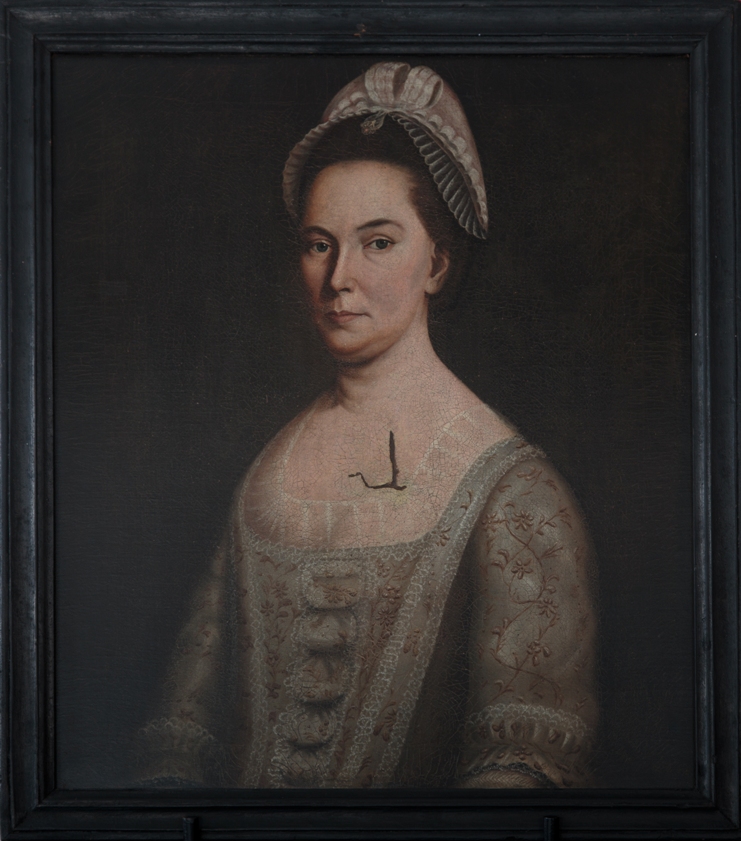
In addition, Prince Demah’s portraits of Henry and Christian Barnes are now among the treasures of the Hingham Historical Society.

Like other talks in this series, this presentation will be accessible in person and online, as part of the whole series or on its town. Admission (which isn’t cheap) helps to fund the society.

Wednesday, August 12, 2020

Paula Bagger with More on Marlborough

After my series of postings about Revolutionary conflict in Marlborough, Paula Bagger of the Hingham Historical Society filled me in on some details about the household of Loyalist merchant Henry Barnes. She has researched that family in the course of making important discoveries about the enslaved artist Prince Demah.

In particular, Paula identified the little girl whom Dr. Samuel Curtis quizzed about the two undercover British army officers who visited the house in March 1775. So I’m sharing Paula’s information as a “guest blogger” posting.


The “child” was undoubtedly Christian (“Chrisy”) Arbuthnot, the daughter of Christian Barnes’s brother William Arbuthnot from Hingham. Born in 1765, Chrisy would have been ten years old whereas the other young women who lived with the Barneses from time to time (Catharine Goldthwait and several Murray nieces of Elizabeth Inman) were older. The Barneses became Chrisy’s guardians when William Arbuthnot, a widower, died in the late 1760s.

Chrisy decamped to England with the Barneses in 1776 and died in 1782 in Bristol.

As for Catharine Goldthwait (1744-1830), who remained in Marlborough trying to preserve the estate in 1775, she traveled to England in the late ’70s or early ’80s. She spent time with her parents, Thomas and Catherine (the latter Henry Barnes’s sister), who had settled in Walthamstow outside London. But she seems to have spent some time with the Barneses in Bristol as well.

In July 1795, Catherine wrote Deborah Barker of Hingham to tell her that Christian Barnes had died in April. Henry Barnes died in London in 1808.

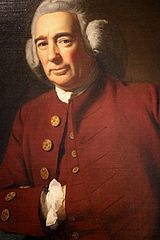
In England, Catharine Goldthwait met and married eighty-year-old Dr. Silvester Gardiner, a wealthy Loyalist widower [shown above]. They returned to America together. After Gardiner died, she married the merchant William Powell of Boston, a wealthy Patriot widower. She had no children of her own but adopted a niece and then two great-nieces.

Thanks, Paula!

One of the oddities I came across while researching this extended family is that Catharine Goldthwait’s sister Mary (1753-1825?) married Francis Archibald in Maine, was widowed, and fell into mental illness—the reason her teen-aged daughter came to live with Catharine Powell in Boston and eventually take her aunt’s last name. Mary Archibald lived on relief in the homes of various Maine householders, including now-famous Revolutionary War veteran Joseph Plumb Martin for several years.


COMING UP: Gossip about Marlborough’s Dr. Curtis.

Tuesday, August 11, 2020

“I will take your Body and I will Tar it”

When I was posting about Henry Barnes’s conflict with his Marlborough neighbors in the summer of 1770, I looked for the text of the anonymous threatening letter he reported receiving in late June.

But I couldn’t find that text and had to settle for quoting the proclamation Lt. Gov. Thomas Hutchinson issued about it.

Later I came across the text of that letter in E. Alfred Jones’s The Loyalists of Massachusetts, so I’ll quote it today.

Henry’s wife Christian had already told her friend Elizabeth Smith about the local protesters:
the first thing that fell a Sacrifice to their Mallace and reveng was the Coach which caused so much desention between us they took the cushings out of and put them in the Brook and the next night Cut the Carraig to Peices.
I first interpreted that “desention” to be between the Barneses, perhaps arguing over the expense of the coach. But in another letter Christian Barnes told Smith about “the Person that cut your Coach to Peices,” meaning that vehicle had first belonged to Smith or her late husband. So now I’m wondering if there had been some disagreement between the two ladies over that coach—perhaps Smith insisting that the Barneses take it as she left for Britain and Christian Barnes trying to resist.

The anonymous letter referred to the coach as a “booby hut,” a New England term for a carriage or coach body put on sleigh runners, as John Hancock’s coach has been preserved. Was that just a pejorative reference, or had the Smith carriage been left on runners since the winter?

In any event, Henry Barnes’s public complaints about the destruction of that vehicle spurred the anonymous writer:
I understand you are about carrying your Old dam’d Booby Hutt to the General Court and from thence Home to England to get recompence for all the damage you have sustained since you have been an infamous Importer or a common Enemy to the Country—

Therefore if you only want recompence for the damage you have done the Country in Importing goods contrary to the Agreement of Body of Merchants on this Continent I will recompence you without going there or any where else for I am determined to fetch you to terms even if I do it at the expence of my own Soul, or the Coat of a Sore Back or any other punishment in this World only for the good of my Country, for I stile myself a Son of LIBERTY,

therefore if you will Shut up your Store and Sell nothing out, nor Import any goods till the Importation takes place you shall sustain no more damage

But if not I will Fire your House and Store and destroy all your substance you have on the earth, And I will take your Body and I will Tar it, and if nothing else will do but Death you shall have it certainly, and so you will have no more Notice and if you do it by the 20th June 1770 Good and well, and if not you may depend upon my being as good as my word and so I will never write no more and so I stile myself Inspector General
I find it striking that this letter doesn’t speak in the voice of the community as Whig missives usually did. Instead, the writer emphasizes himself as an individual—willing to sacrifice for the country, to be sure, but speaking and acting on his own. That makes me inclined to think it didn’t come from Alpheus Woods or another member of the Marlborough town committee to enforce non-importation but from someone riled up by the conflict and perhaps not in his right mind.

Wednesday, July 29, 2020

Getting Out of Marlborough in 1775

When we left Capt. William Brown and Ens. Henry DeBerniere, they were in a back room of Henry Barnes’s house in Marlborough, listening as he tried to send away a member of the local committee of correspondence.

Dr. Samuel Curtis had shown up that evening of 1 Mar 1775, uninvited and asking to stay to supper. Barnes told him the doctor that he couldn’t stay because the family already had company.

Dr. Curtis then turned to a child—DeBerniere wrongly understood the girl to be Barnes’s daughter—and asked “who her father had got with him.”

According to the ensign, “the child innocently answered that she had asked her pappa, but he told her it was not her business.”

Still suspicious but unable to learn more, the doctor left. Brown and DeBerniere decided he was probably going to gather his political allies, so they should stay only a couple of hours to rest. They would leave at midnight, regardless of the snowy weather.

But even that was too leisurely, DeBerniere later wrote:
we got some supper on the table and were just beginning to eat, when Barnes (who had been making enquiry of his servants) found they [local Patriots] intended to attack us, and then he told us plainly he was very uneasy for us, that we could be no longer in safety in that town: upon which we resolved to set off immediately
The two officers had been inside for only twenty minutes, they estimated. Barnes took them “out of his house by the stables, and directed us a bye road which was to lead us a quarter of a mile from the town.”

Brown and DeBerniere hiked through the blowing snow until they reached “the hills that command the causeway at Sudbury, and went into a little wood where we eat a bit of bread that we took from Mr. Barnes’s, and eat a little snow to wash it down.”

At the next house, a man came out and asked Brown, “What do you think will become of you now?” By this time the officers were totally on edge, unable to tell whether the people they met recognized who they were and were helping to plan an assault or just thought it strange for two strangers to be out walking in the night during a snowstorm.

In Sudbury the officers encountered “three or four horsemen.” Those riders moved to either side of the road, letting the strangers pass between them while they watched silently.

Brown and DeBerniere reached the safety of Isaac Jones’s Golden Ball Tavern in Weston about 10:30 P.M., having walked 32 miles that day. The next day, the officers got into Boston, where they were safe. They wrote out a detailed report for Gen. Thomas Gage, which is our source for all this information. They turned over sketches and maps of the route out of Worcester in case the general planned a march that way.

Meanwhile, back in Marlborough, soon after the British scouts left, there was yet another knock on Henry Barnes’s door. This time the whole Marlborough committee of correspondence showed up and “demanded” to see the visitors. Barnes insisted those two men were not army officers “but relations of his wife’s, from Penobscot, and were gone to Lancaster.” According to DeBerniere’s report:
they then searched his house from top to bottom, looked under the beds and in their cellars and when they found we were gone, they told him if they had caught us in his house they would have pulled it about his ears.
Among the Marlborough committee-men was Alpheus Woods. Five years earlier, Woods had also been on the town committee to make Barnes follow the non-importation agreement. Barnes’s supporters had accused Woods of sending the merchant a letter threatening to burn down his potash works and house. Now Woods had nearly caught Barnes harboring British army spies.

Henry Barnes departed Marlborough a few days after his busy evening. His wife Christian Barnes went to stay with her friend Elizabeth Inman until past the actual outbreak of fighting in April. Taking refuge in Boston, they left the Marlborough estate in the hands of Henry’s adult niece, Catharine Goldthwait.

Under Massachusetts committee of safety guidelines, local committees weren’t supposed to confiscate property from Loyalists as long as some family members were still living peacefully on it. But the Marlborough committee including Alpheus Woods did take property from the Barnes estate, including furniture they loaned to Col. Henry Knox. Catharine Goldthwait complained about that to the General Court, to no avail.

In February 1776, Henry Barnes learned that a bequest worth almost £2,000 was awaiting him in London. He and Christian sailed that month, ahead of the end of the siege. Catharine Goldthwait followed a few years later, and Massachusetts confiscated her uncle’s property. Henry and Christian Barnes received a small Loyalist pension until he died in 1808.


Tuesday, July 28, 2020

“Safe no where but in his house”

On the evening of Wednesday, 1 Mar 1775, Henry Barnes opened the door of his large house in Marlborough (shown above, even larger after nineteenth-century expansion).

Two strangers from England stepped inside. They apologized to Barnes “for taking the liberty to make use of his house” and revealed that they were British army officers in disguise–Capt. William Brown and Ens. Henry DeBerniere.

Barnes wasn’t surprised. His Patriot neighbors had actually expected these spies to arrive in Marlborough the previous day. Alerted by Timothy Bigelow of Worcester, “a party of liberty people” had gone to [Abraham] Williams‘s tavern to meet them. Marlborough “was very violent,” Barnes warned the officers, and they “could be safe no where but in his house.”

The merchant asked Brown and DeBerniere if they had spoken to anyone on their way into town. The officers mentioned telling a baker where they were headed. “A little startled,” Barnes explained that the baker “was a very mischievous fellow, and that there was a deserter at his house.”

Indeed, the three men soon determined that that deserter, Drummer John Swain, was from Capt. Brown’s own company in the 52nd Regiment. Swain had certainly recognized his officer and confirmed everyone’s suspicions that these visitors were military spies.

There was another knock at the door. Leaving the officers in an interior room, Barnes went to see who it was. A doctor—local historian Charles Hudson later guessed that this was Dr. Samuel Curtis (1747-1822)—had come for supper. Barnes knew that Dr. Curtis:
  • hadn’t been invited for supper that evening.
  • hadn’t visited the house for two years.
  • was a member of Marlborough’s committee of correspondence.
The merchant told the physician that because there was company he “could not have the pleasure of attending him that night.”

Dr. Curtis then turned to a child in the room. (Ens. DeBerniere believed this girl was Barnes’s daughter, but other sources say Henry and Christian Barnes had no surviving children but raised a couple of nieces.) The doctor asked the girl who Barnes “had got with him.” Presumably all the other adults in the house held their breath.

TOMORROW: Leaving Marlborough behind.

Saturday, July 11, 2020

Family Business and Politics in Marlborough

Personal finance and politics intersected for the Speakman family and their neighbors in the summer of 1770.

As I started to discuss back here, Thomas Speakman acquired property in Marlborough before being killed on the Lake Champlain battlefront in 1757.

His widow Mary was living in that town in the late 1760s, and their son William (Billy) apparently moved out there after a health scare in late 1768.

By that time both mother and son had become attached to Whig politics, even though they were upper-class Anglicans, a group more likely to side with the Crown. That irked Mary Speakman’s Loyalist friend and neighbor Christian Barnes, who nonetheless concluded that the widow was not acting ”from any Self interested Motives.”

In those years the family’s second son, Gilbert Warner Speakman, was in Boston working for his uncle, merchant John Rowe. But that young man, called Gibby or Gib by his family, came of age in 1768 and needed to establish himself independently in some way.

In the same long letter from the summer of 1770 that I quoted about political disturbances in Marlborough, Christian Barnes wrote in late June:
Mrs. Speakman went to Boston last week and Mr. Rowe ask’d her what she intended to to [sic] do with Gibby for he had no longer any ocation for him and could not afford to pay him wages

She told him her last resort was New Boston [New Hampshire, where the family had invested in land] and if she could be put into business there she should like to take her whole family with her,

he made no reply to this and she return’d from Boston in very low Spirits but last Night she received a letter from Gibby informing her that his uncles Row & [Ralph] Inman had agree’d he should go to New Boston with goods and there make Pearl & Pott Ash
Christian Barnes’s husband Henry happened to own a potash manufactory in Marlborough. To be sure, that building had recently had its windows smashed, and a rumor was going around town that Billy Speakman was sparking such vandalism to get Henry to finally adhere to non-importation. But that didn’t stop Gibby from asking his mother’s neighbor for advice:
he sent to Mr. Barnes for an estimate of the Cost of the Works and desires to know if this is a proper Season to cut down Timber to build a House

you see these are all things at a distance and may possibly blow off in Air However it has given Mrs. Speakman new Spirits
That month, two effigies of her husband, a threatening letter, and news of attacks on other Loyalists made Christian Barnes increasingly anxious. And then came a small-town betrayal.

Christian Barnes’s 13 July letter reported that Mary Speakman was preparing for her son to go into business in competition with Henry Barnes. The people of Marlborough would no longer have to buy general goods from an importer or travel to another town. Political, commercial, and personal factors were intertwining as Christian Barnes wrote of the rift between the families:
even Mrs. Speakman has deserted me, and takeing the advantage of our distress’d situation has made aplication to Mr. Row and he has consented to send up Gibby and open a Store at her House and he is now actuly here makeing preparation for the reception of his goods[.] he has brought his Mistress with him and they have past a Week in the greatest Mirth and festivity.

The only excuse they have to make for this ungreatfull proceeding is that as Mr. Barnes has advertized his Estate for Sail but whatever Motive Mr. Barnes might have for advertizeing his Place Mrs. Speakman has told me more than twenty times that she was convinced he has no intention of leaving Marlborough, so you see what the New Boston Scheem is come to but it must end in that finily, or something worse for I am well assured that a Store of Good put into their hands and by Mr. Row must prove their distruction, and at the same time will be injuring us to such a degree as I think ought not to be forgiven.
By this point Christian Barnes had dropped all her skepticism about the Speakman brothers encouraging the attacks on her husband. “I know they have both been very active in all the riots in Boston and they may Posibly find some dareing Sons of Violence who may be willing to assist them in any interprize they shall propose.”

To get away from the local unrest, Barnes went to stay with friends. On 17 September she described developments she found on coming back home:
when I returned from Cambridge (after an absense of five Weeks) I found the Peoples Minds were more composed[.] a Party had apear’d in our favor and some of them had Publicly declared they would act in opposition to any one that should molest us

they remain’d quiet till the time approach’d for takeing out our licence [to sell liquor.] Mr. Barnes then waited on the Select Men for their approbation but was refused

Mrs. Speakman (who is still determin’d to circumvent us in our trade if possible) had no doubt but she should obtain it but she did not gain her Point and Mr. Barnes put in a Petition to the Court which was then siting at Concord and they very readily granted him a license tho there was great opposition made by some People in the Town who were at the expence of feeing a Lawyer upon the ocation

they now begin to make it a party affair among themselves and the Tory Party (as they are call’d) talk of erecting fire Works by way of triumph upon our gaining the licence
Soon, however, the non-importation controversy settled down. Gib Speakman opened a tannery instead of directly competing with Henry Barnes.

Of course, the larger political issues remained unresolved.

TOMORROW: When war came.

[The picture above is an eighteenth-century engraving of a potash kiln, courtesy of the Wellcome Collection.]

Thursday, July 09, 2020

“Become a violent advocate in the Cause of Liberty”

As recounted yesterday, Capt. Thomas Speakman was killed in the French and Indian War in January 1757.

Though I haven’t seen his probate records, Speakman appears to have left a considerable estate to his wife Mary and their children, including properties in Marlborough and Boston. But perhaps not as much as they needed to maintain their lifestyle. Then a house on Milk Street belonging to Thomas Speakman’s estate was among the buildings destroyed in the Great Fire of 1760.

Thomas and Mary Speakman’s oldest child, William, was then twenty years old, looking ahead to his career. The other surviving siblings included:
  • Gilbert Warner, born 7 Nov 1747
  • Hannah, born 1 Nov 1749
  • Sarah, born 27 Oct 1751
  • Mary, born 26 Sept 1754
One important asset for young William Speakman were the men who had married his late father’s sisters—the merchants John Rowe and Ralph Inman. Rowe in particular became a mentor for William and his younger brother. It’s possible William spent time in Rowe’s counting-house, learning business skills; Gilbert certainly did.

By 1765, at the age of twenty-five, William Speakman was partners with a slightly older man named Thomas Chase at a rum distillery in the South End of Boston. Speakman may have inherited that building from one of his grandfathers while Chase handled day-to-day management, but it’s hard to tell. Chase and Speakman also appear together on the records of King’s Chapel, sponsoring babies in their circle at baptism.

Then came the Stamp Act. Thomas Chase was one of a small group of young businessmen who organized public protests against that law, calling themselves the Loyall Nine and later the Sons of Liberty. On 15 Jan 1766 John Adams described dining with the group in “their own Apartment in Hanover Square, near the Tree of Liberty. It is a Compting Room in Chase & Speakmans Distillery. A very small Room it is.”

Speakman never appeared on the list of Whig activists, but he was activist-adjacent. I’ve found only one instance of him participating in politics. On 18 Mar 1768, the anniversary of the repeal of the Stamp Act, his uncle Rowe reported that Speakman, Thomas Crafts, and John Avery took down “two effigies on Liberty Tree this morning marked C[harles]. P[axton]. and J[ohn]. W[illiams].” That action looks like supporting those Customs officials, but in fact Crafts and Avery were members of the Loyall Nine. They wanted to control such protests, and they were among the few men in town with the clout to take down someone else’s effigies when they thought the timing was bad.

A few months later, on 29 August, Rowe wrote in his diary: “Poor Wm. Speakman was taken in a fit & had doubtful Struggles for Life.” Speakman survived this health scare, but it probably prompted him to leave Boston and move out to Marlborough, where his mother was living. William and his brother Gilbert Warner Speakman (listed erroneously as “G. William Speakman”) appear on the 1770 list of polls reprinted in Charles Hudson’s history of the town.

Mary Speakman was an upper-class Anglican, a relative of imperial merchants, and thus a natural supporter of the royal government. But in that same month, on 7 August 1768, her Marlborough neighbor Christian Barnes reported to her friend Elizabeth Smith:
Mrs. Speakman was become a violent advocate in the Cause of Liberty which (if I was not upon my gard) would ocation some warm disputes but I saw so much of party rage in my last excurtion that I determin’d to surpress my sentiments rather than enter into any debate upon that subject.
The following year, on 20 Nov 1769, Barnes confirmed: “my Friend Mrs. Speakman still continues a Staunch Whig tho to do her Justice not from any Self interested Motives at least that I can see.”

It was in that context that Barnes wrote in June 1770 after locals vandalized her husband’s property (including a coach apparently bought from Smith):
it is said that a Young Gentleman (who had formily Headed the Mob in Boston and now resides with us) is the perpetrator of all this Mischeife but I will not beleive it till I have further profe
On 13 July, after the threats had escalated, Barnes was ready to name names:
I mention’d in my former Letter that some people affirm’d that Billy Speakman was the Person that cut your Coach to Peices I did not beleive it nor do I now but this I am certain of that those who have taken such a cruel Mession [?] to undermine us in our Business would stick at nothing to perpetuate their Scheem and who knows what these two Young fellows may be capible off and how far they may work up the People (already distracted with party rage) to Molest and injure us.
The “two Young fellows” appear to be William and his younger brother.

Meanwhile, the gulf between Mrs. Barnes and Mrs. Speakman had widened to include not just politics but business.

COMING UP: What to do with Gibby?

Tuesday, July 07, 2020

“A Letter was left by some unknown Person”

In 1770, the Boston town meeting named Henry Barnes as one of a small group of businesspeople who were openly defying the town’s non-importation agreement.

Barnes was unusual in that group because his shop and main business were off in rural Marlborough, where he also oversaw some small manufacturing enterprises.

In a long letter written over June and July that I’ve been quoting, Henry’s wife Christian Barnes told her friend Elizabeth Smith how their neighbors tried to pressure him into backing down: public meetings (official and unofficial), window-breaking, not one but two effigies.

“But still finding that their malace had no effect,” Christian wrote, “they made a bold push and dropped an incendiary letter.”

Henry Barnes immediately sent a copy of the letter to Thomas Hutchinson at his home in Milton. The acting governor convened his Council at Cambridge on 25 June and showed them the letter. The Councilors asked Hutchinson to summon Barnes to another meeting.

On 28 June, Barnes brought “the original Incendiary Letter [and] his Oath annexed to authenticate the receipt.” Unable to stall any longer, the Council advised Hutchinson to issue a proclamation about it:
Whereas on the 21st. Inst. a Letter was left by some unknown Person at the House of Henry Barnes Esq. of Marlborough, directed to him, threatening to fire his Shop and destroy all his substance that he hath on ye Earth, to take his Body & Tar it & if nothing else will do but death he shall certainly have it if he did not shut up his Shop and forbear Selling and importing of Goods; to the receiving of which Letter in manner as aforesaid the said Henry Barnes made solemn oath…
The province offered a £50 reward for any information about the “unknown Person.”

The Barneses already felt besieged, and they were hearing bad news from friends in Boston. In her letter to Smith, Christian Barnes wrote about other supporters of the royal government being attacked:
Barnes told Smith:
You may judge what sleep I had that night, and, indeed, ever since we have sleept in such a manner that it can hardly be called rest. It is the business of the evening to see the firearmes loaded, and lights properly placed in the store and house; and this precaution we have taken ever since we received the letter.
As for Marlborough’s response, on 30 July the Boston Gazette published a dispatch from that town with this to say about the warning:
Afterwards Barns pretends to have found a letter, threatning of him, and has sent, to the selectmen for their assistance to discover the authors of so vile a thing, and after the most close search, and considering all circumstances of said letter, are of opinion that the same was hatched by Barns’s own party—and one of the Selectmen went and told Barns so; whereupon Barns raged furiously and said, “Then you think I swore falsly do you?” Afterwards Barnes pretends he expect a mob, whether from the horror of his own conscience, or the phrenzy of a Don Quixote and a Squire Sancho, is not said…
The modern term for this political tactic is, of course, “gaslighting.”

TOMORROW: Naming “the perpetrator of all this mischief”?

(The portrait of Christian Barnes above was painted by Prince Demah, who grew up enslaved in the Barnes household. She wrote about his talent for drawing portraits in 1769, and in late 1770 Henry Barnes took Demah to London for training. The artist later returned to Boston and advertised as a portraitist. Demah’s portraits of Christian and Henry Barnes are now owned by the Hingham Historical Society.)

Monday, July 06, 2020

An Effigy on Horseback in Marlborough

When we left merchant Henry Barnes sometimes in June 1770, his Marlborough neighbors had just hanged him in effigy.

A letter from Marlborough dated 20 July and published in Edes and Gill’s Boston Gazette for 30 July gave some Whiggish townspeople’s view of that incident:
THERE was in Marlborough some time last June an old hay-bag stuffed with hay or straw formed with a man’s crotch, body, neck and head, but with a very little resemblance thereof, and hanged by the neck to a gallows with a paper fastened to his breast with these words written in capital letters, “A notorious Importer Henry, Tory, Booby, Tom, Bellus————a spectacle indeed!: and in the evening was cut down & burnt with loud huzzas; and was found to be an Impostor.
In her letter completed 6 July, 250 years ago today, Henry’s wife, Christian Barnes, told her friend Elizabeth Smith what happened next:
A few nights after they stole the covering from the wagon, which was tarred to secure the goods from the weather, and the same night stole a man’s horse from a neighboring stable. They dressed an image in this wagon covering, tarred the horse, saddle and bridle, placed the image upon his back, and set him loose about the town, with an infamous paper pinned to the breast, which was summed up with wishing of us all in hell.
Again, some of the Barnes’s neighbors put a different spin on that event:
Afterwards there appeared in the street an old horse with another hay bag in the fashion of the first, sitting upright on the saddle and made fast to the same, and both man [&] horse dripping with tar, and the old horse, whether by revelation or instinct, marched directly towards Sir Harry’s: but the horse on receiving a fright made off as fast as he could, but Tim. Swann (Barns’s boy) pursued the horse & man, but all in vain.
The Whigs of Marlborough weren’t denying that those public demonstrations of disapproval and intimidation had taken place. In fact, they wanted others in the province to know about those actions.

TOMORROW: A disputed “incendiary letter.”

Saturday, June 27, 2020

Trouble for Henry Barnes, “an Infamous importer”

Yesterday I started to describe how the town of Marlborough started to pressure Henry Barnes (shown here, in a portrait by his former slave Prince Demah) to stop importing goods from Britain.

The men of Marlborough adopted some of the same measures as the non-importation activists in Boston, just a year or more later. They held a town meeting to formally condemn importers. They appointed a committee to inspect goods and customers. They even called a meeting that didn’t have a property requirement so more young men could participate. And some folks started to make their disapproval even clearer by damaging Barnes’s property.

Henry Barnes’s wife Christian heard rumors that this activity was being guided from Boston:
It is said that a young gentleman who has formilly headed the mob in Boston and now resides with us is the perpetrator of all this mischief, but I will not believe it until I have further profe.
Alas, I haven’t found a clue about which young gentleman that might be.

In her letter to her friend Elizabeth Smith, Christian Barnes described how Bostonians themselves had attacked her husband’s property while it was in transport:
The greatest loss we have as yet met with was by a Mob in Boston who a few Nights ago atack’d a wagon load of goods which belongs to us they abused the Driver and cut a Bag of Peppur which contain’d three hundred [pounds?] leting it all into the street then gather’d it up in their Hand’fs & Hatts and caried it off the rest of the load they ordered back into the Publick Store of which the well disposed Commity Keeps the Key

Mr. Barnes has apply’d to the Lefnt. Govener [Thomas Hutchinson] for advice and he advised him to put in a petition to the General Court he then repaired to Mr. [James] Murray [a justice of the peace who was also Smith’s brother] and beg’d his assistance in the drawing of it up he complyed with his request and it is lade before the House next week, as I have entered so largly into the affair I will send you a Coppy of the Petition, we expect no Satisfaction or redress from the General Court but only as it is a legal Method and praparatory (in case of further insults) to the appealing to Higher Powers

You would be pleased to see with what moderation Mr. Barnes behaves in his present distresses at the same time I am well assured his resolution will carry him through all difficultys without swerving from his first principles

The Merchants in Boston are now intirely out of the question in all debates at their Town Meeting, which is caried on by a mob of the lowest sort of people leaded by one [John] Balard and Doct. [Thomas] Young Persons that I never before heard off
Dr. Thomas Young had led a crowd to the McMaster brothers’ store in early June to press them to stop importing. After another crowd carted Patrick McMaster around with a tar barrel on 19 June, John Ballard administered the oath by which the Scotsman swore not to return to Boston. Barnes heard from either Ame or Elizabeth Cumings that “the other two [McMaster] brothers had fled for their lives” as well.

And the people of Marlborough were still ramping up pressure on Henry Barnes. His wife wrote:
on the 10 of June the unqualified Voters had a meeting and enter’d into the same resolves the others had done before and the next day an Effigy was Hung upon a Hill in sight of the House with a paper Pin’d to the Breast, wheron was wrote Henry Barnes an Infamous importer this Hung up all Day and at Night they Burn’d it
In the five years since the Stamp Act, only the society’s worst political enemies had the honor of being hanged and burned in effigy.

COMING UP: Another effigy, this one on horseback.

Friday, June 26, 2020

Meanwhile, out in Marlborough…

One of the Sestecentennial stories I’ve neglected because I don’t have solid dates for all the events is the way the people of Marlborough joined in the non-importation movement by pressuring local businessman Henry Barnes.

Barnes was born in Boston in 1723. His father was a merchant from Britain who helped to administer and set up all three of the Anglican churches in town. In 1746, Henry married Christian Arbuthnot, a daughter of his father’s business partner.

In 1752, Henry Barnes set up a cider distillery in the rural town of Marlborough. That area was apparently a big producer of apples and cider. It also produced people named Barnes, descended from one of the earliest British families to settle there, but Henry Barnes had no connections to that clan.

Over the years, Barnes built up his business to include a pearl ash factory and a general store where he sold goods he imported through Boston to locals. He built a large house, shown above in expanded form before it was taken down to build a fire station. He owned slaves, including a woman named Daphney and her artistically talented son Prince Demah.

On 29 March, in the wake of the Boston Massacre, Marlborough held a town meeting on the imperial crisis. The resolutions that the townspeople approved said:
we are astonished to find that a number are at this critical time so sordidly detached from the public interest, and are so selfish and impudent, as to stand out and not comply with the Non-Importation Agreement, or break the same when entered into, and remain obstinate and bid defiance to their country, when entreated by the Committee of Merchants in the most salutary manner to enter into and abide by the same; and as they continue to practice those things that tend to ruining and enslaving their country and posterity…
The men of Marlborough pledged not to buy anything from the merchants that Boston had designated as importers, listing ten names. In practical terms, that meant boycotting Henry Barnes. And more.

Christian Barnes wrote to her friend Elizabeth Smith about that development in a letter she wrote over the month of June and finished on 6 July:
The Spirit of discord and confusion which has prevailed with so much violence in Boston has now begun to spread itself into the country. These Poor deluded People with whome we have lived so long in Peice & harmony have been influenced by the Sons of Rapin to take every method to distress us, at their March meeting they enter’d into resolves similar to those you have often seen in the Boston News Papers

at their next meeting they Chose four inspecters [Hezekiah Maynard, Peter Bent, Robert Baker, Alpheus Woods, and Moses Woods] (Men of the most Violent disposition of any in the Town) to Watch those who should purchas goods at the Store, with intent that their names should be recorded as enimies to their Country this did not deter those from coming who had not voted to the resolves these were cheifly Young People who were not qualified to vote in their Town Meeting

when they saw their measures had not the desired effect and that our custome still encreased they fix’d a paper upon the meeting House impowering and advising these unqualified voters to call a Meeting of their own and enter into the same resolves with the other this was a priviledg they had never enjoy’d and fond of their new goten Power hasten’d to put it in execution summon’d a Meeting chose a Moderater and (by the direction of those who sat them to work) resolves were drawn up but not yet pass’d

while all this was in agitation their was great outrages commited & insults offer’d to the Importers in Boston so that some of them have been compel’d to quit the Town as not only their Property but their lives were in Danger nor are we wholly free from apprehensions of the like treetment for they have already began to commit outrages

the first thing that fell a Sacrifice to their Mallace and reveng was the Coach which caused so much desention between us this they took the cushings out of and put them in the brook, and the next night cut the carriage to pieces. Not long after they broke the windows at the Pearl Ash Works.
Evidently Henry and Christian Barnes had disagreed in some way about buying a coach, and now it was all broken up anyway. I like how such private details surface in the middle of political trouble.

TOMORROW: More trouble for Henry Barnes.

Saturday, May 05, 2018

A Discussion about Writing in Marlborough, 9 May

On Wednesday, 9 May, I’ll appear in the Friends of the Marlborough Public Library’s Author Series, discussing The Road to Concord, Colonial Comics: New England, this blog, and other writing.

Here’s a P.D.F. file of the flyer for this program. The host and interviewer for that evening will be Hank Phillippi Ryan, who’s won multiple awards as both a television reporter and a mystery novelist.

In this sort of event announcement I like to include some material relevant to the venue, so here’s a story about Henry Barnes (1724-1808), Marlborough’s most visible friend of the royal government. He actually held out in town until almost the last moment, as he later told the Loyalists Commission:
He issued out billeting orders for the Kings Troops in 1775 this made him very obnoxious & the Mob threaten’d to pull down his House. He thought himself in danger & went to Boston the 17th of April.
Even then, Barnes’s wife Christian “staid in the Country till the Octr. following.” But then she went into Boston as well, and they sailed for England on 26 December.

That left the Barnes household uninhabited. In November 1775, Henry Knox, about to leave for New York on a mission for Gen. George Washington, petitioned the Massachusetts General Court:
That your petitioner having been obliged to leave all his goods and house furniture in Boston, which he has no prospect of ever getting possession of again, nor any equivalent for the same, therefore begs the Honorable Court, if they in their wisdom see fit, to permit him to exchange house furniture with Henry Barnes, late of Marlborough, which he now has it in his power to do.
The legislators didn’t let Knox simply take possession of the Barneses’ furniture in Marlborough. But they did let him borrow it.

The event at the Marlborough Public Library will start at 7:00 P.M. It is free and open to the public.

Tuesday, February 02, 2016

“Creativity in Bondage” Discussion in Hingham, 7 Feb.

On Sunday, February 7, the Abigail Adams Birthplace and the Hingham Public Library will present a program on “Creativity in Bondage: Slave Artist Prince Demah and Writer Briton Hammon.”

The event description says:
Prince Demah’s portraits of his owners, Christian and Henry Barnes, now in the collections of the Hingham Historical Society, are among the earliest known paintings by an African-American. Demah, who lived in Boston but had ties to the South Shore, received training in London and was described as a creative “genius.” Hingham resident Paula Bagger, who recently co-authored an article on Demah for The Magazine Antiques, will discuss her research into his life and work. Ms. Bagger is a member of the board of directors of the Hingham Historical Society and a practicing attorney.

Briton Hammon, an eighteenth-century slave belonging to General John Winslow of Marshfield (later of Hingham), is considered the author of one of the first published American slave autobiographies. His 1760 narrative recounts his confrontations with Native Americans and capture by Spanish sailors while on a sea voyage, and the ensuing thirteen-year ordeal in which he faced battle, torture, and imprisonment. Aaron Dougherty, executive director of Marshfield’s 1699 Winslow House and Cultural Center, will speak about Hammon’s life experiences and writings, and will discuss how narratives such as his eventually helped fuel the abolitionist movement.
The event’s moderator will be Michelle Marchetti Coughlin, author of One Colonial Woman’s World: The Life and Writings of Mehetabel Chandler Coit.

This program is scheduled to run from 3:00 to 5:00 P.M. in the the Whiton Room of the Hingham Public Library, 66 Leavitt Street. That will include time for audience questions and discussion. Admission is free and open to the public.

Wednesday, February 18, 2015

An American Artist in London

Yesterday I quoted a Boston News-Letter advertisement about a black man making portraits in Boston in 1773. I also noted how Prince Demah (Barnes) painted William Duguid in February 1773, according to a note on the back of that portrait, acquired just a few years ago by the Metropolitan Museum of Art.

We also have a May 1773 letter from Christian Barnes of Marlborough to her friend Elizabeth (Murray Campbell Smith) Inman to sit for a portrait by her former house-servant Prince the next time she was in Boston. So Prince Demah (Barnes) was definitely working as a painter in Boston in early 1773. How did he come to that business?

According to Christian Barnes, her husband Henry (shown here, courtesy of the Hingham Historical Society) bought Prince before 1769 “not solely with a View of Drawing my Picture but I believe he has some design of improving his Genius in painting.” She described Prince as the son of another family slave named Daphney and “Born in our family.”

As noted by Amelia Peck and Paula M. Bagger in the current issue of The Magazine Antiques, Prince therefore appears to be the child mentioned in this record of a baptism at Trinity Church in Boston on 23 May 1745:
Dafney an adult & Prince negroes.
In that case, Prince was at least in his early twenties when Henry Barnes acquired him from relatives.

In 1769 and 1770 Christian wrote to her friend Elizabeth Smith in London about Prince’s progress as a portraitist. She sent a sample of his work to Smith, and speculated about whether “Mr. Copling” (John Singleton Copley) might train him. So we know the Barneses were seeking opportunities for Prince to learn more.

In those same months Henry Barnes was under attack as one of the few holdout importers of goods from Britain, contrary to Boston’s non-importation agreement. In early 1770 he was called an enemy of his country, threatened with tar and feathers, and found his horse had been attacked that way. That hostility calmed down after Parliament revoked the Townshend duties (except for the tea tax) and removed troops from Boston.

In autumn 1770 Henry Barnes sailed for London, as reported in the 11 October Boston News-Letter. Peck and Bagger report that in February 1771 Barnes wrote to Elizabeth Smith that he’d found an art tutor for Prince in London: “Mr. Pine who has taken him purely for his genius.”

Peck and Bagger conclude that was probably Robert Edge Pine (1730-1788), an established portraitist. Some authors suggest that Pine himself had African ancestry through his father, the engraver John Pine, but that tradition seems to be based simply on how he looks in one engraving, not on his genealogy. Barnes actually wrote that he didn’t want Prince to “converse with any of his own colour here” in Britain. Ironically, while Henry and Christian Barnes eventually became Loyalists, Pine went the opposite way: after the war he moved from his lifelong home in London to Philadelphia.

Henry Barnes returned to North America with Elizabeth Smith and her relatives in the summer of 1771, as stated in the 15 July Boston Evening-Post. Evidently he brought Prince Demah back as well. It wasn’t until the next year that James Somerset’s case made slavery unenforceable in Britain, but Barnes might have emancipated Prince or come to some sort of understanding. The young man appears to have acted as an independent craftsman in the following years.

Thus, Prince Demah had indeed received a little assistance from “one of the best Masters in London” before advertising his skills in Boston, though a few months in 1771 was hardly comprehensive training. Peck and Bagger report that X-ray analysis of the three portraits linked to Prince Demah shows that he used a different technique while painting Duguid than appears inside the picture of Christian Barnes, which is almost certainly a copy of one by Copley. Frankly, I find the body proportions of the Duguid painting to be awkward, but the costume and setting are more ambitious.

All this means that Prince Demah traveled to London to make artistic connections before Phillis Wheatley made her famous trip in 1773, and before Copley first visited the imperial capital in 1774. Indeed, his experiences there might have helped to inspire their journeys.

Friday, January 23, 2015

Discovering Prince Demah, an African-American Artist

Back in 2006 and 2008 I wrote about a young black artist mentioned in the letters of Christian Barnes, a Marlborough merchant’s wife (shown here). All I knew about him was the given name “Prince.”

Paula Bagger, working with the Hingham Historical Society, has found out a lot more. The society owns portraits of Christian Barnes and her husband Henry, and we know that she sat for Prince to paint her. Then it turned out that the Metropolitan Museum of Art owns a portrait of William Duguid in the same style that’s signed on the back “Prince Demah Barnes.”

Bagger just wrote an article about the artist for the historical society’s blog. And in the January 2015 issue of The Magazine Antiques, she and Amelia Peck of the Metropolitan Museum of Art discuss all three known oil portraits by Prince.

On the blog Bagger filled in more about the artist’s life:
Prince enjoyed a short professional painting career before the Revolution changed the lives of Christian, Henry, and Prince. Christian and Henry fled [as Loyalists,] and Prince enlisted in the Massachusetts militia as a free man–Prince Demah (no more “Barnes”)–and served as a matross. He died, likely of smallpox or other disease, in March 1778. As “Prince Demah, limner,” he wrote his will, leaving all he had to [his mother] Daphney.
Christian Barnes’s letters show that Prince Demah practiced with both oils and pastels. She tried to line up friends to sit for him, and there are several years between when she first mentioned his talent and the disruption of the war. So there might well be more portraits by this newly identified African-American artist and Continental soldier, perhaps in private hands or historical society collections. Bagger and her colleagues are on the hunt!

Saturday, June 21, 2008

More on Prince, the “Black Limner”

Back in November 2006, I quoted some remarks from Christian Barnes of Marlborough to her friend Elizabeth ((Murray) Campbell) Smith about a young black slave named Prince who was showing remarkable ability as a portrait artist.

Yesterday I revisited that collection of letters at the Library of Congress, and found a little more about Prince. On 22 July 1773, Barnes wrote again to her friend, now Elizabeth (((Murray) Campbell) Smith) Inman:

I had a favor to ask which I must now petition you will grant me which is that if you have an hour to spare at any time when you are in Boston you will allow Prince to make some alteration in the Coppy he has taken from your Picture which he says he cannot do but from the life and Please to give him any directions you think proper as to the Dress of the Head
So in that year Prince was no longer living with Barnes in Marlborough but in Boston. He might have copied the portrait of Inman created by John Singleton Copley, shown on the cover of her biography above.

Then came the war. Barnes and her husband moved to Britain while Inman remained in Massachusetts. On 16 June 1783 Barnes renewed their correspondence with a letter from Bristol, which she closed this way:
P.S. pray let me know if good old Daphney be living and whether she is capible of giting her living. Her son I hear is provided for and so we shall all be in time
Daphney was Prince’s mother, so that postscript implies that by then Prince had died. And as yet I’ve found no trace of him in any other source.

Sunday, November 26, 2006

Prince: Mrs. Barnes's "Black Limner"

Christian Barnes was a merchant’s wife in Marlborough. She was good friends with Elizabeth Smith, a wealthy widow who had started out as an immigrant shopkeeper and worked and married her way into a large estate in Milton. Apparently the two households' enslaved workers had family links as well.

On 20 Nov 1769, Barnes wrote to Smith, who was on a trip home to Great Britain, about a slave named Prince, who was showing unusual artistic talent:

Daphneys Son Prince is here and I am siting to him for my Picture he has taken a Coppy of my Brothers extreemly well and if mine has the least resemblance I shall have a strong inclination to send it to you purely for the curiosity tho it is nothing but a Daub for he has not proper materials to work with.
Three days later, Barnes added that her husband had bought Prince
not solely with a View of Drawing my Picture but I believe he has some design of improving his Genius in painting and as soon as he has procured material you shall have a sample of his performance. . . .

Daphney appears to be much better reconciled to a State of Slavery since her sons arrival upon the whole I believe there is not a Happier Set of Negros in any Kitchen in the Provence and so much for my Domesticks of the lower order.
Barnes continued to mention Prince and his drawing in letters to Smith, saying that friends “would Esteem it as a Curiosity.” In March 1770 she wrote:
my Limner…is a most surprizing instance of the force of natural Genius for without the least instruction or improvment he has taken several Faces which are thought to be very well done he has taken a Coppy of my Picture which I think has more of my resemblance then Coplings
Barnes obviously meant painter John Singleton Copley, whose portrait of Smith is now at Boston's Museum of Fine Arts. Barnes's words imply that Copley had painted her as well, but I can't find any confirmation of that. (Copley's portrait of a black man, probably painted in England after the war, appears above, for lack of anything better.) Back to Prince:
He is now taking his own face which I will certainly send you as it must be valued as a curiosity by any Friend you shall please to bestow it upon. . . .

We are at great Loss for proper materials. at Present he has worked only with Crayons and them very bad ones and we are so ignorant as not to know what they are to be laid on. He has hetherto used Blue Paper but I think something better may be found out.

If you should meet in your Travils with any one who is a Proficient in the art I wish you would make some inquerys into these perticulas for People in general think Mr. Copling will not be willing to give him any instruction and you know there is nobody else in Boston that does any thing at the Business. . . .

You Laugh now and think this is one of Mr. Barnes Scheems, but you are quite mistaken it is intirely my own, and as it is the only one I ever ingag’d in I shall be greatly disapointed if it does not succeed, I cannot dismis this Subject without acquainting you that this this surprizing Genius has every qualification to render him a good Servent, Sober deligent and Faithfull and I believe as he was Born in our family he is of Tory Principle but of that I am not quite so certain as he had not yet declar’d himself.
Prince finished Barnes’s portrait in early May, and on 11 May she shipped it to England with Capt. James Scott. Again, she wrote with a mix of what seems like genuine admiration but also utter condescension for this young artist she had come to own:
I freely own that my expectations are rather heightened then deminished tho I am not so far determin’d to be at any expence on his account till I find other Peoples Judgment concur with mine tis for this reason I have desired you to give your opinion freely and you may depend upon it I will be govern’d by your advice. for supposing he is not qualified for a Painter he may be otherwise made a very usefull Servant.
Perhaps there are more Barnes letters (these come from the Library of Congress) that finish this story. When the war began, the Barnes family left Massachusetts. Smith, then remarried to Ralph Inman, remained. I have no idea what happened to Prince, his mother Daphney, or his artistic work.

Thursday, November 23, 2006

The Politics of Thanksgiving

These days we treat Thanksgiving as a family holiday for all Americans, regardless of political or sectarian divisions. But in pre-Revolutionary Boston, Thanksgiving was associated most strongly with the Congregationalist tradition, and thus with the Patriot cause. Royal governors issued Thanksgiving proclamations, but in practice Anglicans and friends of the royal government seem to have paid less respect to the holiday and, in times of political turmoil, even defied it.

In his unpublished manuscript The Bay-Boy, a novel set in the pre-Revolutionary Boston where he had grown up, Royall Tyler composed this conversation between his Congregationalist narrator and an Anglican doctor, quite possibly modeled on Dr. Silvester Gardiner:

Author. “...hoping you will permit me to spend Thanksgiving day with my Grandmother.”

Doctor G. “By all means. That Yankee festival is not in our calendar. Eat your pumpkin pudding wherever you please. I hope, however, you will take your Christmas pie with me.”
Thus, at least in this depiction, Congregationalists celebrated Thanksgiving with food and piety while Anglicans waited to feast on Christmas.

In late 1769, the Whigs were putting pressure on a few merchants and shopkeepers to sign on with the rest and stop selling British goods. This "non-importation" was intended to protest the Townshend duties. Among the remaining importers were Henry Barnes of Marlborough and Elisabeth Cumings of Boston, and their supporters included justice of the peace James Murray.

On 29 Nov 1769, Henry's wife Christian Barnes wrote to her friend Elizabeth Smith (who was also Justice Murray's sister) in London about the untraditional way her circle had observed Thanksgiving:
Last thursday which was thanksgiving Day a Ball was given by Mrs. [Elizabeth] Murray [the justice's wife] at Brush Hill [in Milton] to a number of Gentlemen & Ladys from Boston Miss E Cumings was one of the Party

their Goods and ours are arrived in very good order which has caused a Commity from the Well disposed [i.e., the Whig activists] to wait upon them and write to Mr. Barnes with a desire that the Goods may be stored till further orders and so they are to better purpose I hope then they design’d them for they are well Charg’d and I dare say will have a quick Sail [i.e., sale]
Political tensions were even higher on Thanksgiving Day in 1774. The few Sandemanian shopkeepers in Boston kept their shops open to show loyalty to the Crown and were “taken notice of,” as Samuel Adams wrote the next 31 January. (There was an ethnic component to these divisions as well: Cumings, Murray, Smith, and Sandeman were all Scottish immigrants.)

On the other hand, some Anglican families did adopt the Thanksgiving celebration. On 4 Dec 1770 Charles Pelham, a private schoolmaster in Newton, wrote to his half-brother Henry in Boston:
The bearer brings 1 1/2 busl. Malt for our Mama, and 3 buss. for Bror. [John Singleton] Copley, which being good, will afford you a great deal of wholsome Liquor. . . .

Its now very find wholsome weather and a little Tour into the Country would promote any one’s health, especially the Sedentary Persons; I therefore strenuously recommend your keeping the approaching Thanksgiving with us, but take me right; I do not invite you to a sumptuous feast, but to good wholsome Country Fare with undissembled friendship.
SEE ALSO: The politics of football in colonial Boston.