


J. L. BELL is a Massachusetts writer who specializes in (among other things) the start of the American Revolution in and around Boston. He is particularly interested in the experiences of children in 1765-75. He has published scholarly papers and popular articles for both children and adults. He was consultant for an episode of History Detectives, and contributed to a display at Minute Man National Historic Park.

Subscribe thru Follow.it


•••••••••••••••••


Showing posts with label William Simpson. Show all posts

Tuesday, January 23, 2024

“Jackson was obliged to take the knife”
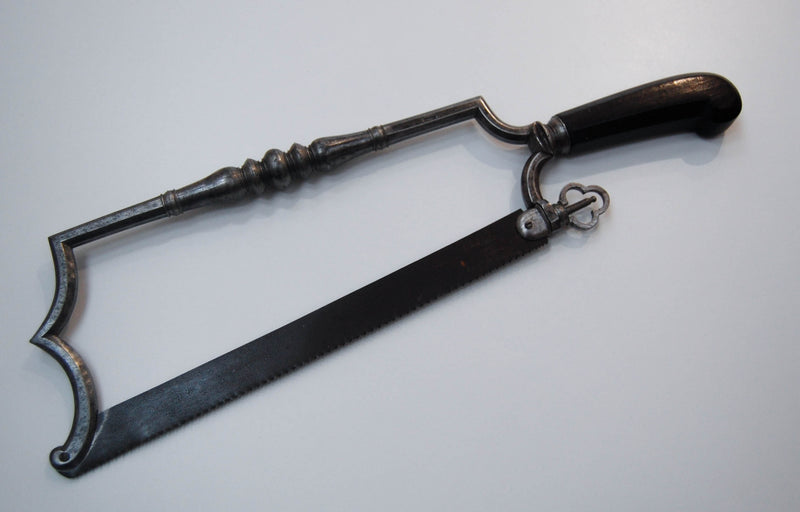
Yesterday I left Pvt. William Simpson of Pennsylvania grievously wounded in the leg by a British cannon ball in late August 1775, and two of the top doctors in the American lines arguing over his care.

Dr. Hall Jackson of New Hampshire was treating the troops north of Boston in Medford/Mistick without official commission or pay.

Dr. Benjamin Church, Jr., was overseeing the Continental Army’s medical wing, centered on hospitals in Cambridge.

Both doctors actually agreed that Simpson’s only hope was to have his wounded leg amputated. But Dr. Church insisted that first the man must be moved from Dr. Jackson’s hospital to the army hospital. And as Surgeon-General, Church outranked every other military surgeon.

Here’s Gen. John Sullivan’s story of what Church did next:
he went home himself—Eat his Dinner—Drank his Glass—then went to meet the wounded voluntier who, by the Loss of Blood, The Tearing and Lacerating his flesh by the Fractured Bone had become happy by growing Insensible of his pain—

Jackson had fortold this, but Church Determining to Kill the man Secundem Artem, called his Subs around him assigns each one his post, and then requests Jackson to take off the Limb—

he Refused, Informing them that the only reason was that the Man’s life could not be saved by amputating the Limb or by any other methods, & agreeable to his predictions the Man Died on the Second day.
And that wasn’t the only amputation case Sullivan said that Church’s administration had botched. He also wrote:
a man in my Brigade…was wounded in the Leg—Dr. Jackson was by—said his Leg must be taken off, but he did not dare to do it till Church was sent for—

he sent down two of his Subs, who Complimented Jackson with the Liberty of using the Saw—one of them was to cut the flesh—the other to take up the Arteries. The first failed, leaving some of the muscles untouched, & the other would not if left to himself have taken up the Arteries till the man had Bled to Death—

Jackson was obliged to take the knife from one & the needle from the other—performed the operation—Drest the man & tended him three Days—every symptom was favourable & Doubtless the man would have soon Recovered, but on the Fourth day Doctor Church sent for him & ordered him to the Hospital.

Jackson told them that the fourth being the Day on which the Inflammation was at the highest he would assuredly die if removed—he was not regarded—the man was removed & died accordingly.
Sullivan wrote those stories in early October, after Church had fallen under a shadow. The general was a bit of a hothead and a strong partisan for Dr. Jackson, so he might have slanted the stories against Church.

Back in early September, shortly after Pvt. Simpson’s death, Gen. George Washington had actually ordered inquiries to settle the disagreement about regimental hospitals versus Dr. Church’s centralized army hospitals.

TOMORROW: The results of those inquiries.

Monday, January 22, 2024

“They were hurried Volens Nolens to a general Hospital at Cambridge”

On 27 July 1775, the Continental Congress created a hospital department for its army outside Boston.

It also appointed Dr. Benjamin Church, Jr., to be Director-General of that department—though he was often called the army’s Surgeon-General.

Church had impressed Congress delegates with his years of work in the Boston Patriot leadership, his genteel bearing during a visit to Philadelphia, and his renowned surgical skills.

Receiving the news in August, Church quickly began to develop hospitals in Cambridge and Roxbury. He started to insist that regimental surgeons send their worst sick and wounded to those hospitals instead of maintaining smaller hospitals near their stations.

That policy soon became a bone of contention between Church and Dr. Hall Jackson, who until then had been working as respectful colleagues.

On 5 September, Jackson wrote to New Hampshire politician John Langdon:

I had established a Hospital for General [John] Sullivan’s Brigade had near a hundred Patients for more than a month, under as good regulations as could be desired, provided with every necessity that prudence and economy would dictate. When all of a sudden they were hurried Volens Nolens [willingly or not] to a general Hospital at Cambridge without a single compliment paid either to them, or their former attendants.
Jackson was ready to return home to Portsmouth—he was a volunteer, after all, with no commission or salary. He stated:
General [Charles] Lee, General Sullivan with all the Officers and Surgeons of his Brigade, will not suffer me to hint an intention to leave them; as not a Surgeon in the whole Brigade has ever had the small Pox, or ever performed a Capital Operation. Some Officers in the Army have offered me a substitution equal to anything I would expect, but this I should dipise, their pay being little enough to support their own Commissions with Honour and decency. Gratitude to them, obliges me to continue with them, until the pleasure of the Continental Congress is known…
On 4 September, Sullivan himself had told Langdon:
I know Doctor Church complains of those Regimental Hospitals as having been very expensive, which the Regimental Surgeons Deny, & say he cannot prove the assertion. How that is I cannot say, but am very certain that good Brigade Surgeons may assist in preventing extraordinary expense as well as Doctor Church or any other person, & give great satisfaction to both Officers & Soldiers in the Army.
That conflict had grown worse after the Continental move onto Ploughed Hill on 26 August. William Simpson, a Pennsylvania rifleman, “had his Foot and Ankle shot off by a Cannon Ball as he lay behind a large Apple Tree, watching an Opportunity to Fire at the Enemy’s Advanced Guards.”

It looks like nobody expected Pvt. Simpson to live, but all agreed that his only hope was an amputation. And, as we’ve seen, Hall Jackson considered himself an expert on amputations.

According to Sullivan, “Doctor Jackson…was there, & had every thing prepared to take off the Limb—Doctor Church happened to come in—forbid him to proceed & ordered the man to be sent to the Hospital.”

TOMORROW: How the operation turned out.

Tuesday, August 27, 2019

The Move onto Ploughed Hill and “Poor Billy Simpson”

On the evening of 26 Aug 1775, two thousand Continental soldiers moved onto Ploughed Hill in west Charlestown, assigned to dig entrenchments. Along with them went some Pennsylvania riflemen as a picket guard.

Capt. James Chambers (1743-1805) of Pennsylvania wrote to his wife on 29 August:
I was ordered to draw fifty men out of each of the Cumberland companies, and to be ready to march at Sunset. Accordingly I did so, and marched without beat of drum to Prospect Hill, and thence proceeded with the riflemen stationed there, in all about four hundred, to Ploughed Hill, and then down the hill within three or four hundred yards of the enemy’s strongest works, to cover a party of about two thousand musket men who were at the same time to entrench on Ploughed Hill.

They labored hard all night, and at daybreak had the redoubt nearly completed. The English began a heavy cannonading, which continued all day. They killed one adjutant and one soldier with cannon, wounded three others with musket balls. William Simpson, of Paxton [Paxtang], was struck by a shot and his foot carried away, &c.
Pvt. Simpson was born about 1743, family historians guess. His older brother Michael was a lieutenant in the Paxtang company.

Maj. Robert Magaw (1738-1790) provided a more detailed account of the action:
On Saturday Night Last about 2000 of our Army with 100 of our Battalion took possession of Plough Hill—this hill lies a little to the left of a direct line from our Camp to Bunker’s Hill near Mistick river, about 3/4 of a mile from us, & very little more from Bunker’s Hill. The Possession of it has for a considerable time been deemed an object of much importance both the by the enemy and by us.

They discovered our Work only on Sunday Morning, & soon began a very heavy Cannonade from Bunkers Hill & Two Floating Batteries which continued the whole day, & altho’ their Artillery was conducted by some of the best Engineers in the British Service & shot amazingly true, all the loss sustained was two killed in the fort and two wounded nearer to the Enemy where 50 of our Rifle Men were placed all day among Orchards, Cornfields etc., sustaining and returning a heavy Fire with the Enemy’s Musketry, the Cannon Balls Shot at Ploughed Hill constantly hissing over their Heads.

Poor Billy Simpson was the only person who suffered of ours. He had his Foot and Ankle shot off by a Cannon Ball as he lay behind a large Apple Tree, watching an Opportunity to Fire at the Enemy’s Advanced Guards. There appears no Danger of his recovery.
However, by the time Magaw finished that 29 August letter he had to add: “Poor Simpson whom I heard this Morning was in a good way is Since Dead.”

Lt. Col. Edward Hand (1744-1802, shown above) was a doctor and veteran of the British army. On 29 August he reported that “Poor Simpson (beau) had one of his legs shattered by a cannon ball, The director general took it off, but the poor lad was buried this evening.”

In his memoirs, James Wilkinson wrote, “The young man was visited and consoled during his illness by Gen. [George] Washington in person, and by most of the officers of rank belonging to the army.” However, Wilkinson didn’t arrive in Massachusetts until “two or three weeks” after Simpson was wounded on 27 August, and he’s far from the most reliable figure in U.S. history.

Whether or not Wilkinson’s statement is true, Pvt. William Simpson’s death was significant. He was the first soldier who had come to the siege of Boston from outside New England to die in the Continental cause.