J. L. BELL is a Massachusetts writer who specializes in (among other things) the start of the American Revolution in and around Boston. He is particularly interested in the experiences of children in 1765-75. He has published scholarly papers and popular articles for both children and adults. He was consultant for an episode of History Detectives, and contributed to a display at Minute Man National Historic Park.

Subscribe thru Follow.it


•••••••••••••••••


Showing posts with label firefighting. Show all posts

Saturday, May 02, 2026

“Inspector of all Boats, Letters, Goods and Passes”

In the fall of 1777, as recounted yesterday, John Hill and his family were released from captivity in Boston as part of a prisoner exchange.

I haven’t been able to find more about that deal—who arranged it, what prisoners of the Crown went free, and so on. To the Hills, those details probably didn’t matter.

Soon John and Elizabeth Hill and John’s daughter were inside British-held New York City. Before the war, they had run an inn there. Had that building survived the fire of 1776? Was it awaiting their return?

Later, in describing his services to the Crown, Hill simply said that he joined a volunteer militia company commanded by David Mathews, the city mayor.

But his major service began, he said, in July 1779 when he “was appointed Inspector of the Ferry, at Brooklyne; near New York, a place of great Trust, and received 10 shillings New York Currency, per Day.”

The Royal Gazette announced that appointment on 14 August:
JAMES PATTISON, Esq; Commandant of the city of New-York and Major General of his Majesty’s Forces in North-America, has been pleased to appoint JOHN HILL, Inspector of all Boats, Letters, Goods and Passes, at Brooklyn-Ferry.
John’s brother Richard, another evacuee from Boston, held the same post, perhaps earlier. In May 1780, Richard broke his thigh bone and had to use crutches, but he appears to have continued in the job.

On 10 Nov 1779, John Hill’s daughter (unnamed) married “Lieut. Cunningham, of the Legion,” at Brooklyn. As I wrote before, this officer might have been Ralph Cunningham, killed the next year in South Carolina.

As ferry inspector, John Hill ran periodic notices in the newspapers announcing lost property. For example, on 11 Dec 1779 he put a notice in the Royal Gazette that he was holding “a Vellice with a Marque, marked Capt. Knight, 43d regiment, with some small articles.” That was presumably Henry Knight, by then major in the 45th.

Hill also sold Richard Speaight’s “Royal Bitter Tincture, for the Fever and Gue,” that franchise being arranged “For the conveniency of the Inhabitants of Long-Island.”

But Hill’s main job was to keep watch for deserters and spies.

TOMORROW: Counterespionage.

Thursday, March 26, 2026

The Last of Castle William

On 10 Mar 1776, the last royal chief justice of Massachusetts, Peter Oliver, boarded a ship called the Pacific, which usually sailed between India and Britain. He called it “a very commodious vessell, which General [William] Howe was so polite as to appropriate to the accomodation of my friends and me.”

For the next week, Oliver recorded periodic artillery exchanges between Boston and the Continental lines. On 17 March, he wrote, “The troops at Boston embarked, and about 20 sail fell down into King Road by 11 o’clock this morning.” The next day, he watched the army start to destroy Castle William.

One of the Royal Artillery engineers involved in that operation was Capt.-Lt. Archibald Robertson. In his diary that officer wrote, “In the Morning went to Castle William to see the mines prepar’d; found them ready for Loading.” 

The next day, Robertson “found the mines all loaded but 12 which were again unloaded as the General wanted them not to be ready for some days.” Gen. William Howe was shifting some troops onto transport ships that had just arrived from Halifax, and the 64th Regiment was still holding the Castle, exchanging cannon fire with the mainland.

That night, Judge Oliver reported, the “south Blockhouse of the Castle was burnt, and some of the walls of it blown up.”

On 20 March, Capt.-Lt. Robertson wrote:
At 3 o’clock Colonel [Alexander] Leslie came to the Castle from the General with orders to load the mines. We began immediately and had 63 done by 7 o’clock.

As the night had the Appearance of Rain and the wind fair it was thought proper for the 64th to Embark. . . . Accordingly at 8 o’clock 6 Companies Embark’d and the Boats lay off untill the mines were fired, which was done 1/2 an hour Afterwards and they had a very good Effect.

The Barracks and other houses were then set on fire, and at 9 the Rear Guard consisting of 3 Companies, the Artillery, etc. Embark’d, and we got all safe on board the Transports.
Judge Oliver’s description of this spectacle was:
The blowing up of the Castle Walls continued: and at night all the combustible part of the Castle was fired. The conflagration was the most pleasingly dreadful that I ever beheld: sometimes it appeared like the eruption of Mount Etna; and then a deluge of fire opened to the view; that nothing could reconcile the horror to the mind, but the prevention of such a Fortress falling into the hands of rebels, who had already spread such a conflagration of diabolical fury throughout America, which scarce anything can quench but the— metu tremefacit Olympum.
That Latin phrase meant “He makes Olympus tremble,” hinting at a supernatural power.

Capt.-Lt. Robertson’s watercolor of Castle William being consumed by fire appears above; “a very good Effect” indeed.

TOMORROW: Leaving America behind.

Tuesday, March 24, 2026

“Fire Ships and fire Rafts, covered by the Smoke of Cannon”?

After evacuating Boston on 17 Mar 1776, the British military was gone—and yet not gone.

The troops, their families, their support staff, royal appointees, and more than a thousand Loyalists had embarked on more than a hundred ships, but those ships were bobbing in the outer harbor.

People worried that the army or navy would attack Boston or other coastal towns, either for supplies or for revenge. The Continental forces had a few armed schooners, good for capturing isolated merchant ships but not up to taking on a royal frigate, much less a fleet.

On 21 March, Josiah Quincy wrote to Gen. George Washington about what he could see from Braintree:
Since the Ships and Troops fell down below, we have been apprehensive of an Attack from their Boats, in Pursuit of live Stock; but, yesterday in the Afternoon, we were happyly relieved, by the Appearance of a number of Whaleboats, streching across our Bay, under the Command (as I have since heard) of the brave Lieut. Colo. [Benjamin] Tupper, who in the forenoon had been cannonading the Ships, with one or more field Pieces from the east Head of Thompson’s Island; and, I suppose, last Night cannonaded them again from the same Place, or from Spectacle Island.

This judicious Manœuvre had its genuine Effect; for, this Morning, the Admiral [Molyneux Shuldam], and all the rest of the Ships, except one of the Line came to sail, and fell down to Nantasket Road; where a countless Number is now collected:

In Revenge for their burning the Castle last Night; were we provided with a sufficient Number of fire Ships and fire Rafts, covered by the Smoke of Cannon from a few Row Gallies; this Night, might exhibit, the most glorious Conflagration, that was ever seen upon the watery Element, and the probable Consequences of it, a Period to the present War, otherwise, Humanity revolts at the Destruction of so great Number, even of our Enemies.
A fireship, as Samuel Johnson defined it, was “A ship filled with combustible matter to fire the vessels of the enemy.” Sometimes they carried not just combistibles but explosives. The tactic was to send such a ship toward a group of enemy vessels, set it afire, and get off safely while it continued on. A flaming fireship was probably the most fearsome single weapon of eighteenth-century warfare. Even if it didn’t damage enemy ships, they had to scramble to stay out of its way, and captains might decide to move on.

It seems significant that the Americans at this time wrote mostly about “fire Rafts.” That seems like a cheaper form of fire ship, not able to carry as much or be steered as easily, dependent on prevailing currents.

Quincy was a senior member of the Massachusetts Council and energetic supporter of the war. Gen. Washington wrote back to him on 24 March, 250 years ago today: 
The continuance of the Fleet in Nantasket Road affords matter for Speculation—it surpasses my comprehension—and awakens all my Suspicions—I have taken every step in my power to guard against Surprizes, but the temper of your People, seems to me to be, to apprehend no danger till it stares them in the Face—

I do not think there is cause to apprehend such Marauding parties as you dread—if any stroke is aimd, it will be a capitol one, for which reason I wish to be much upon my guard; & therefore have appointed Guard Boats, lookouts, &ca—there is one evil I dread, & that is their Spies, I could wish therefore that the most attentive watch was kept to prevent any Intercourse between the Ships & Main
He urged Quincy to set up a shore guard watching for such infiltrators, promising to pay those men’s wages.

Washington sent that reply through Gen. Artemas Ward and added this order for his second-in-command:
As these favourable Winds do not waft the fleet from Nantasket, my Suspicion’s are more and more roused. I wish therefore the Fire Rafts talkd of by Colo. Tupper, could be attempted in a Windy, or dark Night, I think this would discover their designs if no other good effect resulted from it.
TOMORROW: The next day’s action.

Tuesday, November 25, 2025

Fire in the Schoolhouse

On 24 Feb 1780, Boston’s Continental Journal reported:
Early on Tuesday morning last [i.e., 22 February], a fire broke out in the South Writing-School, (near the Laboratory) in this town, which entirely consumed the same; but by the usual activity of the inhabitants, it was happily prevented from doing further mischief.—

’Tis not yet discovered how the fire happened.
Four days later the Boston Gazette added:
Wednesday last a Person was prosecuted for disobeying the Orders of the Firewards in this Town, at the Fire of the South School the Morning preceeding, and fined £.47 for the same.—

[This Information being given, and the second Instance of the Kind, ’tis doubted whether there will be any Need of cautioning Persons in future, against disobeying the Firewards, at the Time of Fire ]
No information on who disobeyed and how.

The selectmen had other business to handle after a fire. They rewarded Richard Hunnewell’s engine company for being the first to arrive on the scene. On 1 March they announced that “those Persons who have taken Stuff from the late Fire [and] refuse to deliver up what they have taken” had one more week to return those goods before being summoned to Faneuil Hall.

In addition, on 23 February the selectmen asked Master Samuel Holbrook how this fire had broken out in his schoolhouse. He couldn’t explain, saying:
that there had been but little Fire [in the stove] that afternoon, and that he left the School the last of any one, and his Son had looked thro. the Windows about 9. OClock, having smelt fire.
I sense that the selectmen found that inadequate. It had been Master Holbrook’s responsibility to check that the schoolhouse stove was left in safe condition at the end of Monday’s lessons.

On 1 March the selectmen recorded: “Mr. Holbrook Master of the South Writing School has sent a Letter of resignation as Master on account of his health.” He was then fifty-one years old.

So now in the middle of the school year the selectmen had to find a new schoolhouse and a new schoolmaster.

TOMORROW: The search.

(John Fenno, Jr.’s 1787 advertisement for leather fire buckets above comes courtesy of Skinner. The leather-dresser’s nephew, also named John Fenno, knew the South Writing School well: he had trained there under Abiah Holbrook and then worked as Samuel Holbrook’s usher in 1773–74.)

Wednesday, October 01, 2025

Bell-Ringing on Special Occasions

Yesterday I looked at the daily schedule for ringing the bells of Boston’s meeting-houses in the 1740s.

I presume those bells also rang for their primary purpose, summoning congregants for services on Sunday.

Beyond that weekly routine, church sextons rang (or arranged for someone else to ring) the bells on various special occasions.

Bells were supposed to signal town meetings, for example. In September 1747 many North Enders complained that no bell had sounded in their neighborhood that morning, so the citizens agreed to postpone that day’s meeting until 3 P.M. The selectmen gave orders “that the Bells be rung throughout the Town.”

The selectmen also ordered sextons to ring their bells for celebrations: on imperial holidays, in response to news of military victories against the French, and when a high-ranking dignitary came to town.

Church bells rang in mourning, as when Boston received word that George II had died. And each meetinghouse’s bell was rung for a funeral, though on 12 May 1747 the town government moved to regulate that practice:
That for the Burial of any Person within the Town of Boston there shall not be more than the Bells of two Churches toll’d and that but twice at each Church on Penalty of Twenty shillings for each Bell more that shall be Toled at one and the same Funeral to be paid by him that shall order Procure or Tole the same.——

The second or Passing Bell not to exceed one hour and half after the first on Penalty aforesaid.——

That any Person demanding or Receiving any more than the Selectmen shall allow for twice Tolling said Bell at one Funeral shall forfeit the Sum of Twenty shillings.
Boston’s Whigs made a sonorous point on the second anniversary of the Boston Massacre, as the Boston Gazette reported: “the Bells muffled toll’d ’till Ten.”

Of course, church bells had also played a role in that 1770 event. After Pvt. Hugh White clubbed barber’s apprentice Edward Garrick, some of the boy’s friends got into the Old Brick Meeting-House to ring its bell. An unscheduled ringing was a fire alarm, but could also be useful in bringing out a crowd for a riot.

You can find more sources on public bells in eighteenth-century Boston in this article from the Colonial Society of Massachusetts.

TOMORROW: A new sound in Boston.

Sunday, June 08, 2025

“Your poor memorialist is stripped almost naked”

Within two weeks of seeing the provincial army destroy his house and farm on Noddle’s Island during the Battle of Chelsea Creek, Henry Howell Williams petitioned the rebel government for support.

On 12 June 1775 he told the Massachusetts Provincial Congress (as transcribed in American Archives):

That your memorialist hath, for eleven years last past, dwelt on an island in Boston Bay, commonly called Noddle’s Island, at a very high rent, and in order to pay the same was obliged to keep a large stock of horses, cattle, sheep, &c.; and that during all the years aforesaid hath paid very large taxes for said island, stock, &c., for the support of Government; and hath always endeavoured faithfully to discharge his duty, as a good member of society, towards all men, and all that was theirs.

That on Saturday, the 27th day of May last, a number of armed troops, commonly called Provincials, came on to said island, by way of Hog Island, and did then and there kill or carry away eight horses and three cows, part of the aforesaid stock, and also burnt and destroyed one dwelling-house and barn, with all the household goods therein contained, wearing apparel, &c.

That on Monday, the 29th of May, the same or another number of said armed troops, came again on to said island, and then and there did burn and destroy two other dwelling-houses, goods, &c., and three barns; and at the same time did take away and drive off from said island about five hundred old sheep, and about three hundred and forty lambs, with between thirty and forty head of horned cattle, the property of your memorialist, together with a further number of horses, hogs, &c., &c.

And that on Tuesday, the 30th day of May aforesaid, they entered again on to said island, and then and there proceeded and burnt your memorialist’s mansion house, with all the barns, corn-houses, and store houses, stores, provisions, goods, house furniture, wearing apparel, liquors, and utensils of all sorts, to a very considerable amount and value:

And on Saturday, the 10th day of June, instant, entered again, and burnt and destroyed the warehouse, the last building on said island, by which means your poor memorialist is stripped almost naked, and destitute of any place to lay his head, with a very large family of children and servants, to the amount of between forty and fifty in number, that are destitute of any business or supplies but from your memorialist.

These are therefore to request your Honours will take his most distressed circumstances into your wise consideration, and make such order thereon as in your wisdom shall seem meet…
That number of forty to fifty dependents probably included everyone Williams employed at harvest time, not his year-round staff. But he was trying to make the case that his personal loss was a societal problem that justified spending scarce public funds.

It looks like Williams had given up hope of having the congress help retrieve his livestock. In fact, the rebel government was already assigning horses from Noddle’s Island to the war effort. The sheep, cattle, and hogs went toward feeding the troops. Figuratively, it was too late to close that barn door.

Then the Battle of Bunker Hill happened five days later, giving the Provincial Congress a lot of other things to deal with.

TOMORROW: Animal tracks.

Friday, May 30, 2025

“Lucky for the Town that the Fire broke out in the Day Time”?

Just above its report on the Royal Navy store ship that caught fire in Boston harbor on 29 May 1773 (quoted yesterday), Richard Draper’s Boston News-Letter ran this brief item about another event that same day:
Saturday last being the Anniversary of the Restoration of King Charles II. a Feu de Joy was fired on board the Men of War in this Harbour.
Ordinarily, royal anniversaries like the king’s and queen’s birthdays were celebrated by both civil and military authorities in Boston. In this case, there was a conspicuous absence of cannon salutes, bell-ringing, or toasts inside the town.

New England had generally supported the Parliamentary side in the English Civil War and the Protectorate of Oliver Cromwell that followed. Its people and elected officials shielded regicides from Charles II’s retribution. Most British people thought the Glorious Revolution of 1688 was a Good Thing, but New Englanders were particularly convinced that deposing the Stuarts was a necessary course correction as the kingdom sank back into papist tyranny.

Therefore, local forts and authorities didn’t join the Royal Navy in celebrating the Stuart Restoration that May day in 1773. But did the descendants of Puritans begrudge the military’s action?

Of course they did. Thomas and John Fleet’s Boston Evening-Post reported the same event this way:
Saturday last being the anniversary of the Nativity and Restoration of King CHARLES II. the Colours, (as usual on Red Letter Days) were displayed on board the Flag Ship here, and at One o’Clock a Feu de Joy from her and the Gibraltar (being the only Ships of War we had then here to protect us) was all the Notice, as we have yet heard, that was taken to honor the Memory of the execrable Race of the STEUART Family.
Even the newspaper’s use of the phrase “Red Letter Days” was fraught with meaning. Those were the saints’ days on the Anglican calendar, shunned by the Puritans. As late as 1758 Roger Sherman had to explain why he acknowledged those dates in the almanacs he published “to serve the Publick” of Connecticut despite being a devout Congregationalist.

As for the radical Boston Gazette, it didn’t mention the anniversary of Charles II’s coronation at all. But Edes and Gill’s report on the ship catching fire was highly political:
Saturday last about 12 o’Clock at Noon a Fire broke out on board the Britannia, Capt. John Walker, a Store Ship for the Fleet station’d here for the Protection of the Trade and Fishery, lying in the Harbour, and within Gunshot of the Town.

It being reported that there was a considerable Quantity of Powder on board, it put the Inhabitants in great Consternation. Thousands of People seeking Refuge from the falling of Chimneys, &c. in Case of an Explosion. However as it turn’d out, there was no Powder on Board; which if it had at first been ascertain’d, would have sav’d said Ship from being burnt almost to the Water’s Edge. Considerable Stores we hear were not consumed.

It is however some what lucky for the Town that the Fire broke out in the Day Time, and when only the People belonging to the Ship were on board, otherwise it might have been Matter of Representation to the Board of Admiralty at Home to have immediately fitted out a Fleet in order to apprehend certain Persons to be sent beyond the Seas to be tried, as in the Case of the Gaspee Schooner at Rhode-Island.

Be it as it may, this Accident may prove very beneficial to some in settling Accounts.
In this one report the Boston Gazette thus managed to suggest that:
  • The idea that Royal Navy warships were in the harbor to protect locals instead of threatening them was laughable.
  • Naval administrators were to blame for the slow firefighting response.
  • Authorities like Thomas Hutchinson would have been happy to add this fire to their list of false accusations about Boston.
  • The royal government was acting unconstitutionally in the Gaspee inquiry.
  • Some corrupt officials or contractors would use the fire to cover up embezzling or other crimes.
That was some impressive conspiracy theorizing.

I should note that the fire was seen at noon, the cannon salute to Charles II at 1:00 P.M. So locals couldn’t have set fire to the ship to protest the royalist celebration. On the other hand, navy commanders might have been more eager to salute the Stuart Restoration after seeing their store ship burning out of control in Boston harbor.

Thursday, May 29, 2025

“A Fire broke out on board the fine large Store-Ship”

While looking at the diary of Thomas Newell this spring, I was struck by this dramatic entry for 29 May 1773, 252 years ago today:
King’s store-ship burnt in this harbor. The inhabitants greatly surprised, fearing there was a great quantity of gunpowder on board. Thousands retired to the back part of the town, and over to Charlestown, &c.; but no powder happened to be on board.
John Rowe mentioned the same event in his diary, but he was out of town fishing during the panic, so his entry doesn’t preserve the same excitement.

For more detail I turned to the newspapers. Here’s the straightforward report in the 3 June Boston News-Letter:
at Noon, a Fire broke out on board the fine large Store-Ship, (which had been laying in this Harbour for several Months past commanded by Capt. [John] Walker, having Stores for the Navy) which soon communicated to the Masts, Rigging and Turpentine on the Deck, and before any Assistance came, her upper Works were almost wholly in a Blaze; so that little or no Attempt was made to extinguish it:—

The Boats from the Men of War, with some from the Town, towed the Ship over to Noddle’s Island, where, after scuttling her, she was left to burn to the Water’s Edge.—

The Fire, it is said, was occasioned by some Coals falling from the Hearth of the Cabouse on to the Deck, which had lately been pay’d over with Turpentine, and spread with such Rapidity that nothing could be taken out of her:—

The Captain, with his Wife and two Children, who usually kept on board, likewise a Boy (the other People belonging to her being ashore) were obliged to be taken out of the Cabin Windows, without being able to save the least Thing but what they had on:—

A report prevailing at the Time of the Fire, that a large Quantity of Powder was on board, put the Inhabitants in general into great Consternation, for fear of the Consequences that might arise from an Explosion thereof; but being afterwards assured that none was in her, they became perfectly easy, and the Hills and Wharfs were covered with Spectators to view so uncommon a Sight.

Some of the Stores in the Hold, such as Cordage, Cables, and Anchors, which were under Water before the Fire could reach them, will be saved.
A “caboose” was originally a ship’s galley, Merriam-Webster says. Advertisements from eighteenth-century America indicate a “caboose” could be sold separately from a ship, and in 1768 New York a man named Thomas Hempsted was killed by “the Caboose falling on him” as a ship keeled over. So I suspect it also meant the stove and other cooking equipment designed for a ship but not necessarily installed in a dedicated cabin.

The first documented use of the word “caboose” in English was in 1732, and Samuel Johnson didn’t include it in his 1755 dictionary. But everyone reading the Boston newspapers was expected to know what that meant.

TOMORROW: The conspiracy theories.

Tuesday, May 27, 2025

“Surely the most ridiculous expedition that ever was plan’d”

After the exchange of fire over Grape Island on 21 May 1775, both sides of the war claimed to have damaged the other and gotten the best of the day.

Four days after the fighting, the New-England Chronicle stated:
Whether any of the Enemy were wounded, is uncertain, though it is reported three of them were. It is thought that they did not carry off more than one or two tons of hay.
As for the gunfire from the departing Royal Navy vessels, that was “without effect.”

The next day’s Connecticut Gazette was even more positive:
the People…wounded 3 of the Enemy, and drove them off. They had got a Ton and Half of Hay on Board.
And the 3 June Pennsylvania Ledger said:
the regulars returned to Boston, with the loss of eight men killed and several wounded, as the provincials were informed by a gentleman that left Boston the next day.
In contrast, Lt. John Barker of His Majesty’s 4th Regiment wrote in his diary that ”a few of the Rebels were killed, without any loss on our side,” and he estimated the amount of hay removed as up to “7 or 8 Tons.”

Militaries always have a better sense of their own losses and usually exaggerate the enemy’s. If we follow that guideline and accept only what each army said about its own force, then the day ended without any casualties on either side.

The Crown forces had taken away a few tons of needed hay, but the Patriots burned far more—even Barker guessed his comrades had left “about 70” tons behind.

The provincials also burned Elisha Leavitt’s barn on the island. Local tradition held that he treated his neighbors to rum during the day to avert similar violence against his property on shore.

As usual, Lt. Barker saw a lot to complain about:
It was surely the most ridiculous expedition that ever was plan’d, for there were not a tenth part boats enough even if there had been Men enough, and the Sloop which carried the Party mounted 12 guns, but they were taken out to make room, whereas if one of two had been left it would have effectually kept off the Rebels
That might have been echoed in the 26 May Connecticut Gazette: “We hear Gen. [Thomas] Gage blamed the Admiral [Samuel Graves] for sending Vessels that were so small, on this Enterprize.” We should ask how the printers could reliably know such a thing. On the other hand, it may be significant that Graves skipped over this action in his self-serving report narrative of the war.

The reaction on the provincial side was very different. In a follow-up letter to her husband, Abigail Adams had nothing but praise for the locals who took part in the fight, particularly their own relatives:
I may say with truth all Weymouth Braintree Hingham who were able to bear Arms, and hundreds from other Towns within 20 30 and 40 miles of Weymouth.

Our good Friend the Doctor [Cotton Tufts] is in a very misirable state of Health, has the jaundice to a [very gr]eat degree, is a mere Skelliton and hardly able to [ride fro]m his own house to my fathers. Danger you [know] sometimes makes timid men bold. He stood that day very well, and generously attended with drink, Bisquit, flints &c. 5 hundred men without taking any pay. He has since been chosen one of the committee of Correspondence for that Town, and has done much Service by establishing a regular method of alarm from Town to Town.

Both your Brothers were there—your younger Brother [Elihu Adams] with his company who gaind honour by their good order that Day. He was one of the first to venture aboard a Schooner to land upon the Island.
That reflects the general mood on the two sides at this time. The British military was having inter-service quarrels over logistics while the provincials were celebrating solidarity. Even though neither side had accomplished a great deal, or suffered a serious loss.

Friday, April 18, 2025

Counterfactual 3: If Prescott Hadn’t Alerted Concord

Continuing my speculation about what might have happened if Paul Revere and William Dawes hadn’t alerted Lexington about the regulars coming out, I’m now going to look at Concord.

This post was prompted by the suggestion in Kostya Kennedy’s book The Ride that if Revere hadn’t ridden out on 18 April “the munitions at Concord could have been seized.”

That’s mistaken because militia colonel James Barrett, his helpers, and his family had started moving the most valuable military supplies out of town days before the British army march. In part because Revere had brought a warning from Boston on an earlier ride. 

On 6 April, James Warren was in Concord for a meeting of the Massachusetts Provincial Congress, and he wrote to his wife Mercy: “This Town is full of Cannon, ammunition, stores, etc., and the Army long for them and they want nothing but strength to Induce an attempt on them.”

But when the redcoats arrived, Ens. Henry DeBerniere said, they “did not find so much as we expected.” Specifically, he reported:
Capt. [Mundy] Pole of 10th regiment…knock’d the trunnions off three iron 24 pound cannon and burnt their carriages; they also destroyed a quantity of flour, and some barrels of trenchers and spoons of wood for their camp.
At Barrett’s farm the soldiers burned some more carriage wheels. But the town was obviously no longer “full” of military stores. And that change had taken days, not a few hours.

If the British expedition hadn’t paused in Lexington but marched straight through, as I posited yesterday, the vanguard would probably have arrived in Concord less than half an hour earlier. Some of the local militia might have been on alert, but without Dr. Samuel Prescott’s warning, it probably wouldn’t have been at full force.

But would that have mattered at first? When the regulars approached the town, the Concord militia marched away and took a position on a hill west of the North Bridge. Other men and then other town companies joined them there while the redcoats searched both the town and Barrett’s farm.

Without the earlier alerts from Revere riding west from Medford to Lincoln and the Prescott brothers riding out of Concord, those militia companies from other towns wouldn’t have joined the Concord companies as quickly as they did. It’s thus possible there would have been significantly fewer men on that hill when smoke began to rise from the center of town, where redcoats were burning carriage wheels (and, briefly, the town house).

The Concord men might have been just as upset by the sight of that smoke, but might not have felt their numbers were strong enough to do anything about it. And eventually the smoke would have dissipated as people in town succeeded in dousing the fire. So the provincials might never have made their fatal march down to the bridge, with the Acton company in the lead.

TOMORROW: The battle that never was.

Monday, July 08, 2024

A City Project to Reconstruct Charlestown in June 1775

Last month, on the anniversary of the Battle of Bunker Hill, the Boston’s Archaeology Program announced the release of research on the people who lived in Charlestown at that time.

During the battle, most of the town burned to the ground. That event provided a physical marker in the ground, and also a documentary milestone as inhabitants filed claims for their losses. However, the department notes, “Despite multiple attempts over half a century, no funds were ever granted.”

Using real estate records compiled by Thomas Bellows Wyman in The Genealogies and Estates of Charlestown (two volumes, 1879), the City Archaeology Team produced a map of property ownership in June 1775 that can be viewed here. The announcement says, “Each property is clickable, with details including a direct link to the property deed (via free familysearch.org account).”

The next step: “property descriptions based on deeds and claims documents to better understand the layout of buildings, structures, wharves, agricultural spaces, fences, and other landscape features for a future 3D landscape reconstruction of 1775 Charlestown.”

Another product of this effort is a reconstructed “census” for Charlestown in 1775, here in spreadsheet form.

Finally, there are multiple databases about the claims themselves, now housed in the Boston Public Library. Those documents have been scanned and are being transcribed, but the index is already available.

One name that stood out for researchers and myself was Margaret Thomas, filing for the loss of a house and furnishings worth £68.9, as shown here.

Wyman listed Margaret Thomas as “Spinster,” house owner, and “negro of Bartholomew Trow,” a Charlestown militia officer. Perhaps she had been enslaved in the Trow family, and anxious authorities still recorded that link even after she was buying real estate of her own.

Was this the same Margaret Thomas who worked at Gen. George Washington’s Cambridge headquarters by February 1776, joined the general’s traveling domestic staff, and married William Lee before the end of the war? We know that other people who came to work at the commander’s headquarters in 1775–76 had been burned out of Charlestown.

The handwriting on the “Summary Accompt.” filed with the town doesn’t match the signature on a receipt Margaret Thomas signed in Valley Forge in April 1778. But it’s possible that the claim was filed by someone else on Thomas’s behalf, or that this summary was copied by someone else. It’s definitely a lead worth following up.

Monday, May 13, 2024

How the Massachusetts Press Responded to the 1783 Earthquake

Prompted by Karen Kleemann’s article quoted yesterday, I looked at how Massachusetts newspapers treated the 29 Nov 1783 earthquake and found some interesting details.

First, we’re used to a standard time extending across an entire time zone. But before railroads, every town had its own noon, and therefore its own perception of when something big happened.

The Massachusetts Gazette and General Advertiser in Springfield said this earthquake was felt “at 40 minutes past 10 o’clock.” The Boston Gazette reported it at “about six minutes before eleven o’clock.” And the Salem Gazette pegged it “at about 11 o’clock.” Of course, it took a few seconds for the shock to travel between those places. The big difference in those times came from how the Earth spins.

All those reports appeared in the first week of December. Starting on 8 December, Massachusetts newspapers began reporting on other places people detected the quake. Printers wondered if it wasn’t as small an event as it first seemed. On 12 December, the Salem Gazette said the shaking was definitely worse in Connecticut and New York.

By 18 December, the newspapers from Philadelphia had arrived, and Massachusetts printers could share details from nearer the epicenter in New Jersey. China and pewter thrown off shelves! People woken from sleep! Aftershocks later the same night!

Still, there were no deaths. Earlier in the year, American newspapers had reprinted news of many people dying from earthquakes in Italy, and similar reports from China.

Isaiah Thomas’s Massachusetts Spy editorialized:
This year must make a conspicuous figure in the instructive records of Time: Great revolutions have occured in the natural and political world.

In Europe the convulsions of nature have destroyed a great part of Sicily, &c. with about one hundred thousand inhabitants. In America such events have taken place, as were before unknown to its civilized inhabitants.

What gratitude is due from us to heaven for its Benedictions—Independence, as a Nation, with the blessings of Peace; and that we have not in the first transports of our national existence met with those calamities that might in a moment have reduced our Continent to its original Chaos!
The Salem Gazette’s 12 December follow-up to its first report ran just above a local disaster with real damage: A fire in John Piemont’s barn in Ipswich had killed one cow and consumed all his hay for the winter.

Back in 1770, Piemont was a hair stylist at the center of Boston, and at the center of Boston events, as I discussed back here. He was able to bounce back from this fire, and in 1784 advertised that he once more offered a stable for horses.

(The broadside shown above dates from almost thirty years after this quake.)

Thursday, March 14, 2024

The Politics of Francis Shaw

As I discussed yesterday, despite how Josiah Quincy characterized the situation in his biography of Samuel Shaw, the Shaw family was not forced to host British marine officers under the Quartering Act.

Rather, in all likelihood, the merchant Francis Shaw (1721–1784) chose to rent rooms to Maj. John Pitcairn, Lt. John Ragg, and perhaps other men.

We don’t have enough sources about Francis Shaw to know what his motivations might have been: money, a sense of obligation or deference to the military, a wish to mollify the royal authorities?

Shaw wasn’t a Loyalist. He didn’t sign either of the addresses to the royal governors in 1774, nor leave town at the evacuation in 1776. In preceding years, he hadn’t stood up to complain about any of the Whigs’ measures.

Nor, however, was Francis Shaw an active Patriot. He had joined the Boston Society for Encouraging Trade and Commerce back in the early 1760s. That was an early chamber of commerce, speaking for the merchant community, and it opposed the Sugar Act and what its members saw as overeager enforcement of that law. In 1770 the Boston town meeting added Shaw’s name to a committee to promote non-importation, particularly by not selling tea.

But other than those moments, the name of Francis Shaw doesn’t appear in connection with Whig politics. He didn’t dine with the Sons of Liberty in 1769. He wasn’t on the committee to promote the Continental Association of 1774. (He may have been a member of the St. Andrew’s Lodge of Freemasons, meaning he knew some Whig leaders, but wasn’t forward in supporting them. Or that Freemason might have been Francis Shaw, Jr.)

The town meeting elected Shaw as a fireward in the North End in 1772. The North End Caucus endorsed his reelection the next year, and he kept at that job until 1784. Boston thanked him for his long service a few months before he died. But that was an apolitical job.

My impression is that Francis Shaw chose to stay out of the larger debate. His son Samuel, in contrast, was fervent for the Patriot cause in 1775. We can see hints of that difference in the anecdote about Samuel getting into an argument with Lt. Ragg, quoted back here.

Francis Shaw had chosen to host British marine officers. The anecdote suggests he didn’t speak out against Ragg calling Americans “cowards and rebels” and then apparently moving toward a duel with twenty-year-old Samuel. The father didn’t, for instance, demand that his tenant leave his son alone—or if he did, it didn’t become part of the family lore. It was up to Maj. Pitcairn to calm matters.

Furthermore, I think the evidence suggests Francis Shaw told his son not to join the Continental Army. Only on his twenty-first birthday, when he was no longer legally under his father’s control, did Samuel leave Boston and seek a commission in the artillery regiment.

Once that happened, letters show that Francis Shaw supported his son, financially and otherwise. After the siege, the merchant served on Boston committees to collect taxes and record citizens’ military service. He may have invested a bit in privateers (or this could have been a man of the same name from Salem). In sum, Francis Shaw became a Patriot, even if he didn’t start out as one.

COMING UP: Lt. Ragg’s war.

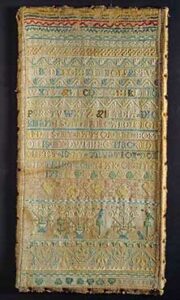
(The picture above, courtesy of Old North, shows a sampler made by twelve-year-old Lydia Dickman in 1735. Nine years later she married Francis Shaw. They had one child together, but Lydia died in 1746 and her son the following year. Francis Shaw remarried and had more children, including Samuel. The sampler is now in the collection of the National Museum of American History.)

Monday, May 15, 2023

Carp on “A figurative and literal tinderbox”

In a long article at the Smithsonian Magazine, Erik Ofgang discusses Benjamin L. Carp’s argument in The Great New York Fire of 1776: A Lost Story of the American Revolution.

As is clear from the article title, “Did George Washington Order Rebels to Burn New York City in 1776?,” this analysis digs into the question of why the city burned so soon after the British army returned.
“I feel that it was definitely set deliberately,” said Carp on a recent afternoon outside of Trinity Church, which has been rebuilt twice since the 1776 fire. A historian at Brooklyn College and the City University of New York Graduate Center, Carp knows he hasn’t proved this theory “beyond all reasonable doubt,” but he points out that legal standard isn’t the norm for historians. He believes many accepted historical truths—including the “dinner table bargain” of 1790, in which Thomas Jefferson supposedly brokered a deal between Alexander Hamilton and James Madison—are built on similar or flimsier evidence.

In his meticulously researched, peer-reviewed book, Carp recounts how New York City, which was centered around modern-day Lower Manhattan and didn’t yet include any boroughs, was a figurative and literal tinderbox in the days before the fire. The vast majority of buildings were wooden. In the aftermath of the Continental Army’s retreat on September 15, the city was crawling with ardent Loyalists, New England radicals, British soldiers and Rebel spies—not to mention rumors that a fire was coming.

When the inferno finally broke out, many witnesses said they saw people starting smaller fires, carrying incendiary devices or interfering with efforts to put the fires out. These accounts are found in diary entries, contemporary newspaper articles and later testimonials. Additionally, Carp counts more than 15 distinct fire ignition points reported by witnesses.
The article tackles questions about the nature of historical evidence and changing perspectives.

This month will bring a couple more opportunities to hear Ben Carp speak about this and other Revolutionary issues. (He likes to prepare different lectures for different venues, so don’t be shy about signing up for both.)

Thursday, 18 May, 6:30 P.M.
Lost Stories: How the New York City Fire of 1776 Illuminates Unfamiliar Lives of the American Revolution
Fraunces Tavern Museum, in person and online
Register here

Tuesday, 30 May, 7:00 P.M.
Urban Geographies of the American Revolution
Leventhal Map Center, Boston Public Library, in person and online
Register here

Sunday, March 26, 2023

“Paid my Respects to Generall Washington”

By Saturday, 24 March, the merchant John Rowe was so used to dining at home that in his diary he started off describing dinner there before remembering he’d dined with a friend and relative, shown here courtesy of the Boston Athenaeum:
I din’d at home with at Mr. [Ralph] Inman’s with him Mrs. [Elizabeth] Inman Genl. [Nathanael] Green Mrs. [Catherine] Green Tuthill Hubbard Mrs. [Dorothy] Forbes, Mr. [John?] Lowell Mrs. Rowe Capt. Gilbt. Speakman & Doctr. [blank] & Spent the Evening at home with Mrs. Rowe Capt. Speakman & Jack Rowe

Some Fire below Nantasket Road—I take it to be a Transport set on Fire to destroy her
Tuthill Hubbard was another Boston merchant, not very active politically. He would become the town’s postmaster.

If another of Inman’s guests was John Lowell (the surname isn’t clear in the manuscript), Rowe might have spoken to him about recovering the value of the goods the British military confiscated on their departure. Later in the year, Lowell would represent Rowe and other merchants in that effort.

The next day was a Sunday:
afternoon I went to Church Mr. [Samuel] Parker Read prayers & preached from the 22d. Chapter of St. Mathew . . . This was a very Good Sermon & considering the distressing Time A Good many People At Church. . . .

A Transport was burnt Last night in the Lighthouse Channell
The British evacuation fleet was still hovering in the outer harbor as 25 March dawned, and Rowe tracked its movement on Monday:
The Fleet still in Nantasket Road—

A Great many of the Ships in Nantasket Sailed this Afternoon

278 Dollars continintall
There’s no indication what that last line referred to, but Rowe was getting used to a new currency.

On Tuesday, 26 March, John Rowe completed the task of cozying up to the new power structure to protect his commercial interests:
Snowd a Little to Night— . . .

I waited on Genl. Greene this morning with Mr. Baker abo. Some Iron on my Wharff.

I din’d at home with Capt. Timothy Folger The Revd. Mr. [Samuel] Parker Mr. [Jonathan] Warner Mr. Richd. Greene Mrs. Rowe & Jack Rowe—

after dinner I went with Mr. Parker & paid my Respects to Generall [George] Washington who Receivd us Very Politely.
I’ll leave Rowe there for the nonce, having successfully trimmed his sails in March 1776.

Wednesday, March 22, 2023

“Plundering of Houses &c. Increasing”

By 12 Mar 1776, the British military’s evacuation of Boston was dissolving into chaos in the eyes of merchant John Rowe, and the cannon were going off again:
A Continual Fire from Both sides this night

They are hurrying off all their Provisions & destroying & Mangling all Navigation

also Large Quantitys of Salt & other things they heave into the Sea & Scuttle the stores

I din’d & spent the Evening at home with—
The Revd. Mr. [Samuel] Parker Mr. [Jonathan] Warner & Richd. Green also Mrs. Rowe & Jack Rowe—

The Inhabitants are greatly terrifyed and Alarm’d for Fear of Greater Evils when the Troops Leave this distressed Place

I got Crean Brush Rect. for the Goods taken from Mee, but dont expect much Good from it tho severall Gentlemen Say they will be my Friend in this affair
By “be my Friend” Rowe meant those gentlemen would testify about his losses—though now he had a receipt as well.

Rowe dated his next entry “13 March Wednesday,” getting the date wrong—a sign of his distress:
I have Staid at home most part of this day—

The Confusion still Continues & Plundering of Houses &c. Increasing

Genl. [James] Robinson paid Me a Visit & Eat a Morsell of Provisions together with Richd. Green Mrs Rowe & Jack Rowe

The Sailors from the Ships have Broke Open my Stores on my Wharff & plunderd them— this was done at Noon this day—

This morning A house was burnt at the North End, whether Set on Fire on Purpose or from Accident Seems Uncertain—

a Considerable Number of Cannon fir’d in the night from Both Sides—

The Country People throwing up more Entrenchments &c on Dorchester Neck—

(I dind at home with Genl. Robertson—Mr. Richd. Green Mrs. Rowe & Jack—) and spent the Evening at home with the Revd. Mr. Saml. Parker Mr. Warner Mr. Richd Greene & Mrs. Rowe
On Thursday, 14 March, Rowe realized he’d made the dating error and corrected himself. This day brought “Snow & Sleet” and a cold wind:
This night much damage has been done to Many houses & stores in this Town & many valuable Articles stolen & Destroyed—

Stole out of Wm. Perrys Store a Quantity of Tea Rum & Sugar to the value of £120 Sterling

Mr. Saml. Quincys house broke & great Destruction The Revd. Mr. Wm. Walters also the Revd. Dr. [Henry] Caners & many others
Samuel Quincy had left Boston months before, so his house was vulnerable. But the ministers had stayed out the siege and presumably didn’t have mercantile goods to carry away.

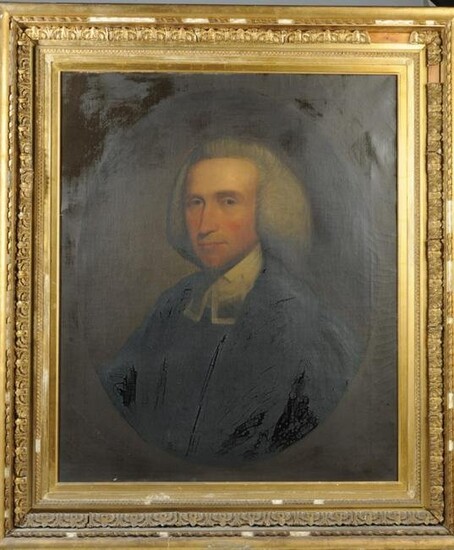
The picture above shows the Rev. William Walter, Anglican minister at Boston’s Trinity Church (1767–1776) and Christ Church (1791–1800). It was sold at auction in 2021.

TOMORROW: The expected departure date.

Saturday, February 11, 2023

2023 Conference of the American Revolution in Williamsburg, 17–19 Mar.

Yesterday I received some books and word of another Revolutionary history conference for the public.

America’s History L.L.C. will hold its tenth annual Conference of the American Revolution on 17–19 March in Williamsburg, Virginia.

Bruce Venter and conference head of faculty Edward G. Lengel, now Chief Historian at the National Medal of Honor Museum, have been organizing this annual event for several years, weathering some difficult times in the pandemic. The gathering spot is once again the Woodlands Hotel of Colonial Williamsburg, allowing easy access to the historic area.

The 2023 presenters and their topics are:
  • Maj. Gen. Jason Bohm, U.S.M.C.: “George Washington’s Marines: The Origin of the Corps and the American Revolution”
  • John “Jack” Buchanan: “‘Picked Men, Well Mounted’: The Battle of Musgrove’s Mill, 1780”
  • Benjamin L. Carp: “‘Many Circumstances Lead to Conjecture That Mr. Washington Was Privy to This Villainous Act’: George Washington and the Great New York City Fire of 1776”
  • Kaitlin Fergeson: “Thompson’s Black Dragoons: A Study in Loyalist Cavalry in the American Revolution”
  • Kylie Hulbert, “America’s Revolutionary War Privateers: The Untold War at Sea”
  • Cole Jones, “Captives of Liberty: British, German and Loyalist Prisoners of War and the Politics of Vengeance”
  • Mark Edward Lender, “Fighting for the Key to the Continent: Fort Ticonderoga, 1777”
  • Margaret Sankey: “Oh the Things They Said: The Yorke Family’s Opinions of British Generals”
  • Eric Schnitzer, “In Memoriam: Rediscovering the Stories of Americans Who Died in the Battles of Saratoga”
  • David O. Stewart, “The Real Miracle at Valley Forge: George Washington’s Political Mastery.”
As with the Fort Plain conference described yesterday, attendees can arrive a day before the presentations and take a bus tour of nearby historic sites with an expert guide. In this case, Dr. Glenn Williams, retired from the U.S. Army Center for Military History, will be showing and discussing sites of the siege of Yorktown. As of now, however, all the seats on that bus have been filled, so the organizers are keeping a waitlist.

For all the details and registration info, visit the conference webpage.

Wednesday, February 08, 2023

Ben Carp on the New York Fire, 10 Feb. and More

On Friday, 10 February, the New York Military Affairs Symposium will host an online talk by Benjamin L. Carp on his new book, The Great New York Fire of 1776: A Lost Story of the American Revolution.

The teaser text:
It’s New York City, summer of 1776, and an unruly rebel army under General George Washington’s command repeatedly threatened to burn the city rather than let it fall into the hands of the British. In August, after the Patriots’ defeat at the Battle of Brooklyn, Washington made a miraculous escape with his army across the East River to Manhattan. The British captured New York City, then much of it mysteriously burned to the ground.

Carp explores that fire and why its origins remained a mystery even after the British investigated it in 1776 and 1783. Uncovering stories of espionage, terror, and radicalism, Carp paints a vivid picture of the chaos, passions, and unresolved tragedies that define a historical moment we usually associate with “life, liberty, and the pursuit of happiness.”
Ben Carp is the Daniel M. Lyons Associate Professor of American History at Brooklyn College. He taught at Tufts University several years back, and is also the author of Defiance of the Patriots: The Boston Tea Party and the Making of America.

This online talk is the first of several events listed on Carp’s website. If you can’t tune in on Friday, you’ll have more chances to hear him speak on the New York Fire in the coming months.

Thursday, 23 February, 7:00 P.M.
Putnam History Museum

Thursday, 2 March, 6:30 P.M.
Six Bridges Book Festival

Thursday, 20 March, 6:30 P.M.
Gotham Center for New York City History

Thursday, 27 April, 7:00 P.M.
Fred W. Smith National Library

There will also be in-person events in greater New York.

Wednesday, February 01, 2023

“I don’t want a major city to catch fire”

Via Yale University Press, Prof. Benjamin L. Carp of Brooklyn College blogs:
When you write a book, you have to promote it. When you promote a book, they ask you to pitch ideas to news outlets. When you pitch an idea to a news outlet, they say you should have a “hook” that relates to contemporary events.

I do not want there to be a hook for my book, The Great New York Fire of 1776: A Lost Story of the American Revolution, because I don’t want a major city to catch fire.

My book is about an awful disaster—a fire on September 21, 1776, that burned about a fifth of New York City, which was then the second-largest town in the rebelling colonies that became the United States. I think the evidence shows that American rebels burned the city deliberately—and perhaps with George Washington’s blessing. The British had just occupied New York six days earlier, and the Americans had talked about depriving the British of headquarters for the winter. After the fire, however, the rebels insisted that Washington and his men had nothing to do with the fire, and they launched a campaign of correspondence and newspaper items to counteract any suggestion that the Americans were to blame. They succeeded, too: for years, most historians said the fire was either an accident or a mystery.

Our world is currently filled with destructive warfare, climate disaster, and disinformation. It shouldn’t be too difficult for me to connect a tragic event from the past to the catastrophes we face today. But I keep hoping the world won’t give me a hook.
As in Defiance of the Patriots: The Boston Tea Party and the Making of America, Ben Carp spent part of his time researching this book digging below the standard history of this famous event to find early clues about which individuals were responsible.

The Tea Party was carefully controlled destruction while the New York fire was supposed to get out of control. The men who destroyed the tea were Boston Whigs no doubt selected for their reliability. Interestingly, some of the figures whom this book links to the Manhattan arson were people from well outside the American power structure, yet willing to sacrifice themselves for the cause.

Saturday, January 28, 2023

Fundraising for Security at Carpenters’ Hall

Carpenters’ Hall was built and owned by the Carpenters’ Company of the City and County of Philadelphia.

The guild started meeting in the building in 1771, though they continued working on it until 1775. By the fall of 1774 it was in good enough shape to host the First Continental Congress.

With delegates from twelve colonies participating, this was the broadest continental resistance gathering yet. It sent a petition to King George III, trying to go over the head of his ministers, and it called on Americans to adopt the Continental Association, a widespread boycott of British goods.

Later the Pennsylvania Provincial Conference and Convention met in Carpenters’ Hall to declare independence for that state, take control of the militia, and set up a new state constitution. (Meanwhile, the Second Continental Congress had taken over the nearby Pennsylvania State House, now called Independence Hall.)

Carpenters’ Hall remains the property of the Carpenters’ Company, but it’s also part of Independence National Historical Park, with National Park Service rangers leading free tours and programs.

For most of 2022, the building was closed for a $3 million renovation. It was due to reopen early this year.

On Christmas Eve, an N.P.S. officer discovered a fire in the building’s basement. Sprinklers went off, containing the flames, though that water harmed some files. Upper parts of the building sustained only smoke damage. Investigators determined the fire had been deliberately set.

The Carpenters’ Company has set up a Go Fund Me page for recovering from this arson, saying:
While insurance will cover much of the destruction, Carpenters' Hall will need to commit to new improvements to prevent another tragedy from occurring again in the future. Public donations will help to fund an improved security system, including new security cameras, fire protection systems, fireproof archival storage, and environmental protections for our collections.

As we look towards the 250th anniversary of the First Continental Congress in just over a year, it is more vital than ever that we reopen the Hall as it was intended: as a meeting place for the community, a civic forum, and a building for the people.
This effort seeks to raise $100,000 to preserve this historic building from future harm.