J. L. BELL is a Massachusetts writer who specializes in (among other things) the start of the American Revolution in and around Boston. He is particularly interested in the experiences of children in 1765-75. He has published scholarly papers and popular articles for both children and adults. He was consultant for an episode of History Detectives, and contributed to a display at Minute Man National Historic Park.

Subscribe thru Follow.it


•••••••••••••••••


Showing posts with label Sampson Salter Blowers. Show all posts

Monday, December 14, 2020

Sentenced and Punished for the Boston Massacre

The 17 Dec 1770 Boston Gazette reported on the third trial for the Boston Massacre by naming all the defendants and concluding, “After a few Hours Trial, they were acquitted.”

Unlike that same day’s Boston Evening-Post, the Gazette said nothing about how the jury had declared those men innocent without even leaving their seats.

Instead, the town’s leading Whig newspaper turned to insisting that there wasn’t “a single Instance of Indecency either in or out of Court” even after eleven of the thirteen men charged with multiple murders were acquitted. Edes and Gill gave much more space to making the case that Boston was a peaceful, law-abiding town than to the embarrassing trial.

Now to do that, the newspaper had to explain away a handbill complaining about the verdict, which I’ll discuss soon. After that, the same issue of the Boston Gazette got to the latest development:
Friday last [i.e., 14 December, 250 years ago today] Kilroy and Montgomery, who were convicted of Manslaughter, at the late Superior Court held here, were branded in the Hand in open Court, and discharged.
The published trial record didn’t specify the date of the sentencing and punishment, so this is a valuable source.

We have a description of the sentencing from one of the presiding judges, Peter Oliver. In 1783 he wrote out a memoir/anslysis of the coming of the Revolution in Massachusetts, which was eventually published as Peter Oliver’s Origin and Progress of the American Rebellion.

Oliver had a lot of acidic comments about the Boston radicals, which makes for fun reading. He told this particular story to complain about the lingering Puritan attitude toward the Anglican church. Since Oliver created a privately shared manuscript, there was no chance for Bostonians or others who had witnessed the scene to object that he was fictionalizing. Nonetheless, I think there’s a good chance this anecdote is accurate.
At the Conclusion of the Trial of Capt. [Thomas] Preston’s Soldiers in Boston; one of them, who was brought in guilty of Manslaughter, standing at the Bar, was asked by the chief Justice, what Objection he had to offer why sentence of Death should not be passed upon him? The simple Fellow did not know what to say. A Bystander whispered to him, to pray the Benefit of the Clergy. The Man not understanding the whole of the Direction, bawled out with an audible Voice, “may it please your Honors! I pray the Death of the Clergy”—& many present nodded their Amen.
The defendant who seems most likely to have made this mistake was Pvt. Mathew Kilroy. We know from a previous filing in the case that Kilroy couldn’t sign his own name, so he probably hadn’t been educated in the details of the common law. Ironically, in pleading benefit of clergy, Kilroy would have been making a nominal claim to literacy, as explained here.

We also have John Adams’s comment on the punishment as collected by his colleague Josiah Quincy’s family and published in their Memoir of the Life of Josiah Quincy, Junior, of Massachusetts Bay, 1744-1775. That book quoted a conversation with Adams in 1822:
I never pitied any men more than the two soldiers who were sentenced to be branded in the hand for manslaughter. They were noble, fine-looking men; protested they had done nothing contrary to their duty as soldiers; and, when the sheriff [Stephen Greenleaf] approached to perform his office, they burst into tears.
Peter Oliver’s manuscript preserves another post-trial development in the story of the Massacre. The judge wrote of the shooting:
…a Stout Fellow, of the Mob [Crispus Attucks], knocked down one of the Soldiers; & endeavoring to wrest his Gun from him, the Soldier cried, “D——n you fire,” pulled Trigger & killed his Man. The other Soldiers, in the midst of the Noise, supposing it was ye. Captain who gave the Order, discharged their Pieces, & five Persons were killed. Let me here observe, that upon the Trial great Stress was laid upon the Captain’s giving the Order to fire, but there was no Proof of it; & the Doubt was not cleared up for many Months after; when the Soldier who gave the Word of Command, as mentioned above, solved the Doubt.
We have a complementary version of that same story from acting governor Thomas Hutchinson. In a handwritten addition to his history of Massachusetts, eventually published in the American Antiquarian Society Proceedings, Hutchinson said:
[Pvt. Edward] Montgomery afterwards acknowledged to one of his counsel that he was the man who gave the word fire which was supposed by some of the witnesses to come from the Captain; that being knocked down & rising again, in the agony from the blow he said Damn you, fire and immediately he fired himself & the rest followed him.
With two sources (albeit not independent of each other), I’m convinced that Pvt. Montgomery made such an admission. Having been been tried and sentenced, he was safe from further prosecution. His remark clears up one of the mysteries from King Street.

There’s no evidence in the papers of John Adams or Josiah Quincy, Jr., that those men ever heard this story from Montgomery. It certainly wasn’t bruited about by Samuel Adams or other local Whigs writing about the case. Montgomery therefore probably spoken in private to his third attorney, Sampson Salter Blowers, who passed it on to fellow supporters of the Crown.

TOMORROW: Whatever happened to the defendants?

Tuesday, December 01, 2020

Violence Beyond King Street on the Fifth of March

By modern standards, the judges overseeing the trial of the soldiers for the Boston Massacre should have limited the testimony to what happened in King Street or specifically involved the defendants.

However, prosecutors Robert Treat Paine and Samuel Quincy wanted to call witnesses to violence and threats from other soldiers that night. Or as acting governor Thomas Hutchinson later wrote: “The Counsel for the Crown urged to be admitted to prove the threats &ct. of the Soldiers preceding the Action.”

The judges were dubious, but defense attorneys John Adams and Josiah Quincy, Jr., were agreeable as long as they had the same leeway to introduce testimony about violence and threats by civilians.

That tactic actually split the defense team, again according to Hutchinson. Robert Auchmuty, senior attorney for Capt. Thomas Preston and a strong advocate for the Crown in other respects, didn’t like letting people testify about aggressive soldiers, but he wasn’t arguing this case.

Adams himself reportedly didn’t want to put too much testimony about aggressive townspeople on record. Hutchinson stated:
Quincy one of the Counsel for the prisoners was for giving very large Evidence against the Inhabitants to prove a premeditated design to drive out the Soldiers & frequent abuse as well as threats Adams was against it & [Sampson Salter] Blowers who acted as an Attony to prepare the Evidence told me that Adams said if they would go on with such Witnesses who only served to set the Town in a bad light he would leave the cause & not say a word more. So that a stop was put & many witnesses were not brought who otherwise would have been.
Some supporters of the Crown even feared Adams was sabotaging the soldiers’ case, but Hutchinson declined to replace him “as it would have been extremely irregular” and Auchmuty wasn’t ready to step in.

As a result, we have records from the trial of confrontations elsewhere in town that night. For instance, Sgt. William Davis of the 14th Regiment described running into a crowd he estimated as about 200 people near Wentworth’s wharf:
I saw no soldier in the street; I heard them saying damn the dogs knock them down, we will knock down the first officer, or bloody backed rascal we shall meet this night; some of them then said they would go to the southward, and join some of their friends there, and attack the damned scoundrels, and drive them out of the town, for they had no business here.

Apprehending danger if I should be in my regimentals, I went into a house at the North end and changed my dress, and in my return from the North-end, about nine, coming near Dock square, I heard a great noise a whistling and rattling of wood; I came near the Market place, and saw a great number of people there, knocking against the posts, and tearing up the stalls, saying damn the lobsters, where are they now; I heard several voices, some said let us kill that damned scoundrel of a Sentry, and then attack the Main guard; some said, let us go to Smith’s barracks [also called Murray’s barracks], others said let us go to the rope-walks;

they divided: The largest number went up Royal-exchange-lane, and another party up Fitch’s alley, and the rest through the main street, up Cornhill. I passed by the Golden-Ball, I saw no person there but a woman, persuading a man to stay at home; he said he would not, he would go amongst them, if he lost his life by it. . . .

It was past nine, for I heard bells ring before. One of them was loading his piece by Oliver’s dock, he said he would do for some of these scoundrels that night.
John Cox, brick-layer, testified to a different scene in the South End:
I saw three soldiers, two belonging to the Neck, and one to the Main Guard, by Liberty-tree, I was at Mr. [John] Gore [Jr.]’s shop opposite the Tree; one said to the other, bring half your guard, and we will bring half ours, and we will blow up this damned pole; I said, so sure as you offer ye scoundrels to blow up that pole, you will have your brains blown out.
Soldiers in New York had blown up the Liberty Pole there a few weeks earlier, prompting bigger fights.

Gregory Townshend, merchant:
Just after the bell rung nine, hearing the bell ring again, I went out thinking it was fire; I saw numbers of people running from the South-end some had buckets, the principal number had clubs in their hands. I asked where is the fire, I received for answer, at the Rope-walks and in King street. Numbers were coming with buckets, and the rest said Damn your bloods do not bring buckets, bring clubs.
Henry Bass, another merchant—and a member of the Loyall Nine:
I went down the main-street, and coming near Boylston’s alley, I saw a number of boys and children from twelve to fifteen years old, betwixt Mr. [William?] Jackson’s and the alley; some of them had walking canes. A number of soldiers, I think four, sallied out of the alley. . . .

I took the soldiers for grenadiers, all of them had cutlasses drawn. . . . They came out of the alley, and I imagine from the barracks; they fell on these boys, and every body else that came in their way, they struck them; they followed me and almost over took me, I had the advantage of them and run as far as Col. [Joseph] Jackson’s, there I made a stand, they came down as far as the stone shop. . . .

these lads came down, some of them came to the Market square, one got a stave, others pieces of pine, they were very small, I do not know whether any of the lads were cut. I turned and then saw an oyster-man, who said to me, damn it here is what I have got by going up; (showing his shoulder wounded) I put my finger into the wound and blooded it very much.
Each legal team thus tried to portray the other side as needlessly aggressive and their own clients as responding with reasonable force. Of course, that was the problem in the first place.

Friday, November 27, 2020

Finding Jurors for the Boston Massacre Trial

On 27 Nov 1770, 250 years ago today, the second trial for the Boston Massacre got under way.

It was supposed to start a week earlier, but the court had trouble finding twelve jurors who were ready to sit on what promised to be an unusually long, unusually charged trial.

The defense team was giving the jurors extra scrutiny. Acting governor Thomas Hutchinson wrote to Gen. Thomas Gage in New York:
My great concern is to obtain an unbiased Jury and for that purpose, principally, I advised Captain [Thomas] Preston to engage one of the Bar, over and above the Council to conduct the Cause in Court, in the character of an Attorney who should make a very diligent inquiry into the characters and principles of all who are returned which he has done and it may be to good purpose, but after all it will be extremely difficult to keep a Jury to the Rules of Law.
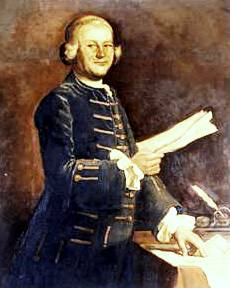
That appears to be the reason that the young solicitor Sampson Salter Blowers joined John Adams and Josiah Quincy, Jr., on the defense team. (Blowers appears above later in life, when he was a judge in Nova Scotia.) Robert Auchmuty, senior counsel for the defense in Preston’s trial, saw his job as done.

The defense lawyers challenged every potential juror from Boston as too close to the case. After all, the town was paying Robert Treat Paine to be a special prosecutor. And the judges accepted those challenges. As a result, the jurors all had to come from other towns in Suffolk County (which at that time included all of present-day Norfolk County as well as Hingham). 

The trial record, which is unusually thick for the eighteenth century and published in volume 3 of The Legal Papers of John Adams and thus on Founders Online, shows the difficulty in seating a jury of twelve. The men called were: 
  • Samuel Williams, Roxbury, challenged for cause.
  • Joseph Curtis, Roxbury, challenged for cause.
  • Nathaniel Davis, Roxbury, sworn.
  • Joseph Mayo, Roxbury, sworn.
  • Abraham Wheeler, Dorchester, sworn.
  • Edward Pierce, Dorchester, sworn.
  • William Glover, Dorchester, challenged peremptorily.
  • Isaiah Thayer, Braintree, sworn.
  • Samuel Bass, Jr., Braintree, challenged peremptorily.
  • James Faxen, Braintree, challenged peremptorily.
  • Benjamin Fisher, Dedham, sworn.
  • John Morse, Dedham, challenged peremptorily.
  • James White, Medway, challenged peremptorily.
  • Nehemiah Davis, Brookline, challenged peremptorily.
  • Samuel Davenport, Milton, sworn.
  • Joseph Houghton, Milton, sworn.
  • James Richardson, Medfield, challenged peremptorily.
  • John Billings, Stoughton, challenged peremptorily.
  • Joseph Richards, Stoughton, challenged for cause.
  • Consider Atherton, Stoughton, sworn.
  • Abner Turner, Walpole, challenged peremptorily.
The clerk then called the Boston men whose names were at the bottom of that list, and the defendants challenged them all.
  • John Brown, Boston, challenged for cause.
  • Joseph Barrell, Boston, challenged for cause.
  • Silas Aitkins, Boston, challenged for cause.
  • Harbottle Dorr, Boston, challenged for cause.
The judges had Sheriff Stephen Greenleaf bring in more men, and the process resumed.
  • Samuel Sheppard, Boston, challenged peremptorily.
  • John Goldsbury, Boston, challenged for cause.
  • Samuel Peck, Boston, challenged for cause.
  • William Gouge, challenged for cause.
  • Joseph Turrell, Boston, challenged for cause.
  • Jacob Cushing, Jr., Hingham, sworn.
  • Josiah Lane, Hingham, sworn.
  • Jonathan Burr, Hingham, sworn.
Finally, the court officers did a little legal maneuvering to ensure the last three men from Hingham were indeed eligible, and the opening arguments began.

Joseph Mayo (1721-1776) of Roxbury was named foreman of the jury. He owned a large farm a little past the intersection of modern Washington Street and South Street in Roslindale. A veteran of the Louisbourg expedition of 1745, he was a captain of his town’s militia company. Mayo had also served on town committees to promote non-importation and to instruct the Massachusetts General Court representatives to stand up for the province’s charter rights. But the defense team felt, based on their inquiry, that he could assess the case fairly.

Sunday, December 08, 2019

“James Otis having ever entertain’d a most consummate Contempt of seeking a Purse”

On 14 Sept 1772, a little more than three years after James Otis, Jr., and John Robinson got into a fight inside the British Coffee-House, the lead item on the front page of Edes and Gill’s Boston Gazette spelled out the end of that dispute.

Otis had sued Robinson for assault, won a whopping jury award of £2,000, and then moved on to the appeals level. Before the legal case came up in the court’s August term, however, the parties reached a settlement, as laid out in the newspaper:
BE IT REMEMBERED, That this same Term in a Case here depending, wherein James Otis of said Boston is Appellant and original Plaintiff against John Robinson, late of said Boston, Esq; the said John Robinson, Esq; by James Boutineau, Esq; his Father-in-Law and Attorney, comes into Court and on the Behalf and in the Name of said John Robinson, Esq; who is now in Parts beyond Sea, to wit, in the Kingdom of Great-Britain, being thereunto fully empower’d as by his Letters of Attorney on File in the Case may appear, FREELY confesses that in the Assault committed by him the said John Robinson, Esq; on him the said James Otis, in presumptuously attempting to take him the said James Otis by the Nose was the first Assault, which occasioned and brought on all the consequent Insults, Wounds and other Injuries whereof the said James Otis in his Declaration more particularly complains; HE the said John Robinson, Esq; was greatly in Fault, is very sorry for his Conduct and Behaviour that Night towards the said James Otis, and asks the Pardon of the said James Otis.
Boutineau signed that statement on behalf of his son-in-law.

The newspaper then published another document, written by Otis himself:
WHEREUPON the said James Otis being personally present here in Court, duly reflecting that he has ever been as ready to give, as to ask or demand Gentleman-like Satisfaction for an Insult real or suppos’d, at the same Time being fully conscious, and, as he apprehends, able abundantly to prove, that he then publickly offer’d that Kind of Satisfaction to the said John Robinson, Esq; previously to the said first Assault, as on the Part and in Behalf of the said John Robinson, Esq; by his Attorney James Boutineau, Esq; is above confess’d—

And the said James Otis having ever entertain’d a most consummate Contempt of seeking a Purse or pecuniary Reparation for a personal Insult, if any other more Gentleman-like could be obtained, by the Consent of the Parties, and that consistently with the Laws of his Country: ACCEPTS of the above Submission here in Court in full for the Assault, Insults, Injuries and Damages above complain’d of in the Declaration of the said James Otis and confess’d as above.

And upon the same Submission, so far as the said John Robinson, Esq; was concern’d in the Assaults, Insults and Injuries above mention’d and confess’d, as he thinks a Gentleman and Christian ought in such Case and on such Submission, freely forgives the said John Robinson, Esq; and by these presents remiseth, releaseth, acquitteth and dischargeth him the said John Robinson, Esq; from all Actions, Suits and Demands, by Reason of or occasion’d by the Premises; and also, all Right and Cause of Action in the Declaration specified.

FURTHERMORE the said James Otis knowing full and right well that by the Operation of the Law hereupon, he also of Course releaseth and dischargeth the alledged and suppos’d Confederates of the said John Robinson from all Demands supportable on the Premises by our Laws, but the said James Otis would by no Means be understood to give up any other Demands he may hereafter make by Reason of the Premises against any of the alleg’d or suppos’d Confederates—
At this point the original document on file with the Massachusetts courts contained a phrase that Otis crossed out before signing: “should he ever meet with either of them in a state of nature, or without the reach of municipal laws.” In other words, he threatened his enemies with a physical attack. (After all, that had gone so well for him before.) Ultimately, Otis decided not to make that bluster part of his legal and public statement.

The official document continued:
At the same Time the said James Otis of his own free Will and meer Motion thinks fit to give it under his Hand, to remain on Record in Favour of the said John Robinson, Esq; as the said James Otis has often privately and publickly, in the hearing of his Friends and others, and even in the Court of Common Pleas declared, as he now does in this honourable Court, That he looks on the said John Robinson, Esq; to be infinitely less to Blame in this (for both Parties in the Suit) very unhappy Affair, than those, who the said James Otis, were he inclin’d to give himself the Trouble, thinks, and is perswaded, he could fully prove artfully and most insidiously as well as maliciously incited the said John Robinson, Esq; to so very unworthy an Action.
Despite no longer openly threatening violence, Otis still had to include insinuations of a conspiracy behind the incident.

The final paragraph of Otis’s statement laid out what payments he wanted Robinson to make:
  • £13.10s.8p. as “Common Costs of Court.”
  • £30 for each of his attorneys—Samuel Fitch, John Adams, and Sampson Salter Blowers.
  • £7.12s. for “the Doctors Bills.”
  • £1.8s. for “taking Affadavits out of Court.”
  • “not a Farthing for the Use of the said James Otis, he having (as before observ’d) a most thorough Contempt for a pecuniary Recompense when a better can be obtain’d.”
Thus, instead of £2,000 or more, Robinson had to pay only £112.11s.8d. and be done with the whole mess. In his accounts, John Adams noted receiving his £30 payment as “a genteel Fee.”

Those settlement documents ran also in the Boston Evening-Post, Essex Gazette, New-Hampshire Gazette, Providence Gazette, Boston News-Letter (after a week’s delay blamed on “Want of Room”), Connecticut Gazette, Pennsylvania Chronicle, and Connecticut Courant. Otis and his allies made sure everyone in New England knew about what they saw as his moral victory.

As I read that settlement, though, I can’t help but see the similarities between its language and the statements Otis was publishing back in September 1769, just before the fight. Once again, Otis was deploying the language of genteel honor (and dueling), hinting at conspiracies against him, threatening violence. In 1769, that mood led him into the conflict with Robinson. Three years later, a similar feeling of extravagance drove his proposal to make a public settlement.

Otis’s colleagues and successors praised his magnanimity at this moment. But they also knew that the leader of Boston’s Whigs in the 1760s had lost a great deal and would never be the same man again.

Saturday, December 07, 2019

James Otis’s Legal Recovery

As James Otis, Jr., recovered physically from the blow on his head with the help of top Boston doctors, he also took legal steps with the help of top Boston lawyers.

In order of seniority, the three men Otis hired to represent him were:
Interestingly, Fitch and Blowers were already leaning toward the Crown politically and became Loyalist refugees during the war.

Of course, Otis himself was one of the province’s leading attorneys, and he no doubt directed his legal strategy.

Otis sued Customs Commissioner John Robinson for £3,000 in damages. To put that figure in perspective, in 1770 Paul Revere bought his house in the North End for a little over £213. When Thomas Hutchinson became royal governor of Massachusetts in 1770, the Crown granted him a salary of £1,500.

In In a Defiant Stance: The Conditions of Law in Massachusetts Bay, the Irish Comparison, and the Coming of the American Revolution, John P. Reid pointed out that any colonial jury award of £300 or more could be appealed to courts in Britain, which would have been much less sympathetic to Otis than one from Suffolk County. In other words, if Otis wanted to maximize his chance of receiving money, he could have asked for £299, and Robinson would have had no appeal. Otis’s huge demand was making a public point.

The court case came up in the January 1770 term, but was continued with the agreement of both parties. And then continued again.

In the meantime, on 5 Oct 1769 Robinson married Anne Boutineau (born 1748, shown above). After the Boston Massacre, the couple sailed for London, carrying documents showing the Crown side of that event. John Robinson never returned to New England.

The case of Otis v. Robinson finally went to court in July 1771. By that time Otis had suffered some very public episodes of madness, but he was back in the Massachusetts General Court. The jury awarded him less than he asked for but still a whopping £2,000. Both parties appealed, Robinson’s side asking for a smaller award and Otis’s for a larger one.

After further delays, that appeal came up in August 1772. Robinson’s father-in-law, merchant James Boutineau, acted as his attorney—probably meaning that he spoke for Robinson, not that he practiced lawyer. By then Otis no longer held public office, his mental instability having become apparent after one legislative session. However, he was still steering his case.

TOMORROW: James Otis’s magnanimity, and how he wanted everyone to know about it.