J. L. BELL is a Massachusetts writer who specializes in (among other things) the start of the American Revolution in and around Boston. He is particularly interested in the experiences of children in 1765-75. He has published scholarly papers and popular articles for both children and adults. He was consultant for an episode of History Detectives, and contributed to a display at Minute Man National Historic Park.

Subscribe thru Follow.it


•••••••••••••••••


Showing posts with label Thomas Nichols. Show all posts

Friday, April 29, 2016

Reviewing Thomas Nichols’s Case

In late February 1775 a Massachusetts magistrate had Thomas Nichols of Natick, labeled variously a “free Negro” or “mulatto,” locked up for “enticing divers Servants [slaves] to desert the Service of their Masters.”

Nichols was still in the jail at Concord when the Revolutionary War broke out. He must have witnessed the British troops under Maj. John Pitcairn force their way into the jailyard to disable three large cannon that belonged to the town.

On 13 May, the Massachusetts Committee of Safety took up Nichols’s case. Its records say:
One Thomas Nicholas, a negro, brought before this committee on account of his suspicious behavior for some time past, having been examined, Resolved, that it be recommended to the council of war to commit said negro, until there be further inquiry into his conduct. . . .

Ordered, That Mr. Isaac Bradish, keeper of the jail in Cambridge, be directed and empowered to confine one Thomas Nicholas, negro, till further orders.
A week later the committee voted:
That Capt. Edward How, Ebenezer Cutler, and Nicholas, a black fellow, now under guard, be sent up to Congress for examination and trial, and Capt. White is appointed to attend Congress, with the above named persons.

Voted, That the general [Artemas Ward] be desired to furnish a guard for the occasion.
On that same day the Committee of Safety recommended against enlisting anyone but “freemen” into the Massachusetts army. There were multiple reasons behind that decision: ideological distaste for forcing slaves to fight in the name of liberty, potential complaints from slaveowners, and a lingering fear of unreliable troops. (The Massachusetts government didn’t decide to bar free black men from the ranks until shortly after Gen. George Washington’s arrival in July.)

On 22 May, a committee of the full Massachusetts Provincial Congress in Watertown, chaired by Edward Mitchell of Bridgewater, considered the evidence against those three jailed men. The decision on Thomas Nichols came last, and it was recorded this way:
Whereas Thomas Nicols, a negro man, hath been brought before this Congress, and there being no evidence to prove any matters or things alleged against him: therefore,

Resolved, That the said Thomas be sent to the Town or District where he belongs, and that the Committee of Correspondence, or Selectmen of said Town or District, take such care of the said Thomas, that he may be dealt with as they, in their judgment, shall think proper.

Ordered, That Captain [Caleb] Kingsbury be directed to appoint some persons to conduct the above-mentioned negro to Natick, agreeably to the foregoing Resolve.
So that was it. The slave conspiracy that had made the papers as far away as Norwich, Connecticut, and resulted in Nichols being jailed for almost three months had “no evidence” to back it up.

And even after that, according to Natick historian Horace Mann, the town “confined” Nichols at the tavern of Pelatiah Morse (shown above courtesy of the Historic Buildings of Massachusetts blog). Morse’s bill for the food he supplied to Nichols and his guard is the evidence for that, but I don’t know how long the confinement lasted.

TOMORROW: Nichols’s in-laws.

Thursday, April 28, 2016

Thomas Nichols of Natick

On Monday I quoted a Connecticut newspaper report of the arrest of “one Thomas Nichols, a Molatto,” in Natick on suspicion of planning an uprising of enslaved people.

What do we know about Nichols? He appears in the Natick vital records on 17 Dec 1766, listed as a “transient.” He married “Patiance Ferrit” of that town, which was originally a community of “praying Indians” but was in transition to become yet another English-dominated farm town.

Patience Ferrit had been born in Milton in 1743. In Behind the Frontier: Indians in Eighteenth-century Eastern Massachusetts, Daniel R. Mandell noted how her father Caesar Ferrit moved to Natick from Boston in 1751 “to live among his own Nation the aboriginal natives.” He brought his wife Naomi and four children born in Milton. The couple had three more children in Natick, as George Quintal detailed in Patriots of Color.

According to local chroniclers, Caesar Ferrit later claimed that only one of his grandparents was a Native American. The others were Dutch, French, and African. Ferrit said he himself was born in the Caribbean.

What’s more, Naomi Ferrit was of English extraction. She appears to be the Naomi Isaac who married “Cesar Ferre” in Dorchester in 1738, one of only a handful of marriages performed by a justice of the peace instead of a minister. There was even a local tradition that Naomi was the ward of “a wealthy gentleman in Boston” who employed Caesar Ferrit as a coachman. The young couple had fallen in love, this tale goes, and were forced to choose a poor life in Natick.

All those stories, some of which may even be true, testify to how the racial or ethnic categories that the laws set up were actually overlapping and fluid. The Native part of Natick was a refuge for families that crossed the society’s “color lines.” Did the Ferrits need to have ancestral roots in the Native nations of New England to live there?

By marrying Patience Ferrit, Thomas Nichols became part of that community. The couple had at least three children in Natick:
  • Isaac, born 1 June 1768
  • Ama, born 14 May 1770
  • Cherrity, born 23 July 1773
When their third child was on the way, the couple petitioned the Massachusetts General Court to be allowed to sell real estate. They needed permission to do so because Patience Nichols was listed as a Native American. On 19 Jan 1773 the legislative Acts and Resolves state:
A Petition of Thomas Nichols of Natick a free negro man Setting forth That he hath lately purchased a plantation in Natick, containing near eighty acres of Land with a dwelling house thereon and many good accommodations; that he has lately intermarried with one Patience Terry an Indian, native, of said Natick who had legally heretofore purchased the following tracts of Land, situate in said Natick, which Lands the Petitioner paid for, but the Deed was given in his Wifes name vizt. the first lot containing about forty acres, the second lot about eleven acres more or less, the third thirty five and the fourth lot between seventy and eighty acres; of which last mentioned tract the Petitioner claims only one sixth part That he is considerably in debt for the purchase of his plantation aforesaid and otherwise. And praying that he may be impowered to sell the four pieces of Land aforesaid, which lie scattering to enable him to pay his just debts and to purchase some Stock and Tools for his plantation aforesaid.
The legislature granted the couple permission to make that sale.

Thomas Nichols had thus gone from a “transient” new arrival in Natick to a property-owner, though his economic situation apparently remained precarious. And a little more than two years later he was locked up, accused of fomenting unrest.

TOMORROW: What was the evidence for those suspicions?

Tuesday, April 26, 2016

Fears in Framingham and Elsewhere

Yesterday I quoted two Connecticut newspapers from March 1775 reporting on the detection of a slave conspiracy in Natick.

Such worries were nothing new. Back in September 1774, Abigail Adams had told her husband about a similar fear in Braintree:
There has been in Town a conspiracy of the Negroes. At present it is kept pretty private and was discoverd by one who endeavourd to diswaid them from it-he being threatned with his life, applied to justice [Josiah] Quincy for protection. They conducted in this way—got an Irishman to draw up a petition letting to the Govener telling him they would fight for him provided he would arm them and engage to liberate them if he conquerd, and it is said that he attended so much to it as to consult Pircy upon it, and one Liut. [?] Small [Maj. John Small?] has been very buisy and active. There is but little said, and what Steps they will take in consequence of it I know not.
Jason T. Sharples has found a deep tradition of such fears in British North America. The rumors would often take the same form: free blacks were tempting enslaved blacks, many masters and their families would be murdered all at once, blacks planned to burn the town…

The political and increasingly military tensions in Massachusetts in 1774 brought those fears to the surface again, alongside other, parallel rumors: that the British military planned to burn the town, that the provincial militia would raise 30,000 men and storm Boston, that the Crown would ship in thousands of French or Russian or Native soldiers. Most of those conspiracy theories were groundless.

People may have had their own doubts then, but they didn’t feel safe dismissing such dangers. Robert G. Parkinson just wrote about how such a worry affected people in Framingham as the war began:
Josiah Temple, a native of Framingham, Massachusetts (about fifteen miles south of Concord), published a book in 1887 on the town’s history. His recounting of what people remembered about the night of the Alarm was so different from the legend that he found it impossible to believe.

For four generations, the local story of the night of April 19, 1775, was that, as soon as the town’s militia marched north toward Lexington Green, a “strange panic” spread through Framingham. But that’s not what surprised the town historian, nor should it us. But what they said next certainly seems odd: “The Negroes were coming to massacre them all!” Some in the town, Temple noted, “brought the axes and pitchforks and clubs into the house, and securely bolted the doors, and passed the day and night in anxious suspense.”
More specifically, Temple wrote that the “women and children” in two Framingham districts felt this fear, particularly Mehetable, “wife of Capt. [Simon] Edgell,” a slaveholder. Temple also said, “Nobody stopped to ask where the hostile Negroes were coming from; for all our own colored people were patriots.” Peter Salem, for example, was marching with Capt. Edgell’s company. A black trumpeter reportedly roused the town militia. But Framingham is right next to Natick, where a free black man named Thomas Nichols had been arrested for fomenting unrest.

A similar fear affected women who gathered for safety from the regulars at a home in Menotomy, according to the Rev. Samuel A. Smith’s 1864 history:
The report was spread abroad that the slaves were intending to rise, and finish what the British had begun by murdering the defenceless women and children. It excited great consternation, therefore, among the women gathered at George Prentiss’s upon the hill, when they saw Ishmael, a negro slave belonging to Mr. [William] Cutler, approaching the house. They thought their time had come, but one, a little braver than the rest, summoned up courage to ask, “Are you going to kill us, Ishmael?”

“Lord-a-massy, no ma’am!” said the astonished black. “Is my missis here?”
Since Ishmael had stayed behind to save the Cutler tavern from burning, he had cause to be annoyed as well as astonished. In 1780, Ishmael Cutler, then thirty-six years old, enlisted as a soldier. The next year, he paid the town poll tax as a free man.

COMING UP: Who was Thomas Nichols?

Monday, April 25, 2016

An “infernal Scheme” in Natick?

British officers and royal officials weren’t the only folks fearing a treacherous plot by their enemies as the Revolutionary War began. The provincials outside of Boston had plenty of suspicions as well.

The 3 Mar 1775 Connecticut Gazette, published in New London, reported:
On Thursday the 23d Instant [i.e., of this month], one Thomas Nichols, a Molatto, was taken at Natick (in the County of Middlesex) and brought under Examination, before a Justice, for being concerned in enticing divers Servants to desert the Service of their Masters—causing the Minds of the said Servants to be inimical towards their Masters Persons and Property—Endeavouring to form an unlawful Combination against their Masters, and other Injuries contrary to Law & the Peace—and for want of Sureties for good Behaviour was commited.
In other words, Nichols was locked up since he couldn’t make bail.

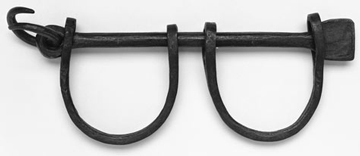
This item appeared two down from a breathless statement that “We are told that some Blacksmiths in Town [Boston] are employed in making a great Number of Iron SHACKLES, but for whom design’d we know not, certainly not for Boston Folks!” I’m not convinced that there was such ironwork, but there was certainly irony.

Six days later another Connecticut newspaper, the Norwich Packet, printed more rumors from Natick:
By a Gentleman arrived here from Boston, we are informed, that last Week a free Negro was apprehended at Natick, in Massachusetts-Bay Government, and, after Examination, committed to Concord Goal. It appeared that said Fellow has for some Time past been employed in forming a Plot to destroy the white People; for that Purpose he had enlisted Numbers of his own Complexion, as Associates, and they only waited until some Disturbance should happen that might occasion the Militia to turn out, and in their Absence it was proposed to Murder the defenceless Inhabitants.

The same Gentleman also informs us, that, last Monday Evening, another African, in the Vicinity of Natick, was discovered to have been deeply concerned in the above-mentioned infernal Scheme; and that his Master had delivered him up to Justice.
This supposed plot was thus the mirror image of the British officers’ worry that Bostonians were conspiring to murder them after a military alarm or a party.

TOMORROW: What was behind that fear?

[Eighteenth-century shackles above courtesy of the excellent website London Lives.]

Monday, March 09, 2015

The Massachusetts Government on Black Soldiers in the Summer of 1775

On 20 May 1775, one month into the Revolutionary War, the Massachusetts Provincial Congress’s Committee of Safety made this statement about the war it had undertaken and the troops it would employ:
Resolved, That it is the opinion of this committee, as the contest now between Great Britain and the colonies respects the liberties and privileges of the latter, which the colonies are determined to maintain, that the admission of any persons, as soldiers, into the army now raising, but only such as are freemen, will be inconsistent with the principles that are to be supported, and reflect dishonor on this colony, and that no slaves be admitted into this army upon any consideration whatever.
That policy barred slave owners from enlisting their human property, who presumably had less stake in the conflict. It preserved the public image, and self-image, of the New England army as freemen fighting for their traditional rights.

On that same day the committee asked that “Nicholas, a black fellow, now under guard,” be brought to Cambridge and jailed for examination. That was Thomas Nichols of Natick. He was accused of trying to entice black slaves to resist their masters, showing that the Patriot leadership was well aware that other people might fight for freedoms as well.

Seven weeks later, on 8 July, the committee proposed a further restriction on the types of soldiers who could enlist in its army:
Resolved, That the instructions to be given to the officers of the regiments, be sent to the council of war, and if approved, be forwarded: they are as follow:
Instructions for the officers of the several regiments of the Massachusetts Bay forces, who are immediately to go upon the recruiting service.

You are not to enlist any deserter from the ministerial army, nor any stroller, negro, or vagabond, or person suspected of being an enemy to the liberty of America, nor any under eighteen years of age.

As the cause is the best that can engage men of courage and principle to take up arms, so it is expected that none but such will be accepted by the recruiting officer; the pay, provision, &c., being so ample, it is not doubted but the officers sent upon this service, will, without delay, complete their respective corps, and march the men forthwith to camp.

You are not to enlist any person who is not an American-born, unless such person has a wife and family, and is a settled resident in this country.

The persons you enlist, must be provided with good and complete arms.
The new commander-in-chief, Gen. George Washington, and his council evidently did approve that language because it appeared on handbills over the signature of Gen. Horatio Gates two days later.

Back when the war had started on 19 April, the first day’s casualties included Prince Estabrook, still legally a slave and yet in the Lexington militia. Yet a month later, Massachusetts pulled back from enlisting slaves in its army. And in July, the authorities barred enlisting any black men at all. In October, the Continental Army commanders, in consultation with members of the Continental Congress, agreed further to bar any black soldiers already in the ranks from reenlisting in the new year.

The New England authorities almost certainly made those changes under the influence of Gen. Washington, a Virginia plantation owner. They also probably reflected what people thought the Congress that appointed Washington would want. Indeed, the black soldiers already in the ranks became an issue in Philadelphia, as I’ll discuss tomorrow.

I think most Americans see our national history as a story of gradually but unstoppably growing liberties, with equality and legally protected rights spreading from white men of property to poorer white men and then black men and then women and so on. But of course the story isn’t so simple. Progress in achieving individual rights hasn’t always been smooth and one-way. The end of Reconstruction and the imposition of Jim Crow laws are the clearest example of retrograde motion.

This period in 1775 is a smaller example as Massachusetts’s Patriot government deferred to a Virginia slaveowner on the question of the black men already in its army. Had the new summer policy prevailed, the enlisted ranks of the Continental Army would have become racially exclusive. The consequences could have been far-reaching: a smaller, weaker army, to judge by estimates from late in the war of how many American soldiers were black men; and less cultural pressure for abolishing slavery, as happened in New England and Pennsylvania in the 1780s.

On Thursday evening I’ll speak at Longfellow House–Washington’s Headquarters National Historic Site about how Washington changed his mind at the end of 1775. That talk starts at 6:30 P.M., and the site asks people to reserve seats by calling 617-876-4491.

[The photo above shows the Edmund Fowle House in Watertown, used by the Massachusetts Provincial Congress for committee meetings in 1775 and 1776.]