J. L. BELL is a Massachusetts writer who specializes in (among other things) the start of the American Revolution in and around Boston. He is particularly interested in the experiences of children in 1765-75. He has published scholarly papers and popular articles for both children and adults. He was consultant for an episode of History Detectives, and contributed to a display at Minute Man National Historic Park.

Subscribe thru Follow.it


•••••••••••••••••


Showing posts with label Andrew Oliver. Show all posts

Thursday, April 10, 2025

“That the leaning of the writer of the above might not be mistaken…”
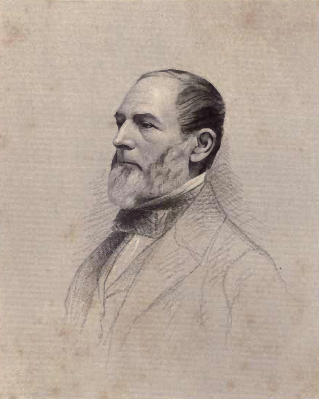
Yesterday I quoted most of the Boston News-Letter’s 22 Aug 1765 report on the first anti-Stamp Act protest the week before.

In 1856 Samuel Gardner Drake (shown here) quoted the same article at length in his History and Antiquities of Boston. He appears to have missed printer Richard Draper’s sarcastic jibes at the crowd, however. Drake wrote:
That the leaning of the writer of the above might not be mistaken, he closed by a memorable saying of Lord Burleigh, much in use in those days, “England can never be undone but by a Parliament.” Thus the mob was encouraged, and, as by the sequel it will appear, a very partial account was given of what had taken place. The course taken by the papers under the control of the Government had some effect in producing the above, for the News-Letter had been jeered by them because it had not come out with early denunciations of the proceedings of the mob.
The criticism of the News-Letter appeared in an Whiggish newspaper, not in one “under the control of the Government.” The Boston Whigs faulted Draper for not reporting on the demonstration at all; if he’d “come out with early denunciations of the proceedings of the mob,” they’d have faulted him even more vigorously.

Drake’s extract included these lines from the News-Letter (with modernized capitalization and punctuation):
The populace after this went to work on the barn, fence, garden, and dwelling-house, of the gentleman against whom their resentment was chiefly levelled [Andrew Oliver], and which were contiguous to said hill. And here, entering the house, they bravely showed their loyalty, courage, and zeal, to defend the rights and liberties of Englishmen. Here, it is said by some good men that were present, they established their Society by the name of the Union Club.
In context, coming right after describing rioters breaking into Oliver’s house “to defend the rights and liberties of Englishmen,” the reference to the “Union Club” looks like another bit of Draper’s sarcasm.

Whigs in Bristol, England, had formed a Union Club by 1750, pushing for political reform and the protection of liberties. In the 1760s a ship of that name was visiting Boston. New Englanders would have known what the “Union Club” stood for—and should have seen the irony of forming one in somebody else’s house.

In 1865 William V. Wells quoted that line about the “Union Club” without its context in his Life and Public Services of Samuel Adams. He went on to say those men were doubtless the same group as the “Sons of Liberty” who had organized the protest.

Later authors repeated that equation: the Sons of Liberty, the Union Club, and the “Loyall Nine” (a term from yet another source, published later) were all names for the same protest organizers identified by the Rev. William Gordon.

In fact, I haven’t found a single source besides the Boston News-Letter using the name “Union Club” that way. It doesn’t reappear in the newspapers. It doesn’t show up in John Adams’s or Samuel Adams’s writings. It doesn’t show up in John Rowe’s or John Tudor’s diaries. Given the sarcasm in the initial report, I doubt the “Loyall Nine” ever really adopted the term.

(By December 1774 a Union Club was established in Salem. It contributed something for the poor after the Boston Port Bill, and on 16 December Samuel Adams sent a thank-you letter to Samuel King. I can’t find any other period mention of that organization.)

Wednesday, April 09, 2025

Richard Draper’s “Report of these Images”

As long as I’m discussing nomenclature for Boston’s political groups in the 1760s, I’ll tackle “the Union Club.”

America’s first public, outdoor demonstration against the Stamp Act took place along Boston’s main road on Wednesday, 14 Aug 1765. The big elm where the protesters hung effigies hadn’t yet been named Liberty Tree.

The next day, Richard Draper published his Boston News-Letter newspaper with a two-page supplement. It didn’t report on the protest, however—that sheet was entirely devoted to foreign news.

The News-Letter did print Gov. Francis Bernard’s 15 August proclamation of a reward for the rioters who had torn down stamp agent Andrew Oliver’s building the night before. That was the paper’s only description of the event.

Boston’s Whigs complained that Draper was tilting his coverage to please the royal government. In his 22 August issue the printer objected to the News-Letter being called “a Court-Paper…under the Controul of higher Powers.” He insisted:
IN regard to the Occurrences of last Week, we would observe, that it was out of our Power to give a perfect Account thereof, as the Transactions were not finished, and a partial one would perhaps have drawn down the Resentment of many of the true Sons of Liberty, and caused us to be more in Fear, than it is said were of publishing any Thing relating thereto:—

Had the Gentleman who furnished one of the Papers with a decent Account of the Affair, been so kind as to have sent us something of the same Nature, he would have saved himself the Trouble (if he really took the Trouble) to inform the Public that we filled an extraordinary Half Sheet with immaterial Foreign Articles.
The News-Letter’s account of the anti-Stamp Act protest, “as concise and true…as it is in our Power,” followed. In the details it agreed with the Monday newspapers, but it also included several sarcastic zings at the protest.
VERY early on Wednesday Morning, the 14th Instant, were discovered hanging on a Limb of the Great Trees, so called, at the South Part of this Town, two Effigies, one of which by the Labels appeared to be designed to represent a Stamp-Officer, the other a Jack-boot, with a Head and Horns peeping out of the Top. said by some of the Printers, to be the Devil or his Imp; but, as we are not acquainted with that Species of Gentlemen, we cannot so well determine whether it was an exact Resemblance or not:

The Report of these Images soon spread thro’ the Town, brought a vast Number of Spectators, and had such an Effect on them that they were immediately inspired with a Spirit of Patriotism, which diffus’d itself through the whole Concourse: So much were they affected with a Sense of Liberty, that scarce any could attend to the Task of Day-Labour; but all seemed on the Wing for Freedom.

About Dusk the Images were taken down, placed on a Bier, (not covered with a Sheet, except the Sheet of Paper which bore the Inscription) supported in Procession by six Men, followed by a great Concourse of People, some of the highest Reputation, and in the greatest Order, ecchoing forth, Liberty and Property! No Stamp! &c—

Having passed through the Town-House, they proceeded with their Pageantry down Kingstreet, and it is said intended for the North Part of the Town; but Orders being given, they turned their Course thro’ Kilbystreet, where an Edifice had been lately erected, which was suppos’d to be designed for a Stamp-Office.

Here they halted, and went to work to demolish that Building, which they soon effected, without receiving any Hurt, except one of the Spectators, who happened to be rather too nigh the Brick Wall when it fell: This being finished many of them loaded themselves with the wooden Trophies, and proceeded (bearing the two Effigies) to the Top of Fort-Hill; where a Fire was soon kindled, in which one of them was burnt; we can’t learn whether they committed the other to the Flames, or if they did whether it did not survive the Conflagration, being its said like the Salamander conversant in that Element.—

The Populace after this went to work on the Barn, Fence, Garden, and Dwelling-House, of the Gentleman against whom their Resentment was chiefly levelled, and which were contiguous to said Hill; and here entering the House they bravely showed their Loyalty, Courage, and Zeal, to defend the Rights and Liberties of Englishmen:——

Here, it is said, by some good Men that were present, they established their Society by the name of The Union Club.—

Their Business being finished, they retired, and proceeded to the Province-House, which was at about 11 o’Clock, gave three Huzzas, and all went quietly home.
The report went on to events of 15 August: Oliver’s resignation and an aborted action against Lt. Gov. Thomas Hutchinson’s house.

The 19 August Boston Gazette offered a detailed and favorable description of the protest in its own two-page supplement. The same day’s Boston Evening-Post printed a positive report from “A.Z.,” who also got in the dig at Draper’s paper. The Boston Post-Boy, friendly to the royal government, ran nothing. None of the three Monday papers reprinted Gov. Bernard’s proclamation.

TOMORROW: The long and short of “The Union Club.”

Sunday, January 05, 2025

Mapping Boston in 1795

ARGO (American Revolutionary Geographies Online) offers a new article by John W. Mackey titled “Practical Knowledge and the New Republic.”

It begins:

Perhaps what is most visually striking about Osgood Carleton’s recently rediscovered 1795 map of Boston is its sheer size. At approximately seven feet by six and a half feet, this wall map dwarfs many other Boston maps of the late eighteenth century, including Carleton’s own 1797 work, which until recently was considered the largest Boston map from this period known to be extant in a collection.
This isn’t a printed map but a drawing. The Massachusetts Charitable Mechanic Association donated it to the Leventhal Map & Education Center at the Boston Public Library in 2021. Based on a cartouche dedicating the map “To the Select-Men of the Town of Boston,” curators deduced it was originally town, then city property.

Indeed, volume III of a report on Documents of the City of Boston, for the Year 1879 (published 1880) had an appendix listing “Plans of Boston in the City Surveyor’s Department,” and that included:
Boston, 1795.—An original map. Surveyed by Osgood Carleton for the Select-men.
As for the cartographer:
Osgood Carleton was born to a New England farming family in 1742 and had little schooling. At age 16, he began military service in Nova Scotia during the Seven Years’ War, and he later served in the Continental Army during the American Revolution. While he was born in New Hampshire and appears to have lived for a time in Haverhill, Massachusetts and in Maine, it was in Boston that Carleton made his mark and built the bulk of his career. Armed with mathematical skills presumably gained during his military service, Carleton earned his living putting these skills to practical use: he became a surveyor, a contributor to the ubiquitous almanacs of the era, and the leading cartographer in Massachusetts during his lifetime. . . .

he also left a legacy in his role as a teacher of young men in the City of Boston. . . . he offered on an array of practical mathematical skills from navigation to surveying and mensuration to gunnery, bookkeeping, and the projection of spheres and maps.
Mackey’s article discusses and displays Carleton’s maps of Massachusetts, one of which was eventually printed with state approval, as discussed back here.
The 1795 Boston map captures the town’s post-war transition. Carleton marked the place for the “New State-house” on “State Land.” That new government building would be dedicated that year.

Mackey also discusses how this map didn’t label Oliver’s Dock, though Carleton had used that as a landmark in advertising his school. By 1795 he may have moved to “an unfinished building in Merchant’s Row,” where Robert Bailey Thomas remembered studying under him. Nonetheless, “Oliver’s Dock” was still the official name of that location, preserving the memory of the unpopular royal appointee Andrew Oliver.

Thursday, February 29, 2024

A Busy Week in Boston in March 1774

Even before Lt. Gov. Andrew Oliver died on 3 Mar 1774, Gov. Thomas Hutchinson knew he had to postpone his trip to Britain.

Oliver would have taken over certain gubernatorial duties while Hutchinson was out of Massachusetts. But if both men were gone, the executive power would have devolved onto the Council.

That upper house of the Massachusetts General Court hadn’t become as radical as the lower house, but it was still dominated by Hutchinson’s opponents.

Among those opponents was John Hancock, who on 5 March delivered Boston’s annual oration commemorating the Boston Massacre. This was probably the most politically radical thing he ever did before July 1776.

On Monday, 7 March the house sent a long response to Hutchinson’s message, quoted yesterday, dismissing the effort to impeach Peter Oliver, chief justice and brother of the now late lieutenant governor.

Much of that response was written by Robert Treat Paine of Taunton, as shown by a rough draft in his papers. However, some touches are more political than legal and may have come from Samuel Adams. Most pointedly, the response quoted the phrase “an abridgment of what are called English liberties” from one of Hutchinson’s own leaked letters, which was kind of rubbing it in.

The assembly’s response concluded with yet another complaint about officials like Hutchinson and the Olivers misrepresenting the state of the province:
We assure ourselves, that were the nature of our grievances fully understood by our Sovereign, we should soon have reason to rejoice in the redress of them. But, if we must still be exposed to the continual false representations of persons who get themselves advanced to places of honour and profit by means of such false representations, and when we complain we cannot even be heard, we have yet the pleasure of contemplating, that posterity for whom we are now struggling will do us justice, by abhoring the memory of those men ”who owe their greatness to their country’s ruin.”
That last quotation came from Joseph Addison’s Cato.

On the evening of 7 March, men carried out the second Boston Tea Party, dumping twenty-nine crates of tea from the ship Fortune. Some traders had thought that Bostonians would accept that tea since it wasn’t owned by the East India Company. They didn’t.

The funeral for Lt. Gov. Oliver was on 8 March. Prominent members of his family didn’t feel safe attending, and it did not go smoothly.

Meanwhile, there was still a stalemate on impeachment as the legislative session neared a close. On 9 March the house resolved, “it must be presumed that the Governor’s refusing to take any Measures therein is, because he also receives his Support from the Crown.” That same day, Secretary Thomas Flucker brought in Gov. Hutchinson’s message proroguing the legislature until April.

As it turned out, there would be no April session. The impeachment effort was dead.

TOMORROW: In the courtroom.

Wednesday, February 28, 2024

“I cannot shew any Countenance to it”

When the Massachusetts house informed Gov. Thomas Hutchinson on 25 Feb 1774 that it had voted to impeach Chief Justice Peter Oliver, his first response was that “he desired the Message may be reduced the Writing.”

The house named Samuel Adams, Joseph Hawley, and Robert Treat Paine a committee to do that reduction, then a larger committee to deliver the paragraph to the governor.

That afternoon, they asked where Hutchinson’s promised response was. Secretary Thomas Flucker replied that the governor had gone home to Milton.

The next morning the house received this message:
Gentlemen of the House of Representatives,

By your Message of Yesterday you informed me that you had Resolved to Impeach Peter Oliver, Esq; Chief Justice of the Superior Court, &. before the Governor and Council of High Crimes and Misdemeanors, and that you had prepared Articles of Impeachment, and you prayed that I would be in the Chair that you might then have the Opportunity of laying them before the Governor and Council.

I know of no Species of High Crimes and Misdemeanors nor any Offence against the Law committed within this Province, let the Rank or Condition of the Offender be what it may, which is not cognizable by some Judicatory or Judicatories, and I do not know what the Governor and Council have a concurrent Jurisdiction with any Judicatory in Criminal Cases, or any Authority to try and determine any Species of High Crimes and Misdemeanors whatsoever.

If I should assume a Jurisdiction and with the Council try Offenders against the Law without Authority granted by the Charter or by a Law of the Province in pursuance of the Charter, I should make myself liable to answer before a Judicatory which would have Cognizance of my Offence, and His Majesty’s Subjects would have just Cause to complain of being deprived of a Trial by Jury, the general Claim of Englishmen except in those Cases where the Law may have made special Provision to the contrary.

Whilst such Process as you have attempted to commence shall appear to me to be unconstitutional, I cannot shew any Countenance to it.

T. Hutchinson.
Milton, 26 Feb. 1774.
The assembly sent their articles of impeachment up to the Council anyway.

On 1 March the assembly produced a longer version and sent that up as well. The impeachment was entirely based on Oliver’s refusal to accept the legislature’s salary instead of the Crown’s; now the legislature also voted not to pay the chief justice any salary, so there. 

John Adams spent that evening talking politics. In his diary he wrote: “Much said of the Impeachment vs. the C.J.—and upon the Question whether the Council have the Power of Judicature in Parliament, which the Lords have at home, or whether the Governor and Council have this Power?” The next day he wrote out the arguments against and for the Council being able to act alone.

Adams also wrote:
Lt. Govr. [Andrew] Oliver, senseless, and dying, the Governor sent for and Olivers Sons. Flucker has laid in, to be Lieutenant Governor, and has perswaded Hutchinson to write in his favour. This will make a difficulty. C. J. Oliver, and Fluker will interfere.
On 3 March, Lt. Gov. Andrew Oliver died.

TOMORROW: End of an impeachment.

Tuesday, February 27, 2024

“A Recess that I may attend to that Preparation for my Voyage”

On 24 Feb 1774, the day that the lower house of the Massachusetts General Court voted to impeach Chief Justice Peter Oliver, Gov. Thomas Hutchinson shared some news of his own.

Hutchinson sent this message written at his country home in Milton:
Having received discretionary Leave from the King to go to England, I think it proper to acquaint you with this Instance of His Majesty’s most gracious Condescension, and that I intend to avail myself of it as soon as his Service will admit.

I must desire you to give all Dispatch possible to such necessary public Business as may yet lie before you, for I must soon, by an Adjournment or Prorogation, give the Court a Recess that I may attend to that Preparation for my Voyage which His Majesty’s Service and my personal Affairs require.
The house received that news on 25 February. The legislators immediately sent a committee to ask the governor to preside over Oliver’s trial in the Council before he left.

Of course, Hutchinson had no desire to do that. The chief justice was his ally, in-law, and friend. He didn’t think the Massachusetts charter even allowed for impeachment.

Hutchinson had been asking the imperial government for permission to visit Britain for months, so his planned trip wasn’t just a ploy. At the same time, he was glad to have a reason to pressure the legislature to stick to “necessary public Business.”

Under the charter, while the governor would be out of the province, the lieutenant governor would take on his duties. At this time, that man was Andrew Oliver (shown above), the chief justice’s brother—even less welcoming to impeachment!

Also on 24 February, John Adams wrote home to his wife Abigail in Braintree: “General Court is preparing an Impeachment vs. the C. Justice. I must not add, but the Name of yr / John Adams.” That coyness might reflect his behind-the-scenes role in the impeachment.

Adams’s remark about “preparing an Impeachment” also shows how that process was still ongoing. At best, the house’s 24 February vote simply led the way to the real confrontation in the Council, and ultimately the Council’s vote.

Perhaps because of that drawn-out timeline, we can find authorities giving different anniversary dates for when the Massachusetts assembly impeached Chief Justice Oliver. The official vote came on 24 February, but there were months of actions leading up to that vote, and lots of work still to do.

TOMORROW: The final formalities.

Thursday, October 06, 2022

“They understood he was not the person intended”

One of the minor but telling disagreements between Josiah Quincy, Jr., and the government ministers he met in London in November 1774 involved the new lieutenant governor of Massachusetts, Thomas Oliver.

After meeting with Quincy, the secretary of state, Lord Dartmouth, described their conversation to former governor Thomas Hutchinson.

Among other things Quincy warned that the people of Massachusetts were strongly opposed to the new Council, appointed by writs of mandamus from London rather than elected. Specifically, he said:
the new Counsellors were in general persons the most exceptionable to the Province, of any which could have been pitched upon, and only one whom the people were satisfied with, which was the Lt. Governor, and he by chance, for they understood he was not the person intended, but that the name of the Ch. Justice was mistaken.
That new appointee, Thomas Oliver, was only in his forties and had not been active in politics before. Massachusetts Whigs suspected that the government in London really meant to name Chief Justice Peter Oliver to succeed his late brother, Andrew Oliver (shown above). Or at least that bureaucrats believed Thomas Oliver was a member of the same family.

I thought the same thing, and said so, in presentations about the “Powder Alarm,” in which Thomas Oliver played a central role. There just didn’t seem to be any other explanation for how the man attracted any attention in London.

But then John W. Tyler, who’s busy editing the Correspondence of Thomas Hutchinson for the Colonial Society of Massachusetts, alerted me to a 29 Mar 1774 letter, to be published in an upcoming volume. In that dispatch to Lord Dartmouth, Gov. Hutchinson discussed candidates to replace Andrew Oliver. William Browne of Salem preferred a seat on the bench. Hutchinson’s next choice was Customs Commissioner William Burch. The provincial secretary, Thomas Flucker, might be persuaded to exchange his hard job for an easier one with a slightly smaller compensation.

And then:
There is a gentleman of the same name with the late Lieut. Governor but of another family Thomas Oliver Esq. of Cambridge, now Judge of the Provincial Court of Admiralty which he must quit in case of his appointment. He has a handsome Estate, is a very sensible man & very generally esteemed. He is Cousin German to Mr. [Richard] Oliver the Alderman and City Member [of Parliament]. I know not how the Alderman stands affected to Government but this Gentleman has been steady in his opposition to all the late measures and I think the Administration in case of the absence of the Governor may be safely trusted with him.
Thus, when the secretary of state appointed Thomas Oliver to be Massachusetts’s new lieutenant governor, he had heard about the man and knew he wasn’t part of the same family.

How did Lord Dartmouth respond to Josiah Quincy suggesting the new lieutenant governor was nothing but a big mistake? According to Hutchinson, “Ld. D. interrupted him here and said it was strange the people of N.E. should suppose the Ministry so inattentive as not to ascertain the names of the persons they appointed.”

Quincy doesn’t seem to have recognized that that was a polite aristocratic way of telling him he was talking through his hat.

As with so many of these conversations, Quincy’s outlook was so far away from how the ministers saw things, and all the men were so certain about their beliefs, that they were speaking past each other.

TOMORROW: A failure of communication.

Wednesday, September 08, 2021

“Stamp Act Memes” Online Talk on 9 Sept.


On Thursday, 9 September, I’ll deliver the latest version of my online talk “How Americans Fought the Stamp Act with Memes” via the American Revolution Round Table of New Jersey.

For details about that event and how to cadge an invitation, see this description.

This event feels bittersweet because I had the pleasure of speaking to this group in Morristown once and had planned to be there again. I was even building a longer trip around the event with archive and family visits. But “community spread” of the Covid-19 virus has risen again, and we decided that it’s safer to avoid large gatherings.

Speaking of large gatherings, my talk will explore how crowds, with the help of newspaper printers, defined the details of an anti-Stamp Act protest in August 1765, and then repeated that action with variations for months until they made the law a dead letter.

We can see that effect in this 6 September letter from the Philadelphia printer David Hall to his mentor and business partner in London, Benjamin Franklin:
We are all in a Ferment here, as well, as in the other Governments, about the Stamp Law taking, or not taking place.

You, very probably before this can reach, may have heard of Mr. [Andrew] Oliver, the Stamp officier being hanged in Effigy in Boston; a House pulled down, which was supposed to have been erected for the Business of the Stamp Office, and other Damage done him; upon which he resigned and, it is said, wrote home to the Commissioners of the Stamp-Office, letting them know that he could not put the Law in Execution; and that he believed it impracticable for any One else to do it.

Soon after this Mr. [Augustus] Johnston, appointed for Rhode Island; Mr. [James] McEvers for New York, and Mr. [William] Coxe for New Jersey, all gave up their Commissions.

At New-London the Stamp Officer has likewise been hanged in Effigy. And at New-Haven the House of the Officer there, has been beset by a Number of People, who desired to know whether he intended to act in that office, or resign? His Answer, it is said, was, that having accepted the Office in Person he did not think he had Power to resign. They then demanded whether he would deliver the Stamp Materials, as soon as they arrived, to them, in Order to make a Bonfire, or to have his House pulled down? Upon which he promised, that when they Arrived, he would either reship them to be sent back, or that when they were in his House, his Doors should be open, and they might then act as they thought proper, on which they despersed.

Mr. [Jared] Ingersoll has likewise been hanged in Effigy [actually, all those preceding Connecticut events were aimed at Ingersoll], as has Mr. [Zachariah] Hood, the officer for Maryland.

Mr. [George] Mercer, the Officer for Virginia, is not yet Arrived, but the People of that Colony, are much enraged.

Mr. [John] Hughes [of Pennsylvania] has not yet resigned; whether he will, or not, I cannot say, but I understand his Friends are all endeavouring to get him to resign.

In short, there seems to be a general Discontent all over the Continent, with that Law, and many thinking their Liberties and Privileges, as English Men lost, or at least in great Danger, seem Desperate. What the Consequences may be, God only knows; but, from the Temper of the People, at Present, there is the greatest Reason to fear, that the Passing of that Law will be the Occasion of a great Deal of Mischief.
The most awkward part of the news for Franklin was that he had used his influence as a lobbyist to get Coxe, Hughes, and Hood appointed as stamp agents in their respective colonies. The patronage job was supposed to be a pleasant surprise. Instead, those men came under threat, and Hood actually had to decamp for New York.


Wednesday, March 31, 2021

“Upon his Interment a large Mob attended”

As I described yesterday, the funeral of Lt. Gov. Andrew Oliver on 8 Mar 1774 did not go smoothly.

Some of Oliver’s close friends and relatives, including his brother, Chief Justice Peter Oliver (shown here), and their in-law, Gov. Thomas Hutchinson, chose to stay away because they expected angry crowds.

Then a protocol mix-up caused the British army and navy officers to cut into the procession ahead of the Massachusetts legislators. Many of those politicians were already at odds with the Oliver–Hutchinson clan and grabbed the excuse to stay away completely.

Nonetheless, lots of people showed up—not to walk in the mournful procession but to watch it. “Such a Concourse or rather Multitude of Spectators I never saw at any Funeral here before,” the merchant John Rowe wrote.

The Cadets, the upper-class militia company that served as the governors’ honor guard, turned out for duty in the procession under their commander, John Hancock. That displeased some people, reportedly.

This is a story I see repeated in a lot of biographies without direct quotations or sourcing. The earliest version I’ve found appears in John Sanderson’s multi-volume Biography of the Signers to the Declaration of Independence, published in the 1820s and thus possibly based on people around in 1774:
The last instance, during the British administration, of the parade of this guard [the Cadets] was at the funeral of the lieutenant governor Oliver, under the chief government of general Gage [sic]; on which occasion Mr. Samuel Adams, hearing that Hancock designed, with the company, to perform the usual military honours to the deceased, who had been one of the most obnoxious tories of the whole continent, hastened to dissuade him from his purpose. But Hancock, in observing to his friend that the honours were designed for the office, and not the man, persisted in his resolution.
Hancock and the Cadets marched with Oliver’s body to his grave at the Granary Burying Ground. Then the well-dressed militiamen fired three volleys over the grave.

The large crowd responded by shouting three cheers for the lieutenant governor’s death. Rowe reported: “There was after Colo. Hancock’s Company had fired & the Funerall over, as the Relations were Returning, Some Rude Behaviour.”

Hutchinson wrote:
Marks of disrespect were also shewn by the populace to the remains of a man, whose memory, if he had died before this violent spirit was raised, would have been revered by all orders and degrees of men in the province.
Andrew Oliver had been politically unpopular for several years, having been hanged in effigy in 1765 as the Massachusetts stamp agent.

Peter Oliver later wrote:
The Vengeance of the Faction was carried to, & beyond the grave—Upon his Interment a large Mob attended, & huzzaed at the intombing the Body; & at Night there was an Exhibition at a publick Window, of a Coffin & several Insignia of Infamy—& at this Exhibition some Members of the general Assembly attended—could Infernals do worse?
As I noted above, the chief justice stayed away from the funeral, and his memory was probably distorted by secondhand reports and the passage of time. The “Exhibition at a publick Window” that Peter Oliver mentioned was part of that year’s illumination in memory of the Boston Massacre. Ordinarily it would have gone up on the 5th of March, but that was right before the Sabbath, so the display was delayed until Money, 7 March, the evening before the funeral.

The descriptions of the 1774 illumination say nothing about pictures criticizing Andrew Oliver. Instead, one window targeted Thomas Hutchinson and Peter Oliver himself.

Some final details from John Rowe: “Then followed the Coaches & chariots amounting to Twenty, then the Chaises amounting to Ten.” And, “Minute Guns were fired from the So. Battery.”

Tuesday, March 30, 2021

A Funeral Procession for Andrew Oliver

I started this month reviewing the events of early March 1774: the return of the Massachusetts Spy, the death of Lt. Gov. Andrew Oliver (shown here), John Hancock’s Massacre oration, and the second Boston Tea Party.

That wasn’t all. Lt. Gov. Oliver had to be interred. And that funeral was scheduled for the day after the tea destruction.

In his diary, merchant John Rowe wrote one line about the tea, showing how such news had become ho-hum. But he left a long description the funeral:
This afternoon his Honour the Lieut. Governour Andrew Oliver Esq was Buried as Follows.

Colo. Hancock with his Company of Cadets & Colo. [John] Erving with the officers of his [militia] Regimt. preceded the Corps—Colo. Hancock’s Compy. under Arms.

The Bearers were Judge [Samuel] Danforth, Judge [Shrimpton] Hutchinson, Treasurer [Harrison] Gray James Russell Esq, Mr. Secretary [Thomas] Flucker, Foster Hutchinson Esq.

Then Followed the Family,…
That family contingent was smaller than normal.

The late lieutenant governor’s brother Peter Oliver was chief justice, and in February the legislature had impeached him for accepting a Crown salary—raising his public profile, and not in a good way. On the day of the funeral, Chief Justice Oliver wrote, he thought
his Risque of his Life was too great, for him to pay his final Visit to the Death Bed of an only Brother; & his Friends advised him not [to] pay his fraternal Respect to his Brother’s Obsequies—the Advice was just; for it afterwards appeared, that had he so done, it was not probable that he ever would have returned to his own home. Never did Cannibals thirst stronger for human Blood than the Adherents to this Faction…
Gov. Thomas Hutchinson also stayed away to avoid rousing the crowd. The governor’s son Thomas, Jr., had married one of Andrew Oliver’s daughters. But his friends told him that they did “not think it safe for me to attend the funeral.”

The rites didn’t go smoothly. In his history of the province, Hutchinson wrote about his late friend and colleague:
Even his funeral afforded opportunity for the spirit of party to shew itself. The members of the house of representatives, who were invited, being in one house, and the admiral, general [sic], and other officers of the navy and army, in another, the latter first came out, and followed the relatives of the deceased, which was so resented by some of the representatives, as to cause them to refuse to join in the procession, and to retire in a body.
Rowe’s version of that was:
next in order should have the Council & house of Assembly but thro some Blunder the Admirall [John Montagu] & his Core followed the Family & Relations, next them Colo. [Alexander] Lesly of the 64 Regiment & his Core, then the Gentlemen of this & the Neighboring Towns which were very few. . . .

Thro some misunderstanding or Blunder the Gentlemen of the Councill did not attend this Funerall & very few of the House of Representatives.
And that was just the start of the trouble.

TOMORROW: Three volleys and three cheers.

Sunday, March 28, 2021

The Influence of a Stamp Act Cartoon

The more I thought about the British cartoon “The Deplorable State of America or S——ch Government,” shown above, the more I wondered about its influence on American politics.

Scholars believe that this print, from an unknown artist, went on sale soon after Parliament passed the Stamp Act on 22 Mar 1765. Copies were shipped across the Atlantic to Boston, where John Singleton Copley evidently took one as inspiration for his own cartoon, discussed yesterday.

Did the same picture inspire Bostonians to protest the Stamp Act in other ways?

The cartoon shows a boot, representing the Earl of Bute, supposedly the politician behind the Stamp Act. (He had retired many months before.) The background of the cartoon includes a gallows, labeled “Fit Entertainment for St—p M—n.”

The anti-Stamp Act protest in Boston on 14 August featured effigies of a boot and stamp agent Andrew Oliver hanged from the great elm in the South End.

To be sure, Pope Night processions had given Bostonians annual practice hanging political enemies in effigy. But would they have extended that particular courtesy to figures connected to the Stamp Act without this cartoon?

Wherever the idea came from, hanging effigies of the stamp agents became an element of anti-Stamp Act protests all over North America, from Nova Scotia to the Caribbean.

Likewise, the cartoon labels a tree being buffeted by winds with the words “To Liberty.” On 11 September, the Boston Sons of Liberty decorated that big elm with “a Copper-Plate with these Words Stamped thereon, in Golden Letters, THE TREE OF LIBERTY, August 14. 1765.” After that, the elm was always known as Liberty Tree.

In his cartoon Copley clearly depicted Boston’s Liberty Tree, with a thick trunk and a sign reading “THE TREE OF LIBERTY / Aug. 14 1765.” But had the idea of dedicating the tree that happened to hold those effigies “To Liberty” come from the British picture?

Both Alfred Young in Liberty Tree and David Hackett Fischer in Liberty and Freedom discuss Liberty Tree as an American invention, dating to 14 Aug 1765. I can’t find any American newspaper reference to the “Tree of Liberty” or “Liberty Tree” before the following months.

Although both Young and Fischer discuss the political symbolism of trees in earlier times, going back to Britain, neither unearthed references to “the Tree of Liberty” before 1765. Thanks to the added power of Google Books, I’ve found three:
  • “Some iniquitous Ministers, who had formed Designs on the Liberties of their fellow Subjects, had found it necessary to restrain and discountenance the Trade of those they intended to strip of their Freedom; for as Poverty certainly follows an Interdiction of Industry, these Sons of Ruin find their Account in laying the Political Axe to the Root of Affluence, as the ready Means for cutting away the darling Tree of Liberty, which seldom thrives in a Land of Poverty and Want.” —Seasonable Observations on the Present Fatal Declension of the General Commerce of England, in Which the Genuine Cause of the Decay of Our Woollen Manufactures Is Particularly Considered, published in London in 1737.
  • The index of a 1739 edition of A Dissertation Upon Parties by Henry, Viscount Bolingbroke, originally published in 1735. Bolingbroke didn’t actually use the key phrase, however, instead writing: “If liberty be that delicious and wholesome fruit, on which the British nation hath fed for so many ages, and to which we owe our riches, our strength, and all the advantages we boast of, the British constitution is the tree that bears this fruit.”
  • Of all places, the second volume of Samuel Richardson’s novel Pamela, published in 1742: “Just as Pedlars catch Monkeys in the Baboon Kingdoms, provoking the attentive Fools, by their own Example, to put on Shoes and Stockens, till the Apes of Imitation, trying to do the like, intangle their Feet, and so cannot escape upon the Boughs of the Tree of Liberty, on which before they were wont to hop and skip about, and play a thousand puggish Tricks.”
Three uses over fifty years is hardly a lot. The rarity of the “Tree of Liberty” metaphor in British political writing, and the lack of consistency in its use, suggests that the phrase hadn’t taken root there.

Which might make this picture with a tree labeled “To Liberty” all the more influential in the last third of the eighteenth century and beyond, as the “Tree of Liberty” became an international symbol.

TOMORROW: Unless we’re getting it all backwards.

Friday, March 12, 2021

“The same Spirit spreads like a Contagion”

I’m returning to the second Boston Tea Party and the other events of March 1774. And who better to ease us into that mindset than John Adams?

On 12 March he filled his diary with this essay:
There has been and is a Party in the Nation, a very small one indeed, who have pretended to be conscienciously perswaded, that the Pretender has a Right to the Throne. Their Principles of Loyalty, hereditary Right, and passive obedience have led them to this judgment, and Opinion.—And as long as they keep these Opinions to themselves, there is no Remedy against them.

But as soon as they express these opinions publicly, and endeavour to make Proselytes, especially if they take any steps to introduce the Pretender, they become offenders, and must suffer the Punishment due to their Crimes.

Private judgment might be alledged in Excuse for many Crimes—a poor Enthusiast [may?] bring himself to believe it lawfull for him to steal from his rich Neighbour, to supply his Necessities, but the Law will not allow of this Plea. The Man must be punished for his Theft.

Ravaillac and Felton probably thought, they were doing their Duty, and nothing more, when they were committing their vile assassinations But the Liberty of private Conscience, did not exempt them from the most dreadfull Punishment that civil Authority can inflict or human Nature endure.

[Thomas] Hutchinson and [Andrew] Oliver might be brought by their interested Views and Motives, sincerely to think that an Alteration in the Constitution of this Province, and an “Abridgment of what are called English Liberties,[”] would be for the Good of the Province, of America, and of the Nation. In this they deceived themselves, and became the Bubbles of their own Avarice and Ambition.
Adams there quoted the most notorious phrase from the ”Hutchinson letters” published the year before.

Gov. Hutchinson would have protested that he was describing the colonies’ situation, too distant to participate in Parliament, and not prescribing how the British government should treat them. (Oliver, in contrast, had indeed suggested changes to the Massachusetts charter.)

Nevertheless, in supposing that Hutchinson and Oliver might be sincere in their misguided political beliefs, Adams came as close as he ever did to granting them some respect. Even as he compared the two men to Jacobites and assassins.
The rest of the World are not thus deceived. They see clearly, that such Innovations will be the Ruin not only of the Colonies, but of the Empire, and therefore think that Examples ought to be made of these great offenders, in Terrorem.

The Enmity of Govr. [Francis] Bernard, Hutchinson and Oliver, and others to the Constitution of this Province is owing to its being an Obstacle to their Views and Designs of Raising a Revenue by Parliamentary Authority, and making their own Fortunes out of it.

The Constitution of this Province, has enabled the People to resist their Projects, so effectually, that they see they shall never carry them into Execution, while it exists. Their Malice has therefore been directed against it, and their Utmost Efforts been employed to destroy it.

There is so much of a Republican Spirit, among the People, which has been nourished and cherished by their Form of Government, that they never would submit to Tyrants or oppressive Projects.

The same Spirit spreads like a Contagion, into all the other Colonies, into Ireland, and into Great Britain too, from this single Province, of Mass. Bay, that no Pains are too great to be taken, no Hazards too great to be run, for the Destruction of our Charter.
This thinking shows how Adams and other Massachusetts politicians reacted to the Massachusetts Government Act, passed by Parliament later in 1774. It was a “we told you so” moment. No matter that the new law was a response to the Tea Party—both of them—and other unrest the Boston Whigs had promoted over the years.

Adams also hopefully foresaw the popular resistance to that law stemming from “a Republican Spirit,” though he wasn’t yet ready to espouse a republic without a monarchy. And like any good son of Massachusetts, he was sure other provinces, even the mother country, would follow its example.

TOMORROW: Tales of the second Boston Tea Party?

Friday, March 05, 2021

“My sincere attachment to the interest of my country”

On the morning of 3 Mar 1774, Andrew Oliver, lieutenant governor of Massachusetts, died. He had previously held the offices of provincial secretary and stamp agent, though of course he never got to do any work in that last capacity.

John Adams viewed Oliver as one of ”the original Conspirators against the Public Liberty,” for monopolizing offices with his brother Peter and their relative by marriage Thomas Hutchinson; for reporting on the Council’s sensitive discussion after the Massacre; and for urging changes to the colonial constitution in the “Hutchinson Letters.”

Adams and colleagues quickly started speculating about what Oliver’s death might mean. At a dinner party the consensus was “Peter Oliver will be made Lieutenant Governor, Hutchinson will go home, and probably be continued Governor but reside in England, and Peter Oliver will reside here and rule the Province.” (That didn’t happen.)

The more immediate worry for the Boston Whigs was the 1774 Massacre oration. Past orators had been Dr. Thomas Young, James Lovell, Dr. Joseph Warren, and Dr. Benjamin Church, all known for their newspaper essays and/or poetry. But for this year the oration committee had decided the speaker would be John Hancock.

Though Hancock had been a selectman, General Court representative, and militia officer for several years, he wasn’t known for his public eloquence. Nor his rhetorical skills. Nor his hale and reliable health. But Hancock was prominent and popular, educated and young. If he wanted to deliver the oration, his colleagues couldn’t say no.

Evidence suggests that the Whigs clustered around Hancock to ensure his speech was up to par. In his autobiography John Adams recalled, “Mr. Samuel Adams told me that Dr. Church and Dr. Warren had composed Mr. Hancocks oration…, more than two thirds of it at least.” Other sources credited Samuel Adams himself and the Rev. Dr. Samuel Cooper, Hancock’s eloquent minister.

On Saturday the 5th, Boston men gathered at Faneuil Hall for their first official town meeting since the previous November. They quickly went through the ritual of voting to have an oration, inviting Hancock to deliver it, and adjourning to the Old South Meeting-House, the largest enclosed space in town. The crowd gathered. The orator entered. The Whigs held their breaths.

Hancock’s speech began with remarks about his speaking abilities not being up to the occasion, traditional rhetoric but in this case perhaps right on the nose:
The attentive gravity; the venerable appearance of this crowded audience; the dignity which I behold in the countenances of so many in this great assembly; the solemnity of the occasion upon which we have met together, joined to a consideration of the part I am to take in the important business of this day, fill me with an awe hitherto unknown, and heighten the sense which I have ever had of my unworthiness to fill this sacred desk. But, allured by the call of some of my respected fellow-citizens, with whose request it is always my greatest pleasure to comply, I almost forgot my want of ability to perform what they required.

In this situation I find my only support in assuring myself that a generous people will not severely censure what they know was well intended, though its want of merit should prevent their being able to applaud it. And I pray that my sincere attachment to the interest of my country, and the hearty detestation of every design formed against her liberties, may be admitted as some apology for my appearance in this place.
Soon he started to spout the fiery rhetoric about the killings four years earlier:
Tell me, ye bloody butchers! ye villains high and low! ye wretches who contrived, as well as you who executed the inhuman deed! do you not feel the goads and stings of conscious guilt pierce through your savage bosoms? Though some of you may think yourselves exalted to a height that bids defiance to human justice, and others shroud yourselves beneath the mask of hypocrisy, and build your hopes of safety on the low arts of cunning, chicanery, and falsehood, yet do you not sometimes feel the gnawings of that worm which never dies? Do not the injured shades of Maverick, Gray, Caldwell, Attucks, and Carr attend you in your solitary walks, arrest you even in the midst of your debaucheries, and fill even your dreams with terror?
It’s noteworthy that that is the only passage in all the orations preserved between 1771 and 1783 to name all the people who died in the Massacre. I suspect that reflected Hancock’s instinct for democratic politics—which was actually sharper than most of his colleagues’.

Son and grandson of ministers, Hancock ultimately turned to exhorting his audience to look to their own moral virtue. He got particular points for warning the crowd against following the allure of rich, dishonest men:
Suffer not yourselves to be betrayed, by the soft arts of luxury and effeminacy, into the pit digged for your destruction. Despise the glare of wealth. That people who pay greater respect to a wealthy villain than to an honest, upright man in poverty, almost deserve to be enslaved; they plainly show that wealth, however it may be acquired, is, in their esteem, to be preferred to virtue.

But I thank God that America abounds in men who are superior to all temptation, whom nothing can divert from a steady pursuit of the interest of their country, who are at once its ornament and safeguard.
Again, I suspect that those words, whoever wrote them, reflected Hancock’s own convictions. He inherited a fortune and spent it down on politics, dying a popular but less wealthy man.

As for how people responded to John Hancock’s 1774 oration, I wrote about that last year.

Thursday, December 31, 2020

“A determination to discourage a faithful Servant of the Crown”

For acting governor Thomas Hutchinson, the dispute between his Council and the provincial secretary Andrew Oliver was yet one more headache in 1770.

On 28 September, Hutchinson told the departed but still official governor, Sir Francis Bernard: “[Royall] T[yle]r is sowered by that deposition of the Secretarys which was published in England and it has hurt me every way.” (Bernard had been responsible for that publication, at least in part, but Hutchinson didn’t let on that he suspected that.)

Writing to John Pownall, an official in the Colonial Office, two days later, Hutchinson was more careful to avoid suggesting the controversy had hurt his effectiveness:
The Council except a few are…very friendly to me though there is some abatement of their friendship since the deposition of the Secretary taken by my order relative to the Affair of the Troops has been published. These publications & the sufference of the Letters to the Ministry of which a fresh parcel was sent by the last Ship to be made publick do infinite disservice.
Ironically, Hutchinson was just as upset about leaks as the Council—just different leaks.

There was also a private dimension to this dispute. On 10 October, while the Council was in the midst of collecting the depositions I quoted over the past couple of days, the acting governor’s son Thomas, Jr., married Sally Oliver, daughter of the secretary.

The families were already related by marriage. Thomas Hutchinson and Andrew Oliver had married sisters. In February 1770, Hutchinson’s daughter Sarah married Dr. Peter Oliver, son of Andrew Oliver’s brother Peter.

All three of those men were royal appointees. Thomas Hutchinson was lieutenant governor, thus acting governor, and also chief justice of Massachusetts. Andrew Oliver was secretary and was supposed to have been the stamp agent. Peter Oliver was a judge. Furthermore, other relatives were in the provincial government. John Cotton, the deputy secretary, was half-brother to the sisters who had married Hutchinson and Andrew Oliver. And Hutchinson had been trying to get his nephew Nathaniel Rogers appointed provincial secretary before the young man died.

Of course, there were family alliances on the other side of the political divide as well. James Bowdoin, the principal author of the complaint against Oliver, was a son-in-law of fellow Councilor John Erving, brother-in-law of fellow Councilor James Pitts, and father-in-law of Customs Commissioner John Temple, whom other royal appointees regarded as a snake.

Eighteenth-century society ran on such familial connections. People expected officials to look out for their relatives, and officials expected their relatives to be loyal assistants in government. Neither side was pure in this regard, and both sides complained about the other using family ties too much.

On 30 October, Hutchinson summed up his view of the controversy over Oliver’s description of the Council meeting in another letter to Pownall:
Unfortunately it has got published. Mr. Tyler denied that he made any mention of the Commissioners. I am sure I heard it from him but could not be certain whether that Day or a day or two before. Three or four Witnesses present swore, they heard it that Day. All the Council say they do not remember it.

They have not however directly charged the Secretary with false swearing but to a long Narrative drawn up by Mr. Bowdoin there is added divers Resolves declaring him guilty of a Breach of trust in taking the Minutes &c. The whole is a weak but malicious injurious performance which they have ordered to be recorded. . . .

I gave them my Opinion that these Resolves would be more resented than any thing which preceeded them as they plainly indicated a determination to discourage a faithful Servant of the Crown from doing his Duty as far as lay in their power.

These proceedings I hope will not pass without censure either in [privy] Council or when the State of the Province comes before the Parliament. Such a censure would mortify the party and being made matter of Record here would remove the reproach which otherwise will be transmitted to posterity upon the Secretarys Character.
In fact, the London government was already preparing to reward Andrew Oliver for his service. When Hutchinson officially became the royal governor, Oliver was promoted into his brother-in-law’s spot as lieutenant governor. And in 1772 Peter Oliver succeeded Hutchinson as chief justice.

(Hutchinson’s 1770 letters will appear in the Colonial Society of Massachusetts’s next collection of his correspondence, scheduled to be published in the new year.)

Wednesday, December 30, 2020

“The breach of a most essential privilege of this Board”

On 12 Oct 1770, eight members of the Massachusetts Council delivered their depositions about what had happened on 6 March, the day after the Boston Massacre.

Harrison Gray, who was also the provincial treasurer, dated his testimony 9 October while the other depositions were all dated on the 12th. Samuel Danforth, the senior Councilor present, and Royall Tyler provided solo accounts. Three men signed one deposition and two another, very similar, which doesn’t really add up to independent evidence.

The focus of controversy was provincial secretary Andrew Oliver’s report that Tyler had said of prominent men in Massachusetts, “they had formed their plan, and that this was a part of it to remove the Troops out of town, and after that the Commissioners.” And the main issues were—

1) Did Tyler really refer to the Customs Commissioners? Witnesses saying he did included Capt. Benjamin Caldwell, R.N.; deputy secretary John Cotton; and clerk Francis Skinner. Lt. Col. William Dalrymple said, “Something of that kind was mentioned by some Gentleman of the Council during the debates; but I cannot say whether it was by Mr. Tyler.” All eight Councilors said they had no recollection of that remark, some said they would definitely have remembered such a thing, and some argued that mentioning the Commissioners made no logical sense.

2) When Tyler spoke of a ”plan,” did he mean a plan formed before the shooting on 5 March or in the twelve to eighteen hours that had elapsed since it? Again, all the Councilors agreed that they didn’t see how anyone would take Tyler’s words to mean the first. To be sure, they had to work through some logical and semantic brambles to get there, as the scholarly Samuel Danforth showed:
whereas the mention made by Mr. Tyler of a plan that had been formed, (considering that the interval of time between those outrages and Mr. Tyler’s narration was scarce sufficient wherein to form such a plan and the knowledge of it to reach Mr. Tyler) may by some be understood to refer to a plan formed before those outrages were committed, this deponent testifies that nothing said by Mr. Tyler, in his hearing, did convey to him any idea of such a plan formed previous to those outrages; and how incautiously and madly so ever some individuals highly incensed, might have expressed themselves, and what apprehensions so ever Mr. Tyler (thro’ misinformation or otherwise) might then have of a plan formed for removing the troops from the town, in any other way than by prevailing with their officers to remove them, this deponent verily believes that no combination had ever been formed, or plan concerted for the purpose of removing the troops, either in the town of Boston or elsewhere; having never heard it suggested by any other person then Mr. Tyler either then or at any time since
On this point, witnesses Cotton and Skinner agreed that Tyler hadn’t appeared to mean a plan made before the Massacre. However, no one disputed that Tyler had spoken of a “plan.” 

3) Was Oliver wrong to send to London a description of the Council meeting that went beyond the official minutes? The secretary declared that he could, and indeed should, provide a full report on the Council to Sir Francis Bernard, still the official royal governor. The Councilors felt Oliver had broken a norm and cast the province in a bad light just like Bernard’s letters to London, exposed the year before.

That bad light was the real issue, of course. Especially since Bernard had Oliver’s account printed (not unlike how the Boston Whigs had published his letters). Massachusetts politicians had been trying to portray Boston as a peaceful, loyal British town unfairly maligned by royal officials and subjected to an unnecessary military presence. That argument was harder to make if the Council—the governor’s top local advisors—had been close to threatening armed rebellion.

After collecting all the statements, on 16 October the Council named a committee to report on the matter. This consisted of five Councilors not present on 6 March: William Brattle; James Bowdoin (shown above); James Otis, Sr.; John Bradbury; and Stephen Hall.

According to acting governor Thomas Hutchinson, Bowdoin had already revealed his response to Oliver’s account by telling Thomas Flucker, “Why this Deposition of the Secretary has defeated every thing we aimed at by the Narrative & Deposition sent home.”

Sure enough, on 24 October the Council adopted a detailed report, penned by Bowdoin, that went over every disputed detail and ended in four resolutions:
I. RESOLVED unanimously, That Andrew Oliver, Esq; Secretary of this Province, by secretly taking minutes at Council, of what was said by the members of Council, in their debates, also by signing a paper containing those minutes, and further by giving his deposition to the truth of it, has in each and all those instances acted inconsistent with the duty of his office, and thereby is guilty of a breach of trust.

II. RESOLVED unanimously, That the said Andrew Oliver, Esq; inasmuch as such proceedings are destructive of all freedom of debate, is guilty of the breach of a most essential privilege of this Board.

III. WHEREAS the said Andrew Oliver, Esq; has suggested in his said deposition, that because his draft was allowed strictly to express the truth, it would not stand well on the Council records, and was therefore rejected by the Council; RESOLVED unanimously, That by such suggestion he has injured and abused the members composing that Council, and by so doing has reflected great dishonor on this Board.

IV. RESOLVED, That an attested copy of this report, and the petitions and depositions, to which it relates, be sent to Mr. Agent [William] Bollan, in order that he may make the best use of them he can, for the benefit of this Province.
Oliver responded with a letter protesting his honor and repeating that he’d reported the truth. The Council sent back a letter rejecting that claim and had the whole collection of documents printed as Proceedings of His Majesty's Council of the Province on Massachusetts-Bay, Relative to the Deposition of Andrew Oliver, Esq. Just one more dispute between the Massachusetts Whigs and the royal authorities with no resolution, just a feeling of grievance on both sides.

TOMORROW: A family feud?

Tuesday, December 29, 2020

The Massachusetts Council Investigates Itself

Yesterday we left off as provincial secretary Andrew Oliver’s sworn statement about what members of the Massachusetts Council had said on the day after the Boston Massacre made its way back to Massachusetts.

That statement was the final item in A Fair Account of the Late Unhappy Disturbance at Boston, published in London. Capt. James Scott, who worked for John Hancock, carried a copy of that pamphlet to Boston. Edes and Gill printed Oliver’s deposition without comment in the 24 September Boston Gazette.

The Whigs quickly leapt to the conclusion that Oliver’s description of the 6 March Council meeting was the latest move by royal appointees to misrepresent the province as rebellious.

And in a way they were right—the statement and its publication were part of a campaign by high officials. As Lt. Gov. Thomas Hutchinson later wrote (modestly referring to himself in the third person), they wanted to be sure the London government understood what they were dealing with:
he asked the secretary to recollect, as well as he could, what passed in the debate at council, and to commit it to writing, intending to send it to England, to shew in the fullest manner the reasons for the lieutenant governor’s complying with their advice, and not with any intention to set the council in general or any particular member, in an unfavourable light.

The secretary informed him, that, of his own mere motion, and for his private satisfaction, he had done it the evening before, while the debates were fresh in his mind.

After he had transcribed and corrected the minutes, he made oath to them; and they were transmitted at the same time with the copies of the votes or minutes of council, and other papers relative to the transaction, not to the secretary of state, but to governor [Francis] Bernard, who, at that time, continued governor of the province.
Oliver (shown above) made his oath before justice of the peace Foster Hutchinson, the acting governor’s cousin. 

Soon after the pamphlet arrived, the Massachusetts General Court started a new legislative session in Cambridge, with the Council meeting in Harvard’s Philosophy Chamber. On 4 October, the Council took up Oliver’s statement:
ONE of the Members of the Board having acquainted the Board that he had seen a Deposition signed Andrew Oliver, which was published in the Appendix to a Pamphlet lately printed in London; in which Deposition divers Gentlemen of the Council, which consisted of 8 Members then present, therein said to be convened on the 5th Day of March last, are represented as having made such a Declaration to His Honor the Lieutenant-Governor, respecting a plan formed by the People to remove the King’s Troops and the Commissioners of the Customs from the Town of Boston, as was likely to be attended with the most pernicious Consequences to this Province—He thereupon moved that the Board would make Enquiry of the Gentlemen of which said Council consisted, what Foundation there was for such a representation—

Which motion being seconded, the Board desired said Gentlemen, namely, Mr. [Samuel] Danforth, Mr. [John] Erving, Mr. [Thomas] Hubbard, Mr. [Harrison] Gray, Mr. [James] Russell, Mr. [Royall] Tyler, Mr. [James] Pitts, and Mr. [Samuel] Dexter, to prepare a true State of the Matter and lay the same before the Board as soon as may be.
Those were the eight Council members present at the 6 March meeting. Oliver had named five of them in his account. (To be exact, he had named three and referred to two more by title, and the London pamphlet had helpfully identified them in footnotes.)

The next day, Oliver asked for a chance to respond and to call witnesses to support his account of the discussion. The Council therefore accepted evidence on 9 October from Capt. Benjamin Caldwell of H.M.S. Rose, Lt. Col. William Dalrymple of the 14th Regiment, deputy secretary John Cotton, and clerk Francis Skinner.

All those witnesses basically agreed with Oliver’s description of what Royall Tyler had said about the town and countryside being angry enough to attack the troops if the governor didn’t remove them, and to drive the Customs Commissioners out of Boston as well. They also agreed that no other members of the Council had objected to Tyler’s statement.

Councilors bore down on Cotton and Skinner about one important detail. When Tyler said of the Whigs, “they had formed their plan, and that this was a part of it to remove the troops out of town, and after that the commissioners,” did he let slip news of a plan predating the Massacre? No, said those provincial employees; they didn’t think Tyler’s mention of a ”plan” on 6 March necessarily referred to any planning more than a day old.

TOMORROW: The Councilors’ contentions.