J. L. BELL is a Massachusetts writer who specializes in (among other things) the start of the American Revolution in and around Boston. He is particularly interested in the experiences of children in 1765-75. He has published scholarly papers and popular articles for both children and adults. He was consultant for an episode of History Detectives, and contributed to a display at Minute Man National Historic Park.

Subscribe thru Follow.it


•••••••••••••••••


Showing posts with label Uxbridge. Show all posts

Sunday, September 20, 2020

Women Who Voted in a Colonial Massachusetts Town Meeting
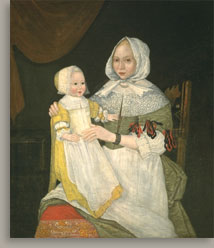
Ten years ago, I noted the legend of Lydia Taft, a widow in Uxbridge who was said to have voted in a town meeting in 1756.

That statement appeared in print in 1881, in the publication of a speech delivered seventeen years before. That book cited no records from 1756 to support the claim.

I opined that it would have been very unlikely for no one to comment on a woman voting, especially when she supposedly broke a tie on a controversial tax. “It would be nice to see the official records,” I wrote.

Last month an unknown commenter stated: “Uxbridge records for the period are extant both as physical documents in the possession of the Town Clerk and as part of the Holbrook group's microfiche collection. There is no mention of Lydia having voted.”

Just now I came across this Mental Floss article by Jocelyn Sears, also based on a look at actual town records:
But according to records from Uxbridge’s town meetings, there wasn’t any meeting on October 30, 1756, and the town did not appropriate any funds that year for the war or for unspecified colonial purposes. (They did vote to raise money for the local schools, to repair the roads, and to pay the town minister’s salary.) Further, even if Lydia Taft had voted, we’d have no way of knowing, since the official minutes for the town meetings do not list the names of people voting or their votes. The minutes simply state when a vote happened and that a given measure passed or failed.
So we can file the story of Lydia Taft voting under myths.

Sears’s article also discusses a documented case of women’s votes being recorded in Sudbury in 1655. At issue was whether the selectmen had apportioned new land fairly in 1649, and whether common grazing rights should depend on the amount of (unfairly?) apportioned land. Sears writes:
Jane Goodenow and Mary Loker were both widows of men who received land in the original division of the meadow. As their husbands’ heirs, each had a stake in this question of sizing the commons. Jane Goodenow owned 25 acres of meadow land, and thus benefited from any policies that favored those with a large acreage. Mary Loker, on the other hand, only owned 5 acres of meadow, and she recognized that tying grazing rights to meadow acreage would disadvantage her. As landowners, both women were theoretically eligible to vote in Sudbury, where the access to the franchise depended on property, though according to custom, women did not vote. But on January 22, 1655, Goodenow and Loker packed into the Sudbury meeting house with over 50 other people to determine how the town commons would be sized.

Acting for herself and as a proxy for a (male) neighbor, Goodenow issued two votes in favor of tying grazing rights to meadow ownership, while Loker issued two votes against the measure (it’s unclear if she was also acting as a proxy).
The good news is that Sears’s article included links to images of Sudbury town records. The bad news is that those links have broken.

But—good news again—I found a new link through Digital Commonwealth. This is actually a handwritten transcription of the seventeenth-century original, mandated by a vote in 1857. Which is why we can, you know, read it.

The preceding page records an official town meeting on 22 Jan 1655 (1654 as British colonies dated years then) and concludes with this call for a vote:
You that judge the act of the select men, for sizing the commons to be a righteous act, and do consent with them in their act, discover it by drawing yourselves together, in the one end of the meeting house, to this vote there appeared, those that follow. (see the other side of this leaf.)
On the left side of the next page spread are the lists of people for and against the measure. Halfway down the first column is “Jane Goodenow widow for herself and Andrew Belcher.” In the right column at the same line is “Mary Luker widow two votes.”

Following the division, there were disputes about whether all the people listed were eligible to vote. As Sears points out, no one objected to the widows Goodenow and Luker participating.

In 1656, the year after this protest, three of the men who had voted against the Sudbury selectmen’s action led some families a few miles west and organized a petition to the Massachusetts General Court to start a new town. That soon became Marlborough.

I tried to find more information about Jane Goodenow and Mary Luker in the Sudbury town records. Unfortunately, because it was a young town, formed in 1638, an older couple that moved there with their children already born wouldn’t show up in the local records of marriages and births.

I believe that Jane Goodenow was the widow who died on 15 July 1666. Her will identified her late husband as named John. John Goodenow, Sr., died on 28 Mar 1654, in the crucial window between the granting of the land and the vote on the common. His will was abstracted here. The Goodenows had a daughter Jane, who married Henry Wait or Wight by 1654, and they had a son named John by the time widow Goodenow died. (This genealogy webpage contains entries for the Goodenows, but I think some of the identifications are mistaken and can’t verify others.)

Mary Luker’s husband was also named John. They had a daughter named Mary on 28 Sept 1653. Sometime in that year, John died. I can’t find any further information about Mary Luker in either Sudbury or Marlborough.

But we can remember the names of Jane Goodenow and Mary Luker as women who, by virtue of being unmarried widows with property, participated in a protest vote in the Sudbury meetinghouse in January 1655.

Monday, January 09, 2012

Not That Benedict Arnold’s Widow

Vital Records of Uxbridge, Massachusetts was published in 1916, collecting records from the town’s churches and small Quaker meetinghouse (shown here, courtesy of Wikipedia).

As Pennsylvania historian John F. Watson reported in 1844, there is indeed a record from that meetinghouse of Benedict Arnold’s widow dying in Uxbridge on 14 Feb 1836. It appears in the genealogical volume on page 356: Sarah Arnold, widow of Benedict, age eighty-three.

However, page 25 of the same book states that a boy named Benedict Arnold was born in that town in 1752 and his wife Sarah in 1754. There’s no record of their marriage, but there are listings for their children Dorcas (1775), William (1777), and Mary (1781). All those births are recorded in a way that indicates the family was Quaker. Page 356 also says that Benedict died in 1802, which left Sarah a widow.

According to the Rhode Island Genealogical Register, Benedict’s will mentioned his wife Sarah and his children William, Dorcas, and Mary. The family is also mentioned in Richard H. Benson’s The Arnold Family of Smithfield, Rhode Island.

So while it’s true that Benedict Arnold’s widow died in Uxbridge, there’s really no doubt that she wasn’t that Benedict Arnold’s widow. The same source that preserves details of her death also records her life with a local Quaker man and their three children.

In fact, there were multiple Benedict Arnolds in southern New England in the late 1700s, many named in memory of a governor of Rhode Island a couple of generations earlier. That causes problems for biographers looking for exploits of the future general’s youth before he became the Benedict Arnold and Americans completely stopped naming their children Benedict Arnold.

The death of the general’s widow was clearly reported in London in 1804. Since she was receiving a pension from the Crown, the British government had a financial incentive to keep track. In 1931 J. G. Taylor published a short book titled Some New Light on the Later Life and Last Resting Place of Benedict Arnold and of His Wife Margaret Shippen, quoting records of the Battersea Church where the couple was buried.

So you might think that the already suspicious claim that Peggy Arnold secretly returned to America and lived for over thirty years in a Massachusetts town where she knew no one would have dissolved a long time ago.

But no, this is the age of the internet! Old claims no longer have to die. Indeed, the fact that Taylor’s 1931 book is still under copyright while Watson’s 1840s books are searchable means that the claim is easier to stumble across than some of the solid evidence.

So now there are webpages, some from reputable organizations like the Penn State University libraries and that new standby Wikipedia, stating that Peggy (Shippen) Arnold died in Uxbridge, Massachusetts. Some even say she did so in 1804, which means the authors had access to the right information but added on a layer of wrong.

Sunday, January 08, 2012

Did Benedict Arnold’s Widow Die in Uxbridge?

In Annals of Philadelphia and Pennsylvania, in the Olden Time, published in 1844, John F. Watson wrote:
The wife of Benedict Arnold was a Philadelphian, a Peggy Shippen, and died on the 14th February, 1836, at Uxbridge, Mass., aged 83 [about the same time a sister of Major Andre, aged 81, died in England.] It seems a strange affair, that the wife of such a general should under any circumstances get back to America—to get, too, not to her own home, and with her nearest relatives, in Pennsylvania, but should go to Massachusetts—the same state where her first ancestor, Edward Shippen, first mayor of Philadelphia, had been publicly punished in Boston as a Quaker!
Two years later Watson repeated his statement about Peggy Arnold in Annals and Occurrences of New York City and State, in the Olden Time:
Gen. [Benedict] Arnold died in London, in 1801, unhonoured and unnoticed there; and afterwards his wife returned to the United States, incognito, and died at Uxbridge, Mass. at the age of eighty-three years, on the 14th Feb. 1836.
A similar statement, with the year of her death changed to 1834, appeared in The National Cyclopaedia of American Biography, 1897 edition and probably others. It may well have popped up in other reference books.

Obviously, the death of Gen. Arnold’s widow in Massachusetts raises a lot of questions, as Watson acknowledged but didn’t pursue:
  • If this woman was truly incognito and away from relatives, how could anyone identify her as Benedict Arnold’s widow after she died?
  • How could this woman die at age 83 in 1836 (i.e., born around 1753) when Pennsylvania records show Peggy Shippen, future wife of the general, was born in 1760?
  • Most important, why did the September 1804 Gentleman’s Magazine in London report the following among its death notices?
In Bryanstone-street, Portman-square, in her 44th year, Mrs. Margaret Arnold, widow of Brigadier-gen. A. who died June 14, 1801…, and daughter of the late Hon. Edward Shippen, chief justice of the state of Pennsylvania, N. America.
Ah, but perhaps that was how the widow faked her death so that she could escape back to America. Because there’s an undisputed, contemporaneous record of the death of the widow of Benedict Arnold in Uxbridge in 1836.

TOMORROW: Examining the vital records.

Thursday, August 26, 2010

The Growing Legend of Lydia Taft

Today is the anniversary of the Constitution’s 19th Amendment in 1920, guaranteeing American women the same voting rights as men.

Some sources, such as this Wikipedia article, say that a widow named Lydia Taft actually voted in the Uxbridge, Massachusetts, town meeting in 1756. In recent years people have named a stretch of highway and a nursing home after Taft.

However, the earliest description of her vote apparently dates from over a century later. In 1881, Rushton D. Burr published an 1864 address in Uxbridge, adding extensive appendices on town history. One of those appendices, titled “The Taft Family,” said this about Lydia Taft:

Her husband died in 1756. The French and Indian war was at hand; the Revolution not far distant [i.e., nearly twenty years later]. A requisition was made upon the town of Uxbridge for a certain sum of money for colonial purposes [i.e., a tax hike]. A meeting of the legal voters was held to see if the money should be granted. The estate of Josiah Taft paid the largest tax in Uxbridge, and his son Bezaleel was a minor [six years old]; but with a sturdy sense of justice that there should be “no taxation without representation [a phrase not coined for years],” the citizens declared that the widow Josiah Taft should vote upon the question. She did so, and her vote was the one that decided in the affirmative that the money should be paid.
More recently, Carol Masiello mined Uxbridge’s vital records to find details of Lydia Taft’s life for this local newspaper article. For example, while Burr remembered her youngest son Bazaleel Taft, the town apparently forgot his older brother Asahel, who was also a minor in 1756. And what about the oldest son, Josiah Taft, who turned twenty-three in 1756 and would ordinarily inherit his father’s place as head of the family with voting rights?

All in all, I’m a little suspicious of the story, for a few reasons. First, I’m not seeing any quotes from 1756 documents. When Uxbridge bent the usual rules to let Lydia Taft vote on the tax hike, was there no complaint from the voters who opposed the tax? There was supposedly an equal number of men on each side. People of the time would complain about “a trifling majority” after losing a close vote, so why accept a decision made by an illegal voter?

Why was there no comment in newspapers or government records on Lydia Taft’s vote or what precedent it might set? (I just looked for reports, and couldn’t find any.)

Second, I see some “memory creep” as people interpret previous writings to make more of Lydia Taft’s suffrage. For example, Masiello’s article reports: “She is mentioned in town records a few times more, once in 1758 to reduce her highway rates and another in 1765 was to change her school district.” In the Wikipedia entry, those mentions of her as a property owner become additional times that Taft voted.

Finally, several articles about Taft (not Masiello’s) reflect later customs, such as stating “she became known as Lydia Chapin Taft.” Actually, she didn’t; she appears in Uxbridge records as “Lydia Taft.” Most eighteenth-century wives didn’t keep their maiden names as middle names; later genealogists (and collateral descendants) like to do that. That makes me question how reliably authors can interpret information about colonial customs.

I can picture the men of Uxbridge deciding to let Lydia Taft participate in this town meeting as her late husband’s administrator, and a sort of proxy for her son. She was a member of the Uxbridge elite, her husband having been one of the richest men in town. Her support for the new colony tax might have carried weight. But I can’t see the men of Uxbridge bending the rules on such a close vote, at least without causing a lot of talk.

It would be nice to see the official records of this town meeting. They might be very skimpy—clerks often tried to avoid recording divisive controversies, so they wrote down only final decisions. If Uxbridge’s 1756 records confirm that “the citizens declared that the widow Josiah Taft should vote,” then Lydia Taft’s place in history is clear. If not, this looks like a local legend—interesting, but not well supported.