J. L. BELL is a Massachusetts writer who specializes in (among other things) the start of the American Revolution in and around Boston. He is particularly interested in the experiences of children in 1765-75. He has published scholarly papers and popular articles for both children and adults. He was consultant for an episode of History Detectives, and contributed to a display at Minute Man National Historic Park.

Subscribe thru Follow.it


•••••••••••••••••


Showing posts with label William Alexander Lord Stirling. Show all posts

Tuesday, March 26, 2024

Lt. Ragg in Captivity

The Battle of Brooklyn on 27 Aug 1776 didn’t end well for the Continental Army. Gen. Sir William Howe’s forces inflicted heavy casualties and drove the Americans off Long Island.

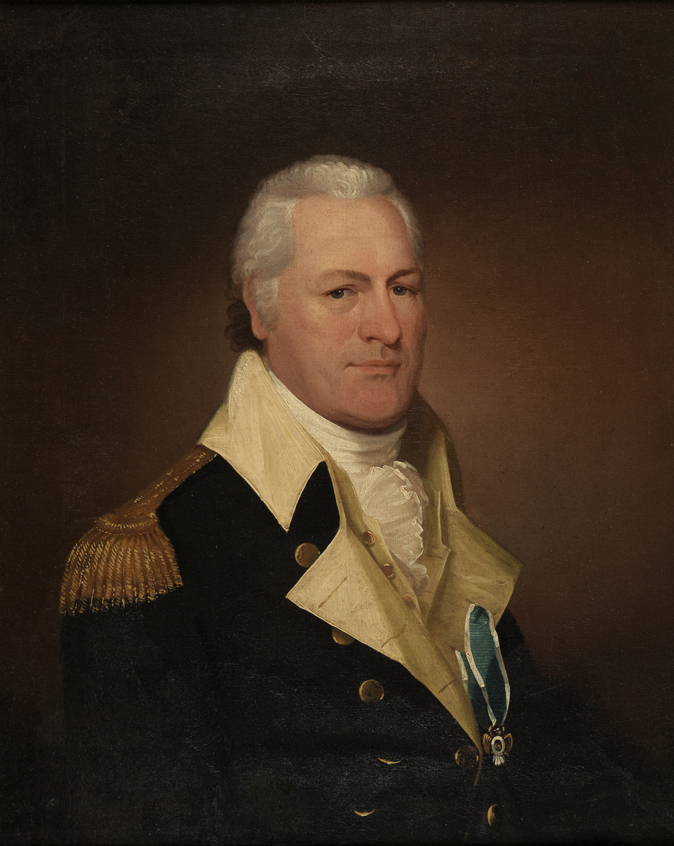
At eight o’clock that evening, Gen. George Washington’s military secretary, Robert Hanson Harrison (shown here), wrote to John Hancock as chair of the Continental Congress:
a Smart engagement ensued between the Enemy and our Detachments, which being unequal to the force they had to contend with, have sustained a pretty considerable loss—At least many of our Men are missing, among those that have not returnd are Genls [John] Sullivan & Lord Stirling

The Enemy’s loss is not known certainly, but we are told by such of our Troops that were in the Engagement and that have come in, that they had many killed and wounded—Our party brought off a Lieutt, Sergt, and Corporal with 20 privates prisoners.
Sullivan and Stirling were prisoners, but at least they survived. Hundreds of other Americans were dead.

Continental commanders hoped this would prove to be a Pyrrhic victory for the Crown, like Bunker Hill. Gen. Henry Knox wrote to his wife Lucy, “The enemy lost nearly 1000 kill’d among whom was General [James] Grant and Capt. [Andrew] Neilson of the 52d.”

In fact, Gen. Howe reported only 63 dead from the Crown forces, and fewer than 400 casualties in all. Gen. Grant was fine; a lieutenant colonel of the same name died.

Later American writers seeking actions to praise in that battle had to content themselves with gallant ways to lose. The noble sacrifice of the Marylanders holding off the enemy! The sly evacuation across the river to Manhattan!

Among the few solid successes Knox could firmly claim was, “We took a Lt. Ragg whom I knew at Boston and 25 Grenadiers of the marines.” And even that overstated the details slightly. Harrison’s numbers were closer.

Lt. John Ragg had led Sgt. David Wallace, Cpls. Thomas Pike and Edward Gibbon, and twenty marine privates into captivity because he and his superiors had mistaken the Delaware Continentals for Hessians.

Behind the American lines, on 29 August Gen. William Heath ordered Lt. Nathan Umstead to conduct those prisoners of war to Fairfield, Connecticut.

A month later, Thaddeus Burr of the Fairfield committee of inspection wrote back to Gen. Washington, reporting that they had sent Ragg and his servant, Pvt. Benjamin Jones, on to Middletown. The other twenty-one men were taken to Wallingford and “placed in the Parishes in the interior part of the County agreable to Rules of Congress.”

There was just one more thing, Burr told the commander-in-chief: Who would pay for “the charges of marching them”? The committee had fed those prisoners for eleven days and paid “a Sergeant and Six from our Battery…a penny a Mile” to lead them on to Wallingford. How was the town to be reimbursed £14.6.½?

The Washington Papers editors wrote, “No reply to that letter has been found.”

TOMORROW: The last of Lt. Ragg.

Monday, March 25, 2024

Two Lieutenants and the Battle of Brooklyn

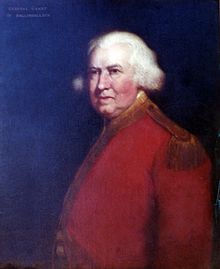
On the afternoon of 27 Aug 1776, British and Hessian soldiers under Gen. James Grant advanced on a Continental force, including men from Delaware and Maryland, under Gen. William Alexander, Lord Stirling (shown here).

Lt. John Ragg of the British marine grenadiers led twenty men forward from the right flank of the Crown forces. His orders were “to speak to” the commander of a unit in blue coats, thought to be Hessians, and tell them to stop firing at their own side.

Meanwhile, Lt. William Popham was one of the American officers trying to hold the left side of their line with a company of “awkward Irishmen and others.” Coming from the Delaware regiment, those soldiers were dressed in blue coats.

You can guess what happened. As Popham told it, “Capt. Wragg [sic] and 18 men, supposing us to be Hessians by the similarity of our dress, approached too near before he discovered his mistake.”

The Delaware Continentals took the marines as prisoners. The Americans stripped the British of their guns, Popham taking charge of Ragg’s weapons.

Decades later Popham reported:
I was immediately ordered with a guard to convey them across the creek in our rear to our lines. On descending the high ground we reached a salt meadow, over which we passed, though not miry, yet very unfavorable to silk stockings and my over-clothes.
Popham was a Princeton College graduate eager to look like a gentleman.

As the party crossed the meadow, the British started to fire cannon in their direction. Lt. Ragg stopped moving, “in the hope of a rescue.”

Popham ordered Ragg to “march forward instantly, or I should fire on him.”

Ragg started moving again. But then a new obstacle appeared:
When we got to the creek, the bank of which was exceedingly muddy, we waded up to our waists. I got in after my people and prisoners, and an old canoe that had been split and incapable of floating except by the buoyancy of the wood, served to help those who wanted help to cross a deep hole in the creek, by pushing it across from the bank which it had reached.

I had advanced so far into the mud, and was so fatigued with anxiety and exercise, that I sat down on the mud with the water up to my breast, Wragg’s fusee, cartouch-box, and bayonet on my shoulder; in which situation I sat till my charge were all safely landed on the rear.
Gen. Grant continued to press forward with his 7,000 men, more than twice the British force in the Battle of Bunker Hill. However, that was just a diversion.

Gen. William Howe had sent many more of his troops on long flanking march to the right. They moved through an unguarded pass and hit the Americans from an unexpected direction. In fierce fighting, almost the whole Continental force was driven back to Brooklyn Heights.

Stirling ordered most of his men back as well, keeping a contingent of Maryland soldiers as the rear guard. He led them in two counterattacks on the Crown forces while other Americans withdrew as best they could.

At the end of the day, the Continentals had lost more than 2,000 men. Nearly all the Maryland rear guard was dead. Stirling was a prisoner.

Gen. Howe reported 64 killed, 293 wounded, and 31 missing—including Lt. Ragg and his marines.

TOMORROW: The end of Lt. Ragg’s war?

Sunday, March 24, 2024

The Continentals from the Lower Counties

From the start of nationhood Americans have spoken of the “thirteen colonies,” but really it was more like twelve and a half.

The Penn family were proprietors of both Pennsylvania and Delaware and always appointed the same man to govern both.

Though Delaware had an older history of European settlement, Pennsylvania became much bigger and wealthier. The “Lower Counties on the Delaware” had their own legislature, but many people treated that area as a mere adjunct.

Delaware didn’t rate its own part of the “Join, Or Die.” snake that Benjamin Franklin printed in 1754, for example. (Though I should also note that all of New England was one piece.)

Under the Stamp Act, the British government appointed John Hughes to collect the tax in both Pennsylvania and Delaware.

The First Continental Congress’s Articles of Association in 1774 still referred to “the three lower counties of Newcastle, Kent and Sussex on Delaware,” as did the Second’s commission for a commander-in-chief in 1775.

We might say that Delaware made itself a full-fledged state by participating in the American resistance. The three counties sent representatives to the Stamp Act Congress and then the Continental Congresses. Deriving their authority from the people through a legislature meant those men were separate from the Pennsylvania delegation. By late 1775, John Adams was writing of “Thirteen Colonies.”

Delaware also raised its own troops to support the Continental Army in January 1776. Not many, since it was a small colony: about 800 men in one big regiment under Lt. Col. John Haslet. In the summer of 1776 those Delaware Continentals marched north to New York.

One young officer in that regiment was Lt. William Popham (1752–1847, shown above). He arrived in New York City on 21 August, and a few days later the Delaware Continentals crossed to Long Island. They were grouped with Marylanders under Gen. Stirling.

A few days later, Popham wrote:
I marched toward the ground occupied by our army, in the summit of the high ground in front of Gowanus, near the edge of the river, where the enemy were landing from their ships, one or two lying near the shore to cover the landing. Many shots were exchanged between us and the enemy.

About 12 o’clock Gen. Stirling came to the east brow of the hill and ordered the Delaware regiment up. Here we received the first order to load with ball, and take care that our men (who were awkward Irishmen and others) put in the powder first.

We then marched up and joined the army which was drawn up in line, my regiment and my company on the left. The whole bay was covered with the enemy’s shipping. The firing continued all the time of the enemy’s landing, and we lost several men.
The British and Hessians began to spread out and march toward the American positions. Haslet saw how “the enemy began to send detachments as scouts on our left.” Though the Continentals held the high spots, the Crown forces outnumbered them and might try to outflank them.

One more thing about the Delaware regiment: They wore blue coats with red facings, not unlike the Hessians.

TOMORROW: Two lieutenants meet.

Saturday, March 23, 2024

Lt. Ragg in the Assault on Brooklyn

In June 1776, Lt. John Ragg of the marines was in Halifax, Nova Scotia, with the rest of the British military force evacuated from Boston.

In July, Ragg was in the fleet of forty-five ships that started unloading British soldiers onto Staten Island, New York.

More troop transports and Royal Navy warships arrived from other parts of the empire. By the end of July, Adm. Lord Richard Howe was overseeing more than one hundred ships while Gen. Sir William Howe commanded 32,000 soldiers.

Those numbers continued to grow in early August. Among the new arrivals were 8,000 Hessian soldiers.

On the morning 22 August, 4,000 redcoats moved onto Long Island. This was significantly more than the British force in the Battle of Bunker Hill, but it was only an advance guard, about a tenth of Howe’s entire land army.

The Americans drew back. By the end of that day, the British had landed 15,000 men at Gravesend Bay, with 5,000 more to follow a couple of days later.

The two armies dug in warily for the next two days. The Americans held the Brooklyn and Guan Heights, guarding the main passes.

Late in the evening of 26 August, Gen. James Grant (1720–1806, shown above) sent a force of about 4,000 British and Hessian men forward against the Continentals. The first major skirmish was around the Red Lion Inn. The British captured the American commander, Maj. Edward Burd, and sent his forces fleeing.

Gen. Samuel Holden Parsons of Connecticut managed to gather Continental troops along the Gowanus Road and to send for reinforcements. Gen. Stirling arrived with about 1,500 men from Maryland and Delaware. Under his command, the Continentals moved back toward the Red Lion Inn.

Meanwhile, Gen. Grant’s Crown troops were also growing, up to 7,000. That force included the 2nd battalion of marines.

According to a letter written on 4 September by a British officer to a friend in Aberdeen, and published in the Scots Magazine, the marine battalion “was sent from our right to support Gen. Grant.”

In the fighting on 27 August, those marines came under “several fires” from a unit dressed in blue uniforms with red facings. Those were the colors of some Hessian regiments while most of the Continental Army had no uniforms at all, so the British officers assumed that was friendly fire.

Lt. Ragg and twenty men from his grenadier company were “sent out to speak to” those Hessians.

TOMORROW: They weren’t Hessians.

Saturday, July 16, 2022

“Calm, clear, & exceeding pleasant”

In my assessment of Benjamin Galloway’s recollection of George Washington threatening to lead “the Virginia riflemen” against British troops in early 1773, I come finally to the environment of the event. Not the political environment, but the actual weather.

In 1818 Galloway stated that Lord Stirling (shown here) and Edward Foy stayed at Mount Vernon “for three or four days, the weather being very tempestuous and sleety.” His 1822 letter echoed that detail, saying the men “continued there during three days, the weather being very tempestuous and snowy.”

The sharp words from Washington to Foy must have occurred on the last evening the two men were at Mount Vernon since, per Galloway’s 1818 account:
during the remainder of the evening [Foy] observed a deathlike silence to Col. Washington. Capt. Foye and Lord Sterling departed from Mount Vernon immediately after breakfast the next morning.
The 1825 version said after the exchange Foy “turned his face immediately towards Mrs. [Martha] Washington, said a few words to her, looked very silly, and soon after requested to be showed to his chamber!” That telling didn’t mention the man’s departure from the estate, but the mood could not have been friendly.

Again, we can test the accuracy of those details. In addition to his “Where & how my time is Spent” journal, Washington also kept a weather diary. And here’s how he described the weather in the days when Galloway, Foy, and Stirling were visiting:
Jany. [1.] Calm, clear, & exceeding pleasant.

2. Calm & very pleasant in the Forenoon with Wind, Clouds, & Rain from the Southward & Eastward in the Afternoon.

3. Clear with the Wind pretty fresh first from the Southwest, & then from the Northwest. But neither Cold nor frosty.
That period wasn’t snowy at all! Maybe the rain on 2 January was enough to make Lord Stirling and Capt. Foy take advantage of Washington’s hospitality for one night, but they weren’t snowed in. Galloway’s memory was more dramatic than actual events.

Then comes the matter of Edward Foy’s movements. Washington’s diary shows Stirling and Foy arrived on 2 January and left on 4 January, not staying “three or four” says. It also offers no support for a rift with their host. In fact, Washington wrote:
4. Lord Sterling & Captn. Foy set out after Breakfast for the Northward thro Alexa. to which place I accompanied them.
The master of Mount Vernon actually went out of his way to show Capt. Foy off.

When I first read this anecdote about Washington striking his table, I was skeptical. After finding that Benjamin Galloway really did meet Foy and Stirling at Mount Vernon at the time he described, I was ready to accept his story. But the false details of the weather and Foy’s departure made me dubious again.

As a young man, Galloway might well have witnessed Washington and Foy disputing over how the royal government should deal with tax resisters in the wake of the Gaspee attack. Their words might have seemed quite heated by pre-war standards. Washington may even have clenched his false teeth and struck the table. But Galloway made the event more dramatic by 1818, with a snowstorm outside and a sudden departure. That means we shouldn’t rely on his memory of what Washington or anyone else said.

Thursday, July 14, 2022

“I accompanied young Custis to Mount Vernon”

In sharing his story about hearing George Washington threaten to lead “Virginia riflemen” against the king’s troops in 1773, Benjamin Galloway included circumstantial details about the event.

The version he sent to the Hagerstown Torch Light in 1818 explained that he was invited to spend Christmas in 1772 at Mount Vernon as a friend of Washington’s stepson, John Parke Custis, from Annapolis. The reprinted story began:
A few days after I arrived at Mount Vernon, Lord Sterling and Captain [Edward] Foye, (the latter being the then secretary to Lord Dunmore, Governor of Virginia) being on their way from Williamsburg to New York, called on Col. Washington, with whom they sojourned for three or four days, the weather being very tempestuous and sleety.
In his letter to the Washington Republican in 1822, Galloway prefaced his anecdote with this scene-setting:
Whilst I was a student at law, in the city of Annapolis, and the late Mr. John Parke Custis, was a pupil under the Rev. Jonathan Boucher, of the same place, by permission of his father-in-law [i.e., stepfather], the then Colonel George Washington, I accompanied young Custis to Mount Vernon, and passed the last week of the year (I think) 1772, and the first week of 1773, at said place. Lord Sterling and Captain Foye, the latter of whom was at that time private secretary to Lord Dunmore, the then governor of the Ancient Dominion, (Virginia was so called at that day,) being on the way from Williamsburg to the city of New York, stopped at Mount Vernon, and continued there during three days, the weather being very tempestuous and snowy.
The second telling also stated that “the Rev. Walter Magowan,…who had resided some years before in the Mount Vernon family as a private tutor to young Custis,” was also present.

Those paragraphs offer multiple names to assess. I was particularly struck by the presence of William Alexander, Lord Stirling (1726–1783), who lived in New York. Why would Galloway have run into him?

So I tested that claim against George Washington’s diary. His entries for the start of 1773 say:
Jany. 1st. Dined at Belvoir and returnd in the Afternoon. Found Mr. Grafton Dulany, Mr. Ben. Gallaway, Mr. Sam Hanson & Mr. Magowan and Doctr. Rumney here.

2. Doctr. Rumney went away after Breakfast. Lord Sterling & Captn. Foy with Colo. [George William] Fairfax came to Dinner. The latter went away afterwards. The other Gentlemen stayd.
So far Galloway’s memory proves remarkably correct. Forty-five years before his anecdote first appeared in print, the young man did spend the turn of the year 1773 at Mount Vernon. And the other guests there included:
  • Lord Stirling, who was traveling around Virginia selling lottery tickets.
  • Capt. Edward Foy, secretary to Lord Dunmore and traveling companion for Stirling.
  • the Rev. Walter Magowan, former tutor and now clergyman in Virginia.
Washington’s diary didn’t mention his stepson Custis, but of course that eighteen-year-old was then a resident, not a guest. According to the Washington Papers editors, Grafton Dulany was one of Custis’s schoolmates in Annapolis, so he had brought chums home for the holidays.

TOMORROW: Looking in the newspapers.

Monday, July 11, 2022

“A deathlike silence to Col. Washington”

Yesterday I quoted a letter that appeared in the Washington Republican newspaper in September 1822, describing a conversation at Mount Vernon almost fifty years before.

I found another version of the same anecdote, reportedly published in the Hagerstown Torch Light on 21 Dec 1818. Unlike the Washington Republican letter, this article didn’t spark any reprints in other newspapers that I could locate.

My access to back issues of the Hagerstown Torch Light being limited, I actually read this letter in Thomas J. C. Williams’s A History of Washington County, Maryland, published in 1906. (The following year, Williams abridged his text for an article in the Maryland Historical Magazine.)

Here’s the text as published in 1906, with added paragraph breaks:
A large company being at the supper table the last evening they were at Mount Vernon, Col. [George] Washington’s well known servant man, named Billy, entered the room from Alexandria, to which place he had been sent by Col. Washington for newspapers and letters, and delivered some newspapers to Col. Washington, who cast them about midway the table, and requested those who took them up to read aloud such articles of intelligence as they might judge would be desirable to the company.

I being seated in a chair which enabled me to lay my hand on one of the newspapers, took the liberty of so doing, and soon announced to the company a very interesting fact, to-wit: The destruction of the King of England’s sloop of war, called Gaspee, by a party of Yankees; she having when in close pursuit (heavy gale of wind) of a Brother Jonathan coaster (smuggling) missed stays and being so near to the shore, the commander of the Gaspee lost all command of her, and she was run ashore high and dry. The Yankees in a short space of time collected in sufficient force and burnt her.

Captain [Edward] Foye asked me to pass the newspaper from which I had communicated to the company the foregoing (I will venture to say to him) bitter pill read the article and instantaneously declared ore rotundo, that blood must be drawn from the Yankees before they would be taught to conduct themselves as obedient subjects ought to do; and insolently said that he, yes, that he would engage to put down all opposition to the execution of revenue acts which had been lately passed, by the King and Parliament of Great Britain; and moreover that he would undertake so to do at the head of five thousand British troops; which he would march from Boston to Charleston, South Carolina.

Col. Washington was engaged in perusing one of the newspapers, whilst Captain Foye was uttering these insulting and audacious words. Col. Washington withdrew his eyes from the newspaper, placed them steadfastly on Captain Foye, and observed that he (Col. W.) entertained no doubt that Capt. Foye could march at the head of five thousand British troops from Boston to Charleston, South Carolina, but added that he should be obliged to Capt. Foye to inform him (Col. W.) whether he meant as a friend or as an adversary! “If as an adversary,” said Col. Washington, “and you, sir would inform me of your intention so to do a few weeks previous to your entry into the ancient dominion, I would engage to give you a handsome check with the Virginia riflemen alone!”

There were on the supper table, at the time when Col. Washington favored Capt. Foye with the above stated retort courteous, twelve or fifteen wine glasses and two or three decanters of excellent old Madeira. At the instant that Col. Washington uttered the words Virginia riflemen alone, he struck the table with his right hand so violently that the decanters and glasses leaped from their proper places and I expected to have beheld them all prostrate on the table.

Capt Foye made no reply but immediately addressed his conversation to Mrs. [Martha] Washington, at whose left hand he was seated; and during the remainder of the evening he observed a deathlike silence to Col. Washington. Capt. Foye and Lord Sterling departed from Mount Vernon immediately after breakfast the next morning.
This anecdote is very similar to the one quoted yesterday, even including some of the same phrasing. There are also some differences in wording and level of detail, though nothing directly contradictory. That suggests the person telling this tale was rather practiced at it.

The biggest difference between the two versions is that this one didn’t include the paragraph about the Rev. Walter Magowan telling other guests at Mount Vernon that he’d never seen Washington so upset.

I don’t know whether the Hagerstown Torch Light included the name of the person who told this story, but Williams included it in his local history: Benjamin Galloway.

TOMORROW: Who was Benjamin Galloway?

Sunday, July 10, 2022

“He had never seen the master of Mount Vernon so displeased”

Last month I addressed the idea that George Washington attended fireworks in celebration of the second anniversary of the Gaspee attack in 1774.

I found that claim to be unsupported by any evidence in Washington’s writings or in the newspapers of Williamsburg, Virginia.

Taverns occasionally displayed fireworks, Washington occasionally attended, and in this case the date of a fireworks show simply coincided with the anniversary of an event in another colony many miles away.

Another source describes Washington showing a strong response to the Gaspee affair—or, more accurately, a strong response to a Crown official’s response to the Gaspee affair.

This story starts with the founding of the Washington Republican newspaper in August 1822 by the printer Thomas L. McKenny to support the political career of John C. Calhoun, then U.S. Secretary of War. McKenny invited his new readers to send material for him to print. Early the next month, someone from western Maryland supplied McKenny with this letter:
Mr. Printer: The authenticity of the following communication may be confidently relied on by the public, as there are now alive those who heard the person that now furnishes it, narrate the facts contained therein, immediately after his return from Mount Vernon to the city of Annapolis, precisely as he is now about to state them.
B. G.

Washington County, Sept. 5, 1822.

...just after the cloth was removed from the supper table, a man of colour named Billy, Col. Washington’s favourite servant, who had been sent by his master to Alexandria for letters and newspapers, entered the supper room and delivered to his master a large bundle containing letters and newspapers. Col. Washington, with a cast of his hand, placed the newspapers about mid way the supper table, around which there were then sitting a large company, Lord Sterling on the right, and Capt. [Edward] Foye on the left hand of Mrs. [Martha] Washington. When Col. Washington so placed the papers, he requested that if they contained any important information, it might be read aloud to the company.

It so happened that I laid my hand on an Eastern paper, which contained an article of intelligence to the following effect: “That a Yankee smuggler, being pursued by one of the King’s vessels of war, (and I think she was called the Gaspee,) hugged the shore so closely that the former (the wind then blowing extremely hard) missed stays, and ran plump ashore. The neighbouring brother Jonathans quickly collected in great numbers, the tide being at ebb, they soon boarded and burned her.”

I read said article aloud to the company, and was immediately requested by Captain Faye to pass the newspaper to him, who, when he had read the article, he had the audacity to declare that “The Yankees must be phlebotomized!” and that he, yes, that he, “would engage, at the head of five thousand British regulars, to march from Boston to Charleston, South Carolina, and put down all opposition to the revenue acts,” that had been recently passed by the British Parliament for the purpose of raising a revenue in the British colonies.

Col. Washington, at the close of this insulting declaration, instantly fixing his eyes on Capt. Foye, observed: “I question not, Sir, that you could march from Boston to Charleston, South Carolina, at the head of five thousand British regulars: but do you mean to say, Sir, that you could do so, as a friend, or as an enemy? If as the latter, and you will allow me a few weeks notice of your intention, I will engage to give you a handsome check with the Virginia riflemen alone.” When Col. Washington was uttering the words with the Virginia riflemen alone, he struck the table so violently with his clenched hand, that some wine glasses and a decanter near him with difficulty maintained their upright positions.

Captain Foye made no reply; but turned his face immediately towards Mrs. Washington, said a few words to her, looked very silly, and soon after requested to be showed to his chamber!

Col. Washington appeared to be very much displeased. Not a word was said by any of the company, in reference to said article of intelligence, while they remained in the room; but when the Rev. Walter Magowan, who was one of the company, and who had resided some years before in the Mount Vernon family as a private tutor to young [John Parke] Custis, had, with two other gentlemen and myself, arrived at our bed chamber, he remarked that, during the whole time he had lived in Col. Washington’s family, he had never seen the master of Mount Vernon so displeased as he appeared to have been that evening with Captain Foye.
I transcribed this from the 18 Sept 1822 Daily National Intelligencer, one of several newspapers that republished the Washington Republican item in late 1822 and early 1823. I couldn’t unearth the Republican itself. (As usual, I’ve broken the long block of text into paragraphs for easier reading on the web.) 

This letter has rarely been republished or cited since. In fact, I couldn’t find a single Washington biographer who quoted what this correspondent said he witnessed around the start of the year 1773.

TOMORROW: Another version of the same tale.

Thursday, February 08, 2018

More Special Events in February

Here are a couple more events this month that caught my eye.

On Sunday, 11 February, at 12:30 P.M. the Pickering House in Salem will host a presentation on “17th- & 18th-Century Food and Cookery” by Karen Scalia of Salem Food Tours.
What would the Pickerings and their contemporaries have been eating back then? How would it have been cooked? What about spices? Utensils? Where did they get their ingredients? How dangerous was standing over a fire? What about our friend, the Rumford Roaster?
(That would be the type of oven invented by Benjamin Thompson of Woburn, later Count Rumford, shown here.)

This lecture includes a “mini spice tasting.” The cost is $25, or $20 for Pickering House members. Advance registration required through pickeringhouse1@gmail.com.

Down in New Jersey, Somerset County’s Heritage Trail Association will offer its “Five Generals Tour” on Sunday, 18 February.
The popular bus tour…gives participants an opportunity to visit five of the existing houses where Generals George Washington, Henry Knox, Baron Von Steuben, Nathaniel Greene, and William Alexander were headquartered during the Middlebrook Cantonment of 1778-79. The historic homes include the Abraham Staats House in South Bound Brook, the Jacobus Vanderveer House in Bedminster, the Wallace House in Somerville, the Van Veghten House in Finderne, and the Van Horne House in Bridgewater.
At the Vanderveer House, Bob Heffner of the American Historical Theatre in Philadelphia will portray Gen. Knox (as shown at right). The artillery commander used that house as his headquarters in the winter of 1778-79. Knox also established America’s first military training school in nearby Pluckemin.

The tour begins at the Van Horne House, 941 East Main Street in Bridgewater. Docents will welcome visitors at each home. The bus will return to the Van Horne House between each visit for refreshments. The entire tour will take a little less than three hours, with departures on on the hour from 11:00 A.M. to 2:00 P.M. Each tour is limited to twenty people. The cost is $25 for adults, $15 for students, free for children under age six. Register through the Heritage Trail Association.

Wednesday, August 20, 2014

A Child’s Memories of the Doctors’ Riot of 1788

A few days back I mentioned William Alexander Duer’s New-York as it Was, During the Latter Part of the Last Century, published in 1849.

Duer (shown here in a copy of a daguerreotype) was born in 1780, son of the British-born Patriot politician William Duer and grandson of the Continental general William Alexander, Lord Stirling.

Duer called the doctors’ riot of 1788 the “public occurrence that made the earliest, if not the deepest impression upon my memory.”

His retellings of events included details he couldn’t have been privy to at the time, and thus must have heard secondhand or taken from previous accounts. But he also described some dramatic moments that he or his family personally witnessed, recalled with the enthusiasm of a seven-year-old.

For example, the clash of an upper-class militia company on horseback and the crowd:
Never shall I forget the charge I saw made upon a body of the rioters by [Capt. John] Stakes’s light-horse. From our residence opposite St. Paul’s, I first perceived the troop as it debouched from Fair, now Fulton-street, and attacked the masses collected at the entrance of the “fields,” whence they were soon scattered, some of them retreating into the church-yard,—driven sword in hand through the portico, by the troopers striking right and left with the backs of their sabres.
And the wounding and care of Gen. Steuben:
The Baron de Steuben was struck by a stone which knocked him down, inflicted a flesh wound upon his forehead, and wrought a sudden change in the compassionate feelings he had previously entertained towards the mob. At the moment of receiving it, he was earnestly remonstrating with the Governor against ordering the militia to fire on the people; but, as soon as he was struck, the Baron’s benevolence deserted him, and as he fell he lustily cried out, “fire! Governor, fire!”

[Footnote:] Upon the occasion mentioned in the text, he was brought bleeding into my father’s house, accompanied by most of the cortege which had assembled at the gaol, and there being no surgeon to be had, my mother [Catherine Duer] staunched his wound, of which the old soldier made very light, and bound up his head. After his departure, Governor [George] Clinton amused the company by relating the above anecdote.
Duer thus left us both a delicious story about Steuben and the provenance for it: from Gov. Clinton to his mother and thence to him.

Another eyewitness, not so young, was William Dunlap (1766-1839), whose history of New York was posthumously published in 1840. He wrote that during the doctors’ riot, “The house of Sir John Temple, the British consul, in Queen Street, was with difficulty saved. It was said ‘Sir John’ was misinterpreted ‘Surgeon.’”

Temple was James Bowdoin’s son-in-law, a friendly Customs official in Boston before the Revolution, and the most likely conduit for Gov. Thomas Hutchinson’s letters to Benjamin Franklin. However, I can’t find any confirmation from Temple’s published papers for his house being mobbed in 1788.

TOMORROW: What about the medical student who started all the trouble?

Wednesday, January 29, 2014

Mr. Redwood’s Wig

Scott Stephenson alerted me to this delightful entry from the diary of William Ellery (1727-1820, shown here), Rhode Island delegate to the Continental Congress.

In 1778 Ellery was traveling to Philadelphia with William Redwood (1726-1815), a Philadelphia merchant who had been born in Newport:
Nov. 5th. Took the route through Paramus and breakfasted at a Dutchman’s about 7 miles from Coe’s, and were well-entertained.

A little diverting affair took place here: The Children who had never before seen a Gentleman with a wig on, were it seems not a little puzzled with my friend’s head-dress. They thought it was his natural hair, but it differed so much from mine and theirs in its shape that they did not know what to make of it. The little boy after viewing it some time with a curious eye, asked his mother, in Dutch, whether it would hurt my friend if he should pull his hair. The mother told us what the boy had said, whereupon my friend took off his wig put it on the head of the boy and led him to the looking-glass. The mixture of Joy and Astonishment in the boy’s countenance on this occasion diverted us not a little. He would look with astonishment at Mr. Redwood’s bare head, and then survey his own head, and the droll figure he made with the wig on, made him and us laugh very heartily. It is not a little remarkable that children who had lived on a public road should have never before seen a wig.

From thence to Newark is 9 miles and to Elizabeth Town 6 miles, where we lodged at one Smith’s. A Detachment of the Army under Ld. Stirling was here. The Officers had a ball at Smith’s and kept up the dance till three o’clock in the morning. Drum, fife and fiddle, with an almost incessant saltation drove Morpheus from my Pillow.
Ellery’s diary was published in the Pennsylvania Magazine of History and Biography in 1888.

Friday, June 27, 2008

Visiting the Roots of William Alexander?

Today I visited Argyll’s Lodging in Stirling, Scotland, a stone’s roll down the crag from Stirling Castle. Before it was bought and expanded to its present dimensions (and more) by the Earl of Argyll, this building was the main residence of William Alexander, the first Earl of Stirling, in the early 1600s. And that provides the tenuous Revolutionary War connection that made me put Stirling on my itinerary.

A top American general also named William Alexander (1726-1783) claimed to be the eldest grandson of the first Earl of Stirling and thus the rightful Earl of Stirling himself. As such, he could have been heir to vast grants of land along the northern North American coast; the first earl had pushed the colonization of Nova Scotia.

It’s not clear to me how solid Alexander’s genealogical claim was. He was born in New York, but the first earl and his eldest son did have links to the New World. What’s definite is that Alexander built up his mother’s mercantile business, married into the Livingston family, and became an aide to Gov. William Shirley of Massachusetts during the French wars of mid-century.

While in London in 1760, Alexander laid claim to the vacated title of the Earl of Stirling. The direct line of heirs had petered out because the title didn’t come with enough money to make it worthwhile to pursue. Alexander argued that he was the most direct living male descendant of the first earl, and some Stirling relatives supported his claim. In 1762 the House of Lords declared that Alexander hadn’t proved his case and had no right to the title of earl.

Nevertheless, Alexander went back to North America calling himself “Lord Stirling.” He built a big mansion in New Jersey, and was active in the militia. During the Revolution, he naturally sided with the Americans rather than with Parliament. Gen. George Washington admired Alexander for his personal bravery and dedication, though his battlefield record was about as mixed as Washington’s own. Everyone referred to the man as “Lord Stirling.”

And that’s actually what intrigues me most about the man. The American Revolutionaries were building a republic, but they still showed a lot of deference to aristocratic titles. Bostonians remembered Earl Percy with respect, even though he commanded the British troops during their bloody march through Menotomy. Everyone always called Gen. von Steuben “the Baron.” The people of Massachusetts knew Agnes Surriage was a tavern serving-maid before Sir Harry Frankland fell in love with and eventually married her, but when she traveled through provincial lines to Boston in 1775 provincial officers referred to her as “Lady Frankland.”

Old habits are hard to break.

Tuesday, May 01, 2007

Mayday at Valley Forge, 1778

When the U.S. of A. became independent, its citizens recognized that they needed new national holidays, not simply those derived from British culture (and especially not those celebrating the king or other aspects of that culture they were fighting against).

Here’s a description of one such attempt, from the Continental Army encampment at Valley Forge in 1778. In late April, the men had received word of the country’s formal alliance with France, which augured more success in the war. In addition, Gen. Washington’s soldiers seem to have achieved a higher level of military discipline and cohesion over the preceding winter. And the winter was over. So they had lots to celebrate.

This description of the day comes from the Military Journal of George Ewing (1754-1824). I think the young officer’s closely written text achieves a sort of poetry:

May
1st Last Evening May poles
were Erected in everry Regt in
the Camp and at the Revelie
I was awoke by three cheers
in honor of King Tamany

The day was spent in mirth
and Jollity the soldiers parading
marching with fife & Drum
and Huzzaing as they passd the
poles their hats adornd with
white blossoms

The following was the procession
of the 3d J[ersey] Regt on the aforesaid day

first one serjeant drest in an
Indian habit representing
King Tamany

Second Thirteen Sergeants
drest in white each with a bow
in his left hand and thirteen
arrows in his right

Thirdly thirteen Drums & fifes

Fourthly the privates in
thirteen Plattons thirteen
men each—

The Non Commissiond
Officcers and Soldiers being
drawn up in the afforsaid
manner on the Regimental
Parade gave 3 Cheers at their
own Pole and then Marchd
of to Head Quarters to do Honor
to his Excellency but just
as they were descending the
hill to the house an Aid
met them and informd
them that the Genl was
Indisposd and desird them
to retire which they did
with the greatest decency
and regularity—

they then returnd and
marchd from right to
left of Lord Stirlings Division
Huzzaing at every Pole

they pasd and then retird
to their Regimental parade
taking a drink of whiskey
which a Generous contribution
of their officers had procurd
for them they dismisd
and each man retird to
his own hut without any
accident hapning throughout
the whole day the whole
being carried on with the
greatest regularity—

in the evening the Officers
of the aforesaid Regt assembld
and had a song and dance
in honour of King Tamany
about 12 O Clock we dismissd and
retird to rest.
We just don’t celebrate like this anymore. The number thirteen symbolized the states, of course. Tammany was a Native chief, thus a symbol of the New World instead of the Old. Whiskey was whiskey.

William Alexander, Lord Stirling, was an American general who claimed a Scottish earldom. The House of Lords disagreed, that that didn’t stop Americans from addressing him with the aristocratic title. The same army was also pleased to welcome a Prussian-born baron of some dubious claims, Gen. Frederick William von Steuben, and the very legitimate Marquis de Lafayette. Republican sentiment melted in the presence of actual European aristocrats.

Maypoles seem to have been unpopular in eighteenth-century America, or at least I couldn’t find mentions of them a couple of years ago. I suspect they became tainted by their association with the Stuart kings after the Restoration. So there’s another irony in seeing them sprout again in the new republic. Then again, when you’re celebrating on the first of May, how else are you going to do it?