J. L. BELL is a Massachusetts writer who specializes in (among other things) the start of the American Revolution in and around Boston. He is particularly interested in the experiences of children in 1765-75. He has published scholarly papers and popular articles for both children and adults. He was consultant for an episode of History Detectives, and contributed to a display at Minute Man National Historic Park.

Subscribe thru Follow.it


•••••••••••••••••


Showing posts with label John Robinson. Show all posts

Wednesday, February 04, 2026

“Causes of the breaking out of this ill Humor”

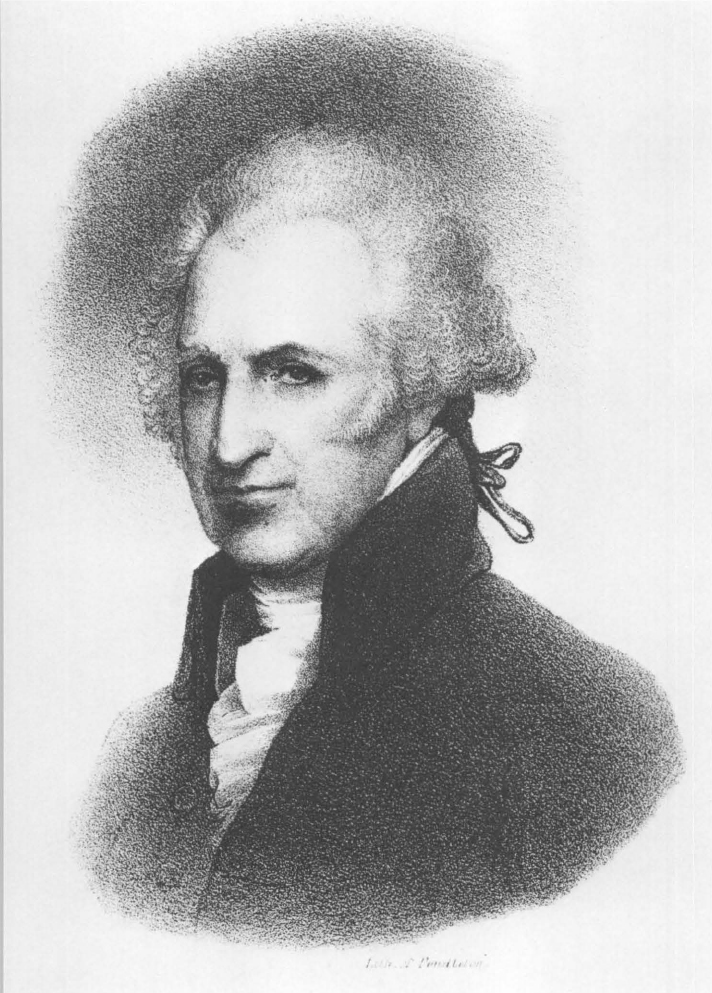
Among the items in the Boston Public Library’s manuscripts department is a 21 Apr 1770 letter from Charles Lloyd (1735–1773) to George Grenville, former prime minister of Britain (shown here).

Lloyd was working at the Treasury office by 1761. His elder brother had tutored Grenville’s sons before becoming dean of Norwich, and through him Charles secured the job of secretary to the new prime minister in 1763.

After the Marquess of Rockingham took over government, Lloyd lost some patronage appointments but continued working at the Treasury. As of 1770, he was writing from the “Salt Office”; that department collected the salt tax, operating somewhat independently.

Lloyd also continued serving Grenville, who remained in Parliament, as a source on London news and a pamphleteer. According to the Dictionary of National Biography, Lord North even suspected that Lloyd wrote the radical Junius letters, a theory most later scholars called “absurd.”

This particular letter passed on news from Boston, which is probably why it ended up on this side of the Atlantic. It began:
Salt Office Saturday
21st April 1770.

Dear Sir

Nothing has occurred since youn left Town that I thought worth troubling you with till this morning when Mr. Robertson [John Robinson] (one of the Commrs. of the Customs in America) arrived in Town with an account that he left the whole Town of Boston in the utmost Confusion.

The immediate Causes of the breaking out of this ill Humor arose from some petty Quarrel between a Townsman & a Soldier. Each had their respective Partizans from words they came to Blows some were killed by the Soldiers & many wounded—

The next Day, a more General Engagement took place between the Civil & military when the Commander in Chief [acting governor Thomas Hutchinson] to prevent further Effusion of Blood order’d the Troops to retire into the Castle, & the Commrs. of the Customs are lodged there likewise—

The Townsmen were guilty of several outrages before the military Fired.
Lloyd then went on to write more about a lottery. He added a brief postscript of political gossip.

We can barely recognize the Boston Massacre in Lloyd’s description. The “petty Quarrel” was probably the ropewalk brawl. Robinson or Lloyd put less significance on the people killed than on Lt. Gov. Hutchinson agreeing to the town’s demand to move the troops—“a more General Engagement…between the Civil & military.” That was how some conservative elements in London first learned about the Massacre. 

Tuesday, October 14, 2025

Lt. Browne “hearing the drum beat to arms”

Yesterday I finally noted that Capt. William Browne, who was in the thick of the action in early 1775 as a spy and an army officer, had also been in Boston from 1768 to 1770. He was then a lieutenant in the 14th Regiment.

In fact, we might have Capt. Browne’s description of the night of the Boston Massacre.

After that confrontation, the army and the Loyalist justice of the peace James Murray compiled testimony from soldiers and officers about their side of the conflict. Customs Commissioner John Robinson carried those depositions to London, where they were published in a book titled A Fair Account of the Late Unhappy Disturbance at Boston.

One of those depositions, dated 13 March, reads:
I William Brown, junior, lieutenant in the 14th regiment of foot, do swear, that on the evening of Monday the 5th of March, 1770, being in company with lieutenant [Daniel] Mattear, ensigns [William] Napier and [Henry] Hallwood, in the quarters appropriated for part of the officers of the 14th regiment, between the hours of nine and ten o’clock, I was alarmed with an extraordinary ringing of bells, and the words “Turn out,” which continued some time, and then ceased a little; but on the bells beginning to ring again, and hearing the drum beat to arms, I prepared to go to the barracks;

at this time, captain lieutenant [John] Goldfinch coming in, the gentlemen then ready went along with him, leaving lieutenant [Alexander] Ross and myself, who presently followed. All along Queen’s-street, and King-street, we were pursued by a number of people with clubs and sticks, calling out, “Here goes two more; kill them, kill them;”

on turning into Quakers-lane, I received a blow across the neck with a stick thrown at me, another being aimed, passed with great violence, and numbers rushing in, I was separated from lieutenant Ross, and followed with the cries, “Down with him, kill him, kill him,” and other opprobrious language, to the middle of Green’s-lane, where they left me; from thence I got safe to the barracks.

WILLIAM BROWN, junior,
Lieutenant of the 14th regiment.
I say this might be the same officer as the man who was later Capt. Browne of the 52nd because the Army Lists for 1767 and 1771 show there were two lieutenants named William Browne in the 14th during its time in Boston.

When I first saw “William Brown, junior,” I thought that might indicate this man’s father was also named William Brown, offering another (thin) clue to his identity. But it’s also possible that the deponent used “junior” to distinguish himself from the older Lt. Browne in the same regiment.

All of the officers Browne named, plus Ens. Andrew Lawrie, provided similar testimony. Capt. Goldfinch also described breaking up a fight earlier that night, and Ens. Napier said a woman told him the bell-ringing “war to raise the inhabitants against the soldiers.” All that could easily be read as evidence of Bostonians being hostile and violent toward British army officers for no reason.

Closer reading shows, however, that Lt. Browne and his colleagues went out into the street after the Massacre. They heard a long stretch of bells, shouting, and other cacophony. Then the noise “ceased a little” as the crowd absorbed the effect of the shots. Finally, the officers heard more bells along with the army drums summoning all the soldiers to their barracks. Browne and his fellows in the 14th headed for those buildings, running into townspeople upset that soldiers had shot a dozen of their neighbors.

TOMORROW: The frustrating Capt. Goldfinch.

Monday, October 06, 2025

“Patriot, Hero, Distracted Person” Online

At the end of the summer Revolutionary Spaces and the National Museum of Mental Health Project debuted an online exhibit titled “Patriot, Hero, Distracted Person: James Otis, Jr. and Mental Health in the Eighteenth Century.” It’s well worth a visit.

For decades the standard American story of James Otis was shaped by the Massachusetts Whigs, particularly his sister Mercy Warren and his admirer John Adams.

That narrative had Otis staunchly leading the political resistance to the British ministry’s corrupt laws until Customs Commissioner John Robinson assaulted him in the British Coffee-House. That severe head injury tipped Otis into bouts of insanity.

In the twentieth century historians noted that Otis’s family had noticed him behaving erratically earlier in life. Adams’s diary and newspapers show that Otis was especially verbose and bellicose in the days leading up to his confrontation with Robinson. The fight in the British Coffee-House might thus have been the result of mental difficulties, not just the cause.

This web exhibit shares all that evidence as well a note from a psychiatrist saying that Otis’s head injury could have brought on or severely exacerbated his manic episodes. It also explores his treatment and family life in more detail than I’ve seen elsewhere.

Without completely neglecting politics, the exhibit thus reframes Otis’s life “from an epic tragedy to a much more familiar story of loss and sacrifice.” It puts particular emphasis on his later years when he was unable to work and often separated from his wife and children. The final page shares artistic responses to his story.

Kate LaPine, Lucy Pollock, Paul Piwko, and their colleagues at Revolutionary Boston and the National Museum of Mental Health Project have produced a website evoking sympathy for Otis as an individual facing human difficulties, not a distant historical figure. It provides a different dimension to our grand Sestercentennial narrative.

Wednesday, May 21, 2025

“Observing the Rebels landed on Noddles Island”

On 14 May 1775 the Massachusetts Provincial Congress’s committee of safety, aware that the British military was buying or confiscating sheep and cattle pastured on the Boston harbor islands, passed this resolution:
as the opinion of this committee, that all the live stock be taken from Noddle’s island, Hog island, Snake island, and from that part of Chelsea near the sea coast, and be driven back; and that the execution of this business be committed to the committees of correspondence and selectmen of the towns of Medford, Malden, Chelsea and Lynn, and that they be supplied with such a number of men as they shall need, from the regiment now at Medford.
That strong opinion apparently didn’t have the effect the committee wanted. It was, after all, recommending that other people undertake a difficult task that wouldn’t normally fall within their responsibilities.

So ten days later the committee resolved:
That it be recommended to Congress, immediately, to take such order respecting the removal of the sheep and hay from Noddle’s Island as they may judge proper, together with the stock on the adjacent islands.
The next day, 25 May, Gen. Thomas Gage wrote to Adm. Samuel Graves (shown above):
I have this moment received Information that the Rebels [intend] this Night to destroy, and carry off all the Stock & on Noddles Island, for no reason but because the owners having sold them for the Kings Use: I therefore give you this Intelligence that you may please to order the guard boats to be particularly Attentive and to take such Other Measures as you may think Necessary for this night.
According to Lt. John Barker, some British troops went onto Noddle’s Island that day “to bring off some hay.” But that was about it.

On the morning of 27 May, about 600 provincial soldiers under Col. John Nixon and Col. John Stark moved from Chelsea onto Hog Island. They began to round up livestock, most likely owned by Oliver Wendell, and set fire to hay and other crops.

In the afternoon, part of that provincial force crossed to Noddle’s Island, burning some structures. The smoke from the fires alerted British commanders. Capt. John Robinson of H.M.S. Preston sent an alert to Adm. Graves, who later wrote:
Upon observing the Rebels landed on Noddles Island, I ordered the Diana to sail immediately between it and the Main[land], and get up as high as possible to prevent their Escape, and I also directed a party of Marines to be landed for the same purpose.
That started the second significant fight of the siege of Boston, which local historians later named the Battle of Chelsea Creek. Rather than recounting the two-day action blow by blow, I recommend Craig J. Brown, Victor T. Mastone, and Christopher V. Maio’s article in the New England Quarterly from 2013 and HUB History’s recent podcast.

On Saturday, 24 May, Chelsea will commemorate the Sestercentennial of the Battle of Chelsea Creek. There will be military drills, artillery demonstrations, and other events at Port Park. The Governor Bellingham Cary House Museum will have an open house. There’s also a boat tour, but that’s sold out (and the Battle of Chelsea Creek wasn’t really a good event for sailing vessels, anyway).

On that same day, East Boston will commemorate the Sestercentennial of the Battle of Chelsea Creek at Condor Street Urban Wild with two battle reenactments at 11:00 A.M. and 3:00 P.M., a boat tour, a walking tour, military music, games, crafts, and the usual activities of modern public festivals.

After the anniversary passes, I’ll discuss a couple of the outcomes of that fighting.

Saturday, February 17, 2024

A True Crime Podcaster on Colonial America

Back in 2007 I launched a series of posts I called CSI: Colonial Boston.

I periodically returned to that theme over the next few five years with other tales of people investigating how other people died by looking at their remains.

At the time, the CSI franchise was dominating American television with three series. They all went off the air by 2016, though one has been periodically revived. Therefore, while the acronym CSI still has the same technical significance, it no longer carries so much cultural weight.

Instead, one of the hot trends today is “true crime podcasts.” I listen to a few myself while cooking and cleaning.

Among the leading practitioners of the genre is Kate Winkler Dawson, a journalist now based in Texas. She specializes in historical examples as an author and a host of three podcasts:
  • Tenfold More Wicked, said to be “a unique blending of narrative nonfiction storytelling with investigative journalism.”
  • Wicked Words, interviews with journalists and writers about crimes they looked into.
  • Buried Bones, in which Dawson presents expert forensics investigator Paul Holes with the details of cases from the past.
On Tenfold More Wicked, Dawson has just launched a short series focusing on deaths in the last years of colonial Williamsburg, Virginia.

The first episode went where I expected it would, to the death of provincial treasurer and speaker of the house John Robinson in 1766. The narration does a lot of looking ahead to the Revolution, which I think it anachronistic. In that year Virginians and other North American colonists felt that the repeal of the Stamp Act by a new government in Britain held promise for better relations within the British Empire.

There are some other glitches, such as the common misunderstanding of the Quartering Act and allowing the Crown to install soldiers into people’s private homes. But Dawson has interviewed lots of people at Colonial Williamsburg to convey aspects of everyday life among the slaveowning gentry, which is more crucial to the stories she’ll tell.

A couple of years ago Dawson and Holes’s Buried Bones podcast tackled the Joshua Spooner murder from 1778 Massachusetts in an episode titled “Soldiers of Fortune.” As one might expect, there wasn’t a lot of reliable forensic information from 1778 for Holes to sink his teeth into, but fans of Revolutionary Massachusetts might still enjoy this take.

For folks who prefer their true crime in book form, there are a couple of modern books about the Spooner case:
  • Deborah Navas, Murdered by His Wife (1999)
  • Andrew Noone, Bathsheba Spooner: A Revolutionary Murder Conspiracy (2021)
The podcast has a list of its sources, many available freely over the web.

Thursday, February 01, 2024

“He should not speak to a gentleman in the street”

Yesterday I quoted John Malcolm’s complaint about how some Royal Navy officers had treated him in 1771, cutting buttons off his cloak.

In his newspaper advertisement about the conflict, Malcolm twice used the language of duelling. One navy officer named Davis reportedly “promis’d…Gentleman-like Satisfaction,” and the Customs officer “demanded Satisfaction of him.”

Davis instead proceeded to an action that was also part of the duelers’ code, but not for a genteel equal with whom one would duel. Instead, Malcolm complained, “he struck me with a Stick.”

Clubbing or caning an opponent was not just a physical assault. It also communicated that person was of a lower social class.

When James Otis, Jr., and Customs Commissioner John Robinson met in the British Coffee-House in September 1769, they were following that code. Otis had publicly claimed the right to break Robinson’s head, and Robinson tried to grab Otis’s nose before swinging his own cane.

Decades later, Rep. Preston Brooks’s assault on Sen. Charles Sumner in the U.S. Senate chamber carried the same symbolism. Brooks had considered challenging Sumner to a duel, as he had previously dueled with other men, but another member of Congress persuaded him that dueling was too good for the anti-slavery senator.

When John Malcolm advertised in 1771 that he had given Davis “a genteel Basting or Caneing,” he wasn’t just saying he’d resisted Davis’s strike and come out ahead in their fight. He was signaling that because he’d succeeded in inflicting that chastisement he was the more worthy gentleman.

Malcolm’s behavior toward George R. T. Hewes on 25 Jan 1774 had the same symbolic dimension. The incident started when a boy criticized Malcolm for having knocked his “chips” into the snow the day before. Malcolm didn’t like being pestered by a child and started waving his cane around. Hewes then remonstrated with the man about threatening the boy.

Malcolm again resented being called out by someone from a lower class—a poor shoemaker. According to the Massachusetts Spy, he told Hewes, “You are an impertinent rascal, it is none of your business,” eventually adding that “he should not speak to a gentleman in the street” like that.

The two men then argued over their “good credit” in town. Hewes didn’t claim to be a gentleman, but he found a way to imply that Malcolm wasn’t one, either: “Mr. Hewes retorted, be that as it will, I never was tarred nor feathered any how.”

At this time, before the actual war broke out, crowds almost always reserved tarring and feathering for working-class men connected with Customs enforcement as low-level officers, sailors, or (supposed) informants. Contrary to later popular images, mobs didn’t tar and feather upper-class Tories.

By bringing up the fact that a crowd in Maine had tarred and feathered John Malcolm, Hewes was insinuating that, despite his career as a ship’s captain, colonial army officer, and higher-level Customs officer, Malcolm was not really a gentleman.

Malcolm responded as the dueling code said a gentleman could when insulted by someone beneath his rank: he clubbed Hewes on the forehead and knocked him out.

Thursday, April 06, 2023

Mapping Westford’s Veterans and Casualties

The town of Westford has a dedicated group of local historians and reenactors as well as the Westford Museum.

One of the latest local-history projects from Westford, created primarily by Judy Cataldo, is this online map of Revolutionary War veterans and civilian casualties in Westlawn Cemetery.

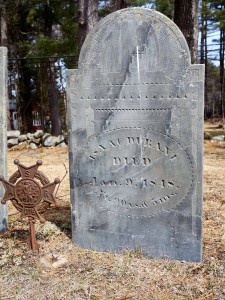
Each gravestone is pictured and accompanied by a profile of the person it commemorates. For instance:
Isaac Durant is the son of Henry and Susanna, born in Littleton on September 16, 1757. On the morning of April 19, 1775, he was living in Lexington and later testified, "that about 5:00 hearing our drum beat, we proceeded towards the parade, and soon found that large bodies of troops were marching towards us." The next month he enlisted in the army at Cambridge as a drummer and served 91 days. He continued to serve as a drummer at other times in the war, one month in 1777, 6 months in 1778, 9 months in 1779 and at the end of the war in 1781. On returning home he married Helena Wendell from Salem in 1784 and they had 9 children. He eventually moved to Westford and lived in a home on the road to the village center. Capt. David Prescott Lawrence a longtime resident of Westford stated that he remembers Isaac Durant a revolutionary soldier, who was blind and was guided about the village by a little grandson. He died in Natick on January 9, 1848 at the age of 90.
Another topic that Judy Cataldo has researched over many years is the epidemic of “camp fever” that affected both soldiers and civilians in New England during the siege of Boston. The intersection of that project and this appears in the entry for the gravestone of the daughters of militia colonel John Robinson:
In the late summer and early fall of 1775, the civilians of Massachusetts towns were besieged by an epidemic of the Bloody Flux or Camp Fever, a type of dysentery that can be deadly to children. The disease was brought into the towns by soldiers returning from their service in the camps around Boston. Col. John Robinson and his wife Huldah lost 3 of their daughters within 10 days. Betty who was born 1770 and Sarah born May 3, 1772 both passed on August 30, 1775 and Mehetebel born August 9, 1767 died on September 7 1775.
It would be nice to see more local projects like this during the Sestercentennial. And to see them preserved in forms that will survive the evolution of the web. 

Monday, March 30, 2020

Capt. Preston and the Town of Boston

On Monday, 12 Mar 1770, one week after the Boston Massacre, the Boston Gazette ran this letter:
Boston-Goal, Monday, 12th March, 1770.

Messieurs Edes & Gill,

PERMIT me thro’ the Channel of your paper, to return my Thanks in the most publick Manner to the Inhabitants in general of this Town—who throwing aside all Party and Prejudice, have with the utmost Humanity and Freedom stept forth Advocates for Truth, in Defence of my injured Innocence, in the late unhappy Affair that happened on Monday Night last: And to assure them, that I shall ever have the highest Sense of the Justice they have done me, which will be ever gratefully remembered, by

Their most obliged and most obedient humble Servant,

THOMAS PRESTON.
Preston was of course the army captain jailed after the Massacre.

In the initial coroners’ inquests and newspaper reports, some witnesses declared that they hadn’t seen Preston give a clear order to his men to fire, or that many other people in the crush on King Street were yelling the word “Fire!” Some added that Preston definitely stopped the soldiers from firing a second time by knocking their muskets up.

Other witnesses, to be sure, said that they had heard and seen Preston give the order to fire. The prints soon to be published by Henry Pelham and Paul Revere depict that. The legal case against Preston was based on that testimony.

By writing this letter, Preston sought to keep the first group of witnesses on his side, to ensure the populace understood his guilt was not clear, and perhaps to break down the stark division between army and civilians. By running the letter, printers Edes and Gill were pleased to show how Preston recognized Boston as a fair-minded town.

Hovering over Preston’s head was the historical memory of John Porteous, a captain of the Edinburgh City Guard who was convicted in 1736 of ordering soldiers to fire at a riotous crowd, killing several people. When it became clear that the royal government planned to reprieve him, a local mob broke into the jail and lynched Porteous, as depicted above.

Preston of course didn’t want that to happen to him. The Boston Whigs didn’t want that to happen, either. They wanted to show the rest of the British Empire that their town was peaceful and law-abiding when not flooded with troops. Providing Preston with a fair trial was the way to do that. The captain’s public thanks to “the Inhabitants in general of this Town” seemed to endorse their position.

The Whigs didn’t know that two days later Preston completed a much longer piece of writing, eventually published under the title of the “CASE of Capt. Thomas Preston of the 29th Regiment.”

It portrayed Boston in a very different light:
IT is Matter of too great Notoriety to need any Proofs, that the Arrival of his Majesty’s Troops in Boston was extremely obnoxious to it’s Inhabitants. They have ever used all Means in their Power to weaken the Regiments, and to bring them into Contempt, by promoting and aiding Desertions, and with Impunity, even where there has been the clearest Evidence of the Fact, and by grossly and falsly propagating Untruths concerning them.

On the Arrival of the 64th & 65th, their Ardour seemingly began to abate; it being too expensive to buy off so many; and Attempts of that Kind rendered too dangerous from the Numbers.—But the same Spirit revived immediately on it’s being known that those Regiments were ordered for Halifax, and hath ever since their Departure been breaking out with greater Violence.

After their Embarkation, one of their Justices, not thoroughly acquainted with the People and their Intentions, on the Trial of the 14th Regiment, openly and publicly, in the Hearing of great Numbers of People, and from the Seat of Justice, declared, “that the Soldiers must now take Care of themselves, nor trust too much to their Arms, for they were but a Handful; that the Inhabitants carried Weapons concealed under their Cloaths, and would destroy them in a Moment if they pleased.”
Lt. Alexander Ross reported hearing justice of the peace Richard Dana give such a warning.
This, considering the malicious Temper of the People, was an alarming Circumstance to the Soldiery. Since which several Disputes have happened between the Towns-People and Soldiers of both Regiments, the former being encouraged thereto by the Countenance of even some of the Magistrates, and by the Protection of all the Party against Government. . . .

The Insolence, as well as utter Hatred of the Inhabitants to the Troops, increased daily; insomuch, that Monday and Tuesday, the 5th and 6th instant, were privately agreed on for a general Engagement; in Consequence of which several of the Militia came from the Country, armed to join their Friends, menacing to destroy any who should oppose them. This Plan has since been discovered.
Preston thus suggested a conspiracy theory to rival the Whigs’ suspicions about the Customs Commissioners with a whiff of treason stirred in.

The “Case” the captain was making appears to be for a royal pardon to rescue him and his men from an unjust death sentence in a hostile province:
And this must be the fate of all the unhappy Soldiers confined with me. In short with such Jurors and Witnesses we have nothing better to expect than to be sacrifyc’d as a terror to all others who would oppose the people, however wrong. . . . The Commanding Officer with the Officers of both the two Corps and every other dispassionate man here have approved of my conduct and hope it will also deserve the attention of His Majesty.
Capt. Preston’s essay was one of the documents that Customs Commissioner John Robinson was carrying to Britain in late March 1770, 250 years ago. Convinced by Preston’s letter that he felt locals were treating him fairly, the Boston Whigs had no idea of his range of feelings about their town.

Saturday, March 28, 2020

The Departure of Commissioner John Robinson

Although the Boston Whigs indicted the Customs officer for the port of Gaspé; a passing notary; and a couple of bottom-level Customs employees for the Boston Massacre, those men weren’t their real targets.

The anonymous person reporting on events for Customs Commissioner Joseph Harrison wrote:
This affair has struck every friend of Government with Horror and amasement, not Knowing but that it may be their case tomorrow . . . almost Every person in the Province are made to believe, that the Commissioners, and principal Officers of the Revenue were aiders & abettors, in the fireing on the 5th Inst.
In his role as historian, and thus referring to himself in the third person, Lt. Gov. Thomas Hutchinson later recounted:
Another witness, having sworn that he saw a tall man in the Custom house or in the balcony; it was insinuated to the Lt. Governor in Council that this was one of the Commissioners, who soon after left the Province and went to England.—There is no judging, in such times, where the credulity of the People will stop.
Who was this “tall man,…one of the Commissioners”? That was John Robinson.

Back in September 1769, Robinson had gotten into a coffee-house brawl with James Otis, Jr., seriously injuring the leader of the Massachusetts Whigs. That popped him to the top of the Least Popular Customs Commissioner list, beating out perennial Charles Paxton.

In February 1770, after land waiter Ebenezer Richardson killed Christopher Seider, some people whispered that superiors in the Customs service had encouraged him to use violence. Perhaps the Customs sloop sailor George Wilmot, who joined Richardson in defending his house, was acting under agency orders?

Clearly all these events were connected! Obviously Robinson and his colleagues were engaged in a secret transatlantic conspiracy to slowly press Massachusetts into political slavery!

Did anyone question how this conspiracy would benefit from killing an eleven-year-old? Or how a well-known tall man in hiding after the Otis brawl got into the Customs House in the center of town without anyone seeing him? Or why his method of attacking the crowd outside that building was by loading a musket, thrusting it into the hands of a teen-aged servant boy, and ordering him to shoot? (Charles Bourgate insisted he had shot over the crowd’s heads.)

Presumably the Boston activists believed that an investigation in the courts would answer those questions. Or, if we take the more cynical approach, they believed that they simply had to keep the questions alive until they achieved some sort of political victory over the Customs bureaucracy.

Meanwhile, what was John Robinson really up to? He had, as Hutchinson wrote, “left the Province and went to England.” The 22 March Boston News-Letter reported:
Friday last [i.e., 16 March] sailed for London the Captains Robson and Miller; in the former went the Hon. John Robinson, Esq; one of the Commissioners of the Board of Customs.
Robinson carried an important cargo: documents telling the army’s side of the story. Lt. Col. William Dalrymple wrote to his commander on 19 March:
I have sent to England States of the affairs here, as well as of Captain [Thomas] Preston’s case. You will pardon my doing so by any other channel than yours, when you consider that the first impression is always the strongest in such cases, an opportunity offered and I presumed to use it.
“Captain Preston’s case” meant a 2,200-word narrative by the imprisoned captain dated 14 March. Robinson also carried affidavits from twenty-one other army officers and several local eyewitnesses dated 12-15 March. They were all certified by James Murray, the Scottish-born justice of the peace appointed by Gov. Francis Bernard in 1768.

By comparison, Boston town officials started to collect testimony about the Massacre on the morning after—at the town meeting and for coroners’ inquests. But it wasn’t until 13 March that the town voted to commission a report on the event to send to Britain.

Whig magistrates took down depositions over the following week, particularly on 16, 17, and 19 March. Then they collected more. They deposed Charles Bourgate on 23 March. They interviewed three Customs service employees who refuted him on 24 March. Meanwhile, there was a debate in the town meeting about how best to send a fast ship to London with the report. The Short Narrative was finally printed on 30 March, and Capt. Andrew Gardner sailed with it on 1 April.

By that point, John Robinson and his documents already had a two-week head start for the imperial capital.

I think the Massachusetts Whigs learned a valuable lesson from this episode. The next time British soldiers shot and killed locals—at Lexington and Concord in April 1775—the Patriots were much more efficient about gathering testimony, printing it, and speeding it to London. In 1775, Capt. John Derby sailed from Salem on 29 April, ten days after the battle—or about as quickly as it took John Robinson to embark after the Massacre.

Sunday, December 08, 2019

“James Otis having ever entertain’d a most consummate Contempt of seeking a Purse”

On 14 Sept 1772, a little more than three years after James Otis, Jr., and John Robinson got into a fight inside the British Coffee-House, the lead item on the front page of Edes and Gill’s Boston Gazette spelled out the end of that dispute.

Otis had sued Robinson for assault, won a whopping jury award of £2,000, and then moved on to the appeals level. Before the legal case came up in the court’s August term, however, the parties reached a settlement, as laid out in the newspaper:
BE IT REMEMBERED, That this same Term in a Case here depending, wherein James Otis of said Boston is Appellant and original Plaintiff against John Robinson, late of said Boston, Esq; the said John Robinson, Esq; by James Boutineau, Esq; his Father-in-Law and Attorney, comes into Court and on the Behalf and in the Name of said John Robinson, Esq; who is now in Parts beyond Sea, to wit, in the Kingdom of Great-Britain, being thereunto fully empower’d as by his Letters of Attorney on File in the Case may appear, FREELY confesses that in the Assault committed by him the said John Robinson, Esq; on him the said James Otis, in presumptuously attempting to take him the said James Otis by the Nose was the first Assault, which occasioned and brought on all the consequent Insults, Wounds and other Injuries whereof the said James Otis in his Declaration more particularly complains; HE the said John Robinson, Esq; was greatly in Fault, is very sorry for his Conduct and Behaviour that Night towards the said James Otis, and asks the Pardon of the said James Otis.
Boutineau signed that statement on behalf of his son-in-law.

The newspaper then published another document, written by Otis himself:
WHEREUPON the said James Otis being personally present here in Court, duly reflecting that he has ever been as ready to give, as to ask or demand Gentleman-like Satisfaction for an Insult real or suppos’d, at the same Time being fully conscious, and, as he apprehends, able abundantly to prove, that he then publickly offer’d that Kind of Satisfaction to the said John Robinson, Esq; previously to the said first Assault, as on the Part and in Behalf of the said John Robinson, Esq; by his Attorney James Boutineau, Esq; is above confess’d—

And the said James Otis having ever entertain’d a most consummate Contempt of seeking a Purse or pecuniary Reparation for a personal Insult, if any other more Gentleman-like could be obtained, by the Consent of the Parties, and that consistently with the Laws of his Country: ACCEPTS of the above Submission here in Court in full for the Assault, Insults, Injuries and Damages above complain’d of in the Declaration of the said James Otis and confess’d as above.

And upon the same Submission, so far as the said John Robinson, Esq; was concern’d in the Assaults, Insults and Injuries above mention’d and confess’d, as he thinks a Gentleman and Christian ought in such Case and on such Submission, freely forgives the said John Robinson, Esq; and by these presents remiseth, releaseth, acquitteth and dischargeth him the said John Robinson, Esq; from all Actions, Suits and Demands, by Reason of or occasion’d by the Premises; and also, all Right and Cause of Action in the Declaration specified.

FURTHERMORE the said James Otis knowing full and right well that by the Operation of the Law hereupon, he also of Course releaseth and dischargeth the alledged and suppos’d Confederates of the said John Robinson from all Demands supportable on the Premises by our Laws, but the said James Otis would by no Means be understood to give up any other Demands he may hereafter make by Reason of the Premises against any of the alleg’d or suppos’d Confederates—
At this point the original document on file with the Massachusetts courts contained a phrase that Otis crossed out before signing: “should he ever meet with either of them in a state of nature, or without the reach of municipal laws.” In other words, he threatened his enemies with a physical attack. (After all, that had gone so well for him before.) Ultimately, Otis decided not to make that bluster part of his legal and public statement.

The official document continued:
At the same Time the said James Otis of his own free Will and meer Motion thinks fit to give it under his Hand, to remain on Record in Favour of the said John Robinson, Esq; as the said James Otis has often privately and publickly, in the hearing of his Friends and others, and even in the Court of Common Pleas declared, as he now does in this honourable Court, That he looks on the said John Robinson, Esq; to be infinitely less to Blame in this (for both Parties in the Suit) very unhappy Affair, than those, who the said James Otis, were he inclin’d to give himself the Trouble, thinks, and is perswaded, he could fully prove artfully and most insidiously as well as maliciously incited the said John Robinson, Esq; to so very unworthy an Action.
Despite no longer openly threatening violence, Otis still had to include insinuations of a conspiracy behind the incident.

The final paragraph of Otis’s statement laid out what payments he wanted Robinson to make:
  • £13.10s.8p. as “Common Costs of Court.”
  • £30 for each of his attorneys—Samuel Fitch, John Adams, and Sampson Salter Blowers.
  • £7.12s. for “the Doctors Bills.”
  • £1.8s. for “taking Affadavits out of Court.”
  • “not a Farthing for the Use of the said James Otis, he having (as before observ’d) a most thorough Contempt for a pecuniary Recompense when a better can be obtain’d.”
Thus, instead of £2,000 or more, Robinson had to pay only £112.11s.8d. and be done with the whole mess. In his accounts, John Adams noted receiving his £30 payment as “a genteel Fee.”

Those settlement documents ran also in the Boston Evening-Post, Essex Gazette, New-Hampshire Gazette, Providence Gazette, Boston News-Letter (after a week’s delay blamed on “Want of Room”), Connecticut Gazette, Pennsylvania Chronicle, and Connecticut Courant. Otis and his allies made sure everyone in New England knew about what they saw as his moral victory.

As I read that settlement, though, I can’t help but see the similarities between its language and the statements Otis was publishing back in September 1769, just before the fight. Once again, Otis was deploying the language of genteel honor (and dueling), hinting at conspiracies against him, threatening violence. In 1769, that mood led him into the conflict with Robinson. Three years later, a similar feeling of extravagance drove his proposal to make a public settlement.

Otis’s colleagues and successors praised his magnanimity at this moment. But they also knew that the leader of Boston’s Whigs in the 1760s had lost a great deal and would never be the same man again.

Saturday, December 07, 2019

James Otis’s Legal Recovery

As James Otis, Jr., recovered physically from the blow on his head with the help of top Boston doctors, he also took legal steps with the help of top Boston lawyers.

In order of seniority, the three men Otis hired to represent him were:
Interestingly, Fitch and Blowers were already leaning toward the Crown politically and became Loyalist refugees during the war.

Of course, Otis himself was one of the province’s leading attorneys, and he no doubt directed his legal strategy.

Otis sued Customs Commissioner John Robinson for £3,000 in damages. To put that figure in perspective, in 1770 Paul Revere bought his house in the North End for a little over £213. When Thomas Hutchinson became royal governor of Massachusetts in 1770, the Crown granted him a salary of £1,500.

In In a Defiant Stance: The Conditions of Law in Massachusetts Bay, the Irish Comparison, and the Coming of the American Revolution, John P. Reid pointed out that any colonial jury award of £300 or more could be appealed to courts in Britain, which would have been much less sympathetic to Otis than one from Suffolk County. In other words, if Otis wanted to maximize his chance of receiving money, he could have asked for £299, and Robinson would have had no appeal. Otis’s huge demand was making a public point.

The court case came up in the January 1770 term, but was continued with the agreement of both parties. And then continued again.

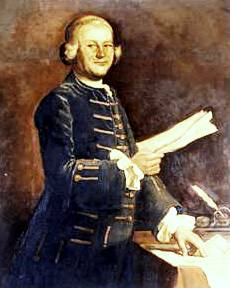
In the meantime, on 5 Oct 1769 Robinson married Anne Boutineau (born 1748, shown above). After the Boston Massacre, the couple sailed for London, carrying documents showing the Crown side of that event. John Robinson never returned to New England.

The case of Otis v. Robinson finally went to court in July 1771. By that time Otis had suffered some very public episodes of madness, but he was back in the Massachusetts General Court. The jury awarded him less than he asked for but still a whopping £2,000. Both parties appealed, Robinson’s side asking for a smaller award and Otis’s for a larger one.

After further delays, that appeal came up in August 1772. Robinson’s father-in-law, merchant James Boutineau, acted as his attorney—probably meaning that he spoke for Robinson, not that he practiced lawyer. By then Otis no longer held public office, his mental instability having become apparent after one legislative session. However, he was still steering his case.

TOMORROW: James Otis’s magnanimity, and how he wanted everyone to know about it.

Friday, December 06, 2019

James Otis’s Medical Recovery

According to James Otis’s first biographer, William Tudor, Jr., after his brawl in the British Coffee-House in September 1769 he received care from “Doctors Perkins and Lloyd.”

Dr. James Lloyd (1728-1810, shown here) was one of Boston’s leading medical practitioners. Although he was a Loyalist in his politics, he remained in town after the siege and reestablished his popularity and practice.

There were three prominent doctors named Perkins in Boston at this time: John Perkins (1698-1781), his son William Lee Perkins (1737-1797), and Nathaniel Perkins (1715-1799). Nathaniel seems to have had the most active practice, so he’s most likely to have examined Otis. The court records (more about that tomorrow) could say for certain.

Back in 1764 Dr. Nathaniel Perkins inoculated John Adams against smallpox, and Adams described him this way:
Dr. Perkins is a short, thick sett, dark Complexioned, Yet pale Faced, Man, (Pale faced I say, which I was glad to see, because I have a great Regard for a Pale Face, in any Gentleman of Physick, Divinity or Law. It indicates search and study). Gives himself the alert, chearful Air and Behaviour of a Physician, not forgeting the solemn, important and wise.
Lloyd and Perkins found James Otis had suffered a deep head wound. They reportedly testified that it must have come from “a sharp instrument,” which Whigs insisted meant a sword. Nonetheless, all the eyewitness evidence says Customs Commissioner John Robinson walloped Otis with a walking stick.

Years later Adams wrote that Otis bore “a scar, in which a man might bury his finger,” and joked, “what is worse, my friends think I have a monstrous crack in my skull.”

At first, people thought Otis would recover. Within a few weeks he was behaving more rationally than before the fight. Toward the start of this series of postings I quoted a couple of entries from John Adams’s diary just before the brawl. In early September Adams had been struck, then annoyed, by how much Otis was talking at social events.

The next time Adams mentioned Otis in his diary (which he kept sporadically enough that year that this might not have been the next time they met) was on 19 October. Adams wrote:
Last night I spent the Evening, at the House of John Williams Esqr. the Revenue officer, in Company with Mr. Otis, Jona. Williams Esqr. and Mr. McDaniel a Scotch Gentleman, who has some Connection with the Commissioners, as Clerk, or something.

Williams is as sly, secret and cunning a fellow, as need be. The Turn of his Eye, and Cast of his Countenance, is like [Ebenezer] Thayer of Braintree. In the Course of the Evening He said, that He knew that Lord Townsend borrowed Money of [Charles] Paxton, when in America, to the amount of £500 st. at least that is not paid yet. He also said, in the Course of the Evening, that if he had drank a Glass of Wine, that came out of a seizure, he would take a Puke to throw it up. He had such a Contempt for the 3ds. of Seisures. He affects to speak slightly of the Commissioners and of their Conduct, tho guardedly, and to insinuate that his Connections, and Interest and Influence at Home with the Boards &c. are greater than theirs.

McDaniel is a composed, grave, steady Man to appearance, but his Eye has it’s fire, still, if you view it attentively.—

Otis bore his Part very well, conversible eno, but not extravagant, not rough, nor soure.
Adams was acerbic about Inspector Williams’s boasting but thought Otis very well behaved. He no longer monopolized conversation or indulged in “bullying, bantering, reproaching and ridiculing” as he had weeks before. If Otis had indeed been suffering a manic mood back in early September, it had passed.

Unfortunately, in the following spring it became clear that James Otis had become prone to serious mental instability. The injury to his head might not have brought on such problems, but it certainly didn’t help.

Thursday, December 05, 2019

The Career of Captain Dundas

Once I saw that “Captain Dundas” had come up in the dispute between James Otis, Jr., and John Robinson, I had to figure out who that was and what role he played in the coming of the Revolution.

In September 1769, Otis called Dundas “a well known petty commander of an armed schooner,” meaning he was in the Royal Navy. (The Customs service had just lost its one and only armed schooner, the Liberty.)

Fortunately, the Royal Navy keeps good records, and websites like Three Decks make that information available as long as one keeps running searches. So here’s what I’ve put together.

Ralph Dundas was born on 12 Oct 1732, the eldest son of Ralph and Mary Dundas of Manour, Scotland. He was serving in the Royal Navy by 1748, when he was in his mid-teens, and passed the exam to be a lieutenant in October 1757.

Lt. Dundas received his first command in 1764: H.M.S. St. Lawrence (also spelled St. Laurence). In British Warships in the Age of Sail 1714-1792 Rif Winfield writes that this schooner was “purchased on stocks at Boston [or Marblehead?],” though J. J. Colledge and Ben Warlow’s Ships of the Royal Navy says the Royal Navy bought it in Halifax, Nova Scotia.

It carried thirty men, six three-pounder cannon, and twelve swivel guns—by no means a fearsome warship but powerful enough for peacetime patrols, carrying messages, and supporting larger vessels as a “tender.” Among the crew was master’s mate John Whitehouse, who later sailed under Capt. James Cook.

On 28 July 1766, the Boston Evening-Post reported:
Friday last arrived a Schooner from Louisbourg, by whom we learn, that some time before he sail’d fro thence, his Majesty’s armed Schooner the St. Laurence, commanded by Lieut. Dundas, was struck by Lightning as she lay at Anchor there, which set Fire to the Powder Magazine in the Fore Part of the Vessel and blew her up, by which Accident three Men were instantly killed, and several others terribly wounded, two of whom died the next Day:

We hear that the Officers on board, being in the Cabin, escaped unhurt; and that the Bows of the Vessel being carried away by the Explosion, she sunk in a few Minutes after.
The Boston Post-Boy of the same date said the explosion happened “between two and three Weeks ago.” The Narrative of American Voyages and Travels of Captain William Owen, R.N. names the site of the wreck as Neganishe, now probably called Ingonish.

Commodore Samuel Hood then bought a merchant’s sloop called the Sally, renamed it St. Lawrence, and assigned it to Lt. Dundas.

In the spring of 1768, the St. Lawrence accompanied H.M.S. Romney from Halifax to Boston. On 23 May, the Boston Chronicle carried Lt. Dundas’s advertisement for four deserters. Keeping the sloop fully manned was a challenge. Within a month the town was upset about a “man pressed by Capt. Dundas, and carried down to Halifax.” Capt. John Corner of the Romney and Councilor Royall Tyler sat down to discuss that issue and others, according to the 27 June Boston Chronicle.

The Boston News-Letter and Post-Boy show that over the next several months the St. Lawrence sailed back and forth along the northeast coast: off to Halifax in August, back to Boston in November and then heading off to Halifax again, collecting military stores at Canso and Louisburg over the winter, then back to Halifax. The St. Lawrence returned to Boston again in August 1769.

That put Lt. Dundas in town for the busy fall of 1769. He probably wasn’t in the British Coffee-House when Robinson and Otis started hitting each other with their canes on 5 September. Otis hinted that he participated in the fight, but Robinson denied that. Otis also said rumor had it Dundas “swore last year that the whole Continent was in open Rebellion.” However, the lieutenant’s name doesn’t appear to have come up again in this or other political disputes, which suggests that Otis’s Whig allies didn’t think they could make a case against him, even to their own followers.

The next month brought the Neck Riot on 24 October, followed four days later by the attacks on printer John Mein and sailor George Gailer. In the next couple of weeks, Royal Navy captains helped to hide Mein from the crowd. On 11 November, provincial secretary Andrew Oliver reported to Gov. Francis Bernard that Mein “thinking it unsafe for him to continue in Tow has taken his passage for England with Capn. Dundass.” In fact, it looks like Mein sailed away on another ship, but Oliver’s letter indicates that Dundas left Boston early in the month.

In April 1770, the sailmaker Ashley Bowen wrote in his diary that Dundas’s schooner had come into Marblehead harbor. However, the diary’s annotations suggest he mistook that ship for the Magdalen under Lt. Henry Colins. That suggests how common it was for New Englanders to see Dundas’s schooner. The 16 July 1772 Massachusetts Spy stated that Dundas had sailed the St. Lawrence to the Bahamas, and the 17 June 1773 Boston News-Letter reported that it had come back from the Bahamas to Boston.

As of June 1774, the Royal Navy listed the St. Lawrence, with six guns and thirty men, at Boston. It was small part of the big fleet under Vice-Admiral Samuel Graves sent to enforce the Boston Port Bill. In November Lt. Dundas sailed for London; part of a letter he carried was forwarded to Lord North as useful intelligence in January 1775.

That was the last voyage of that St. Lawrence, at least as a naval schooner. In May 1775, immediately after the war began, Graves reported that he had bought and armed two schooners at Halifax and planned to call one the St. Lawrence. He assigned it to a new commander. Lt. Dundas’s ship was sold off in London the next year.

Ralph Dundas became commander of the new fourteen-gun sloop Bonetta in April 1779, then the new sixteen-gun sloop Calypso (shown above) in December 1782. He served in that post until 1787. Dundas died that year at age fifty-four, having spent about four decades in the Royal Navy. He was buried at St. Clement Danes in Middlesex County. He left no known wife or children.

Commander Dundas served during two wars, but his naval career was overshadowed by his little brother George (1756-1814), who rose to be a rear admiral—having presumably joined the navy with Ralph as inspiration. An intervening brother, David (1749-1826), became a doctor to George III and a baronet.

Wednesday, December 04, 2019

Otis and Robinson Continue Their Fight in the Newspapers

The earliest public comment I’ve seen from James Otis, Jr., about his altercation with John Robinson on 5 Sept 1769 was an “Advertisement” that appeared in the 11 September Boston Gazette.

It’s remarkable for the amount of emphasis Otis asked of the printers:
From a regard to truth, and to the character of a true soldier, whose honor, is ever, justly dearer to him than life: It is with pleasure I take this first opportunity voluntarily and freely to DECLARE, in the most open and unreserved as well as public manner, that in the premeditated, cowardly and villainous attempt of John Robinson, Commissioner, and his confederates, last week, to assassinate me, I have not the least reason to think, or even suspect, that any officer or officers, either of the army or navy, were directly or indirectly concerned in so foul a deed, except a well known petty commander of an armed schooner, of about 4 swivels, who if fame for once tells truth, swore last year that the whole Continent was in open Rebellion.
Because of the styling of this blog template, in long quotations I boldface words originally set in italics. That makes Otis’s writing style even more blatant. I imagine him furiously scratching lines under one word after another. To me this paragraph seems like more evidence that Otis might have been in the middle of a manic episode that month.

Customs Commissioner Robinson responded to that and other newspaper items in a long letter to the Boston Chronicle dated 18 September. The second half of that letter addressed Otis directly, saying among other things:
On Tuesday [the 5th] you went to a shop, and asked, if I did not buy a stick there, and being told I had, you desired to have the fellow of it which you bought accordingly.—

In the evening we met at the Coffee-house, when I immediately laid aside my sword.—Did that look like assassination?—

Your insult was public, and I determined to give you a public chastisement; but I did not attack you abruptly:—We had a parley together, and I attempted to take you by the nose, which, one would think, was a sufficient warning of what was to follow. What ensued served to balance our accompts.
I do enjoy that “one would think.”

Robinson then addressed Otis’s insinuation in his “Advertisement”:
You have thought proper to acquit the officers of the navy and army, (one excepted,) for which I give you due credit.—You charge the officer so excepted, whom you are pleased to call a petty Commander, &c. with being my Confederate.––To set your right in this particular, I must inform you, that that Gentleman, if you mean Captain Dundas was not in the Coffee-house during the engagement between us, and you may have proof of it, if you desire it.—

Before I conclude, I would remind you, that the man who appeals to the public, should confine himself within the verge of truth, and for his own sake within the bounds of credibility.
In his reply Robinson demonstrated the more restrained, rational deportment of an Enlightenment gentleman—albeit one who had tried to grab his nemesis’s nose.

TOMORROW: Who was “Captain Dundas”?

Monday, December 02, 2019

“For being accessory in beating Mr. Otis”

Back in September, before other Sestercentennial anniversaries came along, I started to explore the 5 Sept 1769 brawl in the British Coffee-House between James Otis, Jr., leader of the Boston Whigs, and John Robinson, one of His Majesty’s Commissioners of Customs.

As those two gentlemen were going at each other with canes and fists, other men intervened. The most energetic on Otis’s side was young John Gridley, identified here. On 6 September, Dr. Thomas Young wrote to John Wilkes that Gridley “had the ulna of his right arm fractured in the fray.”

The Whigs complained that several officers of the British army, navy, or Customs took Robinson’s side, but the one they named was William Burnet Brown, a native of Salem who had married and moved to Virginia. As I discussed here, he was probably visiting Boston to finish selling his New England property.

Interestingly, several recent authors credit Benjamin Hallowell, Jr., comptroller of the Boston Customs office, for breaking up the fight. I’ve read more anecdotes about Hallowell getting into disputes than stopping them, so this offers a novel perspective on him. Unfortunately, I haven’t been able to find the contemporaneous source for that detail.

Robinson went into hiding after the brawl, probably moving out to Castle William, the Customs officers’ usual refuge, which was now in army hands. That kept him beyond the reach of Whig magistrates or writs. Otis’s supporters therefore focused their legal efforts on William Burnet Brown. In fact, some people accused Brown of having attacked Otis himself.

On 6 September the merchant John Rowe wrote in his diary: “this afternoon the sheriff took Mr. Brown, Esq., formerly of Salem, for being accessory in beating Mr. Otis; he was carried to Faneuil Hall.” Sheriff Stephen Greenleaf was acting on a legal complaint sworn out by John Gridley, not making an arrest on his own authority the way police do now.

The magistrates overseeing the hearing at Faneuil Hall that evening were justices of the peace Richard Dana and Samuel Pemberton. Dana was a highly respected member of the Boston judiciary. Pemberton was a magistrate of long standing and a selectman. However, they were also both known for challenging Crown decrees and ignoring complaints from British officers. They were the Whig activists’ go-to magistrates, as the cases of Capt. John Willson, Ens. John Ness, and John Mein show.

In an attempt to counterbalance such magistrates, Gov. Francis Bernard had appointed James Murray (1713-1781) as a justice of the peace in the previous year. Murray was a Scottish gentleman who had settled in North Carolina in 1735, becoming a member of the governor’s council there. However, he didn’t do nearly so well financially as his little sister Elizabeth did in Boston, so in 1765 Murray moved north to join her.

In 1769 Elizabeth (Murray Campbell) Smith was widowed for a second time and decided to visit family in Britain, leaving her brother to manage her extensive property. They had already rented one large building to the British army; locals called that “Smith’s barracks” or “Murray’s barracks.” The public knew Justice James Murray supported the Crown in other ways.

On the evening of the 6th, Murray was taking a walk around the Town House when a gentleman named Perkins told him that Brown had been taken to Faneuil Hall. At the end of the month Murray wrote:
consulting my feelings for another's distress more than my own safety, [I] went directly to the Hall to attend the proceedings. Soon as the multitude perceived me among them, they attempted repeatedly to thrust me out, but were prevented by Mr. [Jonathan] Mason, one of the selectmen, calling out, “For shame, gentlemen, do not behave so rudely.”
What had started as a personal fight between two gentlemen had grown into a legal case. And now it was threatening to become a public fight that would make Boston look like a lawless place.

TOMORROW: Inside and outside Faneuil Hall.

Friday, October 25, 2019

“Count Brown” of King William County, Virginia

In 1767, William Burnet Brown moved out of Massachusetts.

He sold his father’s country house on Folly Hill, “Browne Hall,” to his cousin William Browne, by then one of Salem’s representatives on the Massachusetts General Court. [That meant this property went from William Browne to his son William Burnet Brown to his cousin William Browne, causing immense headaches for future chroniclers.]

It looks like Brown sold his mansion in Salem to his aunt Elizabeth, mother of William Browne, who had remarried Epes Sargent and then been widowed again. She eventually sold that property to her son Paul Dudley Sargent, later a colonel in the Continental Army.

William Burnet Brown, his wife Judith, and their infant children moved to her home colony of Virginia. He bought the King William County estate called Elsing Green from Carter Braxton, a politician who would become one of the signers of the Declaration of Independence. Braxton might have needed cash in 1767 because he was caught up in treasurer John Robinson’s embezzlement of colonial funds.

The mansion house of Elsing Green is shown above. It was built beside the Pamunkey River in the late 1710s. Around it were dependencies, one of those buildings dating to the 1690s; gardens; and fields of tobacco. The estate rested, of course, on the backs of the black workers enslaved there. In the early 1780s the state tax assessors counted seventy-five people working a thousand acres.

Soon Brown brought his sister Mary, his only surviving sibling, to live at Elsing Green. Their voyage in late 1767 was delayed by a storm that blew their ship aground near Stonington, Connecticut. The 24 Dec 1767 Boston News-Letter reported that all the passengers and “the Baggage and Horses of Mr. Brown” were safe.

Living in colonial Virginia was quite different from living in colonial Massachusetts, but the shift was probably not so drastic for William Burnet Brown as it would have been for others. He was an Anglican, not a Congregationalist, so the church worship was the same. He had grown up immensely rich and being served by enslaved black domestic servants. He now had to run a large agricultural plantation, but his wife and her Carter relatives no doubt helped him adjust to the Virginia way of doing things. He became a justice of the peace, and eventually his neighbors called him “Count Brown” for his wealth.

Brown still owned real estate up north. An attorney advertised in the 27 Jan 1769 Connecticut Journal of New Haven about a large amount of property for sale in that colony.

Brown was probably visiting Boston on business of that sort in September 1769 when he happened to witness the fight between James Otis, Jr., and John Robinson (no relation to the late Virginia treasurer). Why he got involved, swinging his cane and striking John Gridley, is unclear. But it caused some legal difficulties in the following weeks, as I’ll soon discuss.

Brown returned to Virginia, and I’ve seen no evidence that he ever visited Massachusetts again. He was never politically active. The only time his name appeared in the newspapers during the Revolutionary War was in 1779 when he advertised “a fine black horse” called Othello for either stud (“will cover mares for 20 dollars the leap”) or sale (for three payments spread out over up to ten years).

William Burnet Brown died in the spring of 1784, aged only forty-five. He was buried at Elsing Green. His daughter Judith married Robert Lewis, a nephew of George Washington. Without surviving sons, Brown willed the plantation to a grandson on condition that the child take his name. The name of William Burnet(t) Brown(e) has therefore been passed on to this day.

Sunday, October 20, 2019

“Too late to see your Friend Otis have a good Drubbing”

One of the more evocatively named citizens of Revolutionary Boston was a sea captain named Mungo Mackay (1740-1811).

According to family tradition, Mackay came from the Orkney Islands to Boston as a teen-aged cabin boy. He married Ruth Coney in 1764 and became a ship’s master the next year, trading with Newcastle and Tenerife. Soon he had a store on Long Wharf, and in 1768 he joined the St. John’s Lodge of Freemasons.

Mackay was another man who watched the John Robinson–James Otis fight from the open front door of the British Coffee-House, having been attracted by the noise. He could offer only a confused description of the action, not recognizing Robinson. He said he saw Otis “hustled back by the Crowd” and then “at least three [Sticks] over his Head, and the Blood running.”

Mackay’s testimony was most useful to the Whigs when he added:
I saw two Officers of the Navy talking together, one of whom said, “You have come too late to see your Friend Otis have a good Drubbing”, to which he replied, “I am very glad of it, he deserved it.”

I saw William Burnet Brown in the Room with a Whip in his Hand, who came up to Capt. [John] Bradford who was looking for Mr. Otis’s Hat & Wig, and asked him in a scornful Manner what he looked at him for, it appeared to me that he had a Desire to pick a Quarrel with Capt Bradford.
Bradford was another merchant captain and an active Whig. He was one of the Boston leaders who went out to deal with the “Powder Alarm” in 1774 and became the Continental government’s agent for the port of Boston during the war.

Mackay concluded his testimony by saying that almost all the men in the coffee-house were “Officers of the Army and Navy.” In other words, even if some men had been on Otis’s side, they were clearly outnumbered.

The Orkney-born captain swore to his affidavit “taken at the Request of James Otis, Esq;” in front of justices Richard Dana and Samuel Pemberton on 21 September, the same day as Thomas Brett.

As for Capt. Mungo Mackay, far from being only a pawn in the game of life, he’s managed to be remembered even in the age of Wikipedia.

TOMORROW: Who was William Burnet Brown?

Saturday, October 19, 2019

“Mr. Otis made a Trip (as they call it) at Mr. Robinson”

In the 25 Sept 1769 Boston Gazette, printers Benjamin Edes and John Gill ran two more eyewitness accounts of the fight between James Otis, Jr., and John Robinson.

One came from Thomas Brett, a merchant from Ireland. He said that on 5 September he was “in a Shop almost opposite the British Coffee-House” when he heard “an unusual Noise” that made him go look to see what was happening.

When I entered the Coffee-Room I perceiv’d two Gentlemen fighting with each other, the rest of the Company round them. I perceived several people rush upon Mr. Otis but in particular when Mr. Otis made a Trip (as they call it) at Mr. Robinson, which I believe would have brought him to the ground if he had not been supported by many people, who held him up.
Brett described John Gridley’s attempt to intervene, how “several people with Sticks struck” at him, and how he was shoved out of the building. Otis was shoved out at the same time, Brett said—a detail not in Gridley’s recollection.

And I don’t recall Gridley mentioning this moment, either:
Mr. Gridley in a short Time made his Appearance the second Time with his Arm (if I don’t mistake) tied up, and his Face very much disfigured with Blood, who said they were all a Pack of cowardly Rascals to take such an Advantage of a single Man, and told them altho’ one of his Arms were disabled, he would fight any cowardly Rascal of them all:
The Irish merchant also remarked on another man in the coffee-house, not previously mentioned:
I heard Mr. John Mein say that he was very glad if Mr. Otis had got much more; but said he was sorry for Mr. Gridley, as he believed he was an honest Fellow. I heard him say to some other Man he lost some Wine about it, but should pay it with the greatest Pleasure.
Mein, a Scottish bookseller and printer, had been carrying on a feud with Otis, Edes, and Gill since early 1768. That, too, had turned violent (Mein clubbed Gill because Edes had refused to confirm that a particular newspaper attack on Mein had come from Otis). So just as Mein was pleased to see Otis get beat up, Edes and Gill were probably happy to drag Mein into that affair.

“Upon the whole, as I was a Stander-by,” Brett concluded his affidavit; “in my Opinion there was foul Play shewn to Mr. Otis.” He signed that document on 21 September in front of justices Richard Dana and Samuel Pemberton, respectable officials who were always sympathetic to the Whig party line.

TOMORROW: Another witness, another accusation.