J. L. BELL is a Massachusetts writer who specializes in (among other things) the start of the American Revolution in and around Boston. He is particularly interested in the experiences of children in 1765-75. He has published scholarly papers and popular articles for both children and adults. He was consultant for an episode of History Detectives, and contributed to a display at Minute Man National Historic Park.

Subscribe thru Follow.it


•••••••••••••••••


Showing posts with label Rachel Revere. Show all posts

Thursday, August 28, 2025

“By Doctor Church I send”
As recounted yesterday, after returning from besieged Boston on 23 Apr 1775, Dr. Benjamin Church told Paul Revere that he’d been detained by Gov. Thomas Gage’s troops and kept in a North End barrack for most of his time in town.

Church’s Patriot colleagues accepted that story, probably even admired his daring. They chose him to travel to Philadelphia and consult with the Continental Congress, and the Congress in turn made him Surgeon-General of its army.

However, the documentary record I explored earlier this week casts doubt on Church’s story. While in Boston he was clearly communicating with relatives of his colleagues and offering to deliver letters for them.

On 22 April, Edmund Quincy gave Church two letters to carry out of town: to his daughter Dorothy and to her fiancé, John Hancock. The letter to Dolly Quincy refers to the “opporty (unexpected) by Doctr. Church” to communicate. There’s no apparent worry about Church being under the royal authorities’ control.

In addition, Edmund’s son Henry Quincy wrote a letter to the elder Dr. John Sprague in Dedham, shown here. That too stated: “Dr. Church Arrived here this PM. from Concord on Business with the General is Allowed in the Morning to Return.”

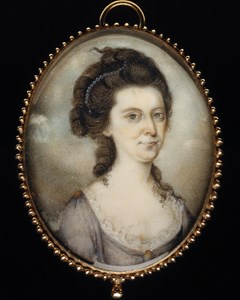
In further addition, Rachel Revere (shown above) wrote a short, undated note to her husband Paul. That began “by Doctor Church I send a hundred & twenty five pounds”—probably devalued Old Tenor currency.

All those documents are in the files of Gen. Gage. Did soldiers seize them from Dr. Church as he left Boston? That wouldn’t explain how those same files contain Dr. John Homans’s note to Dr. Joseph Gardner asking for surgical knives, which Church carried into town. 

When Allen French explored Church’s activities in General Gage’s Informers (1932), the letter from Rachel Revere was one of the prime pieces of proof that the doctor was cooperating with the royal authorities. I wrote about the Homans letter in an article for New England Ancestors in 2006. The Quincy letters add more evidence to that pile.

I wonder what Dr. Church told his colleagues when he arrived back in Cambridge, knowing that their relatives inside Boston would eventually mention that they’d given him letters to deliver. Presumably to maintain his cover the doctor spoke ruefully of having the big, bad soldiers take all his papers away. No one appears to have spoken of those missing documents as evidence of Church’s treachery, even after Gen. George Washington put him under arrest in October.

All the documents I’m speaking of remain in the Thomas Gage Papers at the Clements Library in Michigan. The library has just released digital scans of Gage’s correspondence in the weeks after the start of the war (along with poor computerized transcriptions which I’ve largely ignored). I’m sure there are some surprises to be found, as well as more evidence for what we already know.

Saturday, July 05, 2025

“Siege and Liberation of Boston,” 7–8 Aug.

Registration is open for the third Pursuit of History Weekend that I’ve helped to program, this one on “The Siege and Liberation of Boston” on 7–8 August.

Organized with the folks who manage History Camp, these sessions are designed to offer in-depth looks at developments 250 years ago through expert speakers and visits to the actual sites where the history happened.

We’ll start on the slope of Breed’s Hill in Charlestown, exploring what turned out to be the decisive battle of the first campaign of the Revolutionary War. Sam Forman and Mary Adams will introduce two of the leaders of the American forces, Dr. Joseph Warren and John Stark. We’ll walk the battlefield and hear about ongoing investigations of the landscape from Boston City Archaeologist Joe Bagley. Then we’ll take a road trip to other places that the Continental Army fortified, which few visitors see. That day we plan to have meals at two restaurants that go back to the eighteenth century.

On the following day, we’ll move into the North End, collaborating with the Paul Revere House, the Old North Church, and veteran tour guide Charles Bahne to offer an in-depth look at the experience of living inside besieged Boston. Finally, I’ll speak about George Washington as a new commander-in-chief, what he thought his job was, and what he really learned.

The Pursuit of History webpage for this event has a video of me explaining more. Sam Forman and I are also scheduled to talk about the siege and this event in the History Camp discussion series on Thursday, 10 July, at 8:00 P.M.

This Pursuit of History Weekend is not, in fact, on a weekend but on a Thursday and Friday. That’s to allow people to also attend History Camp Boston on Saturday, 9 August, and even the related tours the next day if their history interests are still unsated.

And speaking of History Camp Boston 2025, I’ll be speaking there, too. My topic is related to the end of the Boston siege. That talk is called “Henry Knox, Loyalist?” It offers a new interpretation of that American general’s rise to prominence.

Wednesday, April 05, 2023

More 2023 Patriots’ Day Events

The Patriots’ Day 2023 events in Minute Man National Historical Park are just one set of commemorations coming up in the area.

They’re just the easiest to keep track of since there’s a government agency to do so.

Many other events are organized at the town level by historical societies or reenacting groups. Some organizations proudly maintain traditions tied to particular days, regardless of when the holiday falls. And some sites have programs for school vacation week as well.

This is a varied sample of other Patriots’ Day–related events this month.

Saturday, 8 April, 10:30 A.M.
Bedford Parade and Pole Capping
Wilson Park, Bedford

I think the Liberty Cap on a Liberty Pole was a symbol that developed during the Federalist–Jeffersonian rivalry of the 1790s. Liberty Poles in the early 1770s featured variations on the British flag. But this is a beloved local commemoration.

Saturday, 15 April, 1:00 to 3:00 P.M.
A Visit with Paul Revere
Paul Revere House, Boston

Michael Lepage portray’s the house’s most famous owner welcoming visitors. Included in regular admission.

Sunday, 16 April, 2:00 to 3:30 P.M.
Lincoln Salute: Festival of 18th-Century Fife & Drum Music
Pierce Park, 17 Weston Road, Lincoln

The Lincoln Minute Men host the fife and drum groups who come for the next day’s parades in outdoor musical performances. Bring a picnic basket, blanket, and lawn chairs. (The picture above comes from a Lincoln Salute so many years ago this drummer is probably practicing law now.)

Monday, 17 April, all day
Lexington Patriots’ Day Events
Various sites around town

Events include Revere’s midnight arrival at the Hancock-Clarke House, the alarm from the belfry, the fight on Lexington common (starting at 5:30 A.M.), the regathering of the local company (8:30 A.M.), and battle demonstrations in Tower Park (4:00 P.M.). The historical society’s Buckman Tavern, Munroe Tavern, and Hancock-Clarke House will be open for tours, and the film “First Shot” will be shown at the Depot.

Monday, 17 April, 9:00 A.M. to noon
Patriots’ Day Parade in Boston
From City Hall Plaza to “The Prado” on Hanover Street

The description says, “After a flag-raising ceremony at City Hall, the parade stops at King’s Chapel Burying Ground to lay a wreath on the tomb of Major William Dawes [actually that’s the grave of his father; the rider’s remains are at Forest Hills], who was a member of the Ancient & Honorable Artillery Company of the Massachusetts Militia [this company wasn’t part of the official militia in 1775], and continues to Granary Burying Ground to lay a wreath at the grave of Paul Revere.”

Monday, 17 April, 9:00 A.M. to 1:00 P.M.
William Dawes’ Ride
From Eliot Square in Roxbury to Lexington Green

A mounted Royal Lancer portraying Dawes is expected to visit Brookline’s Devotion School about 10:00 A.M., Hill Memorial Church in Allston about 10:30 A.M., Cambridge about 11:00 A.M., and Arlington Town Hall around noon.

Wednesday, 19 April, 11:00 A.M. to 3:00 P.M.
Mix & Mingle with Rachel Revere
Paul Revere House, Boston

Judith Kalaora of History at Play portrays the silversmith’s second wife. Included in regular admission.

Thursday, 20 April, 1:00 to 3:00 P.M.
Patriot Fife & Drum
Paul Revere House, Boston

David Vose & Sue Walko play and discuss period music for everyone visiting the museum.

Tuesday, 25 April, 7:30 P.M.
A. Michael Ruderman on “The Battle of Menotomy”
Masonic Temple, 19 Academy Street, Arlington

The Arlington Historical Society’s provocative description says: “Battle Green was an accident. Concord Bridge, a skirmish. But in the most brutal and deadly warfare of April 19, 1775, nearly 6,000 combatants fought hand to hand and house to house, the length and breadth of Menotomy.”

Saturday, July 31, 2021

Documents Old and New

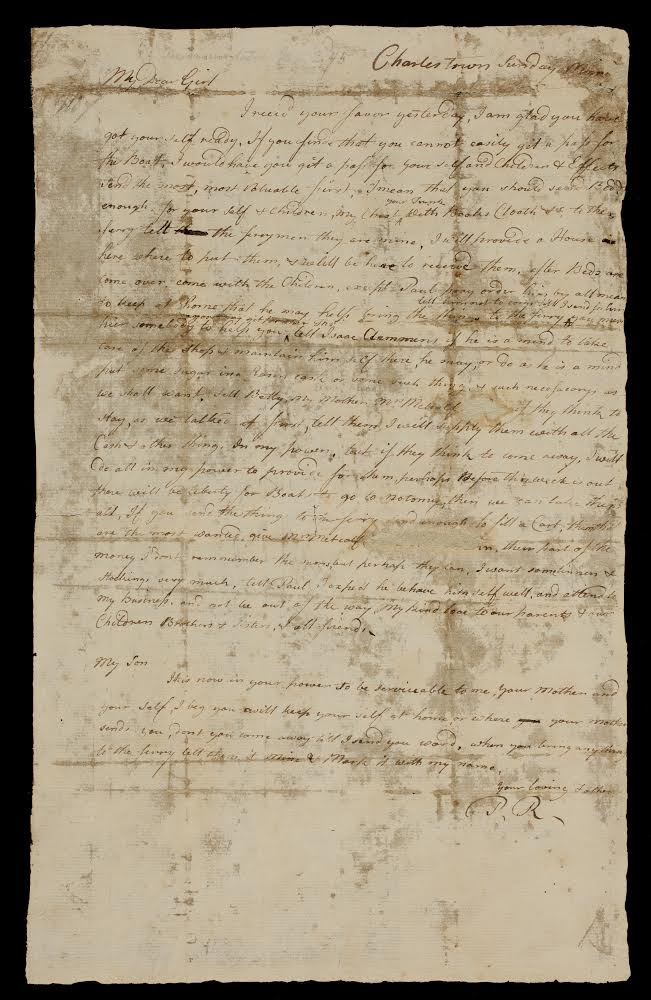
Last year the Paul Revere House highlighted a document from its collection, a letter from Paul Revere to his second wife, Rachel:
Shortly after the Siege of Boston began in the spring of 1775, Paul Revere took a few minutes to scrawl a hasty letter to his wife, Rachel. In it, he included details of his plan to get most of the Revere family out of occupied Boston.
The letter is datelined only “Charlestown Sunday [Morn?].” Context indicates the silversmth wrote it on 23 or, more likely, 30 Apr 1775.

In 2011, a Revere descendant brought the document to the Paul Revere House, and three years later the museum acquired it.

The Museum of the American Revolution in Philadelphia told a similar story this summer:
Discovered in a shoebox in a Northern California garage, the long-lost Revolutionary War diary of John Claypoole is now on display at the Museum of the American Revolution in Philadelphia. Claypoole was the third husband of Betsy Ross, the seamstress and upholsterer who has long been celebrated by many as the creator of the first American flag.

Claypoole’s handwritten diary, which includes letters and songs he transcribed, was written during the years 1781 and 1782…
At the time, Claypoole and Ross’s second husband, Joseph Ashburn, were in the Old Mill Prison in Plymouth, England, after being captured on American privateers. Ashburn died as a prisoner. Claypoole survived, brought the sad news to the widow, and then married her.

Those documents have something in common besides being connected to middling-class craftspeople who lived through the Revolution and became household names in America’s Colonial Revival. Both were transcribed and published in the nineteenth century.

Elbridge H. Goss published the Revere letter in his 1891 biography, reporting the original as still being in the family. But within a generation scholars didn’t know where it was. They had to rely on Goss’s transcription.

Likewise, the Claypoole prison diary was published in the Pennsylvania Magazine of History and Biography in 1892 but then dropped out of sight until a descendant found it among her late mother’s family papers.

For both documents, scholars already had access to the texts. So where is the value in having the originals? Of course, it’s good to be able to confirm that a transcribed document actually exists, and that the published transcription is accurate and complete. There might be additional information (Goss didn’t publish the “Charlestown Sunday” line), perhaps in non-textual form (What size of notebook could a prisoner of war keep?).

But we also have to acknowledge that the authenticity and antiquity of a historical document produces a magnetic appeal that goes beyond the information it preserves. Though they might be most useful to historians as data repositories, they’re also relics of the past.

Tuesday, November 27, 2018

Holiday Traditions at the Paul Revere House, 1-2 Dec.

This weekend, 1-2 December, the Paul Revere House is hosting “Traditions of the Season,” a series of special events free with admission to the site.

The event description says:
Why did New England colonists consider Thanksgiving “the one day above all others”? Which Bostonians kept Christmas and which did not? What types of gifts were exchanged at New Years? Learn the answers while helping us celebrate the holiday season in the style of colonial Bostonians with 18th-century music, culinary delights, and crafts.

Festivities will be held on Saturday and Sunday; sample warm, mulled cider and treats baked from period recipes all day.

Visit with Rachel Revere, portrayed by History At Play’s Judith Kalaora, from 11:00-3:00 throughout the site.

Craftspeople working in traditional methods will demonstrate and sell wares from 12:00-4:00 in our Education and Visitor Center.

R. P. Hale will play 18th c. Advent music on the harpsichord and hammered dulcimer from 12:00-4:00 in the Pierce/Hichborn House.
At the top of this post is the music for “A Christmas Hymn” engraved by Revere for a collection titled Sixteen Anthems, published by fellow silversmith Josiah Flagg (1738-1795) in 1766. This image comes courtesy of the American Antiquarian Society’s online display of Revere’s engravings.

Regular admission to the Paul Revere House is $5.00 for adults, $4.50 for seniors and college students, and $1.00 for children ages 5 to 17. (Members and North End residents can visit free at all times.) The house will be open 9:30 A.M. to 4:15 P.M. that weekend.

Saturday, May 12, 2018

A Souvenir of Harvard College in 1767

We have a good idea of what Massachusetts Hall and the rest of Harvard College looked like just before the Revolutionary War thanks to a surveyor named Joseph Chadwick and our busy friend Paul Revere. They collaborated to issue the engraving shown above.

On 4 July 1767, Revere entered into his account book a charge of £4 “To one half of Engraving a Plate for a Perspective View of the Colleges” and “To Printing.” Evidently Chadwick and Revere split the cost of publishing this image, and presumably the proceeds.

Harvard held its commencement every year in July. It was a public holiday, bringing big, festive crowds to Cambridge, some people because they had links to the college and others because they wanted to watch or sell things to the first group. In 1767 commencement was on Wednesday, 15 July, and I suspect Revere and/or Chadwick were in Cambridge selling their print to those who would want it most.

That might explain why Revere never advertised this image for sale in newspapers. Advertising might have been much less cost-effective at reaching reach the target audience of Harvard graduates.

Revere may also not have printed many copies. The scholar of his engravings, Clarence S. Brigham, reported in 1954 that he had found only four surviving examples, owned by the Essex Institute, the American Antiquarian Society, Harvard itself, and an individual. However, the image has been reproduced many times, so there are lots of later copies of this view hanging on walls.

In May 1775, the Massachusetts Provincial Congress commissioned Revere to engrave and print currency. His wife Rachel and most their children got out of besieged Boston early that month, and they must have brought the old engraving plates. Revere cut the image of Harvard College in half and used the reverse side to make money. That piece of copper is now at the Massachusetts Archives.

Also at the state archives is Chadwick’s journal of a surveying expedition in Maine in 1764, as recounted and transcribed (with maps) in this article.

Monday, March 28, 2016

A Plagiarized Puzzle

On N.P.R. Weekend Edition yesterday, Will Shortz announced this as the puzzle for the week:
The University Press of New England has just published a book by Boston College professor Paul Lewis, called The Citizen Poets of Boston: A Collection of Forgotten Poems, 1789-1820. It has a chapter devoted to puzzles in poetic form. Most of the puzzles are explained—but one puzzle never had a printed answer.

I’d like to see if the collective brainpower of NPR listeners can be brought to bear to clear up this mystery. It’s a two-line verse from the Nov. 12, 1803, issue of the Boston Weekly Magazine:
I am both man and woman too,
And go to school as good boys do.
If you can solve this riddle, let us know. I’ll select what I think is the best answer that’s submitted. If no one sends what I judge to be the intended answer, then I’ll pick what I consider the most ingenious one, whether it’s “correct” or not.
Headlined “A Rebus,” that puzzle was published as “For the Boston Weekly Magazine” and credited to “R. S. G.”

However, the same puzzle had appeared in the London Magazine, or Gentleman’s Monthly Intelligencer in December 1759, as shown below.
So “R. S. G.” might have some explaining to do.

Samuel Johnson defined a rebus as “a word represented by a picture.” However, this magazine and popular culture used the term to mean a puzzle-poem challenging readers to identify a word based on its parts, either syllables or letters. Here’s an example that Paul Revere wrote for his soon-to-be second wife, Rachel. This London Magazine page has another example.

So what was the original solution to this rebus? It appeared in the March 1760 issue of the London Magazine. If you want to know, click on the box below to enlarge the image.
Frankly, I think N.P.R. listeners can do better.

Wednesday, April 15, 2015

Paul Revere House during School Vacation Week

With Patriots Day and Massachusetts school vacation coming up, the Paul Revere House in Boston’s North End has a slate of activities for families and younger kids.

Unless otherwise noted, these events are free with museum admission, which is $3.50 for adults, $3.00 for seniors and college students, $1.00 for children ages 5–17. Members and North End residents get in free. The house is open daily 9:30 A.M. to 5:15 P.M.

Saturday, 18 April, 1:00 to 3:00 P.M.
Patriot Fife and Drum
Enjoy a lively concert of music that accompanied colonists as they marched, danced, wooed their beloveds, and waged war. David Vose and Sue Walko provide fascinating insight into each selection they perform.

Tuesday, 21 April, 1:00 to 3:00 P.M.
A Visit with Paul Revere
David Connor brings Boston’s favorite patriot vividly to life. Ask him about the details of his midnight ride, inquire about his sixteen children, or engage him in conversation about his activities as a member of the Sons of Liberty.

Wednesday, 22 April, 10:30 A.M. to 12:00 noon
Midnight Ride Storytelling Program
Find out what really happened on Paul Revere’s ride! Separate the facts from the myths, then retrace Revere’s route from his home to the banks of the Charles River. Participants don hats and carry props as they go, taking on the roles of Paul and Rachel Revere, their children, British soldiers, rowers, John Hancock and Samuel Adams. Particularly appropriate for kids in grades K-4. Reservations are required and may be made by calling 617-523-2338. $4.50 for each adult and child age 5 and up.

Thursday, 23 April, 2:00 to 4:00 P.M.
Drop-In Colonial Kids Activities
We encourage families with kids of all ages to stop by to try on clothes like Paul Revere’s kids wore, play 18th-century games in an informal setting, and write with a quill pen. This program is included with admission to the house and reservations are NOT required.

Friday, 24 April, 10:30 A.M. to 12:00 noon
Midnight Ride Storytelling Program
See Wednesday above.

Saturday, 25 April, 10:30 A.M.
Kids-eye-view Tour of the Paul Revere House
Take a tour designed especially to answer kids’ most pressing historic house questions like: where did sixteen children sleep? How did they bathe and where did they go to the bathroom? Why didn’t playing cards have numbers? And who was this Paul Revere guy anyway? This program is limited to twenty people. Reservations are required and may be made by calling 617-523-2338. $4.50 for each adult and child age 5 and up.

Thursday, March 19, 2015

Women to Meet at the Shirley-Eustis House this Spring

This spring the Shirley-Eustis House in Roxbury is hosting a series of first-person interpretive presentations on women of Revolutionary Boston and later periods.

Sunday, 22 March, 2:00 P.M.
Meet Phillis Wheatley
Valerie Link Foxx kicks off the series with a poignant first-person performance of the life of Phillis Wheatley. Brought to Boston from Africa at about the age of seven, little Phillis learned English so quickly that she was composing impressive verse while she was still in her teens. As a young woman she pursued literary success with a trip to London even while she was still enslaved, then personal independence as an author, wife, and mother in Boston.

Foxx is an actor, author, wife, and mother. She is also a native of Roxbury and has performed since the age of seven. In 1977, Valerie and her mother, Bernice Link, co-founded Link & Foxx Productions to produce one-woman and family skits and stage plays.

Sunday, 29 March, 2:00 P.M.
Meet Rachel Revere—Petticoats at the Revolution
Hear a remarkable story of tea and Revolution from the woman who rode through life with Paul Revere. Rachel Revere tells of the Boston Tea Party, the midnight ride, and the siege of Boston through the eyes of a woman who had to keep the home fires burning while her husband fanned the flames of Revolution.

This presentation will be performed by Joan Gatturna, creator of Petticoat Adventures. Gatturna is an actor and storyteller. She has been named as a Creative Teaching Partner of the Massachusetts Cultural Council and is on the Touring Roster of the New England Foundation for the Arts.

Sunday, 12 April, 2:00 P.M.
Meet Elizabeth Murray—Shopkeeper to Farmstead
Elizabeth Murray, a Scottish immigrant, developed a successful retail business in colonial Boston. By offering the latest fashions and teaching advanced crafts, and by insisting on prenuptial agreements in two of her three marriages, she achieved economic independence and became a mentor for younger women. Through the upheavals of the American Revolution, Elizabeth (Murray Campbell Smith) Inman faced the challenge of separating from Tory family members while maintaining her home in Massachusetts.

Una McMahon, Founder-Owner of Acorn Tours, provides customized sightseeing tours of Boston and New England and specializes in their rich colonial histories. She is a Governor/Board Member and the Chair of the Events Committee for the Shirley-Eustis House Association. McMahon has taught French Language, led student tours to France and Canada, and established organizations such the Irish Business Network Small Business Forum.

In addition, on 26 April Marcia Stein-Adams will present “Meet Isabella Stewart Gardner,” and on 3 May Jan Turnquist will offer “Meet Louisa May Alcott.”

Admission for each lecture is $10 per person.

(The copy of Gilbert Stuart’s portrait of Rachel Revere above comes courtesy of Oceansbridge.)

Tuesday, February 10, 2015

Paul Revere House Events in February

February school vacation seems to be coming early this year in greater Boston, what with all the snow keeping schools closed. By the middle of next week, when the schools are actually scheduled to be closed, families could be so desperate to get out of the house that they might brave the worst blizzards.

Fortunately, the Paul Revere House will be open with some special vacation-week programs.

Wednesday, 18 February, 10:30 A.M. to 12:00 noon
The Revere Family at Work
Children (and their accompanying adults) tour the Revere House to learn about the jobs Paul Revere’s family did both in and out of their home. Each participant stuffs and sews a headache bag and engraves a design on a piece of copper to take home. Limited to 20 people. Reservations are required and may be made by calling the Revere House at 617-523-2338. Fee: $4.50 for children ages 5-11 and accompanying adults. Price includes admission to the Revere House.

Thursday, 19 February, 11:00 A.M.
Kids’-Eye-View Tour of the Paul Revere House
Designed especially to answer kids’ most pressing historic house questions: Where did 16 children sleep in this house? How did they bathe & where did they go to the bathroom? Why didn’t playing cards have numbers? And who was this Paul Revere guy anyway? Limited to 20 people. Reservations are required. Fee: $4.50 for children ages 5-11 and accompanying adults. Price includes admission to the Revere House.

Friday, 20 February, 10:00 A.M. to 12:00 noon
Drop-In Colonial Kids Activities
We will open up the first floor of the Pierce/Hichborn House and encourage you to drop in to try on clothes like Paul Revere’s kids wore, and play the same kinds of games they played in an informal setting. This program is free with admission to the house, and reservations are not required.

Saturday, 21 Febuary, 11:30 A.M. to 1:30 P.M.
Vera Meyer on the Glass Harmonica
At the Old South Meeting House
Treat your family to the ethereal tones of this fascinating instrument invented by Benjamin Franklin in 1761. Music will range from special works by Mozart and Beethoven to your requests! Between songs, the musician will answer questions and provide details about the instrument’s history. Included with admission to Old South: $6.00 for adults, $5.00 for seniors & college students, $1.00 for children ages 6-18, and free for Old South and Paul Revere House members.

Tuesday, October 14, 2014

Welcoming Three Documents to the Paul Revere House, 16 Oct.

On the afternoon of Thursday, 16 October, the Paul Revere House will welcome three documents related to the silversmith and early industrialist into its collection.

The first of these is a letter that I quoted in 2012 when it was treated by the Northeast Document Conservation Center. Paul Revere wrote that note to his second wife, Rachel, in late April 1775 when the couple was separated by the siege lines around Boston. Elbridge Goss transcribed the letter in his biography of Revere over a century ago, but then the document was thought to be lost until an heir and the Revere House staff recognized its significance.

The second document is a receipt from April 1778 when Revere was a lieutenant colonel in the Massachusetts artillery corps commanding at Castle Island. The site says, “It is one of only few surviving documents that are both written and signed by Revere using his military rank.” It came down in the same branch of the family as the letter to Rachel Revere.

Last is a copy of the 10 June 1775 Pennsylvania Ledger with a supplement printing “An Account of the Commencement of Hostilities between Great-Britain and America” by the Rev. William Gordon of Roxbury. That detailed report mentioned Revere by name. The newspaper was donated to the Paul Revere House by historic tour guide Ben L. Edwards and his family.

At 2:30 on Thursday, the Paul Revere Memorial Association, which runs the house, will host a ceremony titled “My Dear Girl: A Revere Letter Returns.” An actress portraying Rachel Revere will read the letter as she did in 1775. All three documents will then be available for public viewing in the Pierce-Hichborn House while tours go on next door inside the Revere House.

Thursday, January 30, 2014

Women at Old South Meeting House in February

Old South Meeting House’s “Middays at the Meeting House” talks resume on Thursdays in February with presentations on eighteenth-century women.

February 6
Sarah Prince: A Life in Meditations and Letters
Sarah Prince Gill (1728-1771, shown here courtesy of R.I.S.D.), daughter of influential Old South Meeting-House minister Thomas Prince, kept a spiritual diary for twenty-one years and maintained a friendship and correspondence with her “dearest Friend” Esther Edwards Burr, daughter of famed theologian Jonathan Edwards. Historian and Wheelock professor Laurie Crumpacker will discuss what the journal and letters reveal about women’s roles in the Great Awakening, the astonishing spiritual revival that swept the colony.

February 13
Abigail Adams: Life, Love, and Letters
Abigail Adams claimed to write with an “untutored stile,” and asked her husband John to destroy her letters. He saved them anyway, giving posterity a unique look into the life and times of this iconic wife, mother, and Patriot. Living history interpreter Patricia Bridgman uses the couple’s correspondence to bring Abigail to life, from the Adamses’ courtship in 1764, through the tumultuous years of the American Revolution, to 1778 on the eve of her husband and son’s voyage to France. Bridgman’s Mrs. Adams is serious about such issues as women’s education and rights, but she’s saucy, too, and enjoys poking gentle fun at those who deserve it, including Mr. Adams!

February 20
Petticoats at the Revolution
Join us to hear a remarkable story of tea and Revolution from the woman who rode through life with Paul Revere. Actor and storyteller Joan Gatturna portrays Rachel Revere sharing the story of the Boston Tea Party, the Midnight Ride, and the Siege of Boston through the eyes of a woman who kept the home fires burning while her husband fanned the flames of rebellion. Her characterization of Rachel Revere was developed with assistance from the staff of the Paul Revere House.

February 27
“Lett No Country Grants to be Laid Upon our Lands”
The lives and perspectives of Native women are often left out of histories of colonial New England. In 1723, Eastern Pequot leader Mary Momoho submitted a petition to the Connecticut General Assembly, demanding tribal recognition and the preservation of her community’s reservation in Stonington. In this illustrated lecture, anthropologist and UMass Boston professor Amy Den Ouden will explore what we can learn about indigenous women’s daily lives from 18th-century land petitions, and will draw parallels between these historical realities and contemporary issues in indigenous communities involving land, voice, and power.

Each session starts at 12:15 P.M. and lasts for about an hour. They are free to Old South members, $1-6 for others.

Friday, February 01, 2013

School Vacation with the Reveres

February in Massachusetts means February school vacation, which means having to find new unusual reasons to get the kids out of the house. The Paul Revere House is offering family programs in which children (and their accompanying adults) will make and take home samples of typical work done by Paul and Rachel Revere.
“The Revere Family at Work”
Wednesday, 20 February, and Friday, 22 February
10:30 to 12:00 A.M.

Both Paul Revere and his wife Rachel worked hard to keep their large family fed, clothed, and healthy. During this program discover what kinds of chores the Reveres (adults and children) completed in each room in their house. Then try your hand at engraving metal as Revere did in his silversmith shop and make an herbal remedy Rachel may have used to treat her children’s headaches. Participants will take home both an engraved piece of copper and a small cloth bag of dried herbs.

Each presentation is limited to 20 people. The fee is $4.50 for children ages 7-11 and accompanying adults. Price includes admission to the Revere House. Reservations are required and may be made by calling the Revere House at 617-523-2338.
Somewhere Sarah Revere (Paul’s first wife) is wondering why she’s not getting any attention. But we don’t have nearly as much information about her as about Rachel, nor any portraits.

Saturday, April 21, 2012

Revere Rediscovery #1

The Northeast Document Conservation Center is offering a close look at how it conserved a letter that Paul Revere wrote to his wife Rachel on 2 May 1775, as the siege of Boston began.

Elbridge Goss printed a transcription of this letter in his two-volume biography of Revere in 1891, saying it was in the hands of a Revere grandson and already torn at one spot. But then the document dropped from sight. Recently it came to the Paul Revere House with other documents, and that museum sent it out to be conserved.

The letter begins “My Dear Girl,” which might reflect the eleven-year age difference between the silversmith and his second wife. Revere addressed the challenge of leaving the besieged town:

I receivd your favor yesterday. I am glad you have got yourself ready. If you find that you cannot easily get a pass for the Boat, I would have you get a pass for yourself and children and effects. Send the most valuable first. I mean that you should send Beds enough for yourself and Children, my chest, your trunk, with Books Cloaths &c to the ferry tell the ferryman they are mine.

I will provide a house here where to put them & will be here to receive them, after Beds are come over, come with the Children, except Paul, pray order him by all means to keep at home that he may help bring the things to the ferry, tell him not to come till I send for him.

You must hire somebody to help you. You may get brother Thomas. lett Isaac Clemmens if he is a mind to take care of the shop and maintain himself there, he may, or do as he has a mind, put some sugar in a Raisin cask or some such thing & such necessarys as we shall want.

Tell Betty, My Mother, Mrs Metcalf if they think to stay, as we talked at first, tell them I will supply them with all the cash & other things in my power but if they think to come away, I will do all in my power to provide for them, perhaps before this week is out there will be liberty for Boats to go to Notomy [Menotomy?], then we can take them all. If you send the things to the ferry send enough to fill a cart, them that are the most wanted. Give Mrs. Metcalf [torn]in, their part of the money I dont remember the sums, but perhaps they can.

I want some linnen and stockings very much. Tell Paul I expect he’l behave himself well and attend to my business, and not be out of the way. My Kind love to our parents & our Children Brothers & Sisters & all friends.
Revere appended a note to his oldest son, also named Paul, and fifteen years old. He told the boy to mind him and his stepmother, yet he was also asking young Paul to remain alone in the besieged town, behind the British lines, to look after the family property.
My Son.

It is now in your power to be serviceable to me, your Mother and yourself. I beg you will keep yourself at home or where your Mother sends you. Dont you come away till I send you word. When you bring anything to the ferry tell them its mine & mark it with my name.

Your loving Father
P. R.

Saturday, February 11, 2012

Fun & Games at the Paul Revere House, 22-23 Feb.

School vacation week is coming up, and the Paul Revere House in Boston’s North End is planning two special programs on “Fun and Games in the 1700s” on Wednesday morning and Thursday afternoon.

The site’s write-up says:
In colonial Boston did men, women, and children work from sunrise to sunset? The answer is a resounding NO! During a tour of the Revere House, children (and accompanying adults) search for beans, a thimble, bed wrench and other examples of household items the Reveres likely used for both work and play. Then, all participants will try their hands at popular colonial games such as Snail, Ninepins, Jackstraws, and Beast-Fish-Fowl.

Families will leave inspired to turn everyday objects into toys and games and with rules for these and other colonial amusements!
The two sessions are:

  • Wednesday, 22 February, 10:30 A.M. to 12:00 noon
  • Thursday, 23 February, 2:00-3:30 P.M.

The fee is $4.50 for children aged 7-11 and accompanying adults. The price includes admission to the Revere House. Each presentation is limited to 20 people, and reservations are required; call the Revere House at 617-523-2338.

(Picture on top: Thomas Rowlandson’s “Dr. Syntax Playing a Game of Ninepines” from the 1810s but set in an earlier time.)

Friday, February 11, 2011

Visiting the Revere Family in February

The Paul Revere House in Boston’s North End is offering special programs for children aged 6 to 10 during Massachusetts’s February school vacation.

“The Revere Family at Work” will be offered on Wednesday, 23 February, and Friday, 25 February, from 10:30 A.M. to 12:00 noon. The site says:

Both Paul Revere and his wife Rachel worked hard to keep their large family fed, clothed, and healthy. During this program discover what kinds of chores the Reveres (adults and children) completed in each room in their house. Then try your hand at engraving metal as Revere did in his silversmith shop and make an herbal remedy Rachel may have used to treat her children’s headaches.

Participants will take home both an engraved piece of copper and a small cloth bag of dried herbs.
The fee is $4.50 per person, which also includes admission to the Paul Revere House. Each presentation is limited to 20 people, so for reservations call 617-523-2338.

(Photograph of the Paul Revere House last month with just a bit of snow by duluoz cats, via Flickr under a Creative Commons license.)

Wednesday, November 11, 2009

Rachel Revere and Dr. Benjamin Church, Jr.

The 2 May 1775 letter from Rachel Revere that I quoted yesterday was not the first that she’d written to her husband Paul from inside besieged Boston. An earlier note appears here at the Clements Library website, and it begins:

My Dear by Doctor Church I send a hundred & twenty five pounds and beg you will take the best care of yourself and not attempt coming in to this town again and if I have an opportunity of coming or sending out anything or any of the Children I shall do it
It’s undated, but we have good clues about when Rachel wrote it. A hasty note from Dr. John Homans to Dr. Joseph Gardner confirms that Dr. Benjamin Church, Jr., went into the besieged town on 21 Apr 1775, and in 1798 Paul Revere recalled that Church came back out two days later, on Sunday. Rachel most likely gave Church the message and money for her husband that during that visit.

Neither Paul Revere nor Dr. Gardner ever saw the letters addressed to them. Church handed them over to Gen. Thomas Gage, and they were found in the general’s files over a century later. (I wrote about the Homans-Gardner-Church document in an article for the spring 2006 issue of New England Ancestors.)

Yet another document that might bear on the relationship between Rachel Revere and Dr. Benjamin Church was quoted by Allen French in General Gage’s Informers. It’s undated and unsigned, but the handwriting matches what’s on other papers from Church, the general’s best-placed spy. French concluded that the doctor probably wrote this note in early May 1775. It says in part:
Send Rachel out with more practicable instructions, I can’t see how ’tis possible to write again there is a close watch set up, Contrivances shall not be wanting if necessary, send me the news.
The note then looks ahead to the 25th of the month, which “finishes a quarter”—i.e., when bills would be due.

So what do we know? On 2 May, Rachel Revere was still in Boston, trying to get a pass out of town for herself and the many children. By 22 May, according to Jayne Triber’s biography A True Republican, the whole family was in Watertown (except for oldest son Paul, Jr., who stayed behind to look after the shop).

Did Gage receive Church’s undated note early in May and give Rachel Revere a pass so that she could leave Boston, unwittingly carrying secret instructions to the doctor? Or was there another Rachel, or was “Rachel” a code name for someone else?

(This musing was prompted by a query from author John A. Nagy. The image above comes via Oceansbridge, which promises to deliver handmade reproductions of this Gilbert Stuart portrait of Rachel Revere in less than a month.)

Tuesday, November 10, 2009

Scraps of Women’s Lives Online

The Bostonian Society’s online exhibit of “From Baby Caps to Mourning Rings: The Material Culture of Boston’s Eighteenth Century Girls and Women” is now open for virtual visitors. It has a snazzy opening interface. My favorite item is this embroidered map of Boston harbor, sewn by Lydia Withington at the school of actress-novelist Susanna Rowson.

Another new online resource on eighteenth-century women is this biographical website about Martha Washington, created by the Center for History and New Media and sponsored by Mount Vernon. This is designed for educators to use, with lots of teaching materials.

Lastly, the Massachusetts Historical Society has posted a letter from Rachel Revere to her husband, Paul, dated 2 May 1775. It says in part:

I cannot say I was please’d at hearing you aplyed to Capt Irvin for a pass as I shou’d rather confer 50 obligations on them then recive one from them

I am almost sure of one as soon as they are given out

I was at mr Scolays yesterday and his son has been here to day and told me he went to the room and gave mine and Deacon Jeffers name to this [sic] father when no other person was admited
Okay, what’s going on here? Paul was outside besieged Boston, and Rachel wanted to get herself and the kids out, too. I think “Capt Irvin” refers to George Erving, son of John Erving, a former militia colonel who leaned toward the royal government. Rachel then went to John Scollay, a selectman who was closer to the Whigs. “Deacon Jeffers” is probably David Jeffries, the town treasurer and deacon at Old South.

TOMORROW: Was someone else secretly working to get Rachel Revere a pass out of town?

Tuesday, October 09, 2007

The Truth Comes Out about Dr. Benjamin Church

The disappearance of suspected double agent Dr. Benjamin Church, Jr., at sea in 1776 left a lot of unanswered questions for his contemporaries. Massachusetts hadn’t been able to convict him of spying for the British authorities. The state therefore had no information about when Church might have begun collaborating, what information he gave up, and how else he might have undercut the Patriot cause.

In the same 1798 letter in which he described his famous midnight ride, Paul Revere wrote that he’d seen reasons to wonder about Dr. Church’s loyalty before the war. However, there’s no evidence the silversmith spoke up at the time, so the doctor’s actions probably appeared more suspicious in hindsight.

Based on the evidence available through the nineteenth century, people could still have a little doubt about Dr. Church’s cooperation with the Crown. The letter he was caught sending into Boston in mid-1775 could indeed be read as the doctor insisted he meant it: as a back-door attempt to convince the British authorities to back down. That possibility informs this article by Tara Dirst and Allan Kulikoff from Common-place on using the American Archives website to explore the case. (Unfortunately, the article’s links to that database no longer seem to function.)

However, in the early 1900s we got a new source of information. A wealthy American manufacturer named William L. Clements bought the papers of Gen. Thomas Gage, as well as those of several other prominent Revolutionary War figures, and donated them to the University of Michigan. Instantly the Clements Library made Ann Arbor one of the centers for Revolutionary research. The novelist and historian Allen French examined those files, and his book General Gage’s Informers offered, as its subtitle promised, “New Material upon Lexington and Concord, Benjamin Thompson as Loyalist, and the Treachery of Benjamin Church, Jr.”

Gen. Gage’s files turned out to contain:

  • A letter that Dr. John Homans, a young surgeon working for the provincial army, wrote to his mentor, Dr. Joseph Gardner, on 22 Apr 1775 and sent into Boston with Dr. Church. I wrote about this document in an article in New England Ancestors. It describes casualties and prisoners after the Battle of Lexington and Concord.
  • A letter that Rachel Revere wrote to her husband, Paul, and gave to Dr. Church to take out of Boston. The University of Michigan offers an article about that document, as well as the image above.
  • An anonymous letter to Gen. Gage on 24 May saying that the writer had been ordered to go to the Continental Congress in Philadelphia, just as we know Dr. Church ordered to go to the Continental Congress in Philadelphia.
In short, we know much more about Dr. Benjamin Church’s correspondence with Gen. Gage than was available to Revere, George Washington, or other Patriots. There’s no longer any reason to doubt that Dr. Church was collaborating with the British, and did so since shortly after the war began.

Indeed, Gage’s intelligence files also show that the general suddenly knew a lot more about decisions by the Massachusetts Provincial Congress’s Committee of Safety right after Church became a member of that committee in early 1775. I think we can therefore push the doctor’s collaboration that far back. However, I’ve seen no strong evidence that Church worked for the British even earlier.

COMING UP: One more wrinkle about the Dr. Church case and the quest for liberty.

Friday, October 06, 2006

Paul Revere Woos a Young Woman

Yesterday I attended a Massachusetts Historical Society seminar on a study of stepfamilies in 18th- and 19th-century New England by Connecticut College professor Lisa Wilson. At the start of the discussion she noted that gazing down on us was the portrait of Rachel Revere, stepmother of Paul Revere’s oldest children.

That put me in mind of an anecdote about the Reveres that I wrote about for an issue of AppleSeeds magazine a few years ago. It’s not a myth about Lexington and Concord, but I seem to have gotten into a little run of postings about poetry linked to Paul Revere. [How much longer can I keep that up?]

Revere’s first wife, Sara, died in May 1773. It was rare at the time for widowers with young children to remain unmarried—not necessarily because they were such a great catch, but because they were so very eager to find a woman able to keep the household running.

That summer, the silversmith wrote this rhyming riddle on the back of a bill:

Take three fourths of a Paine that makes Traitors confess
With three parts of a place where the Wicked don’t Bless
Join four sevenths of an Exercise which shop-keepers use
And what Bad men do, when they good actions refuse
These four added together with great care and Art
Will point out the Fair One nearest my Heart.
This riddle is quoted in both Jayne Triber’s A True Republican and Esther Forbes’s Paul Revere & the World He Lived In. Here’s the best guess of several generations of historians as to the solution.
  • A “pain that makes traitors confess” is the rack, and three-fourths of that word is RAC.
  • A “place where the wicked don’t bless” is Hell, and three parts of that is HEL.
  • Shopkeepers were often on their feet all day walking, and four-sevenths of that participle produces WALK.
  • To refuse to do good is to ERR.
Put those sets of letters together, and you get RACHEL WALKERR. And indeed Paul Revere married twenty-seven-year-old Rachel Walker in October 1773. They were a couple for nearly forty years until her death.

Whenever I reread that riddle, I’m struck by how hideous the imagery is. No turtledoves and flowers and twin compasses for Paul. No, his “Fair One” made him think of torture instruments, daily toil, sin, and everlasting torment. New England's strong Puritan heritage perhaps?