


J. L. BELL is a Massachusetts writer who specializes in (among other things) the start of the American Revolution in and around Boston. He is particularly interested in the experiences of children in 1765-75. He has published scholarly papers and popular articles for both children and adults. He was consultant for an episode of History Detectives, and contributed to a display at Minute Man National Historic Park.

Subscribe thru Follow.it


•••••••••••••••••


Showing posts with label Jonas Dix. Show all posts

Tuesday, May 04, 2021

“The secret resentment of designing persons”
In late May 1775, the Massachusetts committee of safety received a message from Abijah Brown of Waltham reporting that he had delivered three cannon to Watertown as ordered, and that he was their “most obedient and most humble servant.”

But the committee also received a report co-signed by five Waltham selectmen that Brown was bad-mouthing them and Gen. Artemas Ward as the equivalent to “a set of idiots and lunaticks.”

Perhaps even more disturbing, Brown was reportedly saying things like:
that the [Massachusetts Provincial] Congress had no power to do as they did; for all the power was and would be in the Army; and if the Congress behaved as they did, that within forty-eight hours the Army would turn upon the Congress, and they would settle matters as they pleased; that there would be nothing done but what would be done by the Army
Notably, Brown lumped Gen. Ward in with “the Congress” instead of “the Army.” It would be interesting to know what he might have meant by this rant—was he pining nostalgically for the situation only a few months earlier, when locally appointed town committees and militia companies were organizing rebellion with no provincial authority telling them what to do? Or did he just want to keep those three cannon? 

The committee of safety, with Benjamin White of Brookline in the chair, decided that “any determination on this case is out of the department of this committee” and passed it up to the whole congress. They added a wish “that you may be furnished with such light as may enable you to determine thereon as to you in your wisdom.” So good luck, gentlemen.

The lead signatory of the report, Jonas Dix, was himself a member of the provincial congress. Earlier in the year, Brown had led an effort to disqualify him from that post. Presumably he was happy to share all that he had heard back in Waltham.

The legislature appointed a committee led by Dr. Richard Perkins of Bridgewater to consider the matter. On 27 May he reported back. Notably, he addressed the “complaint against lieutenant colonel Brown.” The Waltham warning had referred to “Abijah Brown, who calls himself Lieutenant-Colonel,” casting doubt on his rank. So by using that title the committee recognized Brown as a high-ranking officer in the state army.

Dr. Perkins said:
That after a full hearing of the allegations and proofs for and against said Brown on the complaint of some unknown person through the selectmen of Waltham to this honorable Congress we are of the sentiment that an unhappy controversy has existed in said town relating to public affairs in which said Brown had exerted himself very earnestly in favor of the cause of liberty by which means he had disgusted several persons who have since endeavored therefor to censure and stigmatize him as being an officious busy designing man

and unhappily it appears that Mr Brown has associated in taverns indiscriminately with many persons in discourse with whom he at some times had inadvertently expressed himself which he would not strictly justify himself in

And that it is evident those disaffected antagonists of Mr Brown’s had taken the advantage of his halting purely from revenge and the committee adjudge from the whole of the evidence for and against said Brown that he is injuriously treated by the secret resentment of designing persons and that he ought to be reinstated to the esteem and countenance of every friend to the liberties of this country
The official ruling, in sum, was that some of Lt. Col. Brown’s neighbors (Dix?) were out to get him—and that he had helped them along by running off at his mouth. Would that scare be enough to make him toe the line in future?

TOMORROW: Of course not.

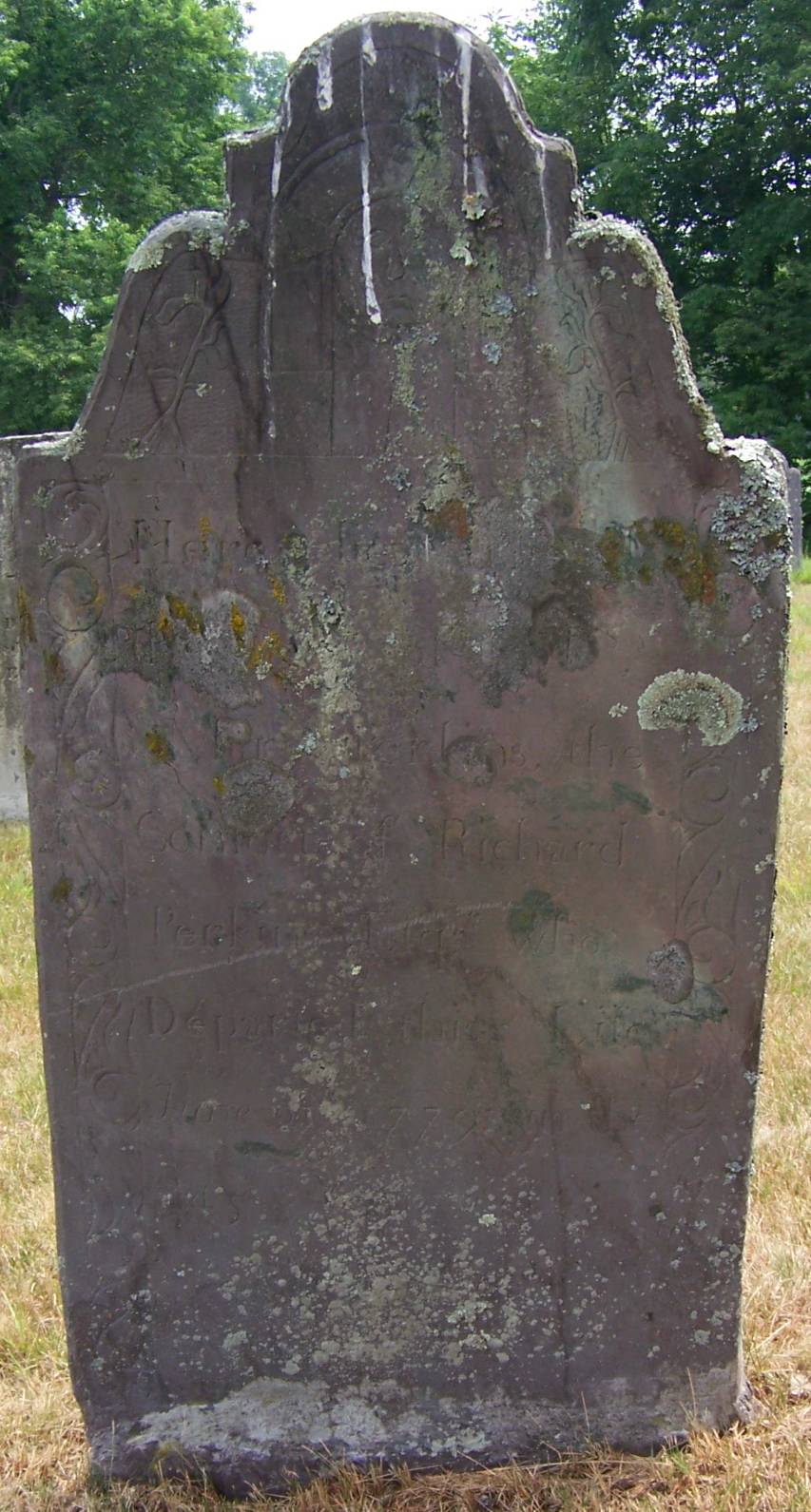
(I couldn’t find Dr. Richard Perkins’s gravestone to stand in for a portrait, so the stone above is for his wife Mary [1735-1779]. She was John Hancock’s older sister. Richard and Mary were also stepsiblings, his widowed father having married her widowed mother.)

Monday, May 03, 2021

“Representing the General and Committees as a set of idiots”

As I related yesterday, in April 1775 the Massachusetts Provincial Congress’s committee of safety ordered Abijah Brown of Waltham to prepare three cannon for use.

Then, about three weeks later, the congress ordered him to deliver those three guns to Watertown.

That wasn’t the congress’s first dealing with Brown. Back in February, the rebel legislature had to consider “A petition of Abijah Browne and others, setting forth the irregularity of the choice of Jonas Dix, Esq., to represent the town of Waltham in this Congress.”

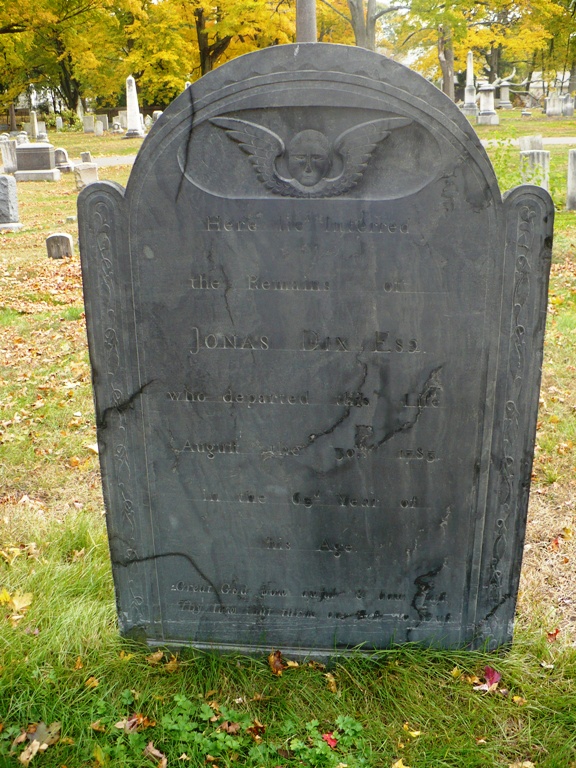
Other Waltham men led by Leonard Williams sent a petition supporting Dix (1721-1783, gravestone shown above courtesy of Find a Grave). Obviously, there was some sort of argument going on in Waltham. It might even have been over politics.

The congress decided to stay out of it. It decided that even if the first petition’s complaints were all true, they were “not sufficient to disqualify Jonas Dix.” So he remained in his seat, in power, with a (further?) reason to dislike Abijah Brown.

Those circumstances set the stage for another message to the congress, printed in Force’s American Archives, that followed the orders to Brown to hand over the cannon:
Whereas a number of the inhabitants in and about Waltham, in the County of Middlesex and Province aforesaid, having a deep sense of their obligations to the Honourable Committee for their services, upon information given, look upon themselves in duty bound, to represent to them in this publick manner, the repeated and publick insults and abuses that the Honourable Committee and Congress are from day to day treated with by one Abijah Brown, who calls himself Lieutenant-Colonel, who, from time to time, and in different company, in the most publick manner upon the road, and in publick houses, where company of strangers or town’s people are on any occasion assembled, taking such opportunity to declare, though in such profane language that we must be excused from repeating, viz: that the Congress had no power to do as they did; for all the power was and would be in the Army; and if the Congress behaved as they did, that within forty-eight hours the Army would turn upon the Congress, and they would settle matters as they pleased; that there would be nothing done but what would be done by the Army; and with respect to the General [Artemas Ward] and Committee, that they had no more right or power to give their orders to remove the cannon and stores from Waltham, than one John Stewart, who is a poor unhappy man, that is non compos mentis; hereby representing the General and Committees as a set of idiots and lunaticks, in order to lessen and bring into contempt the power and authority of the Province, at this very important day.

This conduct from one assuming rank in the Army, in and about Head-Quarters where the Army is, and his reasons for such conduct, we leave every one to judge for himself, &c.

We therefore would bumbly pray that your Honours would be pleased to take into your consideration this very dangerous matter, before it is too late, and before the seeds of discord and mutiny have taken too deep root, and take such steps to put an end to it, as well as to him, with regard to his being any way concerned in the Army, as your Honours in your wisdom shall see fit.

Abner Sanders, John Sanders, Jedediah White, Peter Ball, Eleazer Bradshaw, &c., of Waltham, and Captain Abijah Child, now in the Army, stand ready, upon any day ihat your Honours may appoint, to appear and give your Honours the fullest proofs of what is here set forth, though this is but in part.

Jonas Dix,
Nath’l Bridge,
Josiah Brown,
John Clark,
Selectmen of Waltham.
Abijah Brown was clearly upset about being ordered by the Massachusetts army command to hand over the cannon he had been working on.

And Jonas Dix was clearly thinking Brown shouldn’t be in the Massachusetts army at all, especially at a lieutenant colonel’s rank.

TOMORROW: The congress plays referee.