J. L. BELL is a Massachusetts writer who specializes in (among other things) the start of the American Revolution in and around Boston. He is particularly interested in the experiences of children in 1765-75. He has published scholarly papers and popular articles for both children and adults. He was consultant for an episode of History Detectives, and contributed to a display at Minute Man National Historic Park.

Subscribe thru Follow.it


•••••••••••••••••


Showing posts with label Westford. Show all posts

Friday, January 30, 2026

Knox Trail Commemorations on 31 Jan.–1 Feb.

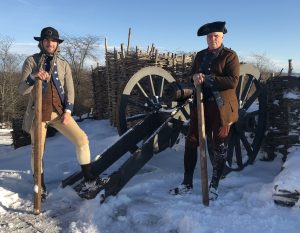
This weekend brings another set of commemorations of Col. Henry Knox’s artillery train, including a couple of events displaced by last weekend’s snow.

Saturday and Sunday, 31 January–1 February, 10 A.M. to 4 P.M.
Knox Train of Artillery
Old Sturbridge Village

In partnership with Fort Ticonderoga, this unique event explores the Noble Train as it went through central Massachusetts. For regular museum admission, join staff from the village and Fort Ti and reenactors from Knox’s Regiment of Artillery to learn about the 300-mile journey. Examine reproduction artillery tools and ammunition. Explore the historic village and interact with costumed historians as they demonstrate daily life after the Revolution. Highlights include:
  • See oxen in action hauling cannons. 
  • Watch Knox’s Regiment of Artillery demonstrate cannon firing. 
  • Learn about American artillery of the Revolution compared to the Massachusetts Artillery of the 1830s. 
  • Try using an artillery engine, lifting reproduction cannon from Fort Ticonderoga. 
  • Handle reproduction cannon ammunition and explore their types and use. 
  • See cabinetmakers building a log sled. 
  • Learn about using draft animals and their importance to 19th-century farmers. 
  • See blacksmiths forging cannon carriage hardware. 
  • Hear stories from a recreated patriot who marched on the Knox Trail from Pittsfield to Cambridge in 1976. 
For more details, including the schedule of events on each day, see the Old Sturbridge Village webpage.

Saturday, 31 January, 1 to 4 P.M.
250th Anniversary of Henry Knox & the Noble Train of Artillery
185 Salisbury Street, Worcester

Join Revolution 250, Boston Celebrations, the AC Marriott Hotel Worcester, and citizens of the towns of Brookfield, Leicester, Spencer, Worcester, Shrewsbury, and Northborough for a commemoration of the epic 1776 adventure of Henry Knox and his “Noble Train or Artillery” trekking across Massachusetts on their way to Boston. A procession will step off from Elm Park about 1 P.M. and end at City Hall. An indoor commemorative program will begin at 2 P.M.

Sunday, 1 February, 1:30 to 3 P.M.
“Were so lucky as to get the Cannon out of the River”: Henry Knox and His Noble Train of Artillery
Westford Museum

Alexander Cain will discuss Knox’s journey and its impact on the Continental Army’s firepower and the American cause. At Fort Ticonderoga, the colonel selected 58 artillery pieces, including immense 12-, 18-, and 24-pounders. Once they were ready, some of that artillery was positioned on Dorchester Heights, forcing the British evacuation of Boston. Cain explores Knox’s mission transformed the Continental Army’s firepower while embodying the ingenuity and determination that defined the American cause. Learn more about this presentation.

Sunday, 1 Febuary, 4 to 6 P.M.
Henry Knox: Presentation and Cannon Firing
Martha Mary Chapel, Wayside Inn, Sudbury

Local writer Steven Glovsky explores the improbabilities and inconsistencies of Henry Knox’s story, leading up to his undertaking the transport of urgently needed cannon in the winter of 1775–76. The presentation will be followed by cannon fire from Crane’s Third Artillery. For more information.

For those wanting to-the-date exactitude, as of 250 years ago, the fifty-eight cannon and mortars were parked in Framingham, being equipped for use. Col. Knox had taken command of the artillery regiment on the siege lines, issuing his first regimental orders.

Thursday, January 22, 2026

Knox Trail Commemorations on 24–26 Jan.

By this date 250 years ago, Col. Henry Knox had checked in with his commander, Gen. George Washington, in Cambridge.

The artillery that Knox had moved from Fort Ticonderoga was, Gen. William Heath wrote, “ordered to be stopped at Framingham.”

Those guns needed to be mounted and equipped for use, a process that would take a few more weeks.

This weekend, the commemoration of Knox’s artillery train will continue with events in several Massachusetts towns.

Saturday, 24 January, noon to 2 P.M.
Demonstration of Knox’s Noble Train
Bidwell Park, Stockbridge

This display of costumed educators from Fort Ticonderoga, a non-firing reproduction cannon, and two friendly oxen is part of “A Day In Revolutionary Stockbridge (1775-1783),” which runs from 10 A.M. to 4 P.M. and marks several moments during the war.

The Mission House will be set up as a tavern with tea, hot chocolate, and baked goods. At the town library, Dennis Picard will discuss eighteenth-century food. Outside the library, Prado del Lana will show her Lincoln Longwool sheep. At the Bidwell Museum and Procter Gallery, museum staff will discuss cooking and other domestic tasks.

Multiple first-person historic interpretations are scheduled from 10 A.M to 1:30 P.M.:
  • Theodore Sedgwick preparing for the Elizabeth Freeman case (Bement Room)
  • Anna Bingham and Abigail Dwight discussing taverns and doing business as women (Red Lion Inn small parlor)
  • Thomas Williams, highest-ranking military officer from Stockbridge to die during the war, recounting the siege of Boston (various locales)
  • Timothy and Rhoda Edwards, storekeepers, community leaders, and relatives of Col. Aaron Burr (Mission House)
  • Members of the 2nd Massachusetts Regiment (various locales)
The afternoon will bring two larger presentations:
  • Stockbridge Committee of Safety court scenario (2 to 3 P.M. in the library lobby)
  • Gregg Duffek and JoAnn Schedler on Mohican Veterans (3 to 4 P.M. in the Bement Room)
Cards with a map and a list of programs will be available at the Stockbridge library and Red Lion Inn. For what’s currently planned, see this page.

Saturday, 24 January, 11 A.M.
Noble Train of Artillery: The Knox Expedition
Bartlett Park and Jacobs Hall Masonic Lodge, Marlborough

The Marlborough Historical Society commemorates Knox’s mission with the town’s own newly acquired cannon and J. Archer O’Reilly III portraying the general and secretary of war. Organizers ask attendees to register in advance so there will be enough refreshments for all.

Sunday, 25 January, 1:30 to 3 P.M.
“Were so lucky as to get the Cannon out of the River”: Henry Knox and His Noble Train of Artillery
Westford Museum

Alexander Cain will discuss Knox’s journey and its impact on the Continental Army’s firepower and the American cause. At Fort Ticonderoga, the colonel selected 58 artillery pieces, including immense 12-, 18-, and 24-pounders. Once they were ready, some of that artillery was positioned on Dorchester Heights, forcing the British evacuation of Boston. Cain explores Knox’s mission transformed the Continental Army’s firepower while embodying the ingenuity and determination that defined the American cause. Learn more about this presentation.

Sunday, 25 January, 4 to 6 P.M.
Henry Knox: Presentation and Cannon Firing
Martha Mary Chapel, Wayside Inn, Sudbury

Local writer Steven Glovsky explores the improbabilities and inconsistencies of Henry Knox’s story, leading up to his undertaking the transport of urgently needed cannon in the winter of 1775–76. The presentation will be followed by cannon fire from Crane’s Third Artillery.

Monday, 26 January, 7 to 8:30 P.M.
Ethan Allen, Benedict Arnold and the Gibraltar of North America
Aeronaut Brewing Company, Somerville

The Somerville Museum presents the first of two talks by Dan Breen on the subject of “Henry Knox and His Noble Train of Artillery” in the sociable space of a brew pub. This evening will cover the story of Fort Carillon/Ticonderoga, its improbable capture, and Col. Knox’s arrival six months later. The second installment, scheduled for 9 February, will complete the tale with “The Noble Train Arrives: Knox, Washington and the End of the Siege.”

Monday, September 15, 2025

Revolutionary Talks This Week in Dedham and Westford

Here are a couple more Revolutionary lectures coming up this week.

Wednesday, 17 September, 7:00 P.M.
Bullet Strikes from the First Day of the American Revolution
Joel Bohy
Dedham Museum, 612 High Street

In 2013, Joel Bohy began a collaboration with conflict archaeologist Dr. Douglas Scott to better understand the ammunition found during archaeological investigations on former battlegrounds. This morphed into live-fire research and the study of the extant battle-damaged structures and objects from April 19, 1775.

From the Elisha Jones house in Concord, through Lexington and the Jason Russell house in Arlington, Massachusetts—where Dedham soldiers fought—the two carefully studied all the surviving bullet strikes and bullet-struck objects. Using modern forensic techniques adapted to historical studies and live-fire validation, Bohy and Scott tell the story of the brutality of the fighting on the first day of the American Revolution as British forces retreated to Boston.

Joel Bohy is the owner of J.Bohy Historical Consulting. He is an arms & militaria specialist at Blackstone Valley Auctions and an appraiser on the PBS TV series Antiques Roadshow.

Admission is $10, free to museum members. This event will be recorded by C-SPAN for its America 250 series and by DedhamTV.

Thursday, 18 September, 7:00 P.M.
The Plight of the Loyalist in Massachusetts
Larry Kerpelman
Westford Museum, 2 Boston Road

It’s been said that history is written by the victors, so it’s not surprising that the story of Loyalists to the Crown who lived in the American colonies is not as widely known as that of the Revolutionary War’s victors, the Patriots. As the drumbeat to independence grew louder, Loyalists faced their Patriot neighbors’ scorn and the agonizing decision of whether or not to flee their towns and homes. Various historians have estimated that between 60,000 and 100,000 people fled the colonies by the time “America’s first civil war” ended. Dr. Kerpelman will present a picture of how ordinary Massachusetts Loyalists and their Patriot neighbors interacted with one another during the fraught period between the 1750s and the 1790s.

Larry C. Kerpelman, Ph.D., is a freelance writer and communications professional from Acton, Massachusetts. Upon retiring as Vice president and Director of Corporate Communications after 30 years with the Cambridge public policy research and consulting firm Abt Global, he turned to researching, writing, and speaking on singular moments in American history. His work has appeared in American History, American Heritage, The Boston Globe, The Rochester Review, and The Chronicle of Higher Education, among other publications. He holds a B.A. from the Johns Hopkins University and a Ph.D. from the University of Rochester.

Suggested Donation for this lecture of $10 per person.

Wednesday, January 29, 2025

Talks on Bullet Strikes and Women Printers

Sestercentennial talks are starting to come fast. I’ll have some of mine to announce soon, and here are two happening tonight and tomorrow.

Wednesday, 29 January, 7:00 P.M., at the Acton Town Hall and livestreamed
“‘Dreadful Were the Vestiges of War’: Bullet Strikes from the First Day of the American Revolution”
Joel Bohy

Bohy, historic arms & militaria specialist at Blackstone Valley Auctions and Estates, will discuss the arms and ammunition used by both British and provincial forces on April 19, 1775, as well as the battle damage that remains. Modern shooting-incident reconstruction, archaeology, live fire studies, and new research sheds new light on the heavy fighting along the route of the British retreat back to Boston.

This free event is an Acton 250 program, and a recording will be available through Acton TV.

Thursday, 30 January, 7:00 P.M., at the Westford Museum
“In the Margins: Women Printers in the 18th Century”
Michele Gabrielson

In the 18th century, newspapers and pamphlets were crucial in spreading information and stoking the fires of conflict during the revolutionary period. Although printing was primarily seen as a masculine profession, women—such as widows, wives, and daughters—stepped up to embrace the responsibilities of a free press. These women not only set the type but, in some cases, also owned and managed their own printing businesses. This lecture will lay out the essential contributions of women in the printing industry leading up to the American Revolution.

Gabrielson is an award-winning educator, a historical interpreter, and secretary for the recently formed Mercy Otis Warren Society.

The suggested donation for this event is $10 per person.

(The picture above shows the broadside “A Bloody Butchery, by the British Troops,” issued after the 19th of April by Ezekiel Russell, whose wife Sarah helped run the print shop.)

Thursday, July 25, 2024

Sorting Out the Solemn League and Covenants

In his 1915 study of the Solemn League and Covenant for the Colonial Society of Massachusetts, Albert Matthews concluded that the text of that boycott agreement he called Form A was the original text from the Boston committee of correspondence, and Form B the variation from Worcester.

Matthews based that conclusion on several points:
(1) As the form sent out from Boston was frequently, if not generally, regarded as too drastic, it is reasonable to infer that the more drastic of the two forms was the one sent out from Boston, and of the two forms A and B, A is the more drastic.

(2) Every town in Massachusetts received a copy of the Boston form. Westford is in Middlesex County and so presumably would have received only the Boston form. The document [from Westford] exhibited to-day is form A.

(3) Every town in Worcester County received a copy of the Boston form and also a copy of the Worcester form. At the bottom of the broadside (form B) owned by the American Antiquarian Society is written, in the hand of Isaiah Thomas, the words “This came from Sutton.” Since Sutton is in Worcester County, the Sutton document might conceivably be either the Boston form or the Worcester form; but as a matter of fact the Sutton document is form B, and so presumably is the Worcester form.

(4) Five newspapers were published in Boston in 1774, but only two of these printed the Solemn League and Covenant,…and this is form A. It is reasonable to assume that the only form printed in the Boston papers was the form sent out by the Boston Committee of Correspondence.
When I started this series of postings, I thought that was convincing. But as I looked at Matthews’s sources and others, I found myself coming to the opposite conclusion.

Here are some points Matthews missed. First, he assumed that people objected to the Boston committee’s draft as “too drastic,” and indeed the merchants of the town did make that complaint. But in a footnote Matthews acknowledged that organizers in Worcester had circulated “even more drastic” language, so we have to consider the possibility that those men thought the Boston draft wasn’t drastic enough.

Matthews assumed that the Worcester committee sent its draft only to other towns in Worcester County. But he quoted evidence that Braintree considered text “much like the Worcester covenant” on 27 June and Falmouth (now Portland, Maine) had received “the non-importation Agreement form’d at Worcester” by 30 June.

The Boston News-Letter did indeed print Form A, but it prefaced it this way: “The foregoing is a Copy of a Covenant, which I am told great Pains are now taking to promote in the Country.” The newspaper didn’t specify the agreement that followed was the Boston committee’s proposal. Rather, the phrase “in the Country” hinted at a rural origin.

The 22 June Pennsylvania Journal printed Form B below “a Circular Letter, written by the Committee of the Town of BOSTON,” suggesting that printer William Bradford had received them together. The Boston text sent on 8 June most likely reached Bradford days before the Worcester text sent on 13 June. Even if he had both in hand, Bradford clearly cited documents from Boston.

We know that the Boston committee spread its text outside of Massachusetts. Silas Deane wrote a letter responding to a copy in Wethersfield, Connecticut, on 13 June, before he could have received the Worcester committee’s version. That appears to have been Form B. [Deane’s letter casts doubt on that book’s assertion that Wethersfield actually adopted the Solemn League on 15 June; I’ve found no official town action.] Form B was also the basis of the Portsmouth, New Hampshire, variation (Form C).

In contrast, we don’t know that the Worcester committee sent its text outside Massachusetts. Its letter referred to recipients as “fellow-countrymen,” which in this period usually meant people from the same colony.

Finally, here are two facts that Matthews acknowledged but set aside. A copy of Form A at the Massachusetts Historical Society is labeled “Worcester Covenant.” The printer’s type and watermark of that copy match the printed letter issued by Worcester’s committee on 13 June—though Matthews explained that away by saying all these documents must have been printed in Boston since Isaiah Thomas hadn’t yet set up the first press in Worcester.

Looking at all that evidence, I reconstruct the sequence of events this way:
  • late May and early June: The Boston committee of correspondence and Worcester County radicals both drafted calls for a stronger boycott on British goods until the Boston Port Bill was repealed.
  • 8 June: The Boston committee sent out its printed circular letter and suggested Solemn League and Covenant (Form B) to all towns in Massachusetts and to allies in other colonies.
  • by 10 June: After feedback from Worcester, if not other places, the Boston committee sent a second printed circular letter approving other language as long as it led to the same broad boycott.
  • 13 June: The Worcester committee of correspondence wrote a new Solemn League and Covenant (Form A) based mostly on the Boston text but incorporating some of its earlier draft and sent that out with a printed circular letter to all towns in Massachusetts.
  • 20 June: Worcester formally adopted its form of the Solemn League and Covenant.
  • 22 June: The Pennsylvania Journal printed the Boston committee’s draft.
  • 23 June: The Boston News-Letter printed the Worcester committee’s draft, saying it was being promoted “in the Country.”
  • 27 June: Braintree adopted the Solemn League and Covenant in a form “much like the Worcester covenant,” according to the 30 June Massachusetts Spy.
  • before 28 June: The Portsmouth, New Hampshire, committee of correspondence sent out its variation on the Boston draft (Form C).
  • 30 June: Falmouth considered “the non-importation Agreement form’d at Worcester” and decided to ask other towns what they were doing.
  • 4 July: Westford adopted the Solemn League and Covenant with the Worcester text and started gathering signatures.
  • 14 July: Attleboro adopted the Solemn League and Covenant with the Worcester text and started gathering signatures.
In sum, Worcester’s version of the Solemn League and Covenant became the standard text within Massachusetts while Boston’s version spread outside the colony. This was an early example of Worcester’s radicals (who were, of course, not living under military occupation) being more confrontational than the usual troublemakers in Boston.

TOMORROW: One town’s debate.

Wednesday, July 17, 2024

“We will suspend all commercial intercourse with the said island”

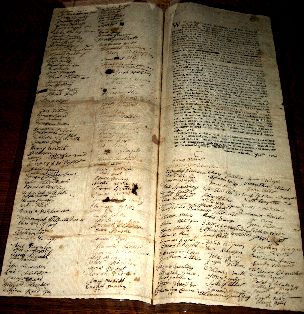
In his 1915 study of the Solemn League and Covenant, Albert Matthews based what he called Form A on a printed broadside preserved in Westford, as shown here and here.

Matching broadsides survive in the state archive and in Attleboro, as reported here.

That text also matches what appeared in Margaret Draper’s Boston News-Letter on 23 June 1774, printed at the request of an opponent of the boycott campaign.

The broadside version had blank spaces for leaders of each town to write in its name and the date in “June [blank] 1774” on which it voted to sign onto the agreement.

The text itself consists of a preamble and four promises for consumers:
1st, That from henceforth we will suspend all commercial intercourse with the said island of Great Britain, until the said act for blocking up the said harbour be repealed, and a full restoration of our charter rights be obtained. And,

2dly, …that we will not buy, purchase or consume, or suffer any person, by, for or under us to purchase or consume, in any manner whatever, any goods, wares, or merchandize which shall arrive in America from Great Britain aforesaid, from and after the last day of August next ensuing. . . .

3dly, That such persons may not have it in their power to impose upon us by any pretence whatever, we further agree to purchase no article of merchandize from them, or any of them, who shall not have signed this, or a similar covenant . . .

Lastly, we agree, that after this, or a similar covenant has been offered to any person and they refuse to sign it, or produce the oath, abovesaid, we will consider them as contumacious importers, and withdraw all commercial connexions with them, so far as not to purchase of them, any article whatever, and publish their names to the world.
This was the oath for retailers to swear if they wanted to retain their customers:
I [blank] of [blank] in the county of [blank] do solemnly swear that the goods I have now on hand, and propose for sale, have not, to the best of my knowledge, been imported from Great Britain, into any port of America since the last day of August, one thousand seven hundred and seventy four, and that I will not, contrary to the spirit of an agreement entering into through this province import or purchase of any person so importing any goods as aforesaid, until the port or harbour of Boston, shall be opened, and we are fully restored to the free use of our constitutional and charter rights.
The last part of the broadside was a generous stretch of blank paper for individual people to fill up with their signatures, as we can see on the copy above.

TOMORROW: Form B.

Thursday, April 06, 2023

Mapping Westford’s Veterans and Casualties

The town of Westford has a dedicated group of local historians and reenactors as well as the Westford Museum.

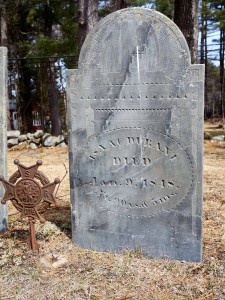
One of the latest local-history projects from Westford, created primarily by Judy Cataldo, is this online map of Revolutionary War veterans and civilian casualties in Westlawn Cemetery.

Each gravestone is pictured and accompanied by a profile of the person it commemorates. For instance:
Isaac Durant is the son of Henry and Susanna, born in Littleton on September 16, 1757. On the morning of April 19, 1775, he was living in Lexington and later testified, "that about 5:00 hearing our drum beat, we proceeded towards the parade, and soon found that large bodies of troops were marching towards us." The next month he enlisted in the army at Cambridge as a drummer and served 91 days. He continued to serve as a drummer at other times in the war, one month in 1777, 6 months in 1778, 9 months in 1779 and at the end of the war in 1781. On returning home he married Helena Wendell from Salem in 1784 and they had 9 children. He eventually moved to Westford and lived in a home on the road to the village center. Capt. David Prescott Lawrence a longtime resident of Westford stated that he remembers Isaac Durant a revolutionary soldier, who was blind and was guided about the village by a little grandson. He died in Natick on January 9, 1848 at the age of 90.
Another topic that Judy Cataldo has researched over many years is the epidemic of “camp fever” that affected both soldiers and civilians in New England during the siege of Boston. The intersection of that project and this appears in the entry for the gravestone of the daughters of militia colonel John Robinson:
In the late summer and early fall of 1775, the civilians of Massachusetts towns were besieged by an epidemic of the Bloody Flux or Camp Fever, a type of dysentery that can be deadly to children. The disease was brought into the towns by soldiers returning from their service in the camps around Boston. Col. John Robinson and his wife Huldah lost 3 of their daughters within 10 days. Betty who was born 1770 and Sarah born May 3, 1772 both passed on August 30, 1775 and Mehetebel born August 9, 1767 died on September 7 1775.
It would be nice to see more local projects like this during the Sestercentennial. And to see them preserved in forms that will survive the evolution of the web. 

Saturday, April 16, 2022

Frank W. Coburn’s Twenty-three Towns—and Four Extra?

About a century ago, Frank Warren Coburn of Lexington set out to document the names of the militiamen who fought in the Battle of Lexington and Concord. Not just the men who marched, but those in companies that exchanged fire with the British troops.

Coburn scoured the available sources to determine which towns’ companies probably saw fighting. Then he went through the Massachusetts state archives, looking for payrolls submitted from those towns. He also sought lists of militiamen from other sources, such as town histories and manuscripts.

Coburn printed all the names he found in an appendix to his 1912 history (full title: The Battle of April 19, 1775, in Lexington, Concord, Lincoln, Arlington, Cambridge, Somerville and Charlestown, Massachusetts). His list of towns was:
  • Lexington, of course
  • Concord, Acton, Bedford, Lincoln, Billerica, Chelmsford, Framingham, Reading, Sudbury, Woburn; all “entered the contest at Concord,” which could mean either at the North Bridge or later as the regulars withdrew from the town
  • Cambridge, which “entered the contest at Lincoln”
  • Newton, which “entered the contest at Lexington”
  • Brookline, Watertown, Medford, Malden, Roxbury, Dedham, Needham, Lynn, Beverly, and Danvers, which all “entered the contest at Arlington”
Twenty-three towns—but Coburn’s appendix also included four more places.

He listed Arlington separately from Cambridge even though in 1775 Arlington was a precinct of Cambridge called Menotomy. Coburn didn’t find a militia muster roll for Capt. Benjamin Locke’s company from that area. Instead, he relied on town histories by Lucius R. Paige and Samuel A. Smith.

It’s worth noting that Coburn didn’t treat Burlington and Winchester the same way. Those towns calved off of Woburn in the 1799 and 1850, respectively, and militiamen from those areas were part of the Woburn companies. But Burlington and Winchester didn’t get their own entries as Arlington did. Likewise, Carlisle was treated as part of Concord, Wayland as part of Sudbury, and so on. 

Coburn also began his appendix with a statement setting off three more towns:
These Companies were all participants, with the exception of those of Dracut, Stow, and Westford. I have given them, as they came so nearly into the contest.
That implies Coburn decided to give the men from those towns an honorable mention for trying extra hard.

That certainly seems to be the case for Dracut, located up at the New Hampshire border. That town’s company made much better time than their neighbors. Coburn wrote, “The men of Dracut did not reach the scene of actual conflict but tried to, and came so near the British rear guard as to deserve a place in this record.” Good effort, Dracut! Way to hustle!

In similar fashion, Coburn wrote, “The men from Westford did not reach Concord in time to enter the engagement, but pursued the British so closely as to deserve especial mention.” And the same sentence about Stow.

As I noted yesterday, Stow actually suffered a casualty in the battle: Daniel Conant, wounded. However, he lived in the part of the Stow that became Maynard in 1871. The Stow Independent reported in 2014:
Conant wasn’t on the [William] Whitcomb company’s list, where he should have been. The theory is he lived closer to North Maynard—and, hence, Concord—at the time, so he marched ahead on his own…
In that case, Conant’s position within shooting range wouldn’t say anything about how close the Stow companies got.

At another point in his book, Coburn wrote that one Stow company “did not reach North Bridge until about noon, too late to be in the action there, but in ample time to be active in the pursuit.” And the three companies from Westford also “reached the North Bridge too late, but were active afterwards.”

What did Coburn mean by “active” or “active in the pursuit”? Especially when he concluded that those same companies were not “participants” but “came…nearly into the contest”? Did they come in sight of the redcoat column, but not within firing range? If so, did they conceivably affect the British soldiers’ behavior? And what about the Salem regiment, which also reportedly came close enough to see the redcoats?

TOMORROW: Another analysis, skirmish by skirmish.

Thursday, April 04, 2019

A Sampling of the 2019 Battle Road Season

The Patriots’ Day season starts this Saturday, 6 April, with three annual events in three towns:
  • Bedford Pole Capping in Bedford, 10:30 A.M.
  • Meriam’s Corner Exercise in Concord, 1:00 P.M.
  • Paul Revere Capture Ceremony in Lincoln, 3:00 P.M.
Two of the events thus commemorated took place on 19 Apr 1775. The pole capping is a more recent community celebration, though Liberty Poles were undoubtedly part of the Revolutionary landscape.

Here’s something I don’t recall seeing before: The town of Lexington has the domain name patriotsday.com. It redirects to the town website, which includes this page of local events from Saturday, 13 April, to Monday, 15 April—legally Patriots’ Day. These opportunities include tours of the Lexington Historical Society’s museums and reenactments of the fights in Lexington.

Back to the Minute Man National Historical Park website for a listing of events it hosts, and to Battleroad.org for related events elsewhere, including:
  • Parker’s Revenge, Saturday, 13 April, 1:00 P.M.
  • Jason Russell House fight, Arlington, Sunday, 14 April, noon. 
  • “Warlike Preparations” at the Barrett Farm, Sunday, 14 April, 1:00-4:00 P.M.
  • Lincoln Fife & Drum Salute, Sunday, 14 April, 2:00-4:00 P.M.
  • Robbins’s Ride in Acton, Sunday, 14 April, 5:00-6:00 P.M.
  • Revere’s arrival at the Lexington parsonage, Sunday, 14 April, 11:30 P.M.
  • Marches from Stow and Westford, Monday, 15 April, arriving at the bridge about 9:00 A.M.
  • North Bridge Fight and Concord Parade, Monday, 15 April, 8:30-10:00 A.M.
There are also events that by tradition take place on the actual anniversaries instead of the legal holiday:
  • Lantern procession and Ceremony at North Bridge, Thursday, 18 April, 7:45-8:45 P.M.
  • Sudbury Militia March, Friday, 19 April, arriving at the bridge about 11:30 A.M. 
And back to Minute Man Park for “The War Has Begun” on Saturday, 20 April, reenacting how Massachusetts communities responded to the strain of the siege of Boston.

This is just a sampling of the historical events taking place around Patriots’ Day, drawn from Middlesex County. Many other communities have their own traditional commemorations.

Thursday, November 29, 2018

The Fate of Levi Ames’s Body

Last month I took another look at the crimes and execution of Levi Ames, but I neglected the important topic of what happened to his body.

Back in 2009 I discussed how groups of medical students competed to seize Ames’s body for dissection. In a postscript to his letter describing the chase, William Eustis wrote:
By the way, we have since heard that Stillman’s gang rowed him back from the Point up to the town, and after laying him out in mode and figure, buried him—God knows where! Clark & Co. went to the Point to look for him, but were disappointed as well as we.
“Stillman” was the Rev. Samuel Stillman, minister of Boston’s second Baptist meeting. Ames had begged him to preserve his body from the anatomists, and he succeeded.

So what happened to the corpse? The printer John Boyle left us an answer: “His Body was carried to Groton after his Execution to be bury’d with his Relations.”

Levi Ames was the son of Jacob Ames, Jr., and Olive Davis of Groton. They married in Westford in 1749. Levi was their second child, born on 1 May 1752. In his confession, Levi Ames said his father died when he was two years old., though there are no vital records to confirm that.

On 9 Oct 1765, Olive Ames married Samuel Nutting in Groton. Nutting was a Waltham widower with children born from 1752 to 1761. Levi Ames and his little brother Jacob thus became part of a blended family—presumably in Waltham, where Samuel and Olive Nutting had a little girl named Olive in 1770.

In his dying speech, Ames described committing some minor thefts in his childhood and promising his mother he would stop. At some point in his teens he was apprenticed into a household he didn’t identify and didn’t like. He stated:
Having got from under my mother’s eye, I still went on in my old way of stealing; and not being permitted to live with the person I chose to live with, I ran away from my master, which opened a wide door to temptation, and helped on my ruin; for being indolent in temper, and having no honest way of supporting myself, I robbed others of their property.
Ames robbed “Mr. Jonas Cutler, of Groton” and “Jonathan Hammond, of Waltham,” as well as householders in other towns where he didn’t have family.

Levi Ames’s corpse was buried among his Groton relatives in 1773. There was no marker.

Friday, May 18, 2018

“Declaring Independence” Presentations Around Massachusetts

“Declaring Independence: Then and Now,” is an ongoing commemoration and exploration of the Declaration of Independence presented by Freedom’s Way National Heritage Area and the American Antiquarian Society.

Each presentation is tailored to the community where it is staged, meaning no two productions are the same. A “Declaring Independence” performance consists of a reading of the Congress’s Declaration and portrayals of people from the host community during the Revolution as drawn from first-hand accounts. A narrator explains the eighteenth-century terms and ideas, challenging the contemporary audience to consider their relevance today.

There are many different stagings scheduled between now and Independence Day.

Sunday, 20 May, 2:00-3:30 P.M.
Leominster Public Library Community Room
Partner: Leominster Public Library

Thursday, 31 May, 7:00-8:30 P.M.
American Antiquarian Society, Worcester
Followed by “Holding These Truths: A Panel Discussion about the Declaration of Independence” with David W. Blight, Annette Gordon-Reed, and Peter S. Onuf
Partner: American Antiquarian Society

Sunday, 3 June, 2:00-3:30 P.M.
Minute Man Visitor Center (Lexington)
Partner: Minute Man National Historical Park

Wednesday, 6 June, 7:00-8:30 P.M.
Westford’s First Parish Church United
Partner: Westford Historical Society

Sunday, 10 June, 3:00-4:30 P.M.
Boxborough Town Hall
Partner: Boxborough Historical Society

2-4 July, starting at 10:30 A.M. & 1:00 P.M.
Old Sturbridge Village’s Center Meetinghouse
With admission to Old Sturbridge Village

Tuesday, 3 July, starting at 11:00 A.M., 1:00 P.M., 3:00 P.M., 5:00 P.M.
Old North Church, Boston
Partners: Old North Church, Boston Harborfest

Wednesday, 4 July, 7:00-8:30 P.M.
Lexington Depot
Partner: Lexington Historical Society

Monday, May 20, 2013

James Hall, American Soldier

Yesterday I shared the first half of an essay by Dan Lacroix about stories told in Westford and Cavendish, Vermont, about a man named James Hall, said to have deserted from the British column on 19 Apr 1775 after being hit by a provincial musket ball and playing dead.

How reliable are those accounts? For example, did Sgt. Hall really try to shoot “Minuteman Wright of Westford” at Concord’s North Bridge? Did John Gray of Westford really steal his “military cap with its ostrich feathers”? And what might those details say about the underlying story, that James Hall wasn’t one of the British dead interred in Concord? Here’s more of Dan’s report:


Prior to Henry B. Atherton’s 1875 newspaper stories, the only Westford men reported to have been at the North Bridge at the time of the skirmish were Lt. Col. John Robinson, Sgt. Joshua Parker, the Rev. Joseph Thaxter, and Oliver Hildreth. The earliest any of the eight documented Wright men who served that day is said to have arrived at the bridge is as the skirmish was ending.

Moreover, even the Lowell Daily Courier article questions the existence of John Gray, a man who continues to elude proper documentation. It’s likely that Atherton gained his knowledge of Westford’s eighteenth-century residents by listening to the stories told by the descendents of the dozens of Westford veterans who emigrated to the Cavendish/Ludlow region of Vermont after the war. But was that oral history reliable?

Further details of James Hall’s life in America after 1775 are supported by vital records, as well as a family document found in a carton of the personal papers belonging to his grandson James Ashton [Under-Lyne] Hall (1816-1845) many years after his premature death. In this more straightforward telling of the story we find that following the grazing of his shoulder James Hall deserted when he found it “convenient.” He then returned to Westford with John Hildreth and spent the next year working for him and his brother Ephraim Hildreth, 3rd. For a time he moved to neighboring Chelmsford and took up the blacksmithing trade with Phineas Chamberlain (1745-1813), whose house still stands today (shown above and in this report).

By 1779 James had grown so fond of his adopted country and its ambitions for independence that he took up the call for nine months’ service in the Continental Army. His time was spent in the Hudson Highlands at West Point with Col. Michael Jackson’s 8th Massachusetts Regiment, part of it during the “winter of the deep snow.” For this service he later received a pension.

One of the many transcribed period documents in Wilson Waters’s History of Chelmsford provides a further example of James Hall’s support for the cause: we find him listed in 1781 along with Chamberlain, his blacksmith mentor, and a class of men who provided financial incentive for another man’s service in the army.

Soon after, the lure of freshly established communities in Vermont drew James and his blacksmithing trade to Cavendish with other Westford veterans. He returned in January of 1784 to marry Thankful Hildreth, and brought her back to Cavendish that same winter. During the 1790s they returned to Massachusetts, residing in Acton and Westford, before settling one final time in Vermont shortly before the turn of the century. In 1822, while living with his son James Whoral Hall in Reading, Vermont, this veteran died at the age of 69.

Like so many of his fellow revolutionary soldiers, James Hall’s weather-worn memorial stone proudly establishes him as “A Soldier of the Revolution.” Not surprisingly, there is no mention of his service to the King, though it very prominently declares his Lancashire birth, as well as the fact that he “Emigrated” from mother England in 1774.
So was Pvt. James Hall of the 4th Regiment one of the three British soldiers killed in the fire at the North Bridge and buried in Concord? Or did his comrades simply think that he was killed, allowing him to take up a new life as a New Englander? If James Hall wasn’t buried in Concord, who was? Or were there two James Halls in the British column, one who died and one who deserted? Very interesting questions. Thanks, Dan!

Sunday, May 19, 2013

James Hall, “a British soldier”

Today I’m pleased to share with you the first half of an essay by Dan Lacroix. As a historical researcher, Dan has worked for years with the Westford Museum & Historical Society. As a reenactor with the Westford Colonial Minutemen, he also has a specialty in eighteenth-century house joinery (carpentry). And a while back Dan clued me in on a fascinating mystery from New England’s Revolution, so I asked him to write up some of his findings as a guest blogger.

About eight years ago my research into the lives of Westford’s Revolutionary War soldiers took an unexpected turn. A short passage in Edwin Hodgman’s 1883 History of Westford describes a past resident by the name of James Hall as “a British soldier, born at Ashton-under-line [Lyne], England, who during the retreat of the Regulars from Concord, April 19, 1775, voluntarily surrendered to the Provincials and came to Westford and worked for Ephraim Hildreth, 3rd, whose daughter he married in 1784.”

An interesting story in itself, but wasn’t James Hall also the name of one of the British soldiers from the 4th (King’s Own) Regiment killed at the North Bridge? The precise identities of those three soldiers have been debated for years, and I won’t be delving into that debate here. Though it may not be possible to conclusively prove that two men named James Hall are one in the same, there is considerable evidence supporting the core facts within some engaging nineteenth-century family stories.

One of Hodgman’s sources might have been an article in the Boston Journal from 26 Apr 1875, which was repeated with annotations two weeks later in the Lowell Daily Courier. Written by an accomplished lawyer and Civil War veteran, Capt. Henry B. Atherton (1835-1906, shown above), the article was based on family stories and traditions from his home town of Cavendish, Vermont, where James Hall, born 29 Sept 1753, ultimately settled and established his family.

From Atherton we learn that at about the age of twenty James “awoke with the fatal shilling of the recruiting sergeant in his pocket,” and then was “engaged with the rest of his regiment in laying roads in Scotland.” A six-week passage (with two of them becalmed off of Newfoundland) brought him to Boston Common with his regiment in 1774.

In true Centennial-era detail we learn of his experiences on April 19th of the following year:

At Concord, he was among those stationed at the bridge. As they were about to begin the retreat, Minuteman Wright of Westford called to them “Boys, don’t pull up the planks!” whereupon Hall took deliberate aim at Wright and shot, but failed to hit him.
And further,
On the retreat through Lincoln Woods, a shot from one of the Minutemen grazed his shoulder, and worn out with fatigue, he threw himself on the ground, his comrades exclaiming, “There goes Sergeant Hall; he is dead!”

After they passed, he rose and returned to the Wright Tavern in Concord. There he suffered no indignity, except that John Gray of Westford pulled off his military cap with its ostrich feathers, which he retained and subsequently gave to his daughters.
The colorful nature of the story aside, certain details immediately raise some questions.

TOMORROW: Details and discrepancies in the legend of James Hall.

Saturday, December 15, 2012

The Desk Calendar Contest Answers!

Here are the answers to this week’s Desk Calendar Challenge, challenging readers to identify men related to the American Revolution who were named either William Smith or John Robinson, for the most part.

1) Member of Parliament and Secretary of the Treasury in London from 1770 to 1782, he was Lord North’s principal political fixer.

This was John Robinson (1727-1802). The phrase “before you can say Jack Robinson” appeared in the late 1700s, so some authors have theorized that it referred to this man, but that seems unlikely.

Col. William Stephens Smith ai... Digital ID: 423419. New York Public Library2) Aide-de-camp to Gen. John Sullivan, Gen. Lafayette, and finally Gen. George Washington, he served as a diplomat and a Congressman, and became an in-law to John Adams.

William Stephens Smith (1755-1816), who married the younger Abigail Adams. (Shown here, courtesy of the New York Public Library.)

3) An officer in the Westford militia company in 1775, he took part in the provincials’ advance toward the North Bridge without his men. Eleven years later he returned to Concord to help close the county courts during the Shays’ Rebellion.

John Robinson (1735-1805).

4) Appointed a Commissioner of Customs, he went into hiding after a coffee-house brawl and sailed secretly to London with a set of pro-Crown reports about the Boston Massacre.

Another John Robinson (died before 1783). He was the man who clubbed James Otis, Jr., in 1769. Wondering whether this guy surfaced at Lord North’s side made me notice how many John Robinsons there were.

5) A historian of colonial New York, he railed against the idea of an Anglican bishop for America and sought compromises between Patriots and the Crown. He served as Chief Justice of both New York and Québec/Lower Canada.

William Smith (1728-1793).

6) Born in Charleston, South Carolina, he spent the entire Revolutionary War as an attorney in England. Back in America, he was elected to the first five Congresses under the new Constitution.

William Loughton Smith (1758-1812), as opposed to William Smith (1751-1837), who fought in the Revolutionary War, represented South Carolina in the U.S. House for only one term, and was in the opposite party.

7) Invited to America by Benjamin Franklin, he helped to set up both the University of Pennsylvania and Washington University. He lobbied for an Anglican bishop for America and was driven from Philadelphia as a suspected Loyalist.

The Rev. William Smith (1727-1803), shown at right.

8) By training a carpenter, he had to leave Cambridge, Massachusetts, after the “Powder Alarm.” After convincing the Crown to support a settlement at Penobscot Bay in Maine, where he owned land, he endured a siege by Massachusetts forces.

This is our odd man out: John Nutting (1740-1800).

9) He’s one of America’s leading historians on the poor in the late colonial and early national period, particularly in Philadelphia.

Billy G. Smith, Distinguished Professor of Letters & Science at Montana State University.

10) He died in office after serving for many years as both Speaker of the House of Burgesses and Treasurer in Virginia, and the government discovered he’d embezzled large sums of money.

John Robinson (1705-1766).

11) Theologically liberal minister of the town of Weymouth, Massachusetts, he became an in-law to John Adams.

The Rev. William Smith (1707-1783), father and tutor of First Lady Abigail Adams. Yes, John Adams’s father-in-law and son-in-law were both named William Smith.

And the winner of the Colonial Williamsburg desk calendar for 2013 is commenter G. Lovely! Please send me an email with your surface-mail address, and that prize will be in the mail next week.

Sunday, December 09, 2012

The 2013 Desk Calendar Contest

If you didn’t win last week’s wall calendar contest, don’t despair! I also have an extra Colonial Williamsburg desk calendar for the coming year. It’s spiral-bound, about 9 inches wide by 8 tall, with a page for each month and each week, all facing color photographs of Williamsburg sights. And I’m going to give this one away, too.

I’ve written capsule descriptions of eleven men linked to the American Revolution, broadly defined. Some of them were named John Robinson. Some of them were named William Smith. One of them was named neither John Robinson nor William Smith. The challenge is to identify the Robinsons and Smiths and name the odd man out.

1) Member of Parliament and Secretary of the Treasury in London from 1770 to 1782, he was Lord North’s principal political fixer.

2) Aide-de-camp to Gen. John Sullivan, Gen. Lafayette, and finally Gen. George Washington, he served as a diplomat and a Congressman, and became an in-law to John Adams.

3) An officer in the Westford militia company in 1775, he took part in the provincials’ advance toward the North Bridge without his men. Eleven years later he returned to Concord to help close the county courts during the Shays’ Rebellion.

4) Appointed a Commissioner of Customs, he went into hiding after a coffee-house brawl and sailed secretly to London with a set of pro-Crown reports about the Boston Massacre.

5) A historian of colonial New York, he railed against the idea of an Anglican bishop for America and sought compromises between Patriots and the Crown. He served as Chief Justice of both New York and Québec/Lower Canada.

6) Born in Charleston, South Carolina, he spent the entire Revolutionary War as an attorney in England. Back in America, he was elected to the first five Congresses under the new Constitution.

7) Invited to America by Benjamin Franklin, he helped to set up both the University of Pennsylvania and Washington University. He lobbied for an Anglican bishop for America and was driven from Philadelphia as a suspected Loyalist.

8) By training a carpenter, he had to leave Cambridge, Massachusetts, after the “Powder Alarm.” After convincing the Crown to support a settlement at Penobscot Bay in Maine, where he owned land, he endured a siege by Massachusetts forces.

9) He’s one of America’s leading historians on the poor in the late colonial and early national period, particularly in Philadelphia.

10) He died in office after serving for many years as both Speaker of the House of Burgesses and Treasurer in Virginia, and the government discovered he’d embezzled large sums of money.

11) Theologically liberal minister of the town of Weymouth, Massachusetts, he became an in-law to John Adams.

Some of these William Smiths and John Robinsons had middle names as well, but the descriptions are all straightforward. All research resources are allowed and encouraged.

Instead of challenging individuals to identify all the men at once, I’m inviting you folks to “crowdsource” the answers. If you can name one or more of the numbered men, do so in a comment with a confirming link or reference. (For example, if you think number 7 was the odd man out and named Dr. Samuel Gardner, your comment could say that and include a link to a webpage about him or cite a book that mentions him.) Make sure your comment has a name or unique pseudonym attached.

I’ll run the complete set of correct identifications next Saturday. And I’ll choose a Boston 1775 reader who contributed to the answer to receive the desk calendar. Happy searching!

Friday, June 17, 2011

“The enemy fir’d very warm from Boston”

One of the standard sources on the Battle of Bunker Hill is a letter written on 25 June 1775 by Peter Brown of Westford, who served in Col. William Prescott’s regiment. The Massachusetts Historical Society displays the letter in its online exhibit about the battle.

The battle begins:
after tarrying on parade till Nine at Night [on 16 June], we march’d down, on to Charleston Hill against Copts hill in Boston, where we entrench’d & made a Fort, ten Rods long, and eight wide, with a Breastwork of about eight more, we work’d there undiscovered till about five in the Morning, when we saw our danger, being against Ships of the Line, and all Boston fortified against us,

The danger we were in made us think there was treachery and that we were brought there to be all slain, and I must and will say that there was treachery oversight or presumption in the Conduct of our Officers, for about 5 in the morning, we not having more than half our fort done, they began to fire (I suppose as soon as they had orders) pretty briskly for a few minutes, then ceas’d but soon begun again, and fird to the number of twenty minutes, (they killd but one of our Men) then ceas’d to fire till about eleven oClock when they began to fire as brisk as ever, which caus’d many of our young Country people to desert, apprehending the danger in a clearer manner than others who were more diligent in digging, & fortifying ourselves against them.

We began to be almost beat out, being fatigued by our Labour, having no sleep the night before, very little to eat, no drink but rum, but what we hazzarded our lives to get, we grew faint, Thirsty, hungry and weary.—

The enemy fir’d very warm from Boston, and from on board their Ships till about 2 oClock when they began to fire from Ships that lay in Ferry way and from a ship that lay in the river against us, to stop our reinforcement, which they did in some Measure one cannon cut three Men in two on the neck,

Our Officers sent time after time for Cannon from Cambridge in the Morning & could get but four, the Captn of which [Samuel Gridley?] fir’d a few times then swung his Hat three times round to the enemy and ceas’d to fire, then about three o Clock there was a cessation of the Cannons roaring, soon after we espied as many as 40, boats or barges coming over, full of troops it is supposed there were about 3000 of them, and about 700 of us left…
Read the whole letter here.

In the same letter Brown told his mother in Newport, “I do a Clerk or Orderly Sergants business; which requires much care but the Duty is easier, and the pay higher than a private Soldiers.” His ability to write got him that job, and let him record an ordinary soldier’s experience of the battle. Other than this letter, very little is known of Peter Brown.

Thursday, April 07, 2011

New England’s Meeting Houses in Westford, 7 April

On Thursday, 7 April, the Westford Museum will host an illustrated talk on “New England’s Colonial Meeting Houses and Their Impact on Society” by photographer Paul Wainwright.

Wainwright’s photographs of the region’s oldest surviving religious buildings are collected in A Space for Faith: The Colonial Meetinghouses of New England, with a foreword by Brent Glass of the National Museum of American History at the Smithsonian and a historical essay by Peter Benes, director of the Dublin Seminar for New England Folklife. The book was named best photography/art book of 2010 at the New England Book Festival.

The event description says:

When built in the 1700s, Colonial meetinghouses were the focus of both religious and civic life – concepts not at all separate in Colonial New England. Many were built with tax money, and their simple, undecorated architecture reflected the desire of early Puritan settlers to live simple lives apart from the Church of England. Yet these were their “cathedrals,” built by hand without adornment, except for the wonderful woodwork. Only a few of them remain in a relatively unchanged state.

These buildings embody an important chapter in American history. In them were formed the principles of our democracy and participatory government. In them the issue of separation of church and state was debated and tested. Wainwright’s photography explores these structures and the society that built and used them. They not only present a fascinating glimpse into our nation’s Colonial history, but are beautiful as well.
And of course those unadorned, white-painted churches are excellently suited to black and white photography.

About the speaker:
Paul Wainwright is a photographer based in Atkinson, New Hampshire, who works in a traditional manner utilizing sheet film, a large-format camera, and silver gelatin printing. His work has appeared in numerous juried competitions and solo exhibitions, and is included in the permanent collections of both private and corporate collectors, including Fidelity Investments, the Boston Public Library, and the Museum of Fine Arts, Houston. . . . Wainwright holds a Ph.D. in physics from Yale University.
Copies of A Space for Faith will be on sale at the talk, which starts at 7:00 P.M.