For action details I drew on Francis E. Blake’s 1899 article for the New England Historical and Genealogical Register, reprinted with additional realty information as a short book titled Dorchester Neck (Now South Boston): The Raid of British Troops, February 13, 1776.
In fact, most of that action happened in the early morning hours of 14 February. I quoted reactions to the raid in this posting from 2008.
Yet my favorite detail about the event is that Maj. Thomas Musgrave, who led a squad of elite troops across the ice from Boston Neck, was considered the best skater in the British force, as quoted here in 2010.
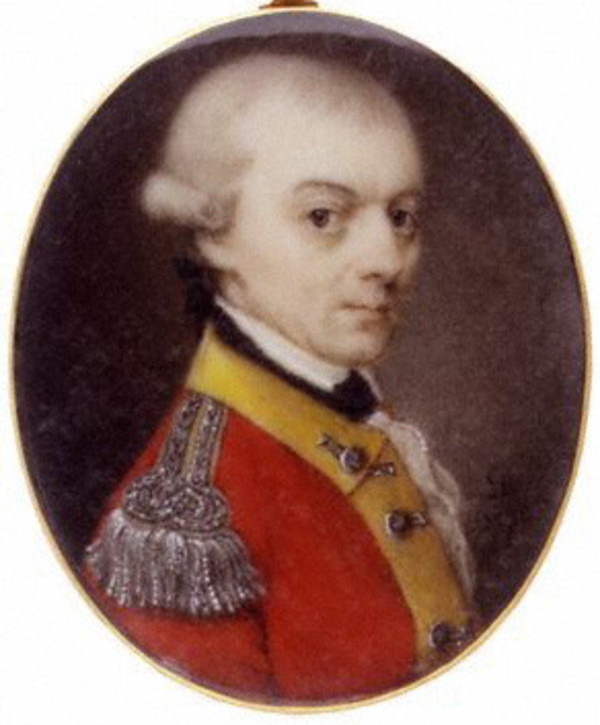
It was therefore intriguing to learn that the American Revolution Insitute will feature Maj. Musgrave in an online presentation on Friday, 6 February.
Here’s the event description:
Join the Institute’s museum collections and operations manager, Paul Newman, for a discussion of a 1780s manuscript account of the American Revolution by Lt. Col. (later made a General and Baronet) Thomas Musgrave, a British officer who served extensively throughout the war.The presentation will emphasize “the 40th Regiment of Foot at the Battle of Germantown.” But maybe there will some seasonal information about Maj. Musgrave on ice.
At the battle of Germantown, he commanded the British 40th Regiment of Foot that famously defended the Chew House against attacking American forces. Subsequently, he was restationed in the West Indies in 1778, before returning to New York as the last British commandant of the city.
Following the war, Musgrave authored a manuscript, housed in our library collections, that offers extensive details of his service throughout the Revolution.



_(cropped).jpg/500px-Brigadier_General_Richard_Prescott_(NYPL_b12349146-424058)_(cropped).jpg)
_(cropped).jpg/500px-William_Tudor_(1779%E2%80%931830)_(cropped).jpg)