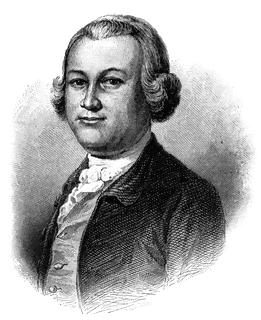
J. L. BELL is a Massachusetts writer who specializes in (among other things) the start of the American Revolution in and around Boston. He is particularly interested in the experiences of children in 1765-75. He has published scholarly papers and popular articles for both children and adults. He was consultant for an episode of History Detectives, and contributed to a display at Minute Man National Historic Park.

Subscribe thru Follow.it


•••••••••••••••••


Showing posts with label Samuel Waterhouse. Show all posts

Tuesday, August 25, 2015

Andrew Oliver’s August Resignation

The anti-Stamp Act protest in Boston on 14 Aug 1765, followed that evening by the destruction of Andrew Oliver’s new building and other property, had a quick result: Oliver resigned as stamp agent for Massachusetts.

Oliver told his Connecticut counterpart Jared Ingersoll, who had visited Boston just a few days before, that he’d “stood the attack for 36 hours—a single man against a whole People, the Government not being able to afford me any help during that whole time.”

I’m not sure Oliver’s resistance quite totals to “36 hours.” That would have been from dawn on 14 August, when his effigy on Liberty Tree became apparent, to the evening of the 15th. Oliver resigned, according to his own writing, on that afternoon.

In the third, posthumously published volume of his history of Massachusetts, Lt. Gov. Thomas Hutchinson described his friend’s decision:

Several of the council gave it as their opinion, Mr. Oliver being present, that the people, not only of the town of Boston, but of the country in general, would never submit to the execution of the stamp act, let the consequence of an opposition to it be what it would. It was also reported, that the people of Connecticut had threatened to hang their distributor [Ingersoll] on the first tree after he entered the colony; and that, to avoid it, he had turned aside to Rhode Island.

Despairing of protection, and finding his family in terror and great distress, Mr. Oliver came to a sudden resolution to resign his office before another night, and immediately signified, by a writing under his hand, to one of his friends, that he would send letters, by a ship then ready to sail for London, which should contain such resignation; and he desired that the town might be made acquainted with it, and with the strong assurances he had given, that be would never act in that capacity.
Oliver’s decision took Hutchinson by surprise, suggesting it came after he left the Council meeting. On 20 Aug 1765 the lieutenant governor wrote, “This resolution he took without my knowing any thing of it & yet I was charged with advising him against it.”

Gov. Francis Bernard told the story differently on 16 August:
In the Afternoon of Yesterday, sevral Gentlemen applied to Mr. Oliver, to advise him to make a publick declaration, that he would resign the Office, & never act in it; without which they said, his House would be immediately destroyed, & his Life in continual Danger. Upon which he was obliged to authorise some Gentlemen to declare in public, that he would immediately apply for leave to resign, & would not act in the Office, (as indeed it was impossible for him to do) until he received further Orders. This satisfied the Leaders; but the lower Part of the Mob were not so easily pacified. 
However, Bernard appears to have skipped town before any of that happened (it’s not in the part of the letter he composed on the evening of 15 August), so he was reporting hearsay.

Oliver addressed his official resignation to the Treasury Office in London, which oversaw the collection of the stamp duty. He also released the news to “one of his friends,” and then copied out those “terms of Capitulation” for Ingersoll:
Mr. Oliver acquaints Mr. Waterhouse that he has wrote to the Lds. of the Treasury, to desire to be excused from executing the Office of Distributor of the Stamps: and that when they arrive he shall only take proper care to secure them for the Crown, but will take no one Step for distributing the same at the time appointed by the Act. And he may inform his friends accordingly.

Thursday Afternoon, 15th. August.
Why did Oliver make Samuel Waterhouse the recipient of this letter? Waterhouse was only a private merchant (he joined the Customs office in 1772). Oliver might have chosen him for two reasons:
  • Waterhouse wrote a lot of newspaper essays supporting the royal government, so he knew how to get news into the press. (Indeed, the resignation was reported in the papers on 19 August.)
  • Oliver was giving Waterhouse a heads-up that the office of stamp agent was soon to be vacant in case he wanted to apply for it himself.
The Whigs in town considered the second possibility serious enough that the following February Oliver had to publicly declare that he hadn’t meant that at all. By then he’d had to resign again—but I’ll get to that in December.

TOMORROW: The mob turns out again.

Wednesday, January 21, 2009

Gossip from Daniel Leonard, part 2

Yesterday I quoted from John Adams’s diary entry from 20 Jan 1766, as he gossiped with Daniel Leonard. But enough, those men apparently decided, about what Boston lawyers think about each other! What do other people think about Boston lawyers?

Here’s the rest of Adams’s notes, as Leonard described his recent visit to Rhode Island:

Leonard gave me also a Relation of his going to Providence Court and Spending an Evening with the Political Clubb there. The Clubb consists of Governor [Stephen] Hopkins, Judge [Daniel] Jenks, [Silas] Downer, [John] Cole and others. They were impatient to have the Courts opened in this Province not choosing to proceed in Business alone.
As in Boston, the big legal issue of early 1766 in Providence was the Stamp Act. That tax law required all legal proceedings to be submitted on stamped paper. Colonists responded by closing their courts until judges agreed not to enforce that part of the law. These Rhode Island attorneys and judges wanted to start holding court sessions again, without stamped paper, but wished to do so alongside the jurists in the bigger colony to their north rather than stick their necks out alone.
Were very inquisitive concerning all our Affairs. Had much to say of [Lt. Gov. Thomas] Hutchinson, [James] Otis, &c. Admired the answer to the Governors [Francis Bernard’s] Speech. Admired the Massachusetts Resolves. Hopkins said that nothing had been so much admired there through the whole Course of the Controversy, as the Answer to the Speech, tho the Massachusetts Resolves were the best digested and the best of any on the Continent. Enquired who was the Author of them.
The man who wrote the Massachusetts legislature’s resolves against the Stamp tax was Samuel Adams—the first time his political activity attracted notice outside the province.

Then the Rhode Islanders’ talk turned to less elevated forms of argument: satirical poems published in the newspapers.
Enquired also who it was that burlesqued the Governors Speeches? Who wrote jemmybullero [about Otis], &c. Thought Hutchinsons History [of Massachusetts] did not shine. Said his House was pulled down [on 26 Aug 1765], to prevent his writing any more by destroying his Materials. Thought Otis was not an original Genius, nor a good Writer, but a Person who had done, and would continue to do much good service.

Were very inquisitive about [Ebenezer] McIntosh [the shoemaker who led Boston’s public protests against the Stamp Act]. Whether he was a Man of Abilities, or not? Whether he would probably rise, in Case this Contest should be carried into any Length.

Jo[seph]. Green, [Samuel] Waterhouse and [Benjamin] Church were talk’d of as capable of Bullero and the Burlesques.
So gentlemen in Rhode Island had a good idea of which Bostonians were in the habit of writing satirical verse. Local consensus settled on Waterhouse as the author of the “Jemmibullero” attack on Otis, with Church responsible for “These Times,” attacking Bernard.

Wednesday, October 29, 2008

The End of “Gloria Mundi”

On 6 January, the same day that Samuel Waterhouse threatened in the Boston Evening-Post to publicly scrutinize James Lovell’s private life as part of their argument in Boston’s newspapers, the Boston Gazette published another letter on the brouhaha. This letter was signed “Thy Friend,” addressed “Friend Samuel,” and written in the voice of a Quaker.

It was not, however, particularly peaceable:

Thou was once esteem’d as a Man of some Learning, some Sociability, some Integrity, some Honor, some Honesty, and some Humanity; but verily of late thou seemest to have lost all Claim to those Virtues, and art grown a sowre, unsociable, jealous, malevolent pityful, pedantick scribler. . . .

Surely Friend Samuel, thou art not Ignorant that Sammy will sound full as well as Jemmy in a late whimsical but invenom’d Song...
That was an allusion to Waterhouse’s notorious “Jemmibullero” song about James Otis, Jr.

One week later, the Monday newspapers printed no fewer than four pieces on the controversy:
  • Unsigned letter in the Gazette suggesting “Gloria Mundi” be sent to “the Ok-um Manufactory [workhouse], as in that Employ to render himself more serviceable to the Community and his Family, than he has ever been in any other Way.”
  • Acrostic in the Gazette spelling out Waterhouse’s name in sixteen insulting lines.
  • “Y. Z.” in the Evening Post, insisting, “notwithstanding what you affirm, 7 out of 8 think Samy is Gloria and Gloria Samy.”
  • Another Evening Post letter, signed “X.,” saying of Waterhouse’s denials: “how unnatural is it, for him in such a public manner to disown his own offspring, & refuse the indulgence and kind offices of a father to the Brats he had sent into the world.”
But at the end of that second letter the Fleet brothers, printers of the Evening Post, wrote:
The Printers hope the above Pieces will finish the Controversy: as they are determined to insert no more upon either Side; and are heartily sorry, that in order to maintain their Impartiality, they have been obliged to publish so much already of what neither themselves or few others understand.
The next week, Edes and Gill at the Gazette followed suit:
The Friend’s Letter to Sammy, and one from his Opponent, are come to Hand; but we hope they will excuse our not publishing them; especially as the other Printers have dropt the Affair, and we can see no Benefit that will accrue to any-one from continuing their Publications.
The Boston Post-Boy of 3 Feb 1766 printed documents showing that Andrew Oliver, who had been Stamp Act agent for Massachusetts before the Sons of Liberty forced him to resign the previous August, swore before magistrate Belcher Noyes that he’d never recommended that Waterhouse as his replacement. Waterhouse likewise swore that he’d never asked for that job. And that was the last of this controversy—until June, when there was a smaller spurt of satirical letters alluding back to these.

As I watch how this dispute developed in the newspaper, I was struck by how much it looked like many arguments on internet discussion boards. Everyone was using pseudonyms (screen names) and occasionally assumed identities. A political disagreement quickly shifted so far into personal invective that it was impossible to tell what the original issue was. Rhetorically, there was a lot of quoting of each other’s words (which I’ve spared you) and sarcasm. People accused one debater of creating another identity and lying about it (sock puppetry). People brought up unrelated personal matters. And finally the moderators—in this case, the printers of the Evening Post—moved to shut the discussion down.

Sometimes experts say that the lack of face-to-face contact make internet arguments more vituperative than other sorts. We say things online that we’d never say in person, and many of us become unusually nasty when we’re anonymous. The speed of communication is also a factor; we send messages that we might well omit if we’d taken another day to consider.

This dispute casts some doubt on that thinking. In eighteenth-century Boston, gentlemen could argue with the same level of nastiness—perhaps more—even though:
  • The postings were only semi-anonymous, as everyone seemed confident of the identities of “Gloria Mundi” and “H.”
  • The men involved were apt to meet face to face any day on the small peninsula.
  • A full week passed before each reply, giving the writers plenty of time to rethink.
The internet may have made nasty arguments more common, but nasty arguments have always been around.

TOMORROW: Hang on. If Boston 1775 promises “unabashed gossip,” what was all that Waterhouse wrote about James Lovell’s “very notable performance, on the feminine GENDER, and the CONJUGATION copulative”?

Tuesday, October 28, 2008

Samuel Waterhouse Gets Personal

Having expressed his strong opinions about a newspaper essay signed “H.” in the 6 Jan 1766 Boston Evening Post, as I quoted yesterday, Samuel Waterhouse went on to write of the essayist:

It would, doubtless, be a very kind, a very timely office, in some of this man’s real friends, to advise him to consideration, and a steady, and thorough reviews of himself.—To consider his real character and situation; and instantly, by all fit means, to purge his boiling, malignant passions; and heal his distemper’d soul!——The man is truly pitied; and all but his base intention is forgiven!—

But yet, it must be added, that should ever this rude, and younger grammarian, usher into public notice any more of his curious and most astonishing pieces, and should he be found in the same active voice, and indicative mood; the invited freedom will be taken, particularly, and pleasantly to remark him: and, at the same time, to scrutinize his very notable performance, on the feminine GENDER, and the CONJUGATION copulative.
Waterhouse’s phrases “younger grammarian” and “usher,” and his references to various grammatical terms, hinted at who he thought “H.” was. John Adams (above, courtesy of the Massachusetts Historical Society) picked up those hints with dismay, writing in his diary on 7 Jan 1766:
Sam. Waterhouse and has made a most malicious, ungenerous, Attack upon James Lovell Jur. the Usher of the Grammar school, and insinuated about feminine Gender and Conjunction Copulative—as Y.Z. and H. had attacked him, about Idleness and familiar Spirits, and Zanyship, and Expectancy of a Deputation &c.

This Way of reviling one another is very shocking to Humanity and very dangerous in its Consequences. To pry into a Mans private Life, and expose to the World, all the Vices, and Follies of Youth, to paint before the Public Eye, all the Blotts and Stains, in a Mans private Character, must excite the Commisseration of every Reader, to the Object, and his Indignation against the Author of such Abuse.
James Lovell was the usher, or assistant teacher, at the South Latin School, working under his father, John Lovell. The younger Lovell is thus the connection between this series of newspaper essays and the paper I read at the New England Historical Association meeting last Saturday, about that school in 1765-75. I had a little bit about this controversy in the long version of my paper, which I had to cut, so you’re getting that and more. Lucky you.

Though Adams noted that charges had been flying in both directions, he didn’t get upset until the mud started to land on one of his political allies. He then expressed the hope of many critics of “negative campaigning,” that criticism perceived as unfair ends up hurting the “Author of such Abuse” most of all.

TOMORROW: The moderators finally step in.

Monday, October 27, 2008

“Such Illiberal Grubstreet, Such Raving Billingsgate”

On 30 Dec 1765, the Boston Gazette printed the essay from “H.” that it hadn’t received in time for its previous edition. The page I have available from the America’s Historical Newspapers online database (available to anyone holding a Boston Public Library card—get yours today) is ragged along one edge. One doesn’t need to read the whole essay, however, to get the gist.

“H.,” like “Y. Z.,” insisted that the man who had written to the newspapers under the pseudonym “Gloria Mundi” was Samuel Waterhouse, despite his public denials. “H.” repeated the accusation that Waterhouse had wanted a position distributing the dreaded stamps under the Stamp Act. He went on:

Such low-bred, low liv’d, idle, restless, unprincipled wretches, as Gloria has proved himself, being as tired of the world as the world is of them, would deride and mock at their punishment even on the gallows, and the dying speech would be, Come one swing for it with a wry neck and a p—t pair of breeches, and all will be over.

I would therefore rather propose that Gloria might be put to work, a much greater punishment, and more dreaded by such miserables than death. . . . [I] have a high opinion of the policy of the Hollanders, who send such objects to the rasp house, to be there worked for like, rather than to the gibbet, to be there hanged, till they are dead, dead; and have other wished that our workhouse was furnished with a machine, called in Dutch a Waterhoose...
Just in case readers didn’t understand what Bostonian he was talking about. (I suspect “a p—t pair of breeches” was “a pist pair...,” the result of a sudden jerk at the neck.)

On the first Monday of the new year, it was Waterhouse’s turn to answer, though he still wasn’t using his name. The 6 Jan 1766 Evening-Post ran two pieces on this controversy. The second was yet another denial that he was “Gloria Mundi” or had seen the essays published over that name before they had appeared in the newspaper. The first was a direct reply to “H.”

Waterhouse acknowledged the possibility that the person who wrote the 9 December “H.” letter wasn’t the same as the person who wrote the “H.” letter published on 30 December. And then he laid into the latter:
Of all the foul mouth’d, dirty Drabs, that ever, to the disgrace of human nature, bolted forth and affronted the public Eye, certainly [this]...appears the most coarse, the most impotently spiteful and unexceptionably despicable! . . .

A performance, where such ridiculous inability, such illiberal grubstreet, such raving billingsgate, together with the most flagrant, as well as the most injurious, and atrocious calumnies maintain throughout a perpetual contest for superiority; and completely evince to the public, the folly, stupidity, solecism, meanness, falsehood, and envy, as well as the most abandoned impudence of it’s aukward, petulant, and every way contemptible Paper-scratcher.
If only Waterhouse had let us know how he really felt.

TOMORROW: And then Waterhouse’s reply to “H.” got personal.

[The thumbnail above, courtesy of Wikipedia, shows London’s Billingsgate Fish Market in the first decade of the 1800s. The area was already notorious for coarse language.]

Sunday, October 26, 2008

Three Scrawlers

Yesterday I quoted from a letter signed “Gloria Mundi,” published in the Boston Evening Post in late November 1765. That letter was a satirical attack on a call for a political boycott from a person calling himself “Y. Z.” In the 9 Dec 1765 issue of the newspaper, “Y. Z.” delivered a pointed reply:

Never was a man more surprized than I was to observe the product of a mad-man (whose wickedness had made him so) in a piece in last Monday’s papers, to which with a very great degree of arrogance was affix’d your name. . . .
Having thus expressed his level of respect for his opponent, “Y. Z.” went on to imagine him:
in a large open space with Water on each side of you, and Monsieur Jack Catch with a hempen neckcloth in his right hand. . . . We shall then be favor’d with your dying speech, in which among many other enormous vices, I shall hear you confess your hatred of America and your fitness for slavery, which induced you thus to attempt to villify those who rejoice at the good of society. . . .
Just as “Gloria Mundi” had implied that “Y. Z.” deserved a public whipping, “Y. Z.” answered that “Gloria Mundi” deserved to be hanged. “Jack Ketch” was slang for the hangman, and Boston’s gibbet was on the Neck, a narrow isthmus leading out of town “with water on each side.”

What’s more, another man had entered the argument. That same day, the Boston Gazette ran this notice:
Mr. H—— presents his respectful Compliments to Mr. Gloria Mundi, and acquaints him that...he should readily furnish him with a Recipe for turning Cyder into Wine...; but as the Ingredients therefor require Cash, and the Process a little Care and Labour, as well as Continence, he thinks him the most improper Person to take up the Vintner’s Business—
Oh, snap.

Something in those letters—perhaps the prominent appearance of the word “Water,” perhaps other allusions we don’t get—caused people to think that “Y. Z.” and “H.” were hinting that “Gloria Mundi” was a Boston man named Samuel Waterhouse, known for his satiric writings about James Otis, Jr. “Y. Z.” even challenged his opponent to “give your name with all its ‘guts,’...; as you might then more easily have been found out a lying r–sc–l, and your well known pen been imployed by the enemies of their country to write nonsense.”

The 16 December Evening-Post carried a reply to both “Y. Z.” (“A Discerning, very ingenious, most humorous, and tremendously satirical, tho’ somehow heavy-brain’d gentleman”) and “H.” (“a political and ghostly gentleman, [who] makes his complaisant appearance, almost anonymously, in Edes and Gill’s Gazette”). This essay claimed that both writers had “taken a false aim” by implying that Waterhouse was “Gloria Mundi.” Rather, it said, that gentleman “looks down with equal and ineffable contempt on all the three pieces and their three scrawlers!” Though that piece was unsigned, its contents made clear that it had come from Waterhouse himself.

Nevertheless, on 23 December, “Y. Z.” returned to the Evening-Post, insisting that he’d correctly guessed the identity of “Gloria Mundi.” That letter also accused Waterhouse of wishing to be “deputy distributor” under the hated Stamp Act. Carefully guarding the moral high ground, “Y. Z.” concluded:
This sharp-edg’d truth will show the villain’s part,
That lies conceal’d within your little heart;
Then, nameless critic, then, thou seeking tool,
Thou shalt appear a villain and a fool.
As for the Gazette, that day its printers wrote: “The Piece directed to GLORIA MUNDI, sign’d H, came too late for a Place in this Paper.” It would have to wait another week.

TOMORROW: But you have to wait only one more day.

Saturday, October 25, 2008

Sic Scripsit Gloria Mundi

In connection to the paper I’m reading at the New England Historical Association meeting this morning, over the next few days I’m going to post some newspaper writing from 1765-66.

As 1765 neared its end, the town was in an uproar over the Stamp Act. In August crowds had forced stamp agent Andrew Oliver to resign. Rioters had attacked his house and others, culminating in the near-destruction of Lt. Gov. Thomas Hutchinson’s mansion in the North End. Town officials worked hard to curtail that year’s Pope Night celebration on 5 November, basically by bribing the young men involved. Crown officials gave up on trying to enforce the Stamp Act.

On 25 November the Boston Evening-Post printed a long letter signed “Y. Z.” advocating a continental boycott of imports from Britain as a way to pressure Parliament into repealing the Stamp Act. One week later, on 2 Dec 1765, the following letter appeared in the Evening-Post:

Mr. Y—Zany,

Never was a man more sensibly struck with a patriotic zeal than I was at reading your nervous essay of last Monday, signed Y. Z. I had scarce read it before I jump’d up, ran into my house, and told my wife she must take care of herself and children, for I was so violently seized with the distemper of the times, that I had order’d my shop to be shut up and intended to make use of what Goods I had by me to pay such r-sc-ls as I could find to write for me.

I instantly set about my laudable work with a zeal becoming a true patriot; and no sooner had I got out of my house than I saw a man preaching about Liberty and Property. I took him aside and acquainted him with my design, he immediately replied, if I proposed to make any figure that way, I must begin an acquaintance with your honor:
The letter then describes that “friend” being interrupted with a demand that he pay his debts. Boston had been hit by a wave of bankruptcies earlier that year, so this was a sensitive topic. The writer resumes his address to “Y. Z.”:
Now Sir, I am willing to start fair, if you will give me a true receipe of your method of turning Cyder into Wine, I will write you a treatise upon the efficacy of Molasses, Turnip-Juice and Cyder. And as I in my youthful days took a notion at painting, and knowing you to be a true friend and lover of arts and sciences, I shall take the liberty of drawing your picture in miniature. . . .

Mr. Zany adorned in beautiful nature erect, his hands and eyes in the same position, as if thanking kind providence for giving him such a strong immoveable and beneficial post as he holds, Sir Thomas M-tch-ll, aid de camp to Gen. L-s-nby, with a parcel of wrought hemp in his hand, this country manufacture, and a Cooper with a parcel of well made hoops on his arm, admiring the attitude and gratitude of Zany, a seeming motion, as if saying one to the other, what better man can be rendered to him for his patriotic zeal to us ward; with some other lively devices. . . .

I will furnish you with an able pen peculiarly adapted to write nonsense on religion, or any other subject that may suit you. If you should publish this, please to gut your name, lest some wag should put a bad construction on it, and you be thereby treated accordingly. This from your humble servant,

GLORIA MUNDI
So what was that all about? I have very little idea. The conspicuous mention of a “post” and “wrought hemp” might refer to a whipping. The capitalized word “Cooper” was probably an allusion to the Rev. Dr. Samuel Cooper, minister of the Brattle Street meeting, or his brother William Cooper, Boston’s town clerk. They were both part of the coalition against the Stamp Act. But the other names? The remark about “Molasses, Turnip-Juice and Cyder”? I’m baffled.

But at the time people found those references so full of meaning that this letter set off a cascade of other letters to the newspapers as personal and nasty as any of the time.

TOMORROW: “Y. Z.” and his friend “H.” strike back. And what does this possibly have to do with my paper, which is about the boys of the South Latin School?

[P.S. Corrections to my Latin are welcome.]

Saturday, January 12, 2008

Jemmy’s in the Caucas, and Jemmy’s with the Reps

Yet another early mention of the Boston caucus! As the 1765 Massachusetts General Court elections approached, James Otis, Jr., was in political trouble. He’d been the Boston merchants’ most aggressive advocate and representative since 1761, when he argued the writs of assistance case. But in early 1765 his father had received a royal appointment, and Otis suddenly toned down his rhetoric.

Otis’s apparent flip-flopping was too easy a target for his old critic Samuel Waterhouse to pass by. The 13 May 1765 issue of the Boston Evening-Post included “Jemmibullero: A Fragment of an Ode of Orpheus,” ostensibly by “Peter Minim, Esq.” With a title alluding to the popular song “Lillibullero,” the verse went a little something like this:

II.
And Jemmy is a lying dog, and Jemmy is a thief,
And Jemmy is a jury-mouther,—Jemmy spouts his brief,
And Jemmy is a grammar-smith, and Jemmy is a grub,
And Jemmy is a Cooper’s vessel—Jemmy is a tub.
Sing tititumti, tumtititi tititumti, tee,
And tumtititi, tititumti, tumtiprosodee.
III.
And Jemmy’s a town-meeting man, & Jemmy makes a speech,
And Jemmy swears that LIBERTY and LIBERTY he’ll preach,
And Jemmy’s in the CAUCAS, and Jemmy’s with the REPS,
And all who’d rise as Jemmy rose must tread in Jemmy’s steps.
Sing tititumti, tumtititi tititumti, tee,
And tumtititi, tititumti, tumtiprosodee. . . .
VII.
As Jemmy is an envious dog, and Jemmy is ambitious,
And rage and slander, spite and dirt to Jemmy are delicious,
So Jemmy rail’d at upper folks while Jemmy’s DAD was out,
But Jemmy’s DAD has now a place, so Jemmy’s turn’d about.
Sing tititumti, tumtititi tititumti, tee,
And tumtititi, tititumti, tumtiprosodee.

VIII.
Now Jemmy varies scrawl and talk, as answers Jemmy’s ends,
And MARTIN’s far-stretcht LIBERTY, COURT JEMMY reprehends,
And Jemmy is of this mind, & Jemmy is of that,
And Jemmy’d fain make something out, but Jemmy can’t tell what.
Sing tititumti, tumtititi tititumti, tee,
And tumtititi, tititumti, tumtiprosodee.
The name Orpheus might allude to an odd episode in Otis’s college days, thought to be his first episode of irrationality, when he compared himself to the legendary Greek musician. “Cooper’s vessel” probably refers to William Cooper, Boston’s town clerk. I don’t get the second line of verse VIII at all.

This attack on Otis actually seems to have benefited him. According to John Adams, writing in 1818, the Boston Whigs had been ready to withhold their support from Otis.
The public opinion of all the friends of their country was decided. The public voice was pronounced in accents so terrible, that Mr. Otis fell into a disgrace, from which nothing but Jemmibullero saved him.
The poem made Otis sympathetic again, and probably convinced voters that he would never find a home among friends of the royal government.

After yet another Evening-Post attack on Otis in 1766, he wrote to his sister, Mercy Warren (shown above), ostensibly addressing a concern of her husband, James (even though she was just as politically savvy):
Tell him to give himself no concern about the scurrilous piece in Tom Fleet’s paper; it has served me as much as the song did last year. The Tories are all ashamed of this as they were of that. The author is not yet certainly known, tho’ I think I am within a week of detecting him for certain. If I should, shall try to cure him once for all by stringing him up, not bodily, but in such a way as shall gibbet his memory to all generations in Terrorem.
It’s thought that the 1766 attack, like “Jemmibullero,” came from Samuel Waterhouse.

Thursday, January 10, 2008

Bluster about the Boston Caucus

It’s still caucus season (at least in Nevada), so I’m returning to the topic of the original caucus—the somewhat mysterious gathering of politically-minded gentlemen in advance of Boston’s town meeting elections.

After my posting on the “Caucas Club” that builder Thomas Dawes hosted in 1763, architect Frederic C. Detwiler alerted me to an article he wrote about Dawes in Old-Time New England, the magazine Historic New England used to publish when it used to be the Society for the Preservation of New England Antiquities. Click here for a PDF download of Rick’s article, and here for his follow-up on Dawes’s design of the Brattle Square Church.

Rick’s article about Dawes alerted me in turn to another odd source on the caucus in 1763, which seems to have been the first year it became an open political issue. I quoted a complaint about the “Corkass” from the 21 Mar 1763 issue of the Boston Evening-Post. That same newspaper carried this little advertisement:

THIS AFTERNOON will be published,
And to be had of the Printers hereof.
[Price Five Coppers.]
PROPOSALS
For Printing by Subscription, the History of Adjutant Trowel and Bluster, together with a Specimen of the Work.—
In the eighteenth century, authors would often advertise such “proposals” and “specimens” (or advance peeks) of books they were working on as a way to drum up advance orders and pay for printing the whole book.

In this case, however, the proposal was just an excuse for publishing an eight-page pamphlet attacking a couple of Boston Whigs. A copy of that pamphlet at the Boston Athenaeum has handwritten notes identifying its author as Samuel Waterhouse, “Adjutant Trowel” as Dawes, and “Bluster” as James, Otis, Jr. The major reference guide to colonial publications tentatively dates this pamphlet to 1766, when Waterhouse wrote newspaper articles calling Otis “Bluster,” but the Evening-Post ad shows it appeared three years earlier.

Even in the midst of Waterhouse’s allegory and satire, we can spot details that match other accounts of the caucus meetings in Dawes’s large attic. Highlighted phrases like “General court” and camouflaged phrases like “g——l a———y” make the link to contemporary Massachusetts politics. Here’s an extract that takes up when “Adjutant Trowel” is serving with the army.
Chap. VII. He assembles a number of Malcontents at a large tent, prepared by him for that purpose, to endeavour to obtain their votes, in order to carry a favourite point at the next General court martial, which, partly by their assistance, and partly by stratagem, he effects.

Chap. VIII. Flush’d with success, he forms a plan to new model the army & cashier all those who he imagin’d might oppose any of his future schemes, for which purpose he collects all the discontented officers of the regiment, at the great tent, endeavours to stir them up to sedition, and mutiny against the new General.

Chap. IX. The great increase of his levee—he is look’d upon as an officer of consequence, by the ignorant and illiterate part of his brother officers—applications are made to him instead of the General.—

Chap. X. He boasts of his consequence—takes upon himself the state of a general officer—the army repairs to winter-quarters—he builds himself a stately house, superior to the General’s, with a large hall in the upper story, appropriated to the same use as his large tent.

Chap. XI. He cabals with the inhabitants of the city were [sic] he is quartered, against the mayor and aldermen who from their being men of probity and honor are caress’s by the General quarter’d in the same city.
The “new General” was probably Gov. Francis Bernard, who took office in 1760.

Then “Bluster” comes on the scene, a lawyer upset that a friend has been passed over for the office of “C—f J——e.” In real life, James Otis, Sr., thought he was in line to be Chief Justice; when Bernard appointed Lt. Gov. Thomas Hutchinson to that post instead, his son broke with the royal party and took up popular politics. And so did “Bluster”:
Chap. XIX. Finding every other method fail, he applies to Trowel—is admitted into his junto, or nocturnal assembly—a specimen of his low artifice and cunning—he is look’d upon by the whole herd of fools, tools, and sycophants, as a fit person to represent them, at the next g[enera]l a[ssembl]y—it it publickly declar’d at the junto—he is chose at the g[enera]l e—l[ectio]n.— . . . .

Chap. XXVI. He becomes the darling of Trowel’s Junto, and presides at the head of their affairs—a specimen of his oratory—with his smooth tongue he persuades the junto into an implicit obedience to his will in every respect.—

Chap. XXVII. According to a previous resolution of the junto, he is advanced to a higher post of honor than ever he aspired after—unmerited and unsolicited favors heap’d on him in abundance, for which he thanks the people at their an[nua]l as[sembl]y with the wheedling epithets of F-th-rs, Fr—nds, F-ll-w C-t-z-ns & C—ntrym-n.

Chap;. XXVIII. The transactions of the an[nua]l as[sembl]y,—business postpon’d in order to facilitate some private views of the junto, contrary to the usual and constant custom—partiality to voters, junto officers allow’d to count their own votes without being sworn to the faithful discharge of their office.—
Waterhouse’s pamphlet strikes me as another example of how Loyalists didn’t even try to adapt their rhetoric to the new, popular politics. Imputing that Otis was wrong to call his supporters “Friends, Fellow Citizens & Countrymen” was hardly the way to win support from those very men.

[UPDATE: Article links restored, thanks to Boston 1775 reader Charles Bahne.]