J. L. BELL is a Massachusetts writer who specializes in (among other things) the start of the American Revolution in and around Boston. He is particularly interested in the experiences of children in 1765-75. He has published scholarly papers and popular articles for both children and adults. He was consultant for an episode of History Detectives, and contributed to a display at Minute Man National Historic Park.

Subscribe thru Follow.it


•••••••••••••••••


Showing posts with label William Dawes. Show all posts

Monday, September 14, 2026

“We have esteemed him to be an honest and peaceable citizen”

In May 1777 Boston had a series of town meetings concerned chiefly with its military defenses.

On 17 May that discussion went further to assembling a list of “Persons belonging to this Town, as have been endeavouring since the 19th. of April 1775, to counteract the united Struggles of this & the neighbouring States.”

The town meeting voted to have those twenty-nine men “apprehended & confined”—while recognizing that would require an order from the Massachusetts Council.

Boston’s official list of suspected Loyalists included the Rev. Dr. Mather Byles, Dr. James Lloyd and four other physicians, William Jackson of the Brazen Head, and others. Three of those men were already in jail: Hopestill Capen, Thomas Edwards, and Benjamin Davis, Sr.

On 22 May the town elected seven representatives to the Massachusetts General Court, with John Pitts and Ellis Gray getting the most votes—more than 500.

Some prominent people disagreed with the town’s list of Loyalists. Soon after the new legislative session started, the Council received a petition “praying the Court to give Orders for the Removal of Hopestill Capen, a Prisoner in Boston Goal.” That petition came from a group headed by Robert Pierpont, a Roxbury merchant and official with impeccable Patriot credentials.

Furthermore, it appears Patience Capen had collected ninety signatures on this statement, transcribed in American Archives:
We, the subscribers, inhabitants of Boston, do hereby certify, that Mr. Hopestill Capen is well known to us, and we have esteemed him to be an honest and peaceable citizen; some of us in particular, have experienced his kind and faithful services in securing and saving our interest and property when we were out of the town; and we all join with the petitioner that he may be released from gaol and restored to his family.
The phrase “when were were out of the town” referred to the siege of Boston. Capen had evidently looked after other shopkeepers’ goods or real estate.

Again, those signers included some men deeply involved in Boston’s Patriot movement and town government: William Dawes, Samuel Dashwood, Moses Grant, Timothy Newell, Edward Payne, John Scollay, Pool Spear, Henry Bass, and so on. Other signers were more moderate Whigs—Ezekiel Price, John Andrews, Thomas Fleet, Thomas Handysyd Peck, Duncan Ingraham. But none of those names would raise political or religious suspicions.

Ninety signatures on a petition was a very impressive number. Nonetheless, those men would have been a decided minority in a town meeting attended by up to 500 citizens worried about the town being attacked from without or undermined from within.

On 18 June, Council member Dr. Samuel Holton brought the businessmen’s petition to the House with a proposal to form a committee “to examine the Commission of the Court of Enquiry, and their Doings thereon at large, together with this Petition, and report what is best to be done thereon.” The House approved that step the next day.

And then, it appears, nothing happened for months.

COMING UP: The repetition of Patience Capen.

Wednesday, December 10, 2025

Recording of “The First Commander Remembered” Panel

The Cambridge Room at the Cambridge Public Library has shared the video recording of last week’s panel discussion on “The First Commander Remembered: Washington’s Legacy in Cambridge.”

This event was organized by a group of local historical organizations and moderated by Christopher Beagan, site manager of the Longfellow House–Washington’s Headquarters National Historic Site.

The first part of the event is my fast analysis of why George Washington was in Cambridge from different perspectives: how that town became the headquarters of the provincial and then Continental army, why the Continental Congress chose Washington to lead that army, what he thought his mission was, what he really learned during his months in Cambridge, and how historians of the nineteenth century portrayed his work.

Then Charles Sullivan, executive director of the Cambridge Historical Commission, discussed how the city has commemorated Washington, particularly the long life, death, and latter-day commemoration of the Washington Elm.

We then discussed themes of memory and answered questions from the audience. Though this event happened on a night with a somewhat gloomy weather forecast, there was a robust and curious crowd.

I think my favorite part was getting the inside story of how William Dawes’s ride through Cambridge came to be commemorated through the unique bronze horseshoes in the sidewalk at Harvard Square rather than a conventional equestrian statue.

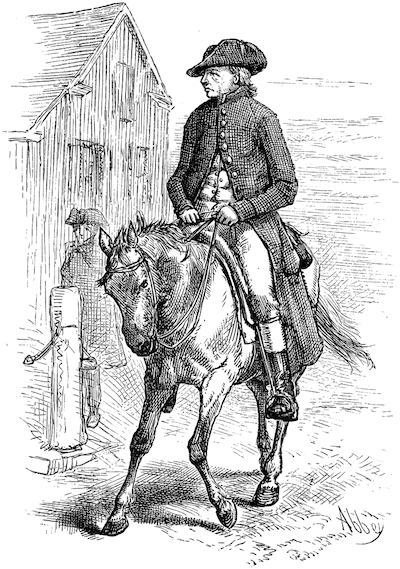
Though I suppose an equestrian statue might have been unconventional, too, if it were really modeled after the description traced back to Dawes’s cousin Josiah Waters, Jr.: “mounted on a slow jogging horse, with saddle bags behind him, and a large flapped hat upon his head, to resemble a countryman on a journey.”

The recording of the series’s first event, “From Revolution to Remembrance: Memory of the American Revolution” with Michael Hattem, Nikki Stewart, and Beth Folsom is also available for viewing.

Sunday, September 14, 2025

“Lost and Legendary Riders” in Boston on 16 Sept.

On Tuesday, 16 September, I’ll deliver a talk for the Paul Revere Memorial Association on “Lost and Legendary Riders” from the 19th of April in ’75.

The event description says:
Beyond Paul Revere and his companions, Americans have passed along stories of other notable riders on April 19, 1775. Historian J. L. Bell investigates the facts and fiction behind such figures as Hezekiah Wyman, the dreaded “White Horseman;” Abel Benson and Abigail Smith, children said to have helped raise the alarm in Middlesex County; and Israel Bissell, the post rider credited with carrying news of the fight all the way to Philadelphia.
I’ve spoken on this topic before, but I’ve collected new information on some of those figures—and on some of the real people around them.

This event is free and open to the public. It will start at 6:30 P.M. in Smith Commons on the 5th floor of Sargent Hall, Suffolk University, 120 Tremont Street in Boston.

That’s a short walk from the King’s Chapel Burying Ground, where every years thousands of visitors pay respects to the very real rider William Dawes, who was never actually buried there and thus might also qualify as “lost.” Dawes was first buried in what’s now called the Central Burying-Ground on the Common and then moved to Forest Hills in Jamaica Plain in 1882. The William Dawes grave near King’s Chapel was his father’s.

Here are the upcoming lectures in the same series at Suffolk University.

Tuesday, 30 September, 6:30 P.M.
William Dawes’s Midnight Ride
William Dawes Schulz, journalist

Tuesday, 21 October, 6:30 P.M.
Who Cares About the Midnight Ride?: Perspectives on an American Legend
Moderated by Dr. Noelle Trent, Museum of African American History, Boston
Ahsante Bean, Creator and Storytelling Strategist
Dr. Eileen Ka-May Cheng, History Faculty, Sarah Lawrence College
Kerry Dunne, History & Social Studies department head, Lexington High School

Tuesday, 28 October, 6:30 P.M.
Who Was Paul Revere, Really?
Dr. Robert Martello, Professor of the History of Science & Technology, Olin College of Engineering
Dr. Jayne Triber, Independent Scholar
Nina Zannieri, Executive Director, Paul Revere Memorial Association

Other organizations sponsoring this series are GBH, the Suffolk University History Department, Old North Illuminated, Lexington History Museums, Evanston History Center at the Charles Gates Dawes House (Evanston, IL), and Made by Us, with funding from the Lowell Institute.

Saturday, April 19, 2025

Counterfactual 4: If No One Had Died at Lexington or Concord

Building on my counterfactual of what might have happened if Paul Revere and William Dawes had never brought their warning to Lexington, I reached the moment when the militiamen of Concord saw smoke rising above their town.

Under the scenario so far, the lack of urgent alerts out of Boston had no effect on the safety of John Hancock and Samuel Adams (who were never in great danger, despite their worries) or the quantity of military supplies the redcoats found (since James Barrett and his crew had already moved most of that stuff).

But that counterfactual situation would have delayed the response from towns around Concord, meaning fewer militia companies would have joined the local men on the hill overlooking the North Bridge.

We know those men were of two minds about confronting the regulars. They stayed on that hill for about two hours, marching down only after thinking other soldiers had set fire to the center of town. Then, after a fatal exchange of fire had chased the company from the bridge, they pulled back for another couple of hours.

Given those real-life details, I posited yesterday that the militia men would have been more wary about marching down on the bridge if there had been fewer of them. And eventually the smoke from town would have stopped, lessening the urgency.

In real life, after the shooting the militia companies moved around the north side of Concord and then massed east of the town. At Meriam’s Corner, once the regulars had left the most populated area, the provincials started to shoot at the column. Would that have happened the same way in this what-if scenario?

The very big difference in this counterfactual is that no one has yet been killed. There was no shooting in Lexington or at the North Bridge. Neither side had seen deaths to avenge. As long as the two groups of armed men remained at a distance, neither would have felt themselves to be under imminent threat.

In that case, the afternoon might have proceeded like the end of Lt. Col. Alexander Leslie’s raid on Salem in February: with the regulars marching in order back to where they came from while the local militia regiments watched sullenly to be sure they left. Lt. Col. Francis Smith’s men would have met Col. Percy’s reinforcement column somewhere in west Cambridge, and they would all have returned to Boston.

As it happened in April 1775, the bloodshed along the Battle Road motivated a militia siege of Boston. The committee of safety and its generals didn’t have to choose that policy; it came about naturally as militia companies massed off the peninsulas of Boston and Charlestown. Without deaths, the provincials wouldn’t have felt so much fervency, so the situation might have remained as it was: no military siege, but the countryside beyond Boston outside of royal control.

In the ensuing days, the Patriot press would have made the most of the army incursion into people’s homes while also trumpeting how the raid had found so little. The newspapers would have celebrated the escape of Hancock and Adams. They would have lauded the strong unified response of the Massachusetts militia.

As for Gen. Thomas Gage, he would have been pleased not to lose any men but frustrated at not capturing all the artillery pieces and other weapons he wanted to destroy. And how would he explain the mission to his superiors in London after they’d advised him to do something else?

Of course, that scenario doesn’t include any of the near-random events that can ignite violence, like the first shot at Lexington. What if British troops and Massachusetts militia did bump into each other somewhere? What if military patrols stopping Revere or Dawes before they got to Lexington meant that one of those popular Bostonians had wound up dead?

And even if the 18–19 April expedition did end without bloodshed, the conflict and tensions in Massachusetts would have remained unresolved. Gen. Gage’s next mission could have started the war instead, just a few weeks later.

Wednesday, April 16, 2025

Counterfactual 1: If Revere Had Never Reached Lexington

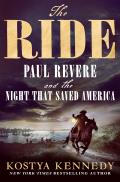
For the Journal of the American Revolution, Jim Piecuch just reviewed The Ride: Paul Revere and the Night that Saved America by Kostya Kennedy.

Piecuch writes:
Kennedy begins his book by posing an intriguing question: What might have happened if Massachusetts militia had not been present at either Lexington or Concord when British troops arrived on April 19? He speculates that John Hancock and Samuel Adams could have been captured or killed, that the munitions at Concord could have been seized, and that such events might have put the American Revolution on a completely different, perhaps even unsuccessful, course.

In Kennedy’s view, the question that gives rise to this hypothetical scenario can also be stated as: What might have happened had Paul Revere not made his ride to warn the inhabitants of towns outside Boston that British regulars were coming? While it is impossible to answer such a question, Kennedy uses it to underscore the importance of Revere’s ride, declaring that “Perhaps no night was more critical to [America’s] fate” (page 4).
I’ve been cogitating along similar lines but not coming to the same firm conclusions.

Let’s start with the question of what would have happened if Paul Revere had been satisfied with arranging for the signals from the North Church steeple to his colleagues in Charlestown. The rider they sent west toward Lexington never made it, probably stopped by a British mounted patrol. We don’t even know who that man was. But let’s imagine Revere went to bed thinking he’d sent the warning as Dr. Joseph Warren had asked.

Or we can imagine Revere heading out of Boston as he did but being stopped by the H.M.S. Somerset, or by that same mounted patrol in west Charlestown. If Revere had never made it past Medford, how would that have affected events the following day?

In that case, Dr. Warren’s warning would have reached Lexington about half an hour later than it did, as soon as William Dawes arrived in town. Since it took hours for Adams and others to persuade Hancock to leave Lexington, and since the regulars didn’t arrive until hours after that, those thirty minutes probably wouldn’t have made a big difference.

TOMORROW: But what if neither Revere nor Dawes had reached Lexington? 

Sunday, April 13, 2025

Sestercentennial Talks in Boston on the 18th of April

Friday, 18 April, will be the 250th anniversary of the day when Maj. Edward Mitchell led over a dozen British army officers on horseback out into Middlesex County to tamp down alarms (and thus caused alarms).

The 250th anniversary of the day when William Dawes and Paul Revere rode out into the same countryside to do all they could to spread the alarm as far as Lexington, at least.

And finally the 250th anniversary of the day when more than 700 British light infantrymen and grenadiers embarked across the Charles River to begin their alarming march to Concord.

Some of those events will be reenacted that evening in various places, and there will also be talks in the city of Boston on both sides of the Charles River.

The U.S.S. Constitution Museum and Paul Revere House are sponsoring “The Messenger and the Maker,” a free evening of activities at the Constitution Museum in the Charlestown Navy Yard. From 5 to 9 P.M. families can explore the galleries and make their own lanterns to help escort Revere on his journey from the Navy Yard through Charlestown.

At 8:00 P.M. I’ll speak in the museum on “The Reasons for Revere’s Ride.” The organizers asked me to lay out the background for the events on 18 Apr 1775, and they said I had twenty minutes. Later they revised that to thirty. I’m preparing a whirlwind tour through history up to that fateful evening. And I can’t speak too long because the audience will go out to meet Mr. Revere.

At City Square Park in Charlestown, two events are scheduled at 8:45 P.M. Revere will arrive at Deacon John Larkin’s House and emerge to mount his borrowed horse. Around that event Joe Bagley, Boston’s Chief Archaeologist, will speak on “Unearthing the Untold Stories of Charlestown’s Sacrifice.” Drawing on recent discoveries and study, he will introduce the inhabitants of Charlestown, enduring the frightening end of one battle and the destruction caused by another.

Meanwhile, over in Boston’s North End, the Old North Church will offer a free costumed reading of Revolution’s Edge from 6:30 to 8 P.M. on Paul Revere Mall (or, in case of rain, inside St. Stephen’s Church). This play by Patrick Gabridge dramatizes the choices that the Rev. Mather Byles, Jr.; Capt. John Pulling; and Cato, the minister’s enslaved servant, faced in April 1775.

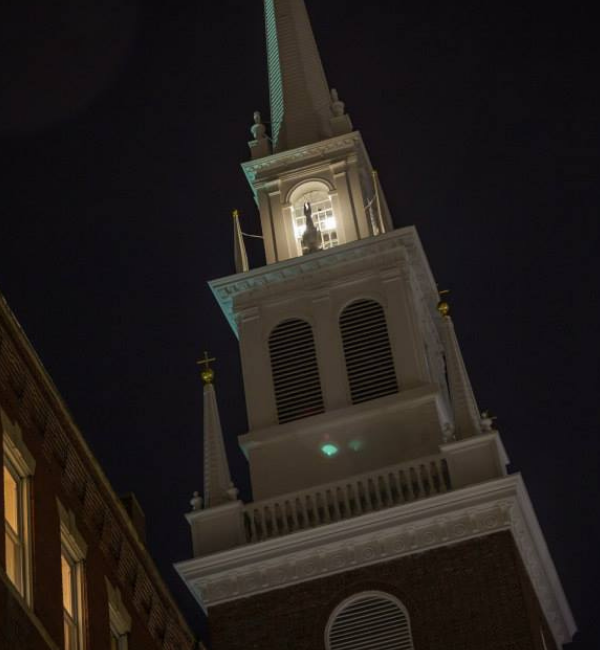
Starting at 7 P.M., the church will also host its traditional Lantern Service. This year’s keynote address will be offered by Heather Cox Richardson, professor of American history at Boston College and author of Democracy Awakening: Notes on the State of America. This commemoration will also include inspirational music, Revere’s recollection of his ride, prayers for the nation, and the lighting of the lanterns in the belfry at about 8:15 P.M. (This event is currently at capacity.)

Monday, November 11, 2024

Looking at Lexington and Concord through Eighteenth-Century Eyes

Last month Alexander Cain at Historical Nerdery announced a resource for people researching the Battle of Lexington and Concord ahead of next spring’s Sestercentennial: a list of links to eyewitness accounts of the day.

That listing will be very useful, and it can grow. Perforce these are texts that have been digitized in one way or another. I’m sure that more lurk within books, newspapers, and letters. It’s a matter of ferreting them out and/or digitizing them in usable forms.

For instance, here is the list’s link to Gen. Thomas Gage’s instructions to Lt. Col. Francis Smith for the march to Concord on 18–19 April.

We also have what appears to be Gage’s notes or first draft of those instructions, quoted in General Gage’s Informers (1932) by Allan French. A digital version of that book can be borrowed from the Internet Archive, at least for now. Look on pages 29–30.

Since the Massachusetts Historical Society has scanned merchant John Rowe’s diaries, we can see his response to the news coming into Boston here. A transcription of what a descendant thought were the most important parts of that diary was published a century ago. Among the details one can find only in the handwritten journal is that on 20 April Capt. John Linzee, R.N., dined and spent the evening at Rowe’s house after fending off an attack on his ship on the Charles River.

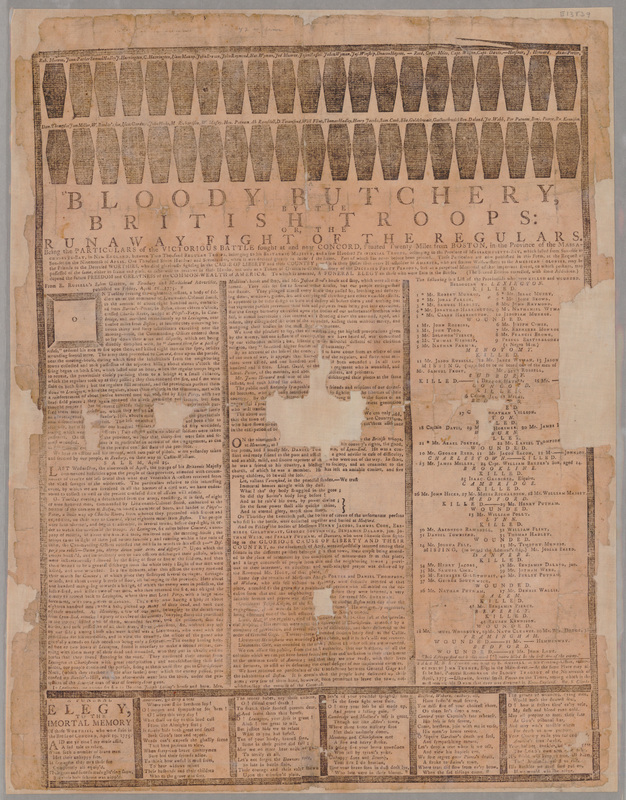
It’s possible to identify the sources of some anonymous accounts. One resource on the list, Ezekiel Russell’s “Bloody Butchery by the British Troops” broadside, includes text headlined “SALEM, April 25.” Those paragraphs commence: “LAST Wednesday, the nineteenth of April, the troops of his Britannic Majesty commenced hostilities upon the people of this province…”

The preceding paragraphs come with a source citation—not coincidentally, to Russell’s own Salem Gazette newspaper. But Russell didn’t give his competition publicity by revealing that he took the second and longer passage from Samuel Hall’s Essex Gazette for 25 April. That text was later imperfectly transcribed in Peter Force’s American Archives.

The 3 May Massachusetts Spy on the list includes an unsourced story about what happened “When the expresses [from Boston] got about a mile beyond Lexington.” That story matches one that William Dawes’s family recalled hearing from him, revealing that Dawes was probably printer Isaiah Thomas’s source.

Among the lately revealed visual resources is this hand-drawn map in the Library of Congress. I’m convinced by Ed Redmond’s hypothesis that Ens. Henry DeBerniere created this map ahead of the march to Concord. It thus offers a look at what British army officers knew of the countryside west of Boston. (I discussed details of that map starting here.)

TOMORROW: A source from May 1775.

Saturday, May 11, 2024

My Latest from the Journal of the American Revolution

Last month the Journal of the American Revolution published my article “Dr. Warren’s Critical Informant.”

Built from postings on this site over the years, this article proposed an identity for the “person kept in pay” by the Boston Patriots in early 1775.

Dr. Joseph Warren reportedly consulted that informant just before sending William Dawes and Paul Revere out to warn Samuel Adams and John Hancock of a British march on 18 Apr 1775.

I also chatted about that article with Brady Crytzer in an episode of the Dispatches podcast.

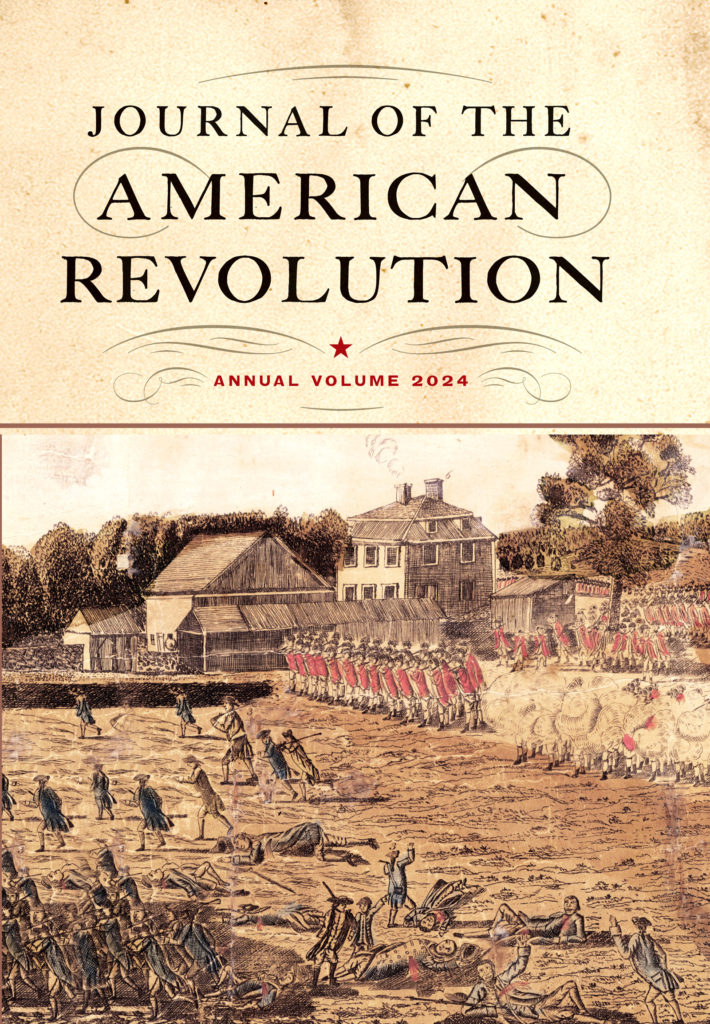
In addition, this month I received my contributor copy of the 2024 collection of articles from the journal, shown above. This volume includes the print version of my article “The Return of Samuel Dyer,” which can be read on the website in two parts.

Monday, September 11, 2023

“William Dawes” and Other History Camp Boston Videos to Watch

History Camp Boston has now posted videos from its conference at Suffolk University Law School early last month.

That means you can see me talk about “William Dawes Before and After His Ride” (a/k/a “William Dawes’s Secret”).

One of the details I noticed while updating my notes for this talk is the timing of this item from the Boston Gazette published on Monday, 9 May 1768:
Last Tuesday was married, Mr. William Dawes, Jun. to Mrs. Mehitable May, both of this Town, and Yesterday made a handsome Appearance, dress’d wholly in the Manufactures of this Country, wherein he did Honor to himself, and merits the Respect of the Province, agreeable to their unanimous Vote passed the last session…
I hadn’t processed before that Dawes dressed up in his new suit not on his wedding day but on the first Sunday after his wedding, when he and Mehitable went to their church, Old South, for the first time as a married couple.

Weddings were usually small family affairs in colonial New England, but now I’m curious if there are other examples of the first Sunday after a wedding being the public.

History Camp Boston included many more talks about eighteenth-century and Revolutionary topics, so there are plenty of videos to sample, on topics like the Salem witch trials, James Otis, the Tea Party, Thaddeus Kosciuszko, John Hancock, and more. And of course some sessions considered other periods of history as well.

Some of these videos, including mine, were produced with a grant from the Americana Corner Foundation.

Monday, May 08, 2023

History Camp Boston 2023, 12–13 Aug.

On Saturday, 20 May, I’ll speak at History Camp Valley Forge. There’s still time for folks in the greater Philadelphia area to sign up for that event.

Closer to home, History Camp Boston 2023 will take place on Saturday, 12 August, once again in the Suffolk University Law School Building at 120 Tremont Street.

I’ve participated in every History Camp in the Boston area since the first in 2014. It’s a fun way to learn, share knowledge, hear about new ideas, and enjoy the company of other people as passionate about history as you are.

For 2023 I’m offering this talk:
William Dawes, Before and After His Ride

William Dawes, Jr., is known today only as the other rider who carried news of the British army march to Lexington in April 1775. In fact, like his famous colleague Paul Revere, Dawes was active throughout Massachusetts’s Revolution. Before April 1775 he was a militia organizer, a political fashion icon, and even an arms smuggler whose secret mission for the Patriots’ Committee of Safety helped bring on the same march to Concord he helped to warn about. During the war he took on responsibilities administering and supplying the state’s armed forces. And afterwards he was active in reestablishing one of Boston’s oldest military institutions. Hear all about one of the hands-on figures who made the Revolution happen.
Scrolling through the list of planned presentations, I see people speaking about the Stamp Act, witch trials and their records, the 1774 uprising in western Massachusetts, John Hancock, Thaddeus Kosciuszko, tea etiquette, and designing a local program to honor Revolutionary War veterans. Not to mention topics from other periods of the American past.

And there could be more. The hallmark of History Camp is that anyone can propose presentations or workshops until the schedule fills up. The proposal deadline is 10 June, so you still have more than a month to design a talk, panel discussion, hands-on activity, or other session.

On the Sunday after History Camp Boston, 13 August, people can sign up for one of three special tours at an additional cost:
  • The Maritime History of Boston and Salem, including ferry rides to Salem and back
  • The Witch Trials: Salem Village and Salem Towne, including bus transportation to and from Salem and admission to the Rebecca Nurse Homestead
  • Centuries of the Soldier and the American Heritage Museum in Hudson, including a bus to and from the museum and admission
Registration for History Camp Boston costs $80, with additional charges for lunch, a T-shirt, and/or a table to sell books and other wares. You can find all the information starting here.

Friday, April 28, 2023

A Few More Tidbits from Along the Way

Here are a few more observations on the sources I examined in my hunt for traces of Dr. Samuel Prescott this month.

First, in 1835 Lemuel Shattuck, probably relying on local and family traditions in Concord, wrote that when Prescott met Paul Revere and William Dawes, he “had spent the evening at Lexington,…and having been alarmed, was hastening his return home.”

In other words, Dr. Prescott had left his fiancée, Lydia Mulliken, because he had heard about the approaching regulars. Given the timing, that news had probably reached Lexington when the Boston men arrived at the Lexington parsonage. By the time the riders met on the road, Revere and Dawes didn’t need to tell Prescott.

If Dr. Prescott had indeed already heard the alarm, that helps to explain two details:
  • why he left the Mulliken house—because he wanted to get back to his home town and prepare for any necessary military or medical action. He may therefore have planned to spend the night.
  • how Revere and Dawes quickly learned that Prescott was a “high Son of Liberty.” They were probably all talking about what the army might be up to.

Second, in The Road to Concord, I wrote that James Barrett’s family and friends probably took the four cannon stolen from Boston to Stow and hid them near the house of Henry Gardner, the Massachusetts Provincial Congress’s reciever-general (equivalent of treasurer).

I based that on a statement in a Bicentennial-era history of Stow citing a local tradition. I wished I had a stronger source, but I presented it only as a possibility.

In the 24 Apr 1824 Concord Gazette and Middlesex Yeoman article I quoted this month I spotted this sentence:
Five pieces of cannon, a quantity of ammunition had been previously conveyed to Stow, and put under the care of Mr. GARDNER.
That’s still an unsourced statement from a newspaper story published forty-nine years after the event. Nonetheless, it’s gratifying to find people in Concord believed that was true.


Finally, in the 14 Feb 1778 article from the Providence Gazette where I found Dr. Prescott’s name among the men who had died in Halifax prison, another name is “Samuel Dyre.”

Samuel Dyer (whose name was spelled other ways as well) was the subject of the two articles I wrote for the Journal of the American Revolution published earlier this month.

Early in those articles I noted how hard it is to trace that Samuel Dyer since he was a sailor, thus transient and unlikely to leave a mark on institutional records, and since there were other men with the same or similar names.

Therefore, I resist the temptation to say that sailor Samuel Dyer from 1774–75 was the same man who died in Halifax in late 1776 or early 1777, most likely after being captured on a privateer.

After all, the last time my Samuel Dyer definitely appears in the historical record, he had been working for the royal authorities as a trustie inside the Boston jail. Would he really have enlisted aboard an American privateer after that?

All I can say is, given my Samuel Dyer’s habit of switching sides and telling powerful men what they wanted to hear, I can’t rule out that possibility.

Friday, April 21, 2023

The Real Third Rider on the 18th of April

Dr. Samuel Prescott is usually described as the third alarm rider to carry Dr. Joseph Warren’s alert on 18–19 Apr 1775, but that label should really apply to another man. There was an earlier alarm rider completely lost to history.

The first rider was William Dawes, Jr., adjutant of the Boston militia regiment. Following Dr. Warren's instructions, he rode out through the town gates in the early evening of 18 April.

Warren then turned to his Plan B. He passed the same alert to Paul Revere, who put into motion an arrangement he had made with Richard Devens and other Patriots in Charlestown.

Revere in turn informed John Pulling, a vestryman of Christ Church in the North End, now better known as the Old North Church. Pulling summoned Robert Newman, sexton of that church. Around 10:00 P.M. those men hung two lanterns in the church’s tall steeple, a signal that the British army was starting their expedition by boat across the Charles River.

That launch for the British march hinted at where they were headed: west-northwest toward Cambridge, Lexington, and Concord rather than west-southwest toward Worcester. The committee of safety had just met in west Cambridge, with some delegates staying overnight, and top officials John Hancock and Samuel Adams were in Lexington. Both Concord and Worcester were storing multiple cannon and other military supplies.

The Patriots seem to have had good intelligence about the British government’s priorities. Lord Dartmouth, the secretary of state, had told Gen. Thomas Gage to start arresting leaders of the Massachusetts rebellion. Dr. Warren’s mission for Dawes, therefore, was to warn Hancock and Adams that troops were moving toward them. The Patriots didn’t know that Gage’s real focus was Concord, where his spies had located cannon spirited out of Boston armories back in September.

Old North’s two lanterns shone across the Charles River. Those lights were in the steeple only a short time. Newman and Pulling didn’t wait to be caught in the tower. Still, the signal lasted long enough for the Charlestown Patriots to spot it and take the next step in Plan B. On their side of the river, a man mounted a horse and started riding west toward Lexington.

And then that guy disappeared.

Not only do we not know what happened to that second rider, none of the people involved in sending him out preserved his name in their papers or reminiscences. I suspect that if British patrols had detained the man, or if he had betrayed the cause, the Patriots would have told the story in some way. Instead, there’s complete silence about the man’s identity in the record. That strikes me as likely a result of profound disappointment in the man rather than worry or anger.

Paul Revere made himself Plan C, a backup courier of Dr. Warren’s message to Hancock and Adams. He arranged for colleagues to row him across the Charles River to Charlestown. Arriving after 10:30, Revere consulted with Devens and other locals, got another horse, and started riding west, following the same route as the second rider.

After crossing the Charlestown neck into the west part of town, Revere almost fell into the hands of British army patrols. He had to wheel his horse and ride north, coming back onto the main road to Lexington after a few miles. Nevertheless, with a shorter route and a faster steed, Revere arrived in Lexington about half an hour before Dawes.

Presumably those same mounted British officers in west Charlestown stopped the second rider. Perhaps they detained him, as other officers would later detain Revere in Lincoln. Perhaps they simply scared him into abandoning his ride.

Either way, the third alarm rider that night was Paul Revere. And the second rider, the one who apparently never made it out of Charlestown, is completely forgotten.

Sunday, April 16, 2023

Getting to Know Dr. Samuel Prescott

One of the questions after my online talk for the Army Heritage Center Foundation last week led me to discussing Dr. Samuel Prescott and how little we know about him. So I decided to look into what we do know.

Dr. Prescott is remembered for joining Paul Revere and William Dawes on their ride west from Lexington center in the small hours of 19 Apr 1775. Revere’s 1798 account is largely responsible for that clear identification. The silversmith wrote: “We were overtaken by a young Docter Prescot, whom we found to be a high Son of Liberty.”

Some authors have claimed that Prescott was already active in the Patriot resistance, carrying messages. I’ve never seen evidence of that beyond the fact that Revere called him “a high Son of Liberty.” But look at how that clause began, “whom we found…” Revere and Dawes, who were active in the network and in Revere’s case had been out to Concord before, didn’t know Prescott. They had to get to know him.

Note also how Revere, aged forty, recalled this rider as “a young Docter Prescot.” Samuel Prescott was only twenty-three years old. In fact, he was the fourth Dr. Prescott in Concord, after his father, Dr. Abel Prescott (1718–1805), and his brothers, Benjamin (1745–1830) and Abel, Jr., who had just turned twenty-six. (Their mother had died the previous July.)

(I’m following the dates that appear in The Prescott Memorial, published by a family member in 1870. Find-a-Grave gives a different date in 1749 for Abel, Jr.’s birth without citing a source. The family doesn’t appear in Concord’s published vital records.)

Revere warned his companions that there were British army officers on the road that night, so they should be prepared. And:
I likewise mentioned, that we had better allarm all the Inhabitents till we got to Concord; the young Doctor much approved of it, and said, he would stop with either of us, for the people between that & Concord knew him, & would give the more credit to what we said.
The elder Dr. Abel Prescott had treated people in that region for decades, succeeding his own father and elder brother. He had probably brought his sons along on calls for training.

In Lincoln, while Prescott and Dawes visited a house together, Revere spotted two riders up ahead. He thought they were behaving like the army officers who had nearly stopped him in Charlestown. He called for his companions to join him, thinking three Patriots could handle two officers. Instead, “in an Instant I was surrounded by four.”

Revere continued:
The Docter being foremost, he came up; and we tryed to git past them; but they being armed with pistols & swords, they forced us in to the pasture;—the Docter jumped his Horse over a low Stone wall, and got to Concord.
Revere had nothing more to say about Prescott. Concord sources confirm that he reached his home town with the Bostonians’ warnings and then continued on west to Acton and Stow.

Meanwhile, Dr. Abel Prescott, Jr., mounted and carried the same news to Framingham and Sudbury, south of Concord. Later in the morning he tried to return to Concord over the South Bridge, only to find regulars from the 10th Regiment of Foot guarding that position.

TOMORROW: Wounded and hiding.

Wednesday, April 05, 2023

More 2023 Patriots’ Day Events

The Patriots’ Day 2023 events in Minute Man National Historical Park are just one set of commemorations coming up in the area.

They’re just the easiest to keep track of since there’s a government agency to do so.

Many other events are organized at the town level by historical societies or reenacting groups. Some organizations proudly maintain traditions tied to particular days, regardless of when the holiday falls. And some sites have programs for school vacation week as well.

This is a varied sample of other Patriots’ Day–related events this month.

Saturday, 8 April, 10:30 A.M.
Bedford Parade and Pole Capping
Wilson Park, Bedford

I think the Liberty Cap on a Liberty Pole was a symbol that developed during the Federalist–Jeffersonian rivalry of the 1790s. Liberty Poles in the early 1770s featured variations on the British flag. But this is a beloved local commemoration.

Saturday, 15 April, 1:00 to 3:00 P.M.
A Visit with Paul Revere
Paul Revere House, Boston

Michael Lepage portray’s the house’s most famous owner welcoming visitors. Included in regular admission.

Sunday, 16 April, 2:00 to 3:30 P.M.
Lincoln Salute: Festival of 18th-Century Fife & Drum Music
Pierce Park, 17 Weston Road, Lincoln

The Lincoln Minute Men host the fife and drum groups who come for the next day’s parades in outdoor musical performances. Bring a picnic basket, blanket, and lawn chairs. (The picture above comes from a Lincoln Salute so many years ago this drummer is probably practicing law now.)

Monday, 17 April, all day
Lexington Patriots’ Day Events
Various sites around town

Events include Revere’s midnight arrival at the Hancock-Clarke House, the alarm from the belfry, the fight on Lexington common (starting at 5:30 A.M.), the regathering of the local company (8:30 A.M.), and battle demonstrations in Tower Park (4:00 P.M.). The historical society’s Buckman Tavern, Munroe Tavern, and Hancock-Clarke House will be open for tours, and the film “First Shot” will be shown at the Depot.

Monday, 17 April, 9:00 A.M. to noon
Patriots’ Day Parade in Boston
From City Hall Plaza to “The Prado” on Hanover Street

The description says, “After a flag-raising ceremony at City Hall, the parade stops at King’s Chapel Burying Ground to lay a wreath on the tomb of Major William Dawes [actually that’s the grave of his father; the rider’s remains are at Forest Hills], who was a member of the Ancient & Honorable Artillery Company of the Massachusetts Militia [this company wasn’t part of the official militia in 1775], and continues to Granary Burying Ground to lay a wreath at the grave of Paul Revere.”

Monday, 17 April, 9:00 A.M. to 1:00 P.M.
William Dawes’ Ride
From Eliot Square in Roxbury to Lexington Green

A mounted Royal Lancer portraying Dawes is expected to visit Brookline’s Devotion School about 10:00 A.M., Hill Memorial Church in Allston about 10:30 A.M., Cambridge about 11:00 A.M., and Arlington Town Hall around noon.

Wednesday, 19 April, 11:00 A.M. to 3:00 P.M.
Mix & Mingle with Rachel Revere
Paul Revere House, Boston

Judith Kalaora of History at Play portrays the silversmith’s second wife. Included in regular admission.

Thursday, 20 April, 1:00 to 3:00 P.M.
Patriot Fife & Drum
Paul Revere House, Boston

David Vose & Sue Walko play and discuss period music for everyone visiting the museum.

Tuesday, 25 April, 7:30 P.M.
A. Michael Ruderman on “The Battle of Menotomy”
Masonic Temple, 19 Academy Street, Arlington

The Arlington Historical Society’s provocative description says: “Battle Green was an accident. Concord Bridge, a skirmish. But in the most brutal and deadly warfare of April 19, 1775, nearly 6,000 combatants fought hand to hand and house to house, the length and breadth of Menotomy.”

Thursday, February 10, 2022

“He collected many facts, for a history”

Another reason I suspect Josiah Waters, Jr., was the “Mr. Waters” who told the Rev. Jeremy Belknap about the Boston Patriots’ intelligence on the march to Concord is that it fits with what people tell us about Waters’s later behavior.

Waters was really interested in preserving military lore. By the mid-1780s he was colonel of the Boston militia regiment. He also served as treasurer of the Ancient and Honorable Artillery Company, and one of the first books about that organization’s members says:

He collected many facts, for a history, but never published them. The manuscript is lost. The older members used to speak of it as containing important facts, as well as anecdotes of members, now preserved in the imperfect recollection of survivors.
Specifically, we know that Waters was passing on stories about the beginning of the Revolutionary War before he died in 1804.

In fact, we have another account of how Dr. Joseph Warren learned about the British army mission that came ultimately from this Josiah Waters. It was published in the New England Historic and Genealogical Register in 1853, and I shared it back in 2020.

That account was transmitted orally through a couple of people before being written down: from Col. Waters to Joseph Curtis to Catherine Curtis and into the journal. As a result, some details got muddled—most notably, the name of William Dawes (Waters’s first cousin) morphed into Ebenezer Dorr.

Putting that account together with what Belknap wrote down in 1775 shows how the two complement each other. Here are the passages about the best-placed informant.

Belknap, 1775:
Mr. Waters informed me, that the design of the regular troops, when they marched out of Boston the night of April 18, was discovered to Dr Warren by a person kept in pay for that purpose. . . . [After gathering early indications something was afoot] Dr. Warren…applied to the person who had been retained, and got intelligence of their whole design; which was to seize [Samuel] Adams and [John] Hancock, who were at Lexington, and burn the stores at Concord.
Curtis, 1853:
The Americans obtained this news, through an individual by the name of Jasper, an Englishman, a gunsmith by trade, whose shop was in Hatter’s Square; he worked for the British, but was friendly to the rebels; a sergeant major quartered in his family and made a confidant of him, telling him all their plans. Jasper repeated the same to Col. Waters, who made it known to the Committee of Safety.
Looking at those sources together, I think it’s likely that the Boston Patriots’ paid informant was William Jasper (d. 1786), a maker of cutlery and surgical instruments from Britain. I gathered all the information I could find about Jasper here.

If these two accounts are basically reliable, Jasper rented rooms to a British sergeant major, who trusted him because of his British birth and his work repairing army weapons. But Jasper was also funneling information to Waters and Dr. Warren in exchange for money.

As I understand it, the British army didn’t formalize the duties of a sergeant major until the late 1790s. But it was already the designation of a senior sergeant with more authority than any other enlisted man in that unit. A sergeant major wouldn’t have been privy to Gen. Thomas Gage’s whole plan. But by late on the afternoon of 18 April he may well have been aware of some crucial variables:
  • The troops would leave Boston by water instead of over the Neck, indicating a destination to the northwest rather than, say, Worcester.
  • The troops were preparing to travel farther and stay out longer than the training marches of previous weeks.
The man may even have known about those mounted officers sent out as far as Lincoln on 18 April.

With solid but incomplete information, Warren dispatched Dawes and Paul Revere, as well as an anonymous and unsuccessful rider out of Charlestown, out to Lexington to warn Adams and Hancock. Patriots in Concord were already on alert, hiding most of the military supplies stored there. Those mounted officers tipped off Patriots in Cambridge and Lexington. And the result was war.

Wednesday, February 09, 2022

Josiah Waters, “very serviceable in this line”

Josiah Waters (1721–1784) was a painter by training who became a respected merchant in pre-Revolutionary Boston.

Waters joined the Old South congregation at age twenty. He was elected to several town offices, including constable, fence viewer, clerk of the market, and finally warden, one of the most prestigious. In 1747 he joined the Ancient & Honorable Artillery Company and filled many roles in that organization.

Also in 1747, Josiah and his wife Abigail had a son, Josiah, Jr. He grew up to work with his father in the firm of “Josiah Waters and Son” on Ann Street. In fact, it’s difficult to distinguish the two, but fortunately they seem to have acted as a unit, so that task isn’t so important. Josiah, Jr., also became a member of Old South and the Ancient & Honorables, and in 1770 he joined the St. Andrew’s Lodge of Freemasons.

In 1768, Josiah Waters invested in land in Maine, buying out partners to become the main proprietor of the Massabesick Plantation. That area included the modern towns of Alfred, Sanford, and what the family would modestly name Waterboro. The Maine Historical Society has digitized the Waters account book and map.

As of 1770, Josiah Waters, Sr., was a captain in the Boston militia regiment. By 1772, Josiah, Jr., was his lieutenant. (I told you they came as a unit.) According to Mills and Hicks’s British and American Register for the Year 1775, as war approached Capt. Waters’s brother-in-law Thomas Dawes was the regiment’s major, and the adjutant, or administrative officer, was their nephew William Dawes, Jr.

When war broke out in April 1775, it looks like the elder Waters quickly got his family out of town and followed by the 22nd. Then as a gentleman volunteer he took on the job of laying out the fort in Roxbury that was to keep the British army from marching over the Neck. In his memoirs Gen. William Heath listed Capt. Waters among the men “very serviceable in this line.” And of course Josiah, Jr., helped his father with those fortifications.

In October, Gen. George Washington and the Continental Congress started organizing an army for the coming year, with revamping the artillery regiment a big priority. John Adams was a fan of the Waters family. On 21 October, he sent James Warren a letter introducing a couple of Pennsylvanians visiting Massachusetts:
I could wish them as well as other Strangers introduced to H[enry]. Knox and young Josiah Waters, if they are any where about the Camp. These young Fellows if I am not mistaken would give strangers no contemptible Idea of the military Knowledge of Massachusetts in the sublimest Chapters of the Art of War.
Earlier in the same month he wrote to Gen. John Thomas asking about Josiah, Sr.’s work as a military engineer, among other men.

Gen. Thomas didn’t have good things to say, however. He wrote back to Adams that Waters
I Apprehend has no great Understanding, in Either [gunnery or fortifications], any further than Executing or overseeing works, when Trased out, and by my Observations, we have Several Officers that are Equal or exceed him…
Likewise, by 2 November Gen. Washington was writing candidly to Gov. Jonathan Trumbull of Connecticut:
I sincerely wish this Camp could furnish a good Engineer—The Commisary Genl [i.e., the governor’s son, Joseph Trumbull] can inform you how excedingly deficient the Army is of Gentlemen skilled in that branch of business; and that most of the works which have been thrown up for the defence of our several Encampments have been planned by a few of the principal Officers of this Army, assisted by Mr Knox a Gentleman of Worcester
Washington was impressed by Knox, whom he helped to maneuver into the artillery command, but not by Josiah Waters, father or son.

By that fall of 1775 it probably became clear to the Waterses that they hadn’t won over the commander-in-chief. They were unlikely to get appointments in the new army being organized for 1776, at least at the ranks they wanted. But they still had the respect of some New Englanders like Heath and Adams. They took on a new assignment helping to fortify New London, Connecticut. Based on how the state calculated the older man’s pay, he started that work on 25 November. Josiah, Jr., was his assistant, of course.

Before heading south, I posit, Josiah, Jr., traveled north to take stock of the family property in Maine. The Massabesick Plantation sat on the western side of that district. Just over the border in New Hampshire was the town of Dover. And the minister of Dover was the Rev. Jeremy Belknap.

I thus think the “Mr. Waters” who talked to Belknap on 25 October about how the war had started was Josiah Waters, Jr. (1747-1805). We know from Belknap’s later correspondence, preserved at and published by the Massachusetts Historical Society, that the two men were friends in the 1780s and ’90s. Waters collected orders for Belknap’s history of New Hampshire, for example. (By then everyone knew Waters as “Colonel Waters” for his highest militia rank.)

If Josiah Waters, Jr., told Belknap about how the Boston Patriots had learned of Gen. Thomas Gage’s plans, he wasn’t speaking as just some random guy in Dover. He came from Boston, where he had close connections with the town’s militia establishment. Even beyond that, his first cousin, William Dawes, was a key figure in both smuggling artillery out of occupied Boston and Dr. Joseph Warren’s alarm system.

The account Belknap wrote down in October 1775 is looking more reliable.

TOMORROW: More details from Mr. Waters?

Monday, February 07, 2022

“Got intelligence of their whole design”

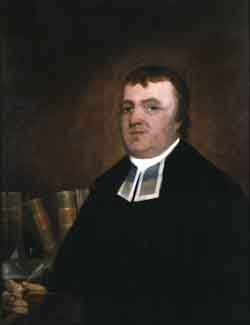
Getting back to the question of who told the Boston Patriots about the British army march to Concord, the first historian to gather evidence on that question was the Rev. Jeremy Belknap (1744–1798, shown here), founder of the Massachusetts Historical Society.

Indeed, Belknap recorded information so early that it might not even qualify as historical.

In the fall of 1775 Belknap visited the Continental Army camps around Boston, checking on the New Hampshire troops and observing the siege. He kept a diary during that trip, published by the M.H.S. in 1860.

A few days after returning to his town of Dover, New Hampshire, Belknap added this entry dated 25 October to his travel diary:
Mr. Waters informed me, that the design of the regular troops, when they marched out of Boston the night of April 18, was discovered to Dr. [Joseph] Warren by a person kept in pay for that purpose. That they had a design upon the stores at Concord the week before, and dressed victuals for their men; but, by the dressing an extraordinary quantity in the barracks, the design was discovered. They then marched out only as far as Watertown, as they had frequently done before in the day-time, for an airing, and returned before night.

But, on the night of April 18, they took every imaginable precaution to prevent a discovery. Their meat was dressed on board a transport-ship in the harbor. Their men were not apprised of the design, till, just as it was time to march, they were waked up by the sergeants putting their hands on them, and whispering gently to them; and were even conducted by a back-way out of the barracks, without the knowledge of their comrades, and without the observation of the sentries.

They walked through the street with the utmost silence. It being about ten o’clock, no sound was heard but of their feet; a dog, happening to bark, was instantly killed with a bayonet. They proceeded to the beach under the new powder-house,—the most unfrequented part of the town; and there embarked on board the boats, which had their oars muffled to prevent a noise, and landed on Phips’s Farm, where they were met by the infamous Capt. Beeman, and conducted to Concord.

Notwithstanding all this secrecy, the following circumstances contributed to their discovery. Numbers of people were jealous, and kept a vigilant eye upon them. It was observed, that, two days before, general orders were given out that the light infantry and grenadiers should be excused from duty. The boats were observed to be launched from the transports. In the afternoon of April 18, an uncommon number of officers were seen walking up and down the Long Wharf; and a party of nine rode out of town with their blue surtouts, and passed through Cambridge just before night, riding very slowly; and, being followed by a person who suspected some bad design, they damned him, and told him not to keep so near them. Late in the evening, a light-infantry man was seen in a retail shop with his accoutrements on.

These circumstances being communicated to Dr. Warren, he applied to the person who had been retained, and got intelligence of their whole design; which was to seize [Samuel] Adams and [John] Hancock, who were at Lexington, and burn the stores at Concord. Two expresses were immediately despatched thither, who passed by the guards on the Neck just before a sergeant arrived with orders to stop passengers. Another messenger went over Charlestown Ferry; so that the alarm was given several hours before the troops arrived at Lexington.
Historians have treated this source with skepticism. In fact, despite Belknap’s record being available in a leading historical journal since before the Civil War, almost no book has discussed the “person kept in pay” by Dr. Warren and his colleagues.

There seem to be two problems with that part of the story. First, I can’t help but suspect that American authors felt an ideological aversion to the idea of the Patriots bribing an informant. It was much more reassuring to stress the unity and perspicacity of Bostonians watching the soldiers prepare. And imagining Thomas Gage betrayed by his wife, or Margaret Gage torn by conflicting allegiances to husband and country of birth, is more dramatic.

That distaste opened the door to being skeptical about this account on grounds of provenance. How would this otherwise unidentified “Mr. Waters” in Dover, New Hampshire, have any reliable information on Dr. Warren’s secret source down in Boston? Was this statement anything more than well-traveled camp gossip festooned with unconfirmable claims?

David Hackett Fischer used Belknap’s statement in Paul Revere’s Ride, but only partially. He accepted that Dr. Warren “applied to” his best-placed source late on 18 April after hearing from other sources and before sending out William Dawes and Paul Revere, the “Two expresses.” But Fischer set aside the detail about “a person kept in pay” and instead focused on the possibility that that source was Margaret Gage.

In a 2014 article, Derek W. Beck, author of Igniting the American Revolution, discussed this source and concluded, “Mr. Waters’s statement sounds like an American concoction.” Unsupported by other evidence and judged against more reliable sources, Beck decided, this story reflected Waters’s wish to look like he had inside info and Belknap’s wish to believe him. 

To make this account into useful evidence, we need to answer questions like: Who was Belknap’s acquaintance, the mysterious “Mr. Waters”? Did this person really have connections in Boston’s Patriot leadership? Can any specific, non-public details of this account be confirmed by other sources? And does answering those questions lead us any closer to identifying the “person who had been retained”?

Answering those questions might require spending years studying small details of Revolutionary New England, looking at a plethora of sources both print and digital, and being crazy enough to think they matter.

TOMORROW: You rang?

Monday, January 24, 2022

“The general said that his confidence had been betrayed”

Earlier this month I noted the American Revolution Institute’s article about a likely caricature of Gen. Thomas and Margaret Gage published in London in 1776.

Comments on that post raised the question of when historians started to consider the possibility that Margaret Gage had betrayed her husband by leaking his plans for the 18 Apr 1775 expedition to Concord to the Patriots.

Not that anyone involved in that discussion believed that theory. Rather, we were just wondering when it arose and what evidence, if any, supported it.

By the end of the eighteenth century there were three readily available printed sources speaking to this question. The first was the Rev. William Gordon’s History of the Rise, Progress, and Establishment, of the Independence of the United States of America, published in London in 1788. Gordon knew the Boston Whigs well and was particularly close to Samuel Adams. He wrote of April 1775:
The grenadier and light infantry companies were taken off duty, upon the plea of learning a new exercise, which made the Bostonians jealous that there was some scheme on foot. A daughter of liberty, unequally yoked in point of politics, sent word, by a trusty hand, to Mr. Samuel Adams, residing in company with Mr. [John] Hancock, at Lexington, about thirteen miles from Charlestown, that the troops were coming out in a few days. Upon this their friends at Boston were advised to move out their plate, &c. and the committee of safety voted [18 April], “that all the ammunition be deposited in nine different towns. . .”

Mr. Adams inferred from the number to be employed, that these [military stores] were the objects, and not himself and Mr. Hancock, who might more easily be seized in a private way, by a few armed individuals, than by a large body of troops, that must march for miles together under the eyes of the public. . . .

When the corps was nearly ready to proceed upon the expedition, Dr. [Joseph] Warren, by a mere accident, had notice of it just in time to send messengers over the Neck and across the ferry, on to Lexington, before the orders for preventing every person’s quitting the town were executed.
I quoted from the 1801 edition, which differs a little in punctuation but not wording from the original.

Gordon described two pieces of information reaching two different Patriots. First, Adams outside Boston heard from a sympathetic woman with a Loyalist husband that a march would happen “in a few days.” There’s no clear hint that woman had inside information; instead, Gordon pointed to the orders for the flank companies, which lots of people heard about.

The Patriot leadership had already acted on that advice when Warren “by a mere accident” heard the march was imminent just in time to send messengers—we now know these were William Dawes and Paul Revere—out to Lexington.

From the British side, former officer Charles Stedman’s 1794 History of the Origin, Progress, and Termination of the American War confirmed that Gen. Gage was focused on Concord and tried to keep the mission secret:
In war there is nothing that so much avails as secresy of design and celerity of execution: Nor, on the contrary, so hurtful as unnecessary openness and procrastination. General Gage on the evening of the eighteenth of April told lord Percy, that he intended to send a detachment to seize the stores at Concord, and to give the command to colonel [Francis] Smith, ”who knew that he was to go, but not where.” He meant it to be a secret expedition, and begged of lord Percy to keep it a profound secret.

As this nobleman was passing from the general’s quarters home to his own, perceiving eight or ten men conversing together on the common, he made up to them; when one of the men said—“The British troops have marched, but they will miss their aim.”

“What aim?“ said lord Percy.

“Why,” the man replied, ”the cannon at Concord.”

Lord Percy immediately returned on his steps, and acquainted general Gage, not without marks of surprize and disapprobation, of what he had just heard. The general said that his confidence had been betrayed, for that he had communicated his design to one person only besides his lordship.
I broke Stedman’s single long paragraph into shorter paragraphs for easier reading.

Clearly Col. Percy was Stedman’s source for this story. And clearly Percy believed Gage’s plans had leaked, presumably through that “one person” (or maybe Gage hadn’t been as circumspect as he claimed).

Gage and Percy might not have guessed correctly about a leak. The man speaking on the Common might have been speculating about what the British goal was, based on the number of soldiers who were departing. After all, Adams had reportedly made the same guess.

One more early printed source was Paul Revere’s letter to the Rev. Dr. Jeremy Belknap about the opening of the war, published in the Massachusetts Historical Society’s Collections series in 1798:
The Saturday night preceding the 19th of April, about 12 o’clock at night, the boats belonging to the transports were all launched, and carried under the sterns of the men of war. (They had been previously hauled up and repaired.) We likewise found that the grenadiers and light Infantry were all taken off duty.

From these movements, we expected something serious was to be transacted. On Tuesday evening, the 18th, it was observed, that a number of soldiers were marching towards the bottom of the Common. About 10 o’clock, Dr. Warren sent in great haste for me, and begged that I would imediately set off for Lexington, where Messrs. Hancock and Adams were, and acquaint them of the movement, and that it was thought they were the objects. When I got to Dr. Warren’s house, I found he had sent an express by land to Lexington—a Mr. William Dawes.
Belknap cleaned up some of Revere’s spellings before publishing. See the original here. Revere’s letter was reprinted in the Worcester Magazine and Historical Journal in 1826 and in the New England Magazine in 1832.

Thus, before the turn of the nineteenth century historians had sources close to the action revealing that:
  • The commander and second-in-command of the British troops thought the secret plan for the march had leaked, despite only three people knowing about it.
  • Bostonians had actually been talking about the likely plan for days, based on publicly visible signs; Samuel Adams had deduced the general’s goal; and the committee of safety was acting on that warning.
  • Warren sent Dawes and Revere to Lexington based on the mistaken idea that “the objects” of the march were Adams and Hancock; in other words, whatever last-minute information the doctor received “by a mere accident,” that source did not tell him that Gage was focused on Concord.

TOMORROW: The view from the mid-1800s.

Monday, April 13, 2020

Did Josiah Waters Obtain the News of the British March?

Some accounts of the Battle of Lexington and Concord in April 1775 credit Josiah Waters of Boston with helping to provide intelligence about the British army’s plans to Dr. Joseph Warren. How did Waters enter the historical picture?

Waters’s role seems to have been first mentioned in print in 1853, when the New England Historical and Genealogical Register published an article titled “Revolutionary Incidents,” based on the recollections of Joseph Curtis, then 86 years old.

Curtis spoke of “Col. Josiah Waters of Boston, a staunch whig, and who afterwards acted as engineer in directing the building of the forts of Roxbury.” The article summed up the story this way:
The Americans obtained this news, through an individual by the name of Jasper, an Englishman, a gunsmith by trade, whose shop was in Hatter’s Square; he worked for the British, but was friendly to the rebels; a sergeant major quartered in his family and made a confidant of him, telling him all their plans. Jasper repeated the same to Col. Waters, who made it known to the Committee of Safety. The Colonel has often told this story, years after, to his then young friend, Joseph Curtis, who is still living.
There were two men named Josiah Waters in pre-Revolutionary Boston, father and son. The father was born in 1721, became a militia captain by 1770, and died in 1784.

Josiah Waters, Jr., was born to that man and his wife Abigail in 1747. After the war he became active in the Massachusetts militia, rising to the rank of colonel and collecting “many facts, for a history,” before dying in 1805. So when Joseph Curtis referred to “The Colonel,” he meant the younger man. Curtis was in his thirties when Col. Waters died, so he had plenty of time to hear that veteran’s stories.

Both father and son were involved in building forts in Roxbury early in the siege of Boston. Gen. William Heath’s memoir mentioned “Capt. Josiah Waters of Boston” as an impromptu engineer, and in a 21 October 1775 letter John Adams referred to “young Josiah Waters” as another. In 1776 the Connecticut legislature appointed Josiah Waters as engineer for Fort Trumbull in New London with Josiah Waters, Jr., as his assistant. (However, Gen. John Thomas wrote that neither Waters had “great Understanding” of either fortifications or gunnery “any further than Executing or overseeing works, when Trased out.”)

I mentioned Abigail Waters, Josiah, Sr.’s wife (and Josiah, Jr.’s mother). She was a daughter of Deacon Thomas Dawes and thus an aunt of William Dawes, Jr. In 1773, as discussed here, Capt. Waters and Adjutant Dawes were both asking the Boston selectmen if they could use Faneuil Hall for militia training.

The fact that Josiah Waters, Jr., and William Dawes, Jr., were first cousins becomes significant in looking at another of the details Joseph Curtis recounted about the start of the war:
The intelligence, that the British intended to go out to Lexington, was conveyed over Boston Neck to Roxbury by Ebenezer Dorr, of Boston, a leather dresser, by trade, who was mounted on a slow jogging horse, with saddle bags behind him, and a large flapped hat upon his head, to resemble a countryman on a journey. Col. Josiah Waters…followed on foot, on the sidewalk at a short distance from him, until he saw him safely past all the sentinels.
There was a Roxbury farmer named Ebenezer Dorr, but no other source connects him to the 18 April alarm. Many sources, some contemporaneous, credit William Dawes, and Curtis probably just muddled that name. (After all, Yankees would drop the R in “Dorr.”) But it’s reasonable that Dawes’s cousin might have watched to make sure he got out of town safely.

Was Waters also a conduit of crucial information about the British march for Dr. Joseph Warren? There are multiple stories of Bostonians reporting on British military activity, and we know Warren didn’t rely on a single source. Waters may well have supplied helpful intelligence, but he wasn’t the only Bostonian to do so.

TOMORROW: What about this gunsmith named Jasper?