J. L. BELL is a Massachusetts writer who specializes in (among other things) the start of the American Revolution in and around Boston. He is particularly interested in the experiences of children in 1765-75. He has published scholarly papers and popular articles for both children and adults. He was consultant for an episode of History Detectives, and contributed to a display at Minute Man National Historic Park.

Subscribe thru Follow.it


•••••••••••••••••


Showing posts with label Saratoga. Show all posts

Wednesday, September 16, 2026

“Behind Enemy Lines” along Lake Champlain, 25 Sept.

On Friday, 25 September, America’s History, L.L.C., is offering a unique tour titled “Behind Enemy Lines: General Benjamin Lincoln’s Pawlet Expedition and the Battle of Diamond Island.”

The event description explains:
In September 1777 during Lt. Gen. John Burgoyne’s campaign to capture Albany, American militia commanded by Maj. Gen. Benjamin Lincoln staged a daring raid on the British army’s supply line from Fort Ticonderoga to Lake George and Skenesborough. It is one of the most unappreciated operations of the campaign.

Although the Pawlet Expedition had some successes and some failures, in the main, it created major consternation in Burgoyne’s mind, forcing him to roll the dice in a failed attempt to turn the left flank of Maj. Gen. Horatio Gates’s army at Bemis Heights. Burgoyne’s defeat on October 7, 1777 paved the way for an ultimate retreat back to Saratoga (Schuylerville, New York) and the surrender of his army on October 17.

During this tour we will trace the march of Col. John Brown’s force from Pawlet to Ticonderoga Landing and Mount Defiance, Col. Samuel Johnson’s attack on Mount Independence, and Col. Benjamin Woodbridge’s actions at Skenesborough. We will take a boat ride to interpret Brown’s attack by water on the British supply depot on Diamond Island. Weather permitting (for docking purposes), we will land on the island, unlike Col. Brown, to see it from the British perspective.
This tour is limited to 39 participants. The bus will leave the parking lot of Fort Ticonderoga at 8 A.M. and return by about 5 P.M. (Fort Ti’s American Revolution conference starts that evening, with most presentations over the weekend.)

The $195 tour registration cost covers transportation by bus and boat; all admissions and gratuities; lunch, snack, and beverage breaks; a map and materials package; and the expertise of Bruce Venter as guide.

Dr. Venter is the author of The Battle of Hubbardton: The Rear Guard Action that Saved America. He created and co-manages the annual American Revolution conference in Virginia, as well as symposia, tours, and other events for students of American history.

For more information on this tour and to register, see this event page.

Saturday, December 06, 2025

“Knox’s Mission to Lake Champlain” in Saratoga, 11 Dec.

On Thursday, 11 December, I’ll be in Saratoga, New York, to share thoughts on “Myths and Realities of Col. Henry Knox’s Mission to Lake Champlain.”

Our event description:
In November 1775, Gen. George Washington gave Henry Knox a mission to travel to New York and bring back cannons for the Continental Army. Knox was a 25-year-old bookseller with no military rank. His trek back to Cambridge has become a beloved part of the American saga. This talk digs deeper into that story, examining such questions as who first had the idea to fetch cannon from Lake Champlain, how Knox had contributed to the Patriot movement, the ways weather affected the mission, and how much those cannon changed the British army’s plans.
This talk will take place in the Saratoga National Historical Park visitor center starting at 6:30 P.M. It is free, but because seating is limited, the park asks people to make reservations by email to SARA_Reservations@nps.gov. The Friends of Saratoga Battlefield supports this and other fall lectures at the park.

The Saratoga battlefield park is within the town of Stillwater, New York. Exactly two hundred and fifty years before the date of this talk, Knox wrote in his diary, he sent a man from Fort George “to Squire Palmer of Stillwater to prepare a number of Sleds & oxen to drag the Cannon presuming that we should get there.”

According to the Gilder Lehrman Institute’s abstract of Knox’s letter to Palmer, the colonel asked for forty sleds. Since he would soon refer to “eighty Yoke of oxen,” that meant he was planning to use four beasts per sled. (The institute also says that letter was dated 12 December, so it’s possible Knox was off by a day in his journal.)

George Palmer (1719–1809) was a local bigwig, more than twice Knox’s age. According to Stillwater’s website, he had “at his own expense equipped a company of militia which marched to Crown Point and Ticonderoga, arriving just after Ethan Allen had taken the fort.”

Palmer came to Fort George on 13 December and “agreed to provide the necessary number of sleds & oxen & they to be ready by the first snow.”

COMING UP: Making other plans.

Wednesday, April 30, 2025

Aritfacts Lost, Strayed, or Stolen

The Journal of the American Revolution regularly asks its contributors to share a short answer to an intriguing question—a favorite event or person, a what-if possibility, a little-known example.

Usually I get intrigued, think about possible answers, often type up something to edit down to the requisite length. And then other things land on top of the task pile and I end up never sending in an answer.

But I was able to muster a reply to the latest challenge for contributors: “an artifact from the 1765–1805 era known to have existed well into the nineteenth century, that has since been stolen or gone missing.”

The various answers include one painting and three medals stolen in the second half of the twentieth century, several items of clothing that have probably been tossed out or disintegrated, and an entire financial archive.

Plus, Elias Boudinot’s handwritten memoir (which was, thankfully, transcribed and published before disappearing from archive shelves), two cannon captured at Saratoga and recaptured one war later, and possibly an entire Hessian colonel.

Another example occurs to me now, but I’m not sure it meets the criterion of having “existed well into the nineteenth century.”

On 16 Feb 1836, the printer Peter Edes, son of Benjamin Edes of the Boston Gazette and the Loyall Nine, wrote to his grandson:
It is a little surprising that the names of the tea-party were never made public: my father, I believe, was the only person who had a list of them, and he always kept it locked up in his desk while living. After his death Benj. Austin called upon my mother, and told her there was in his possession when living some very important papers belonging to the Whig party, which he wished not to be publicly known, and asked her to let him have the keys of the desk to examine it, which she delivered to him; he then examined it, and took out several papers, among which it was supposed he took away the list of the names of the tea-party, and they have not been known since.
Benjamin Edes died in 1803, his widow Martha in 1809, and this encounter would have happened between those dates, probably earlier. There were two politically active Benjamin Austins in Boston, father and son; the first died in 1806, the second in 1820.

Did Benjamin Edes really keep such a list, and why? Did Benjamin Austin do away with that document? If so, did he act because of the names that were on it or the names that weren’t on it?

Monday, August 19, 2024

“Claimed to be Burgoyne in order to get better quarters”?

Sherman Lohnes left a helpful comment on these lines in yesterday’s posting about Elisha Porter:
He later served in the Saratoga campaign as a militia colonel and escorted Gen. John Burgoyne east. According to the Porter family, Burgoyne left his host a dress sword.
Since December 2022 Lohnes has shared a blog on The 1777 March of the Saratoga Convention Army, the prisoners of war in Continental custody after the Saratoga battles.

Using sources and reminiscences of that journey, the blog reexamines a lot of the lore and local traditions about it.

Lohnes commented:
It's highly unlikely that General Burgoyne gave Elisha Porter his sword - or even that Porter accompanied Burgoyne from Saratoga to Cambridge.

Burgoyne offered his sword in surrender to General Horatio Gates on October 17th at Saratoga, who graciously allowed him to keep it. Prior to the surrender, Burgoyne took pains to negotiate terms with Gates that allowed all of his officers to not only keep their swords, but wear them while they were being held in Massachusetts.

Finally, Burgoyne didn't stay with Porter in Hadley. New Hampshire Militia Brigadier-General William Whipple, who did travel with Burgoyne and kept a journal of their trip, indicates that they crossed the Connecticut River south of Hadley, from West Springfield into Springfield, before continuing on through Palmer to Brookfield, and eventually Cambridge…
In this blog post, Lohnes wrote:
Though Porter was a colonel, and commanded the 4th Hampshire County Regiment of the Massachusetts Militia, which marched on September 24, 1777, to reinforce the Northern Army and served until October 17, 1777, Brigadier-General William Whipple’s Journal indicates Burgoyne did not pass through Hadley.

If Burgoyne didn't stop in Hadley (or Northampton), what may have led its residents think that he did? Perhaps the source of these tales is explained by British Ensign (and author) Thomas Anburey. According to Anburey, at some point along the march one of the officers with the British column went on ahead, and claimed to be Burgoyne in order to get better quarters. Being the first to reach "a small village, he personated General Burgoyne, and with such an air of confidence..." that his hosts being "compleatly outwitted, they assigned him the best quarters."
Another possibility is simply that the Porter family’s understanding of what happened grew in the telling from one generation of children to another. Marching out to Saratoga and back again in parallel with some prisoners from Burgoyne’s army could have become escorting the British general himself. A British officer’s dress sword acquired in any sort of way could have become connected to the most famous officer in that army.

Family and local historians writing in the 1890s and 1900s described seeing that sword, and they didn’t use the same language, indicating they observed independently. That strongly suggests the Porter family did own such an artifact. But evidently not an accurate knowledge of where it came from.

Sunday, August 18, 2024

The Life of “an exceeding active Man”

As I recounted this past week, in the summer of 1774 Elisha Porter of Hadley traveled to New York, Providence, and at least some way to New London seeking military supplies for the Continental Army besieging Boston.

In late September, the Patriot authorities called on Porter for another sensitive job: deciphering the letter that Dr. Benjamin Church, Jr., had given to his mistress Mary Butler, and which she unwisely asked her ex-husband, Godfrey Wenwood, to send into Boston.

Elbridge Gerry gave Porter a copy of that letter to work on. Porter’s deciphering exactly matched one by the Rev. Samuel West. Gerry then spread around news of the results.

During those months Porter was also busy on many committees of the Massachusetts General Court, and in August 1775 he became sheriff of Hampshire County.

In January 1776, Porter volunteered to raise a Massachusetts regiment to go into Canada and shore up the effort to win over that territory by force. Gen. George Washington introduced him by letter to Gen. Philip Schuyler as ”Colo. Porter, said to be an exceeding active Man.” I think that praise is a little faint for someone who had worked directly for the general.

Washington also gave Porter instructions urging him to act quickly, and the Massachusetts government supplied him with money.

Col. Porter started to keep a diary in January 1776, published in 1893. It describes how he got as close as the Plains of Abraham outside Québec City on 27 April, and how a week later the American forces started to withdraw.

Porter took a leave in August because of illness but returned in time to help with the Trenton campaign. He later served in the Saratoga campaign as a militia colonel and escorted Gen. John Burgoyne east. According to the Porter family, Burgoyne left his host a dress sword.

In 1778 Porter married a second time, to Abigail Phillips of Boston, first cousin of his first wife. That couple had no children, and I have no clue who brought up the young children of his first marriage while he was away from home.

After the war, Porter continued to serve as sheriff and militia officer and occasionally a town representative. He argued for Massachusetts to ratify the new U.S. Constitution. In 1796 he died unexpectedly at the age of fifty-four.

As for the other man involved in Gen. Washington’s plan to obtain gunpowder from Bermuda, sea captain William Harris appears to have gone back to sailing out of New London, Connecticut. He may have been the captain named Harris who spread word of a British fleet approaching New York in August 1776.

The 15 Mar 1809 Connecticut Gazette of New London reported the death of “Capt. WILLIAM HARRIS, aged 66 years.”

Friday, March 08, 2024

Fort Ticonderoga’s 2024 Annual Seminar on the American Revolution, 20–22 Sept.

Fort Ticonderoga will host its twentieth Annual Seminar on the American Revolution on 20–22 September.

There slate of speakers are:
  • Sara C. Evenson, “Archaeology, Archive-Making, and Interpretation: Military Kitchens at Fort Ticonderoga”
  • Jason T. Sharples, “Governing the Anglo-American Subjects of Spanish Florida after 1783”
  • Robert Swanson, “‘For the Common Cause of the States’: Ideology and Canadian Participation in the American Revolution”
  • Todd W. Braisted, “‘Anxious to be of some Service to the Government’: The Trials and Tribulations of Burgoyne’s Royalist Corps after Saratoga”
  • David C. Hsiung, “Energy, Geography, and Geology in the Saratoga Campaign, 1777”
  • Kieran J. O’Keefe, “Why Did Horatio Gates Become a Revolutionary?”
  • Craig Wilson, “A Spirit of Dissention and Disobedience in the Troops: Military Mischief and Geographic Isolation at Michilimackinac”
  • John William Nelson, “Chicago’s Long War of Independence: Native Peoples and the Power of Chicago’s Portage Geography”
  • Jennifer K. Bolton, “‘Just IMPORTED from LONDON’: An Apothecary’s Place within the British Empire”
On Friday there will also be an optional bus tour from America’s History, L.L.C., “In the Footsteps of Ethan Allen, Benedict Arnold, and John Brown: The Capture of Fort Ticonderoga,” and an evening talk by Matthew Keagle, Fort Ticonderoga’s curator.

There are scholarships for teachers available. Registration is open.

Wednesday, March 06, 2024

The Eleventh America’s History Conference on the Revolution, 15–17 Mar.

America’s History, L.L.C., is hosting its eleventh annual conference on the American Revolution on 15–17 March.

In past years this gathering has brought history buffs to Williamsburg, Virginia, but the 2024 conference will be at the Virginia Crossings Hotel in Glen Allen, close to Richmond.

The speaker lineup, recruited by head of faculty Edward G. Lengel, includes:
  • Mark R. Anderson, “Down the Warpath to the Cedars: Indians’ First Battles in the Revolution”
  • Friederike Baer, “Incomprehensible Friends and Rebellious Enemies: German Soldiers in the American Revolutionary War”
  • Brooke Barbier, “King Hancock: The Radical Influence of a Moderate Founding Father”
  • Stephen Brumwell, “Turncoat: A Fresh Interpretation of Benedict Arnold and the Crisis of American Liberty”
  • Iris De Rode, “A New Perspective on the Yorktown Campaign: Revelations of the Unpublished Private Papers of François-Jean de Chastellux”
  • William Anthony Hay, “‘We Live on Victory’: British Military Strategy and Decision-Making in the American Revolution, 1774-1781”
  • Ricardo “Rick” Herrera, “Projecting Power Continental Army Style: George Washington and the Armed Camp at Valley Forge”
  • Paul Lockhart, “Drillmaster of the Revolution: The Baron de Steuben and the Making of the American Army”
  • Daniel Murphy, “The Revolutionary War’s Other Cavalryman: William Washington, America’s Light Dragoon and the Myths of Hobkirk’s Hill”
  • Kevin J. Weddle, “America’s Turning Point: Leadership in the Saratoga Campaign of 1777”
That’s a range of authors with some excellent books, new and old. There will also be a tour of Revolutionary sites in Goochland County led by Dr. John Maass, historian at the new National Museum of the U.S. Army at Fort Belvoir.

For more information and to register, go to this site.

Saturday, August 05, 2023

Obelisks Being Repaired

The National Park Service is preparing for the Sestercentennial, which means sites with Revolutionary roots are being spruced up.

The agency maintains a list of “deferred maintenance” projects with a total cost that’s now more than $22 billion.

The 250th anniversary of the Revolution, and the crowds that’s expected to bring to those parks, has sent some money toward those maintenance projects. That’s a Good Thing.

There is an immediate downside, however: In the next couple of years that work might affect access to or views of some sites.

At Minute Man National Historical Park, for instance, the obelisk erected at the site of Concord’s North Bridge in 1863 and the nearby Minute Man Statue were recently conserved, shrouding them briefly.

A larger and longer project has started at the Bunker Hill Monument. Restoring the upper exterior of that stone tower means putting up lots of scaffolding, which will surround the monument and affect the views from its windows.

For safety, the area immediately around the tower and lodge are fenced off, though both buildings are still open to the public. I believe one of the small cannon traced in The Road to Concord is still on display in the lodge.

That work is scheduled to be done by the end of this year, keeping the tower in good shape for its spotlight in 2025.

Folks eager to see a towering Revolutionary obelisk this summer and fall might instead take a trip to the Saratoga Monument in Victory, New York. It will be open on weekends from 12 August to 15 October.

The Saratoga Monument is 155 feet tall, with 188 steps, compared to the Bunker Hill Monument’s 221 feet and 294 steps. However, it also offers more decoration to look at, including statues of Continental leaders Horatio Gates, Philip Schuyler, and Daniel Morgan on three of its four sides.

Sunday, April 09, 2023

“Women in War Symposium,” Schuylerville, 6 May

On Saturday, 6 May, the Saratoga County 250th Commission and the Marshall House will host the the 2nd Annual Women in War Symposium, offering perspectives on the various roles women played during the American Revolution.

The scheduled presentations are:
  • Don Hagist: “Killed, Imprisoned, Struck by Lightning: British Soldiers’ Wives on Campaign”
  • Philip Hamilton: “The Excitement and Perils of War: Henry and Lucy Knox’s Revolutionary War”
  • Katie Turner Getty: “In the Greatest Terror: Women and Children in Crisis after Lexington and Concord”
  • Alexander Cain: “‘I Have Scarcely a Mouthful of Bread for Myself or Children’: Mary McAlpin and the Plight of Loyalist Women during the Saratoga Campaign”
  • Jenna Schnitzer: “After Burgoyne Surrendered: Women of the Convention Army”
This symposium will take place from 9:00 A.M. to 3:00 P.M. at Saratoga Town Hall, 12 Spring Street, Schuylerville, New York. The $50 registration fee will cover morning refreshments and lunch. For more details and registration, visit this page.

On the day before the symposium, the organizers will offer “Through the Baroness’ Eyes,” a four-hour tour of sites of the Burgoyne campaign as experienced by Frederika von Massow Riedesel, wife of General Friedrich von Riedesel, Commander of the German Division of Burgoyne’s Army. Along with her three young daughters, the baroness accompanied her husband to America and left a journal and letters recording her life with the army.

The tour will follow Riedesel’s path from Fort Edward (The Red House) through Saratoga (now Schuylerville) to the Saratoga Battlefield (Taylor House) and finally the back to the Sword Surrender Site. It involves some walking over uneven terrain. There is a separate $60 registration fee for this event.

Saturday, February 11, 2023

2023 Conference of the American Revolution in Williamsburg, 17–19 Mar.

Yesterday I received some books and word of another Revolutionary history conference for the public.

America’s History L.L.C. will hold its tenth annual Conference of the American Revolution on 17–19 March in Williamsburg, Virginia.

Bruce Venter and conference head of faculty Edward G. Lengel, now Chief Historian at the National Medal of Honor Museum, have been organizing this annual event for several years, weathering some difficult times in the pandemic. The gathering spot is once again the Woodlands Hotel of Colonial Williamsburg, allowing easy access to the historic area.

The 2023 presenters and their topics are:
  • Maj. Gen. Jason Bohm, U.S.M.C.: “George Washington’s Marines: The Origin of the Corps and the American Revolution”
  • John “Jack” Buchanan: “‘Picked Men, Well Mounted’: The Battle of Musgrove’s Mill, 1780”
  • Benjamin L. Carp: “‘Many Circumstances Lead to Conjecture That Mr. Washington Was Privy to This Villainous Act’: George Washington and the Great New York City Fire of 1776”
  • Kaitlin Fergeson: “Thompson’s Black Dragoons: A Study in Loyalist Cavalry in the American Revolution”
  • Kylie Hulbert, “America’s Revolutionary War Privateers: The Untold War at Sea”
  • Cole Jones, “Captives of Liberty: British, German and Loyalist Prisoners of War and the Politics of Vengeance”
  • Mark Edward Lender, “Fighting for the Key to the Continent: Fort Ticonderoga, 1777”
  • Margaret Sankey: “Oh the Things They Said: The Yorke Family’s Opinions of British Generals”
  • Eric Schnitzer, “In Memoriam: Rediscovering the Stories of Americans Who Died in the Battles of Saratoga”
  • David O. Stewart, “The Real Miracle at Valley Forge: George Washington’s Political Mastery.”
As with the Fort Plain conference described yesterday, attendees can arrive a day before the presentations and take a bus tour of nearby historic sites with an expert guide. In this case, Dr. Glenn Williams, retired from the U.S. Army Center for Military History, will be showing and discussing sites of the siege of Yorktown. As of now, however, all the seats on that bus have been filled, so the organizers are keeping a waitlist.

For all the details and registration info, visit the conference webpage.

Saturday, October 29, 2022

Digging into the Archeology of the Revolution

Here are a couple of items from Revolutionary War archeology.

After the Battles of Saratoga, the “Convention Army” of Crown prisoners of war marched to eastern Massachusetts, where they were supposed to board ships for Britain.

Instead, the Continental Congress decided to toss out the surrender agreement between Gens. Horatio Gates and John Burgoyne and keep those men (and not a few women and children traveling with them) in inland parts of the U.S. of A.

Hundreds of people were still held captive in Charlottesville, Virginia, in early 1781 before being moved north to York, Pennsylvania. In what became Springettsbury township, the Continental authorities built a compound of huts surrounded by a stockade fence that was named Camp Security.

The next year, hundreds more Crown prisoners, this time from the Yorktown surrender, also arrived in the area. More huts went up, many outside the stockade for people who didn’t seem to warrant strict surveillance; that area got the name of “Camp Indulgence.”

When the formal end of war finally arrived, those prisoners were freed to go back to Europe or make new homes in America. Locals quickly reclaimed the land and the wood. But the memory of the prison camp remained. Unlike other former prisoner-of-war camp sites from the Revolution, the land that Camp Security sat on was never heavily developed.

Eventually people moved to preserve the site, now property of the township. Locals formed the Friends of Camp Security. The Conservation Fund added to the protected land.

A 1979 archeological study found buckles, buttons, and other items linked to British soldiers, confirming local lore about the location of the P.O.W. camp. This week researcher John Crawmer announced that his team had located part of the stockade wall, identifying a “pattern of holes and a stockade trench that matched stockades at other 18th-century military sites.” Next season those archeologists will try to determine the full dimensions of the stockade and search for other features.

In other news, this past summer a different team found the remains of thirteen Hessian soldiers killed in the Battle of Red Bank, New Jersey, in October 1777. That was the same time the “Convention Army” was moving east toward Boston.

Emerging Revolutionary War will host a conversation with one of those archeologists, Wade Catts, to learn about the discovery and what it might say about those soldiers.

That event will be live on Facebook on Sunday, 30 October, starting at 7:00 P.M. The conversation will also be recorded and made available through Emerging Revolutionary War’s Facebook and YouTube accounts.

Friday, August 19, 2022

The Mysteries of Fortune Freeman

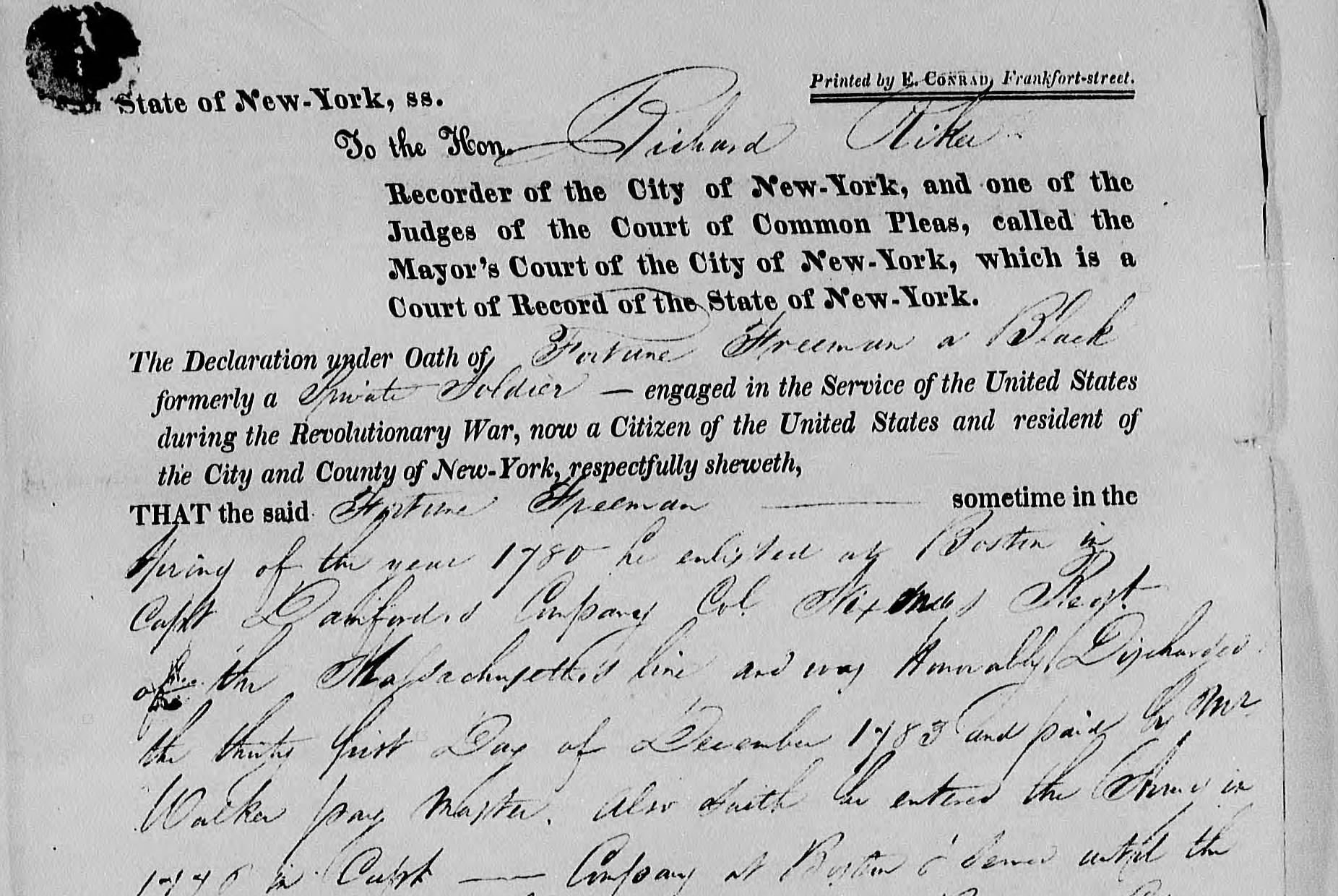
Earlier this year Boston National Historical Park shared a research article by Anjelica Oswald about an African-American Revolutionary War pensioner. It starts with this scene:
In the spring of 1818, an old man named Fortune Freeman…swore to the court that he served as a soldier in the Revolution, and applied for a veteran’s pension for some relief. Arriving to the court with merely the clothes on his back, Freeman provided few details about his personal life in his statement. Aside from his own declarations, few records of his life exist before or after the war. Only one of these precious few records remained in his possession when he approached the court: a discharge paper from the 4th Massachusetts, issued to him at the close of the Revolutionary War in 1783.
Because many veterans similarly lacked paperwork, and because the U.S. War Department had suffered a fire in 1800, the pension process for aging Revolutionary War veterans relied on applicants’ memories. That makes the pension files detailed historical sources but also leaves them riddled with gaps and contradictions.

In Fortune Freeman’s case, his memories didn’t match the remaining paper trail in several ways.
Freeman claimed to have first enlisted in Boston in 1776 in Captain Elijah Danforth’s company, Colonel Thomas Nixon’s regiment, later designated the 6th Massachusetts Regiment in 1779. He stated that he continued to serve in the same regiment until his honorable discharge in 1783. However, when looking through muster rolls, there is no record of a “Fortune Freeman” enlisting in 1776 in Danforth’s company. In fact, there is no record of a “Fortune Freeman” in Danforth’s company at all.
Capt. Danforth was from Billerica, serving from the first day of the war. But he left the army in March 1779. So whom commanded Fortune Freeman after that?

Freeman also testified to having been wounded at the Battle of Brandywine and to witnessing the surrender of Gen. John Burgoyne at Saratoga. Those two major battles took place in the same season hundreds of miles apart, so no army units were at both.

Freeman’s pension application thus shows some of those gaps and contradictions. However, Oswald also found that in May 1777 Col. James Barrett mustered a Billerica man named Fortune (or “Forten”) Conant into Capt. Danforth’s company. This man served in that Massachusetts regiment until 1780. Then there’s no further record of him.

But there is a record of a man named Fortune Freeman enlisting into the 4th Massachusetts regiment in 1781 and serving until the end of the war two years later. Those details matched the discharge paper Freeman presented with his pension application decades later.

Oswald’s essay explores the likelihood had Fortune Conant and Fortune Freeman were the same man, with some details dovetailing, others (like his later commanding officer) left aside, and a few (either Brandywine or Saratoga) embellished.

It also uses the record of the units Conant and Freeman were linked to, and later civilian records, to fill in the big holes of his/their life. Was Fortune Conant born enslaved, perhaps to the Conant family of Billerica? Did Fortune Freeman return to Massachusetts after being discharged? The U.S. government continued to pay his pension until 1824, so is that when this veteran died? The article is a detailed read, careful to distinguish evidence from supposition.

Monday, August 15, 2022

The Memory of Gen. Simon Fraser

Brigadier general Simon Fraser had a long career in the British army before dying in the Battle of Saratoga.

Even so, it appears that Gen. John Burgoyne’s description of his funeral, quoted back here, made Fraser into a British icon of sorts.

Burgoyne’s efforts were helped along by another narrative of that event in Lt. Thomas Anburey’s Travels Through the Interior Parts of America, published in 1789. Anburey wrote:
About sun-set, the corpse was carried up the hill; the procession was in view of both armies; as it passed by Generals Burgoyne, [William] Phillips and Riedesel, they were struck at the plain simplicity of the parade, being only attended by the officers of his suite…and urged by a natural wish to pay the last honors to him, in the eyes of the whole army, they joined the procession.

The enemy, with an inhumanity peculiar to Americans, cannonaded the procession as it passed, and during the service over the grave. The account given me by your friend Lieut. [Quin John] Freeman was, that there appeared an expressive mixture of sensibility and indignation upon every countenance—the scene must have been affecting.
Anburey spent years as a prisoner of war with the Convention Army—that was how he traveled through the interior parts of America. He didn’t come away with any fondness for the host nation.

In the same year Anburey’s account was published, a print appeared on the London market titled “View of the West Bank of the Hudson’s River, 3 Miles above Still Water, Upon which is the Army under the Command of Lt. Gen. Burgoyne (Showing General Frazer’s Funeral).”

Follow this link to a digitized image of this print from the Yale University Art Gallery. On the rightmost of the three hills is a line of tiny figures following two coffins. Some experts interpret the second one as representing Burgoyne’s aide-de-camp Sir Francis Clarke, also killed in the battle though not in any account buried with Fraser.

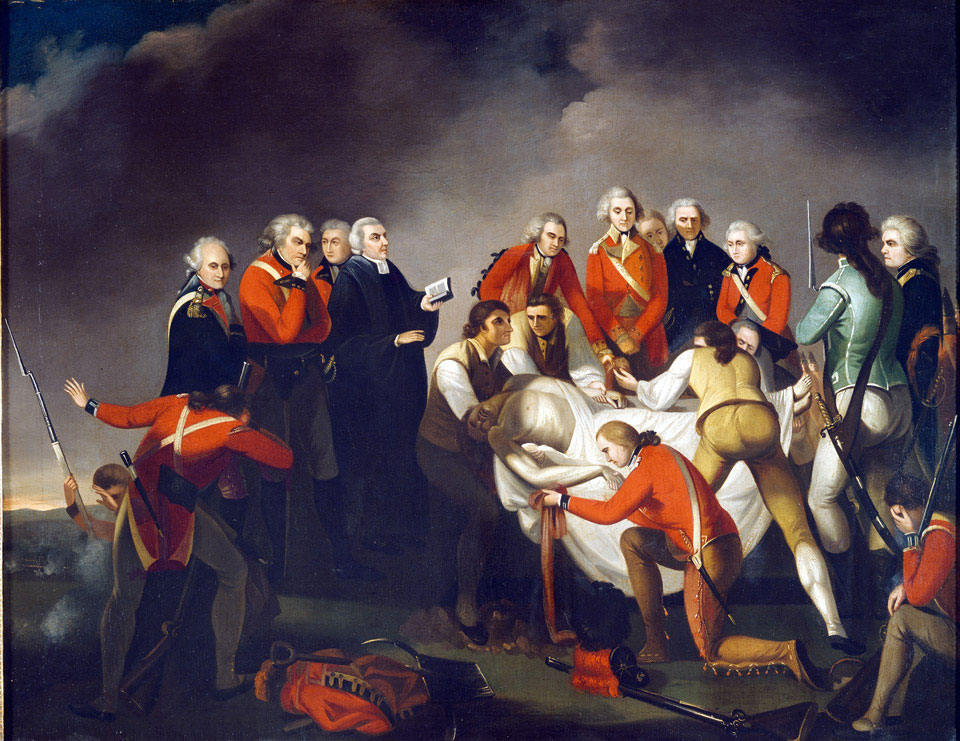
Finally in 1791 the Scottish artist John Graham (1754–1817) exhibited a painting of Fraser’s funeral. Graham was influenced by Benjamin West’s picture of the death of Gen. James Wolfe in 1759. So much so, in fact, that one critic of the time reviewed The Funeral of General Fraser by saying: “We should have been more pleased with the picture if we had not seen The Death of General Wolfe by West.”

As West had done before him (and as other West acolytes like John Singleton Copley and John Trumbull did), Graham sought out the officers who had been at the event he was depicting. He made studies of those men and portrayed them as individuals in his scene. That painting was made into a print in 1794, and the print was issued with a key to the figures.

(I can’t find Graham’s original on the web; the image above shows a copy in the collection of the National Army Museum.)

Burgoyne, Anburey, and Graham thus crafted Fraser’s funeral into an emblem of British fortitude and propriety even in defeat. This stuff-upper-lip behavior could easily, as Don Carleton commented last week, tip into Monty Python–style satire. Still, it was effective.

American chroniclers of the Battle of Saratoga felt a need to quote Riedesel and Burgoyne on Fraser’s death and metal—those sources are just too full of drama to ignore. But the same historians often added a protest that if only the British commanders had told the Americans that the generals were gathering for a funeral there would have been no artillery fire. I’m not entirely convinced.

Friday, August 12, 2022

The Funeral of Gen. Simon Fraser

Yesterday I quoted Frederika von Massow Riedesel on the death of Gen. Simon Fraser at Saratoga.

Wounded at Bemis Heights on 7 Oct 1777, Fraser died the following morning. By then the Crown forces had pulled back to their fortified camp, and the Continentals were attacking them.

Riedesel's memoir, in the 1827 translation, continued:
After he had been washed, he was wrapped in a sheet, and laid out. We then returned into the room, and had this melancholy spectacle before us the whole day. . . .

We were informed, that general [John] Burgoyne intended to comply with general Fraser’s last request, and to have him buried at 6 o’clock, in the place which he had designated. This occasioned an useless delay, and contributed to our military misfortunes. At 6 o’clock, the corpse was removed, and we saw all the generals, with their retinues, on the hill, assisting at the funeral ceremony.
Among those generals was Riedesel’s own husband, making what followed particularly unnerving for her. Especially since she obviously felt the army should be moving to a place of greater safety rather than going through this ceremony.

The chaplain who presided was the Rev. Edward Brudenell.

Gen. Burgoyne devoted space in his report to the House of Commons on the failed campaign to Fraser’s funeral:
The incessant cannonade during the solemnity; the steady attitude and unaltered voice with which the chaplain officiated, though frequently covered with dust, which the shot threw up on all sides of him; the mute but expressive mixture of sensibility and indignation upon every countenance: these objects will remain to the last of life upon the minds of every man who was present. The growing duskiness added to the scenery, and the whole marked a character of that juncture that would make one of the finest subjects for the pencil of a master that the field ever exhibited—

To the canvas and to the faithful page of a more important historian, gallant friend! I consign thy memory. There may thy talents, thy manly virtues, their progress and their period, find due distinction; and long may they survive;—long after the frail record of my pen shall be forgotten.
Can you tell that Burgoyne (shown above) was a dramatist?

COMING UP: A scene of British fortitude.

Thursday, August 11, 2022

The Death of Gen. Simon Fraser

During the fight at Bemis Heights, the second act of the Battle of Saratoga, an American rifleman picked off Simon Fraser, brigadier general and commander of His Majesty’s 24th Regiment of Foot.

Frederika von Massow Riedesel left a dramatic account of Fraser’s last hours. Wife of the officer commanding the Crown’s German-speaking hired regiments, she had traveled to North America with their young children.

This is from the 1827 translation of Riedesel’s memoir of the war:
About 3 o’clock in the afternoon, instead of the guests whom I expected, I saw one of them, poor general Fraser, brought upon a hand-barrow, mortally wounded. The table, which was already prepared for dinner, was immediately removed, and a bed placed in its stead for the general. I sat terrified and trembling in a corner. The noise grew more alarming, and I was in a continual agony and tremour, while thinking that my husband might soon also be brought in, wounded like general Fraser.

That poor general said to the surgeon, “tell me the truth: is there no hope?” . . . the ball had passed through his body, but unhappily for the general, he had that morning eaten a full breakfast, by which the stomach was distended, and the ball, as the surgeon remarked, passed directly through it. I heard often amidst his groans, such words as these, “O bad ambition! poor general Burgoyne! poor Mistress Fraser.” Prayers were read, after which he desired that general [John] Burgoyne should be requested to have him buried on the next day at 6 o’clock in the evening, on a hill where a breastwork had been constructed.

I knew not what to do: the entrance and all the rooms were full of sick, in consequence of the dysentery which prevailed in the camp. At length, towards evening, my husband came, and from that moment my affection was much soothed, and I breathed thanks to God. He dined with me and the aids-de-camp in great haste, in an open space in the rear of the house. We poor females had been told, that our troops had been victorious; but I well saw, by the melancholy countenance of my husband, that it was quite the contrary. On going away, he took me aside, to tell me every went badly, and that I should prepare myself to depart, but without saying any thing to any body. Under the pretence of removing the next day to my new lodgings, I ordered the baggage to be packed up. . . .

my children…were asleep, but…, I feared, might disturb the poor dying general. He sent me several messages to beg my pardon for the trouble he thought he gave me. About 3 o’clock, I was informed that he could not hold out much longer, and as I did not wish to be present at his last struggle, I wrapped my children in blankets, and retired into the entrance hall. About 8 o’clock in the morning he expired.
The 1827 translation says that the words in boldface above appeared in English in the original German publication of Riedesel’s memoir. In other words, they were supposedly the general’s exact words. Nonetheless, a later translation presented Fraser’s words as, “Oh, fatal ambition! Poor General Burgoyne! My poor wife!” 

TOMORROW: A memorable burial.

Sunday, April 10, 2022

Online Talks about Patriots of Color and Their Legacy

This month, the Boston Public Library and the National Park Service are teaming up for two online events that look at the Revolutionary War and its legacy.

Tuesday, 12 April, 6:00–7:00 P.M.
Patriots of Color
online

More than 2,100 men of color from Massachusetts served the Patriot cause during the American Revolution. They served as militiamen in emergencies, and as professional soldiers who marched in campaigns from Boston to Saratoga, from Monmouth to Yorktown.

As the nation plans for its 250th anniversary, join National Parks of Boston staff and interns as they share their emerging research that explores select life stories of Patriots of Color during and long after they served on the Revolutionary battlefields.

Register for this event through this link on this page.

Tuesday, 26 April, 6:00–7:00 P.M.
Connecting Past, Present, and Future: The Descendants of Darby Vassall on the Legacy of Slavery and Freedom
online

In 1774, the family of Darby Vassall—enslaved in Cambridge and surrounding towns—seized their freedom. Vassall dedicated the rest of his life to the struggle for freedom, education, and equality for greater Boston’s black community.

In this virtual program, join Vassall’s descendants for a conversation on the significance of surfacing the past, present, and future. Members of the Lloyd family and other descendants will reflect on the process of finding their ancestors’ history, and the critical importance of making this history—of the legacy of slavery, the value of freedom, and the beauty of the struggle—known to this and future generations.

Staff from the Longfellow House–Washington’s Headquarters National Historic Site and other historical organizations will also briefly discuss collaborative efforts to research and memorialize the legacy of the Vassall family and slavery in greater Boston.

Register through this page.

Wednesday, March 09, 2022

American Revolution Conference in Williamsburg, 19-20 Mar.

I’d missed this good news, but America’s History L.L.C. is hosting its Ninth Annual Conference of the American Revolution in Williamsburg, Virginia, on 19-20 March 2022.

The presenters will be:
  • Edward G. Lengel, head of faculty: “Some Desperate Glory: The Battles of Connecticut Farms and Springfield, June 1780”
  • Michael Gabriel, “‘To Induce the Officers & Soldiery to Exert Themselves’: Plunder and Trophies in the Revolutionary War” 
  • Michael Harris, “Germantown: The Battle for Philadelphia, October 1777” 
  • T. Cole Jones, “Captives of Liberty: British, German and Loyalist Prisoners of War and the Politics of Vengeance”
  • Larry Kidder, “Ten Crucial Days: Washington’s Campaign against Trenton and Princeton”
  • Mark Edward Lender, “Cabal!: The Plot against George Washington” 
  • James Kirby Martin, “Reconciliation or Independence: Understanding the Rebel Insurgents of 1775-1776”
  • David Preston, “General George Washington: Echoes of the Seven Years’ War in the Revolutionary War”
  • Eric Schnitzer, “Make Way for New Interpretations: Don Troiani’s Campaign to Saratoga – 1777”
  • Gary Sellick, the Dr. Robert J. Christen Emerging Scholar: “Black Men, Red Coats: The Creation of the Carolina Corps in Revolutionary South Carolina”
Bruce Venter and his America’s History team had to cancel the last two years of conferences because of the pandemic, with all the anxiety and frayed relations that produces. I’m pleased to see this event back on the calendar for Revolutionary War buffs even though I can’t attend.

In future, I hope the topics will once again broaden to include more than the military side of the Revolution, and the presenters will be similarly diverse. But after all the organizational angst of the last two years, it’s good to see this conference in any form.

Wednesday, October 20, 2021

Gen. Gates’s Articles of Convention

As I said yesterday, on 23 Oct 1777 John Gill’s Continental Journal printed the “ARTICLES of CONVENTION between Lieutenant-General [Horatio] GATES and Major-General [John] BURGOYNE.”

Gates must have hurried that document to Boston, not simply because the Battle of Satatoga was big news but also because the state of Massachusetts had to prepare for the arrival of thousands of prisoners of war.

The full text of the surrender terms is here. I’ll quote the most important passages, those involving substance rather than details of implementation, as they appeared in the Continental Journal.

ARTICLE I. The troops under Lieutenant-General Burgoyne, are to march out of their camp with the honors of war and the artillery of the intrenchments, to the verge of the river where the old fort stood, where the arms and artillery are to be left; the arms to be piled by word of command from their own officers.

Art. II. A free passage to be granted to the army under Lieutenant-General Burgoyne to Great Britain, on condition of not serving again in North America during the present contest, and the port of Boston is assigned for the entry of transports to receive the troops, whenever General [William] Howe shall so order. . . .

Art. IV. The army under Lieutenant-General Burgoyne, to march to Massachusetts-Bay by the easiest, most expeditious and convenient route; and to be quartered in, near, or as convenient as possible to Boston, that the march of the troops may not be delayed when transports arrive to receive them.

Art. V. The troops to be supplyed on their march, and during their being in quarters, with provisions by General Gates’s orders, at the same rate of rations as the troops of his own army, and if possible, the officers horses and cattle are to be supplyed with forage at the usual rates.

Art. VI. All officers to retain their carriages, batt-horses and other cattle, and no baggage to be molested or searched, Lieutenant General Burgoyne giving his honor that there are no public stores secreted therein.—Major-General Gates will of course take the necessary measures for the due performance of this article; should any carriages be wanted during the march for the transportation of officer’s baggage, they are if possible to be supplyed by the country at the usual rates. . . .

Art. IX. All Canadians and persons belonging to the Canadian establishment, consisting of sailors, batteaumen, artificers, drivers, independent companies and many other followers of the army, who come under no particular description, are to be permitted to return there . . .
Gates was a veteran of the British army. He and Burgoyne had enlisted as young officers at the same time, and he had served under Burgoyne earlier in their careers.

The American general knew what supplies and housing a large army, including families, would need. He was also sensitive to the honor of British officers; one of the thirteen articles guaranteed those gentlemen the privilege of walking around greater Boston wearing their arms. 

About 5,900 Crown troops surrendered at Saratoga. On 8 November they started to arrive in Cambridge, which in 1776 had an official population of 1,586.

Monday, October 18, 2021

Joyful News from Saratoga

On 18 Oct 1777, Gen. George Washington issued joyous general orders to the Continental Army outside Philadelphia:
The General has his happiness completed relative to the successes of our northern Army. On the 14th instant, General [John] Burgoyne, and his whole Army, surrendered themselves prisoners of war—

Let every face brighten, and every heart expand with grateful Joy and praise to the supreme disposer of all events, who has granted us this signal success—The Chaplains of the army are to prepare short discourses, suited to the joyful occasion to deliver to their several corps and brigades at 5 O’clock this afternoon—

immediately after which, Thirteen pieces of cannon are to be discharged at the park of artillery, to be followed by a feu-de-joy with blank cartridges, or powder, by every brigade and corps of the army, beginning on the right of the front line, and running on to the left of it, and then instantly beginning on the left of the 2nd line, and running to the right of it where it is to end—The Major General of the day will superintend and regulate the feu-de-joy.
According to Col. Timothy Pickering, the chaplains’ sermons were forestalled by a report that “the enemy were marching towards us,” so the soldiers had to muster for battle instead. But “the enemy pretty soon went back to their quarters.”

The evening celebration went on. Over on the British side, Maj. John AndrĂ© wrote in his journal, “at sunset firing was heard in the direction of the Rebel Encampment. This was a feu-de-joie on account of the taking of General Burgoyne and the Northern Army.”

(A feu-de-joie involved soldiers firing their muskets in rapid succession to make a long ratatat-tat-tat sound.)

Washington was especially pleased with that news because his own army was still reeling from losses at Brandywine, Paoli, and Germantown. He had just heard from Gen. Israel Putnam about British forces storming up the Hudson. The last letter he’d received from Gen. Horatio Gates indicated that Gen. Burgoyne’s campaign was still a threat.

Thus, the commander-in-chief was delighted when Putnam passed on a note from Gen. George Clinton in Albany dated 15 October:
Last Night at 8 OClock the capitulation whereby Genl Burgoyne and whole Army surrenderd themselves Prisoners of war was sign’d, and this morning they are to march out towards the river above fish Creek with the honors of war (and there ground their Arms) they are from thence to be marched to Massachusets Bay. We congratulate you on this happy event, and remain yrs &c.
In fact, that report was premature. Burgoyne and Gates started talks on 14 October, but it took three days before the British and Hessian soldiers actually surrendered. All the while, Gates was worrying about whether Crown reinforcements might arrive and change Burgoyne’s mind.

Now technically we could say Washington’s army didn’t jump the gun because the British army did surrender on 17 October, one day before the celebrations in Pennsylvania. But Washington was still operating on false information.

Discussing Saratoga gives me leave to note that the national park there has a new Chief of Interpretation starting today. Garrett Cloer previously worked at Minute Man National Historical Park, Independence National Historical Park, and Longfellow House–Washington’s Headquarters National Historical Site, all places with serious Revolutionary history, in addition to his latest posting at the Herbert Hoover Birthplace in Iowa. He’ll be a real asset to Saratoga.

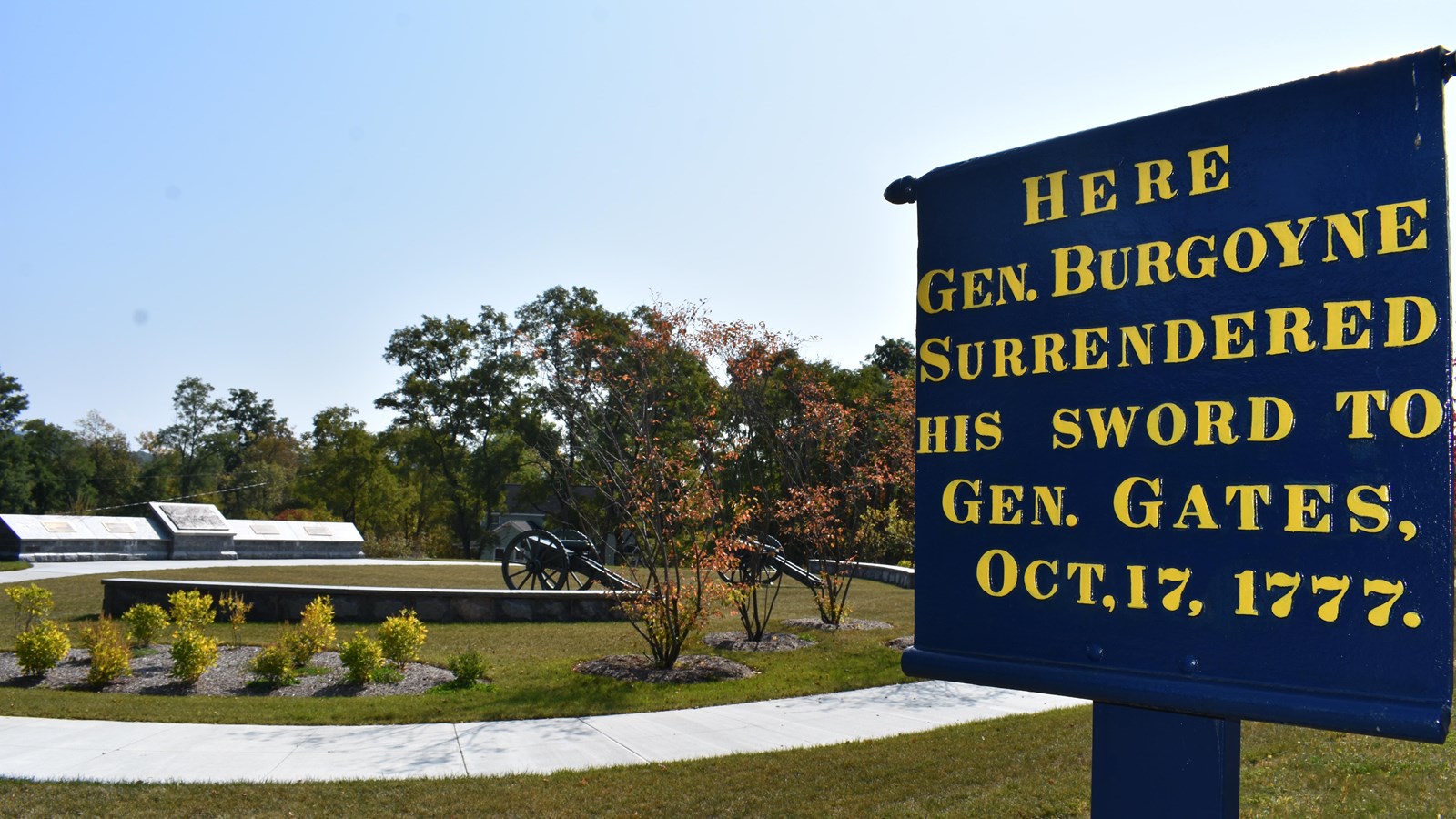
The photo above shows the Saratoga surrender site, which will soon also become part of the national park there. For the past two years that landscape has been managed and upgraded by the Friends of Saratoga Battlefield.

Thursday, August 19, 2021

Francis Akley, Continental Ranger

When I started to focus on Joseph Akley, I also introduced his brothers: Francis, one year older, and Thomas, John, Samuel, and William, from three to seventeen years younger.

Samuel and William were so much younger, in fact, that Joseph never lived in the same household with them, being indentured out before he was born. (Joseph and William both grew up in Boston, so they might have known each other at least.)

The Boston Overseers of the Poor sent the other five brothers to new masters all over the province, as far west as Springfield and as far north as Topsham, Maine.

Those Akleys were young men and teenagers during the Revolutionary War. In 1775 only Joseph had married and started a family. Francis, Thomas, and John came of age before or during the war, meaning their apprenticeships ran out. They had no doubt built some personal ties in the communities where they grew up, but they didn’t have any relatives or property.

In sum, those Akley brothers were just the sort of young men the Continental Army was looking for. Just the sort of young men that towns were happy to grant a little bonus money and send off to fill draft quotas.

Indeed, all four of those Akley brothers joined the army, and, remarkably, all four survived long enough to apply for pensions in the early 1800s. By that time they had scattered across the northeastern U.S. of A. None of their applications described their family background or life in Boston before enlisting, but they stated their ages and the towns from which they enlisted, confirming that these are the right guys.

Francis Akley, Jr., baptized on 19 May 1751, was indentured to a cooper in Lancaster. After turning twenty-one in 1772 he moved to Guilford in what would be Vermont. In January 1777 he enlisted under Lt. David Goodnough in “an independant corpse of rangers mostly from New Hamps. at Tyconderoga commanded by Major [Benjamin] Whitcomb—and Capt. [George] Aldrich Company.”

Aldrich’s company fought in the Battle of Bennington on 16 Aug 1777. The only event Akley specifically recalled, however, was being “at the taking of Burgoyne” after Saratoga. He said he was discharged at Haverhill, New Hampshire, “I think in 1783.” Whitcomb’s Rangers actually disbanded at the start of 1781.

Francis Akley applied for a pension while living in Halifax, Vermont, in 1819. The following year he testified that he was seventy years old and his property consisted of “two Pigs—1 Jacknife & 1 old Pocketbook.” At that time, the law required veterans to show need before receiving any support.

The federal government granted Akley a pension. In 1829 he moved to Connecticut, and then in 1838 back to Vermont. Akley appeared on the U.S. government’s pension list in 1840, the year he turned eighty-nine.

The Vermont Mercury for 26 Mar 1841, published in Woodstock, carried a notice from the men commissioned to settle “Francis Akley’s Estate,” he being “represented insolvent.” They invited creditors to meet “at the dwelling-house of Lyman Akley in Plymouth,” most likely a descendant the veteran had been living with at the end of his long life.

TOMORROW: More Akley brothers’ service.

(The drawing above comes from the website of the reenacted Whitcomb’s Rangers and shows a soldier like Francis Akley.)