J. L. BELL is a Massachusetts writer who specializes in (among other things) the start of the American Revolution in and around Boston. He is particularly interested in the experiences of children in 1765-75. He has published scholarly papers and popular articles for both children and adults. He was consultant for an episode of History Detectives, and contributed to a display at Minute Man National Historic Park.

Subscribe thru Follow.it


•••••••••••••••••


Showing posts with label Jonathan Trumbull. Show all posts

Saturday, September 05, 2026

“The first essays with the submarine Vessel”
On 2 Feb 1776, David Bushnell journeyed from his workshop in Saybrook, Connecticut, to Lebanon to meet with Gov. Jonathan Trumbull and his Council, telling those gentlemen about his “machine contrived to blow ships.”

After Bushnell left the room, the officials voted to keep the conversation secret and to send Matthew Griswold, the deputy governor, to Bushnell with £60 to encourage his work.

Back home, Bushnell resumed work on his machine—the first submarine to be deployed in warfare.

Years later, Bushnell described his invention to a curious Thomas Jefferson:
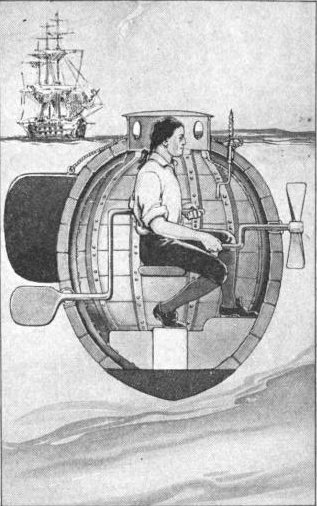
The external shape of the Submarine Vessel bore some resemblance to two upper tortoise shells of equal size, joined together: the place of entrance into the Vessel being represented by the opening, made by the swell of the shells, at the head of the animal. The inside was capable of containing the Operator, and air, sufficient to supply him, thirty minutes, without receiving fresh air.

At the bottom, opposite to the entrance, was fixed a quantity of lead for ballast. At one edge, which was directly before the operator, who sat upright, was an oar, for rowing forward or backward. At the other edge, was a rudder for steering. An aperture, at the bottom, with its valve, was designed to admit water for the purpose of descending; & two brass forcing pumps served to eject the water within, when necessary for ascending. At the top, there was likewise an oar, for ascending or descending, or continuing at any particular depth. A Watergage or Barometer, determined the depth of descent, a compass directed the course, & a ventilator within, supplied the Vessel with fresh air, when on the surface. . . .

The skilful operator could swim so low on the surface of the water, as to approach very near a Ship, in the Night, without fear of being discovered, and might if he chose, approach the stem or stern, above water, with very little danger. He could sink very quick, keep at any depth he pleased, and row a great distance, in any direction he desired, without coming to the surface; & when he rose to the surface, he would soon obtain a fresh supply of air, when, if necessary, he might descend again and pursue his course. . . .

In the first essays with the submarine Vessel, I took care to prove its strength to sustain the great pressures of the incumbent water when sunk deep, before I trusted any person to descend much below the surface: and I never suffered any person to go under water without having a strong piece of rigging made fast to it, until I found him well acquainted with the operations necessary for his safety. After that I made him descend and continue at particular depths, without rising or sinking, row by the compass, approach a Vessel, go under her, and fix the Woodscrew…into her Bottom, &c. until I thought him sufficiently expert to put my design into execution.

I found agreeably to my expectation, that it required many trials to make a person of common ingenuity, a skilful operator. The first I employed was very ingenious and made himself master of the business, but was taken sick in the campaign of 1776 at N.York, before he had an opportunity to make use of his skill, and never recovered his health sufficiently afterwards.
David Bushnell’s first operator was his own brother Ezra. They had inherited a farm together, and Ezra had bought out David’s interest to give him the capital to attend Yale College—an unusual course for a man in his late twenties.

Jefferson had Bushnell’s detailed description of his invention published by the American Philosophical Society in 1799. Those documents serve as the source for all attempts to depict and recreate the submarine, such as the 1916 illustration above.

TOMORROW: Into action.

Monday, December 01, 2025

“Sentenced to be Sent to Simsburty in Connecticut”

Here’s another glimpse of Gen. George Washington’s work in Cambridge 250 years ago.

On 11 Dec 1775, mustermaster general Stephen Moylan wrote out a letter to the committee of safety of Simsbury, Connecticut, for the commander’s signature:
Gentlemen

the prisoners which will be deliverd you with this haveing been tried by a Court Martial & deemd to be Such flagrant & Attrocious villains, that they Cannot by any Means be Set at Large or Confined in any place near this Camp were Sentenced to be Sent to Simsburty in Connecticut.

you will therefore be pleas’d to have them Secured in your Jail or in such other manner as to you shall Seem necessary So that they Cannot possibly make their escape—the Charges of their imprisonment will be at the Continental expence.
That same day Washington’s new military secretary Robert Hanson Harrison (shown here) sent this note to Gen. Artemas Ward in Roxbury, as published by Peter Force in American Archives:
I am commanded by his Excellency to enclose to your care the letter which you will herewith receive for the Committee at Symsbury. Should there be any of the Connecticut troops at Roxbury, which are going that way, and with whom the prisoners can be trusted, you will get them to take charge of them, as it will save some expense; but if you are of opinion that there will be the least risk of their getting away, you will send them off under a proper guard, with a copy of their sentence for the Committee.
On 21 December, Harrison sent a follow-up:
I wrote you the 11th inst., respecting the prisoners to be sent to Simsbury, and enclosed a letter for the Committee of that place; to these I beg leave to refer you. In case you did not receive them, his Excellency desires that you will send them off under a proper guard, unless there should be any of the Connecticut troops going home, who will take the charge of them to the Committee. You will please certify the Committee of the atrociousness of their crime, and of the court’s sentence.
Some of the Connecticut regiments had finished their enlistment terms on 10 December and were heading home. Hence the suggestion that those men could escort these prisoners to Simsbury (and presumably get a little more pay for that work).

Because Washington’s letter was printed in American Archives, a widely distributed and authoritative nineteenth-century source, it’s been quoted in many books about the Old New Gate Prison at Simsbury and American incarceration in general. 

However, I haven’t found any of those books stating who these prisoners were. Because Loyalists were confined at Simsbury later in the war, many authors have assumed that the people Washington sent to Connecticut were political prisoners. 

TOMORROW: Naming names.

Monday, July 07, 2025

“The Colony of Connecticut must raise 6,000”

As I quoted last week, on 23 Apr 1775 the Massachusetts Provincial Congress resolved to raise an army of 30,000 men, 16,400 of them coming from outside the province.

In this Journal of the American Revolution article from last year, I discussed how early in 1775 the congress had set up liaisons with the governments of Connecticut, Rhode Island, and New Hampshire in case war broke out.

The Massachusetts Patriots had alerted their colleagues in those colonies about the fighting on 19 April. And now they asked for troops.

In Connecticut, Gov. Jonathan Trumbull supported the Patriots. As soon as he heard the news from Lexington, he agreed to call the legislature into session to take official action. On 21 April, William Williams, the Connecticut assembly speaker and Trumbull’s son-in-law, wrote with two other politicians to the Massachusetts congress:
Every preparation is making to Support your Province— . . . the Ardour of Our People is such that they can’t be kept back;—The Colonels are to forward part of the best men & most Ready, as fast as possible; the remainder to be ready at a Moments warning
Some militia officers were already on the move. Israel Putnam was in Concord on 21 April as the Massachusetts congress met. He wrote back:
I have waited on the Committee of the Provincial Congress, and it is their Determination to have a standing Army of 22,000 men from the New-England Colonies, of which, it is supposed, the Colony of Connecticut must raise 6,000, and begs they would be at Cambridge as speedily as possible, with Conveniences; together with Provisions, and a Sufficiency of Ammunition for their own Use.
Col. Benedict Arnold and his volunteers left New Haven on 22 April and arrived in Cambridge one week later. On 23 April a letter from Wethersfield to New York said:
We are all in motion here, and equipt from the Town, yesterday, one hundred young men, who cheerfully offered their service; twenty days provision, and sixty-four rounds, per man. They are all well armed, and in high spirits. . . . Our neighbouring Towns are all aiming and moving. Men of the first character and property shoulder their arms and march off for the field of action. We shall, by night, have several thousands from this Colony on their march. . . .

We fix on our Standards and Drums, the Colony Arms, with the motto, “qui transtulit sustinet,” round it in letters of gold, which we construe thus: “God, who transplanted us hither, will support us.”
On 27 April the Connecticut legislature voted to enlist 6,000 soldiers—six regiments of about a thousand men each. Joseph Spencer was appointed general of this army with Putnam next in seniority. (David Wooster remained in Connecticut to oversee defending its coast or New York as needed.)

Notably, Connecticut asked men to enlist in its army only until 10 December, not the end of the year as other New England colonies did. That became a problem when December rolled around and lots of Connecticut companies wanted to leave early (as Gen. George Washington viewed it) or on time (as their enlistment papers said). I discussed that conflict back here.

TOMORROW: Rhode Island’s observers.

Tuesday, June 03, 2025

“To turn his back sullenly on his General”?

As discussed yesterday, on 19 July 1775 Gen. Joseph Spencer arrived back in the camps of what was now the Continental Army, bringing a letter from the governor of his home colony of Connecticut, Jonathan Trumbull.

Trumbull asked Gen. George Washington to understand how Spencer was miffed at seeing Israel Putnam promoted to major general over him. And merely because Putnam had led troops in the Battle of Chelsea Creek.

Delivering that letter was probably the first time Spencer had met Washington. And I imagine the discussion was as stiff and cold as the new commander-in-chief could be. As Maj. Samuel Blachley Webb (shown here) wrote on 11 July, Spencer’s departure “without leave or license from Gen. Washington,…displeased him much.”

Indeed, Spencer’s hissy fit had damaged his standing even among his own officers. He’d asked his subordinates to sign a protest on his behalf, and Webb reported:
I have since been to Roxbury, and find the officers, many of them, heartily sick of what they have done, in particular, Maj. [Return Jonathan] Meiggs,—who says he was forced to sign what the others did—to keep peace; and says he had rather serve under Putnam than Spencer.

You’ll find Generals Washington and [Charles] Lee, are vastly more fond, and think higher of Putnam, than any man in the army; and he truly is the Hero of the day. . . . Better is it for us to lose four Spencers than half a Putnam.
News of Putnam’s higher rank “gave universal satisfaction,” Webb added.

Webb was sending these observations to his stepfather, Silas Deane. On 20 July, Deane told his wife how the Continental Congress was responding to Spencer’s behavior:
You can be at no loss to infer what opinion is formed of him from this conduct, in doors and out. Suffice it to say, the voice here is, that he acted a part inconsistent with the character either of a soldier, a patriot, or even of a common gentleman. To desert his post in an hour of danger,—to sacrifice his Country, which he certainly did as far as was in his power,—and to turn his back sullenly on his General, a General, too, of such exalted worth and character,—will, I can assure you, unless he take the most speedy and effectual measures to atone, draw upon him the resentment of the whole Continent.
Neither Deane nor fellow Connecticut delegate Eliphalet Dyer ever pushed Spencer for promotion again. (He was made a major general in the fall of 1776 as part of a general wave of promotions.)

On 21 July, Gen. Washington reported to the Congress that Spencer had agreed to “serve under Puttnam, rather than leave the Army intirely.” The men’s relative ranks would not change.

The next day, Gen. Washington announced a new organization for the Continental Army around Boston. With three major generals under him, he put Artemas Ward in charge of a brigade on the southern side of the siege lines, Lee in charge of the northern wing, and Putnam in charge of the center.

Among the brigadier generals, he assigned Spencer to the southern wing under Ward. Thus, Spencer would answer to a general he’d already acknowledged as senior, not to Putnam. Gov. Trumbull had suggested a similar way of keeping the two Connecticut officers apart. Which wasn’t the sort of issue Washington wanted to face.

Spencer served the rest of the siege, making no distinct contribution at all. He never gained Washington’s trust, and after an unsuccessful Rhode Island campaign he left the army.

Monday, June 02, 2025

“General Spencer’s uneasiness, &c., at being overlooked, &c.”

According to the young Connecticut officer Samuel Blachley Webb, when Gen. Joseph Spencer learned the Continental Congress had ranked Israel Putnam over him, “He began to speak very freely; and finally, persuaded the officers, to remonstrate to the Assembly of Connecticut; and he set off immediately for home.”

Spencer was older than Putnam. He had raised a company for King George’s War in the 1740s while Putnam’s vaunted military career began in 1755. The Connecticut legislature had granted Spencer seniority, and he wanted to keep that status.

Forty-nine Connecticut officers signed a letter to their legislature that praised Spencer’s “exemplary life, good conduct, prudence, and courage.” It said:
You are sensible it will be with great reluctance our Troops at Roxbury could see their General superseded by an officer in previous lower command. We have no objection to the appointment of Generals [George] Washington and [Charles] Lee, and shall endeavour to preserve the good order and submission to their government as hath before distinguished this part of the Connecticut Troops whilst under General Spencer’s command; but the late arrangement so far removes General Spencer from his former command, that he cannot and will not continue in the service under this arrangement.
In his home colony, Spencer seemed to get the support he was after. In Lebanon on 13 July, Gov. Jonathan Trumbull showed his Council a draft letter to Gen. Washington about the issue. The official record of that meeting says the letter was
hinting at General Spencer’s uneasiness, &c., at being overlooked, &c., and that it was beside our expectations, &c., and proposing, &c., that said General Spencer may remain stationed at Roxbury with the body of Connecticut Troops now there, &c.; which are approved, though a small alteration was made in the Letter to gratify Gen. Spencer after he came in, &c.
Two politicians, Samuel Huntington and William Williams (the governor’s son-in-law and speaker of the assembly), went to the tavern where Spencer was staying to hear him out about “his dissatisfaction, &c.” They tried to “reconcile him cheerfully to pursue the service.”

That afternoon, Gov. Trumbull and the Council invited Spencer to join their meeting. They
had a long conference with him on the subject matter of his being superseded by the General Congress, in putting Gen. Putnam above him &c., which he thinks very hard of and resents &c., and is at length persuaded to return to the army and not at present quit the service as he proposed; and Genl. Spencer set out on his return to camp with the letters to Genl. Washington.
Trumbull’s letter to Gen. Washington said that “Generals [David] Wooster and Spencer will think they have reason to complain” about their ranking relative to Putnam and suggested a “Method to obviate the difficulties that are apprehended”:
The Army before Boston is necessarily thrown into two Grand Divisions. General Spencer with a Number of Our Troops hath hitherto been at Roxbury, and General Putnam at Cambridge —That Destination continued and Observed, may prevent uneasy Competition; preserve good order, and promote the public Service.
Spencer arrived back on the siege lines around Boston on 19 July.

TOMORROW: A triumphant return?

Friday, December 20, 2024

“Liberty to remove with her sd. family to her husband”

Ideally I would have quoted today’s documents earlier in this series about Sarah and John Cochran, but I hadn’t find them yet.

As described back here, the Cochrans were separated in 1775, forced to communicate by letters between independent Londonderry, New Hampshire, and British-held Long Island, New York.

In early 1777 one of those letters was intercepted alongside a letter from John’s patron, royal governor John Wentworth. Gov. Jonathan Trumbull of Connecticut sent copies to the New Hampshire government and to Gen. George Washington, and an extract was printed in the New-Hampshire Gazette in April.

About a year later, Sarah Cochran gave up trying to stay. She petitioned the New Hampshire government:
To the honble The Committee of Safety for said State now sitting at Exeter — The Petition of Sarah Cochran, of Portsmouth in the County and State aforesaid humbly sheweth that your Petitioner’s husband John Cochran lately of said Portsmouth has for several years past been absent from his family and is now at Long Island without the least prospect of being likely to return to this State —

and your Petitioner having a large family which she finds extremely difficult to support in the absence of her said husband and as he has frequently written to her to come with her family to him —

your Petitioner humbly prays your honors wd grant her liberty to remove with her sd. family to her husband for which favour your petitioner as in duty bound, will ever pray —

Portsmouth April 23d 1778.

Your Petitioner further begs that your honors would grant her liberty to carry her household furniture with her
Five days later, the committee granted Sarah Cochran and her children to go to New York “after having advertized her Departure three weeks Successively in the New Hampr. Gazette.” State leaders didn’t want her to run out on any creditors.

On 27 October, this notice appeared in that newspaper:
The Subscriber by Permission
Of the Committee of Safety for the State of New Hampshire, being about to depart the same, gives this Notice thereof, That all Persons who have Accounts open with her Husband John Cockrin, lately of Portsmouth, may within three Weeks from this Date, appear and settle the same.

Oct, 27, Sarah Cockrin.
That spelling of the family name meant it took me forever to find this ad.

Together these sources suggest that Sarah Cochran and her children traveled from New Hampshire to New York late in 1778. Thus, when the New Hampshire legislature confiscated John Cochran’s property in June 1779, it didn’t have to worry about resistance from his wife.

TOMORROW: Back to that property.

Monday, September 09, 2024

Reardon on Benedict Arnold’s New London Raid, 10 Sept.

Matthew Reardon will speak at the Ledyard, Connecticut, Public Library on 10 September about his new book, The Traitor’s Homecoming: Benedict Arnold’s Raid on New London, Connecticut, September 4-13, 1781.

The background:
By 1781, the war in North America had reached a stalemate. Throughout the summer the combined Franco-American armies of Generals George Washington and Jean-Baptiste comte de Rochambeau deceived British General Sir Henry Clinton into believing they were about to lay siege to New York City. When in fact, they were moving south toward Yorktown, Virginia, in a bid to trap Lord Cornwallis’ army against the sea.

Clinton, falling for the deception, dispatched former American General Benedict Arnold to attack New London, hoping the move would derail militia reinforcements and supplies headed from Connecticut to the allied armies outside New York City, as well as destroy the privateers which operated out of its harbor.

Situated in southeastern Connecticut, New London was the center of the state’s wartime naval activities. State and Continental naval vessels operated out of its harbor, which doubled as a haven for American privateers. Arnold landed on September 6 and, in a textbook operation, defeated local militia, took possession of the town, harbor, and forts, and set New London's waterfront ablaze.

But that is not how it is remembered. The Connecticut governor’s vicious propaganda campaign against the British and Arnold, who was already infamous for his treachery, created a narrative of partial truths and embellishments that persist to this day. As such, most of the attention remains on the bloody fighting and supposed “massacre” at Fort Griswold. There is much more to the story.
Based on years of research, this book dismantles myths that have cemented around Arnold’s raid and offers a major reinterpretation of what’s significant about it.

Matthew Reardon is a native of northeastern Connecticut with degrees from Sacred Heart University. He served as executive director of the New England Civil War Museum & Research Center for more than fifteen years. He currently works as a middle school teacher in Vernon and serves as a command historian for the Connecticut Military Department.

Tuesday, August 02, 2022

“Independence Booth was Born”


The New England troops that enlisted in their colonies’ armies in the spring of 1775, and then became the Continental Army in June, agreed to serve until the end of the year.

Some Connecticut troops in fact believed the end of their stint was in mid-December and tried to leave camp then, prompting a confrontation between those men and regiments from other colonies obeying the commands of Gen. George Washington to keep everyone in camp. (I discussed that episode back here.)

Washington also wrote to the New England governors asking them to order some militia regiments to the Boston siege lines to maintain numbers until new Continental recruits and re-enlistees started to arrive in mid-winter. Connecticut governor Jonathan Trumbull activated Col. Erastus Wolcott and his regiment from December to February.

French and Indian War veteran Joseph Booth of Enfield was a junior officer in Wolcott’s regiment. A few weeks before Booth set out for Massachusetts, he and his wife, Mary, conceived their eighth child. Around the time Booth returned home, Mary’s pregnancy began to show. The baby, a little girl, arrived in July.

By then Booth was commissioned in another state regiment, under Col. Comfort Sage, to serve in the expected New York campaign. I like to think that Joseph Booth’s fellow militia officers arranged for him to stay in Enfield until the baby came. But it’s also possible that Mary Booth was home with only her other children (the oldest still only twelve), relatives, and neighbors.

In the little notebook Joseph Booth kept for his occasional diary, accounts, and memoranda, he recorded the arrival of his new daughter this way:
Independence Booth was Born Sunday July 14th: about 4 oclok in the Morning and in the year 1776 which was 10 Days after the united Colonies were Declard. to be Independent Stats by the Continantel Congress
The timeline of events works out this way.
  • 4 July 1776: The Second Continental Congress declared independence.
  • 12 July: Declaration of Independence published in New London’s Connecticut Gazette.
  • 14 July: The Booths’ baby girl was born.
  • 15 July: Declaration of Independence published in Hartford’s Connecticut Courant.
  • 21 July: The baby was baptized Independence.
  • 29 July: That christening was reported in the Connecticut Courant.
The Booth family genealogies I cited yesterday give different dates for Independence Booth’s birth, and neither matches what her father wrote in his notebook. J. H. Booth said she was born on 17 July. Charles Edwin Booth gave the date of 4 July, based on Enfield records, while acknowledging what her father wrote.

Basically, it appears that Independence Booth, her family, and her neighbors eventually decided to believe she was born on Independence Day. Even though news of the Declaration wouldn’t have reached central Connecticut by 4 July, that’s the date that appears on her gravestone.

TOMORROW: Independence Booth grows up.

Wednesday, February 05, 2020

Trading for Gunpowder Just Before the War

Last year I wrote about the New London, Connecticut, merchant Nathaniel Shaw, Jr., and his many ways of evading Customs duties on molasses and other goods.

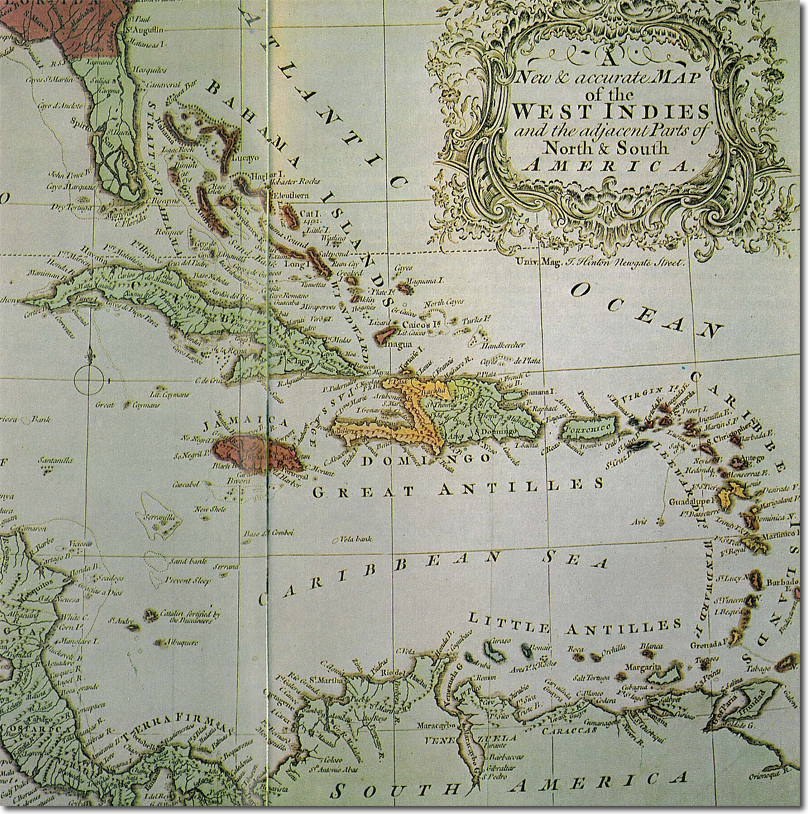
Shaw’s experience moving molasses from the Caribbean to mainland North America was useful as New England went to war in 1775. The army outside Boston needed gunpowder and weapons, things that were on sale in West Indies as long as Americans had money to pay for them and ships to carry them past Royal Navy patrols.

In fact, Nathaniel Shaw started to trade in military supplies even before the war began. On their website the authors of a new book, Two Revolutionary War Privateers: William and Joseph Packwood of Connecticut, describe the voyage that the older of those two brothers undertook on Shaw’s orders:
Capt. William set sail on 7 Feb 1775 on the Macaroni with orders to obtain as much gunpowder and arms as he could. He visited many Caribbean islands in his search. After a three-week time period, Capt. William was at Anguilla (British) which is 230 miles east of Puerto Rico. . . .

Unable to purchase gunpowder at most places he stopped, Capt. William made his way down the Leeward Islands to St. Eustatius (Dutch) on March 1, Martinique (French) on March 4, and Dominica (French until 1763, then British) on March 6. . . .

Capt. William then went to Guadeloupe (French) on March 7, back to St. Eustatius on March 9, and finally to Haiti (French) on March 15. During the last half of March, he went back and forth between two of the major trading ports in Haiti: Môle Saint-Nicolas on the northwest tip of the island and Cap-Haïtien (called Cap François at the time) on the north coast midway to the Dominican Republic, the Spanish part of the island. He returned to St. Eustatius on April 9 and then went back down to the Môle on April 16.
Back in Connecticut, Shaw was keeping a keen watch on the markets. On 6 April, he wrote to a merchant in Guadeloupe that gin was selling slowly in New York and “Nothing will command cash but Molas. and Powder.” Two days later, after a request that Samuel Holden Parsons passed on for Roger Sherman, Shaw ordered “fifteen Tons of Lead” from his usual trading partners in Philadelphia.

On 25 April, soon after New London received word of the fighting in Massachusetts, Capt. Packwood returned to port. Shaw immediately wrote to Gov. Jonathan Trumbull:
Agreable to your Desire I have Sent up Eighty Three Barrels of Powder to Colo. Jed. Huntington Containg about 108 Each

the Remainder is in this Town I hourly Expect Thirty Two Barrels more that I have Account of the Capt. having it on bord

the Remainder of what Moneys was in My hands Capt William Packwood left with Capt. Jno. Mckibbin who is in One of my Vessels in the West Indies to Lay out in the first Powder that Arives, he says that a large Quantity was Daly Expected

he purchased all that Could be had and thought it best to push home with this Rather than Tarry Longer—this Quantity he Obtain’d through the Influence of the Famous Palunkey (who was An Old Commander of a Private Tear the Warr before Lasts) who Prevailed with the Governour of the Cape to take it out of the Kings Store—

In Short Packwood Says the French Seem to be Disposed in the Islands to Assist in this way as Much as in their power, I Intend he Shall Sail Again for the Cape Next Week and I Don’t Imagine he will be Gone More than Six weeks If you Intend to have any more Money Laid out in that way it will be a good Oppertunity 
The same day, Shaw told his New York connection that Packwood had brought back “fifty One Hogsheads and Eleven Terses of Mollasses and four hogsheads of Cocoa.” That voyage wasn’t just about military supplies. And Shaw hadn’t lost his usual “hope you’l Save the Dutys” by evading the Customs men.

TOMORROW: Placing a bigger order.

Friday, February 13, 2015

Visit Washington’s Headquarters, 19 Feb.

On Thursday, 19 February, Ranger Garrett Cloer of the National Park Service will lead special tours of the Cambridge mansion that was Gen. George Washington’s home and headquarters from July 1775 to early April 1776. That estate is now the Longfellow House–Washington’s Headquarters National Historic Site.

How did the generalissimo spend his own birthday there? Probably working. Washington’s earlier diaries don’t note any special events or reflections on the two days that could be considered his birthday: 11 February (the date on which he was born under the Julian Calendar) or 22 February (the equivalent under the Gregorian Calendar, which he eventually preferred for birthday celebrations).

Gen. Washington’s letter to Gov. Jonathan Trumbull of Connecticut on 22 Feb 1776 gives a taste of the matters he was dealing with:
In my letter to you of the 19th instant [i.e., of this month] I mentioned to you that I was sorry to find there would come but 4217 pounds of powder instead of 6 or 8000 I had expectations of—I had taken my information from [Rhode Island] Governor [Nicholas] Cooke’s letter which upon a reperusal I find mentions that weight including the Casks. I have since had it weighed by the Commissary, an exact return of which you have inclosed; by which you will see, that the Net weight is 3577 lbs. 577 lbs. thereof will be placed to the credit of your Colony and the whole settled for in whatever manner will be most agreeable.

I have just received a letter from J[abez]. Huntington Esqr. with the agreeable account of his having forwarded two tons of powder to this Camp, by your order. Accept Sir of my thanks for this seasonable supply. When it arrives I shall send you an account of it; and when you point out the mode it shall be paid for, or replaced in the manner you and the rest of your legislature shall think proper.
In a couple of weeks, that gunpowder would be used to start an artillery attack on British-held Boston, which in turn covered up a move onto the heights of the Dorchester peninsula.

Back to the tours of Washington’s headquarters! They start in the visitor center at the back of 105 Brattle Street in Cambridge. They’ll begin on the hour from 3:00 to 6:00 P.M. and last forty-five minutes. These tours are free, but space is limited, so call 617-876-4491 to reserve a spot.

Tuesday, March 23, 2010

“The Standard of our Second Regiment”

A lot of analyses of American and other national flags discuss what the colors symbolize. In fact, those meanings got attached to the banner years after it had been established. In 1782, a Continental Congress report on a seal for the United States noted that it contained the colors of the national flag and said:

White signifies purity and innocence, Red, hardiness & valour, and Blue, the color of the Chief (the broad band above the stripes) signifies vigilance, perseverance & justice.
Sometimes, however, color symbolism was a luxury an army couldn’t afford. On Monday, 19 June 1775, Gov. Jonathan Trumbull of Connecticut met with that colony’s Committee of War on various matters, including flags:
It was moved and represented that the colour of blue, being ordered for the Standard of our Second Regiment, cannot be obtained, &c.

Voted, That the colour of green be substituted in its stead.
So much for “vigilance, perseverance & justice,” I guess.

Saturday, February 09, 2008

Why Is the Town of Boston Now Shut Up?

The Eighteenth-Century Reading Room blog offers a look at Connecticut governor Jonathan Trumbull’s 28 Apr 1775 letter to Gov. Thomas Gage, and Gage’s 3 May reply. Both letters were composed for public consumption, trying to grab the moral high ground after the Battle of Lexington and Concord. Basically, Trumbull asked, Why are you acting as if there were a war going on? And Gage answered, Why are you writing as if there weren’t?

Connecticut and Rhode Island were alone among Britain’s North American colonies in electing their governors. Massachusetts had had the same system at first settlement, but was later turned into a “royal” province. That meant its governor, like those in all the other colonies but its southern neighbors, was appointed by the ministry in London. The Connecticut and Rhode Island governors were therefore more independent of the Crown and more beholden to popular opinion. Trumbull kept right on being elected governor as Connecticut became independent.