


J. L. BELL is a Massachusetts writer who specializes in (among other things) the start of the American Revolution in and around Boston. He is particularly interested in the experiences of children in 1765-75. He has published scholarly papers and popular articles for both children and adults. He was consultant for an episode of History Detectives, and contributed to a display at Minute Man National Historic Park.

Subscribe thru Follow.it


•••••••••••••••••


Showing posts with label Bolton. Show all posts

Friday, June 17, 2022

“The Case of the poor Boy, Calvin Piper”
In 1758, a young man named John Piper bought farmland in Bolton. He married around the same time, and from 1759 to 1765 Mary Piper had four children in Bolton. The third was a boy named Calvin, born 11 Apr 1763.

In 1764 John Piper, alongside his brothers and several neighbors, started buying farmland to the west in the town of Templeton. The next year, John moved his family onto sixty acres there.

After another few years, the Piper family moved again, this time back east to Westborough. A family genealogist found no evidence John Piper bought land in that town and guessed he “had decided to rely on his work as a tanner to support the family.” It’s also possible that the Pipers were now poor enough they had to work on other people’s land.

On 29 Apr 1774, Westborough’s minister, the Rev. Ebenezer Parkman, wrote in his diary:
At Eve came Mr. John Piper who is newly come to live among us, and asks the privilege to communicate with us, as also that his Wife Mary, may; they being Members of the Church in Templeton.
The Pipers were trying to fit into the Westborough community and congregation.

That summer, many Massachusetts towns became even more roiled in imperial politics than they were already. On 1 August, Westborough had a town meeting about “Subscribing the Agreement” and “bearing of the Charge of the Congress.” 

On that same Monday, Parkman wrote:
Martin Piper, a Lad in his 12th Year, was thrown by a Colt, and his Head came down on a Rock, nigh Mr. Newtons. He was carryed in there. It was feared to be a mortal Blow. Mr. Newton came in haste for me. I went. He was delirious. Dr. [James] Hawes soon blooded him. He bled well. Vomited Several Times — inclined to sleep; when any thing was given him, he cryed out bitterly, but could not speak. I prayed with him. What a Warning! Especially to Youth! But how great the Mercy he was not killed! His parents much distressed.
As subsequent journal entries make clear, this was Calvin Piper. In his distress, and not knowing the family well, the minister mistakenly called him “Martin” (after another Protestant leader?).

Delirium, vomiting, sleepiness—those are all symptoms of a serious head injury. Parkman was not optimistic (but then he rarely seems to have been). The next day, the minister visited the house of militia lieutenant Joseph Baker “to see young Piper”—despite his injury, the boy had been moved. Parkman wrote, “He is no better. Prayed with him.”

On Saturday morning, a coterie of rural surgeons came to Baker’s house. In addition to the local Dr. Hawes, Parkman also listed Charles Russell of Lincoln (politically a Loyalist, but still valued as a doctor), Edward Flynt of Shrewsbury, and “a Number of Doctors besides being there on the Case of the poor Boy, Calvin Piper.”

Fortunately, there were now good signs. The minister reported that the boy “last Evening began to recover his senses and to Speak—and is this morning composed and utters himself pertinently.”

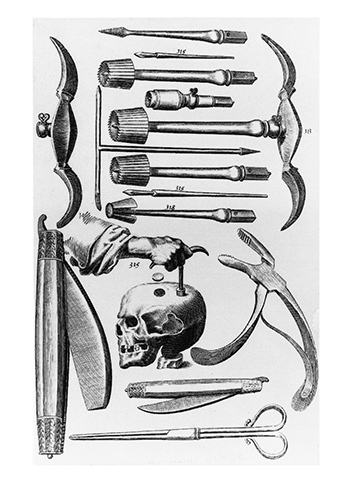
Still, those doctors had come prepared to trepan the kid—to drill a hole in Calvin’s skull to remove fluids and relieve pressure on his brain. They had no doubt brought their drills and other tools. It would have been a shame not to use any of that equipment.

TOMORROW: The operation and the aftermath.

Saturday, January 09, 2021

How Natty Martyn Grew Up

Last September, we got a passing glimpse of fifteen-year-old Natty Martyn, youngest son of the minister in Northborough in 1756.

Natty had a bad sore, and his family had begun to despair for him. The Rev. John Martyn took his son to Dr. Ebenezer Dexter in the neighboring town of Middleborough, and he recovered.

Natty Martyn’s father was a Harvard graduate, though he didn’t go into the ministry until fifteen years after graduating. In the early 1760s the family also hosted the retired Harvard Hebrew instructor Judah Monis, who had married Natty’s maternal aunt. But neither Natty nor his older brothers went to college.

Instead, Nathaniel Martyn became a physician, training in the field like most other country doctors of the time. He set up a practice in the town of Harvard, where his father had been the first town clerk and filled other offices in the 1730s. The doctor was assigned “ye Sixth Seat Below” at the Harvard meetinghouse.

On 23 Dec 1765, the twenty-four-year-old Dr. Martyn married twenty-year-old Anna Townsend of Bolton. Their first child, named Michael after one of his paternal uncles, arrived in September, but died within two weeks.

In his diary for 16 June 1767, the Rev. Ebenezer Parkman of Westborough recorded that he “rode by the way of Dr. Martyns to see him—and the fine Farms at Still River Corner.” Martyn had bought the large farmhouse built in 1749 by Moses Haskell. The Massachusetts Historical Commission called this property “One of Still River’s earliest and largest farms.” The house still stands on Still River Road, as shown above, though altered considerably for use as a Benedictine chapel.

When Parkman visited, Anna Martyn was expecting another child. The couple had two before the end of the decade:
  • Pamela, born 24 Aug 1767.
  • Nathaniel, baptized 13 Aug 1769.
There was at least one other member of the household. In May 1767, the selectmen of Harvard signed a printed form for Boston’s Overseers of the Poor certifying that Dr. Nathaniel Martyn was “a Man of sober Life and Conversation; and in such Circumstances, that we can recommend him as a fit Person to bind an Apprentice to.” On 19 November, those officials indentured a boy named Ebenezer Dumaresque to the doctor. Ebenezer was to come of age on 25 Nov 1781, meaning he was six years old when he moved out to Harvard, most likely to work as a household servant.

Sometime in 1769, it appears from real estate records, Dr. Martyn sold his property in Harvard to Peter Green, a younger physician from the Harvard class of 1766. The Martyn family moved to Bolton, Anna’s home town.

On 16 Aug 1770, the Rev. Ebenezer Parkman wrote in his diary:
Dined at Mr. Harringtons, who acquainted me with the proceedings at Bolton and with Mr. Goss’s present Case under Confinement to his Bed, by Lameness. N.B. Dr. Wait has the Care of him. The brief Story of Dr. Wait. Called at Mr. Josh. Townsends by reason of what has occurred lately relative to Dr. Nat. Martyn, who has lately absconded. His wife and two Children at Mr. Townsends.
Anna Martyn was back home in her father’s house. And Dr. Nathaniel Martyn was nowhere to be found.

TOMORROW: Can this marriage be saved?

Friday, December 28, 2012

The Voices of British Soldiers

Folks might recognize Don Hagist’s name from the British Soldiers, American Revolution blog. He digs out details about the enlisted men who were part of the British government’s effort to hold onto those thirteen rebellious North American colonies. His research can turn some faceless redcoats into individual people.

Often that task involves paging through muster rolls, pension grants, court-martial records, and other British military documents now stored at the National Archives at Kew. Unfortunately, there’s no British equivalent to the American pension application system, which (in lieu of systematic record-keeping during the war) required veterans to provide detailed narratives of their service. That means most British soldiers are preserved as names on a few documents without a line connecting those dots.

A few redcoats left detailed personal narratives. One of Don’s earlier books was an edition of Sgt. Roger Lamb’s postwar writing that collected all his first-hand military experiences in one volume. Don’s new book, British Soldiers, American War: Voices of the American Revolution, reprints nine shorter narratives of service in the king’s army (as well as the samples of the work of two military poets, including John Hawthorn). The narratives include the information taken down by the pension office, a letter written during the war to a potential patron, a convict’s dying words, and several published memoirs.

In each case, Don has checked and filled out the soldier’s own account with contemporaneous documentation, where available. Thus, the book includes the autobiographical “Dying Speech” of Pvt. Valentine Duckett, executed for desertion on Boston Common in 1774, and the record of his court-martial. Another court-martial fills out the story of Pvt. Thomas Watson, who survived to settle in Bolton, Massachusetts.

In some chapters Don describes other British soldiers whose careers parallel the main subject. For example, chapter 9, “The Aspiring Soldier,” is about William Burke of the 45th Regiment, who deserted to the Americans for more social and economic opportunity. That chapter also mentions Pvt. Thomas Machin of the 23rd, who did the same in July 1775 and eventually became Capt. Thomas Machin of the Continental Artillery. (I also discuss Machin in the big Washington study.)

You’ve probably spotted a significant pattern in these narratives: most of the memoirists ended up becoming American. Of the nine men profiled in the book, only two retired from the British army in good standing. Six deserted to the Americans or, in the case of Ebenezer Fox of Roxbury, deserted back to the Americans. Their recollections got published because in America those men became honored relics of our War for Independence.

British society simply wasn’t that eager to read the experiences of enlisted men. That may have been due to how societies don’t like to be reminded of wars they lose. But I think it reflects the aristocratic values of Georgian Britain. We see the pattern already right after the Battle of Lexington and Concord. The Massachusetts authorities published broadsides naming all the local men killed and wounded, regardless of rank. Gen. Thomas Gage sent home reports listing the officers killed but not the enlisted men. (Granted, that would have been a much longer list.) American culture valued ordinary individuals more.

Given the social stratification in Britain, it’s no surprise that several of these redcoats saw more opportunity on the other side of the conflict. One chapter of British Soldiers, American War documents how the army encouraged soldiers to learn to read and write, valuable skills in any large organization. But even an educated enlisted man was very unlikely to rise above sergeant.

As memoirists and as defectors, most of the men who left behind recollections for British Soldiers, American War were atypical. But of course all memoirists are atypical (at least until this era of self-publishing). And these men offer a rare peek into the daily lives of British recruits. Alongside Don’s research on recruitment patterns, demographic data, &c., the book is a top-notch source on the king’s soldiers during the Revolutionary War, “ordinary” men caught up in historical change.

British Soldiers, American War is handsomely designed (though, reflecting what Georgian artists were commissioned to paint, the cover art shows British officers instead of enlisted men). The profiles include images of some of their documentary sources. Eric H. Schnitzer’s drawings and detailed captions discuss the soldiers’ likely garments, which should increase the value of the book for reenactors. Thorough notes and index round out a fine volume.