J. L. BELL is a Massachusetts writer who specializes in (among other things) the start of the American Revolution in and around Boston. He is particularly interested in the experiences of children in 1765-75. He has published scholarly papers and popular articles for both children and adults. He was consultant for an episode of History Detectives, and contributed to a display at Minute Man National Historic Park.

Subscribe thru Follow.it


•••••••••••••••••


Showing posts with label Daniel Harrington. Show all posts

Sunday, August 29, 2021

Spinning Bee Tableau in Lexington, 31 Aug.
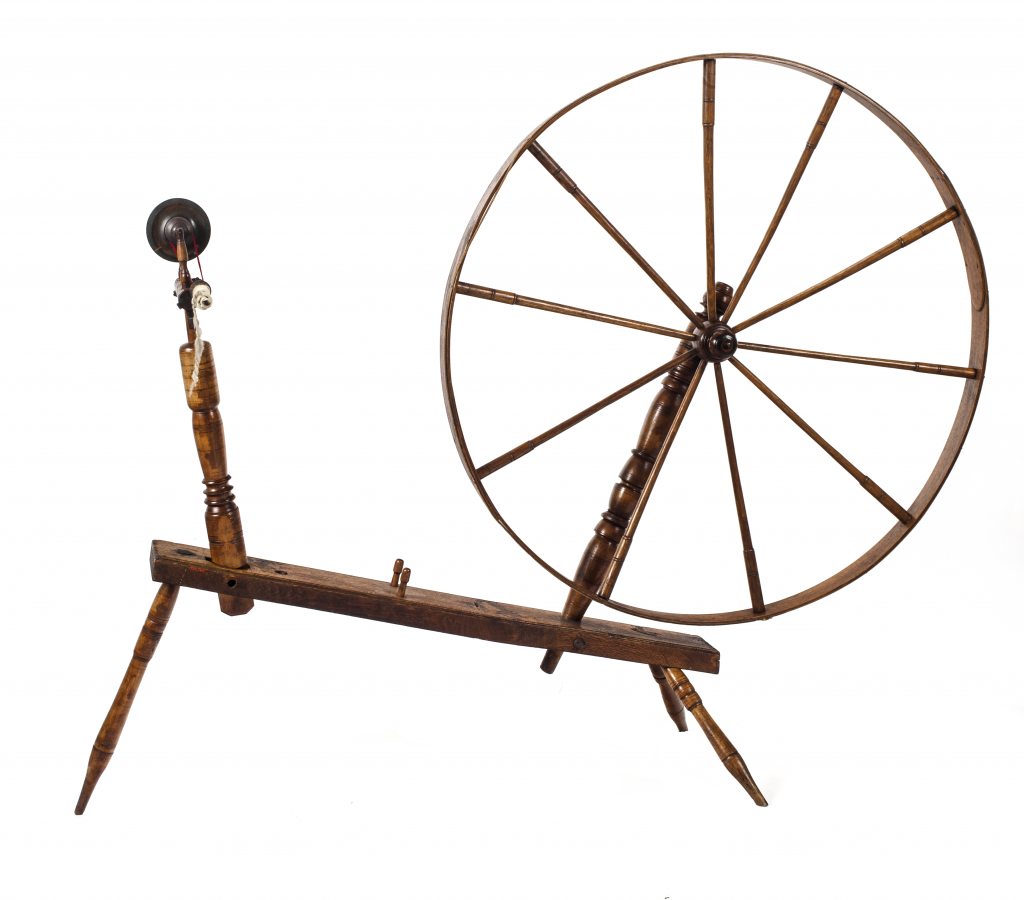
On Tuesday, 31 August, LexSeeHer, an organization dedicated to recognizing women’s history in Lexington, will gather at the site of a spinning bee in 1769.

According to a report from Lexington in the Boston Gazette, on 31 August of that year:
Very early in the Morning, the young Ladies of this Town, to the Number of 45, assembled at the House of Mr. Daniel Harrington, with their Spinning-Wheels, where they spent the Day in the most pleasing Satisfaction: And at Night presented Mrs. Harrington, with the Spinning of 602 Knots of Linnen, and 546 Knots of Cotton.
Daniel Harrington’s wife Anna, who no doubt did much of the organizational work for this event, was from the Munroe family. There were lots of Harringtons and Munroes in Lexington, not to mention their like-minded neighbors.

Such spinning bees were a way for colonial women to support the manufacture of cloth in the province, thus aiding the non-importation strategy to end the Townshend duties. They demonstrated the broad popular base of that protest movement and, given women’s supposed freedom from profit-seeking and politics, lent a moral air.

Even 1,148 knots of yarn wouldn’t make a lot of cloth, and the thread these busy amateurs made probably wasn’t as fine as what professionals in Britain produced. But symbolically such public actions were important. This gathering took place next to Lexington’s common, so it was a visible event, and the newspaper report amplified the news.

LexSeeHer plans to stage “a tableau representing these brave, industrious women.” Eventually they hope to sponsor a monument dedicated to Lexington women's history nearby.

This gathering is scheduled for Tuesday, 31 August, at 6:00 P.M. at 3 Harrington Road.

Monday, August 05, 2019

“At the House of Mr. Daniel Harrington”

On 16 Oct 1769, Edes and Gill’s Boston Gazette ran this news item with the dateline “Lexington, Aug. 31, 1769.”:
Very early in the Morning, the young Ladies of this Town, to the Number of 45, assembled at the House of Mr. Daniel Harrington, with their Spinning-Wheels, where they spent the Day in the most pleasing Satisfaction: And at Night presented Mrs. Harrington, with the Spinning of 602 Knots of Linnen, and 546 Knots of Cotton.

If any should be inclin’d to treat such Assemblies or the Publication of them, with a Contemptuous Sneer, as thinking them Ludicrous: Such Persons would do well first to consider what would become of one of our (so much boasted) Manufactures, on which we pretend the Welfare [of] our Country is so much depending, if those of the fair Sex should refuse to lay their “Hands to the Spindle,” or be unwilling to “hold the Distaff.”
The quotations at the end were noted as coming from “Prov. 31. 19.”

The phrase “Very early in the Morning” also appeared in an earlier report about a similar spinning meeting in Beverly. Getting to work early was a sign of diligence.

The “Number of 45” was of course a symbol of John Wilkes’s reform campaign in London.

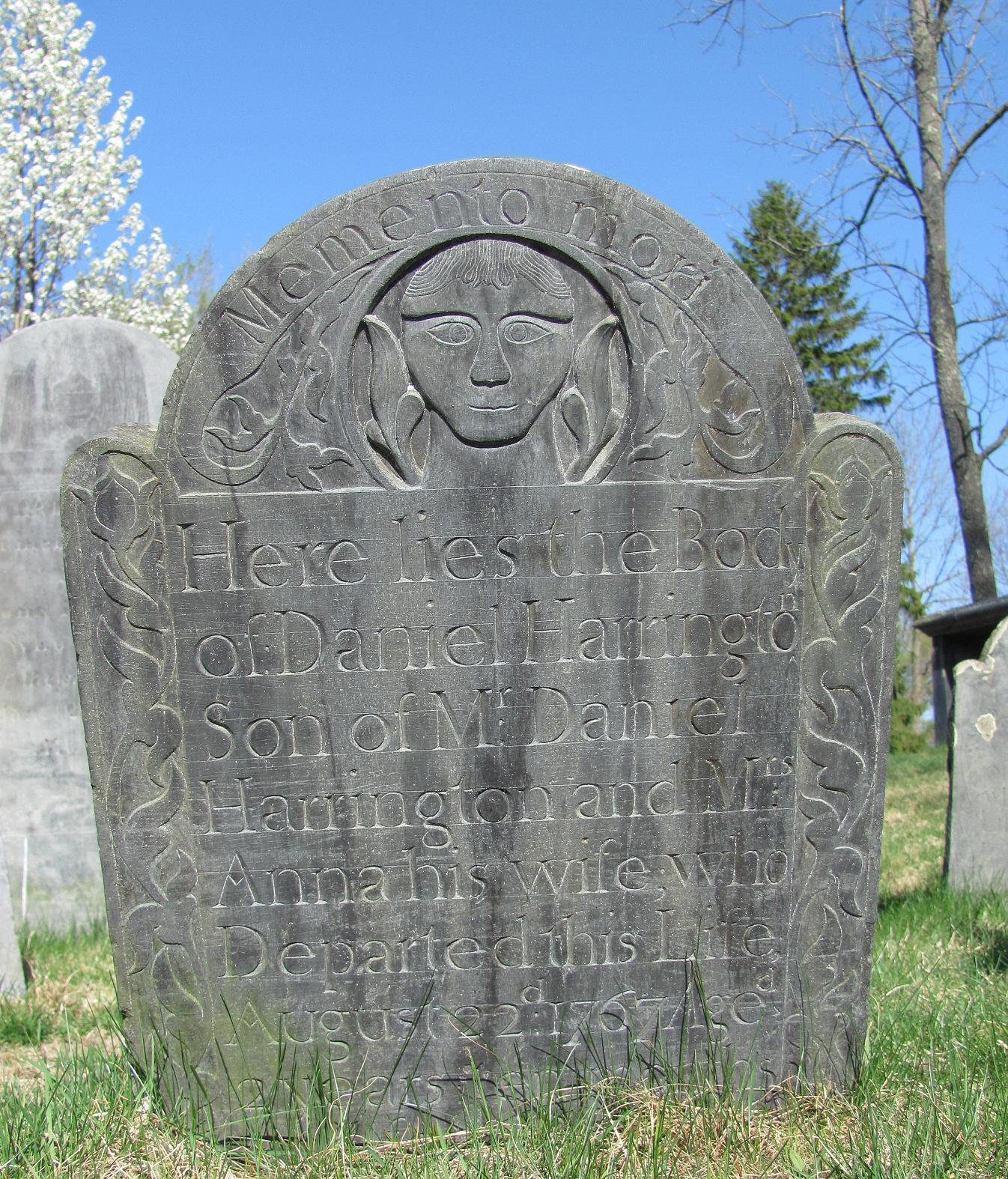
Daniel Harrington (1739-1818) was a young man whose house faced the Lexington common. In May 1760, shortly before turning twenty, he had married Anna Munroe. Their first child arrived six months later, and by 1769 they had four living children plus one—Daniel, Jr.—memorialized by the stone shown above. By 1775 Harrington would be clerk of the Lexington militia company, later rising to captain. He became a selectman in 1777 and was chosen to lead the singing in the meetinghouse in 1781.

Perhaps the most puzzling detail of this article is that a month and a half had passed since the Lexington spinning meeting. The Gazette had run reports on several similar events in the preceding months, and it would no doubt have welcomed this one as well. Someone in Lexington had to prepare the report, however; Richard Kollen speculates that was the Rev. Jonas Clarke. In many towns, the minister hosted the spinning and received the results, but not here, and perhaps that caused the delay.

The second paragraph of the report, chiding people who dismissed spinning meetings, indicates some people were indeed sneering at those events. And to be true, they didn’t produce enough good thread to have practical value. But these events were important to the Whig movement as propaganda—so they had to get into the papers.

TOMORROW: Lexington looks back on this spinning meeting.