J. L. BELL is a Massachusetts writer who specializes in (among other things) the start of the American Revolution in and around Boston. He is particularly interested in the experiences of children in 1765-75. He has published scholarly papers and popular articles for both children and adults. He was consultant for an episode of History Detectives, and contributed to a display at Minute Man National Historic Park.

Subscribe thru Follow.it


•••••••••••••••••


Showing posts with label John Glover. Show all posts

Tuesday, March 18, 2025

William Browne, John Glover, and a Farmhouse in Swampscott

Save the Glover is a campaign by several historic organizations in Swampscott and neighboring towns to preserve an eighteenth-century farmhouse.

The house was originally built in the third quarter of the 1700s by William Browne (1737–1802), a wealthy and respected lawyer. It was his country estate since he already owned a mansion in Salem, as well as part of a family seat in what’s now Danvers.

Browne was elected to the Massachusetts General Court in 1762. Though he joined the Customs service in 1762 as collector for the port of Salem, he favored local merchants enough to keep getting reelected—until he voted to rescind the Circular Letter of 1768.

After that, Browne was firmly on the side of the royal government. Gov. Thomas Hutchinson rewarded him with appointments: as colonel of the Essex County militia, as judge in the county court, and eventually as the last royal appointment to the Massachusetts superior court in 1774. That same year, the London government named him to the mandamus Council.

Refusing to resign from the Council made Browne unpopular locally. Dozens of militia officers refused to serve under him. He moved to Boston late in 1774, to Britain in 1776, and to Bermuda as royal governor in 1781. The state of Massachusetts confiscated Browne’s real estate, including that country house and land.

Gen. John Glover (1732–1797) of the Continental Army bought the property and moved in with his second wife in 1782. He lived there for the rest of his life, welcoming fellow veterans and serving in local offices.

In 1793 the Rev. William Bentley recorded how “the general received us with Great Hospitality” when a committee came through to settle the boundaries of Marblehead, Salem, and Lynn. Glover evidently felt he still lived in Marblehead, but surveyors determined that his house stood in a narrow splinter of Salem which later became part of Swampscott.

The property remained a farm through the nineteenth century. The photo above shows how it looked about 1910. In the twentieth century, the original house became the core of a larger inn and then restaurant, both named, in fine Colonial Revival fashion, for Gen. Glover. For the last thirty years or so, however, that complex has been abandoned.

Originally the Save the Glover campaign sought to preserve the house from being taken down for a new residential development (to be called Glover Residences, naturally). However, the developer has scrapped that project. Now weather and decay are the biggest dangers to the Glover house.

Sunday, March 17, 2024

Anderson on the Glover Houses of Marblehead, 18 Mar.

On Monday, 18 March, Judy Anderson will discuss “Five Glover Houses in Marblehead” at the Abbot Public Library.

Registration to attend this event in person has been closed, but I believe people can still listen in on Zoom.

The event description says:
Dive into Marblehead’s architectural heritage through a talk about five Glover family homes from the mid-1700s, with photos, beginning with General John Glover’s handsome Georgian-style home located on today’s Glover Square, near the public Town Landing on Front Street. Glover’s heroism in the American Revolution is well known. But this talk will feature stories about the homes, lives and families of General Glover and his three brothers.

General Glover’s home is one of Marblehead’s most significant houses, among nearly 300 homes that still survive from the 1700s, before the American Revolution began in 1775. Its elegant front doorway frame also makes it among the most stylish, since only about a half dozen from that time remain that were not updated or remodeled as styles changed. Unlike most homes from the 1700s, the Glover house also retains much of its original interior woodwork craftsmanship. In addition, one of its two front rooms has finely carved woodwork in the “Federal” or neoclassical style, from the decades before the War of 1812.

In 1781, toward the end of General Glover’s retirement from nearly seven years of grueling service in the Revolution, he purchased a farmhouse that is now located on a uniquely shared historic site in Swampscott, Marblehead and Salem. The house is thought to have been built in the 1750s in what was then Salem, though new evidence suggests it may have been built as early as 1732, the year Glover was born.

Over the fifteen years before General Glover’s death in 1797, he would serve in elected offices on the local, regional and state level, including as a Marblehead selectman, a Massachusetts state legislator, and on state committees that ratified the U.S. Constitution and oversaw land distribution in northern New England.
Judy Anderson is a social and cultural historian with a focus on architecture, daily life, and women’s and family history. She was curator of Marblehead’s Jeremiah Lee Mansion for a decade, and can lead expert walking tours of the town.

This talk coincides with a campaign to “Save the General Glover Farmhouse,” the home John Glover bought in 1781. Before the Revolution, that house had belonged to Superior Court justice William Browne.

This event will run from 6:30 to 8:00 P.M. Here is the link to attend by Zoom.

Wednesday, July 12, 2023

Events in Marblehead and Quincy, 15 July

Weather permitting, on Saturday, 15 July, folks in Boston’s North Shore and South Shore regions can both enjoy local Revolutionary-era events on the grounds of historic sites.

The recreated Glover’s Marblehead Regiment will hold its annual encampment at Fort Sewall from 10:00 A.M. to 5:00 P.M. Scheduled events include:
  • 10:15 A.M. and 2:00 P.M.: Children’s Drill
  • 10:30 A.M.: March through town with music past Gen. John Glover’s home
  • 11:30 A.M.: Skirmish with Crown forces at Seaside Park
  • 3:30 P.M.: Battle with Crown forces on Gas House Beach
  • 5:00 P.M.: Cannon salute to close camp, followed by sea chanties
Meanwhile, down in Quincy from 11:00 A.M. to 2:00 P.M. the Dorothy Quincy Homestead will host Henry Cooke speaking on and demonstrating “The Tailor’s Art: Making Clothing and Making a Living in 18th-Century New England.”

Cooke is an internationally recognized expert on Revolutionary-era tailoring, having among other commissions created clothing for figures of George Washington on display at Mount Vernon. He’s also a stalwart of local reenactments—his face will be familiar to anyone who’s enjoyed the tea meetings in Old South Meeting House in recent years.

Tuesday, February 14, 2023

“The Soldiers are tired of the Camp”

Dr. Benjamin Church, Jr., had plenty to tell his British intelligence contact, Maj. Edward Cane, about the state of the Continental Army.

The Continental surgeon general wrote in his 24 Sept 1775 letter:
A difficulty will soon cause one much greater than perhaps they are aware of at this time, tho’ many of them (that is the Officers) begin to Quake what they will do in December, then the time is Expired for which they inlisted for, and the Soldiers are tired of the Camp, wish for home, many will come in their Stead I am sensible, but they will not so readily get another Army together as they have this.

The return that was made to the General of the Army last week was 22,540 Men. . . .

Great disturbences in the Camp of late with Mutinying, many Soldiers are now Confined in Guard for Mutiny.
There were indeed two mutinies in the Continental ranks earlier in that month.

One was the uprising of the Pennsylvania riflemen described here. They were protesting about a sergeant being confined, and then about one of those protesters being confined, and ultimately thirty-two more men were confined. A court-martial fined them a rather small amount, for the benefit of Church’s hospitals, but they lost a lot of their privileges as riflemen.

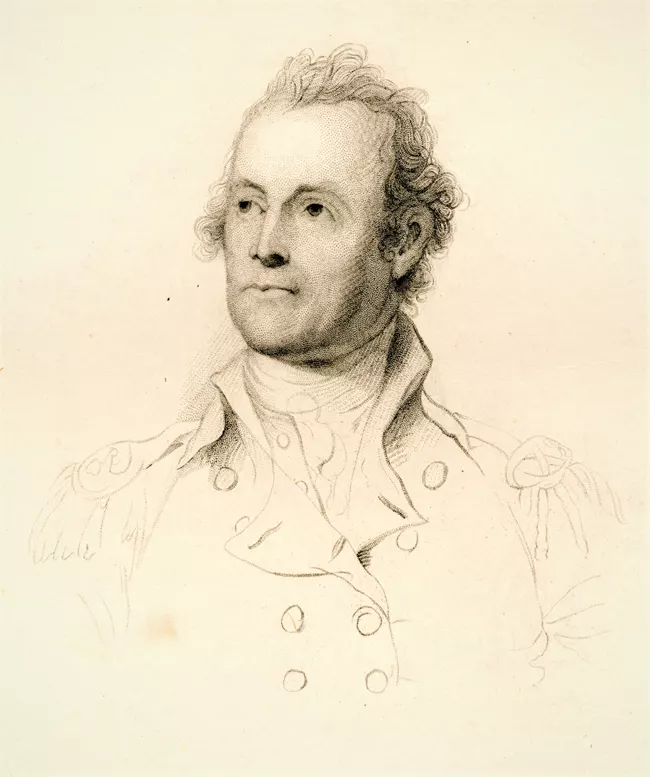
Around the same time, the soldiers assigned to the armed schooner Hannah refused to sail out of Beverly, probably angling for better prize money. Gen. George Washington had Col. John Glover (shown above) mobilize the local militia, arrest those men from his own regiment, and march them to Cambridge. On 22 September, the general orders announced that thirty-six men had been found guilty of “Mutiny, Riot and Disobedience of orders.” One was sentenced to be whipped 39 times and drummed out of the army.

At the same time, other parts of the Continental Army were still gung-ho. There were those thousand volunteers who marched off to invade Canada this same month, for example.

As Church noted, the real looming problem would come at the end of the year. The New England colonies had enlisted their armies only until then. In October, Washington would meet with his generals, delegates from the Continental Congress, and local political leaders about recruiting a new army for 1776. But the transition from one set of men to the next was a scary prospect.

Church’s letter in Gen. Thomas Gage’s files shows that the British command inside Boston was aware of that transition. But they didn’t try to take advantage of the besiegers’ weakness over the winter, as Washington feared. The British generals wanted to leave.

TOMORROW: Officers behaving badly.

Tuesday, February 07, 2023

“To transport these Men to Kennibeck”

When Dr. Benjamin Church wrote his intelligence report on 24 Sept 1775, the latest big event along the Continental lines was the departure of volunteers heading north.

Those men were under the command of Col. Benedict Arnold (shown here), respected for his part in taking Fort Ticonderoga and other Crown positions along Lake Champlain.

Church knew Arnold. In fact, the doctor had been the ranking member of the Massachusetts Committee of Safety who had signed Arnold’s orders for that mission to Ticonderoga on 3 May. In August he headed the committee to review the colonel’s expenses, an interaction that didn’t go so smoothly. (Ironic moments, since Church was already supplying the Crown with secrets and Arnold would do so later.)

In late August, Arnold met with Gen. George Washington and gained approval for a quick thrust through Maine to Québec, meeting up with Gen. Richard Montgomery’s force advancing from New York. The commander’s general orders for 5 September called for “such Volunteers as are active woodsmen, and well acquainted with batteaus,” to march under Arnold’s command. About a thousand men responded, and most of them left Cambridge on 13 September.

Although the destination of that column was supposed to be secret, lots of people suspected. For example, on 13 September Jesse Lukens, a volunteer from Pennsylvania, wrote:
Col. Arnold having chosen one thousand effective men, consisting of two companies of riflemen, (about one hundred and forty,) the remainder musqueteers, set off for Quebec, as it is given out, and which I really believe to be their destination. I accompanied on foot as far as Lynn, nine miles.
Starting on 20 September, newspapers in New York and Philadelphia reported on Arnold’s departure for Québec, citing reports from Cambridge. New England newspapers were more cagy about his destination, but the secret was out.

Dr. Church mentioned the overall Canada campaign three times in his letter, starting with the second sentence and ending just before his request for money:
The fifteen hundred Men that you had news of going to Quebec are going to Halifax (I believe) to destroy that place, . . .

An Express from Ticondiroga, says that they had been Ambushed but foursed their way through with the loss of 13 Men and they on their advancing forward found on the ground ten Indians dead, that the Army was within one Mile and a half of St. Johns, on which they sent a party of Men to Cut of the Communication between Montreal and the Fort. . . .

The Vessells I mentioned that was fiting at Salem was to transport these Men to Kennibeck as I find since, I am not Certain they are gone to Halifax but it is thought and believed they are.
This letter shows that even the British commanders inside Boston had received word of “fifteen hundred Men…going to Quebec” and asked Church about it. But the doctor suspected they were headed to Nova Scotia. When he began this dispatch he was certain about that; by the end, he wasn’t so sure but still thought that was most likely.

In fact, the Continental generals had talked about an attack on Halifax. Immediately after hearing about the shortage of gunpowder on 3 August, Washington and his council of war discussed raiding Crown outposts with powder stores. Col. John Glover leased a schooner called the Hannah.

By mid-September, however, plans had changed. Washington had ordered the Hannah to try attacking British supply ships instead. He wrote to the merchant Nathaniel Tracy to arrange for several more ships to carry Arnold’s one thousand men from Newburyport up to the mouth of the Kennebeck River.

Church’s expectation of an attack on Halifax might have been accurate at one point, but not any longer.

COMING UP: More details from the Continental camp.

Sunday, July 12, 2020

The Speakman Brothers at War

When we left the Barnes and Speakman families in Marlborough in the fall of 1770, they appear to have arrived at some sort of truce.

Henry Barnes continued to run a potash manufactory and general store. Older brother William Speakman probably managed the farming land while younger brother Gilbert Warner Speakman set up a tannery.

Four years later, in the summer of 1774, Parliament’s Coercive Acts radicalized the Massachusetts countryside far more than it had been before. Marlborough held a town meeting to endorse the Solemn League and Covenant, the strictest boycott yet on British goods and people selling them in America.

On 8 July, John Rowe, uncle and mentor of the Speakman brothers and then trimming toward the Crown, wrote in his diary:
I heard of the bad behaviour of the people at Marlborough; its said the Speakmans were concerned; if it proves so, they have not only behaved ill, but contrary to my sentiments, and forfeited my regard in future for them.
Then came the “Powder Alarm” of 2 September, when thousands of Middlesex County militiamen poured into Cambridge, spurred by Gen. Thomas Gage’s seizing of gunpowder from a provincial storehouse and false rumors of British military atrocities. The Marlborough militia companies were prominent in that action according to Boston merchant John Andrews:
Though they had an account at Marlborough of the powder’s being remov’d, last Thursday night, yet they were down to Cambridge (which is thirty miles) by eight o’clock Fryday morning, with a troop of horse and another of foot, both under the command of Gib. Speakman, a young fellow who serv’d his time with John Rowe.
When the real war came in April 1775, William Speakman marched with the Marlborough militia infantry. (That is, in fact, the last record I’ve found of him.)

Gilbert Warner Speakman became a captain in Col. John Glover’s regiment, drawn mostly from Marblehead, at the start of 1776. On 17 March, the British military evacuated Boston, taking many Loyalist families with them, including Henry and Christian Barnes.

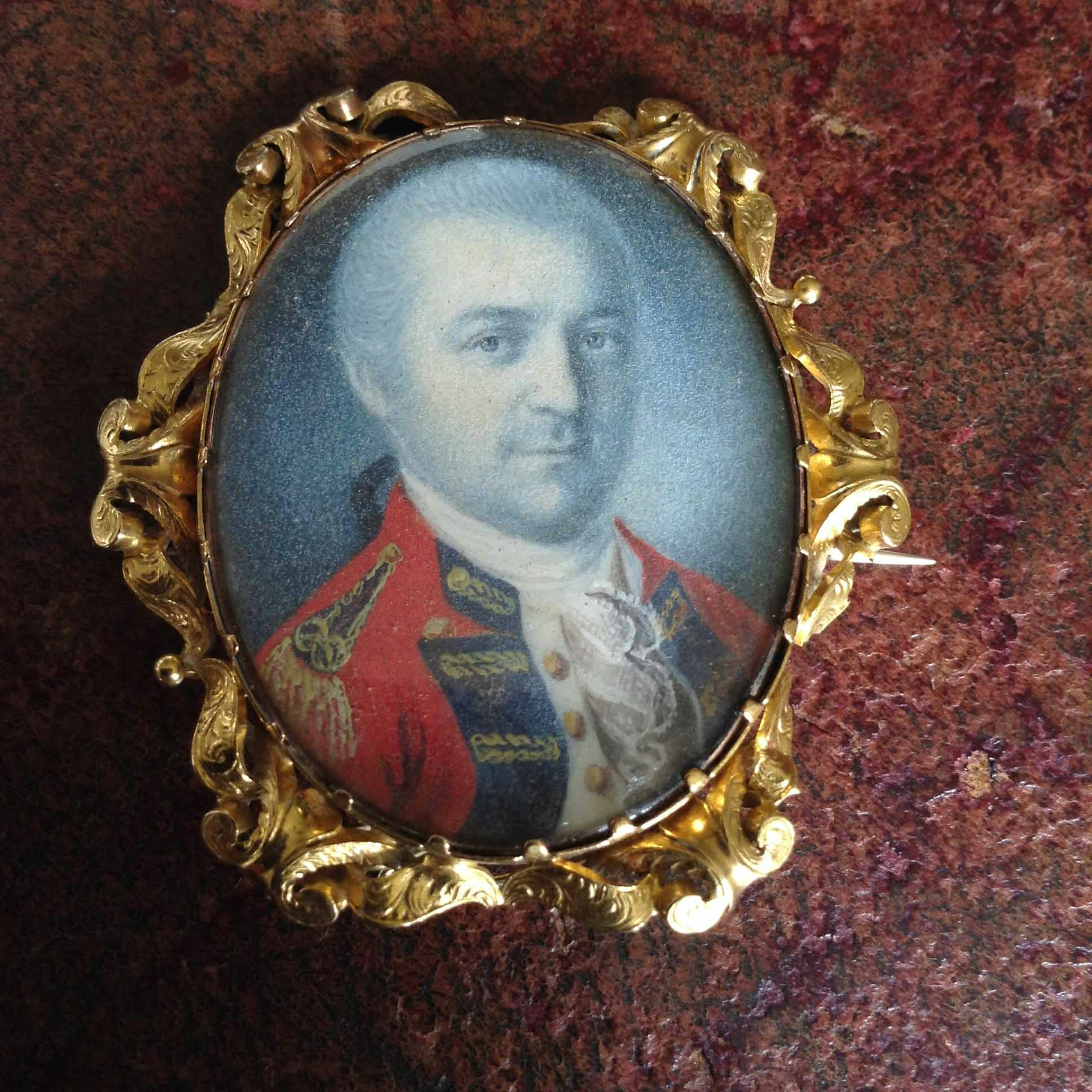
The Speakmans’ uncles, John Rowe and Ralph Inman (shown above, courtesy of the Boston Athenaeum), stayed behind to tough out the change in political power. Just one week after the evacuation, with the British fleet still massed off shore, Rowe wrote in his diary:
I dined at Mr. Inman’s with him, Mrs. Inman, Genl. [Nathanael] Green, Mrs. [Catherine] Green, Tuthill Hubbard, Mrs. Forbes, Mr. Lowell [?], Mrs. Rowe, and Capt. Gilbert Speakman.
Rowe had regained his regard for his nephew, now that that nephew was on the winning side.

In May 1776, Capt. Gib Speakman advertised for deserters from his regiment. Those newspaper notices provide valuable descriptions of how Marblehead soldiers were dressing.

The next year, Capt. Speakman transitioned to being commissary of military stores at Springfield and then commissary of ordnance for the ill-fated Penobscot expedition of 1779. He offered damning testimony in the court-martial of Paul Revere. Revere was acquitted while Speakman was still petitioning the Massachusetts legislature for reimbursement for that mission in 1798.

The Speakmans expected to marry within the same class and religion, as their aunts had done by marrying Rowe and Inman. That became more difficult after the evacuation of so many genteel Anglican families as Loyalists. Gib Speakman and his sisters Hannah and Sarah all ended up marrying siblings in the Minot family of King’s Chapel, including historian George Richards Minot.

Wednesday, July 05, 2017

Gen. Washington at His Headquarters in Cambridge, 8 July

On Saturday, 8 July, John Koopman will once again portray Gen. George Washington at his Cambridge headquarters, now the Longfellow House–Washington’s Headquarters National Historic Site.

That date is the anniversary of when the Massachusetts Provincial Congress’s Committee of Safety voted to fix up the mansion belonging to John Vassall for the new commander-in-chief. Vassall, a Loyalist, had left a very fine house behind when he moved into Boston.

After arriving on 2 July, Washington and Gen. Charles Lee first stayed in the house usually reserved for the Harvard College president. Back in 2012, I shared my thinking on why Washington preferred to move to the Vassall house.

It’s not exactly clear who was in the John Vassall House in early July. Massachusetts Committee of Safety records for 15 May refer to moving “the three companies at Mr. Vassal’s house” out to “Mr. Foxcroft’s house.” Four days later, the committee proposed to use the Vassall house itself, “as soon as General [Artemas] Ward shall provide for the soldiers in said houses in some other places.”

But then came the Battle of Bunker Hill. The provincial army suddenly needed more hospital space for the wounded, and on 22 June Col. John Glover’s regiment was summoned from Marblehead to Cambridge to strengthen the siege lines. Washington’s account book states that the Vassall house “had been occupied by the Marblehd. Regimt” before he moved in, but no other source offers more information about that.

On 28 June, Ward ordered “That Lieut.-Colonel [William] Bond occupy one room, in the south-east corner of Col. Vassall’s house, upon the second floor, for the sick belonging to said regiment.” That was the regiment of Col. Thomas Gardner. Its medical staff consisted of Dr. Abraham Watson, Jr. (1752-1804), of Cambridge as surgeon and Dr. William Vinal (1752-1781) of Watertown as his mate. Though Watson and Vinal, classmates in the Harvard class of 1771, weren’t formally commissioned until early July, they probably treated the wounded in the Vassall house. That may even have been where Col. Gardner himself died of his wounds on 3 July.

Washington’s return visit to his headquarters at 105 Brattle Street will take place on Saturday from noon to 4:00 P.M. The site is free to all visitors, but Cambridge parking rules apply to nearby spaces, so it may be easier to stroll out from the Harvard Square subway station.

Thursday, July 10, 2014

Reenactment by the Shore in Marblehead, 12-13 July

This weekend Glover’s Marblehead Regiment will have its annual summer encampment at Fort Sewall in Marblehead.

The camp opens to the public for tours and demonstrations at 10:00 A.M. on Saturday, 12 July. The last morning tour will be at 11:00 A.M. to allow the reenactors to prepare for their skirmishes at 11:30 and 2:30. The camp will reopen from 3:00 to 5:30 P.M. On Sunday, the camp will be open to the public from 10:00 A.M. to noon.

The skirmishes will take place on Fort Beach. The schedule for the day also includes fifes and drums marching around town and giving concerts, a musket-firing competition, and other events.

(The photo above was taken during the unit’s 2011 encampment.)

Friday, June 24, 2011

General Folsom and General Sullivan

Yesterday I quoted the New Hampshire general Nathaniel Folsom’s complaint to the government back home about Col. John Stark refusing to acknowledge his authority in late June 1775. (Image of the Stark statue here courtesy of the webcomic The Adventures of Brigadier General John Stark.)

Stark had been on the siege lines for about two months by that point. He had arrived as a militia captain, but his regiment reorganized itself as part of the New England army, and he apparently felt he answered directly to Gen. Artemas Ward.

Then for some reason Stark decided he would recognize Folsom’s authority. On 1 July, the New Hampshire government replied to Folsom’s good news:
It gives us great Pleasure to find by yours of 26 [sic] last month that a reconciliation had taken place between you & Col. Stark: We doubt not you’ll use your utmost endeavours to keep up a good Harmony among the Troops
One day later, Gen. George Washington arrived from Philadelphia with commissions for all the Continental Army generals. And representing New Hampshire in that group was…John Sullivan.

Sullivan and Folsom had been their colony’s representatives to the First Continental Congress. Sullivan went back for the second, which put him in great position to point out that (as far as the Congress knew when it was drawing up commissions) there was no general from New Hampshire, and he was available. Hint, hint.

On his first full day in Cambridge, Gen. Washington acknowledged Folsom’s presence in his general orders:
It is ordered that Col. [John] Glover’s Regiment be ready this evening, with all their Accoutrements, to march at a minutes warning to support General Falsam of the New Hampshire forces, in case his Lines should be attack’d.
After all, Washington had met Folsom as a peer at the first Congress. He couldn’t just ignore the man. But he didn’t have a Continental commission for him. Awkward.

Sullivan arrived in Massachusetts on 10 July. Ten days later, Washington told the Congress that “General Folsom proposed…to retire.” Apparently the New Hampshire officers had worked out some arrangement among themselves, which doesn’t show up in any official document.

Folsom returned to New Hampshire, where in August the colony’s legislature voted to make him the sole general of its militia. Sullivan and Stark remained with the Continental Army.

Wednesday, October 27, 2010

Were Your Revolutionary Ancestors Marbleheaders?

On Thursday, 4 November, at 2:00 P.M., the Marblehead Museum will host a lecture by Walter Hickey of the National Archives on “Researching your Revolutionary War Ancestors.” The museum’s press release says:

“This lecture supports the Museum’s genealogy initiative whose current research is focusing on the soldiers of [John] Glover’s Regiment,” says Pam Peterson, Executive Director of the Museum. “Led by Board Members Dick Carlson and Lynne Ambrose, our Genealogy Committee responded to the Old Burial Hill challenge put forth at the Museum’s Annual Meeting last April. At that meeting, historical conservation expert Ivan Meyjer challenged Marbleheaders to identify the names of all 600 soldiers who are buried in that cemetery.”
(I’m not sure how that’s supposed to work. If we know that 600 soldiers are in that cemetery, then shouldn’t we know their names already? And don’t we already have the names of lots of soldiers in Glover’s regiment?)

Hickey’s presentation will take place in the J.O.J. Frost Folk Art Gallery at the Marblehead Museum, 170 Washington Street. Admission is $10 for Museum members and $15 for non-members. Because of limited space, the museum recommends making reservations at 781-631-1768.

Thursday, March 04, 2010

Upcoming Lectures at the Marblehead Museum

The Marblehead Museum is featuring a couple of lectures on Revolutionary topics this month.

On Wednesday, 10 March, clothing historians Matthew Brenckle and Victoria Rebal Brenckle will speak on “What They Wore: Soldiers and Camp Followers in Glover’s Regiment, 1775”:

How did Marblehead’s seafaring soldiers and landside laborers—the men of [Col. John] Glover’s Regiment—dress as they prepared for war in 1775? What did their attire say about who they and their families were as citizens?
This session starts at 7:30 P.M. It looks like it’s free to the public, and there will even be refreshments. Call 781-631-1768 for reservations.

On Thursday, 18 March, Don Doliber will trace “The History of Masons in Marblehead.” Admission to this talk is listed as $15, or $10 for museum members. It is in conjunction with the museum’s current exhibit on “Masons in Colonial Marblehead,” which features the punchbowl shown here.

Saturday, February 20, 2010

“The spirit of equality which reigns through this Country”

In October 1775, muster master general Stephen Moylan went to Beverly to assist Col. John Glover in fitting out schooners with artillery and crews for the Continental Army. Back in Cambridge, the commander-in-chief’s military secretary, Joseph Reed, was impatiently waiting for word those schooners had sailed.

After Reed sent Glover a particularly harsh letter, suggesting that he was exploiting the contract, Moylan replied a week later with a list of the challenges involved:

You cannot conceive the difficulty, the trouble, and the delay there is in procuring the thousand things necessary for one of these vessels. I dare say one of them might be fitted in Philadelphia or New-York in three days, because you would know where to apply for the different articles; but here you must search all over Salem, Marblehead, Danvers, and Beverly, for every little thing that is wanting.

I must add to these, the jobbing of the carpenters, who are, to be sure, the idlest scoundrels in nature. If I could have procured others, I should have dismissed the whole gang of them last Friday—and such religious rascals are they, that we could not prevail on them to work on the Sabbath. I have stuck very close to them since, and what by scolding and crying shame for their tory-like disposition in retarding the work, I think they mend something.

There is one reason, and I think a substantial one, why a person born in the same Town or neighbourhood, should not be employed on publick affairs of this nature, in that Town or neighbourhood; it is, that the spirit of equality which reigns through this Country will make him afraid of exerting that authority necessary for the expediting his business.

He must shake every man by the hand, and desire, beg, and pray, do brother, do my friend, do such a thing; whereas a few hearty damns, from a person who did not care a damn for them, would have a much better effect, (this I know by experience,) for your future government. Indeed, I could give other reasons, but I think this sufficient.
In fact, Moylan, Glover, and their workers managed to launch four armed schooners by the end of that October. I think Reed was extraordinarily impatient because a committee of Continental Congress delegates had arrived in Cambridge, and he wanted to impress them by reporting that the schooners were already sailing.

This afternoon I’ll say more about this episode and others in my talk “Cambridge: Birthplace of the American Navy?”, at Longfellow National Historic Site.

Tuesday, January 05, 2010

Ahoy! Upcoming Talks on the Naval War

I’m looking forward to two lectures about the naval side of the American Revolution in New England coming up in the next two months.

First, the Friends of Minute Man National Park will present Emily A. Murphy speaking on “The War Has Made Such An Alteration in People & Things: Privateering and the Revolution at Sea.” This talk will come on Wednesday, 20 January, at 8:00 P.M. at the Trinity Episcopal Church at 81 Elm Street, Concord, Massachusetts. It’s free and open to the public.

Emily is the Historian and Public Affairs Officer for Salem Maritime National Historic Site. She holds a Ph.D. in American Studies from Boston University, where her dissertation, “To Keep Our Trading for Our Livelihood”: The Derby Family and Their Rise to Power, examined how that Salem mercantile family reached political and social prominence. For the National Park Service she’s written the walking tour guide Nathaniel Hawthorne’s Salem and Merchants, Clerks, Citizens, and Soldiers: A History of the Second Corps of Cadets.

Privateering produced an outsourced navy, with governments (mostly the colonies/states) licensing private citizens to arm vessels, hire crews, and hunt down enemy shipping. Instead of receiving government pay, privateers’ crews would share the value of the ships and cargos they captured. Although serving on a privateer carried a lot of the risks of soldiering (death, disease, imprisonment), there was also the possible upside of lots of money.

On Saturday, 20 February, at 4:00 P.M., the Friends of the Longfellow House and Longfellow National Historic Site will host a lecture titled “Cambridge: Birthplace of the American Navy?” That cheeky title reflects the fact that in Cambridge, within that very historic mansion, Gen. George Washington gave the first orders for an armed ship to attack enemy shipping under Continental authority. In the fall of 1775 he put army funds into a schooner called the Hannah, and assigned men from Col. John Glover’s regiment to serve aboard her.

Sending troops out on a ship was a bold move. For one thing, attacking British supply ships was offensive rather than defensive warfare, and could be read to mean the American colonies were seeking independence. For another thing, Washington’s orders from the Continental Congress didn’t really authorize him to oversee a fight at sea.

“Cambridge: Birthplace of the American Navy?” will focus on what that early naval war looked like from Washington’s headquarters, which had a view of the Charles but was many miles from the useful American harbors. One reason I’m looking forward to that talk is that I’m giving it, so I’m naturally interested in hearing what I’ve found to say.

Thursday, February 12, 2009

Nelson on Washington’s Navy in Boston, 18 Feb

Last year James L. Nelson of Maine published George Washington’s Secret Navy: How the American Revolution Went to Sea, which offers a detailed account of the first American navy, launched shortly before independence.

After overseeing the siege of Boston for a few months, Gen. George Washington realized that, although the provincial troops had trapped nearly the entire British army in North America inside Boston, they’d also left the back door open. The Royal Navy had the run of the seas to the east, so its ships were bringing in food, firewood, ordnance, and other necessary supplies.

The Continental Congress hadn’t authorized the creation of an American navy, which would be a big financial undertaking. Some New England states were licensing privateers—basically, privatized warships. Washington took a further step by authorizing Col. John Glover of Marblehead to take his soldiers, many of them experienced fishermen and sailors, and launch ships out of Beverly to hinder Britain’s supply effort. Only afterwards did Washington ask Congress to authorize this.

Nelson will speak about this story on Wednesday, 18 February, at 6:00 P.M. at the invitation of the Shirley-Eustis House Association, dedicated to preserving Gov. William Shirley’s mansion in Roxbury. The Massachusetts Society of the Cincinnati is supporting this event as well. It will take place at the William Hickling Prescott House at 55 Beacon Street in Boston, local headquarters of the National Society of The Colonial Dames of America. R.S.V.P. to the Shirley-Eustis House.

Friday, January 25, 2008

Capt. Moses Brown and the Beverly Company

Boston 1775 reader Tom Macy sent a link to his handy online edition of the orderly book of Capt. Moses Brown of Beverly from January to May 1776. Brown’s company was part of the 14th Continental Regiment, stationed in Beverly to guard the first American privateers’ wharfs, supplies, and captured vessels.

Here’s what the regiment’s commander, Col. John Glover (shown here), issued as general orders on this date in 1776:

It is Coll’s Orders that the Captains see that the Soldiers under their Command be disciplined [i.e., trained] twice a day at least, and that they keep their Arms clean and fit for Use, also to divide them into Messes of Six Men each, and to visit their Barracks three times a week & order them to be swept clean, and that the Soldiers keep themselves Neat & Clean, shave once a Week at least – as their Health & Reputation much depends on this, it’s expected this Order is punctually obeyed.

And it is further ordered and directed that the Non-Commissnd Officers & Soldiers attend divine Service at the house of publick Worship, and that no one will presume to go to the house of God in an indecent rude or disorderly manner, or behave so while their, on penalty of being punished therefore agreeable to the Nature of his Offence, and in order to encourage and stimulate the Soldiers, Commissioned Officers will set the Example by going themselves.
Macy’s annotations explain the location of the barracks, the nearest meeting-house, and the local ministers who were paid as chaplains. He also wisely writes, “There must be a good story behind the order that no one should behave ‘in an indecent rude or disorderly manner’ at church.” Almost every time someone writes a rule against certain behavior, we can assume that someone else has been behaving in just that way. Likewise, some officers had probably not been setting the example the colonel wanted.

The website also includes Brown’s breakdown of his company by age, height, home town, and whether they brought their own muskets. Almost all these soldiers came from Beverly, so they were serving in their home town. One, Esop Hales, was African-American, confirming that Glover’s regiment was integrated.

Capt. Brown’s orderly book is on display with his sword at the Beverly Historical Society.