


J. L. BELL is a Massachusetts writer who specializes in (among other things) the start of the American Revolution in and around Boston. He is particularly interested in the experiences of children in 1765-75. He has published scholarly papers and popular articles for both children and adults. He was consultant for an episode of History Detectives, and contributed to a display at Minute Man National Historic Park.

Subscribe thru Follow.it


•••••••••••••••••


Friday, October 02, 2026

Inventing “The ’Preserved Clap’ carriage”
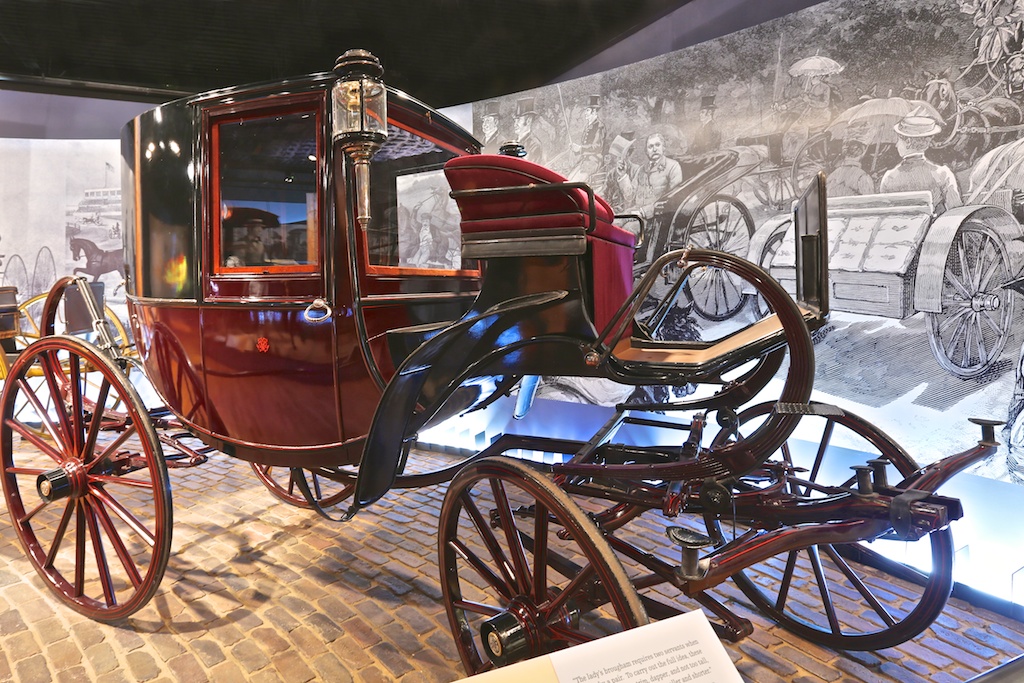
Last May, I wrote a series of postings about Dr. Preserved Clap of Hadley.

This was probably the most that anyone had written about Dr. Clap in two hundred years.

While doing that research, I ran some web searches for Clap’s name to feel sure I wasn’t missing additional sources. Google Books in particular has been hugely valuable for unearthing leads in state and local histories.

However, Google has prioritized its generative A.I. programming, putting that output at the top of search results. Here are some ways Google—once the most powerful, most useful way to search for information that humanity had yet devised—explained Preserved Clap:
The "Preserved Clap" carriage is a specific, modified light ambulance-style carriage used to transport the sick and wounded, famously used during the Revolutionary War siege of Yorktown and developed by Preserved Clap, a Continental Army artificer known for his mechanical ingenuity. [1, 2] . .

The Inventor: Preserved Clap was a Massachusetts-born craftsman with great mechanical abilities. During the Revolutionary War, he worked at the Continental artificer shops and also claimed to have discovered an improved method for boring cannons.

* The Carriage Invention: In 1780, Clap designed and constructed a specialized medical transport carriage. This carriage was later detailed by Dr. James Thacher in his military journals and drawn by an artillery officer present at the siege of Yorktown.
That response was accompanied by a thumbnail photo of the “Chariot d’Orsay” made in Paris in 1875–1885, featured in Art & Architecture Quarterly’s article about the Long Island Museum of American Art, History & Carriages, as shown above.

Dr. Preserved Clap had nothing to do with ambulances. The “carriage” he invented was a gun carriage for mounting cannon. Dr. James Thacher didn’t mention Clap in his Military Journal or his American Medical Biography. The carriage that Google showed has no link to Revolutionary America.

Of course, that text doesn’t reflect how the Google A.I. program would respond to the same query now. Even back then the service would put out different responses from one day to another according to a completely opaque process. Today the programming is using my writing from May to provide more accurate answers about Dr. Preserved Clap.

That’s because generative A.I. programs based on large-language models aren’t really designed to supply true answers to questions. They’re designed to provide plausible answers based on the statistical likelihood of how sentences flow. By releasing a few articles about Dr. Preserved Clap into the world, I altered what sentences about him are likely to say.

Back when I first ran this search, Google’s programming constructed what seemed like the most probable answer about a doctor and a “carriage,” gussied up with references to another Revolutionary doctor and a big Revolutionary event. It roped in a pretty picture of a carriage. The result was what’s come to be called a “hallucination,” a false description of the world offered with seeming confidence and authority. It’s one of the unavoidable pitfalls of this programming.

TOMORROW: Handwriting analysis.

Thursday, October 01, 2026

Seeing an Unfamiliar Face

Sign from Bunker Hill reenactment in Gloucester, June 2025, with an A.I.-generated picture falsely said to show Richard Gridley
In June of 2025 I attended the Sestercentennial reenactment of the Battle of Bunker Hill in Gloucester.

While walking from one site to another I passed a series of temporary lawn signs profiling various participants in that historical event.

One showed Col. Richard Gridley, the provincial artillery commander. It was a portrait in John Singleton Copley’s style.

By then I’d been studying Gridley for over twenty years. I’d never come across a portrait. But since Gridley’s not one of the most famous or influential figures of his time, I thought it was possible that a portrait had only recently been identified or made available to the public.

I took a photo with my phone and walked on. Then I saw more of those signs, showing other men in the unmistakable style of generative artificial-intelligence (A.I.) imagery. Those pictures didn’t try to replicate photographs or period art—they were overly dramatic, flat digital images with the patina of light brown produced from the mixture of all the colors. You probably know the look.

“Wait a minute,” I thought. I went back to the Gridley sign. Only then did I notice that at the lower left corner of the picture was the tiny label “AI Generated Image.” 

Clearly the folks publicizing that big reenactment had used one of the generative A.I. programs to pump out a bunch of pictures—some in its standard style, some made to look like period portraits. And those pictures did catch the eye. For an expensive event designed to attract people not already interested in Revolutionary history, that might be a valuable function.

The risk is, of course, that those images could fool people into believing they’re real. That’s unlikely for the pictures in the obviously A.I. style, but this picture programmed to look like a Copley fooled me for a couple minutes.

So far this image hasn’t escaped the confinement of one lawn sign in Gloucester in June 2025. I certainly hope my photo taken at an angle doesn’t loose it onto the world. But I can think of plenty of examples of false or falsely attributed portraits proliferating on the internet almost as quickly as false quotations do.

In the past month I had a couple more encounters with A.I. and historical material. I wrote about a message from an “AI agent” at Ko-fi, one of my monthly addenda for generous supporters. I watched an online presentation using images adapted from authentic period artifacts but run through an A.I. program that changed details—apparently without the presenter realizing it. Those experiences made me think it was time to share some thoughts about the use of generative A.I. in presenting history.

TOMORROW: Hallucination nation.