J. L. BELL is a Massachusetts writer who specializes in (among other things) the start of the American Revolution in and around Boston. He is particularly interested in the experiences of children in 1765-75. He has published scholarly papers and popular articles for both children and adults. He was consultant for an episode of History Detectives, and contributed to a display at Minute Man National Historic Park.

Subscribe thru Follow.it


•••••••••••••••••


Showing posts with label Nathaniel Tracy. Show all posts

Tuesday, February 07, 2023

“To transport these Men to Kennibeck”
When Dr. Benjamin Church wrote his intelligence report on 24 Sept 1775, the latest big event along the Continental lines was the departure of volunteers heading north.

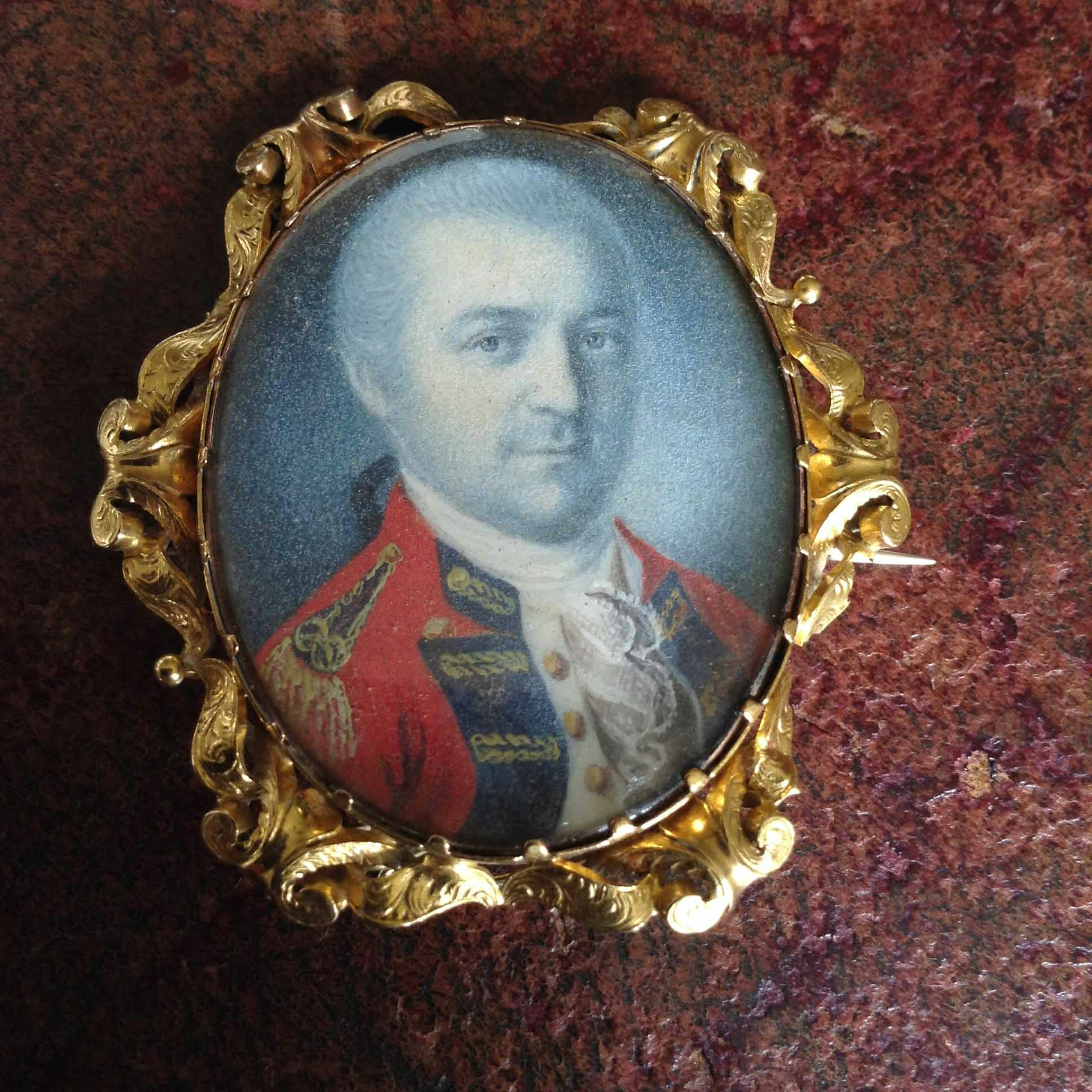
Those men were under the command of Col. Benedict Arnold (shown here), respected for his part in taking Fort Ticonderoga and other Crown positions along Lake Champlain.

Church knew Arnold. In fact, the doctor had been the ranking member of the Massachusetts Committee of Safety who had signed Arnold’s orders for that mission to Ticonderoga on 3 May. In August he headed the committee to review the colonel’s expenses, an interaction that didn’t go so smoothly. (Ironic moments, since Church was already supplying the Crown with secrets and Arnold would do so later.)

In late August, Arnold met with Gen. George Washington and gained approval for a quick thrust through Maine to Québec, meeting up with Gen. Richard Montgomery’s force advancing from New York. The commander’s general orders for 5 September called for “such Volunteers as are active woodsmen, and well acquainted with batteaus,” to march under Arnold’s command. About a thousand men responded, and most of them left Cambridge on 13 September.

Although the destination of that column was supposed to be secret, lots of people suspected. For example, on 13 September Jesse Lukens, a volunteer from Pennsylvania, wrote:
Col. Arnold having chosen one thousand effective men, consisting of two companies of riflemen, (about one hundred and forty,) the remainder musqueteers, set off for Quebec, as it is given out, and which I really believe to be their destination. I accompanied on foot as far as Lynn, nine miles.
Starting on 20 September, newspapers in New York and Philadelphia reported on Arnold’s departure for Québec, citing reports from Cambridge. New England newspapers were more cagy about his destination, but the secret was out.

Dr. Church mentioned the overall Canada campaign three times in his letter, starting with the second sentence and ending just before his request for money:
The fifteen hundred Men that you had news of going to Quebec are going to Halifax (I believe) to destroy that place, . . .

An Express from Ticondiroga, says that they had been Ambushed but foursed their way through with the loss of 13 Men and they on their advancing forward found on the ground ten Indians dead, that the Army was within one Mile and a half of St. Johns, on which they sent a party of Men to Cut of the Communication between Montreal and the Fort. . . .

The Vessells I mentioned that was fiting at Salem was to transport these Men to Kennibeck as I find since, I am not Certain they are gone to Halifax but it is thought and believed they are.
This letter shows that even the British commanders inside Boston had received word of “fifteen hundred Men…going to Quebec” and asked Church about it. But the doctor suspected they were headed to Nova Scotia. When he began this dispatch he was certain about that; by the end, he wasn’t so sure but still thought that was most likely.

In fact, the Continental generals had talked about an attack on Halifax. Immediately after hearing about the shortage of gunpowder on 3 August, Washington and his council of war discussed raiding Crown outposts with powder stores. Col. John Glover leased a schooner called the Hannah.

By mid-September, however, plans had changed. Washington had ordered the Hannah to try attacking British supply ships instead. He wrote to the merchant Nathaniel Tracy to arrange for several more ships to carry Arnold’s one thousand men from Newburyport up to the mouth of the Kennebeck River.

Church’s expectation of an attack on Halifax might have been accurate at one point, but not any longer.

COMING UP: More details from the Continental camp.

Friday, October 28, 2016

Mr. Jefferson’s Respects on the President’s Birthday

Amid the controversy over the birthday ball for George Washington in Philadelphia in 1798, Abigail Adams wrote home to a relative:
I have heard that there is a design to shift this matter off upon the Vice President, but in Justice to him, he had no hand in it further than to subscribe to it, being told that the President would certainly attend. when he found that he would not go, he refused also, this I am sure of so that let no more be laid upon him than he deserves.
Thomas Jefferson had indeed bought a ticket to support the ball on 2 February. That suggests the Vice President had early word of the event. The organizers didn’t send an invitation to President John Adams for another ten days.

Furthermore, on 15 February Jefferson wrote to his friend James Madison from Philadelphia about the celebration and its political implications:
A great ball is to be given here on the 22d. and in other great towns of the Union. This is at least very indelicate, & probably excites uneasy sensations in some. I see in it however this useful deduction, that the birthdays which have been kept have been, not those of the President, but of the General.
As a republican, Jefferson viewed balls honoring officeholders on their birthdays as monarchical. But he was ready to make an exception for one that tweaked his rival.

By the day of the ball, it had blown up into a big controversy of both politics and politesse. Jefferson ducked out of attending with a note to one of the organizers:
Th: Jefferson presents his respects to mr Willing, and other gentlemen managers of the ball of this evening. he hopes his non-attendance will not be misconstrued. he has not been at a ball these twenty years, nor for a long time permitted himself to go to any entertainments of the evening, from motives of attention to health. on these grounds he excused to Genl. Washington when living in the city his not going to his birthnights, to mrs Washington not attending her evenings, to mrs Adams the same, and to all his friends who have been so good as to invite him to tea- & card parties, the declining to go to them. it is an indulgence which his age and habits will he hopes obtain and continue to him. he has always testified his homage to the occasion by his subscription to it.
From his safe distance, Jefferson seems to have rather enjoyed the turmoil. He wrote again to Madison on 2 March:
The late birthnight has certainly sown tares among the exclusive federals. It has winnowed the grain from the chaff. The sincerely Adamites did not go. The Washingtonians went religiously, & took the secession of the others in high dudgeon. The one sex threaten to desert the levees, the other the evening-parties. The whigs went in number, to encourage the idea that the birthnights hitherto kept had been for the General & not the President, and of course that time would bring an end to them. [Benjamin] Goodhue, [Nathaniel?] Tracy, [Theodore] Sedgwick &c did not attend: but the three Secretaries & Attorney General [Charles Lee] did.
Abigail Adams’s assessment of the event was based on the small number of ladies she heard had attended. Jefferson gave more attention to how President Adams’s Cabinet—which included Secretary of State Timothy Pickering, Secretary of War James McHenry, and Secretary of the Treasury Oliver Wolcott, Jr.—was acting more loyal to Washington than to him. Which was indeed a problem.

Saturday, January 17, 2015

President Washington and Major Gibbs

Here’s a final glimpse for the week of President George Washington’s visit to Massachusetts in 1789.

On Friday, 30 October, Washington left Boston for the north shore and New Hampshire. His diary entry for that day was all about the bridges along the way, such as the one over the Charles River, shown above courtesy of the John Carter Brown Library.

The 19 July 1823 Columbian Centinel added this anecdote:
It will be recollected by many, that when he visited Boston, in 1789, he appointed 8 o’clock in the morning, as the hour when he should set out for Salem, &c. and that while the Old South clock was striking 8, he was crossing his saddle.

It will also be remembered, that the company of cavalry which volunteered to escort him, not anticipating this strict punctuality, were parading in Tremont-street after his departure; and it was not until the President had reached Charles river bridge, (where he stopped a few minutes to examine the draw) that the troop of horse overtook him.

On passing the corps, the President, with perfect good humor, said to the Commander, “Major ———, I thought you had been too long in my family not to know when it was 8 o’clock.”
That anecdote was reprinted in later years (without citation) in the Literary Register, various anecdote collections, and eventually by authors back in Boston who identified the mounted major as Caleb Gibbs (1748-1818).

Gibbs had indeed been in Washington’s military “family” through most of the Revolutionary War. He started in the Continental Army as adjutant of John Glover’s Marblehead regiment, but on 12 Mar 1776 Washington appointed him head of the Commander-in-Chief’s Guard. In that job Gibbs was responsible for transporting and guarding the headquarters papers, organizing the general’s living quarters, and sitting in as an aide-de-camp when necessary. He was a popular member of the headquarters staff, known for his easygoing temperament and fondness for singing.

Gibbs officially transferred to the 2nd Massachusetts Regiment in 1781 but seems still to have worked at headquarters. He suffered a wound at Yorktown and left the army in 1784. Gibbs settled in Boston and married Catherine Hall in 1787. That was his situation when President Washington came through town in 1789.

Unfortunately, Gibbs did poorly in business. He invested a lot of money with the merchant Nathaniel Tracy, who then went into bankruptcy. In 1790 Gibbs wrote to Washington that he had sold most of his furniture at auction and was moving from Boston to Barre, Massachusetts, which he called “the wilderness, incompassed by an uncooth neighbourhood, and to occupy a house prehaps not tennantable.”

From that town Gibbs wrote to Treasury Secretary Alexander Hamilton, another old colleague from headquarters, about money the federal government supposedly owed Tracy and about federal job openings. It struck me how often in that surviving correspondence Gibbs mentioned his wife:
  • 16 Jan 1791: “Mrs. Gibbs would go with me almost any where if a Comfortable competence offers (even with the strictest oeconomy) and can be obtained. Perhaps something within your own sphere can be found. Think of me My good Sir and notwithstanding the Presidents forgetfulness of me a hint from you I know would answer every purpose.” 
  • 16 May 1791: “And what is still more effecting to me, to see my amiable wife looking over the Letter and exclaiming is it possible, is it possible Mr. Gibbs that you have lost that hard earned money you friendly lent that wicked man [Tracy]. Indeed my friend it was too much for her to bear.” 
  • 10 Sept 1792: “Mrs. Gibbs cannot no longer content herself in this wilderness. Her seperation from her dearest connections, the great distance and extreem bad roads to Boston, and what is still more trying is the Education of her Children and an innumerable number of difficulties to incounter, has brought me to a Resolution to Linger out the cold Inclement winter at this place and return to Boston Early in April next if possible to get there.”
In 1794 the administration made Gibbs a clerk at the Boston Navy Yard. (Oddly, at the time the U.S. of A. did not have a navy.) That job did not, however, end Gibbs’s letters to the capital seeking better jobs. After eighteen years, during the Madison administration, he became superintendent of the yard.

Saturday, April 02, 2011

Washington’s Wine Bottles?

The Northeast Museum Services Center of the National Park Service has an Archeology Lab, and that lab has a blog. Back in February it posted, “Did These Bottles Belong to George Washington?” as the hook for an article about finds at Longfellow House–Washington’s Headquarters National Historic Site in Cambridge.

The posting says:

Between 1759 and 1791 the house was home to several families. Both families were interested in botany and horticulture and purchased many plants for the yard. Evidence of fruit bearing trees, rye grass, cactus, and butterfly wings all speak to both the indigenous and exotic plants on the property.

The Longfellow house served as headquarters for George Washington and his officers from July 1775 to April 1776. During Washington’s 9 month occupation of the house, his steward, Ebenezer [actually, I believe, Timothy] Austin kept meticulous account books of expenses for food, drink and household goods. The account books list orders for mutton, fowl, butter, eggs, fish, smoking pipes, a sugar pot, and an earthen platter. . . .

The well-preserved biological material adds some additional clues. Seeds, eggshell fragments, and oyster shells, and animal bones were well-preserved in the feature. Fish, goat, chicken, rabbit, and rock dove are all represented. Seeds from a muskmelon or cucumber, apple or pear were also recovered from the basement and are listed as being purchased during Washington’s time in the home. Three cherry stones were also recovered and Ebenezer Austin entered payment for cherries in at least two different days in August 1775. One half of an olive pit was also recovered. Austin does not list any purchases for olives, but records from 1772 and again in 1783 document that George Washington ordered olives for his household in Mount Vernon. . . .

So how can we be certain that this trash deposit dates from the mere 9 months that George Washington occupied the house? We simply aren’t sure yet. The detailed accounts by Ebenezer Austin are extremely helpful and remind us that Historical Archaeology is a combination of historic research, architectural analysis, and archeological excavation.
That last paragraph acknowledges that it’s nearly impossible to tie artifacts to a particular nine months out of the house’s first thirty-two years. I suspect that Washington’s name comes up only because:
  • We have his household accounts because he submitted them to the Continental Congress for reimbursement, and we don’t have such detail for the people who lived in the mansion the rest of the time.
  • Gen. Washington’s a much bigger celebrity than John Vassall, Nathaniel Tracy, and Andrew Craigie, the other men known to have headed that household in the late 1700s.
But I suspect the archeologists know that very well. This is really a study of the garbage of an upper-class household in late-eighteenth-century New England. All the families, personal or military, who lived in that house probably shared a similar lifestyle when it came to the dinner table.

Thursday, January 21, 2010

Dr. Windship Assures Gen. Washington

Yesterday we left Dr. Amos Windship stuck in Boston at the start of the Revolutionary War. According to Dr. Ephraim Eliot, recording stories he’d heard from and about the man:

In the disguise of a sailor, with his head shaved & covered with a milled cap, he escaped from the town
That was in July 1775, and Windship, with a drive for social climbing, appears to have gone right to the top. On 21 July, Gen. George Washington reported to John Hancock, chairman of the Continental Congress:
I have also received a more authentick account of the loss of the enemy in the late battle [Bunker Hill], than any yet received. Doctor Winship, who lodged in the same house with an Officer of the Marines, assures me they had exactly one thousand and forty-three killed and wounded, of whom three hundred fell on the field, or died within a few hours; many of the wounded are since dead.
That was a fairly accurate count; Windship might even have helped in treating the British wounded, as some Whiggish physicians did from a sense of professional responsibility.

Washington’s report is interesting in a couple of other ways. It suggests that Windship had heard the memorable stories of Maj. John Pitcairn’s death from the Marine officer. And in an ironic twist nobody could have foreseen, Washington’s headquarters, where the doctor probably went to make his report (shown above, courtesy of the National Park Service), would after the war become the home of Nathaniel Tracy, who had gotten Windship booted out of Harvard.

During the siege, according to Eliot, Windship
got employment as a surgeon in the military hospital at Cambridge, where he continued several months, was every intimate with the Director general Doctor [Benjamin] Church, who being charged with holding a treasonable correspondence with the Enemy, our Doctor was suspected of having concern with him, but the suspicion soon died away, and he was never called to an account.
No evidence has ever surfaced that Windship was involved in Dr. Church’s espionage. This was probably just an example of his knack for being in the wrong place at the wrong time just when he thought he was doing well.

TOMORROW: I know this series is supposed to be about Maj. Pitcairn’s body, but I have to share an anecdote about Dr. Windship and Abigail Adams.

Wednesday, January 20, 2010

Dr. Amos Windship and Nathaniel Tracy’s Four Guineas

Tracking Maj. John Pitcairn’s body means getting a handle on that Christ Church warden who reprimanded sexton Robert Newman in 1788, as I mentioned yesterday.

Dr. Amos Windship (1745-1813) was a man of energy and ambition who repeatedly plunged himself into awkward situations, but never stopped striving. He seems to have been both pushy and pathetic, and after his death Dr. Ephraim Eliot wrote down a lot of juicy stories about him; I’m going to get to only a fraction of those.

Windship was born in Holliston to a middling farm family, and his father died when he was eight. He was raised by relatives and guardians as a farm boy. In 1767, he got into Harvard. At twenty-two he was older than almost all the other undergraduates, and almost certainly poorer, but he’d managed to educate himself enough to qualify.

Alas, Windship left after eight months under shadowy circumstances. According to Eliot, the young man:

was freshman [i.e., designated gofer] to N[athaniel]. T[racy]. of Newburyport who was a monied Lad. Frequently missing money from his desk, suspicions were excited against our friend.

One day in order to ascertain who was the pilferer if possible, he [Tracy] pretended to be obliged to leave Cambridge a few days, his chambermate being also absent. It was customary for freshmen to study in their senior’s rooms, and he left the care of his room to Windship.

Returning after a few hours, he enquired if any one had been there? was assured that no one had, & that he himself had not been out of the room, not even to prayers. On examining his desk, he missed four guineas, and directly charged his freshman with the theft.

It was strenuously denied, but symptoms of guilt appearing in his countenance, he was searched and no money found. But T[racy]. insisted upon his leaving College at once or he would prosecute him, he wisely followed his directions, and ran away without taking up his bond, & did not finish his education there, or at any other seminary.

After a few days the sweeper on removing the bedstead in T[racy]’s room, found a guinea under each Bed post.
Eliot seems to imply that Windship hoped to return to Tracy’s room to retrieve those hidden coins. But if he didn’t expect Tracy back that afternoon, why didn’t he just take the money? Are there circumstances Eliot didn’t record? Was it all a set-up? In any event, Windship was gone from Harvard after July 1768.

He then studied medicine with Dr. Bela Lincoln of Hingham, brother of the later general Benjamin Lincoln, and possibly with other rural physicians. Windship set up a practice at Wellfleet for a few years. He moved to Boston in 1774, when other men were moving out because of the Port Bill, and was stuck there when the war began.

TOMORROW: Dr. Windship’s intelligence for Gen. Washington.

Wednesday, September 02, 2009

Ships for a “Secret Expedition”

On 2 Sept 1775, Gen. George Washington wrote to Nathaniel Tracy, a merchant of Newburyport, from his headquarters at Cambridge:

You are hereby authorized and empowered to take up for the service of the said Colonies so many vessels as shall be necessary for the transporting a body of Troops to be detached from this Army on a secret expedition.

Freight of such vessels to be paid in such manner and at such a rate as is herein endorsed; and in case of loss or damage to such vessels, or any of them, such loss or damage to be compensated by the publick, according to an estimation to be made before the said vessels proceed in the above service.
Washington’s secretary, Col. Joseph Reed, then added:
To prevent any dispute which may arise respecting the freight of the within vessels, it is agreed that Colonel [Azor] Orne, of Marblehead, with two other persons, to be nominated by him, fix the price, which shall be binding on both parties, and that the same gentlemen do appraise the vessels before they proceed.
Orne had been a member of the Massachusetts Provincial Congress’s Committee of Safety and Supplies before the war, and knew the Essex County maritime community well.

The “secret expedition” Washington wrote about was Col. Benedict Arnold’s part of the American attack on Canada. Volunteers from the army around Boston were to march to Newburyport, board the ships that Tracy had provided, and travel by water along the coast and up the Kennebec River in Maine.

One ironic note about those letters from Washington and Reed: In 1781, Tracy bought the Cambridge house where they were written. It’s now Longfellow National Historic Site.

Friday, January 02, 2009

Fire in a Barn at Cambridge

This is a quotation from an “Account of Fires in Massachusetts” published by the Massachusetts Historical Society in 1838:

LinkAug. 8, 1783. In the evening of this day, a barn at Cambridge, belonging to Nathaniel Tarcy, Esq. was set on fire by lightning, which consumed it, with his carriages, and a large quantity of hay.
The name Tarcy is obviously a misprint for Tracy.

Nathaniel Tracy was a Newburyport merchant who invested heavily in privateers during the Revolutionary War. He made enough money to own several houses, including the Cambridge estate that this item probably refers to. It’s now the Longfellow National Historic Site, shown above. There’s no longer a barn on the lot, but there is a late nineteenth-century carriage-house modified with pipes for a car wash. There are two lightning rods on the main house, one of which reaches the ground.

The year 1783 was not a good one for lightning. About three months before this fire, a bolt struck the house where James Otis, Jr., was being treated for mental illness and killed him.

Saturday, July 08, 2006

Nathaniel Tracy serves frogs for dinner

Samuel Breck was born in Boston in 1771. Later his family moved to Philadelphia, and after his death his memoirs were published there. That book contains some delightful anecdotes about the Revolution, no doubt a bit polished by repeated tellings.

Here are Breck's remarks on the reception of the French fleet in Boston after the king of France started to formally support the American independence movement. France had of course been the enemy for British colonists since the late 1600s. Patriots complained that the London ministry was becoming as tyrannical as "France or haughty Spain." As late as the fall of 1774, New England buzzed with rumors that the Crown would bring "the French" down from Québec to oppress them.

And then Silas Deane, Benjamin Franklin, and Pierre Augustin Caron de Beaumarchais forged an alliance between the new U.S. of A. and France. Suddenly the French were no longer enemies, but helpers. The anti-Catholic Pope Night holiday disappeared. Indeed, just after the war a Roman Catholic church with a French priest even opened in Boston on the corner of School Street and modern Washington Street (where the Irish Famine Memorial now, um, stands).

But old stereotypes die hard, as Breck recalled.

Every vulgar story told by John Bull about Frenchmen living on salad and frogs was implicitly believed by Brother Jonathan, even by men of education and the first standing in society. When, therefore, the first French squadron arrived in Boston, the whole town, most of whom had never seen a Frenchman, ran to the wharves to catch a peep at the gaunt, half-starved, soup-maigre crews. How much were my good townsmen astonished when they beheld plump, portly officers and strong, vigorous sailors!
This apparently refers to the arrival of French transports in Boston in May 1781. Those ships brought about 6,300 soldiers who would march south to the siege of Yorktown.

That same year, Newburyport privateer owner and merchant Nathaniel Tracy had bought a mansion in Cambridge that had been confiscated from the Loyalist John Vassall. (That mansion is now known as Longfellow House, a National Park Service site open for tours Wednesday through Sunday for the rest of the summer.) He decided to host the French naval officers and consul.
Mr. Nathaniel Tracy, who lived in a beautiful villa at Cambridge, made a great feast for the admiral and his officers. Everything was furnished that could be had in the country to ornament and give variety to the entertainment. My father was one of the guests, and told me often after that two large tureens of soup were placed at the ends of the table. The admiral sat on the right of Tracy, and Monsieur de l’Etombe on the left. L’Etombe was consul of France, resident at Boston. Tracy filled a plate with soup, which went to the admiral, and the next was handed to the consul. As soon as L’Etombe put his spoon into his plate he fished up a large frog, just as green and perfect as if he had hopped from the pond into the tureen. Not knowing at first what it was, he seized it by one of its hind legs, and, holding it up in view of the whole company, discovered that it was a full-grown frog. As soon as he had thoroughly inspected it, and made himself sure of the matter, he exclaimed, "Ah! mon Dieu! un grenouille!" then, turning to the gentleman next to him, gave him the frog. He received it, and passed it round the table. Thus the poor crapaud made the tour from hand to hand until it reached the admiral. The company, convulsed with laughter, examined the soup-plates as the servants brought them, and in each was to be found a frog. The uproar was universal. Meantime Tracy kept his ladle going, wondering what his outlandish guests meant by such extravagant. merriment. "What’s the matter?" asked he, and, raising his head, surveyed the frogs dangling by a leg in all directions. "Why don’t they eat them?" he exclaimed. "If they knew the confounded trouble I had to catch them in order to treat them to a dish of their own country, they would find that with me, at least, it was no joking matter." Thus was poor Tracy deceived by vulgar prejudice and common report. He…had caused all the swamps of Cambridge to be searched in order to furnish them with a generous supply of what be believed to be in France a standing national dish.