J. L. BELL is a Massachusetts writer who specializes in (among other things) the start of the American Revolution in and around Boston. He is particularly interested in the experiences of children in 1765-75. He has published scholarly papers and popular articles for both children and adults. He was consultant for an episode of History Detectives, and contributed to a display at Minute Man National Historic Park.

Subscribe thru Follow.it


•••••••••••••••••


Showing posts with label Samuel Cook. Show all posts

Thursday, February 26, 2026

“It was not the Butler who fell in Battle”
I just finished quoting a letter that Jonathan Hastings, Jr., of Cambridge addressed to “Friend Jacob” on 11 June 1775. The letter probably never reached that friend because it’s in the files of Gen. Thomas Gage, the British commander besieged inside Boston at the time.

Hastings started by referring to “Your Brother’s Letter of 18th. May.” Later he wrote, “John intends to write to your Brother.” The writer had a younger brother named John, born in 1754 and graduating from Harvard College in 1772. Heitman’s Historical Register of Officers of the Continental Army says John Hastings “Served in the Army in 1775” but doesn’t specify a unit until 1777. Massachusetts Soldiers and Sailors of the Revolutionary War likewise documents his service from 1777 on, rising to brevet major.

It looks like the Hastings brothers, Jacob, and Jacob’s unnamed brother were all part of the same crowd in Cambridge, probably connected with Harvard. Jonathan expected Jacob to know where “the Red House leading to Charlestown” was. Jacob and the Hastings family had financial dealings.

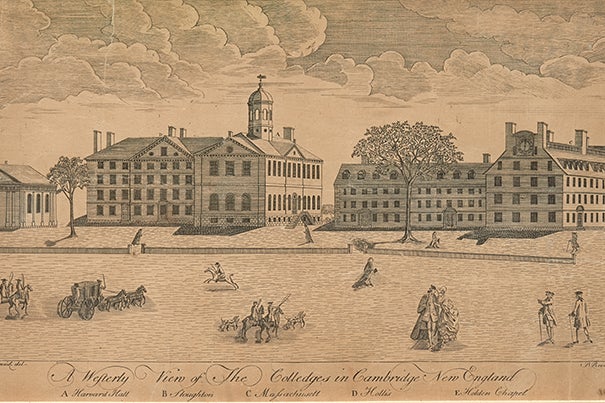
That link offers an explanation for Jonathan Hastings’s line “It was not the Butler who fell in Battle, but a Samuel Cooke from Danvers.” Harvard had a staff position called the butler. This man oversaw the buttery, which sold snacks and other little items to undergraduates. Unfortunately, the Harvard archives says, “there is no complete list of all of the Harvard Butlers.” It looks like the college reserved the job for master’s students to hold for two or three years before moving on.

Harvard’s class of 1772 included Samuel Cooke, Jr. (1752–1795), son of the minister in Cambridge’s Menotomy precinct. Some college documents say Cooke filled in as librarian while reading for his master’s degree. I suspect that he was the college butler in that period, thus known to his classmates and those who came after as well as to the administration.

After Samuel Cook of Danvers was widely reported as killed in the fighting at the Jason Russell House, Jonathan Hastings assured his friend Jacob that this wasn’t the fellow they knew from the buttery. The Menotomy Samuel Cooke, Jr.’s most significant action on 19 Apr 1775 was dragging his father away from the fighting.

TOMORROW: A man on the move and on the make.

Wednesday, February 25, 2026

“Boston is environed on all sides”

Having shared his version of the Battle of Lexington and Concord, as quoted over the last two days, the new Cambridge postmaster Jonathan Hastings, Jr., turned to the current situation.

His 11 June 1775 letter described the siege this way:
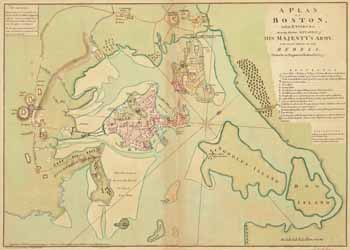
Boston is environed on all sides. 7000 Men at Camb. 6000 at Roxbury, exclusive of smaller Numbers wch. guard the Coasts both Eastward & Southward. [Thomas] Gage acknowleges our Superiority in Number, but says we have neither Government, Discipline nor Powder. The two first Charges are false; and I hope the other Colonies will not be backward to Supply us with the last, to let him see he is mistaken in that likewise.—

Indeed we are determined to defend ourselves in the best manner at all Events, rather than submit to Slavery.—Our Motto is the same which Caesar engraved on his Breast Plate—“Nil actum reputans si quid superesset agendum.”
That was a standard eighteenth-century British rendering of a line from Lucan’s Civil War, appearing in the Spectator and Lord Chesterfield’s letters. It translates more or less as “As long as there’s anything left to do, we don’t consider anything done.” Curiously, that Latin line appears differently in modern editions of Lucan. I can’t explain the discrepancy.
Should Massachusetts be conquered, your Halcyon Days will soon be at an end. God grant our union may be like that of a Band of Brothers, wch. can never be broken. The Light Troops in Boston we are informed have not done Duty for 4 Days. An Attack is expected soon, for every Delay on their part is a Strengthening to us.

It was not the Butler who fell in Battle, but a Samuel Cooke from Danvers the largest Man in the Colony, I suppose
A Danvers man named Samuel Cook, Jr., was indeed among the provincial casualties on 19 April, killed at the Jason Russell House. I haven’t found any other reference to his size. I’ll discuss why Hastings mentioned him tomorrow.
You must excuse my not being more particular, as John intends to write to your Brother, and my Business call me away: therefore would just acquaint you that an half a whole Sheet with your Name alone will afford a particular Pleasure to your sincere Friend & very humble Servant

Jonathan Hastings Junr.

P.S.—My Father & mother desire to be remembered to you & your Friends, & would inform you that our Papers are removed into the Country, & we know not where to look for any Receipts, therefore beg you will make yourself easy with regard to us—&c
JH
That looks like a very familiar closing for an eighteenth-century letter, begging more time to pay bills. Or maybe Hastings was replying to a correspondent who had begged more time.

Of course, there was a war on. The Hastings house had become the headquarters of both the Massachusetts committee of safety and Gen. Artemas Ward, so it’s understandable that the family had moved their records out.

TOMORROW: Clues to the crowd.