J. L. BELL is a Massachusetts writer who specializes in (among other things) the start of the American Revolution in and around Boston. He is particularly interested in the experiences of children in 1765-75. He has published scholarly papers and popular articles for both children and adults. He was consultant for an episode of History Detectives, and contributed to a display at Minute Man National Historic Park.

Subscribe thru Follow.it


•••••••••••••••••


Showing posts with label Royal Navy. Show all posts

Friday, October 09, 2026

Writing the Second Draft of History with Gen. Heath

Another of the Massachusetts Historical Society’s ongoing crowd-sourced transcription projects is Gen. William Heath’s manuscript diary.

When Heath wrote his memoir, published in 1798, he went back to this document as his source. That book is in day-by-day journal form.

The entries for 9 Oct 1776, 250 years ago today, show how he developed his history.

Heath’s diary entry, as newly transcribed:
Early this morning Three ships Two of 40 Guns and one Frigate, With Two, or Three Tenders Stood up the north River, They were Briskly Cannonaded from Mount Washington and Fort Constitution, They However Passed our works & Chevaux De Frise,

our Gallies Small Craft, and Two Large Ships Stood on before them, The Two Ships were Run on shore nears Philips’s mills, and Two Gallies near Dobbs’s Ferry,

The Enemy took Possession of the Two Gallies and got them off, one Boat Landed and Plundered a Store, (Stove the Cask) & set it on fire, but our People Extinguished it,

Colo. Sargent has marched for that Place, with 500 Infantry and 40 Light Horse, Capt. Horton with 2 twelve Pounders, and Capt. Crofts with a Howtzer

the Enemy also took a Schooner Load,d with Rum Sugar Wine etc, and Sunk a Sloop which had on board the machine for blowing up their Ships, a Contrast this to Sink that, which was to Blow them up —

our Division being under arms on the alarm were marched Down over the Broken Ground in front of our Post
The day’s entry in Memoirs of Major-General Heath:
Early in the morning, three ships, two of 40 guns, and one frigate, with two or three tenders, stood up the North River. They were briskly cannonaded from Fort Washington and Fort Constitution. They however passed our works and the chevaux-de-frise; the American galleys, small craft, and two large ships standing on before them.

The two ships were ran on shore near Phillips’s mills, and two of the galleys near Dobbs’ Ferry. The enemy took possession of the two galleys, and got them off. A boat landed a number of men, who plundered a store, stove the casks, and then set the store on fire, and left it. The Americans soon extinguished the fire.

Our General ordered Col. [Paul Dudley] Sargent, with 500 infantry, 40 light-horse, Capt. [Jotham] Horton of the artillery, with two 12 pounders, and Capt. [Edward] Crafts with a howitzer, to march immediately, with all possible expedition, to Dobbs’ Ferry.

The enemy took a schooner loaded with rum, sugar, wine, &c. and sunk a sloop, which had on board the machine, invented by, and under the direction of, a Mr. [David] Bushnell, intended to blow up the British ships. This machine was worked under water. It conveyed a magazine of powder, which was to be fixed under the keel of a ship, then freed from the machine, and left with clock-work going, which was to produce fire when the machine had got out of the way. Mr. Bushnell had great confidence of its success, and had made several experiments which seemed to give him countenance; but its fate was truly a contrast to its design.

Our General’s division was formed in line, with its advance, reserve, flank-guards, and artillery, all in order of battle, when they were moved down over the different grounds, which it was supposed might be the scene of action. Some of this ground was very broken, and there were many fences. These afforded frequent opportunities for the troops to break off and form; for the pioneers to open avenues, &c. and for the whole to become acquainted with every part of the ground, and the best choice of it, if suddenly called to action.
Heath made sure he appeared in his book, as “our General,” as an active participant, issuing orders and strengthening the forces under his command.

He also took the opportunity to add more detail, such as the backstory of David Bushnell’s submarine.

This entry doesn’t reveal any significant information that Heath left out of his book. But now that the whole diary is digitized and transcribed, folks can look for those details.

Sunday, October 04, 2026

“Even the best quality HTR will contain errors”

Yesterday I described how the Clements Library in Michigan has provided transcripts of handwritten documents in the Thomas Gage Papers.

The library website explains:
The plain text we provide for this collection was created using Transkribus, a tool that uses machine learning and artificial intelligence to transcribe handwritten documents. Handwritten Text Recognition (HTR) “reads” the page images and makes a best guess at identifying the letters and words on a page. This is an automated process and subject to error, particularly if the original handwriting is difficult to read.

Even the best quality HTR will contain errors. This means that the plain text is not a fully faithful reproduction of the scanned original document. Proper nouns such as names of individuals, groups, and places are especially subject to recognition errors. Text written at an angle or vertically on the page will likely not be recognized at all. In addition, any spelling errors, line breaks, or abbreviations in the original document will be represented verbatim.

We provide this uncorrected plain text in the interests of improving accessibility and searchability of the collection. Please keep in mind that full text search results may not be fully accurate for specific keywords and we encourage you to use multiple search strategies to find relevant materials.
I’m very grateful to the Clements Library for providing scans online. As for the transcriptions, I chose an incoming document at random to assess.

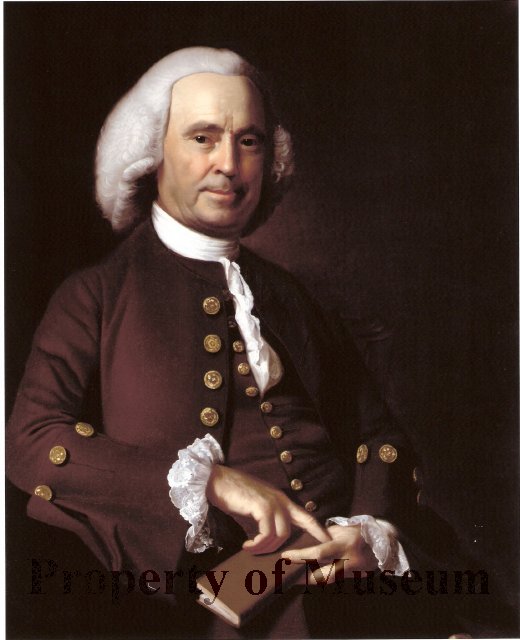
On 29 Dec 1774, New Hampshire governor John Wentworth (shown above) wrote to Gen. Gage about how his authority was crumbling. The transcription of that document currently reads in part:
It is very certain that the peoples
minds, are too generally prepared, by
factions artifices and falwhoods wickedly
disseminated by the popular Laders, for any
violences whatever. This Spirit, I observe,
has been exceedingly angmented since the
return of the Delegates, from the continental
Congress; And having broken forth into
overt Acts, in the late repeated assaults on
His Majesty's Castle William and Mary,
those persons & all they can influence are
less restraind, and more readily disposed
to pursue any violences that may be
recommended by their Party in Boston,
or in contemplation hers, among which

I have strong reasons to beleive, Reprisals
on the King's Servants mentiond by the
Congress, will be the earliest & most sudden,
His Majesty's Ships Searborough and
Cancanx are not sufficient to frustrate
such intentions, and at the same time
cover of sure the Castle Wm. and Mary,
which is situate three mites from this
Town, which wou'd receive protection
from one additional Sloop or small Rigate
of war; with an angmentation of about
Forty or Fifty Mariness to their Compliment
To quote those lines here on Boston 1775, I’d begin with this text but carefully read the scans to confirm or correct it. The result is:
It is very certain that the peoples minds, are too generally prepared, by factious artifices and falsehoods wickedly disseminated by the Popular Leaders, for any violences whatever. This Spirit, I observe, has been exceedingly augmented since the return of the Delegates, from the continental Congress; And having broken forth into overt Acts, in the late repeated assaults on His Majesty’s Castle William and Mary; those persons & all they can influence are less restrain’d, and more readily disposed to pursue any violences that may be recommended by their Party in Boston, or in contemplation here, among which I have strong reasons to beleive, Reprisals on the King’s Servants, as mention’d by the Congress, will be the earliest & most sudden;

His Majesty’s Ships Scarborough and Canceaux are not sufficient to frustrate such intentions, and at the same time cover & secure the Castle Wm. and Mary, which is situate three miles from this Town, which wou’d receive protection from one additional Sloop or small Frigate of war, with an augmentation of about Forty or Fifty Marines to their Compliment.
The A.I. transcription has some errors, but Gov. Wentworth’s main topic and message come through: Send in the Marines!

It helped that this document was clearly written. Wentworth had received an elite education at a time when handwriting was part of a gentleman’s training. He had time to compose and write out this letter; I saw only one word squeezed in as an afterthought.

As for the peculiarities of eighteenth-century writing from our perspective, Wentworth’s spelling was rather modern. He used the long s less often than many contemporaries. However, he wrote many of his lowercase e backwards to our eyes—the root of several transcription errors.

TOMORROW: What about less elegant documents?

Thursday, September 17, 2026

“The Prize Papers of the American War” Workshop, 8 Oct.

On Friday, 8 October, the Prize Papers Project at Britain’s National Archives will host an international symposium on “The Prize Papers of the American War of Independence.”

Online registration to this event is available, but folks should know that it will take place in London. The discourse will start at 4:30 A.M., Boston time.

The workshop description says:
Bringing together specialists on prize law, the American War of Independence and the Prize Papers, the workshop approaches the collection as a transnational archive of wartime capture and its afterlives. The workshop creates a forum for sustained international exchange and collaboration.

The year 2026 marks the 250th anniversary of both the Declaration of Independence of the United States of America in July and the opening of the British Vice-Admiralty Court in newly-captured New York City in September 1776. Although exceptionally rich, the prize papers of this court have been largely inaccessible. The newly catalogued papers of the New York court (and its mother-court in London) provide new perspectives on the War of Independence at sea, and on lived experiences of the time, through the intercepted papers and letters found by the British on merchant and fighting ships.

Maritime warfare was central to the War of Independence. Controlling, disrupting, and capturing shipping was crucial to the war on both sides. America started privateering early, in 1775, and sought new (previously forbidden) trading partners. From 1778, French naval and privateering activity expanded the war against Britain, followed by Spain and the Netherlands. British naval forces and loyalist privateers sought to stop American and allied shipping, enforce their imperial authority, and weaken the Continental cause. The conflict eventually extended far beyond the North American seaboard.

An initial group of papers from 150 captured ships, American or supporting America, will be published online on 8 October in the Prize Papers Portal, the open-access online database of the Prize Papers Project. . . . Major bodies of captured material from American, French, Spanish, Dutch and recaptured British vessels will be published in the coming months and years…
Presentations schduled for 8 October include:
  • Amanda Bevan & Luan Cakolli: “A Voyage of Discovery and Delivery … and what we’re learning along the way”
  • Suzanne Foxley: “American Experience of British Prize Law”
  • Séverine Angers: “Write to me by different ships as the English capture many”
  • Randolph Cock: “Piecing Together Clues from the U.S.S. Lexington, 1777: A Whodunnit”
  • Rebekah Harbord: “Behind the Scenes: Preparing documents from the Prize Papers for digitisation”
  • Bethany Groff Dorau: “‘Taken by 64 Guns’: A Case Study of Dalton Marine Captain Offin Boardman”
  • Christopher Minty: “‘False & Colourable’: The Brigantine Adventure and the Paper War of the American Revolution”
  • Abby Mullen: “Mutiny or Loyalty?: Revolt from the Enemy in American Prizes”
  • Graham Moore: “Revolution 250: Exhibiting the Prize Papers at The National Archives”
  • John Beiner & Lucas Haasis: “History at the Helm: The Prize Papers and the Making of the Videogame Ahoy”
The keynote address to close out Friday will be delivered by Nathan Perl-Rosenthal, author of The Age of Revolutions and the Generations Who Made It (Basic Books, 2024).

The Prize Papers Project is run by the National Archives, U.K., and the University of Oldenburg, Germany. Other organizers of this event are the German Maritime Museum Bremerhaven and the German Historical Institute London. The workshop will be hosted by Nele Popp, Amanda Bevan, Oliver Finnegan, and Lucas Haasis.

This symposium occurs alongside an exhibit at the National Archives in Kew titled “Revolution 250: America's Independence Story 1763–1783,” which will run through 29 November.

Tuesday, September 15, 2026

New York City Has Fallen

On 15 Sept 1776, 250 years ago today, the Continental Army withdrew from the southern end of Manhattan Island, leaving the city of New York to the British army.

That’s an orderly way to describe what happened. Here’s Gen. George Washington’s official dispatch to John Hancock and the Continental Congress the next day:
in the morning they began their Operations—Three Ships of War came up the North River as high [as] Bloomingdale which put a total stop to the removal by Water of any more of our provision &c. and about Eleven OClock those in the East River began a most severe and Heavy Cannonade to scour the Grounds and cover the landing of their Troops between Turtle-Bay and the City, where Breast Works had been thrown up to oppose them.

As soon as I heard the Firing, I road with all possible dispatch towards the place of landing when to my great surprize and Mortification I found the Troops that had been posted in the Lines retreating with the utmost precipitation and those ordered to support them, [Samuel Holden] parson’s & [John] Fellows’s Brigades, flying in every direction and in the greatest confusion, notwithstanding the exertions of their Generals to form them.

I used every means in my power to rally and get them into some order but my attempts were fruitless and ineffectual, and on the appearance of a small party of the Enemy, not more than Sixty or Seventy, their disorder increased and they ran away in the greatest confusion without firing a Single Shot—

Finding that no confidence was to be placed in these Brigades and apprehending that another part of the Enemy might pass over to Harlem plains and cut off the retreat to this place, I sent orders to secure the Heights in the best manner with the Troops that were stationed on and near them, which being done, the retreat was effected with but little or no loss of Men, tho of a considerable part of our Baggage occasioned by this disgracefull and dastardly conduct—

Most of our Heavy Cannon and a part of our Stores and provisions which we were about removing was unavoidably left in the City, tho every means after It had been determined in Council to evacuate the post, had been used to prevent It. We are now encamped with the Main body of the Army on the Heights of Harlem where I should hope the Enemy would meet with a defeat in case of an Attack
William Douglas, a Connecticut militia colonel whose troops had been guarding an area near Kip’s Bay, told his wife that “my Left wing gave way” under the initial artillery fire:
I Lay myself on the Right wing, wateing for the boats untill Capt. [Jonas] Printice Came to me and told if I ment to Save my Self to Leave the Lines for that was the orders on the Left and that they had Left the Lines. I then told my men to make the best of their way as I then found I had but about ten Left with me.
Caesar Rodney, one of Delaware’s delegates to the Congress, was in the region, and he gathered this information:
the Ships…began a verry heavy Fireing at Turtle-Bay, to Scour the Country previous to their landing the troops, but hurt no Body that I Can hear of—When the Fireing ceased their Troops began to Land and ours to Run as if the Devil was in them in Spite of all the Genel. Could do. They never fired one Gun—

General Whashington haveing discovered their intention to Land at that place, and haveing properly disposed of his troops in case of an Attempt in either or both the other places, ordered a Reinforcement and set out there himself. However before he Got to the place, met our people runing in Every direction. He Endeavoured by persuasion, Threats &c. to get them back, but all to no purpose, in Short they Run till they left the General to Shift for himself—
A story went round that Gen. Washington was so angry that he threw his hat on the ground and shouted, “Are these the men with which I am to defend America?” (per Gen. William Heath) or “Good God, have I got such troops as those?” (per George Weedon). No one who was with Washington at the time described him behaving that way. But of course those men had other things on their minds—and may have thought such behavior was perfectly understandable.

Monday, September 07, 2026

“Ever afterwards, he was known as Dr. Bush”

David Bushnell’s pioneering submarine didn’t do much damage to the Royal Navy in 1776, but the next year he came back with another invention.

As Christian McBurney relates in this article, in August 1777 Bushnell oversaw an attack on H.M.S. Cerberus with explosive mines. They didn’t hit the warship, but they did destroy a schooner and kill three British sailors.

In August 1779 Bushnell became an officer in a new Continental corps of “Sappers and Miners.” Two years later, Capt. Bushnell led his specialized unit in the siege of Yorktown.

In 1787 Bushnell moved from Connecticut to France. There’s not much evidence of what he did there. Some people speculate that he crossed paths with Robert Fulton, who would design his own submarine as well as a steamboat. However, it looks to me like Fulton didn’t go to France until 1797, and by then Bushnell was back in the U.S. of A.

Not in Connecticut, however. Instead, Bushnell settled in Georgia “in 1795 or 96,” according to the Rev. George White’s Historical Collections of Georgia (1854). At first he was “a teacher in the County of Columbia.”
He was eminently distinguished for his classical and scientific learning. His chief enjoyments were found in the instruction of his classes, and an occasional visit to a few men of congenial spirit. . . .

His old fellow soldier, the Hon. Abraham Baldwin, received him into his family, under whose auspices he had no difficulty in placing himself at the head of one of the most respectable schools in Georgia. In this vocation he spent several years, and under his guidance and tuition many of our most useful citizens received valuable instructions in learning and morals.
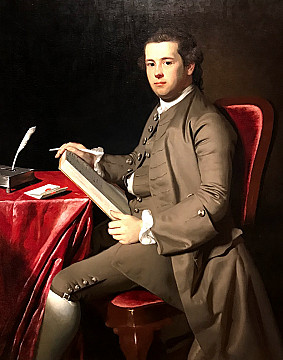
Bushnell and Baldwin (1754–1807, shown above) had met at Yale in the early 1770s. Baldwin was barely a “fellow soldier,” though; he had been a chaplain for Connecticut troops but spent most of the war preparing for the Congregationalist pulpit. Then in 1783 he suddenly changed direction, became a lawyer, and moved to Georgia.

Within a few years Baldwin was representing the state in the Confederation Congress, the Constitutional Convention, and the first federal House of Representatives. He also served as president of the nascent University of Georgia while it was organized.

As for the “family” that Baldwin welcomed Bushnell into, both men were lifelong bachelors. It looks like Bushnell shared Baldwin’s house for several years before the younger man died suddenly in 1807 while serving in the U.S. Senate.

The Historical Collections of Georgia profile of Bushnell continued:
Late in life, he settled in Warrenton as a practitioner of physic. Then, and ever afterwards, he was known as Dr. Bush. For reasons which have never been disclosed, he had some time before he settled in Georgia, dropped the last syllable of his name; and until the publication of his last will and testament, no person in this country, except his old friend Baldwin, was apprised of the fact that his family name was Bushnell.
The name of “David Bush, Phicion [physician]” does appear on Georgia tax records for 1805, owning “Stock in trade & House adjoining Warrenton.” Three years later, he bought more real estate. In 1810 David Bush was one of the commissioners to incorporate the town of Warrenton, named for Dr. Joseph Warren.

At least one other local did know Dr. Bush’s real name, however. In 1814 George Hargraves, a notary in Warren County, wrote a letter to Thomas Jefferson enclosing a “description and drawing of a Torpedo” that might be useful to the U.S. in the current war. He said the inventor was “a man of science” mentioned in David Ramsay’s history of the Revolution, hinting: “you will readily conjecture who the Inventor is.” Bushnell must therefore have entrusted Hargraves with his secret, just as he trusted the man to be an executor of his will.

Dr. Bush probably died in early 1826. Hargraves started advertising for his debtors to come pay what they owed the estate on 15 March of that year.

On 9 August an item appeared in the Middlesex Gazette of Middletown, Connecticut, reminding readers about Bushnell and his “destructive machine.” It reported:
About 30 years since, Mr. Bushnell left his native town, and from that period no information was received respecting him, until very recently, when a gentleman arrived in Saybrook from Georgia, with the intelligence that Mr. Bushnell had lately died in that State, leaving about 9,000 dollars in cash; accumulated principally by the practice of Medicine; which Mr. B. had given to him, he being a particular friend, provided that if he should, upon inquiry, discover that Mr. B’s connexions in Saybrook, were from their character, worthy of the property, such connexions were to receive the whole amount.

The gentleman with whom it was entrusted, ascertained, on reaching Saybrook, that Mr. Bushnell’s nearest relatives were four nephews, and those all men of worth and integrity, and faithfully divided the property among them.
Those were the sons of David Bushnell’s brother Ezra. In addition to the money, this article said, he bequeathed them an “unfinished a piece of mechanism, upon which he had bestowed much pains”—but what it was, the newspaper didn’t, or couldn’t, say.

The Middlesex Gazette stated: “Mr. Bushnell…bore a very high reputation as a mechanical genius, and was esteemed an exemplary member of society, although possessing many eccentricities of character.” Again, the paper didn’t say what those eccentricities were.

Sunday, September 06, 2026

“Came under the bottom of the ship”

After his brother Ezra Bushnell fell ill, the inventor David Bushnell asked Gen. Samuel Holden Parsons to send three men who might be able to operate his submarine against the Royal Navy in New York harbor.

Parsons already had a list of volunteers ready to sail a fireship toward the fleet, another risky venture. One of them was his brother-in-law, Sgt. Ezra Lee (1749–1821, shown here).

Bushnell brought the machine back to Saybrook, Connecticut, for the three men to practice. Eventually Lee got the assignment. His mission: Screw a timed explosive charge (Bushnell’s other invention, called the “magazine”) to the hull of H.M.S. Asia.

Lee went into action on 6 Sept 1776, 250 years ago today. Decades later, in 1815, he wrote an account of his mission for David Humphreys:
We set off from the City—the Whale boats towed me as nigh the ships, as they dared to go, and then cast me off—I soon found that it was too early in the tide, as it carried me down by the ships—I however hove about, and rowed for 5 glasses, by the ships’ bells, before the tide slacked so that I could get along side of the man of war, which lay above the transports—

The Moon was about 2 hours high, and the daylight about one—when I rowed under the stern of the ship, could see the men on deck, & hear them talk—I then shut down all the doors, sunk down, and came under the bottom of the ship, up with the screw against the bottom but found that it would not enter—

I pulled along to try another place, but deviated a little one side, and immediately rode with great velocity, and come above the surface 2 or 3 feet between the ship and the daylight—then sunk again like a porpoise I hove partly about to try again, but on further thought I gave out, knowing that as soon as it was light the ships boats would be rowing in all directions, and I thought the best generalship, was to retreat, as fast as I could as I had 4 miles to go, before passing Governor’s Island.—

So I jogg’d on as fast as I could, and my compass being then of no use to me, I was obliged to rise up every few minutes to see that I sailed in the right direction, and for this purpose keeping the machine on the surface of the water, and the doors open—

I was much afraid of getting aground on the island as the Tide of the flood set on the north point While on my passage up to the City, my course owing to the above circumstances, was very crooked & zig zag, and the enemy’s attention was drawn towards me, from Governors Island—

When I was abreast of the fort on the island 3 or 400 men got upon the parapet to observe me,—at leangth a number came down to the shore, shoved off a 12 oar’d barge, with 5 or 6 sitters, and pulled for me—I eyed them, and when they had got within 50 or 60 yards of me, I let loose the magazine, in hopes, that if they should take me, they would likewise pick up the magazine, and then we should all be blown up together, but as kind Providence would have it, they took fright, and returned to the island, to my infinite joy.—

I then weathered the Island, and our people seeing me, came off with a whaleboat, and towed me in—

The Magazine after getting a little past the Island, went off with a tremendous explosion, throwing up large bodies of water to an immense height.
On seeing that explosion, Humphreys wrote, Gen. Israel Putnam shouted, “God’s curse ’em, that’ll do it for ’em.” But the bomb merely startled the enemy, not doing any physical damage.

Why hadn’t Sgt. Lee been able to attach that bomb to H.M.S. Asia as planned? Humphreys explained:
The reason why the screw would not enter, was that the ship’s bottom being coppered it would have been difficult under any circumstances to have peirced through it—but on attempting to bore with the auger, the force necessary to be used in pressing against the ships bottom, caused the machine to rebound off
In this series about David Bushnell and his submarine, I’ve cut down long letters that the U.S. Navy has collected on this website. Though the submarine was a top-secret operation in 1776, men like Humphreys and Thomas Jefferson made a concerted effort after the war to gather information about the machine and its operation.

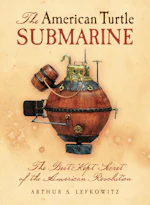
Authors have written several books about the submarine. I’m linking to Arthur S. Lefkowitz’s The American Turtle Submarine because he gave me a nifty cap.

TOMORROW: Bushnell’s secrets.

Friday, August 21, 2026

In Exchange for John Callender

In June 1777, as quoted here, the Massachusetts General Court voted to send imprisoned Loyalist Benjamin Davis, Jr., with his father to New York on condition that the royal authorities send back John Callender in exchange.

Callender (1747-1797) had been one of four provincial officers ordered to lead their artillery companies onto the field at the Battle of Bunker Hill.

Only one of those officers, Samuel Russell Trevett, actually stayed through the whole battle doing damage to the regulars. Only one—again, Trevett—kept any of the provincials’ valuable cannon from being captured.

However, two of the other officers had the advantage of being related to Col. Richard Gridley, commander of the artillery. They were Maj. Scarborough Gridley, the colonel’s son, and Capt. Samuel Gridley, his nephew.

Eventually both young Gridleys were removed from the ranks. But that took months, and in July 1775 the new commander-in-chief, Gen. George Washington, had to make an example of someone. So John Callender was cashiered in a very public way.

Callender carved out a second chance for himself. He went to New York in the fall of 1776 as a gentleman volunteer or “cadet” attached to the artillery company commanded by Capt.-Lt. John Johnson (c. 1753–1818, self-portrait shown above).

During the Battle of Brooklyn, Johnson was “desperately wounded,” in the words of Henry P. Johnston. Callender took command of the company and “fought his piece on Long Island until the enemy’s bayonets were at his breast.” Both officers and their men became prisoners.

Johnson was exchanged in May 1777 but was in no physical shape to return to the army. He became Boston’s leading portrait painter during and immediately after the war.

Callender was awarded a Continental Army commission as a captain-lieutenant, dated 1 Jan 1777. And the Massachusetts legislature tried to get him back, as its June resolution showed.

But that didn’t work. Callender was still a prisoner in New York in September. And I rather doubt Benjamin Davis, Jr., returned to Massachusetts to be locked up again.

I suspect the British authorities didn’t see a fair trade in exchanging a Continental officer captured in battle for a young man, barely of age, who just happened to be with his father on a merchant ship when it was seized. It’s possible the Crown freed another young American man whose identity I haven’t found, and it’s possible the issue of Benjamin, Jr.’s trade faded away.

In September 1777, John Callender’s wife Hepzibah asked the Massachusetts legislature to approve another swap for her husband. The man to be freed from the Boston jail this time was John Hill, a Loyalist captured during the evacuation in the spring of 1776.

The General Court approved that swap on 17 September. I presume it actually happened because by the end of the year Callender and Hill were both back on their own sides.

In subsequent years Hill served as “a Capt. of Marines on board a Privateer for 8 months, than as Capt. of Marines in the Jason.” Then with his brother Richard he was inspector of the ferry between Manhattan and Brooklyn.

Callender remained on duty in the Continental artillery force for the rest of the war, mustering out in 1784.

TOMORROW: The Davises in New York.

Saturday, August 08, 2026

“Fell in with two Arm’d Schooners”

Yesterday I wrote about Benjamin and Edward Davis, two brothers who were mercantile partners in Boston until religion and Revolutionary politics split them apart.

Benjamin became a Sandemanian, devoutly guided not to oppose British Crown policies by, for instance, signing on to the non-importation boycotts.

Edward remained an Anglican, attending Trinity Church. By late 1774 the Whigs coopted him into helping to enforce their strongest boycott, the Continental Association.

Both brothers remained in Boston during the siege. But when the British military evacuated, Edward stayed while Benjamin sailed away to Halifax, Nova Scotia. In April 1776 the Patriot authorities ordered magistrates to question Edward about his loyalty, but evidently he passed muster.

Around the start of July, Benjamin Davis boarded the ship Peggy, headed for New York. Along with him came his son Benjamin, Jr., who turned twenty that year; an enslaved man; half a dozen other Loyalist men; and a few Loyalist women.

Evidently those refugees saw business opportunities supplying the huge British and Hessian army assembling at New York. The Peggy was loaded with provisions, including 2,648 “mutton hams,” 311 “tierces salted beef,” fish, flour, snuff, cloth, stockings, and a large quantity of alcohol in various forms.

The Peggy also carried six 3-pounder and two 2-pounder cannon. It sailed in convoy with dozens of other merchant ships and troop transports, all escorted by two Royal Navy warships. The sea voyage probably seemed safe.

We have the ship captain’s account of what happened next:
I James Kennedy, Master of the Ship Peggy, in the Merchant Service, declare that I left Hallifax about the first Inst. [i.e., of this month] under Convoy of the Renown of Fifty Guns, with a Fleet of sixteen [torn] Transports containing the 42nd & 71 Scotch Regiments & Fraziers new rais’d Regiment, about 3000 in all, & three Large Ships with Hessian Troops on board, about 600 in all, & one Ship with 5 companys of English foot Guards, & four Victualling Ships, the whole Fleet bound for New York.

Off Nantucket Shoals we fell in with the Flora Frigate of Thirty Guns & four Transports with Highland Troops, these had been in Boston Bay, where they got information from a Fisherman that the Town was Evacuated, on which they Stood for Hallifax untill they met with us, they then joyn’d our Fleet for New York.

The Scotch Troops were all to be of Coll [Archibald] Campbells division (of the Grand Army in America, the whole of which Army I was informd, would by the last of July, amount, to 50,000.) the Hessian Troops left England about the 12th of May, some of the Officers informd me they came out with 304 Sail under the Command of Commodore Hawtham [William Hotham], on board of whom were 10,000 Foreign Troops & some English Troops (number unknown).

last Fryday sennight [19 July] in a gale of wind & thick weather I lost the Fleet & on monday [22 July] I fell in with two [American] Arm’d Schooners, Capts. [John] Skimmer & [Samuel] Tucker, to whom I surrendered after a short engagement, in which I had only one man Wounded.

The day after the Fleet left Hallifax, I saw from my Deck forty Sail of Ships standing in for that Harbour, & which I suppose to be part of the Fleet under Commodore Hawtham.
Skimmer commanded the Franklin and Tucker the Hancock, schooners originally launched under the authority of the Continental Army commander. They were now sailing for Massachusetts.

The Patriot authorities who took Capt. Kennedy’s deposition were evidently pumping him for intelliegence on what other British ships and troops were out there rather than details of his engagement with the schooners.

For Benjamin Davis, all that mattered now was that he was a prisoner of the state he’d left four months before.

TOMORROW: The gingerbread man.

Wednesday, May 27, 2026

Uncovering Boston Jersey

Earlier this month the Guardian reported on how researchers had unearthed new information about a figure in this portrait.
For hundreds of years, he was known only as “Jersey”, an enslaved boy of about 11 rendered in oil on canvas by the great 18th-century portrait painter Sir Joshua Reynolds. . . .

The painting, thought to have been completed around 1748, shows the boy and his “master”, the naval officer and MP Paul Henry Ourry. While Ourry looks out into the distance authoritatively, the enslaved child gazes up at the officer tentatively. . . .

Scouring admiralty records, letters, muster books (ships’ registers) and captains’ logs, [Mark] Brayshay and Katherine Gazzard, a curator at Royal Museums Greenwich, found him named as “Boston Jersey” on ships that Ourry was attached to.

They believe he may have been given the surname Jersey because Ourry was born in the Channel Islands. It is possible he had his first name because he once lived in Boston, Massachusetts.

The researchers discovered Jersey was baptised as George Walker (possibly a name he had been known by earlier in his life) on 30 July 1752, probably in a chapel in Westminster.
The article has a little more to say about George Walker and much more about the restoration of the painting.

This discovery led to the quick creation of a Wikipedia page about Boston Jersey/George Walker.

Monday, May 18, 2026

“In what a defenceless State we still remain”

I was preparing to write about a document from the Samuel Adams Papers at the New York Public Library, digitized as “Letter from John Scollay” dated 22 Apr 1776.

But after taking a closer look, I realized that only the first two four pages at that link come from a letter by selectman John Scollay. And the first two pages of Scollay’s letter are at this link, called “Letter from William Davis”—which is indeed accurate for the first two of four pages there.

The file called “Letter from John Scollay” also contains a two-page letter from the Rev. Samuel Cooper, dated 29 Apr 1776. His signature is abbreviated, but the handwriting matches Cooper’s other letters in this collection.

The Cooper letter closes by saying he’d recently written to John Hancock and John Adams. The letter to Hancock isn’t listed in the John Hancock Papers project, so it probably hasn’t survived. But the Adams Papers does offer a 22 April letter from Cooper matching the style and concerns as the letter to Samuel Adams.

In particular, Cooper told John Adams he was worried about Boston’s defenses:
After so many Weeks Possession of this Town you would be surpriz’d to see in what a defenceless State we still remain. The Business of Fortifying has lain between Genl. [Artemas] Ward and a Committee of the General Court: Between them both, little or nothing has yet been done. We have but 7 or 8 Guns mounted on Fort Hill. Nothing yet done on any Island in the Harbor.

A British Ship of 40 or 50 Guns with two or three small arm’d Vessells are in Possession of King Road and Nantasket. They take or drive away almost all supplies coming to us by Water; and (would you believe it!) with this inconsiderable Force the Harbor has been, and is now effectually block’d up. Two or three Ships of War have had it in their Pow’r ever since the Evacuation of the Town to come up and cannonade it.
That warship’s primary mission was to stop other British ships from going into the harbor unaware that it waw now in rebel hands. But of course Cooper and other Bostonians couldn’t be sure it wouldn’t attack.
Ward complains that too small a Force, but 5 Regiments not full, were left him. The Court blame him for Inactivity, and He them. I was pleas’d to see your Letters and others from Gentlemen of the Congress mentioning the Importance of putting this Harbor into the best State of Defence. Pray write again and again to press this Matter.

There is a Report here that Ward has desir’d to resign. I wish from my Heart He would do it. He is a good Man, a thoro N. England man, and dispos’d to do us ev’ry Service in his Power. But He certainly wants Decision and Activity. It is of absolute Necessity that some General Officer of the best Qualities be sent to this Department immediately. Pray let [Nathanael] Green or some other be plac’d here.

We are in the utmost Hazard, should the Enemy return, of loosing in this Quarter much more than we have gain’d, by the Departure of the British Forces. Had there been a Man here, at the Head of the Military who would have discern’d at once what was proper to be done; and stated it to the Court, we might have been in a good Posture of Defence Weeks ago.
Ward had indeed put in his resignation on the grounds of ill health, then asked to remain so he could help Massachusetts rebuild. Cooper wasn’t the only local to say Ward moved too slowly. When the minister wrote this letter, however, it had been less than three weeks since Gen. George Washington had departed and left Ward in charge. It therefore doesn’t seem fair to suggest Boston could have been fortified against ocean attack “Weeks ago.”

Thursday, April 23, 2026

“Without the Privelege of Pen, Ink, Paper or Candle”

In April 1776, Watertown was the seat of Massachusetts’s government.

Though people could now go into Boston, that town was still reeling from the siege. Plus, there was smallpox.

So the Massachusetts General Court stayed in Watertown—the assembly in the town’s meeting-house and the Council in an upper chamber of Edmund Fowle’s house (now headquarters of the Historical Society of Watertown, shown here).

Under the provincial charter, because the governor and lieutenant governor were absent (both driven away by the war), the Council exercised executive power.

That’s why, on 12 April, James Otis, Sr., as senior member of the Massachusetts Council, signed this order to imprison five genteel Loyalists captured aboard the brig Elizabeth:
To the Keeper of the Goal at Boston, in the County of Suffolk—Greeting—

You are hereby directed and commanded to take into your Custody Crean Brush, William Jackson, Peter Ramsey, Edward [K]eighley, and Richard Newton, lately taken in their flight from Boston in attempting to carry away from thence under the protection of the British fleet, large Quantities of Goods Wares & Merchandizes, the Rightful Property of the Inhabitants of that town, and having joined themselves with the Fleet & army employed against the united Colonies of America—

and you are commanded to confine the said Crean Brush William Jackson & Peter Ramsen [sic], each in an apartment by himself, without the Privelege of Pen, Ink, Paper or Candle, and not suffer them, or either of them to converse with any person whatever, unless in your hearing, and for the better Security of the said Crean Brush you are further ordered & commanded to put him into Handcufts immediately—

And them and each of them safely keep, ’till the further Order of the Major part of the Council, or they be otherwise discharged by due Course of Law—Hereof fail not at your Peril.
Two days later, Maj. John Grizzage Frazer, as assistant quartermaster for the Continental Army, wrote to Gen. George Washington to say that those men were now locked up. Brush was “in Irons.”

Frazer also passed on the news that on 12 April “8 british seamen” had made off with the cutter from H.M.S. Renown, one of the Royal Navy ships still hovering in the outer harbor, and got into Boston. Those defectors were much more welcome than the Loyalists who had tried to leave.

TOMORROW: Free William Jackson!

Sunday, April 19, 2026

The Case of the Stolen Fishing Boat

Ashley Bowen was a sailrigger in Marblehead who kept a diary for many years, published in print and online by the Colonial Society of Massachusetts.

On 29 February 1776, Bowen recorded a waterfront crime:
This night some seamen took Eleazer Ingalls’s boat and went to the Nautilus.
H.M.S. Nautilus was a Royal Navy sloop, rated for sixteen guns, under the command of Cdr. John Collins. It patrolled outside Marblehead harbor, hunting for the Continental schooners and trading ships. Or, as Bowen wrote on 1 March:
The Nautilus layeth a mile below our Fort. Much ice about her. Ingalls’s boat astern.
The next day the warship sailed out of sight “and carried Ingalls’s boat with her.”

A month later, Bowen started to record details about the Loyalists captured on the Elizabeth:
5 [April:] … Admiral John Manley arrived at Beverly [other sources say Gloucester] with 13 of the King’s troops on board, prisoners whom he had taken out of a brig he took bound from Boston for Halifax and carried in to Portsmouth, laden mostly with English dry goods, one [William] Jackson merchant. . . .

9 [April:] … I find Captain Samuel Tucker hath brought the inhabitants that was taken by Manley from Cape Ann and landed them here, and they are housed at Mr. William Rogers’s house at Nick Cove. . . .

10 [April:] Sam Tucker went out and returned to Beverly as his cruise is up. Passed a ship for Boston. The 3 men are taken up that stole Eleazer Ingalls’s boat and carried her to the ship.
The authorities had cracked the case of the missing boat! On 17 April Joseph Orne reported to the Massachusetts Council on behalf of the Marblehead committee of safety:
The Committe of Correspondence upon a ReExamination of the Prisoners, (taken by Capn Manly on board the Brig Sally [sic] bound to Hallifax) have made a Discovery of Joseph Wheaton & his Brother Caleb Wheatons Stealing & Carrg away a Fishing Boat in the night of the 28th Feby last, from Eleazer Ingalls of this Town, & then made their Escape to one of the Men of Warr Station’d here—

An Acct of the Boats amount with stores &c, Will be forwarded by the Owner who also Attends to Wait your Honours Determination respecting what Steps He shall pursue in the Recovery of his Intrest Again—

We are with the Greatest Respect
In behalf of the Committee
Joshua Orne Chairm.

P S Phineas Jones one of the Prisoners & who was also concerned in the above Theft Eloped the 10th Inst—notwithstandg he was under the Care of the Guards
Before reading these sources, I pictured Caleb Wheaton, Sr., going into Boston just before the war began or shortly afterward, and his wife and family joining him there (perhaps reluctantly for some) in the spring or summer of 1775.

The way Orne wrote about this theft suggests a different scenario: Phineas Jones, Joseph Wheaton, and Caleb Wheaton, Jr., stole Ingalls’s boat in order to get to H.M.S. Nautilus and thus into Boston. If so, those Wheaton brothers were inside the besieged town for only a couple of weeks before it was time to leave.

TOMORROW: A summons to Watertown.

Friday, April 17, 2026

“The honor of this enterprise belongs to Joseph Wheaton”

Yesterday I shared part of a letter Joseph Wheaton wrote in 1818 about how men from Machias, Maine, captured H.M.S. Margaretta early in the Revolutionary War.

In 1824, Charles W. Goldsborough quoted that letter in The United States Naval Chronicle. Many other chroniclers drew on it to describe the fight, sometimes said (by people not from Fairhaven) to be the first naval battle of the war.

In The Pictorial Field-book of the Revolution (1852), Benson J. Lossing said in a footnote:
The honor of this enterprise belongs to Joseph Wheaton, a native of New York, then residing at Machias. He was an energetic young man of twenty years. He proposed the expedition, but modestly named [Jeremiah] O’Brien for commander. He was active in the whole affair, and in person seized the colors of the Margaretta.
However, in a 1975 article for Maine History titled “The Historiography of The Margaretta Affair, Or, How Not To Let the Facts Interfere With a Good Story,” Edwin A. Churchill grouped Wheaton’s description of events with other unsupported or untenable tales. Churchill referred to “the self-centered bragging of Joseph Wheaton” and said his memory was “notoriously bad.”

Churchill’s main targets were two big errors that he said “traditionalist” authors kept making in their accounts of the Margaretta affair. It wasn’t sparked by conflict over a Liberty Pole, he insisted, and Benjamin Foster’s ship didn’t run aground before the fight. Wheaton wrote nothing about a pole, but he left Foster out of his account entirely. 

I won’t continue to quote Wheaton’s account, which you can read in full here, thanks to Maine Memory. Nor will I try to pick apart its details, much as I like doing that. Other people, closer to Machias geographically and emotionally, can handle that task.

Instead, I’ll consider how Joseph Wheaton’s account of the Margaretta capture fits, or doesn’t fit, with his status in March 1776: in the family of a royal appointee evacuating Boston with the British military.

It’s possible that Joseph Wheaton did take part in the attack on the Royal Navy sloop in 1775, despite (or because of) how that would have angered his father, a local Customs officer and Loyalist. He wouldn’t have been the only Revolutionary veteran to muddle details of events forty years before and put himself and his friends at the center of an event. He definitely did join the Continental Army a couple of years later.  

On the other hand, coming from a Loyalist family gave Joseph Wheaton a strong incentive to play up his Patriot credentials. In 1776 Massachusetts authorities even confined him as a suspected Loyalist. Telling the story of helping to capture the Margaretta let Wheaton claim that he’d fought for what became the U.S. from (nearly) the start of the war.

And Wheaton told that story a lot.

TOMORROW: Over the decades.

Thursday, April 16, 2026

“I said to him—Dennis let us go and take that Schooner”

Where were Caleb Wheaton, Sr.’s sons when the Revolutionary War began in April 1775?

Wheaton made his home on a substantial riverside plot in Machias, Maine, but he also owned real estate in Dedham. It’s conceivable an older son was farming that land.

The newspaper articles I quoted here suggest Wheaton himself was traveling in his home town of Rehoboth and nearly Providence, Rhode Island, in February.

But I haven’t found any statement from Caleb Wheaton about why or when he left Machias, when he went into Boston, or how many family members were with him.

In contrast, Caleb’s son Joseph Wheaton left a definite and detailed account of how he saw the war begin. In a letter to Gideon O’Brien, written on 23 Apr 1818 and held and published by the Maine Historical Society, Joseph Wheaton stated:
Before the Battle of Concord 19. Apr 1775—the Margarette Schooner Capt Moore—saild from Boston and came to Machias to escort convoy two sloops owned by Ichobod Jones with lumber for Boston & for the use of the British Governmt

while those vessels were loading. their came to Machias a vessel, & brought the news of the Battle of Concord—and communicated it to the people, on a Saturday Evening—

the next Morning Sunday it was proposed to take the officers when at public worship, and thereby obtain the vessel in retaliation for Concord & Lexington,

in attempting this, the officers Capt Moore & others escaped and got on board the Schoon—and fell down to Scotts Wharf—Where they were fired upon by a party who had come there headed by Mr [Benjamin] Foster from the East river—but as it fell dark very soon the Margarette fell down the river near where my family then lived

on Monday morning the people being yet together at Scotts—the Schooner in view. Your Brother Dennis and Myself were Standing on the Wharf by ourselves—when I said to him—Dennis let us go and take that Schooner—

how will you do it Said Dennis—

I said, we can take Job Hains’s Sloop, get the people on board her, the Sloop will out Sail the Margarette, we can board her and take her—

with all my heart said Dennis—

we then called to our aid two youths and renewed the proposition to which they agreed—we four immediately steped into a boat and went on board the Job Hains’s sloop and demand him to take the sloop to Scotts Wharf which with some little opposition was effected—

so soon as we steped on shore and gained the Bank before Scotts house, we four took off our Hatts and gave three cheers—when your Brother Jeremiah steped forward, yourself & Brother John & called upon the people to undertake the interprise to which all consented
We know from other sources that Lt. James Moore brought H.M.S. Margaretta to Machias in early June 1775, well after news that a war had started. That should be our first tip-off not to take the story that Joseph Wheaton told more than forty years later at face value.

TOMORROW: Maine memories. 

Sunday, March 29, 2026

“After this they went to it with their fists”

Here’s an example of how Gen. John Burgoyne’s diary of the late 1775, just brought to light, offers new detail on life inside besieged Boston.

We’ve long known that in August 1775 Adm. Samuel Graves (shown below) and Customs Commmissioner Benjamin Hallowell (shown at right) got into a fistfight. In 1929, Allen French delivered a whole paper on this incident to the Massachusetts Historical Society.

The two men had already butted heads over the unloading of a merchant ship. One report suggests that Hallowell had critiqued the way Graves deployed warships during the Battle of Bunker Hill. But the immediate conflict was over hay growing on Gallops Island in the outer harbor.

Hallowell had purchased the right to harvest that hay. Graves wanted that hay, or at least half of it, for the navy. (Or maybe he wanted half the value of the hay for himself.) Hallowell secured permission from Gov. Thomas Gage to harvest. Graves refused to allow haying on the islands, and he had warships.

Hallowell sent increasingly angry letters to the admiral. Graves sent no replies. Hallowell took that silence as a sign of disrespect, and he was probably right.

The next time the commissioner saw Adm. Graves, on Milk Street on 11 August, he demanded the sort of answer that he, “as a gentleman, had a right to expect."

A letter sent from Boston on 19 August and printed in the 21-23 Sept 1775 London Chronicle stated:
To this civil question, the Admiral replied in his usual style; and while the Commissioner was whispering a challenge to him, returned a blow in the face.

Though Mr. Hallowell was unarmed, the Admiral had recourse to his sword, on which the former rushed upon him, forced it from him, broke it over his knee, and then flung it in Greaves’s face; after this they went to it with their fists, but were soon parted.—

The Admiral has come off with a black eye. He has not yet proposed a renewal of battle, probably preserving himself for the Yankies, who have already carried off all his fresh stock, burnt his hay on the islands, and destroyed the light-house twice under his very nose.
Over the next couple of days Graves’s nephew, Capt. Thomas Graves, R.N., twice challenged Hallowell on the admiral’s behalf. Another nephew, Capt. Samuel Graves, R.N., hit the commissioner on the back of the head with a cane, and Sheriff Stephen Greenleaf had to separate the men. Hallowell declared he wouldn’t duel on instructions from Gen. Gage—at least not with anyone but the admiral.

According to a 21 August letter from Capt. Samuel Graves summarized in the Dartmouth Manuscripts, the dispute was heard by a court martial. The board faulted the admiral for “An error in judgment for disobedience of orders and neglect of duty.”

Our most detailed description of this fight comes from Hallowell, and most of the other sources sympathize with him, too. (Given the commissioner’s snappish temper, that shows how many people disliked Adm. Graves.) At least a couple of those sources say the admiral came away with a black eye, suggesting the commissioner got the better of the fight.

Per Andrew O’Shaughnessy, Gen. Burgoyne called the whole incident “shameful” and recorded that Hallowell suffered a black eye, too.

Prof. O’Shaughnessy will share more details about the Burgoyne diary and how it came to light in an online “fireside chat”/Zoom webinar on 15 April at 6 P.M. Harvard time.

Friday, March 27, 2026

“Here I took my leave of that once happy country”

Even after the destruction of Castle William, described yesterday, Judge Peter Oliver’s ship Pacific remained in Boston’s outer harbor, waiting for the right weather.

On 24 March, Oliver recorded, the night was so cold “that the vessell’s bows and cables were loaded with ice.”

The next day the winds were more favorable. A packet ship sailed for London, carrying Oliver’s son Peter, Jr., and his wife Sally; Sally’s brother Thomas Hutchinson, Jr., and his wife Sarah (who was also the judge’s niece); and their children among the passengers. At the same time, the “first Division” of the Loyalist fleet headed toward Halifax.

Still, Oliver’s ship remained. On 26 March he was rowed over to H.M.S. Renown and dined with “Commodore [Francis] Banks,” that ship’s captain.

On 27 March, 250 years ago today, Adm. Molyneux Shuldam (c. 1717–1798, shown above) was ready to sail, his flagship H.M.S. Chatham leading a fleet of Royal Navy warships, army troop transports, and merchant vessels to Nova Scotia. But first he wrote out orders for Capt. Banks:
You are hereby required and directed to employ His Majesty’s Ship under your Command, in such manner as you shall judge best, either by Cruizing or Anchoring occasionally in preventing all communication or Commerce with the Town and Harbour of Boston; And whereas many Vessels are daily expected here with Stores and Provisions for the use of His Majesty’s Fleet and Army, which are in extreme want of them; You are to take under your Command the Ships and Vessels mentioned in the Margin and employ them in Cruizing between the Latitudes of Cape Cod, and Cape Anne at such distance from the Shore, where they are most likely to fall in with the above Expected Vessels, which you are to direct them to see in safety to Halifax, and then return to you.

You are also hereby required and directed on the Arrival of any of His Majesty’s Ships and Vessels at Nantasket (except those you have Orders to take under your Command) to give their Commanders Orders to proceed immediately to join me at Halifax, or where ever else you shall from good Authority hear I may be.

You are to take, sink, burn, or destroy, all Rebel Armed Vessels you may meet with, and to continue upon this Service till further Order, Governing yourself in the Executing of it, by the General Code of Orders and Instructions, you have already received from me, sending all Vessels you may seize or detain to Halifax, to be proceeded against according to Law, and giving me an Account of your Proceedings by all opportunities that offer.
The naval ships that the admiral listed in the margin were the frigates Lively, Niger, and Fowey; the sloop Swan; the brigs Hope and Bolton; and the schooner Dispatch. That flotilla would remain to limit New England shipping.

Judge Oliver wrote in his diary for that day:
I sailed from Nantasket, abt. 3 o’clock, afternoon, in the 2nd and last Division of the fleet, about 70 sail, for Hallifax, under convoy of the Chatham, Admiral Shuldham, and of the Centurion, Capn. [Richard] Braithwaite.

Here I took my leave of that once happy country, where peace and plenty reigned uncontrouled, till that infernal Hydra Rebellion, with its hundred Heads, had devoured its happiness, spread desolation over its fertile fields, and ravaged the peacefull mansions of its inhabitants, to whom late very late if ever, will return that security and repose which once surrounded them; and if in part restored, will be attended with the disagreeable recollection of the savage barbarities, and diabolical cruelties which had been perpetrated to support rebellion, and which were instigated by Leaders who were desperate in their fortunes, unbounded in their ambition and malice, and infernal in their dictates.

Here I drop the filial tear into the Urn of my Country.

O fortunatos nimium, sua si bona norint—Nov-Anglicanos!

And here I bid A Dieu to that shore, which I never wish to tread again till that greatest of social blessings, a firm established British Government, precedes or accompanies me thither.
Oliver’s Latin riffed off of one of Virgil’s lines in Georgics, saying that the farmers (or New Englanders) would count themselves lucky if only they knew how good they had it.

Peter Oliver was one of the wealthier Loyalists, as well as having a royal appointment (and salary). He soon moved on from Halifax to London, where he lived the rest of his life until 1795.

Oliver’s diary of departing Massachusetts was published in a volume of his friend and in-law Thomas Hutchinson’s diary and letters. Oliver also left of bitter, detailed, and gossipy account of the coming of the Revolution, written in the early 1780s and finally published in 1961. (Highly recommended.)

Wednesday, March 25, 2026

“Near or quite fifty Sail are got out to Sea”

Lt. Nahum Ward, son of Gen. Artemas Ward, carried Gen. George Washington’s letter (quoted yesterday) to Josiah Quincy, Esq. (shown here), of Braintree on 24 Mar 1776.

The squire, encouraged, started to make detailed notes about what the British fleet was doing out on the Nantasket Road, the shipping channel in the outer harbor.

“The Admiral [Molyneux Shuldam] has a Signal now flying at his main top mast Head,” Quincy wrote the next day, 250 years ago today. “I wish it was in my Power to construe it.” Yes, that would have been more helpful.

But then he saw movement.
11 OClock. This Moment an Explanation of the above Signal occurrs: Part of the Fleet are come to Sail: I shall proceed, journalwise, to inform your Excellency of their Movements, ’till the Bearer, who is gone to see Colo. [Benjamin] Tupper, returns.

1 OClock They are still coming to sail: near or quite fifty Sail are got out to Sea; about half of them Brigs, Schooners, and Sloops; one or two Frigates, and the remainder Transport Ships; their Course shaped for Cape Cod: May not this Division be bound for Martha’s Vineyard, and the Islands in that Sound to procure fresh Provision for the Fleet, which is to rendevous at Hallifax, and from thence to proceed to Quebec?

3 OClock My Servant, who was directed to take an Account of the Number that have sailed, informs me, there are in all fifty two: One transport Brig: is just arrived: . . .

5 OClock The Adml has just now hoisted another Signal a Pendant under his Flagg two more Ships are under Sail going out of the Harbor: 7 O’Clock, Mr Ward & Colo. Tupper are just arrived: They are of Opinion, that the Ships which sailed to Day, have carried off the Tories, and are bound with them to Lewisburgh.

Tuesday Morng [26 March] Mr Ward’s tarrying in Town, gives me a further Opportunity to inform your Excellency that the Fleet, consisting of about 100 Sail, chiefly large Ships, remain as they were last Night.

10 OClock The same Signal is now flying at the Admiral’s Main top mast Head as was hoisted yesterday morning: Scarce hoisted before it was lower’d again, & in abt ½ an hour a blew [blue] flag is flying at mizen Top mast Head and a Pendant at his mizen Peek.

11 O’Clock The above Signals are changed, for a red Ensign hoisted just under his Mizen Yard: A signal is just now hoisted upon the Top of the Light House, for Vessels in the Offing; and immediately followed, by a blew broad Pendant from the middle of the Tower: In less than 10 Minutes the Signal first mentioned vizt a Pendant is flying from his main top mast Head.

12 O’Clock A red Ensign is now flying at his mizen top mast Head; a blew Ensign at his starboard mizen Shrouds, and a pendant thrown out between, by hand, & immediately taken in again.

2 OClock The 60 gun Ship in King Road is come to Sail & going down to Nantasket: The Admiral’s red Ensign is struck; the blew one remains: a large transport Ship and a Brig are just arrived within the Light.
Quincy wasn’t sure all that detail could be useful, but he promised Washington he’d keep sending it until the general said otherwise. He really wanted to be part of the effort to defeat the British.

About half of the fleet had moved off, heading for the safe port of Halifax, Nova Scotia. Most of the rest would follow by the end of 26 March. A few warships stayed behind to patrol Boston harbor.

TOMORROW: Aboard one of those ships.

Tuesday, March 24, 2026

“Fire Ships and fire Rafts, covered by the Smoke of Cannon”?

After evacuating Boston on 17 Mar 1776, the British military was gone—and yet not gone.

The troops, their families, their support staff, royal appointees, and more than a thousand Loyalists had embarked on more than a hundred ships, but those ships were bobbing in the outer harbor.

People worried that the army or navy would attack Boston or other coastal towns, either for supplies or for revenge. The Continental forces had a few armed schooners, good for capturing isolated merchant ships but not up to taking on a royal frigate, much less a fleet.

On 21 March, Josiah Quincy wrote to Gen. George Washington about what he could see from Braintree:
Since the Ships and Troops fell down below, we have been apprehensive of an Attack from their Boats, in Pursuit of live Stock; but, yesterday in the Afternoon, we were happyly relieved, by the Appearance of a number of Whaleboats, streching across our Bay, under the Command (as I have since heard) of the brave Lieut. Colo. [Benjamin] Tupper, who in the forenoon had been cannonading the Ships, with one or more field Pieces from the east Head of Thompson’s Island; and, I suppose, last Night cannonaded them again from the same Place, or from Spectacle Island.

This judicious Manœuvre had its genuine Effect; for, this Morning, the Admiral [Molyneux Shuldam], and all the rest of the Ships, except one of the Line came to sail, and fell down to Nantasket Road; where a countless Number is now collected:

In Revenge for their burning the Castle last Night; were we provided with a sufficient Number of fire Ships and fire Rafts, covered by the Smoke of Cannon from a few Row Gallies; this Night, might exhibit, the most glorious Conflagration, that was ever seen upon the watery Element, and the probable Consequences of it, a Period to the present War, otherwise, Humanity revolts at the Destruction of so great Number, even of our Enemies.
A fireship, as Samuel Johnson defined it, was “A ship filled with combustible matter to fire the vessels of the enemy.” Sometimes they carried not just combistibles but explosives. The tactic was to send such a ship toward a group of enemy vessels, set it afire, and get off safely while it continued on. A flaming fireship was probably the most fearsome single weapon of eighteenth-century warfare. Even if it didn’t damage enemy ships, they had to scramble to stay out of its way, and captains might decide to move on.

It seems significant that the Americans at this time wrote mostly about “fire Rafts.” That seems like a cheaper form of fire ship, not able to carry as much or be steered as easily, dependent on prevailing currents.

Quincy was a senior member of the Massachusetts Council and energetic supporter of the war. Gen. Washington wrote back to him on 24 March, 250 years ago today: 
The continuance of the Fleet in Nantasket Road affords matter for Speculation—it surpasses my comprehension—and awakens all my Suspicions—I have taken every step in my power to guard against Surprizes, but the temper of your People, seems to me to be, to apprehend no danger till it stares them in the Face—

I do not think there is cause to apprehend such Marauding parties as you dread—if any stroke is aimd, it will be a capitol one, for which reason I wish to be much upon my guard; & therefore have appointed Guard Boats, lookouts, &ca—there is one evil I dread, & that is their Spies, I could wish therefore that the most attentive watch was kept to prevent any Intercourse between the Ships & Main
He urged Quincy to set up a shore guard watching for such infiltrators, promising to pay those men’s wages.

Washington sent that reply through Gen. Artemas Ward and added this order for his second-in-command:
As these favourable Winds do not waft the fleet from Nantasket, my Suspicion’s are more and more roused. I wish therefore the Fire Rafts talkd of by Colo. Tupper, could be attempted in a Windy, or dark Night, I think this would discover their designs if no other good effect resulted from it.
TOMORROW: The next day’s action.