J. L. BELL is a Massachusetts writer who specializes in (among other things) the start of the American Revolution in and around Boston. He is particularly interested in the experiences of children in 1765-75. He has published scholarly papers and popular articles for both children and adults. He was consultant for an episode of History Detectives, and contributed to a display at Minute Man National Historic Park.

Subscribe thru Follow.it


•••••••••••••••••


Showing posts with label Nicholas Cooke. Show all posts

Tuesday, July 08, 2025

Rhode Island’s “vote for raising men”

As soon as he heard about the shooting at Lexington, James Warren, delegate from Plymouth to the Massachusetts Provincial Congress, passed the news on to Patriots in Rhode Island.

On 20 April the elite militia company called the Kentish Guards mustered and marched toward Massachusetts.

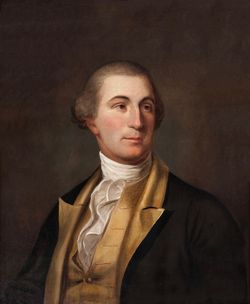
Before those men reached the border, a message arrived from Gov. Joseph Wanton (shown here), ordering the unit to stand down.

Four members continued on horseback, three of them being Nathanael Greene and his brothers. But once those men heard that the British troops were back inside Boston and the emergency had passed, they went home to Rhode Island to sort things out.

The colony’s first step came quickly. On 22 April the assembly passed an act to raise 1,500 men
properly armed and disciplined, to continue in this colony, as an army of observation, to repel any insult or violence that may be offered to the inhabitants. And also, if it be necessary for the safety and preservation of any of the colonies, to march out of this colony and join and co-operate with the forces of the neighboring colonies.
The Massachusetts Provincial Congress had also used the phrase “army of observation” in early April, implying a purely defensive force. Once the fighting began, however, it dropped that phrase entirely. Even as the Rhode Island assembly called its new troops an “army of observation,” it was clearly opening the door to sending those men off to help Massachusetts in its war.

Top officials in the colony resisted. Though Gov. Wanton had been crucial to stymieing the Crown’s Gaspee inquiry a couple of years before, he filed a protest against the legislature’s vote. Deputy Governor Darius Sessions joined him along with two members of the Council of Assistants (the upper house), Thomas Wickes and William Potter. On 25 April they declared their opposition to the new army
Because we are of opinion that such a measure will be attended with the most fatal consequences to our charter privileges, involve the Colony in all the horrors of a civil war, and, as we conceive, is an open violation of the oath of allegiance, which we have severally taken upon our admission into the respective offices we now hold in the Colony.
Coincidentally, Rhode Island’s charter called for a new legislative session to start on the first Wednesday of each May. In that spring’s annual election, Sessions, Wickes, and Potter all lost their seats. (Potter would recant and apologize in June, and then return to the Council of Assistants.) Nicholas Cooke became the new deputy governor.

Rhode Island’s freemen reelected Joseph Wanton as governor, but on 2 May he sent a letter to the assembly saying, “indisposition prevents me from meeting you.” Instead he enclosed what Lord Dartmouth, the British Secretary of State, considered a conciliatory offer. Wanton thought that was a more promising route to resolving the crisis. He told the legislators:
The prosperity and happiness of this colony, is founded in its connexion with Great Britain; “for if once we are separated, where shall we find another Britain to supply our loss? Torn from the body to which we are united by religion, liberty, laws and commerce, we must bleed at every vein.”
That passage quoted from John Dickinson’s Letters from a Farmer in Pennsylvania. (Some authors miss the quote marks and attribute those words to Wanton himself.)

On 5 May the legislative speaker, Metcalf Bowler, tried to force the governor’s hand. He sent a blank commission for an officer in the new army and asked Wanton whether he would sign such a form. The governor replied:
I cannot comply with it; having heretofore protested against the vote for raising men, as a measure inconsistent with my duty to the King, and repugnant to the true and real interest of this government.
At that point the assembly bypassed Gov. Wanton and started treating Nicholas Cooke as the colony’s chief executive. Wanton wouldn’t be officially replaced until November, but he could no longer stand in the way of Rhode Island’s army.

TOMORROW: Finding a general.

Saturday, August 17, 2024

“One hundred barrels of gun-powder has been taken out”

On 2 Sept 1774, Gov. Nicholas Cooke reported that the Rhode Island government had finally acquiesced to Gen. George Washington’s wish for the colony to send an armed ship to Bermuda to pick up some gunpowder that island’s inhabitants were reportedly ready to sell to the American rebels.

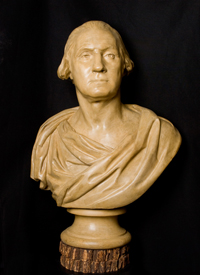
The man for the job, Cooke said, was Abraham Whipple (1733–1819, shown here). He had commanded a privateer in the last war and had already taken one Royal Navy vessel: the Gaspee in 1772. Rhode Island had made him commodore of its fleet, which at that time consisted of two ships.

Rising from his sickbed, Whipple had one request:
He requests your Excellency to give him a Line under your Hand assuring the People of Bermuda that, in Case of their Assistance, you will recommend it to the Continental Congress to permit them to fetch Provisions for the Use of the Island. He does not purpose to make any Use of it unless he shall find it utterly impracticable to obtain the Powder without their Assistance.
Washington’s military secretary Joseph Reed drafted that document:
In the great Conflict which agitates this Continent I cannot doubt but the Assertors of Freedom & the Rights of the Constitution are possessed of your most favourable Regards & Wishes for Success. As the Descendants of Freemen & Heirs with us of the same glorious Inheritance we flatter ourselves that tho. divided by our Situation we are firmly united in Sentiment. The Cause of Virtue & Liberty is confined to no Continent or Climate it comprehends within its capacious Limits the wise & the good however dispersed & separated in Space or Distance. . . .
On 9 September, Cooke sent more news: “Zealous to do every Thing in our Power to serve the common Cause of America, the Committee have determined, instead of the small armed Sloop, to send the large Vessel with Fifty Men upon the Bermuda Enterprize.”

Whipple sailed on 12 September. Gov. Cooke probably thought the general would finally be satisfied. Then he noticed an item in the 14 September New-England Chronicle under a Philadelphia dateline:
Extract of a letter from Bermuda, dated August 21.

“Upwards of one hundred barrels of gun-powder has been taken out of our magazine: supposed by a sloop from Philadelphia, and a schooner from South Carolina: It was very easily accomplished, from the magazine being situated far distant from town, and no dwelling house near it.”
In fact, this gunpowder heist was an inside job. A Bermuda gentleman named Henry Tucker had made arrangements with the Continental Congress to trade that gunpowder for regular shipments of food. He had arranged for men to break into the storehouse on 14 August and load the 1,182 pounds of powder inside onto the two American vessels. Tucker even sent the Congress a bill for around £162. Read all about that in Hugh T. Harrington’s article for the Journal of the American Revolution.

Back in early August, Gov. Cooke had told Gen. Washington that there was no need for a special voyage since the Bermudans might very well move the gunpowder on their own. Now that turned out to be true. In fact, Tucker’s team had acted even as Cooke was maneuvering his legislature to fund Rhode Island’s effort for Washington’s sake. By the time Cdre. Whipple had sailed, the gunpowder in question had arrived at Philadelphia. Unfortunately, Cooke was unable to get Whipple and his armed ship back to Narragansett Bay.

Remarkably, the governor managed not to write to the general ‘I told you so.’

TOMORROW: Whatever happened to…

Friday, August 16, 2024

“The only Chance of Success is by a Sudden Stroke”

On 11 Aug 1775, Elisha Porter returned to Gen. George Washington’s headquarters with a letter from Rhode Island governor Nicholas Cooke, the second Cooke had sent within four days.

Both letters said the same thing about the general’s proposal to send an armed ship to Bermuda to collect gunpowder: Rhode Island couldn’t spare the resources to do it, and the Bermudans might deliver the gunpowder on their own.

That was not what Gen. Washington wanted to read. During the siege of Boston, he constantly sought to do something about the king’s troops in Boston. He felt the Continental Congress had sent him to drive that force out of Boston, not just to prod them until its commanders decided to leave.

The lack of gunpowder seemed like the biggest obstacle to any plan, so Washington was eager to take any action to fix that problem. Then he could get on to other schemes, like sending Col. Benedict Arnold up through Maine, launching armed schooners, or eventually proposing an attack across the frozen Charles River.

On 14 August, therefore, the general wrote back to the governor that the Bermuda plan was really good, and it depended on not quibbling and acting fast:
Having conversed with Collo. Porter and farther considered the Matter, I am of Opinion it ought to be prosecuted on the single Footing of procuring what is in the Magazine. The Voyage is short, our Necessity is great: The Expectation of being supplied by the Inhabitants of the Island under such Hazards as they must run, is slender: so that the only Chance of Success is by a Sudden Stroke. . . .

I should suppose the Captain who is to have the Direction of the Enterprize, would rather chuse to have Men whom he knew, and in whom he could confide in Preference to Strangers. From what Collo. Porter informs me, I do not see that [William] Harris’s Presence is absolutely necessary, and as his Terms would add considerably to the Expence, after obtaining from him all the Intelligence he could give, his Attendance might be dispens’d with.
Sea captain William Harris of New London, Connecticut, had come to Massachusetts proposing the voyage to Bermuda and obviously hoped to profit from it. Now Washington and Porter planned to milk him for information and cut him out of the deal.

Cooke didn’t write back until the end of the month. He hadn’t even proposed to the Rhode Island assembly that the colony undertake this mission, choosing instead to maneuver until he could work with a select committee. But he was still pessimistic: “At present the Undertaking appears to me extremely difficult. The most suitable Man we have for the Purpose is confined to his Bed by Sickness.”

Washington would not have been pleased to hear that.

TOMORROW: A mission from Rhode Island.

Thursday, August 15, 2024

“The General would be glad to confer with you”

Yesterday I started to profile Elisha Porter, as of July 1775 Hadley’s representative in the Massachusetts General Court and militia colonel.

Porter helped fellow lawyer Joseph Hawley of Northampton write this letter to the Continental Congress waxing eloquent on the need for more gunpowder:
Were you now in the Continental Army which invests Boston, it would beget unutterable vexation and torment in your hearts, to behold so large a body of so active brave men as that army consists of, insulted by the fire and blaze of the enemy’s cannon and mortars from their lines, ships, and floating batteries; and the same brave men, although possessed of divers good pieces of great ordnance, and willing, at any hazard, to improve them, yet wholly restrained from returning any fire of the kind, lest, by so doing, their little stock of gunpowder should soon be exhausted, and they reduced to the fatal necessity of laying down their arms or flying into the woods, leaving their houses to be burnt, their fields wasted; in short to give up and abandon the just claims of all America, and in effect to resign themselves and the lives of all the children of liberty in this whole Continent, to the arbitrary pleasure of a haughty Administration, instigated and influenced by enraged tories of our own breeding.
I couldn’t resist quoting that sentence, as transcribed by Peter Force.

In mid-July, Porter made a trip to New York, seeking “2 hhds Flints & 10 Tons Lead,” as the general wrote. He returned on 2 August, having succeeded in arranging for ”80,000 Flints & eight Tons of Lead.”

The next day, a council of war disclosed how little gunpowder the army had. Joseph Reed (shown above), Gen. George Washington’s military secretary, sent Porter a quick note:
If you could spare Time to ride down to Head Quarters this Afternoon the General would be glad to confer with you on a Matter of some Importance which you mentioned to him on your Return from New York
Porter made the short trip from Watertown to Cambridge. Later that day Washington wrote to Rhode Island governor Nicholas Cooke about the urgent need for gunpowder and the possibility of obtaining it from Bermuda, as quoted here. He concluded:
Col: Porter has undertaken to assist in the Matter or to provide some suitable Person to accompany [William] Harris to you who will communicate all Circumstances to you.
Porter personally carried that letter to Cooke. There was a brief glitch when they lost track of Harris, a sea captain who was continuing to shuttle among American ports. On 11 August, Cooke sent Porter back to Washington with a letter.

Gov. Cooke had already expressed his position: reports suggested that Bermudans were inclined to sell that powder to Continental forces, so there was no need to send a ship to the island, and besides Rhode Island didn’t have the resources for such a mission, anyway.

TOMORROW: The general’s response.

Tuesday, August 13, 2024

“They gave Information of the Powder”

As I quoted back here, on 3 Aug 1775 Gen. George Washington wrote to Gov. Nicholas Cooke of Rhode Island asking him to send all available gunpowder and lead.

Washington also urged the governor to dispatch one of the colony’s armed ships with a man named Harris to Bermuda to seize more gunpowder.

As I wrote yesterday, I think Harris was a Connecticut-based sea captain named William Harris.

Cooke wrote back promptly on 8 August. His responses were:
  • Rhode Island didn’t have that much gunpowder and lead left, and needed all it had.
  • The colony couldn’t spare either of its armed sloops.
  • There wasn’t enough money available to buy the gunpowder in Bermuda.
  • Washington’s agent, Elisha Porter, “can hear nothing of Harris…but is greatly apprehensive that he is fallen into the Hands of the Enemy.”
But aside from those details, Cooke was eager to cooperate with the general’s plans.

I believe Capt. Harris had gone on to New York. The 10 August issue of Rivington’s New-York Gazetteer reported that the Customs office had just cleared “Bittern, Harris,” to sail for “Rhode-Island.”

On 11 August, Cooke told Washington that Harris was back in Providence. And he had news to share about that powder in Bermuda:
Since my last to you Mr [Samuel] Ward One of the Delegates hath returned from the Congress. He informs me that some of the Bermudians had been at Philadelphia soliciting for Liberty to import Provisions for the Use of the Island. They gave Information of the Powder mentioned in your Letter to me, and were of Opinion it might be easily obtained. They were told by the Delegates that every Vessel they should send to the Northward with Powder should be permitted to carry Provisions to the Island. Whether their Situation will not probably prevent them from bringing the Powder I submit to your Excellency.
Gov. Cooke sent that letter back to Cambridge with Porter.

TOMORROW: The general’s operative.

Sunday, August 11, 2024

“Arrived here a Sloop from Bermuda”

As I quoted yesterday, on 4 Aug 1775 Gen. George Washington wrote to the governor of Rhode Island about what he’d heard about Bermuda from a man he called “One Harris.”

The editors of The Revolutionary Correspondence of Governor Nicholas Cooke identified Harris as “Captain Benjamin Harris,” but I don’t see what they based that on. I can’t find other mentions of Benjamin Harris in connection with Rhode Island or Bermuda.

I found clues in newspapers pointing in another direction. Rivington’s New-York Gazetteer for 15 June reported: “sloop Bittern, Harris, [cleared for] Bermuda.” And on 27 July: “Bittren, Harris, Bermuda” was among the inward entries, the only one from that island. The 31 July New-York Gazette reported that sloop as “Brittain, W. Harris.”

In addition, the 24 July New-York Gazette reported:
Friday Night last [i.e., 21 July] arrived here a Sloop from Bermuda: By Letters from thence we learn, that the Inhabitants of that Island are greatly alarmed at the present Situation of publick Affairs, being under the most dismal Apprehensions of Starving; to prevent which they have passed a Law, that no Provisions should be sent off the Island at any Rate whatsoever; and were about dispatching a Vessel to Philadelphia, to request the Honourable the Continental Congress to take their Case into their most serious Consideration.
That was reprinted in the 27 July New-York Journal and from thence in the 2 August Massachusetts Spy and the 3 August New-England Chronicle.

Thus, we have a ship’s captain named “W. Harris” arriving from Bermuda on a ship named something like the Bittern, probably bringing political news, in time to make his way to Gen. Washington’s headquarters in Cambridge with an offer.

Another clue about Harris appears in Gov. Cooke’s 8 August response to Washington saying that he didn’t know where the man was. Washington’s agent Elisha Porter was “bound as far as New-London to endeavour to meet with him,” indicating that people perceived Harris as most likely to surface in New London, Connecticut.

That took me to my favorite smuggling merchant, Nathaniel Shaw of New London. His letter book shows he employed two captains named William Harris in the early 1770s. He wrote sometimes of William Harris, sometimes William Harris, Jr., and most often simply ”Harris.”

The 10 May 1771 New-London Gazette reported among the ships cleared out of that harbor “Sloop Bittren, Harris [to] New York.” On that same say Shaw sent a letter to Peter Vandervoort in New York with a shipload of molasses overseen by “Wm. Harris Junr.” The 6 Dec 1770 Pennsylvania Journal likewise links a “W. Harris” with the “Sloop Bittern” traveling between New York, Philadelphia, and New London. Several newspapers in 1770 render Harris’s ship as the “Bittren.”

Two years later, the 23 Apr 1773 New-London Gazette shows “Capt. William Harris, late of New-London,” had died and one of the estate administrators was “William Harris”—no doubt formerly Jr.

Thus, I propose that the “One Harris” who visited Gen. Washington in August 1775 with a proposition regarding gunpowder was William Harris of New London, Connecticut, a ship captain recently returned from Bermuda on a sloop called something like the Bittern.

COMING UP: Mission to Bermuda.

Saturday, August 10, 2024

“One Harris is lately come from Bermuda”

Here’s a story I ran across in preparing my History Camp Boston 2024 presentation on the British colonies beyond the thirteen represented at the Second Continental Congress.

As I’ve written about before, at a council of war in Cambridge on 3 Aug 1775 Gen. George Washington learned that the Continental Army had only 38 barrels of gunpowder in reserve and not, as he’d thought based on previous reports, more than 400 casks.

That crisis produced some wild schemes for obtaining gunpowder quickly. The council endorsed the idea of a raid on Nova Scotia, which was soon abandoned but led to a couple of other enterprises: the army launching the schooner Hannah and the ships transporting Col. Benedict Arnold’s force from Newburyport to Maine.

The next day, Washington set a somewhat less wild idea in motion with a letter to Gov. Nicholas Cooke of Rhode Island:
I am now, Sir, in strict Confidence to acquaint you that our Necessities in the Articles of Powder & Lead are so great as to require an immediate Supply—I must earnestly intreat you will fall on some Measures to forward every Pound of each in the Colony which can possibly be spared—

It is not within the Propriety & Safety of such a Correspondence to say what I might upon this Subject: It is sufficient that the Case loudly calls for the most strenuous Exertions of every Friend of his Country and does not admit the least Delay—No Quantity however small is beneath Notice, & should any arrive I beg it may be forwarded as soon as possible—But a Supply of this kind is so precarious not only from the Danger of the Enemy but the Oppy of purchasing that I have revolved in my Mind every other possible Chance & listned to every Proposition on this Subject which could give the smallest Hope—

Among others I have had one made which has some Weight with me as well the General Officers to whom I have proposed it. One Harris is lately come from Bermuda, where there is a very considerable Magazine of Powder in a remote Part of the Island, & the Inhabitants well disposed not only to our Cause in General, but to assist in this Enterprize in particular:

We understand there are two armed Vessels in your Province commanded by Men of known Activity & Spirit: One of which it is proposed to dispatch on this Errand with such other Assistance as may be requisite: Harris is to go along as the Conductor of the Enterprize & to avail ourselves of his Knowledge of the Island but without any Command:

I am very sensible that at first View this Project may appear hazardous, & its Success must depend upon the Concurrence of many Circumstances but we are in a Situation which requires us to run all Risques—No Danger is to be considered when put in Competition with the Magnitude of the Cause & the absolute Necessity we are under of increasing our Stock—Enterprizes which appear chimerical often prove successful for that very Circumstance
The general concluded that letter: “Since writing the above Col: [Elisha] Porter has undertaken to assist in the Matter or to provide some suitable Person to accompany Harris to you who will communicate all Circumstances to you.”

TOMORROW: Who was “One Harris”?

Friday, February 13, 2015

Visit Washington’s Headquarters, 19 Feb.

On Thursday, 19 February, Ranger Garrett Cloer of the National Park Service will lead special tours of the Cambridge mansion that was Gen. George Washington’s home and headquarters from July 1775 to early April 1776. That estate is now the Longfellow House–Washington’s Headquarters National Historic Site.

How did the generalissimo spend his own birthday there? Probably working. Washington’s earlier diaries don’t note any special events or reflections on the two days that could be considered his birthday: 11 February (the date on which he was born under the Julian Calendar) or 22 February (the equivalent under the Gregorian Calendar, which he eventually preferred for birthday celebrations).

Gen. Washington’s letter to Gov. Jonathan Trumbull of Connecticut on 22 Feb 1776 gives a taste of the matters he was dealing with:
In my letter to you of the 19th instant [i.e., of this month] I mentioned to you that I was sorry to find there would come but 4217 pounds of powder instead of 6 or 8000 I had expectations of—I had taken my information from [Rhode Island] Governor [Nicholas] Cooke’s letter which upon a reperusal I find mentions that weight including the Casks. I have since had it weighed by the Commissary, an exact return of which you have inclosed; by which you will see, that the Net weight is 3577 lbs. 577 lbs. thereof will be placed to the credit of your Colony and the whole settled for in whatever manner will be most agreeable.

I have just received a letter from J[abez]. Huntington Esqr. with the agreeable account of his having forwarded two tons of powder to this Camp, by your order. Accept Sir of my thanks for this seasonable supply. When it arrives I shall send you an account of it; and when you point out the mode it shall be paid for, or replaced in the manner you and the rest of your legislature shall think proper.
In a couple of weeks, that gunpowder would be used to start an artillery attack on British-held Boston, which in turn covered up a move onto the heights of the Dorchester peninsula.

Back to the tours of Washington’s headquarters! They start in the visitor center at the back of 105 Brattle Street in Cambridge. They’ll begin on the hour from 3:00 to 6:00 P.M. and last forty-five minutes. These tours are free, but space is limited, so call 617-876-4491 to reserve a spot.

Friday, December 20, 2013

Rhode Island’s First Major General

A few days back, I quoted Samuel Ward’s December 1774 letter describing how Rhode Island was putting itself on a footing for war by, among other things, appointing the first major-general in the colony’s history. That was not Nathanael Greene, who sprang from the rank of private to that of general only after the war had begun. So who was it?

The Rhode Island legislature appointed Simeon Potter (1720-1806) of Bristol. He had gained wealth and notoriety as a privateer during the mid-century imperial wars and allegedly helped to lead the raid on the Royal Navy’s GaspĂ©e in 1772.

According to Beggarman, Spy: The Secret Life and Times of Israel Potter, by David Chacko and Alexander Kulcsar, Simeon Potter was not a mild-tempered man. For instance, in 1761 he beat up a seventy-four-year-old minister. (To be fair, the minister had told Potter, “There is whoring wherever you go.”)

What did Maj.-Gen. Potter do in the spring of 1775? On 19 April, two members of the Massachusetts Provincial Congress—James Warren of Plymouth and Dr. Charles Pynchon (1719-1783) of Springfield—came to Providence to consult with Rhode Island legislators about the outbreak of fighting in Middlesex County. One of the Rhode Island politicians, Stephen Hopkins, sent Potter a letter reporting:

The King’s Troops are actually engaged butchering and destroying our brethren in the most inhuman manner. The inhabitants oppose them with great zeal and courage.
Hopkins asked Potter to come to Providence to consult with Lt. Gov. Darius Sessions, who had been put in charge of the colony’s military preparations.

Potter never took the field. According to Beggarman, Spy, he “claimed to have received a letter from the commanding general of the Massachusetts Militia telling him that no troops were needed.” Unfortunately, Chacko and Kulcsar don’t quote that letter, and their citation isn’t specific or clear.

That book’s notes mention “Simeon Potter’s letter of September 3, 1774 to his nephew Nathan Miller of Warren in WHS [Warren Historical Society] that is only partially reprinted in NDAR [Naval Documents of the American Revolution].” The second volume of N.D.A.R. does include a letter from Potter dated 3 Sept 1775, saying it went to Col. William Turner Miller and is at the Rhode Island Historical Society. But that letter says nothing about the April crisis or a message from Massachusetts. It’s conceivable that that published transcript is based on an incomplete, mislabeled copy and that the Warren Historical Society holds a longer document, but I wish the information were more solid.

In any event, the Rhode Island legislature cleaned house in May 1775. It replaced Lt. Gov. Sessions with Nicholas Cooke, and later pushed out Gov. Joseph Wanton in favor of Cooke as well. It made Greene a brigadier-general commanding three regiments of infantry and an artillery company outside Boston. For its own defense, the colony chose a new major-general: William Bradford (1729-1808), also of Bristol. In October Bradford became lieutenant governor and Joshua Babcock (1707-1783) of Westerly became the new major general.

As for Potter, one of these days I’ll quote that September 1775 letter to show his resentment about the whole situation. Potter did end up providing cannon for the Continental Army—at a price. In 1776 the Rhode Island legislature even appointed him an Assistant, or member of the upper house. But Potter didn’t show up for sessions, the next year he stopped serving in town offices, and he refused to pay taxes to the new government. That didn’t save him from losing his mansion in a British raid in 1778. Potter had to move into a smaller house, which is now a bed-and-breakfast.

Thursday, October 18, 2012

The George Washington’s Headquarters Download

As I announced on Tuesday, the National Park Service has published my book-length historic resource study George Washington’s Headquarters and Home—Cambridge, Massachusetts.

Nathaniel Philbrick, author of In the Heart of the Sea: The Tragedy of the Whaleship Essex and Mayflower: A Story of Courage, Community, and War, has called this study “an amazing piece of work that will be an invaluable resource for years to come.”

The Park Service printed a limited number for institutional use, but anyone can obtain a digital copy in P.D.F. form by clicking here. Be warned—the file is 5.61 megabytes!

Reformatting my finished pages resulted in some errors that might cause confusion. We’re looking into whether the digital version can be changed, but here’s the erratum list as it stands now.

Figures 3 and 4 appear between pages 197 and 199, not on page 173.

The full text of the caption on page 232 is:
Figure 5. Martha Washington’s New England itinerary, as preserved in the expense account that aide de camp George Baylor submitted in January 1776. The first column shows the dates of Baylor’s travel away from headquarters, from 27 November to 11 December 1775. The second column names the towns (or in one line the tavern) where Baylor and his party stopped, presumably for a midday dinner or overnight accommodations. The third column shows the cash he laid out. Image from the George Washington Papers at the Library of Congress.
Many commas after dates have gone missing, but the only one I spotted producing an error of fact rather than punctuation is on page 526. The first sentence in section 16.12 should read: “On 10 December, Rhode Island governor Nicholas Cooke reported, two Frenchmen arrived in Providence from Haiti aboard a ship ‘despatched some time since from this place for powder.’” Those men arrived from Martinique on 10 December; Cooke wrote of their arrival the next day.

Those Frenchmen, Pierre Penet and Emmanuel de Pliarne, went to Cambridge to meet with Gen. Washington, arriving about the same time as Martha Washington. [See how the last two paragraphs tie together?] On their way home, they asked the general to pass on to “Madam Your Lady” a selection of oranges and other tropical fruit, wines, and sugar. The next day, I was pleased to find, the Rev. Dr. Samuel Cooper recorded visiting headquarters to meet the general’s wife and being “Treated with Oranges and a Glass of Wine.”

And that in turn lets me repeat that tonight at 6:00 P.M. Longfellow House–Washington’s Headquarters will host a slide talk by archeologist Alicia Paresi on the many shards of wine bottles recently found encased in mortar in the mansion’s basement. Did any of those bottles come from Penet and De Pliarne?

Wednesday, February 25, 2009

“Wild conduct and insanity of our late commander”?

On 21 Apr 1776, less than two weeks after Col. Henry Babcock had helped to drive away the British warship Scarborough away from Newport, as I described yesterday, his fellow Rhode Island colonel, William Richmond, wrote to naval commander Esek Hopkins:

Before this can come to hand, you must have heard of the confusion we have lately been in, occasioned by the wild conduct and insanity of our late commander, who is now under an arrest at Providence, and, we judge, must be discharged from the service: in consequence of which, the command, at present, devolves upon me—a heavy task.
[ADDENDUM: Hopkins’s own letters on 16 and 17 April show that he thought Babcock ranked as a general. Was that the admiral’s mistake, or had the colonel written to him with that title?]

The General Assembly of Rhode Island met in Providence in early May 1776 and concluded:
Whereas, it hath incontestably appeared to this Assembly that Henry Babcock, Esq., Colonel of a Regiment in the service of this Colony, is at times deprived of the perfect use of his reason, and thereby rendered unfit to command; it is voted and resolved, that the said Henry Babcock be, and he is hereby dismissed from the command of said Regiment; and that office is hereby declared vacant.
On 7 May, Gov. Nicholas Cooke sent this act to Continental Congress delegate (and former governor) Stephen Hopkins, along with “an act discharging the inhabitants of the Colony from allegiance to the British King.” (The legislature wasn’t quite ready to use the term “independency.”)

In June 1776 the legislature reimbursed Capt. Benjamin Peirce for expenses in traveling from Newport to Providence “for the Trial of Col. Henry Babcock.” Alas, I haven’t been able to find records of that trial with details of what had caused the colony to remove Babcock from his command.

But here’s a weird clue. Gen. George Washington got the news of Babcock’s arrest in early April, and he wrote back to Gov. Cooke from New York on 28 Apr 1776:
Colo Babcock's misfortune is truly pitiable. the incontestable Proofs which he has given at Cambridge and since, of a Distempered Mind, must to every one acquainted with him, shew how unfit he must be to Command the forces of your Colony.
So Babcock had given “incontestable Proofs...of a Distempered Mind” when he was in Cambridge, seeking the post of brigadier-general under Israel Putnam. Yet Washington had both passed on Putnam’s recommendation to the Congress and, when Babcock was leaving Massachusetts on 7 Dec 1775, gave him letters to carry to Cooke. All I can think is that Babcock’s breeding, intelligence, and major fawning skills made Washington overlook signs of his irrationality.

TOMORROW: Clues to Babcock’s mental problems.

Friday, September 07, 2007

Taking Gunpowder from Bermuda

Yesterday I quoted a British naval history on the unauthorized removal of gunpowder from the government magazine on Bermuda. I found a detailed account of that theft in the first volume of the Naval Documents of the American Revolution (a kind gift a few years back from Bart Reynolds). On 17 Aug 1775, Gov. George James Bruere reported to the Earl of Dartmouth, Secretary of State for the colonies:

I had less suspicion than before, that such a daring and violent Attempt would be made on the Powder Magazine, which in the dead of night of the 14th of August was broke into on Top, just to let a man down, and the Doors most Audaciously and daringly forced open, at the great risk of their being blown up; they could not force the Powder Room Door, without getting into the inside on Top

They Stole and Carried off about one Hundred Barrels of Gun powder, and as they left about ten or twelve Barrels, it may be Supposed that those Barrels left, would not bare remooving. It must have taken a Considerable number of People; and we may Suppose some Negroes, to assist as well as White Persons of consequence. . . .

The next morning the 15th Instant, (of August) one Sloop Called the Lady Catharine, belonging by Her Register to Virginia, George Ord Master, bound to Philadelphia, was seen under Sail, but the Custom House Boat could not over take Her.

And likewise a Schooner Called the Charles Town and Savannah Packet, belonging to South Carolina, from South Carolina Cleared out at Bermuda the 11th of August with 2,000 Sawed Stones for Barbados John Turner Master. And was seen under Sail the same day, at such a Distance off, that the Custom House Boat could not over take either of the Vessels.

It may be supposed that neither of the vessels came near the Shore, to take in the Powder, if they did carry it away, but it is rather to be imagined that it must have been Carried out by Several Boats, as both these Vessels, Sailed from a Harbour at the West End, twenty Miles off, of the Magazine.
The Bermuda legislature offered reward of £100 to anyone who gave evidence to convict someone of this theft. Bruere offered a personal reward of £30 and a pardon to any informer, or £10 “to be paid to any Negro, or Negroes, to inform against any other Negro or Negroes.” There’s no indication that anyone tried to claim either reward.

At the same time this was going on, Gen. George Washington and Gov. Nicholas Cooke of Rhode Island were in correspondence about sending a ship to Bermuda to obtain that very powder. On 8 August Cooke wrote, “If the Powder supposed to be at Bermuda be private Property it must be immediately paid for. If not I imagine it will be settled with our own Disputes”—i.e., by stealth and force justified by politics. By the time a ship left Newport for the island, however, that gunpowder was on its way north.

And what of the anxious governor’s sons in Boston, whom I also mentioned yesterday? By the 2nd of September Bruere had heard a rumor that “both my Sons, very promising Youths, are Said to be Killed, and I know nothing to the Contrary.” Indeed, the governor’s eldest promising youth, John Bruere, had been killed at the Battle of Bunker Hill; he seems to have been a military retiree serving as a volunteer officer with the 14th Regiment.

The next oldest promising youth was merely wounded at Bunker Hill. George Bruere (1744-1786), a lieutenant in the grenadier company of the 18th, survived to marry fourteen-year-old Martha Louisa Fatio in 1777 and serve as Bermuda’s lieutenant governor in 1780-81, after his father had died.