


J. L. BELL is a Massachusetts writer who specializes in (among other things) the start of the American Revolution in and around Boston. He is particularly interested in the experiences of children in 1765-75. He has published scholarly papers and popular articles for both children and adults. He was consultant for an episode of History Detectives, and contributed to a display at Minute Man National Historic Park.

Subscribe thru Follow.it


•••••••••••••••••


Showing posts with label William Pierce. Show all posts

Saturday, October 09, 2021

Tracking Down Diaries of the Québec Expedition
Earlier this week I mentioned Stephen Darley’s 2011 book Voices from a Wilderness Expedition, a bibliography of all known diaries and first-person accounts of Col. Benedict Arnold’s trek to Québec in 1775 and a listing of all the men on that march.

That book also included the transcripts of five diaries not previously published or noted in the last edition of Kenneth Roberts’s March to Quebec.

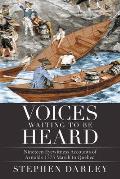
This year Darley published a new collection, Voices Waiting to Be Heard, with transcriptions of nineteen accounts of the expedition, some discovered in the last decade. The earliest actually appeared in the Pennsylvania Packet in March 1779.

In 2013, Darley and Stephen Burk published an article in Early American Review, which can be read here. It tackled the question of who wrote a diary of the expedition published in The American Antiquarian and Oriental Journal in 1900 without a name, still anonymous at the time of Darley’s first book.

Burk and Darley wrote:
From the pages of his journal it is apparent that the anonymous author was a Massachusetts soldier and that he had been in a Captain Smith’s company prior to transferring to Captain Hubbard’s company for the March to Quebec. He also mentions having a brother on the March although it is not evident whether both men were in the same company. The journal states that the author’s brother died “with fever and flux” on Dec. 28, 1775 near Quebec. Also, journal entries make clear that the author was not among the many that were taken prisoner during the Dec. 31 assault on the walled city of Quebec.
Using the listing of men in Darley’s book, the researchers found three named Pierce (or Peirce) in Capt. Jonas Hubbard’s company. David Pierce died during the march. John and William Pierce avoided both death and capture. But did either of them keep a diary?

In fact, they both did. Ens. John Pierce’s journal was published in Roberts’s compilation. One entry reads: “David Peirce…was taken again all on a sudden and died in a few days he had no senses after he was taken the last time –Adiu to my Friend and Namesake.” That doesn’t sound like a brother, just a man with the same last name.

Furthermore, Ens. Pierce was from Worcester, but David and William Pierce enlisted together from Hadley. They both served in Capt. Eliakim Smith’s company starting with the Lexington Alarm.

Those details confirmed William Pierce as the anonymous diarist first published in 1900. Knowing his name, Burk and Darley could fill out more details of the brothers’ lives. William was born in 1752, David two years later. Their father, a Harvard graduate, represented Hadley in the Massachusetts Provincial Congress.

David Pierce died just before Gen. Richard Montgomery led his doomed attack on Québec. William Pierce was sick that day, thus unable to fight. He remained with the Continental Army during its withdrawal in 1776 and was back in Hadley that summer. Pierce never married, dying in Hadley in 1832. Burk and Darley even found his gravestone.

All told, there are now thirty-eight known first-person accounts of the Arnold expedition, making it one of the most individually documented campaigns of the war. All the more striking since we usually hear about it as an event that took place in the wilderness under conditions that don’t seem conducive for keeping a diary.

Tuesday, May 26, 2015

Sorting Out the Versions of Crispus Attucks

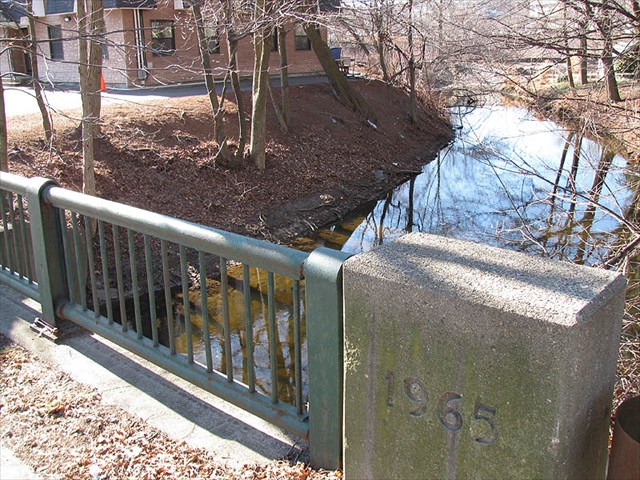
This is a view from the Crispus Attucks Footbridge in Framingham, built near the area where he was reportedly born and worked for William Brown. And it looks like a good place to pause and reflect about how to reconcile the conflicting traditions about Attucks’s life.

The standard modern story (which I’ve repeated myself) is that Attucks escaped from slavery in Framingham in 1750, when he was about twenty-seven years old, and made a new life for himself as a sailor traveling to the Caribbean and North Carolina. At least while he was back in Boston, he used the alias “Michael Johnson,” presumably to preserve his freedom; that was how he was identified immediately after he was killed. We don’t know how within three days printers knew he was “born in Framingham,” nor how his real name became known the next week.

The Brown family traditions don’t fit easily with that story, but they aren’t easy to dismiss, eoither. Descendants of William Brown told their story of his slave Crispus by 1857. We might suspect they were trying to seize on the celebrity that abolitionists like William C. Nell had conferred on Attucks, but in 1859 antiquarians found the Boston Gazette advertisement that backs up the family’s claim.

Brown descendants also brought forward a cup, teapot, and powderhorn that Attucks reportedly owned. The provenance of these “relics” is impossible to confirm, but the two items that survive do appear to date from the early 1700s. They’re also cheap and misshapen, unlikely to have been saved unless the family had invested them with some meaning.

The biggest contradiction between those two stories is that the Brown family said Attucks returned to his master after 1750 and remained in Framingham for the rest of his life. In the late 1800s, that tradition expanded to say that Brown also let Attucks go to sea, apparently to accommodate the documentary evidence from 1770. But there’s still no explanation why Attucks would be using the name “Michael Johnson” if he had his master’s permission to travel to Boston, trade cattle, and work on ships.

One possibility is that in the confusion after the Boston Massacre people misidentified the big mulatto man shot in the chest as the sailor Michael Johnson. William Brown alerted the authorities to their mistake. and they corrected the dead man’s name to Crispus Attucks in legal papers by the next week, but the printers didn’t catch up, leaving us with newspapers that still erroneously called that man a sailor.

This scenario raises more questions:
  • Why did the first reports about “Johnson” already connect him to Framingham?
  • Why did Boston bury Attucks as a “stranger” if he had a master and family still in close touch and living less than a day away?
  • Why didn’t William Brown seek compensation from the Crown for the loss of his slave?
  • Why did Bostonians like William Pierce (cited in Traits of the Tea Party) continue to say Attucks was a sailor for years afterward?
Another possibility is that the Brown family preserved the memories of Crispus Attucks working for their ancestor, trading cattle “on his own judgment,” but forgot the part about how he escaped and never came back. That may not have been his 1750 departure; Attucks may have returned then but left permanently later, and Brown didn’t bother advertising for him again. Other members of the extended Attucks family continued to work in Framingham for years, and the family could have attached memories of them to Crispus after he became famous.

Again, that scenario has a big hole:
  • If one of your family slaves has run away and you later learn he’s been killed in a riot in Boston, wouldn’t you remember him as a miscreant who got what was coming? Why would your family memory drop the fact that he’d run away when to you that was probably one of the most significant facts about his life?
Finally, there’s the Natick tradition that William C. Nell spoke about in 1860, one which named other members of the Attucks family. Nell’s informant said that his or her mother had heard Attucks’s sister Sal speak about him, apparently in the 1770s or 1780s. Nell didn’t name his source, and his papers have probably disappeared, leaving us with less to evaluate. To my knowledge that tradition never got into books, and no historians have grappled with it.

The Natick information emphasized Attucks as a big man, a bold man, and a law-breaker (smuggling horses, fighting soldiers). It said nothing about Attucks being enslaved to the Brown family, though it did identify him as a likely son of Jacob Peterattuck, “who lived with Capt. Thomas Buckminster of Framingham.” That tradition also said nothing about Attucks’s work at sea, saying instead that he had visited home “with three or four horses” shortly before the Massacre. Again, that’s hard to reconcile with the 1770 reports about “Michael Johnson” awaiting work on a ship south.

A lot of recent historical scholarship has used Crispus Attucks as an example of a politically aware sailor, not so much tied to Boston as part of a roving maritime working class within the British Empire. It emphasizes his life in the shadows as a runaway slave.

However, if the Brown family and Natick traditions are correct, then Attucks had much stronger links to life in rural Massachusetts than the standard profile suggests, though he may also have worked on ships. If not legally free, Attucks had at least some practical freedom within his bondage to William Brown. And he had an extended family out in the Framingham and Natick area, some of them known for carrying on Native American traditions (“the gourd-shell squaw”). That would provide new areas for historical consideration. But still, how did “Michael Johnson” enter that scenario?

Tuesday, December 16, 2014

Caricature of a Tea Partier

Adam Colson (his family name was also spelled Collson, Coleson, and Coulson) was born in 1738. At that time his grandfather David was a Boston selectman. Adam followed his grandfather into leather-dressing, and he also became politically active.

Colson joined the St. Andrew’s Lodge of Freemasons in 1763. In 1766 the town meeting elected him as a “Clerk of the Market,” a beginner-level office. By 1773, he was also a member of the North End Caucus (and, reportedly, the “Long Room Club”).

Colson was in the second set of volunteers patrolling the wharves to make sure no East India Company tea was landed. Benjamin Bussey Thatcher’s 1835 book Traits of the Tea-Party listed him among the men who destroyed that tea on 16 Dec 1773—the earliest such list to see print. Thatcher also wrote of that night’s meeting at Old South:
Some person or persons, in the galleries, (Mr. [William] Pierce thinks Adam Colson,) at this time cried out, with a loud voice, “Boston Harbor a tea-pot this night!”—“Hurra for Griffin’s Wharf!”—and so on.
For Colson to have gotten down from the gallery during a crowded meeting and onto a tea ship would have been a feat.

In 1774 Bostonians voted Colson to be the town’s Informer of Deer, a post he held for years, and the next year he was chosen to be a Warden. In 1779, with the town hurt by shortages and price jumps, he was made an Inspector of the Market. He appears to have served only briefly in the military, patrolling the town under Col. Jabez Hatch.

During these years Colson maintained his business selling leather goods in the South End under the “Sign of the Buck and Glove” near Liberty Tree. But he also bought real estate, opening an inn and what by 1788 he called the “Federal Stable.” In 1782 he hosted the future Marquis De Chastellux, who was making a trip through the new U.S. of A.

In Boston’s 1792 state election returns, Colson garnered 7 votes for lieutenant governor, coming in third. Samuel Adams with 686 was the clear winner, and merchant Thomas Russell with 17 was second. Yet Colson was still just a tradesman and landlord, not a gentleman (he didn’t get “Esq.” after his name in the official tally). That made his relative prominence notable. So what were his post-Revolutionary politics?

In 1795 the Rev. John Silvester John Gardiner (1765-1830), future rector of Trinity Church, published a book called Remarks on the Jacobiniad through the new Federal Orrery newspaper and then the printers Weld and Greenough. It was a biting, satirical, and not entirely coherent attack on the nascent Jeffersonian party in Boston. In particular, Gardiner lampooned Thomas Edwards, Benjamin Austin, Samuel Hewes, “Justice [John] Vinal,” and Colson. Judging by a legal report in the Columbian Centinel in 1791, Gardiner must have been carrying on that feud for years.

Remarks on the Jacobiniad portrayed Colson as an illiterate veteran of the Revolutionary struggle. At what must have been some expense, the book even included caricatures of those five leading “Jacobins,” allowing us to see a version of Adam Colson, above.

Colson died in 1798, not surviving to see his party take the Presidency and hold it for six terms. He left an estate worth nearly $17,000, including $10,000 of real estate on Washington Street in the South End.

Wednesday, March 05, 2014

New Myths of the Boston Massacre

The Boston Massacre occurred 244 years ago today. From the start that was a controversial event with different participants seeing it quite differently. It’s been mythologized in many ways, and myths and misconceptions continue to crop up. Here are some that I’ve seen repeated recently.

Did Crispus Attucks work at Gray’s ropewalk?

Boston’s official report on the shooting, titled A Short Narrative of the Horrid Massacre…, gave a lot of attention to a brawl between soldiers and workers at John Gray’s rope-manufacturing facility on 2 March. That fight involved two soldiers, Mathew Kilroy and William Warren, and one ropemaker, Samuel Gray, who faced off on King Street three days later. Another soldier, John Carroll, was part of a follow-up brawl on 3 March. Thus, the town suggested, those soldiers had not shot in self-defense but out of anger at townspeople, and perhaps at Samuel Gray in particular.

In all that attention to the ropewalk fight, however, no witness identified Crispus Attucks as being involved. Testimony does put a big man of African descent in the brawl: Drummer Thomas Walker of the 29th Regiment. But justice of the peace John Hill recalled shouting at Walker, “you black rascal, what have you to do with white people’s quarrels?” That suggests that no man of color like Attucks had been prominent in the fights before. Newspapers described Gray as a ropemaker but Attucks simply as a sailor.

In 2008 I noted a Boston Globe essay that said, “According to lore, Attucks reappeared [in Boston] just before the massacre, likely finding dock work as a rope maker.” But there’s no evidence for that guess and some to suggest it was mistaken. I suspect people trying to find a tight link between the ropewalk fight and the shooting on King Street assumed Attucks was involved in both, but historical events aren’t always so neat.

Did Attucks work on a whaling ship?

In Traits of the Tea-Party, published in 1835, Benjamin Bussey Thatcher cited an old barber named William Pierce as his source that Attucks “was a Nantucket Indian, belonging on board a whale-ship of Mr. Folger’s, then in the harbor…” But Pierce also told Thatcher that he’d never seen Attucks before the night of the Massacre, so he didn’t have inside information.

Boston’s 1770 newspapers directly contradict Pierce. They said Attucks was from Framingham, not Nantucket. They reported Attucks was “lately belonging to New-Providence [in the Bahamas], and was here in order to go for North-Carolina”—meaning he worked on trading voyages to the south rather than hunting whales.

I suspect that Pierce’s memory of Attucks from sixty-five years before had gotten mixed with his memory of the Prince Boston legal case, which did involve a man of African and Native descent, whalers from Nantucket, and a captain named Folger.

TOMORROW: The myth of the tombs.