J. L. BELL is a Massachusetts writer who specializes in (among other things) the start of the American Revolution in and around Boston. He is particularly interested in the experiences of children in 1765-75. He has published scholarly papers and popular articles for both children and adults. He was consultant for an episode of History Detectives, and contributed to a display at Minute Man National Historic Park.

Subscribe thru Follow.it


•••••••••••••••••


Showing posts with label Israel Putnam. Show all posts

Sunday, September 06, 2026

“Came under the bottom of the ship”

After his brother Ezra Bushnell fell ill, the inventor David Bushnell asked Gen. Samuel Holden Parsons to send three men who might be able to operate his submarine against the Royal Navy in New York harbor.

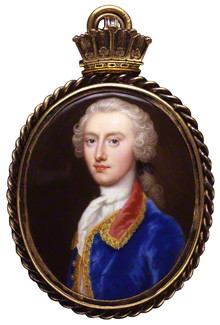
Parsons already had a list of volunteers ready to sail a fireship toward the fleet, another risky venture. One of them was his brother-in-law, Sgt. Ezra Lee (1749–1821, shown here).

Bushnell brought the machine back to Saybrook, Connecticut, for the three men to practice. Eventually Lee got the assignment. His mission: Screw a timed explosive charge (Bushnell’s other invention, called the “magazine”) to the hull of H.M.S. Asia.

Lee went into action on 6 Sept 1776, 250 years ago today. Decades later, in 1815, he wrote an account of his mission for David Humphreys:
We set off from the City—the Whale boats towed me as nigh the ships, as they dared to go, and then cast me off—I soon found that it was too early in the tide, as it carried me down by the ships—I however hove about, and rowed for 5 glasses, by the ships’ bells, before the tide slacked so that I could get along side of the man of war, which lay above the transports—

The Moon was about 2 hours high, and the daylight about one—when I rowed under the stern of the ship, could see the men on deck, & hear them talk—I then shut down all the doors, sunk down, and came under the bottom of the ship, up with the screw against the bottom but found that it would not enter—

I pulled along to try another place, but deviated a little one side, and immediately rode with great velocity, and come above the surface 2 or 3 feet between the ship and the daylight—then sunk again like a porpoise I hove partly about to try again, but on further thought I gave out, knowing that as soon as it was light the ships boats would be rowing in all directions, and I thought the best generalship, was to retreat, as fast as I could as I had 4 miles to go, before passing Governor’s Island.—

So I jogg’d on as fast as I could, and my compass being then of no use to me, I was obliged to rise up every few minutes to see that I sailed in the right direction, and for this purpose keeping the machine on the surface of the water, and the doors open—

I was much afraid of getting aground on the island as the Tide of the flood set on the north point While on my passage up to the City, my course owing to the above circumstances, was very crooked & zig zag, and the enemy’s attention was drawn towards me, from Governors Island—

When I was abreast of the fort on the island 3 or 400 men got upon the parapet to observe me,—at leangth a number came down to the shore, shoved off a 12 oar’d barge, with 5 or 6 sitters, and pulled for me—I eyed them, and when they had got within 50 or 60 yards of me, I let loose the magazine, in hopes, that if they should take me, they would likewise pick up the magazine, and then we should all be blown up together, but as kind Providence would have it, they took fright, and returned to the island, to my infinite joy.—

I then weathered the Island, and our people seeing me, came off with a whaleboat, and towed me in—

The Magazine after getting a little past the Island, went off with a tremendous explosion, throwing up large bodies of water to an immense height.

On seeing that explosion, Humphreys wrote, Gen. Israel Putnam shouted, “God’s curse ’em, that’ll do it for ’em.” But the bomb merely startled the enemy, not doing any physical damage.

Why hadn’t Sgt. Lee been able to attach that bomb to H.M.S. Asia as planned? Humphreys explained:
The reason why the screw would not enter, was that the ship’s bottom being coppered it would have been difficult under any circumstances to have peirced through it—but on attempting to bore with the auger, the force necessary to be used in pressing against the ships bottom, caused the machine to rebound off
In this series about David Bushnell and his submarine, I’ve cut down long letters that the U.S. Navy has collected on this website. Though the submarine was a top-secret operation in 1776, men like Humphreys and Thomas Jefferson made a concerted effort after the war to gather information about the machine and its operation.

Authors have written several books about the submarine. I’m linking to Arthur S. Lefkowitz’s The American Turtle Submarine because he gave me a nifty cap.

TOMORROW: Bushnell’s secrets.

Monday, June 22, 2026

“Orders to march to Breeds Hill in Charlestown”

As I quoted yesterday, in July 1775 the Massachusetts Provincial Congress officially deemed the provincial fortification of Breed’s Hill in Charlestown to have been done “by some Mistake.”

Nine months later, Dr. Cotton Tufts echoed that assessment in a letter to John Adams: “Could a greater Blunder have been committed than that of Breeds Hill. Yet it finally has operated to our Advantage and trust will continue to do so.”

By then, New Englanders had decided that the Battle of Bunker Hill had worked out well because, even though they’d suffered hundreds of casualties and lost territory, the cost for the British army was catastrophic.

Who had made that fateful mistake? The report used the passive voice to avoid naming names, but everyone knew the battlefield commanders who’d overseen the building of the redoubt were Col. William Prescott, Connecticut general Israel Putnam, and Massachusetts colonel Richard Gridley of the artillery.

And the rumor I quoted here absolved Gridley, saying one of the top two infantry officers had insisted on Breed’s Hill. Or, to be exact, either Prescott or Putnam had insisted on digging the redoubt there before fortifying a fallback position on Bunker’s Hill, as the other two men thought wise.

Adams followed up the report from Massachusetts with some questions from Philadelphia. On 25 August, Prescott wrote back: “On the 16 June in the Evening I received Orders to march to Breeds Hill in Charlestown. . . . We arrived at the Spot, the Lines were drawn by the Enginier and we began the Intrenchmant…”

No written orders survive. If Gen. Artemas Ward and his council of war did indeed use the name “Breed’s Hill,” that would be our earliest confirmed example of that label, before the newspapers accounts I quoted here. But it’s also possible Prescott wrote “Breed’s Hill” in hindsight to reflect his understanding of those orders.

Prescott’s letter criticized some other officers. Gridley “the Enginier forsook me.” His “Field Officers being indisposed could render me but Little Service.” That makes it notable that Prescott didn’t complain about Putnam overruling his judgment and insisting on fortifying Breed’s Hill first. It thus seems clear that Prescott had been the officer sticking to that course.

Prescott didn’t take that position (figuratively and literally) because he deemed it more strategic for attacking Boston, as some analysts have argued. He declared that he was following instructions from his superiors. Perhaps those orders included some ambiguous term like “Charlestown Hill.” The memory of such a command probably empowered Prescott to convince Gridley to draw the entrenchment lines despite his and Putnam’s concerns—because that’s what they understood the council of war had told them to do.

TOMORROW: Why that mattered.

Saturday, June 20, 2026

“The engineer and two generals went on to the hill”

engraved portrait of Israel PutnamYesterday I quoted Samuel Gray’s 11 July 1775 description of the Battle of Bunker Hill, based on what he called “my own knowledge.”

Gray wasn’t in the battle—he was probably behind the lines in Roxbury—but he could describe the terrain and basic action.

Gray then went on to share a rumor that must have been going around the provincial camps, specifying that this wasn’t first-hand knowledge:

I am informed that, in a council of war, it was determined to intrench on Charlestown Hill and on Dorchester Hill the same night, but not till we were so supplied with powder, &c., as to be able to defend the posts we might take, and annoy the enemy; that on Friday a resolution was suddenly taken to intrench the night following, without any further council thereon; that the engineer and two generals went on to the hill at night and reconnoitered the ground; that one general and the engineer were of opinion we ought not to intrench on Charlestown Hill till we had thrown up some works on the north and south ends of Bunker Hill, to cover our men in their retreat, if that should happen, but on the pressing importunity of the other general officer, it was consented to begin as was done.
Gray didn’t name names. But “the engineer” was Richard Gridley, commander of the artillery regiment. The “two generals” were William Prescott (actually a colonel) of Groton and Israel Putnam from Connecticut (shown above).

A fair amount of ink has flowed out debating whether Prescott or Putnam was responsible for building the redoubt on Breed’s Hill (Gray’s “Charlestown Hill”) before fortifying portions of the taller Bunker’s Hill.

Some authors have written Putnam made that call, based on his higher rank; his image as fearless, aggressive fighter; and a conviction that he was in command of the provincial troops during that battle.

Others point out that Prescott oversaw the building of the redoubt and then its defense while Putnam was more focused on Bunker’s Hill, trying to get men to fortify there.

And of course there’s the possibility that Gray’s information was incorrect, that Gridley, Putnam, and Prescott did discuss where to fortify but didn’t divide so neatly, at least on that night.

This letter confirms that in the weeks after the battle people were asking why the provincials positioned themselves as they did. Because that was turning out to be a very big deal.

TOMORROW: Mistakes were made?

Friday, May 29, 2026

Meeting the Real Samuel McClellan

Yesterday’s post introduced Samuel McClellan (1730–1807) of Woodstock, Connecticut, the captain of a militia troop of horse in 1774.

McClellan was a shopkeeper and landowner in his small town. After the Revolutionary War he became a brigadier general in the state militia.

The McClellans remained locally important, and one of his great-grandsons was Gen. George B. McClellan of the Union Army and the 1864 Presidential race.

As often happens in that situation, Samuel McClellan’s descendants were influential enough to get their understanding of his role in the Revolution into local histories and biographical profiles when primary sources were hard to consult. For example, the 1902 National Cyclopedia of American Biography said:
On Oct. 13, 1773, he was commissioned captain of a fine troop of horse, raised in the towns of Pomfret, Woodstock, and Killingly, and led it Boston on receipt of the news of the battle of Lexington. He passed through the battle of Bunker hill uninjured, and in commemoration of that his wife planted three elm trees in front of residence, which attained great size and were standing when Gen. George B. McClellan visited Woodstock in 1884.
Ellen Douglas Larned’s History of Windham County, Connecticut: 1760–1880 says there were originally four elms.

The latest version of that lore is Samuel McClellan’s Wikipedia page, which as of this week says:
In 1775 Major Samuel McClellan led 184 men at the Battles of Lexington and Concord. He played a prominent role in the Battle of Bunker Hill, and after achieving the rank of lieutenant colonel in 1776, colonel in 1777, and brigadier general of the 5th Brigade in 1779, his regiment of the Connecticut Militia was stationed near New Jersey. McClellan was solicited by General George Washington to join the Continental Army and was offered a commission, but his domestic and business affairs compelled him to refuse.
That overstates the facts in multiple ways, starting with how McClellan wasn’t commissioned a major in the militia until October 1775.

News of the outbreak of war in Massachusetts didn’t reach Woodstock until 20 April, after the fighting was over, so there was no way men from that town were “at the Battles of Lexington and Concord.” Col. Israel Putnam was one of the first men from Connecticut to respond. On 21 April he wrote from Concord to say that the Massachusetts Provincial Congress hoped that Connecticut would send 6,000 men for “a standing Army.”

Putnam added as a postscript: “The Troops of Horse are not expected to come until further notice.” But Capt. McClellan had already led his 184 mounted men north into Massachusetts. That’s shown by Connecticut records of militia service, as tabulated here.

However, those same records also show that McClellan was paid for only eight days of service. Like most of his neighbors, he went home when it was clear the emergency had passed. Some men stayed or returned and enlisted in what became the New England army. McClellan didn’t.

There’s no evidence putting McClellan at the Battle of Bunker Hill or on the siege lines around Boston at the time. That undercuts the claim he “played a prominent role” in the battle, but it does explain how he remained “uninjured.”

Later in the war McClellan did mobilize with his militia regiment for short assignments in the Northern Department. He also served in the Connecticut assembly and as a commissary. In that last capacity his name comes up in Washington’s papers, but there’s no direct written solicitation from the commander for McClellan to join the Continental Army.

McClellan apparently left a fowling-piece, made by the Massachusetts gunsmith Joel White, equipped with a bayonet mount and bearing the initials “SMC.” That’s been displayed as a weapon from the Battle of Bunker Hill. McClellan may well have carried it during the Revolutionary War, but not at that fight.

Tuesday, March 17, 2026

“This Convinced me that they were Actually fled”

Gen. John Sullivan of New Hampshire wrote this description of how experienced the end of the siege of Boston for John Adams:

We Saw the Ships under way about 8 in the morning and the River full of Boats with Armed Soldiers. This gave an Alarm as Some Suspected they were about to Land at Dochester but having a full view of them with a Glass from Plowed Hill I found they were going on board the Ships.

I then took my Horse and Rode Down to Charlestown Neck where I had a Clear view of Bunkers Hill. I Saw the Sentrys Standing as usual with their Firelocks Shouldered but finding they never moved I Soon Suspected what Regiment they belonged to and upon taking a Clear view with my Glass found they were only Effigies Set there by the flying Enemy. This Convinced me that they were Actually fled for if they meant to Decoy us they would have taken away Every appearance of Men.

By this time I was Joined by Colo. [Thomas] Mifflin who with my Brigade Major [Alexander Scammell] agreed to go up[;] Sending two persons Round the works to Examine whether there was any of them in the Rear of the works while we went up in the front. I at the Same time Sent for a Strong party to follow us on to the Hill to assist us in Running away (if necessary).

We found no persons there and bravely Took a fortress Defended by Lifeless Sentries. I then brought on the party to Secure what we had So bravely won and went Down to the other works where we found all Abandoned but the works not Injured in any part.

We hailed the ferry Boat which came over and Informed us that they had abandoned the Town. We then gave Information to the General who ordered me with the Troops under my Command to take possession of Charlestown and General [Israel] Putnam with 2000 men to take possession of the works in Boston
Samuel Hall’s New-England Chronicle for 21 March offered the public this account of the action at the other end of Boston on the Neck:
About the same time General [Artemas] Ward, attended by about 500 troops from Roxbury, under the command of Col. Ebenezer Learned, (who unbarr’d and opened the gates) entered the town on that quarter, Ensign [Samuel] Richards carrying the standard.

The command of the whole being then given to General Putnam, he proceeded to take possession of all the important posts, and thereby became possessed, in the name of the Thirteen United Colonies of North-America, of all the fortresses in that large and once populous and flourishing metropolis, which the flower of the British army, headed by an experienced General, and supported by a formidable fleet of men of war, had, but an hour before, evacuated in the most precipitate and cowardly manner.
That’s rubbing it in, don’t you think?

TOMORROW: Ens. Richards’s perspective.

Sunday, December 28, 2025

“Under the hieroglyphical similitude of tropes and figures?”

As a prominent gentleman in Connecticut, Israel Putnam couldn’t ignore what “A New-York Freeholder” wrote about him in the New-York Gazette, as quoted yesterday.

However, Putnam faced a couple of challenges in replying. First, if he appeared to be flying off the handle, that would simply validate what the “Freeholder” had written.

Second, Putnam wasn’t a highly educated man, and in particular his spelling and punctuation were even more irregular than the eighteenth-century norm.

Even Putnam’s biographers acknowledge that he probably had help in shaping his reply in the 7 October 1774 Connecticut Gazette of New London, either from a friend or from printer Timothy Green. Because it doesn’t look like his usual writing.

The preface reads:
Mr. GREEN,

As my letter to Capt. [Aaron] Cleveland, wrote in consequence of the late alarm, has circulated far and wide, and made unfavourable impressions on the minds of some, ’tis desired that you and the several printers in the other colonies upon the continent, would give the following piece a place in your paper, and you will oblige
Your humble Servant,
ISRAEL PUTNAM.

POMFRET, 3d. October 1774.
The first line of the ensuing essay makes clear what it was really responding to: “In Mr. [Hugh] Gaine’s New-York Gazette of the 12th of September…”

Putnam described how the rumor of a British military attack on Boston had reached him through “Capt. Keyes”—most likely Stephen Keyes (1717–1788, gravestone shown above courtesy of Find a Grave). Keyes had heard the news from “Capt. Clarke of Woodstock,” who heard from his son in Dudley, Massachusetts, who heard from an Oxford man named Wilcot, who heard from his father and also found confirmation in Grafton.

With “only four gentlemen,” Putnam rode toward Boston, traveling “about thirty miles from my house.” In Douglas, Massachusetts, the party met the local militia captain, probably Caleb Hill (1716–1788), who with his company had just returned from their own march to “within about thirty miles of Boston.” Having thus learned that the earlier report was false, Putnam returned home, spreading the new word.

Putnam posited that the false alarm started with Customs Commissioner Benjamin Hallowell having “informed the army that he had killed one man and wounded another” while escaping from Cambridge. Hallowell’s own account of the “Powder Alarm” said nothing of the sort.

As for presenting himself as a gentleman in prose, Putnam acknowledged that he’d written his letter passing on that misinformation in haste and not in high style; he said he “aimed at nothing but plain matters of fact, as they were delivered to him.”

But Putnam also showed himself capable of deploying complex sentences and classical allusions in response to the “New-York Freeholder”:
Paying all due defference to this author’s learning, and his undoubted acquaintance with the rules of grammar and criticism, I would beg leave to ask him, whether he does not betray a total want of the feelings of humanity, if he supposes in the midst of confusion, when the passions are agitated with a real belief of thousands of their fellow countrymen being slain, & the inhabitants of a whole city just upon the eve of being made a sacrifice by the rapine and fury of a merciless soldiery, and their city laid in ashes by the fire of ships of war, he or any one else could set down under the possession of a calmness of soul becoming a Roman senator, and attend to all the rules of composition, in writing a letter, to make a representation of plain matters of facts, under the hieroglyphical similitude of tropes and figures? . . .

Now I submit it to the determination of every candid unprejudiced reader, whether my conduct in writing the aforementioned letter, merits the imputation of imprudence asserted by said writer; or whether they would have had me tamely set down, and been a spectator to the unhuman sacrifice of my friends and fellow-countrymen, or (in other words) Nero like, have set down and fiddled, while I really supposed Boston was in flames, or exerted myself for their relief?
Well, when he put it that way…

TOMORROW: Who was the “New-York Freeholder”?

Saturday, December 27, 2025

“This letter betrays the state of the poor Colonel’s mind”

engraved portrait of Israel PutnamOne of the key nodes in the spread of the “Powder Alarm” was Israel Putnam. On 3 Sept 1774 he summoned the militia in eastern Connecticut and sent urgent messages to other parts of the colony.

On 6 September one of those messages arrived at the First Continental Congress. Robert Treat Paine recorded that from Putnam’s letter “we were informed that the Soldiers had fired on the People and Town at Boston.”

In fact, British soldiers had done no such thing. That became clear over the next few days.

Whigs spun the false alarm into a Good Thing, saying it showed how the populace was united and ready to defend Boston in an actual military emergency. “It is surprising and must give great satisfaction to every well-wisher to the liberties of his country, to see the spirit and readiness of the people to fly to the relief of their distressed brethren,” said an item in the 9 September Connecticut Gazette.

But other newspaper writers were more critical. Most of the front page of Hugh Gaine’s New-York Gazette on 19 September was filled with an open letter “To the Inhabitants of North-America” from “A New-York Freeholder” that said in part:

Col. PUTNAM’s famous letter, (forwarded by special messengers to New-York and Philadelphia) and the consequences it produced, are very recent and fresh in our memories. He informs Capt. [Aaron] Cleaveland [of Canterbury]---
“That the men of war and troops had fired on Boston—that the artillery played all night—that six were filled at the first shot, and a number wounded—that the people were universally rallying from Boston as far as Pomfret in Connecticut—and he begs the captain would rally all the forces he could, and march immediately for the relief of Boston.”
The evident confusion of ideas in this letter betrays the state of the poor Colonel’s mind, whilst writing it, and shews he did not then possess that calm fortitude which is so necessary to insure success in military enterprizes. . . .

What the design of this infamous report was—whether to inflame the other colonies, and to learn how they would act on such an emergency if real, or to influence the deliberations of our congress now sitting, I shall not taken upon me to determine.

One thing it has eventually made evident past all doubt, that many in the New-England colonies are disposed and ripe for the most violent measures: For it is certain that some thousands of armed men, in consequence of it, proceeded on their march from Connecticut towards Boston. . . .

These circumstances are mentioned with no other view than to shew that the apprenhension of a civil war is justly founded; and it is no more than justice to say that I think Col. PUTNAM himself was deceived when he wrote the above letter, tho’ still he acted imprudently in writing it. The authors of the report are to me unknown.
The “New-York Freeholder” went on to write about the horrors of a civil war, closing with Tobias Smollett’s poem “The Tears of Scotland,” composed after the Jacobite uprising of 1745. That would have annoyed the New England Whigs, not just because they were telling people that a firm, unified militia response would help stave off civil war but also because they hated being equated with Jacobites.

TOMORROW: How Putnam responded.

Friday, December 26, 2025

“The Powder Alarm” in Essex, Connecticut, on 4 Jan.

I’ll start off the Sestercentennial year with a talk in the America 250 Winter Lecture Series of the historical society in Essex, Connecticut.

My topic on the afternoon of Sunday, 4 Jan 2026, will be “The Powder Alarm: The Breakdown of Royal Rule in New England, September 1774.”

Here’s our event description:
Before dawn on September 1, 1774, the royal governor of Massachusetts ordered some of the colony’s gunpowder moved into army-occupied Boston. That action put thousands of militiamen on the march. As rumors spread, they grew more dire. People in Connecticut heard that the king’s army and navy had attacked Boston. In Milford, a 13-year-old boy went to bed fearing he would “be dead or a captive before to-morrow morning.” But the real result of this event, dubbed the “Powder Alarm” by later historians, was that almost all of New England was free of royal rule—almost two years before the Declaration of Independence.
I’ve spoken about the “Powder Alarm” before, and this time I’ll emphasize Connecticut’s experience through figures like Israel Putnam, Silas Deane, and Joseph Plumb Martin.

Here’s an account of the colony’s reaction from the 8 Sept 1774 Massachusetts Spy:
By letters from Connecticut, and by several credible gentlemen arrived from thence, we are informed that there were not less than 40,000 men, in motion, and under arms, on their way to Boston, on Saturday, Sunday, and Monday last [3–5 September], having heard a false report that the troops had fired upon Boston, and killed several of the inhabitants: Twelve hundred arrived at Hartford from Farmington, and other places forty miles beyond Hartford, on Sunday last, on their way to this place, so rapidly did the news fly. But being informed by expresses that it was a false report, they returned home, declaring themselves ready at a minute’s warning to arm again, and fight for their country, and distressed brethren of Boston.
That report from printer Isaiah Thomas was no doubt exaggerated. In 1774 Connecticut’s total population was just under 200,000. More than half of those people were under the age of sixteen, and half the adults were women, so “no less than 40,000 men” would be virtually the entire adult male population.

Nonetheless, it’s clear the alarm was widespread, reflecting the urgency that people had come to feel about what was happening in Massachusetts. Several other newspaper articles about the “Powder Alarm” also included the phrase “a minute’s warning,” popularizing it just as citizens were discussing how to improve their militia system.

This talk is scheduled to run from 3:30 to 4:30 P.M. in Hamilton Hall at Essex Meadows, 30 Bokum Road in Essex, Connecticut. It’s free and open to the public. The society asks people to register through this page. Doors will open at 3 P.M., and seating will be on a first-come, first-served basis.

(The modern town of Essex appears on the map above as “Putty Pogue” on the Connecticut River.)

Wednesday, November 12, 2025

“Tradition gives us a graphic scene connected with her arrest”

In his biography of George Washington, published in the late 1850s, Washington Irving included a vivid description of how Mary (Butler) Wenwood was brought to the commander-in-chief’s headquarters.

Irving wrote:
Tradition gives us a graphic scene connected with her arrest. Washington was in his chamber at head-quarters, when he beheld from his window, General [Israel] Putnam approaching on horseback, with a stout woman en croupe behind him. He had pounced upon the culprit.

The group presented by the old general and his prize, overpowered even Washington’s gravity. It was the only occasion throughout the whole campaign on which he was known to laugh heartily.

He had recovered his gravity by the time the delinquent was brought to the foot of the broad staircase in head-quarters, and assured her in a severe tone from the head of it, that, unless she confessed everything before the next morning, a halter would be in readiness for her.

So far the tradition;…
This anecdote is consistent with other stories about Putnam.

However, there’s no contemporaneous support for this tale, nor did Irving explain how he came by all those details, especially the picture of the general laughing in his own bedroom.

In fact, even Irving seemed dubious, twice labeling this story “tradition.” But he couldn’t resist including it.

And some other authors, including George Washington Greene, repeated it in their books.

It can serve to signal how Mary Wenwood was about to be transmuted from a real woman into the embodiment of all female dangers.

Monday, July 07, 2025

“The Colony of Connecticut must raise 6,000”

As I quoted last week, on 23 Apr 1775 the Massachusetts Provincial Congress resolved to raise an army of 30,000 men, 16,400 of them coming from outside the province.

In this Journal of the American Revolution article from last year, I discussed how early in 1775 the congress had set up liaisons with the governments of Connecticut, Rhode Island, and New Hampshire in case war broke out.

The Massachusetts Patriots had alerted their colleagues in those colonies about the fighting on 19 April. And now they asked for troops.

In Connecticut, Gov. Jonathan Trumbull supported the Patriots. As soon as he heard the news from Lexington, he agreed to call the legislature into session to take official action. On 21 April, William Williams, the Connecticut assembly speaker and Trumbull’s son-in-law, wrote with two other politicians to the Massachusetts congress:
Every preparation is making to Support your Province— . . . the Ardour of Our People is such that they can’t be kept back;—The Colonels are to forward part of the best men & most Ready, as fast as possible; the remainder to be ready at a Moments warning
Some militia officers were already on the move. Israel Putnam was in Concord on 21 April as the Massachusetts congress met. He wrote back:
I have waited on the Committee of the Provincial Congress, and it is their Determination to have a standing Army of 22,000 men from the New-England Colonies, of which, it is supposed, the Colony of Connecticut must raise 6,000, and begs they would be at Cambridge as speedily as possible, with Conveniences; together with Provisions, and a Sufficiency of Ammunition for their own Use.
Col. Benedict Arnold and his volunteers left New Haven on 22 April and arrived in Cambridge one week later. On 23 April a letter from Wethersfield to New York said:
We are all in motion here, and equipt from the Town, yesterday, one hundred young men, who cheerfully offered their service; twenty days provision, and sixty-four rounds, per man. They are all well armed, and in high spirits. . . . Our neighbouring Towns are all aiming and moving. Men of the first character and property shoulder their arms and march off for the field of action. We shall, by night, have several thousands from this Colony on their march. . . .

We fix on our Standards and Drums, the Colony Arms, with the motto, “qui transtulit sustinet,” round it in letters of gold, which we construe thus: “God, who transplanted us hither, will support us.”
On 27 April the Connecticut legislature voted to enlist 6,000 soldiers—six regiments of about a thousand men each. Joseph Spencer was appointed general of this army with Putnam next in seniority. (David Wooster remained in Connecticut to oversee defending its coast or New York as needed.)

Notably, Connecticut asked men to enlist in its army only until 10 December, not the end of the year as other New England colonies did. That became a problem when December rolled around and lots of Connecticut companies wanted to leave early (as Gen. George Washington viewed it) or on time (as their enlistment papers said). I discussed that conflict back here.

TOMORROW: Rhode Island’s observers.

Monday, June 16, 2025

“Satisfied that he was intitled to a large allowance”

engraved portrait of Israel PutnamAfter listing more than £3,600 of property lost on Noddle’s Island in May and June of 1775, Henry Howell Williams presented that document to the Continental Congress’s agent in Boston and asked to be paid back.

That agent was Royal Flint (1754–1797), from Windham, Connecticut. A Yale graduate, he became a Connecticut paymaster in 1776 and eventually a Continental assistant commissary-general under Jeremiah Wadsworth. He had accompanied the army command to Valley Forge and Morristown, New Jersey. Flint was thus used to dealing with paperwork and property.

In 1786 the Congress appointed Flint to settle Continental accounts in New England, laying out procedures for him to follow. (In a possible conflict of interest, he was also starting to speculate in western lands, an enterprise that took up all of his time after 1790 and soon broke him.)

It appears that Williams approached Flint in 1786. Flint explained that his job was to settle outstanding bills with military contractors. Even if Williams’s livestock did ultimately benefit the army, he didn’t qualify. Instead, Flint advised Williams to ask for special consideration from the small Confederation bureaucracy.

On 1 Apr 1787 Williams got Flint to write that out in a certificate now shared by the Massachusetts Historical Society. Flint told the Congress, then meeting in New York:

soon after I entered upon the duties of my office as Commissioner for Settling public accounts in this State, the annexed claim was presented to me for allowance by Mr. Henry H. Williams.

As some part of it was for articles that were destroyed & which were productive of no advantage to the United States; and as none of it was Supported by regular vouchers, I suspended my determination upon it ’till I had obtained the best evidence that could be found.

The charges for the loss of Household furniture and whatever was received merely as damage could not be admitted at this Office; therefore I did not so critically investigate the proofs which were to establish that part of the Account. But that part of the claim which related to supplies of provision, or any other articles which were applied for the benefit of the United States, could be admitted, if the evidence of the fact was Satisfactory.

Under this idea, I suggested to Mr. Williams the propriety of stating in a Separate account such articles as were applied for the use of the Army; and to produce his evidence both with respect to the value & appropriation of them. From a great concurrence of testimony, he established the general fact, that his property was taken at the time & in the manner set forth in his memorial.

We also made it evident that the horses taken were turned into public Service; whether for this State or the United States, some of the witnisses were at a loss. The Honorable Moses Gill Esqr. & the late Major Genl. [Israel] Putnam informed me, they were actually applied for the United States. The number & value of the horses was not ascertained with any precision, but it was well proved that the horses were valuable & the number considerable.

It was proved to me that some Cattle & Sheep were slaughtered for the use of the Army, but the quantity was altogether uncertain.

Upon the whole, as this claim was for so large an amount, & the evidence in support of it not precise, I recommended to Mr. Williams to lay the affair before the Commissioners of the Treasury. I was however Satisfied that he was intitled to a large allowance & should have admitted that part of the account which related to articles appropriated to public use, with some deductions.

But the claimant preferred laying a memorial before the Honorable Congress under the expectation that the whole claim will be admitted. It must be Settled by general estimation. The nature of the transaction was Such as to exclude all possibility of accurate testimony. The evidence is satisfactory as far as it goes. It is perhaps as good as the nature of the case will admit.
That wasn’t a ringing endorsement, but Flint did say that Williams deserved some compensation.

That was enough for Henry Howell Williams, who submitted his request for the whole £3,600+ to the Congress.

TOMORROW: A confederated response.

(Israel Putnam was still alive in 1787, so “the late Major Genl. Putnam” must refer to his having retired from the army.)

Sunday, June 15, 2025

“Ought to be paid by the United States”

To bolster his request for compensation after the Battle of Chelsea Creek, Noddle’s Island estate owner Henry Howell Williams assembled several documents, shared by the Massachusetts Historical Society.

One came from William Burbeck, who before the war had a job managing munitions in Castle William as well as helping to lead Boston’s militia artillery train.

I quoted Burbeck’s account last month. Because Williams took the risk of helping him get out of town, Burbeck was able to become second-in-command of Massachusetts’s artillery regiment.

As for Williams’s loyalty, Burbeck wrote:
it was Done at ye Risque of Every thing that is Dear And [he] informd. me that he was ready to save me or his Country in any thing that he Could

I know of but few men if Any in America that would have taken such Risques they being in his then situation (on an Island Surounded by men of war)—

Mr. Williams Complaynd. to me of the Ill treatment he Recd. from the Enemy that his family had been abused And his Interest taken from him & Recd. nothing therefor and that his situation was Dredfull, That he wished his Interest was off the Island and himself in the Country.
Burbeck signed that account (it’s not written in his handwriting) on 17 Apr 1776, just after the siege, as the Massachusetts legislature was moving to fortify Noddle’s Island. Obviously that document was meant to answer suspicions about Williams’s loyalty and willingness to provide provisions, even passively, to the British military the previous spring.

Williams also collected two statements signed by Moses Gill (shown above), prominent Patriot politician from the town of Princeton. One is dated 20 Mar 1786 and written in what looks like the same hand as the Burbeck statement. That document was composed for multiple people to sign, but only Gill did. It said:
in the year 1775 we were appointed by the Government A Committee of Supplies for the Army that when Genrl. [Israel] Putnam Removed the Stocks from Noddles Island, Among which were a Number of Horses which were Committed to our Care, And Upon Genrl. [George] Washington taken the Command of the Army they were with other Stores turnd. over to Colo. [Joseph] Trumbell the Continental Commissary Genrel at Cambridge
The other document signed by Gill isn’t dated, but it responds to an “account above”—probably meaning Williams’s inventory of lost property. As quoted yesterday, that accounting included “43 Elegant Horses...@ 30£.” The statement said:
I cannot with precision recollect the number, yet I believe the above amount is too high charged either with respect to the number or value of the horses.
And then the scribe inserted “not” in front of “too high.” I think that was the intended meaning all along, given the rest of the sentence, but that particular edit does raise eyebrows.

Williams also claimed to have lost “3 Cattle” and “220 Sheep.” Gill responded:
As to the Cattle & Sheep charged above, I have no personal knowledge in what manner they were applied, but I have no doubt they were used for the benefit of the American Army. as I was informed so by officers & others at that time
The bottom line for Gill:
Upon the whole, the account above charged is in my opinion just & ought to be paid by the United States.
Williams was already in discussions with a representative of the national government.

TOMORROW: A federal agent.

Tuesday, June 03, 2025

“To turn his back sullenly on his General”?

As discussed yesterday, on 19 July 1775 Gen. Joseph Spencer arrived back in the camps of what was now the Continental Army, bringing a letter from the governor of his home colony of Connecticut, Jonathan Trumbull.

Trumbull asked Gen. George Washington to understand how Spencer was miffed at seeing Israel Putnam promoted to major general over him. And merely because Putnam had led troops in the Battle of Chelsea Creek.

Delivering that letter was probably the first time Spencer had met Washington. And I imagine the discussion was as stiff and cold as the new commander-in-chief could be. As Maj. Samuel Blachley Webb (shown here) wrote on 11 July, Spencer’s departure “without leave or license from Gen. Washington,…displeased him much.”

Indeed, Spencer’s hissy fit had damaged his standing even among his own officers. He’d asked his subordinates to sign a protest on his behalf, and Webb reported:
I have since been to Roxbury, and find the officers, many of them, heartily sick of what they have done, in particular, Maj. [Return Jonathan] Meiggs,—who says he was forced to sign what the others did—to keep peace; and says he had rather serve under Putnam than Spencer.

You’ll find Generals Washington and [Charles] Lee, are vastly more fond, and think higher of Putnam, than any man in the army; and he truly is the Hero of the day. . . . Better is it for us to lose four Spencers than half a Putnam.
News of Putnam’s higher rank “gave universal satisfaction,” Webb added.

Webb was sending these observations to his stepfather, Silas Deane. On 20 July, Deane told his wife how the Continental Congress was responding to Spencer’s behavior:
You can be at no loss to infer what opinion is formed of him from this conduct, in doors and out. Suffice it to say, the voice here is, that he acted a part inconsistent with the character either of a soldier, a patriot, or even of a common gentleman. To desert his post in an hour of danger,—to sacrifice his Country, which he certainly did as far as was in his power,—and to turn his back sullenly on his General, a General, too, of such exalted worth and character,—will, I can assure you, unless he take the most speedy and effectual measures to atone, draw upon him the resentment of the whole Continent.
Neither Deane nor fellow Connecticut delegate Eliphalet Dyer ever pushed Spencer for promotion again. (He was made a major general in the fall of 1776 as part of a general wave of promotions.)

On 21 July, Gen. Washington reported to the Congress that Spencer had agreed to “serve under Puttnam, rather than leave the Army intirely.” The men’s relative ranks would not change.

The next day, Gen. Washington announced a new organization for the Continental Army around Boston. With three major generals under him, he put Artemas Ward in charge of a brigade on the southern side of the siege lines, Lee in charge of the northern wing, and Putnam in charge of the center.

Among the brigadier generals, he assigned Spencer to the southern wing under Ward. Thus, Spencer would answer to a general he’d already acknowledged as senior, not to Putnam. Gov. Trumbull had suggested a similar way of keeping the two Connecticut officers apart. Which wasn’t the sort of issue Washington wanted to face.

Spencer served the rest of the siege, making no distinct contribution at all. He never gained Washington’s trust, and after an unsuccessful Rhode Island campaign he left the army.

Monday, June 02, 2025

“General Spencer’s uneasiness, &c., at being overlooked, &c.”

According to the young Connecticut officer Samuel Blachley Webb, when Gen. Joseph Spencer learned the Continental Congress had ranked Israel Putnam over him, “He began to speak very freely; and finally, persuaded the officers, to remonstrate to the Assembly of Connecticut; and he set off immediately for home.”

Spencer was older than Putnam. He had raised a company for King George’s War in the 1740s while Putnam’s vaunted military career began in 1755. The Connecticut legislature had granted Spencer seniority, and he wanted to keep that status.

Forty-nine Connecticut officers signed a letter to their legislature that praised Spencer’s “exemplary life, good conduct, prudence, and courage.” It said:
You are sensible it will be with great reluctance our Troops at Roxbury could see their General superseded by an officer in previous lower command. We have no objection to the appointment of Generals [George] Washington and [Charles] Lee, and shall endeavour to preserve the good order and submission to their government as hath before distinguished this part of the Connecticut Troops whilst under General Spencer’s command; but the late arrangement so far removes General Spencer from his former command, that he cannot and will not continue in the service under this arrangement.
In his home colony, Spencer seemed to get the support he was after. In Lebanon on 13 July, Gov. Jonathan Trumbull showed his Council a draft letter to Gen. Washington about the issue. The official record of that meeting says the letter was
hinting at General Spencer’s uneasiness, &c., at being overlooked, &c., and that it was beside our expectations, &c., and proposing, &c., that said General Spencer may remain stationed at Roxbury with the body of Connecticut Troops now there, &c.; which are approved, though a small alteration was made in the Letter to gratify Gen. Spencer after he came in, &c.
Two politicians, Samuel Huntington and William Williams (the governor’s son-in-law and speaker of the assembly), went to the tavern where Spencer was staying to hear him out about “his dissatisfaction, &c.” They tried to “reconcile him cheerfully to pursue the service.”

That afternoon, Gov. Trumbull and the Council invited Spencer to join their meeting. They
had a long conference with him on the subject matter of his being superseded by the General Congress, in putting Gen. Putnam above him &c., which he thinks very hard of and resents &c., and is at length persuaded to return to the army and not at present quit the service as he proposed; and Genl. Spencer set out on his return to camp with the letters to Genl. Washington.
Trumbull’s letter to Gen. Washington said that “Generals [David] Wooster and Spencer will think they have reason to complain” about their ranking relative to Putnam and suggested a “Method to obviate the difficulties that are apprehended”:
The Army before Boston is necessarily thrown into two Grand Divisions. General Spencer with a Number of Our Troops hath hitherto been at Roxbury, and General Putnam at Cambridge —That Destination continued and Observed, may prevent uneasy Competition; preserve good order, and promote the public Service.
Spencer arrived back on the siege lines around Boston on 19 July.

TOMORROW: A triumphant return?

Sunday, June 01, 2025

“Genl. Putnams fame ran so high”

engraved portrait of Israel PutnamAnother consequence of the Battle of Chelsea Creek was that it raised the profile of Israel Putnam (1718—1790).

Putnam was already well known in North America. He’d fought for several years in past wars. He served in Maj. Robert Rogers’s rangers, on the Crown’s naval expedition against Havana in 1762, and even in Pontiac’s War.

People also passed around a story of Putnam crawling into the den of a wolf on his farm, so his personal bravery and strength were beyond doubt.

Around the start of 1775, a Pennsylvanian wrote to London to refute the idea that the Americans would need Charles Lee to command an army. That letter said:

the colonies are not so wrapped up in Gen. Lee’s military accomplishments as to give him the preference to Col. Putnam and Col. [George] Washington,—men whose military talents and achievements have placed them at the head of American heroes. There are several hundred thousand Americans who would face any danger with these illustrious heroes to lead them.
Then in early June 1775 reports of the fighting on and off Noddle’s Island reached Philadelphia. Those reports noted that Putnam, now a Connecticut general, had led the New England troops in the field. And successfully! (In fact, this was the only time Putnam would be present at a significant American victory for the rest of the war.)

Noddle’s Island was the latest news when the Continental Congress decided to adopt the New England army as the Continental Army in mid-June, appointing Washington commander-in-chief and commissioning more generals to serve under him. The Congress chose these men as major generals, in order: Artemas Ward, Lee, Philip Schuyler, and Putnam. Nine more men were given the rank of brigadier general.

As Connecticut delegate Eliphalet Dyer wrote, “Genl. Putnams fame ran so high as Induced the Congress to give him the Preference” over other candidates for the higher rank. Indeed, Putnam was the only general besides Washington whom the Congress elected unanimously.

Unfortunately, the Connecticut legislature had appointed its generals in this order: David Wooster, Joseph Spencer, and then Putnam. Spencer was on the lines in Massachusetts, thinking he had seniority over Putnam.

On 23 June, Roger Sherman told Wooster that he’d tried to convince his fellow delegates in Philadelphia to stick to the Connecticut ranking:
I informed them, of the arrangement made by our Assembly which I thought would be satisfactory, to have them continue in the same order; but as General Putnam’s fame was spread abroad, and especially his successful enterprise at Noddle’s Island, the account of which had just arrived, it gave him the preference in the opinion of the Delegates in general, so that his appointment was unanimous among the colonies.
Wooster was assigned to the Canada campaign under Schuyler, so he wouldn’t be serving under Putnam. Spencer, on the other hand, faced the prospect of taking orders from a man he’d just outranked. On 10 July, Washington wrote to the Congress:
General Spencer was so much disgusted at the Preference given to General Puttnam, that he left the Army without visiting me, or making known his Intentions in any Respect.
TOMORROW: Rank feelings.

Wednesday, May 28, 2025

“The Diana was soon after burnt by the rebels”

Having covered the maritime seizures that took place between Fairhaven and Martha’s Vineyard (14 May 1775) and the exchange of fire over Grape Island off Hingham (21 May), I’ve come back to the skirmishing over Hog Island and Noddle’s Island that’s become known as the Battle of Chelsea Creek.

And just in time for its Sestercentennial! (Well, the Sestercentennial of the second day of the action.)

Here’s a description of that fight from the British perspective, not contemporaneous but within living memory, published in 1804 by former engineer Robert Beatson in Naval and Military Memoirs of Great Britain:
The insurgent Americans, with astonishing perseverance, pursued their avowed design of cutting off every possible supply from the friends of Government, and of destroying what they could not carry away.

On the 27th of May, they burnt a great deal of hay on Hog island; and a few hours after, they landed on Noddles island, with the intention of also burning the hay which had been purchased for the army, and of adding to the conflagration, by laying in ashes a storehouse that had been hired when his Majesty’s ship the Glasgow was on shore, and in which the Admiral [Samuel Graves] had deposited two large cargoes of lumber, until an opportunity should offer of sending them to Halifax.

The storehouse also contained many other articles, which it was of great consequence to preserve, from the impossibility of having them replaced at this juncture. There were likewise on this island six hundred sheep, several milch cows, and a number of horses, mostly private property.

The Admiral, eager to prevent the depredations of the Americans, when he observed that they were landed upon the island, immediately ordered the Diana schooner (newly arrived) to sail between it and the main; and to get up as high as possible to intercept them: and as assistance from the army required time, he directed a party of marines to be landed.

The Diana entered the river between three and four in the afternoon at low water, and proceeded to Hog island, with some interruption from the rebels on all sides. Their numbers on Hog and Noddles islands were computed at seven hundred men. Parties of each occasionally attacked the Diana. They were, however, all obliged to quit Noddles island, without doing the intended mischief.

This being effected; Lieutenant [Thomas] Graves [shown above, later in his career], whom the Admiral had ordered not to remain in the river upon the turn of the tide, began to move off: but being retarded by a calm which unluckily took place, the boats of the squadron were ordered to assist the Diana by towing her along.

The slow progress which she made gave time for the enemy to assemble; and by the close of the evening the whole country was alarmed, and the rebel General [Israel] Putnam had brought two thousand men with field-pieces from Cambridge, with which he lined the shore and greatly annoyed her.

The marines from the squadron were landed on the island, with two three pounders from the Cerberus; and General [Thomas] Gage, the moment it was in his power, sent two pieces of artillery: but it was impossible, though in sight of the fleet, to give the schooner any effectual assistance.

The calm continued; it grew almost dark; the fire of the rebels increased; between eleven and twelve at night, she unfortunately got aground upon the ferry-ways at Winnisimmest, and the tide ebbing fast, rendered every effort to move her ineffectual.

About three in the morning she fell over, and her crew were obliged to abandon her, and go on board the Britannia armed floop, which had been sent to their assistance. The Diana was soon after burnt by the rebels.

The battle was renewed by Lieutenant [John] Graves in the Britannia, and lasted about eleven hours from first to last, in which there were two men killed, and several wounded; the commander, officers, and crew of the Diana schooner were tried by a Court-martial for the loss of the vessel, and most honourably acquitted.
Lt. Thomas Graves of was a nephew of Adm. Samuel Graves, as was Lt. John Graves of the Somerset’s tender Britannia. Other sources say both Graves brothers suffered serious burns when the provincials set the Diana on fire.

This account is based mostly on Adm. Graves’s report to the Admiralty on 7 June. He said almost nothing about this event in his later narrative of the start of the war, most likely because it didn’t reflect very well on the navy in general and his family in particular.

The courts martial that Beatson mentioned were held in Boston, under Adm. Graves’s eye. In their 2013 New England Quarterly article on this fight, Craig J. Brown, Victor T. Mastone, and Christopher V. Maio reported that all the British mariners testifying at Lt. Graves’s trial said the Diana hadn’t gone far upstream, but the archeological record suggests otherwise. In sum, that inquiry might have been a whitewash. Both Graves brothers eventually became admirals.

Of the shoreline fights between Crown and provincials in May 1775, this was the first in which either commander reported any of his own men killed. The two Royal Navy seamen who died were named George Williams and William Crocker. The Rev. John Troutbeck, assistant rector at King’s Chapel, “performed divine Service” at their funeral on board H.M.S. Somerset.

Saturday, March 29, 2025

“Employing every art and all the Address I am Master of”

Here’s another glimpse of espionage in 1775.

That summer, Julien-Alexandre Achard de Bonvouloir, younger son of a French nobleman, and the Chevalier d’Amboise arrived in London on a ship from New England.

They aroused the suspicions of the British government. On 5 August John Pownall, Secretary to the Board of Trade, wrote to the Earl of Dartmouth, Secretary of State for the colonies:
The Lodgers at the Hotel in Watling Street have been watched & pumped by a discreet & proper person employed by Lord Rochford, they proved to be as stated in the Letter you left with me, French officers from the West Indies, by the way of North America; they do not conceal that they have been in [Israel] Putnams Camp, but they speak of him and his troops in a most despicable Light, and say that but for their advice they would have made an Attempt that would have ruined them—if this is true I don’t think we are much obliged to the Gentlemen—

they further say that there is at least 200 able Officers & Engineers of all countrys now here endeavouring to get passages to North America—

a few days ago the Society at the Hotel was increased by the addition of a french officer from France, who got out of his Chaise at Westminster Bridge took a Hackney Coach, and went both to the Spanish and French Embassadours—in a few days we shall probably know more and be able to judge what is fit to be done.
The Earl of Rochford (shown above) was Britain’s other Secretary of State, with responsibility for continental Europe.

This document seems less valuable for its secondhand content about America than for its hints about intelligence methods in London. The Frenchmen were “watched,” “pumped,” and trailed. The new arrival switched vehicles before visiting embassies but didn’t manage to shake his trackers.

Lord Dartmouth’s files also contain a unsigned report headed “Intelligence.” which states:
What I have been able to collect from the two French Officers by employing every art and all the Address I am Master of, amounts to what follows:—

1st. That they have been over great part of the American Continent, particularly at Philadelphia, at New York, Rhode Island, and New England, which with their stay in and about Boston, would have required more time to perform than the three Months they say they remained in America.

2d. That they are particularly acquainted with Putnam and [Artemas] Ward,—the first they represent to be a good natured Civil and brave old Soldier—but a head strong, ignorant and stupid General—Ward they hold indeed very cheap.

[3d.] That they were both in person at the Affair of Lexington, and from circumstances they cited, I am induced to think that they were present at the Affair of the 17th [i.e., Bunker Hill].

4. That they were courted by the Rebels to stay amongst them, and were offered forty Pounds / Month each, of pay—they say they did not think such Offers solid, nor did they like the paper Currency. . . .
I suspect the claim to have been “in person at the Affair of Lexington” meant Bonvouloir and D’Amboise were present in eastern Massachusetts during the militia alarm on 19 April, not that they were in Lexington itself on that early morning. Still, adding two aristocratic Frenchmen to the mix of people in New England at the outbreak of war is intriguing.

TOMORROW: Pumping M. Bonvouloir.

Thursday, September 12, 2024

“In what Scenes of Distress and Terror”?

On the afternoon of 6 September, news of the “Powder Alarm” reached Philadelphia, where the First Continental Congress had just started meeting in Carpenter’s Hall.

Of course, that news consisted of the dreadfully exaggerated rumors that had spread through New England after British soldiers had seized gunpowder on the morning of 1 September.

James Duane of New York kept private notes on each day’s session, and he wrote:
N B. During the meeting of the Congress an Express arriv’d to the Jersey Members giving Intelligence that the soldiers had seized the powder in one of the Towns near Boston. That a party was sent to take this; & that six of the Inhabitants had been killd in the Skirmish. That all the Country was in arms down to [blank] in Conneticut. That the Cannon fired upon the Town the whole Night.
Naturally, the Massachusetts delegates were most concerned. Robert Treat Paine wrote in his diary:
About 2 o Clock a Letter came from Israel Putnam into Town forwarded by Expresses in about 70 hours from Boston, by which we were informed that the Soldiers had fired on the People and Town at Boston, this news occasioned the Congress to adjourn to 8 o Clock pm. The City of Phila. in great Concern, Bells muffled rang all pm.
According to Samuel Ward of Rhode Island, the news of “the Troops & Fleets cannonading the Town of Boston &c occasioned an Adjournment to 5 o’Clock P.M.”

John Adams held out hope for better news:
Received by an express an Intimation of the Bombardment of Boston—a confused account, but an alarming one indeed.—God grant it may not be found true.
The next day, Silas Deane (shown above) of Connecticut wrote home to his wife:
An express arrived from N York confirming the Acct. of a rupture at Boston. All is in Confusion. I can not say, that all Faces, gather paleness, but they all gather indignation, & every Tongue pronounces Revenge. The Bells Toll muffled & the people run as in a Case of extremity they know not where, nor why.
As of the morning of 8 September, the Congress was still anxious for news. Adams wrote to his wife Abigail:
When or where this Letter will find you, I know not. In what Scenes of Distress and Terror, I cannot foresee.—We have received a confused Account from Boston, of a dreadfull Catastrophy. The Particulars, We have not heard. We are waiting with the Utmost Anxiety and Impatience, for further Intelligence.

The Effect of the News We have both upon the Congress and the Inhabitants of this City, was very great—great indeed! Every Gentleman seems to consider the Bombardment of Boston, as the Bombardment, of the Capital of his own Province. Our Deliberations are grave and serious indeed.
And Deane wrote:
We are all in the greatest anxiety, that of a most cruel suspence as to the certainty of the Boston rupture, as No fresh intelligence has as yet arrived.
TOMORROW: Fresh intelligence at last.

Wednesday, September 11, 2024

“The purport was, Boston was in action…”

One important element of the “Powder Alarm” of 1774 was that although the British army operation ended peacefully on the morning of 1 September, reports of what happened kept spreading for days.

And as those reports spread, they grew more dire.

Rev. Dr. Ezra Stiles recorded from an eyewitness that in Shrewsbury in the early morning hours of 2 September the rumor was “six men killed.”

Exaggerations like that brought thousands of Middlesex County militiamen into Cambridge that day. That event produced fear about more British military action, which apparently produced more rumors.

At noon on 3 September, Israel Putnam tried to rouse the militia around Pomfret, Connecticut, because of and with this news:
I have this minute had an express from Boston that the fight between Boston and Regulars [began] last night at sunset, the cannon began to and continued playing all night, and they beg for help
Early on 4 September, Titus Hosmer (shown above) in Middletown, Connecticut, was woken by the sheriff, who had received a letter from Putnam. Hosmer wrote:
The purport was, Boston was in action by the “troops sending out to seize all the powder in the country, especially at Framingham [sic] about 20 miles from Boston; which when discovered occasion’d the country people to collect and offer to rescue the powder [i.e., grab it back]. Six of the country people were shot dead at the very time, and many wounded—an Artillery planted at the Neck—the Ships were heard to fire all night of a Friday.
By noon that day, Hosmer heard a less drastic report via Hartford:
[William] Brattle at Cambridge, a high tory, had petitioned [Gen. Thomas] Gage for troops to protect him at his house, which Gage granted; a mob gathered and demand of Brattle to renounce his toryism or whatever you may term it; but after a short parley the troop fired, kill’d some right out, a large numr. wounded. No news from the town itself.
On Sunday, 4 September, the worst rumors reached Longmeadow, Massachusetts. The Rev. Stephen Williams heard that the Royal Navy was involved:
the Ships in ye Harbour—of Boston, & ye Army on ye Land Side were allso fireing upon ye Town so yt. it was like ye Town was Demolishd.
In Milford, Connecticut, young Joseph Plumb Martin heard the talk at church that Sunday afternoon and went to bed fearing redcoats would attack his family’s home before morning.

Of course, none of that happened. But it took a while for the real news to catch up.

TOMORROW: How the news reached the Continental Congress.