


J. L. BELL is a Massachusetts writer who specializes in (among other things) the start of the American Revolution in and around Boston. He is particularly interested in the experiences of children in 1765-75. He has published scholarly papers and popular articles for both children and adults. He was consultant for an episode of History Detectives, and contributed to a display at Minute Man National Historic Park.

Subscribe thru Follow.it


•••••••••••••••••


Showing posts with label Samuel Shaw. Show all posts

Thursday, March 14, 2024

The Politics of Francis Shaw
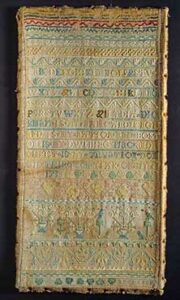
As I discussed yesterday, despite how Josiah Quincy characterized the situation in his biography of Samuel Shaw, the Shaw family was not forced to host British marine officers under the Quartering Act.

Rather, in all likelihood, the merchant Francis Shaw (1721–1784) chose to rent rooms to Maj. John Pitcairn, Lt. John Ragg, and perhaps other men.

We don’t have enough sources about Francis Shaw to know what his motivations might have been: money, a sense of obligation or deference to the military, a wish to mollify the royal authorities?

Shaw wasn’t a Loyalist. He didn’t sign either of the addresses to the royal governors in 1774, nor leave town at the evacuation in 1776. In preceding years, he hadn’t stood up to complain about any of the Whigs’ measures.

Nor, however, was Francis Shaw an active Patriot. He had joined the Boston Society for Encouraging Trade and Commerce back in the early 1760s. That was an early chamber of commerce, speaking for the merchant community, and it opposed the Sugar Act and what its members saw as overeager enforcement of that law. In 1770 the Boston town meeting added Shaw’s name to a committee to promote non-importation, particularly by not selling tea.

But other than those moments, the name of Francis Shaw doesn’t appear in connection with Whig politics. He didn’t dine with the Sons of Liberty in 1769. He wasn’t on the committee to promote the Continental Association of 1774. (He may have been a member of the St. Andrew’s Lodge of Freemasons, meaning he knew some Whig leaders, but wasn’t forward in supporting them. Or that Freemason might have been Francis Shaw, Jr.)

The town meeting elected Shaw as a fireward in the North End in 1772. The North End Caucus endorsed his reelection the next year, and he kept at that job until 1784. Boston thanked him for his long service a few months before he died. But that was an apolitical job.

My impression is that Francis Shaw chose to stay out of the larger debate. His son Samuel, in contrast, was fervent for the Patriot cause in 1775. We can see hints of that difference in the anecdote about Samuel getting into an argument with Lt. Ragg, quoted back here.

Francis Shaw had chosen to host British marine officers. The anecdote suggests he didn’t speak out against Ragg calling Americans “cowards and rebels” and then apparently moving toward a duel with twenty-year-old Samuel. The father didn’t, for instance, demand that his tenant leave his son alone—or if he did, it didn’t become part of the family lore. It was up to Maj. Pitcairn to calm matters.

Furthermore, I think the evidence suggests Francis Shaw told his son not to join the Continental Army. Only on his twenty-first birthday, when he was no longer legally under his father’s control, did Samuel leave Boston and seek a commission in the artillery regiment.

Once that happened, letters show that Francis Shaw supported his son, financially and otherwise. After the siege, the merchant served on Boston committees to collect taxes and record citizens’ military service. He may have invested a bit in privateers (or this could have been a man of the same name from Salem). In sum, Francis Shaw became a Patriot, even if he didn’t start out as one.

COMING UP: Lt. Ragg’s war.

(The picture above, courtesy of Old North, shows a sampler made by twelve-year-old Lydia Dickman in 1735. Nine years later she married Francis Shaw. They had one child together, but Lydia died in 1746 and her son the following year. Francis Shaw remarried and had more children, including Samuel. The sampler is now in the collection of the National Museum of American History.)

Wednesday, March 13, 2024

“The house of Francis Shaw was assigned for quarters”?

Yesterday I quoted the story of Samuel Shaw’s interaction with British marine officers staying in his father’s house in late 1774 or early 1775.

People sometimes point to the Shaw family as an example of colonists forced to host the king’s soldiers in their home under the Quartering Acts of 1765 and 1774.

Author Josiah Quincy’s language, especially the use of the passive voice, pushed that reading:
…the officers of the army were billeted on the inhabitants. The house of Francis Shaw was assigned for quarters to Major [John] Pitcairn and Lieutenant [John] Wragg.
But that’s not the way Britain’s Quartering Acts worked. Those laws required communities to provide barracks and firewood for regiments stationed in their cities and towns. They empowered the army to use uninhabited buildings if necessary, eventually with the help of royally appointed magistrates. Military commanders didn’t actually want to disperse their soldiers into different households; that was a recipe for desertion.

Furthermore, the Shaw family hosted officers, and officers didn’t live in barracks. As gentlemen, they made individual arrangements with homeowners to rent rooms. And as gentlemen, paying in hard currency, they were desirable tenants, especially when the local economy had been stifled by the Boston Port Bill.

Quincy’s word “assigned” suggests there was some formal process for matching officers with homes. Any bureaucracy produces paperwork, but there’s no evidence of such assignments. Nor were there complaints in the newspapers, and Boston’s newspapers ran lots of complaints. Instead, military officers asked around about rooming possibilities and reached deals with willing homeowners.

But didn’t Bostonians have political objections to hosting army and marine officers? Some surely did. We have no anecdotes about Samuel Adams, John Hancock, and other activists agreeing to rent rooms to military men—nor of them being forced to do so.

(After the war began, many of those politicians had moved out of Boston and more troops arrived. During the siege, officers did move into empty private homes. But neither the Quartering Act nor the Third Amendment apply in wartime.)

TOMORROW: Shaw family politics.

Tuesday, March 12, 2024

“Arrangements for a duel were in preparation…”

Earlier this month I had an online discussion with Kevin M. Levin, creator of Civil War Memory (now on Substack) and author of an upcoming book on Col. Robert Gould Shaw.

It concerned a passage from the third Josiah Quincy’s biography of Samuel Shaw (1754–1794, shown here)—Continental officer, early American diplomat, and brother of Col. Shaw’s great-grandfather.

I discussed that passage years ago in a comment but never in a posting until now. It describes young Shaw’s experience in 1774–75, when he was twenty years old:
The northern part of Boston, where he resided, was also the abode of some of the most active and ardent spirits who gave character and impulse to the first movements of the American Revolution.

Troops, sent from the parent state to awe the colonies into submission, and parading the streets of Boston, were continual causes of excitement and anger; giving intensity to feelings which it was difficult to restrain, and impossible to allay. Boston being at that time regarded by the British as a garrison town, the officers of the army were billeted on the inhabitants. The house of Francis Shaw was assigned for quarters to Major Pitcairn and Lieutenant Wragg.

A tradition in the family states, that, the latter having at the table, in the presence of Samuel Shaw, spoken of the Americans as “cowards and rebels,” he immediately resented the reproach, and transmitted to the lieutenant a challenge. While arrangements for a duel were in preparation, the fact came to the knowledge of Major Pitcairn, who interfered, and, either by influence or authority, obtained from the lieutenant such an apology for the offence as Mr. Shaw was willing to accept, and the affair was thus terminated.

On the 2d of October, 1775, Samuel Shaw attained the age of manhood, and, with the assent of his father, immediately took measures to insure his enrolment in the army, then collecting at Cambridge under the auspices of Washington.
The immediate question was: Who was this “Lt. Wragg”? I looked in published Army Lists from the 1770s and found no officer with that last name. But there was a Lt. John Ragg in the marines. So that must have been the man sharing quarters with Maj. John Pitcairn.

Pitcairn arrived in Boston in November 1774, part of Gen. Thomas Gage’s build-up of the royal military after the rest of the province slipped out of his control in September. Ragg presumably arrived at the same time, though it’s conceivable he came with another set of marines in March 1775.

Although this anecdote appears in Quincy’s book after mentions of the Battles of Lexington and Concord and Bunker Hill, it definitely didn’t happen that late. Pitcairn died from his wounds right after the second battle. The story feels like something that would have happened before the shooting war actually began, during the tense winter of 1774–75.

TOMORROW: Reading between the lines.

Tuesday, August 30, 2016

Seeking a Clear Image of Moll Pitcher

To figure out what sort of fortune-telling Mary “Moll” Pitcher of Lynn did requires getting around the romanticized descriptions and legends that grew over the nineteenth century.

For example, in Moll Pitcher’s Prophecies; or, The American Sibyl (1895), Ellen M. Griffin claimed that Maj. John Pitcairn visited Pitcher on 17 Apr 1775, and she took information about the march to Concord that she gained from him to the Marblehead Patriot Elbridge Gerry. (Who was actually out of town that week.)

Likewise, there was a widely commonly reprinted picture of Pitcher, shown here. People who had actually seen her in life said it was a terrible likeness. Authors wrote that she was thin, with “a long Athenian nose,” and as she aged “Her nose became peaked and her features seemed to lengthen.” An 1879 profile said, “Her most habitual mode of covering her head, and one perhaps peculiar to herself, was to bind a black silk handkerchief about her forehead.” Nothing of the sort shown in the picture.

That mythologizing process started even in Pitcher’s lifetime. The only reference to her fortune-telling that I’ve found from before her death in 1813 is a series of letters published in the Boston Weekly Magazine. These started as a debate between the fashionable Boston woman Mary Ann Smartly and the Lynn Quaker Rebecca Plainly. The 26 Feb 1803 Smartly letter says:
And now to address you in your own shocking style.—Good Rebecca, (lord, what an old fashioned name) how knowest thou that my wig is red? Hast thou been to Moll Pitcher, to know what colour it is of? Pray thee, how much did it cost thee and the old witch to ascertain the colour of my wig? For I suppose it is some trouble to Mrs. Pitcher, to conjure up her infernal agents.
A Plainly letter dated 6 March likewise alluded to “Moll Pitcher.” And then on 2 April the magazine published a letter dated from Lynn on 17 March with Moll Pitcher’s name at the bottom. That was a protest against her being misrepresented, using Christian language and allusions. It also mentioned having read Hannah More’s Strictures on the Modern System of Female Education, published in England four years before.

For all of this Moll Pitcher’s protests against people misusing her name, I can’t help but suspect that the real Mary Pitcher of Lynn wasn’t involved in that debate at all. The correspondents and their letters all appear to be literary creations. Smartly and Plainly were voices for an ongoing philosophical debate, and whoever wrote the Moll Pitcher letters appears to have treated her as equally symbolic, even though the real woman was still active.

When Pitcher died, the Rev. William Bentley of Salem wrote in his diary for 19 May 1813:
The death of Widow Mary Pitcher, aet. [aged] 75, in Lynn furnishes two facts to the World. This woman has been commonly resorted to by this neighbourhood as a fortune teller & died in the full reputation of her skill. Some dared to insinuate she was a Witch, but there was no fire or halter in the Law for her. Superstition in this sort is still general among seamen & even among such as are not of the lowest order of them. It is a more pleasing circumstance attending the death of “Mother Pitcher” as she is commonly named by those who call upon her, that her death is said to be the only one in Lynn, for five months past from a population exceeding 4 thousand.
The basic source about Mary Pitcher is Alonzo Lewis’s history of Lynn, published in 1829, revised in 1844, and re-edited by later scholars. Lewis saw Pitcher personally as a child, and his attitude toward her was neither credulous nor disdainful. I quoted what he first wrote about Moll Pitcher a couple of days ago. According to him, “Her only ostensible means of obtaining secret knowledge” was reading tea leaves.

Lewis described people coming to Pitcher with three main questions:
  • “affairs of love.” Yet I haven’t come across a single anecdote about this sort of prophecy.
  • “loss of property.” In his History of the Town of Groton (1848), Caleb Butler wrote that Pitcher was “employed in the search” for valuable millstones lost when a flood destroyed a gristmill around 1700; however, the stones were never found.
  • “surmises respecting the vicissitudes of their future fortune,” particularly ocean voyages. Many sailors visited Pitcher, as did eccentric leather-dresser and merchant “Lord” Timothy Dexter after his first fortune-teller of choice, Jane Hooper of Newburyport, died in 1798.
Pitcher’s pronouncements could affect the maritime labor market. In the first volume of his Narrative of Voyages and Travels (1817), Amasa Delano wrote about the grand ship Massachusetts, launched from Quincy in 1789 to trade with China under captain Job Prince and supercargo Samuel Shaw. It didn’t actually set out until the following year. Why?
It is worthy of remark that the Massachusetts had more than three crews shipped before she sailed from Boston. The greatest part of them left the ship in consequence of a prediction by an old woman, a fortune teller, Moll Pitcher of Lynn, that the Massachusetts would be lost, and every man on board of her. Such was the superstition of our seamen at that time, that the majority of them believed the prophecy, and were actuated by it in their conduct.
Ten years later George Whitney wrote in Some Account of the Early History and Present State of the Town of Quincy, “It is commonly reported that this ship was lost in her first voyage. This, however, is not true. The report probably arose from a prediction, of Moll Pitcher of Lynn, a fortune-teller, that she would be lost and every man in her.” And from the fact that the Massachusetts never did return to America; Shaw sold the ship to some even more desperate Danish merchants in the Pacific.

TOMORROW: Visiting Moll Pitcher.

Thursday, November 06, 2014

“True Yankees” Talk in Salem, 6 Nov.

Tonight, 6 November, the Salem Maritime National Historic Site is hosting a talk by Prof. Dane A. Morrison on his new book, True Yankees: The South Seas and the Discovery of American Identity.

The publisher’s description of the book says:
With American independence came the freedom to sail anywhere in the world under a new flag. During the years between the Treaty of Paris [1783] and the Treaty of Wangxi [1844], Americans first voyaged past the Cape of Good Hope, reaching the ports of Algiers and the bazaars of Arabia, the markets of India and the beaches of Sumatra, the villages of Cochin, China, and the factories of Canton. Their South Seas voyages of commerce and discovery introduced the infant nation to the world and the world to what the Chinese, Turks, and others dubbed the “new people.”

Drawing on private journals, letters, ships’ logs, memoirs, and newspaper accounts, True Yankees traces America’s earliest encounters on a global stage through the exhilarating experiences of five Yankee seafarers. Merchant Samuel Shaw spent a decade scouring the marts of China and India for goods that would captivate the imaginations of his countrymen. Mariner Amasa Delano [1763-1823] toured much of the Pacific hunting seals. Explorer Edmund Fanning [1769-1841] circumnavigated the globe, touching at various Pacific and Indian Ocean ports of call. . . .

How did these bold voyagers approach and do business with the people in the region, whose physical appearance, practices, and culture seemed so strange? And how did native men and women—not to mention the European traders who were in direct competition with the Americans—regard these upstarts who had fought off British rule? The accounts of these adventurous travelers reveal how they and hundreds of other mariners and expatriates influenced the ways in which Americans defined themselves, thereby creating a genuinely brash national character—the “true Yankee.”
Morrison’s talk starts at 7:30 P.M. at the Salem Visitor Center at 2 New Liberty Street. A book signing will follow. It’s free and open to the public, though seating is limited.

Friday, November 15, 2013

“He is no more a Mandarin than one of our shopkeepers”

Yesterday I noted Dael Norwood’s article about a Chinese businessman named Punqua Wingchong, who got special permission from Thomas Jefferson’s administration to sail home during the embargo. Jefferson’s critics complained that Punqua was just a front man for John Jacob Astor.

Punqua had come to the U.S. of A. on his own, however. In 1807 he arrived on Nantucket on the Favorite, accompanied by a servant. In The Other Islanders: People Who Pulled Nantucket’s Oars, Frances Ruley Karttunen writes that the local diarist Keziah Fanning described him as: “a Chinaman that came with Mr. Whitney last fall from Canton. He is a merchant there. He is the color of our native whites.”

After Punqua’s return voyage in August 1808 became a political controversy, a New Yorker wrote to Secretary of State James Madison under the pseudonym “Columbus” to warn the administration that they had made a mistake:
Mr. Winchong who is represented as a China Mandarin I know well and knew him before he left Canton. He is no more a Mandarin than one of our shopkeepers is for that is his occupation. That he came away from China and must return by stealth I am sure of, as it is the only way a Chinese can visit a foreign country in a foreign vessel and Mr. Winchong has frequently told me that he came away from Canton without any Mandarin knowing it and he expected to return the same way, and I believe that should the Mandarines become acquainted with his visit to this country when he returns they would strip him of every cent he is worth. . . .

Since I left NewYork (my place of residence) on my Journey to this place I have had continual enquiries respecting the great Chinese Mandarin and I have in several instances related what I knew concerning him and I have just learnt that the Ship Beaver of near 500 Tons is permited to carry him and his property to Canton. This the Feds & Tories with a sneer observe is another proof of the wisdom of Mr. Jeffersons administration. I have sir now only to add that the Ship Beaver belongs to the bitterest opposers of the present administration and should they succeed with their tool Winchong in accomplishing their object they will laugh at those that granted the favor by way of showing their superior wisdom.

That Winchong does not possess 5000 Dollars in this country is my opinion for some time ago I recievd a letter from Mr. S. Whitney the gentleman that bro’t Winchong to this country stating that he wished me to be friendly to Winchong as he had not exceeding $500 Dollars with him and surely he ought to know. That Winchong holds notes of Shaw & Randall’s to a large amount and that he came to this country for the express purpose of collecting the same, is certain, but that House became bankrupts several years ago. Shaw is since dead and Randall with hard labour can scarcly support his indigent family. Therefore not a cent has been collected from them.

It would be cruel to the highest degree for any person to object to Mr. Winchong and the other chinese having permission to return to their native country but why is a ship of five hundred Tons necessary to carry them (and to return with a full Cargo). A small vessel certainly would be more expeditious (and particular at this season when they will have to take a circuitous and difficult route) and perhaps equally as comfortable.
By the time this letter reached the capital, Punqua’s ship had already sailed. But it points out some more connections between Punqua and Massachusetts.

When “Columbus” wrote, “the Ship Beaver belongs to the bitterest opposers of the present administration,” Norwood says he probably meant brothers James Perkins (shown above, courtesy of the Boston Athenaeum) and Thomas Handysyd Perkins, who were partners in that ship with Astor. The Perkinses were indeed Federalists—which is probably why they kept quiet and let Astor handle arrangements with his friends in the Jefferson administration.

Punqua’s “notes of Shaw & Randall’s” also have New England roots. Samuel Shaw had grown up in Boston and become an artillery officer during the Revolutionary War. He helped open the China Trade, first as supercargo on the Empress of China in 1784 and then as a trader and first American consul in Canton from 1786 to his death in 1794.

Thomas Randall’s background is harder to pin down, in part because there’s a prominent New York merchant of the same name. He was a lieutenant in the Continental artillery regiment as early as October 1775, when he was court-martialed for stabbing an enlisted man. (The panel recommended a reprimand.) In 1784 Shaw insisted that “Captain Randall, with whom he had formed an intimate friendship in the course of the American war, and who was as destitute of property and employment as himself, should be united with him and share with him the profits of the agency” in China.

That enterprise failed after Shaw’s death at the age of thirty-nine, and the notes Punqua hoped to collect on were worthless. No wonder he needed help to get back home.

TOMORROW: But what about his servant?

Sunday, November 10, 2013

“The frothing Tory comeing for his Hog”

From the memoir of Boyrereau Brinch, an African-American dragoon in the Continental Army:
From thence we marched to West Point, and took up winter quarters. While we remained here the soldiers played many boyish pranks. One Samuel Shaw, a brave soldier, but as complete a petty thief as ever graced a camp; not that I would represent him a thievish character; as honesty was never more predominent in any human being, than it was in him, when he pledged himself to any fellow soldier. However he with myself and some others from our camp, the day before we were to be reviewed, by his Excellency, Gen. George Washington, concluded we would have a soldier-like frollick.

Accordingly we secretly stole from the lines, went to a Farm not many miles distant, which was occupied by a Tory. From him we stole a shoat [i.e., young pig]. Shaw was the principle manager in this affair, and we got into camp just before day. We laid the Shoat in the middle of the camp, and sat down, and in the language of gratitude, began conversing upon our success; but short was our confab. As we soon saw the frothing Tory comeing for his Hog.

We immediately covered ourselves with our blankets and effected to be asleep. He recognized his property; he went to the Col. to whose regiment we then belonged, and reported that we had stolen one of his shoats. Col. [Return J.] Meigs, came immediately to our company, and with a countenance, that plainly bespoke a determination of punishing us if guilty.

He asked how we came by that Shoat; I answered immediately that the owner had brought it for sale, but that from his manner of conversation (knowing him to have been a tory) we unanimously suspected him to have come as a spy, and were determined to keep the Shoat until the officers might have an opportunity of being acquainted with his designs.

My fellow soldiers were glad of the opportunity of confirming the truth of my assertion—which so completely satisfied the Col. of our innocence, together with the circumstance of its lying in fair view, in the middle of the Camp—that he severely reprimanded the man for his insult on him and his soldiers. The man a little frightened at so unexpected a charge of guilt that he really had the appearance of a condemned culprit, and was glad to escape with his dead pig upon his back.
Lots of other stories about soldiers’ “pranks” that I’ve seen involve stealing food from a Tory, or a Quaker, or someone else who, the storyteller suggests, deserved to be stolen from because he didn’t support the American cause enough. But I think the real point was the food.

(The picture above shows Col. Meigs later in life, courtesy of Wikipedia. The Samuel Shaw in this anecdote is assuredly not the young artillery officer from Boston.)

Sunday, September 16, 2012

Dettwiller on Capt. Magee at Shirley-Eustis House, 27 Sept.

On 27 September, the Shirley-Eustis House will host an illustrated talk by historical architect and researcher Frederic C. Detwiller on “Boston’s Convivial, Noble-Hearted Irishman Captain James Magee”:
Captain James Magee was described as “a convivial, noble-hearted Irishman” by his colleague and kinsman “Merchant Prince” Thomas Handasyd Perkins of Boston. The Magee family were seafarers from County Down, in the vicinity of Downpatrick (Saint Patrick’s country) across the Irish Sea from Scotland.

From somewhat obscure beginnings, James Magee [1750-1801] became an American privateer captain off the New England coast in the Revolution, and rose to prominence as a China trade captain and merchant. He survived the tragic wreck of the Brig General Arnold off Plymouth in 1778 to sail for China in 1786, taking with him the first U.S. Consul to China (Samuel Shaw) and bringing back the first Chinaman (a student) to the United States.

With his hard-earned wealth, James Magee and his wife Margaret Elliot, whom he married in 1783, were able to acquire Shirley Place, a mansion built by Royal Governor William Shirley in 1746-50 and now restored by the Shirley-Eustis House Association. Magee’s membership in the Charitable Irish Society and his numerous contributions of exotic items from his voyages (given to the Boston Marine Society, Massachusetts Historical Society, Harvard University, and the Peabody Museum in Salem) prove the generous nature of this “convivial, noble-hearted Irishman.”
Admission to this program is $5.00 for adults, $4.00 for students and seniors, and free to members of the Shirley-Eustis House Association. The lecture starts at 6:30 P.M., and will be followed by refreshments.

The thumbnail above shows a legal document created for Magee by Ezekiel Price in 1781; it’s readable at this page. Magee’s brig Amsterdam was captured by a British warship on 19 October while he was sailing back from Sweden “laded with Dry Good, Iron, Steel, Copper, Tea &c.” This document was his legal protest about being stopped on the high seas. Since Magee had previously used the same brig as a privateer to capture four British ships, he might not have really had the moral high ground.