J. L. BELL is a Massachusetts writer who specializes in (among other things) the start of the American Revolution in and around Boston. He is particularly interested in the experiences of children in 1765-75. He has published scholarly papers and popular articles for both children and adults. He was consultant for an episode of History Detectives, and contributed to a display at Minute Man National Historic Park.

Subscribe thru Follow.it


•••••••••••••••••


Showing posts with label speaking engagements. Show all posts

Tuesday, September 08, 2026

“The British Empire Strikes Back” in New Jersey, 6–8 Nov.
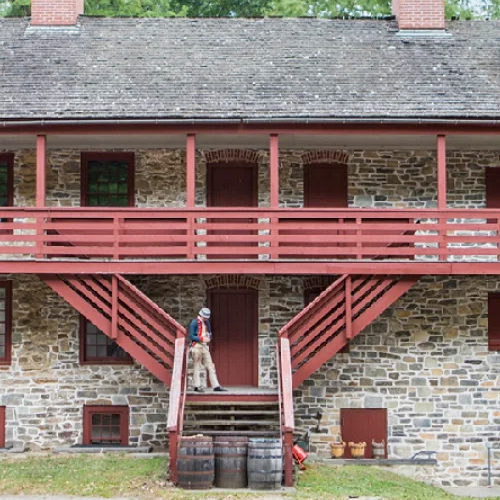
The next Pursuit of History Weekend session is called “The British Empire Strikes Back,” and it will cover the New York and New Jersey campaigns from August 1776 to January 1777.

Here’s how we’re describing the developments of 250 years ago:
Even as the United States declared their independence, the British military returned to New York. Starting in August 1776, Gen. William Howe pushed Gen. George Washington off Long Island, off Manhattan Island, and down into New Jersey. The Continental Army struggled through battles at Brooklyn, Harlem Heights, White Plains, and Fort Washington.

By late December, the Congress was evacuating Philadelphia, Washington was estranged from top aides, and Continental soldiers’ enlistments were about to run out. Only by counterattacking Gen. Cornwallis and his Hessian vanguard at Trenton and Princeton did Washington reenergize the American cause.
Our main meeting space for this weekend will be the Old Barracks Museum in Trenton, New Jersey, built to house troops in the French and Indian War. On 6–8 November, we’ll visit sites of fighting in that city; Washington Crossing, Pennsylvania; and Princeton, New Jersey. 

Here are some of the experts I’m eager to hear from:
  • Ricardo Herrera, Ph.D., joins the Pursuit of History Weekends as a program director and faculty member. He is Senior Historian at the George Washington Leadership Institute at George Washington’s Mount Vernon, having previously served as Professor of Military History at the U.S. Army War College and as an Armor and Cavalry officer. For the U.S. Army Center of Military History Rick wrote The New York Campaign 1776 (2026).
  • Friederike Baer, Ph.D. (friederikebaer.com), is the author of Hessians: German Soldiers in the American Revolutionary War (2022), honored with the American Revolution Round Table of Philadelphia’s Annual Book Award and the Society of the Cincinnati Prize. She is a Professor of History at Penn State University Abington College.
  • Benjamin L. Carp, Ph.D. (benjamincarp.com), wrote The Great New York Fire of 1776 (2023) and Rebels Rising: Cities and the American Revolution (2007), and other award-winning studies of the American Revolution. He holds the Daniel M. Lyons Chair in American History at Brooklyn College within the City University of New York.
  • William L. “Larry” Kidder, M.A. (wlkidderhistorian.com), has written several books about the Revolutionary War, including Ten Crucial Days: Washington’s Vision for Victory Unfolds, Crossroads of the Revolution: Trenton 1774–1783, and Revolutionary Princeton 1774–1783. He is a veteran of both the U.S. Navy and forty years of teaching high school.
  • Phillip Papas, Ph.D., explored the life of the Continental Army’s most confounding commander in Renegade Revolutionary: The Life of General Charles Lee (2014). Also author of That Ever Loyal Island: Staten Island and the American Revolution (2007), Papas is Senior Professor of History in the Economics, Government, and History Department at Union County College.
We’re still finalizing the schedule with the venues, but I expect to give some brief presentations as well.

Pursuit of History Weekends are limited to about forty people to facilitate discussion with speakers and among attendees. As of this holiday weekend, only ten slots are left.

For more information and to register, please visit this webpage.

Tuesday, August 04, 2026

Back to Philadelphia for “The Road to Independence” in September

In April, I went to Philadelphia to help lead the Pursuit of History Weekend on “The Road to Independence,” nearly three full days of exploring the city and the Continental Congress’s move to breaking from Britain.

That was so much fun that we’re offering a similar program on 18–20 September. The anniversary of the Declaration of Independence has passed, of course, but we can dig deeper into its history in this Sestercentennial year. In fact, we have the chance to take in new material and historic spaces not available in the spring.

This time our base will be the Arch Street Meetinghouse, commissioned by Quakers in 1803–04 and shown above. We’ll also visit Carpenters’ Hall, Independence Hall, the controversial Presidents’ House site, the Arch Street Burying-Ground, the Museum of the American Revolution, the American Philosophical Society Museum, and other places in scenic Philadelphia.

One addition to this session is the First Bank of the United States, which just reopened after a major refurbishment. We’ll visit that on Sunday, our “extra” day when we go outside the period of our main focus.

Our speakers this time around will be:
  • Jane E. Calvert, Ph.D., author of Penman of the Founding and founding director of the John Dickinson Writings Project.
  • Christina R. Carrick and James P. McClure, Ph.D., editors at the Papers of Thomas Jefferson.
  • Shawn David McGhee, Ph.D., author of No Longer Subjects of the British King: The Political Transformation of Royal Subjects to Republican Citizens, 1774–1776.
  • Samuel A. Forman, M.D., M.P.H., author of Joseph Warren and Ill-Fated Frontier, and a native of Philadelphia.
  • Richard Vague, author of The Banker Who Made America: Thomas Willing and The Rise of the American Financial Aristocracy, 1731–1821.
  • J. L. Bell, program director and author of The Road to Concord.
We’re expecting this session to be smaller than the one in the spring, but still looking for two to three dozen folks interested in Revolutionary history.

For more information about what’s included, costs, and registration for “The Road to Independence,” please visit the Pursuit of History website.

(Meanwhile, I’m also working on the program for a new Pursuit of History Weekend in November.)

Sunday, July 19, 2026

Looking Back on a Chat with Medford’s Laura Duggan

Earlier this month I visited Medford Community Media to chat with Laura Duggan of Looking Back at Medford History about The Road to Concord and the history surrounding it.

We got into some deep mysteries, such as why the Thomas Gage Papers are in Ann Arbor, the Samuel Adams Papers are in New York, and a lot of the Thomas Jefferson Papers are in Boston.

The conversation runs for an hour and twenty minutes. You can watch the whole thing here.

Monday, July 13, 2026

“Headquarters of a Revolution” in Cambridge, 19 July

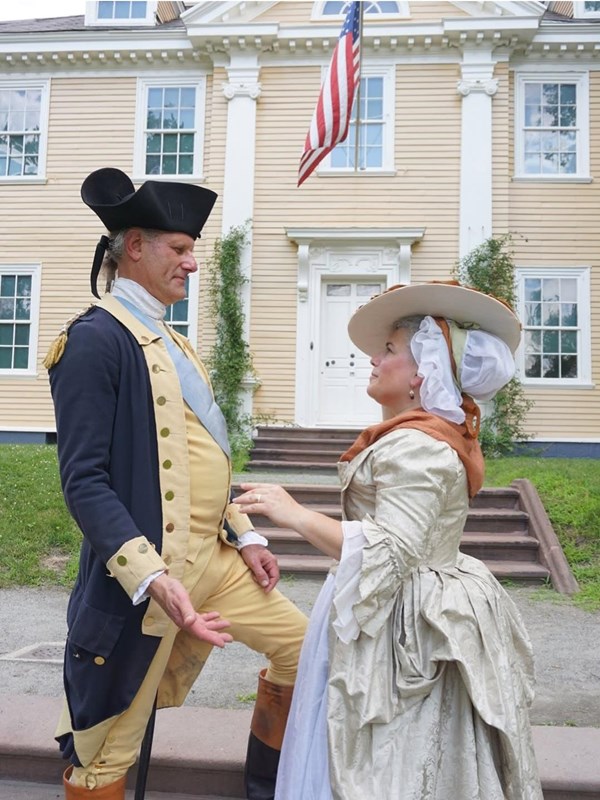
On Sunday, 19 July, the Longfellow House–Washington’s Headquarters National Historic Site in Cambridge will host a commemoration called “Headquarters of a Revolution: Washington’s Arrival in Cambridge,” coinciding with the 251st anniversary of the new commander-in-chief’s first week living in that mansion.

Here are the events scheduled for that day, including two from me.

10 A.M. to 3 P.M.
Living History
On the Lawn

Interact with living historians John Koopman (as George Washington) and Sandy Spector (as Martha Washington), including a noontime Q&A with Mrs. Washington. Free family activities and a story walk available all day.

10 and 11:30 A.M., 2:30 P.M.
House Tour: Headquarters of a Revolution
Starting in the Visitor Center

General George Washington’s Cambridge headquarters was a testing ground for many of the ideals, institutions, and questions that still define our nation. This conversational tour with an N.P.S. ranger explores Cambridge Headquarters as a hub of revolutionary activity, where generals, enslaved people, paid laborers, poets, Indigenous diplomats, politicians, and soldiers shaped history—and how later generations would shape its memory.

10:15 A.M.
Get Ready with Martha
Carriage House

Learn all about the clothing of 1775 as Mrs. Washington finishes dressing for her day. There will be some stories and some gossip, too! Sandy Spector is a Boston-based historian, researcher, and interpreter, and has been a Revolutionary War reenactor since 2000. She spends most of her time researching and interpreting Mrs. Washington and has been portraying Martha—alone or with George—in numerous states and venues for the past 10 years.

11:30 A.M. to 12:15 P.M.
The Last British Army to Come Through Cambridge
Carriage House

In November 1777, nearly 6,000 soldiers of the king arrived in Cambridge. With them came about a thousand women and children. These weren’t invaders but prisoners of war, British and German, captured at Saratoga. Top officers were housed in mansions along “Tory Row” while enlisted men went into the leftover barracks on Prospect and Winter Hills. Over the next few months Cambridge, Charlestown, and neighboring towns had to adjust to a new population under guard. J. L. Bell explores what we should remember about this “Convention Army” as we approach the 250th anniversary of its arrival.

12:30 to 1:15 P.M.
“Though Dwelling in a Land of Freedom”
Carriage House

Join poet, educator, and Darby Vassall descendant Denise Washington for an exploration of Revolutionary-era freedom struggles surrounding Washington’s Headquarters through the lens of Anthony, Cuba, and Darby Vassall, as well as Phillis Wheatley Peters.

1:30 to 3 P.M.
The Black Patriots of Lexington – Silas Burdoo
Carriage House

This film explores the role that third-generation Lexington resident Silas Burdoo played in the Revolutionary War, starting with the battle on 19 Apr 1775. Burdoo was a grandson of Ann and Philip Burdoo, who married in Medford in 1704 and then purchased 40 acres in Cambridge Farms, which became Lexington. This film screening will be followed by a discussion with Zine Magubane, professor of historical sociology at Boston College, and Sean D. Osborne, producer of the Black Patriots of Lexington YouTube series.

3 P.M.
What Washington Saw on Cambridge Common
Walking Tour starting at the gate at the southern tip of the common

What did the center of Cambridge look like in July 1775? Since April, the town had been the base of the New England army besieging Boston, with war transforming the community. On this walking tour J. L. Bell looks at sites in and around the common, including the first headquarters, buildings turned into barracks, and the Continental artillery’s lost laboratory. How well do the Washington Elm and the Revolutionary monuments that dot the common memorialize the men who were actually there?

All of these events are free, as organized by the National Park Service.

Sunday, July 12, 2026

History Camp Boston 2026 Coming Up on 8 August

History Camp Boston will take place on 7–9 August, with the main gathering on Saturday the 8th.

As in recent years, the main venue will be the Suffolk University Law School building at 120 Tremont Street, just a block from the Park Street subway station and across the street from the Park Street Burying Ground. Or, as I like to think of it, on top of Adino Paddock’s coachyard.

This year I’ll talk about the myths and realities of the signing of the Declaration of Independence, from the signature on the first copy not included on later versions to the handprint that mysteriously appeared on the document in the early 20th century.

In fact, there’s a little Declaration track on the schedule, with Andy Volpe speaking about the printing technology behind the spread of that text and Jennifer Epstein Rudnick speaking about locating the Signers’ graves.

And there are many more presentations on eighteenth-century history, including Sam Forman and Salina Baker giving their separate takes on Dr. Joseph Warren; Ben Powers and Bjorn Bruckshaw on Col. Christopher Greene and Janet Uhlar on his cousin, Gen. Nathanael Greene; Bob Allison on the year 1776; Jake Sconyers on the year 1752 and why it was so short for the British Empire; Judy Anderson on Loyalists in Marblehead; Sarah Walsh and Christopher Davis on the spoken language behind the Adams letters; John Morton on Paul Revere; and more.

Other speakers will cover topics ranging from mercantilism and King Philip’s War to the bombing of the Los Angeles Times and Amelia Earhart. The hardest part of History Camp is picking which presentations to attend—but most are available afterwards on video.

In addition, there’s a reception on the preceding Friday evening for people who support History Camp financially, and on Sunday folks can choose among seven tours of historic sites at additional cost.

Registration for Saturday with a hot lunch and morning and afternoon refreshments costs $135. That money goes toward the food, the venue, the recordings, and support services; all the speakers are volunteers, talking about their topics for the pleasure of sharing history.

Thursday, June 11, 2026

Remembering the Battle of Bunker Hill This Week

Next week brings the 251st anniversary of the Battle of Bunker Hill, and the Charlestown Historical Society and partner organizations have planned several events to commemorate it.

On Saturday, 13 June, there will be an Author & Historian Symposium in the lodge beside the Bunker Hill Monument. Among the scheduled speakers from 10 A.M. to 4:30 P.M. are:
  • Timothy Reardon on the Brothers of the Battle of Bunker Hill descendants group 
  • James Philbrick on his ancestor, David Howe
  • Joni and Christine Parker on their ancestor, Benjamin Parker
  • Christian Di Spigna on Dr. Joseph Warren
  • J. L. Bell on the “whites of their eyes” quotation
  • Joe Bagley on archeology in Charlestown, including the dig completed the day before
  • Julie Hall on how public relations shaped the American Revolution
Throughout the day family artifacts, letters, journals, ephemera, and other historic items will be on display for visitors. A musket demonstration by the National Park Service is scheduled for 4:30.

Charlestown’s annual Bunker Hill Day Parade will be on Sunday, 14 June, from 12:30 to 4:30 P.M. I understand through other sources that there will also be a sidewalk demonstration against White House censorship of signs quoting later generations on the monument inside the lodge, as discussed here.

On Tuesday, 16 June, the society, the city of Boston, and GBH will cohost a community viewing of the Bunker Hill portion of Ken Burns, Sarah Botstein, and David Schmidt’s documentary series The American Revolution. Some of the historians, archeologists, and descendants from Saturday will be on hand, as well as Donald R. Ryan, biographer of William Prescott. That discussion will take place from 6 to 8 P.M. in the street-level meeting room of the Bunker Hill Museum.

On Wednesday, 17 June, the Bunker Hill Monument Association will have its annual meeting at 11 A.M. in the museum. Prof. Robert Allison from Suffolk University will speak on “The Importance of the Left Flank and the Rail Fence.” This event is open to B.H.M.A. members and invited guests only.

Finally, from 3:30 to 5 P.M. that Wednesday, the annual Remembrance Ceremony on the monument grounds will be open to the public.

Wednesday, June 10, 2026

Three Podcast Episodes

Producing a podcast strikes me as a lot of work, but speaking about Boston history on other folks’ podcasts is always fun.

Here are three episodes I’ve recorded in the last few months. Enjoy all you can.

“The Spark: How Boston Ignited the American Revolution” on The Object of History from the Massachusetts Historical Society

We ask several historians for their thoughts on why Boston helped light the spark of the American Revolution. Was there something unique about Boston's community or geography that made it prone to a rebellious spirit? We sit down with J. L. Bell, Historian of the Revolutionary Era in Massachusetts, Garrett Dash Nelson, President & Head Curator at the Leventhal Map & Education Center at the Boston Public Library, and Kathryn Lasdow, Assistant Professor of History and Director of Public History at Suffolk University, to answer this question.
I’d already been mulling about “Why did the Revolutionary conflict flare up in Boston?” when the invitation to explore that question arrived. Hear my threefold answer and more.

“Boston” on History’s Greatest Cities from History Extra
As one of the oldest cities in the United States, Boston played a pivotal role in the outbreak of the American Revolutionary War, as well as the signing of the Declaration of Independence that followed. In this episode of History’s Greatest Cities, Paul Bloomfield is joined by writer John Bell to explore the storied history of the capital of Massachusetts. Together, they wander through Boston’s oldest neighbourhoods, tracing the story of this harbour city from its pre-colonial roots, through Puritan settlement, to its rise as a major port and administrative centre of the British Atlantic world.
This podcast asks its guests to answer a series of questions, from major events to foods a visitor mustn’t miss.

“Not What You Hurd” on Antiques Roadshow Detours from GBH
In the world of rare silver, American Colonial silver is the stuff collectors dream of. So, when a pair of drinking vessels or “canns,” complete with intricate engraving by a master Boston craftsman, were discovered during ROADSHOW’s visit to Akron in 2023, expert Nick Dawes examined the cups’ clues to reveal both the silver’s early-American history and extraordinary value. But does Nick’s tale of the tankards hold water? Join host Adam Monahan as he searches for the untarnished truth, picking through the many stories, half-truths, and wishful legends in a quest for what may or may not have been lost to history forever.
My voice pops up occasionally on this episode, leaving more time for the fine local historians Joel Bohy and Caitlin DeAngelis.

Tuesday, June 09, 2026

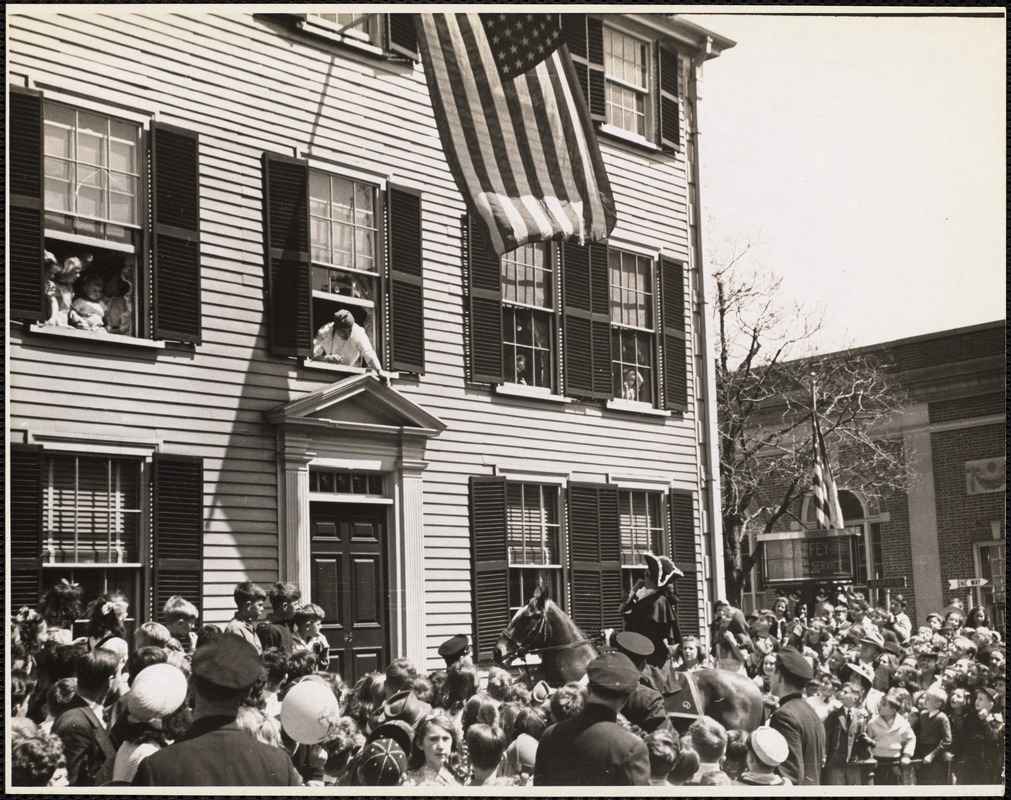
“Paul Revere and Plan B” in Medford, 11 June

On Thursday, 11 June, I’ll speak to the Medford Historical Society on the topic of “Paul Revere and Plan B: Planning and Improvisation in the Lexington Alarm.”

Our event description says:
After the Battle of Lexington & Concord on April 19, 1775, Massachusetts resistance leaders portrayed the uprising as a mostly spontaneous response to the army’s incursion into a peaceful countryside. Decades later, Henry W. Longfellow presented “Paul Revere’s Ride” as nearly a one-man show.

In truth, the Massachusetts Patriots had prepared for months to resist the Crown military. Revere was part of a network of organizers, informants, and alarm riders. At the same time, Revere and his colleagues succeeded by being able to respond to contingencies by changing their plans.

Drawing on new research, this talk will shed light on one of independent America’s oldest stories—and how the day could have turned out differently.
I developed an earlier, short version of this talk for the 19th of April several years ago, and now I’m backloading it with more about Revere’s pre-war propaganda and espionage work.

The society will meet at the Charlotte and William Bloomberg Medford Public Library starting at 7 P.M. This event is free and open to the public.

(The photograph above, which comes courtesy of Digital Commonwealth, shows the reenactment of Paul Revere’s stop at the Isaac Hall House in Medford sometime in the mid-1900s.)

Saturday, May 30, 2026

“How the Shooting Began in 1774” in Hampstead, N.H., on 2 June

On Tuesday, 2 June, I’ll be at the Hampstead, New Hampshire, public library, speaking to the Hampstead Historical Society about “How the Shooting Began in 1774: The Start of the Revolutionary War in New Hampshire.”

Here’s our event description:
Officially the Revolutionary War began with the Battle of Lexington and Concord in April 1775, but the first exchange of fire between the king’s government and the Patriots came the previous December in New Hampshire. The bloodless fight over Fort William & Mary in Portsmouth harbor was one stage of a months-long “arms race” as New England’s royal governors and political resistance vied to seize cannon and other artillery supplies in preparation for a war. This talk explores the mass demonstrations, armory break-ins, shadow governments, and espionage that brought on the war.
I’ll be drawing on The Road to Concord and more recent research to pander to the local audience speak bold truths about the start of the Revolutionary War—a story that starts months before the 19th of April and involves events hundreds of miles apart.

This free event is scheduled to take place from 6:30 to 8 P.M. at the library.

This talk is made possible by New Hampshire Humanities, N.H.P.B.S., and the Cogswell Benevolent Trust. It’s part of the “By the People: Conversations Beyond 250” series of community events developed by the Federation of State Humanities Councils and the Smithsonian Center for Folklife and Cultural Heritage.

Tuesday, May 05, 2026

Upcoming Talks in Woburn and Stoneham

As April started, I planned to spend just a few days on the capture of the Elizabeth, one of the Loyalist evacuation fleet.

I expected to focus on that brig’s two most prominent passengers, Crean Brush and William Jackson, and then sail on.

But then other passengers—the Wheatons, the Hills—turned out to have their own stories, which hit some of my prime interests: espionage, mythmaking, and other suspect behavior.

So here it is early May, and I haven’t even gotten to the legal wrangling around the Elizabeth and its cargo, which took months to settle in 1776 and could take many days to recount.

But I’ll break off from that topic to announce a couple of public talks next week (speaking of espionage, mythmaking, and other suspect behavior).

Tuesday, 12 May, 6:30 to 8 P.M.
Before He Was Count Rumford: Benjamin Thompson’s American Youth
Woburn Public Library, Fireplace South Gallery

Even as a teenager and young man, Woburn’s own Benjamin Thompson was intelligent, ambitious, and full of trouble. This talk tracks the future count through his failed apprenticeships (he blew himself up only once) to his youthful marriage, dealings with royal governors, and first known affair. The outbreak of war in Massachusetts presented young Thompson with bigger dangers—and opportunities.

This talk is free to the public. Register for a seat here. There are no plans to record this talk.

Thursday, 14 May, 7 to 8:30 P.M.
George Washington’s Spy—and Stoneham’s Minister?
Stoneham Historical Society and Museum

Twelve days after arriving in Massachusetts as the new commander-in-chief of the Continental Army, George Washington paid a man to go into Boston and secretly report on British “movements & designs.” For two centuries that person’s name remained hidden. Recent research reveals that he was John Carnes, a grocer with an unusual past: he had started his career in the 1750s as Stoneham’s minister. This talk uncovers Carnes’s background, his role in the first Continental spy network, and what happened to him when the British commander had his own spy among the Massachusetts Patriots.

This event is free, with donations welcome. Doors will open at 6:45 P.M. for museum viewing, and there will be a brief historical society business meeting at 7:15 before the presentation at 7:30. Again, I don’t think this talk will be recorded. [UPDATE: There are now plans to record this talk for sharing later on StonehamTV.]

Sunday, March 15, 2026

“After Evacuation” in Cambridge, 19 Mar.

On Thursday, 19 March, I’ll speak at Longfellow House–Washington’s Headquarters National Historic Site on the topic “After Evacuation: What Came Next for General Washington and the American Colonies.”

Back in January I spoke in that same space about Col. Henry Knox’s “Fine Train of Artillery” and the end of the siege of Boston. Here’s the video of that presentation. This talk will pick up when that left off.

Here’s our event description:
On March 17, 1776, the British military pulled out of Boston, giving General George Washington his first victory of the Revolutionary War. Already, however, he was positioning the Continental Army for the redcoats to return. Meanwhile, the political atmosphere had changed, sending the thirteen colonies in a new direction. This year’s annual Evacuation Day talk explores how much changed during the siege and what lay ahead as the Washingtons left Cambridge.
One detail I haven’t decided whether to include is the honorary doctorate that Harvard College conferred on Washington on 3 Apr 1775, as discussed back here. This was the first time the college gave an LL.D. degree.

The Rev. Dr. Samuel Cooper wrote in his diary about signing the handwritten diploma on 4 April. Then Cooper went to Cambridge to say farewell to the general and presumably help to deliver that document, only to find that Washington was already on his way south. No word about how the diploma eventually made its way to the man.

To reserve a seat at my talk on Thursday, or learn about how to look in online, go to this page.

Sunday, February 22, 2026

“Henry Knox’s Trek from Ticonderoga” in Acton, 26 Feb.

On Thursday, 26 February, I’ll return to the Acton 250 lecture series to speak about “Henry Knox’s Trek from Ticonderoga: Myths, Realities, and Results for Boston.”

Our event description says:
In early 1776, the young Continental Army colonel Henry Knox moved dozens of heavy cannons and mortars from Lake Champlain to the siege lines around Boston; one of the most famous stories from the Revolutionary War. And like many famous stories, it embodies a fair amount of legend and lore.

This talk sorts out what we know, what we only think we know, and what we should know about how Knox brought this “noble train of artillery” that helped to make all of Massachusetts independent.
The day on which I’ll speak will be the 250th anniversary of when Gen. George Washington informed the Massachusetts Council and the Continental Congress about the plan to fortify Dorchester Heights. On that same day the Boston official Ezekiel Price, then living as a refugee in Milton, wrote in his diary:
It is said that the heavy cannon which were left at Framingham are brought down to Cambridge;…every thing getting in readiness to make a push by our army.
For a month the fifty-eight artillery pieces which Col. Knox had managed to bring from Fort Ticonderoga had stayed in Framingham, being equipped with the necessary carriages and tools. Now they were moving forward to the siege lines. How would the Continentals use them?

This talk is scheduled to start at 7 P.M. in Room 204 of the Town Hall, 472 Main Street in Acton. It will also be shown live and recorded on Acton cable television.

(The photo above shows a cannon carriage being completed at the Hartwell Tavern in Lincoln. I took this photo during yesterday’s Minute Man Park/Fort Ti event.)

Saturday, January 24, 2026

Talking about “The Spark” on The Object of History

Last April I spoke at the U.S.S. Constitution Museum by invitation of the Paul Revere House on the topic “The Reasons for Revere’s Ride.”

I decided not to stick to the events of 1774–75, or even 1765–75. I dug further back into why Boston, of all the parts of the British Empire, was the epicenter of resistance to the Crown’s new revenue measures.

My first reason was: Puritanism, and its effects. Later came: General Economic Anxiety. And a crucial ingredient for heightening the crisis: Crown Crackdowns.

That talk wasn’t recorded, and I started thinking about turning it into an article. But before I could get around to that, folks at the Massachusetts Historical Society invited me to speak about the same question for their podcast, The Object of History.

Here’s what the M.H.S. has just announced for “The Spark: How Boston Ignited the American Revolution”:
Season 5 of The Object of History is dedicated to topics related to the American Revolution. On this first episode, we ask several historians for their thoughts on why Boston helped light the spark of the American Revolution. Was there something unique about Boston's community or geography that made it prone to a rebellious spirit?

We sit down with J. L. Bell, Historian of the Revolutionary Era in Massachusetts, Garrett Dash Nelson, President & Head Curator at the Leventhal Map & Education Center at the Boston Public Library, and Kathryn Lasdow, Assistant Professor of History and Director of Public History at Suffolk University, to answer this question.
And here’s the link.

Friday, January 23, 2026

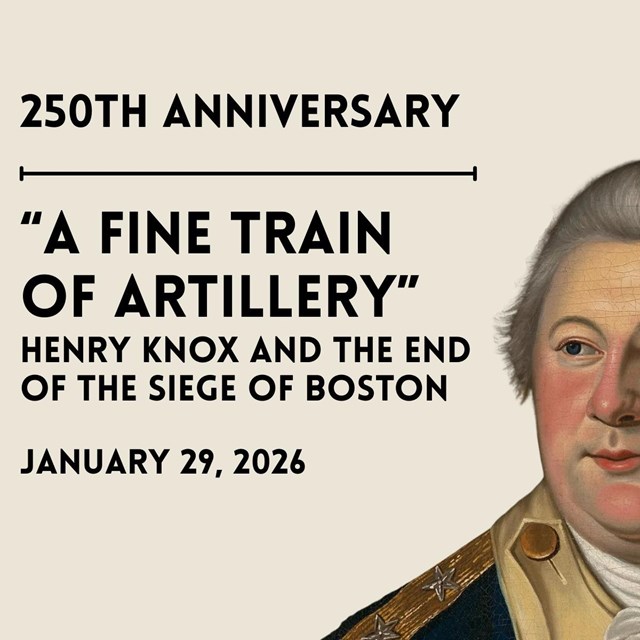
“A Fine Train of Artillery” Talk in Cambridge, 29 Jan.

On Thursday, 29 January, I’ll contribute to the discourse about Col. Henry Knox’s artillery trek with the talk on “‘A Fine Train of Artillery’: Henry Knox and the End of the Siege of Boston” at the Longfellow House–Washington’s Headquarters National Historic Site in Cambridge.

In the past few months I’ve already shared my take on the myths and realities of the Knox saga, and on Knox’s political profile before the war and how that might have contributed to his rise to command the artillery regiment.

For this new talk, therefore, I’m focusing on what Knox accomplished on his first military mission and how that affected the siege of Boston. Here’s our event description:
On January 18, 1776, Gen. William Heath wrote, “Col. Knox, of the artillery, came to camp. He brought from Ticonderoga a fine train of artillery.” Those 58 guns would nearly double the size of the Continental artillery force. But Gen. George Washington and his commanders still had to figure out the best way to use their new ordnance before they could drive the British military out of Boston.
Gen. Washington’s first proposal appears in his 18 February letter to John Hancock as chairman of the Continental Congress:
The late freezing Weather having formed some pretty strong Ice from Dorchester point to Boston Neck and from Roxbury to the Common, therby affording a more expanded and consequently a less dangerous Approach to the Town, I could not help thinking, notwithstanding the Militia were not all come In, and we had little or no Powder to begin our Operation by a regular Cannonade & Bombardment, that a bold & resolute Assault upon the Troops in Boston with such Men as we had (for it could not take Many Men to guard our own Lines at a time when the Enemy were attackd in all Quarters) might be crown’d with success . . .

from a thorough conviction of the necessity of attempting something against the Ministerial Troops before a Re-inforcement should arrive, and while we were favour’d with the Ice, I was not only ready, but willing and desirous of making the Assault; under a firm hope, if the Men would have stood by me, of a favourable Issue; notwithstanding the Enemy’s advantage of Ground—Artillery—&ca.
An infantry charge across the flat ice of the inner harbor against the British army’s fortified batteries on the Common and in the South End. What could go wrong?

This talk is due to start at 6 P.M. It’s free and open to the public, but because of limited seating the site asks people to register in advance. We’re working on how to record and/or livestream the talk as well.

Friday, December 26, 2025

“The Powder Alarm” in Essex, Connecticut, on 4 Jan.

I’ll start off the Sestercentennial year with a talk in the America 250 Winter Lecture Series of the historical society in Essex, Connecticut.

My topic on the afternoon of Sunday, 4 Jan 2026, will be “The Powder Alarm: The Breakdown of Royal Rule in New England, September 1774.”

Here’s our event description:
Before dawn on September 1, 1774, the royal governor of Massachusetts ordered some of the colony’s gunpowder moved into army-occupied Boston. That action put thousands of militiamen on the march. As rumors spread, they grew more dire. People in Connecticut heard that the king’s army and navy had attacked Boston. In Milford, a 13-year-old boy went to bed fearing he would “be dead or a captive before to-morrow morning.” But the real result of this event, dubbed the “Powder Alarm” by later historians, was that almost all of New England was free of royal rule—almost two years before the Declaration of Independence.
I’ve spoken about the “Powder Alarm” before, and this time I’ll emphasize Connecticut’s experience through figures like Israel Putnam, Silas Deane, and Joseph Plumb Martin.

Here’s an account of the colony’s reaction from the 8 Sept 1774 Massachusetts Spy:
By letters from Connecticut, and by several credible gentlemen arrived from thence, we are informed that there were not less than 40,000 men, in motion, and under arms, on their way to Boston, on Saturday, Sunday, and Monday last [3–5 September], having heard a false report that the troops had fired upon Boston, and killed several of the inhabitants: Twelve hundred arrived at Hartford from Farmington, and other places forty miles beyond Hartford, on Sunday last, on their way to this place, so rapidly did the news fly. But being informed by expresses that it was a false report, they returned home, declaring themselves ready at a minute’s warning to arm again, and fight for their country, and distressed brethren of Boston.
That report from printer Isaiah Thomas was no doubt exaggerated. In 1774 Connecticut’s total population was just under 200,000. More than half of those people were under the age of sixteen, and half the adults were women, so “no less than 40,000 men” would be virtually the entire adult male population.

Nonetheless, it’s clear the alarm was widespread, reflecting the urgency that people had come to feel about what was happening in Massachusetts. Several other newspaper articles about the “Powder Alarm” also included the phrase “a minute’s warning,” popularizing it just as citizens were discussing how to improve their militia system.

This talk is scheduled to run from 3:30 to 4:30 P.M. in Hamilton Hall at Essex Meadows, 30 Bokum Road in Essex, Connecticut. It’s free and open to the public. The society asks people to register through this page. Doors will open at 3 P.M., and seating will be on a first-come, first-served basis.

(The modern town of Essex appears on the map above as “Putty Pogue” on the Connecticut River.)

Wednesday, December 10, 2025

Recording of “The First Commander Remembered” Panel

The Cambridge Room at the Cambridge Public Library has shared the video recording of last week’s panel discussion on “The First Commander Remembered: Washington’s Legacy in Cambridge.”

This event was organized by a group of local historical organizations and moderated by Christopher Beagan, site manager of the Longfellow House–Washington’s Headquarters National Historic Site.

The first part of the event is my fast analysis of why George Washington was in Cambridge from different perspectives: how that town became the headquarters of the provincial and then Continental army, why the Continental Congress chose Washington to lead that army, what he thought his mission was, what he really learned during his months in Cambridge, and how historians of the nineteenth century portrayed his work.

Then Charles Sullivan, executive director of the Cambridge Historical Commission, discussed how the city has commemorated Washington, particularly the long life, death, and latter-day commemoration of the Washington Elm.

We then discussed themes of memory and answered questions from the audience. Though this event happened on a night with a somewhat gloomy weather forecast, there was a robust and curious crowd.

I think my favorite part was getting the inside story of how William Dawes’s ride through Cambridge came to be commemorated through the unique bronze horseshoes in the sidewalk at Harvard Square rather than a conventional equestrian statue.

Though I suppose an equestrian statue might have been unconventional, too, if it were really modeled after the description traced back to Dawes’s cousin Josiah Waters, Jr.: “mounted on a slow jogging horse, with saddle bags behind him, and a large flapped hat upon his head, to resemble a countryman on a journey.”

The recording of the series’s first event, “From Revolution to Remembrance: Memory of the American Revolution” with Michael Hattem, Nikki Stewart, and Beth Folsom is also available for viewing.

Saturday, December 06, 2025

“Knox’s Mission to Lake Champlain” in Saratoga, 11 Dec.

On Thursday, 11 December, I’ll be in Saratoga, New York, to share thoughts on “Myths and Realities of Col. Henry Knox’s Mission to Lake Champlain.”

Our event description:
In November 1775, Gen. George Washington gave Henry Knox a mission to travel to New York and bring back cannons for the Continental Army. Knox was a 25-year-old bookseller with no military rank. His trek back to Cambridge has become a beloved part of the American saga. This talk digs deeper into that story, examining such questions as who first had the idea to fetch cannon from Lake Champlain, how Knox had contributed to the Patriot movement, the ways weather affected the mission, and how much those cannon changed the British army’s plans.
This talk will take place in the Saratoga National Historical Park visitor center starting at 6:30 P.M. It is free, but because seating is limited, the park asks people to make reservations by email to SARA_Reservations@nps.gov. The Friends of Saratoga Battlefield supports this and other fall lectures at the park.

The Saratoga battlefield park is within the town of Stillwater, New York. Exactly two hundred and fifty years before the date of this talk, Knox wrote in his diary, he sent a man from Fort George “to Squire Palmer of Stillwater to prepare a number of Sleds & oxen to drag the Cannon presuming that we should get there.”

According to the Gilder Lehrman Institute’s abstract of Knox’s letter to Palmer, the colonel asked for forty sleds. Since he would soon refer to “eighty Yoke of oxen,” that meant he was planning to use four beasts per sled. (The institute also says that letter was dated 12 December, so it’s possible Knox was off by a day in his journal.)

George Palmer (1719–1809) was a local bigwig, more than twice Knox’s age. According to Stillwater’s website, he had “at his own expense equipped a company of militia which marched to Crown Point and Ticonderoga, arriving just after Ethan Allen had taken the fort.”

Palmer came to Fort George on 13 December and “agreed to provide the necessary number of sleds & oxen & they to be ready by the first snow.”

COMING UP: Making other plans.

Friday, November 28, 2025

“The First Commander Remembered” Panel in Cambridge, 2 Dec.

On Tuesday, 2 December, I’ll take part in a panel discussion on “The First Commander Remembered: Washington’s Legacy in Cambridge.”

This is the second in a series of Sestercentennial events on “Washington in American Memory” to be held at the Cambridge Public Library through April 2026.

The panel will include:
  • Charles Sullivan, executive director of the Cambridge Historical Commission and coauthor of Building Old Cambridge: Architecture and Development.
  • Christopher Beagan, site manager at the Longfellow House–Washington’s Headquarters National Historic Site, moderator.
  • me, drawing from a study of the commander-in-chief’s months in Cambridge in 1775–76 and any thoughts that have occurred to me since. 
We’ll talk about how Gen. Washington came to Cambridge, how authors have portrayed his time there, and how he’s been commemorated in Cambridge by, among other things, a tree, a park, a monumental gate, a hotel (shown above), and a National Park Service site. What do all those landmarks tell us about how we like to think of Washington? And could we remember and teach that period of history more accurately?

This event is scheduled from 6 to 7:30 P.M. in the Cambridge Public Library’s Lecture Hall. It will also be livestreamed and recorded for online viewing.

This program and all the series will be free and open to the public. Follow this link to register.

The main supporter of this series is Eastern National, a nonprofit partner of the National Park Service. It has been organized by the National Park Service/Longfellow House–Washington’s Headquarters National Historic Site, History Cambridge, Cambridge Public Library, Cambridge Historical Commission, and Cambridge MA250.

Thursday, November 06, 2025

“Examining Dr. Church” in Watertown, 9 Nov.

As previously announced, on Sunday, 9 November, the Historical Society of Watertown and Watertown Free Public Library will host me speaking about “Examining Dr. Church: The Trials of the Revolutionary War’s First Notorious Spy.”

Our event description:
In October 1775, Massachusetts politicians gathered in Watertown to try one of their own on the charge of supplying intelligence to the king’s army.

Dr. Benjamin Church, Jr., had been a leader of Boston’s resistance and then Surgeon-General of the Continental Army. The rebel authorities had collected the reluctant testimony of Church’s mistress and a letter written in cipher—but was that evidence strong enough to impeach the doctor as an enemy spy?
This Sestercentennial talk will start at 2 P.M. in the Watertown Savings Bank Room on the library’s first floor. It will be free and open to the public, thanks to a grant from the Watertown Community Foundation.

Here’s how this inquiry into the Continental Surgeon-General’s actions came to be held in Watertown.

On 14 June, 1775, the Continental Congress created a committee “to bring in a dra’t of Rules and regulations for the government of the army.” To chair that committee, the delegates chose George Washington, formerly colonel in charge of the Virginia regiment, just as they had put him in charge of previous committees on military topics.

However, the next day the Congress voted to make Washington commander-in-chief of that army. So the task of completing those rules shifted to other committee members—probably Silas Deane, Thomas Cushing, and Joseph Hewes. On 17 July the Pennsylvania Packet printed “the rules and articles of war agreed to by the Congress.”

Among those articles was:
Art. XXVIII. Whosoever belonging to the continental army, shall be convicted of holding correspondence with, or of giving intelligence to, the enemy, either directly or indirectly, shall suffer such punishment as by a general court-martial shall be ordered.
In late September, Gen. Washington learned that Dr. Church had broken that rule, at least the part about secretly corresponding with people inside Boston. As serious as that charge was, a Continental court-martial couldn’t order just any punishment. Its options were limited by another article:
Art. LI. That no persons shall be sentenced by a court-martial to suffer death, except in the cases expressly mentioned in the foregoing articles; nor shall any punishment be inflicted at the discretion of a court-martial, other than degrading, cashiering, drumming out of the army, whipping not exceeding thirty-nine lashes, fine not exceeding two months pay of the offender, imprisonment not exceeding one month.
The commander-in-chief called his generals together as a council of war on 4 October. According to the notes of that meeting:
after examining the Regulations of the Continental Army & particularly the Articles 28 & 51—

It was determined from the Enormity of the Crime, & the very inadequate Punishment pointed out that it should be referr’d to the General Congress for their special Direction & that in the mean Time he be closely confined, & no Person visit him but by special Direction.
The Continental commanders couldn’t ignore what Church had done. But they also couldn’t proceed against him, lest they have to let him off with punishment that would be, though degrading to a gentleman, far less than they thought a traitor deserved.

TOMORROW: Passing the buck.

Sunday, November 02, 2025

“Washington in American Memory” Series in Cambridge, Starting 10 Nov.

The Longfellow House–Washington’s Headquarters National Historic Site, working with History Cambridge, the Cambridge Historical Commission, and Cambridge MA250, has organized a series of Sestercentennial panel discussions and talks at the Cambridge Public Library on the theme of “Washington in American Memory.”

This series runs through April 2026. Here are the events scheduled for this calendar year.

Monday, 10 November, 6 to 7:30 P.M.
From Revolution to Remembrance: Memory of the American Revolution
Cambridge Public Library and online

Explore how Americans have remembered, reinterpreted, and reshaped the meaning of the American Revolution from 1776 to today, featuring:
  • Michael Hattem, author of Past and Prologue: Politics and Memory in the American Revolution and Associate Director of the Yale-New Haven Teachers Institute
  • Nikki Stewart, Executive Director of Old North Illuminated
Register here.

Tuesday, 2 December, 6 to 7:30 P.M.
The First Commander Remembered: Washington’s Legacy in Cambridge
Cambridge Public Library and online

Debunk myths and trace the evolution of the public memory of George Washington in Cambridge, Massachusetts, featuring:
  • J. L. Bell, author of The Road to Concord: How Four Stolen Cannon Ignited the Revolutionary War and proprietor of Boston 1775
  • Charles Sullivan, co-author of Building Old Cambridge: Architecture and Development and Executive Director of the Cambridge Historical Commission
Register here.

All these events will be free thanks to funding from Eastern National.

Unfortunately, some of the people who worked hard to organize this series are now not being paid and legally barred from their jobs in the National Park Service because of the federal government shutdown. Because these panel discussions will be at the city library, they will go on, unlike events scheduled at parks themselves. But it’s a hell of a way for the U.S. government to celebrate the 250th.