J. L. BELL is a Massachusetts writer who specializes in (among other things) the start of the American Revolution in and around Boston. He is particularly interested in the experiences of children in 1765-75. He has published scholarly papers and popular articles for both children and adults. He was consultant for an episode of History Detectives, and contributed to a display at Minute Man National Historic Park.

Subscribe thru Follow.it


•••••••••••••••••


Showing posts with label Edward Bancroft. Show all posts

Friday, September 30, 2022

“Great wonderment made at the New England Coffee house”

On 8 Nov 1774, Capt. Nathaniel Byfield Lyde of the Boston Packet left Josiah Quincy, Jr., “at Falmouth in the county of Cornwall” before sailing on to London.

Quincy made his way to the imperial capital over land, seeing the Plymouth Dockyard, Exeter, Salisbury, “the famous Roman or Druid Temple at Stonehenge,” and at least three peers’ lordly seats. He arrived in the imperial capital on the morning of 17 November.

Word of Quincy’s arrival got around quickly. He wrote in his journal that day that the Boston merchant Thomas Bromfield, a relative of his wife, reported “there was great wonderment made at the New England Coffee house about what brought me to London.” One man even said, “he has been blowing up the seeds of sedition in America and had now come to do the same here.”

Quincy told Bromfield to reply “that if I had done nothing but blow up seeds they would probably be very harmless, as they would never take root, but if I should have to sow any here and they should afterwards ripen, he or the ministry might blow them about at their leisure.”

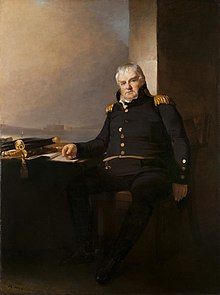
Other visitors that first day were Edward Dilly, the London bookseller who published Catharine Macaulay, and Jonathan Williams (1750–1815, shown above), who had secured an easy job as “Inspector of the Customs in the Massachusetts Bay” but sided with the American Whigs. Later Quincy went to tea at the home of Williams’s great-uncle, Benjamin Franklin.

The next day Williams Williams’s uncle, Customs Inspector-General John Williams, visited Quincy again for a long private talk. He reported:
Governor [Thomas] Hutchinson had repeatedly assured the Ministry, that a union of the Colonies was utterly impracticable: that the people were greatly divided among themselves in every colony, and that there could be no doubt, that all America would submit, and that they must, and moreover would, soon. . . . Governor Hutchinson had more than once said the same to persons in the Ministry in his presence.
Inspector Williams wanted Quincy to meet with Lord North, the prime minister, and the Earl of Dartmouth, the Secretary of State for North America. Quincy signaled that he was ready if those officials wanted to meet with him.

That day Quincy dined at Franklin’s house with Jonathan Williams and Dr. Edward Bancroft. (During the war, Bancroft would serve the first U.S. diplomats in France as a secretary and, simultaneously, the Crown as a spy.) Franklin echoed what his great-nephew had said about Hutchinson.

In the evening, Quincy went to the Covent Garden Theater, a novel experience for a man raised in Massachusetts. He wrote:
the actresses in several striking elegances of Gesture, voice and action, convinced [me] that women equal men [in] the powers of Eloquence. I am still further satisfied in my opinion, that the Stage is the nursery of vice, and disseminates the seeds of vice far and wide—with an amazing and banefull success.
Meanwhile, royal officials were discussing this visitor from Massachusetts.

TOMORROW: Through Hutchinson’s eyes.

Saturday, October 10, 2020

“The Solicitation and Expectation of such Reward”

I left William Story on his way to London in late 1771 bearing letters of reference from three major political players in Boston—from royal governor Thomas Hutchinson, speaker of the house Thomas Cushing, and house clerk Samuel Adams.

Hutchinson had recommended Story, a former deputy register of the Vice Admiralty Court, to the Secretary of State for the colonies, Lord Hillsborough, and to Sir Francis Bernard, the former governor.

On the other side of the political aisle, Cushing had written a letter to Benjamin Franklin, the house’s agent, and Adams one to Arthur Lee, the house’s alternate agent. Story and Adams had been part of Boston’s political caucus back in the early 1760s.

But then, unbeknownst to Story, Adams had sent a second letter to Lee, warning that since Story might not be trustworthy since he’d also sought a favor from Hutchinson. That could have been a big problem for Story except that Lee viewed Franklin as a rival and never told him about Adams’s warning. 

Story’s patron in Massachusetts, John Temple, was also in London. He’d been a Customs official in Boston but instead of working closely with the royal governors and the other Customs Commissioners he’d allied himself with the local merchants and Whigs, marrying James Bowdoin’s daughter. In late 1770 Temple sailed for London to bolster his position, only to lose his post as Commissioner for being absent. Sometime in 1771, however, Temple secured the position of Surveyor General of Customs in England.  

In sum, everyone was maneuvering around everyone else. In particular, Story and Temple were trying to maintain a foot in both political camps.

Still ignorant of Adams’s suspicions, Franklin happily “introduc’d Mr. Story to a Secretary of the Treasury,” as he told Cushing in a letter on 13 Jan 1772. That connection helped Story with one of his problems: being pressured to pay Massachusetts the value of a worthless note from the late bankrupt Nathaniel Wheelwright, which he had accepted to gratify Temple. 

But Story didn’t just want to escape that debt. Back in 1765, mobs had attacked his house on the same riotous night when they damaged the homes of Hutchinson and Benjamin Hallowell. The Massachusetts legislature had grudgingly recompensed all three men for part of their losses along with Andrew Oliver, attacked earlier. But Hutchinson, Oliver, and Hallowell had also received promotions within the royal bureaucracy. Story, in contrast, had lost his post in the Vice Admiralty Court, possibly for being too close to Temple. 

Now Story wanted “some Appointment in consideration of his Sufferings from the Mob,” in Franklin’s words. Franklin wasn’t optimistic about the chances: “I doubt whether it may be worth his while to attend here the Solicitation and Expectation of such Reward, those Attendances being often drawn out into an inconceivable Length, and the Expence of course enormous.” 

It looks like some officials in London told Story that he had a better chance of landing a royal salary through Hutchinson. So that spring he sailed home. Traveling with him was a Massachusetts-born protégé of Franklin named Edward Bancroft, who made only a short visit in Boston before heading back to London. 

(During the war, Bancroft served as Franklin’s secretary in Paris. But he was really a spy for the British. In 1777, Arthur Lee, by then another American diplomat in Paris, accused Bancroft of corresponding with the enemy. But since by this time no one trusted Lee, Franklin continued to rely on Bancroft. His spying didn’t become public until 1891.) 

After landing in Boston in June 1772, William Story went to Gov. Hutchinson and told him he wanted an appointment, preferably a lucrative one. Hutchinson declined to offer any position. According to the governor, Story then “let me know that he hoped he should not be obliged to make publick the substance…of some writings of mine he had seen in London.” 

As I said, everyone was maneuvering around everyone else.

Saturday, December 29, 2012

The Value of Spying in America

Michael J. Sulick was the chief of counterintelligence at the Central Intelligence Agency from 2002 to 2004 and director of its National Clandestine Service from 2007 to 2010. He wrote Spying in America: Espionage from the Revolutionary War to the Dawn of the Cold War to create “one compact volume” that includes case studies from several periods of American history, something he felt was missing from the market or the classroom.

Spying in America doesn’t try to be comprehensive or to break new ground in discussing espionage in America. And it doesn’t. It leans heavily on secondary sources, most of them more than a generation old, such as the books by John and Katherine Bakeless. Other sources cited in the chapters about the Revolution include an article in the Colonial Williamsburg Journal, Thomas B. Allen’s George Washington, Spymaster for young readers, and the websites of the C.I.A. and Federal Bureau of Investigation.

In fact, Spying in America relies so much on secondary sources that chapter epigraphs from George Washington, Benjamin Franklin, and other well-documented historical figures aren’t credited to the original letters but to other books that have previously quoted those letters.

The Revolutionary War section starts with a short introductory chapter. Unfortunately, it contains basic errors. Page 16, for example, mischaracterizes the American Whigs’ preferred political solution to the conflict (not representation in Parliament but more autonomy for their colonial legislatures) and misapplies the John Adams quotation about a third of Americans opposing the Revolution (citing Howard Zinn). The next page misstates the reasons behind the British march to Concord in April 1775 and says Paul Revere’s fellow observers “were dubbed the Mechanics,” as if that were a formal name rather than the generic term for their class in society.

Three long-studied case studies follow, again with unfortunate errors. In retelling the treachery of Dr. Benjamin Church, Jr., the book displays Revere’s engraving of the doctor’s namesake ancestor as if it were a portrait of the traitor himself. This chapter also states that Church was at the Boston Tea Party, but an anonymous Crown source—i.e., just the sort of informer a book about espionage might highlight—placed him inside the Old South Meeting-House instead. (I can’t knock Sulick for not including my findings about Church’s mistress, published just this year in the big Washington study.)

The study of spying in the American delegation to Paris highlights the role of secretary Edward Bancroft, but then indulges in the wish-fulfilling suggestion that Franklin was onto the man all along. We Americans not only forgive Franklin his known tricks but happily believe he was up to more than he probably was. This chapter mentions Julien-Alexandre Achard de Bonvouloir, a gentleman who came to America in late 1775 as an unofficial emissary from the French court; it doesn’t note that Bonvouloir was in Massachusetts early in that year or that British agents had filed reports on him during the months in between.

To retell the story of Benedict Arnold’s treachery, Sulick relies most on Willard Wallace’s 1954 biography, which repeats a lot of dubious legends about the man’s boyhood. James Kirby Martin’s 1997 biography, Dave R. Palmer’s George Washington and Benedict Arnold, and other recent books seem more reliable, and also offer more detail about Peggy Arnold’s role in the affair.

Spying in America jumps right from the Revolutionary War to the Civil War, leaving out the highest placed known foreign agent ever to serve in the U.S. government: Revolutionary War veteran Gen. James Wilkinson, for more than ten years the top American general and also a paid agent of Spain.

I sense an unstated, perhaps unrecognized, purpose in this compilation. Sulick focuses on espionage against the U.S. during major conflicts while skipping successful intelligence-gathering and aggressive covert action by Americans (except against the Confederacy). These stories are thus all about Americans discovering spies in our midst. The book’s message is clear in the title of its introduction: “The Peril of Disbelief.” Readers must never let their guard down or doubt the need for vigorous government counterintelligence.

Yet Sulick notes that the U.S. had no coordinated counterintelligence effort until 1939, though the country had grown tremendously during the preceding century and a half. I wouldn’t argue that the greater threats of the mid-20th century and today, with faster communications and weapons delivery and more complex systems, require vigilance. But since the world has changed so greatly, how much useful information can we really learn from thin versions of the tales of Church, Bancroft, and Arnold? Those stories seem to be included for their “Founders’ Chic” value: even Washington and Franklin had to deal with spies!

Georgetown University Press could have served this book better during editing. For instance, page 5 tells us that in 1939 Franklin D. Roosevelt assigned responsibility for counterespionage to the F.B.I., and then page 6 tells us the same thing.

On the other hand, the publisher provided a great exterior design by Tim Green of Faceout Studio. The image above doesn’t do it justice. The dust jacket is a translucent vellum with a triangular cutout for the all-seeing eye of the dollar bill’s Great Seal—looking out for us or starting out on us?

(Review based on copy provided by the publisher.)