


J. L. BELL is a Massachusetts writer who specializes in (among other things) the start of the American Revolution in and around Boston. He is particularly interested in the experiences of children in 1765-75. He has published scholarly papers and popular articles for both children and adults. He was consultant for an episode of History Detectives, and contributed to a display at Minute Man National Historic Park.

Subscribe thru Follow.it


•••••••••••••••••


Showing posts with label Jeremiah Wadsworth. Show all posts

Wednesday, February 23, 2022

“After the steed is stolen Shut the Stable Door”
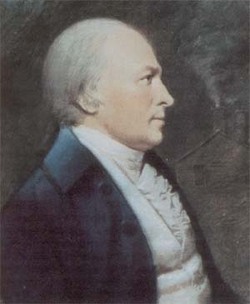
Yesterday I related, with the help of Dr. Robert A. Selig, how Samuel Talcott, Jr., sent his enslaved young man Addam off to Jeremiah Wadsworth (shown here) in Hartford.

Addam carried a letter describing how an unnamed “French general” wanted to hire or even buy him as a servant for the coming campaign. Having heard of that interest from Addam himself, Talcott asked Wadsworth to close that deal for him.

Incidentally, it turns out that was Samuel Talcott, Jr.’s second appearance on this blog. He was one of the victims of the gunpowder explosion during Hartford’s celebration of the repeal of the Stamp Act on 23 May 1766. His brother-in-law Dr. Nathaniel Ledyard was killed, and he was “very much burnt in his face and arms.”

But apparently Talcott recovered quickly enough to be back in business by the end of 1766. He appeared in Connecticut newspapers settling estates, helping to organize a new township in western Massachusetts, and otherwise acting as a respectable man of business.

We might think that experience would make Talcott more savvy than he behaved with Addam, because the next development in this story appears at the bottom of a copy of that letter he had sent off with the young man:
Dear Sr.

The foregoing is a Coppy of Mine to you sent by my negro which I find he did not deliver and hath since disappeard——

ay—after the steed is stolen Shut the Stable Door—very true Sr—but as perhaps [smudge] another old adage—Better Late than never may be applied in this Case I trouble you again

I am Dear Sr
ut Supra [as above] & I hope permanently
Saml. Talcott Junr.
Addam had taken advantage of his owner not expecting to see him back for a while to free himself.

According to Bob Selig, “There is a letter to Wadsworth a few months later asking Wadsworth to check the Black servants of the French officers for his Addam, but Wadsworth could not find him.”

Addam may have attached himself to the French troops, but on his own terms. He may have joined the Continental Army. He may have found other work.

All we know is that Samuel Talcott, Jr., ended up with neither his slave nor any of the money he hoped to see.

I found no advertisement seeking Addam’s return, though Talcott and his father did advertise at other times in the early 1780s for a missing pocketbook, a strayed mare, and of course the repayment of debts owed them.

Evidently Talcott didn’t want Addam returned that badly. Or he didn’t want to have to explain how the young man got away.

Tuesday, February 22, 2022

“I dont want the fellow but I want Money”

Earlier this month Dr. Robert A. Selig shared an interesting document on Facebook.

It may also have appeared in one of the reports Selig has written for the National Washington-Rochambeau Revolutionary Route Association, and he said he welcomed other people writing about it. So here goes.

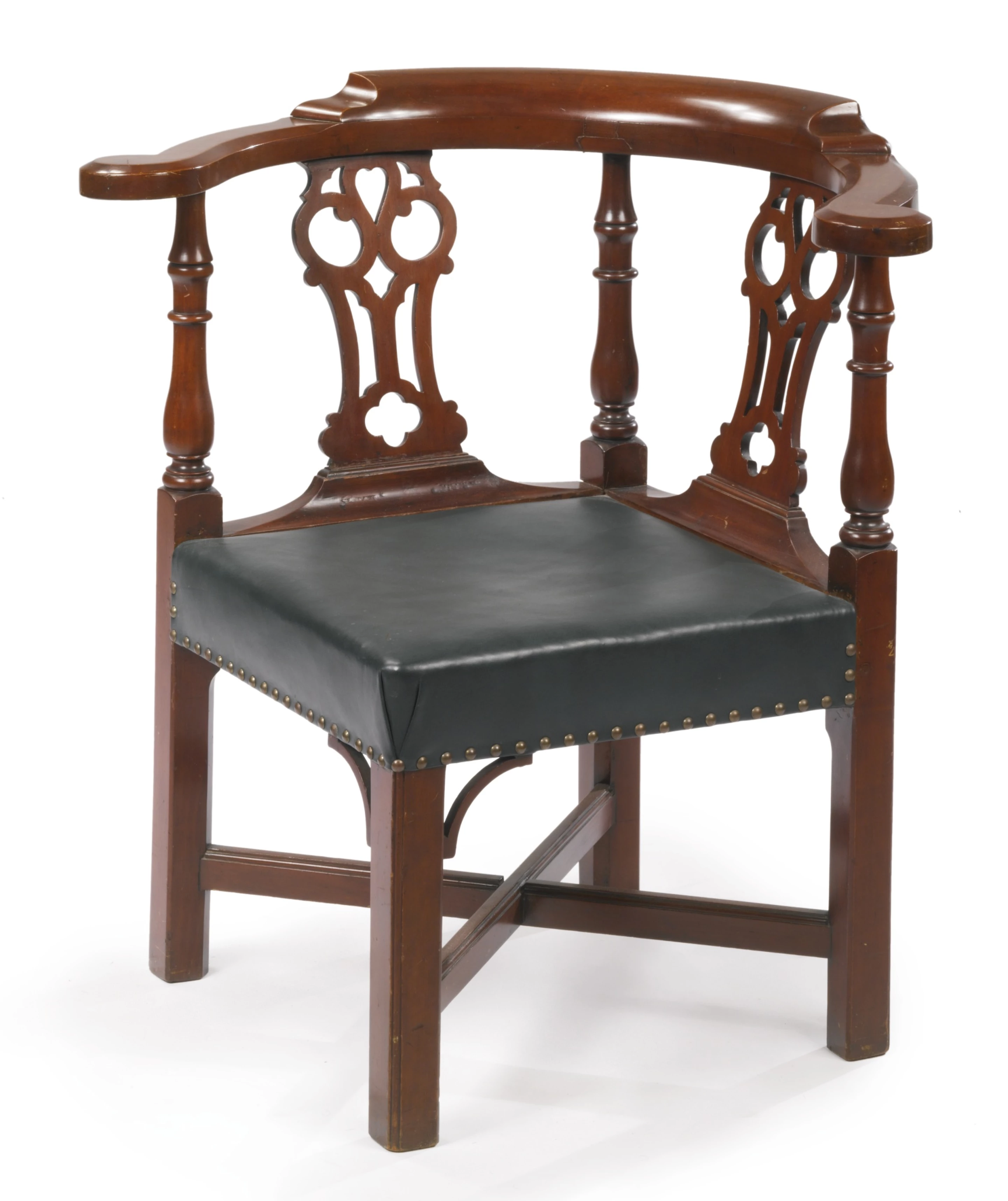
Samuel Talcott, Jr. (1740–1798), was a Hartford businessman. His paternal grandfather had been governor of Connecticut, he graduated from Yale College, and his father gave him this fine chair around the time of his marriage.

By 1781 Talcott had a growing family, an estate in West Hartford, and at least one enslaved servant. His Talcott ancestors had enslaved people as well, and there’s a record of him selling a six-year-old girl to James Wadsworth of Farmington in 1764.

In June 1781, many French troops under Gen. Rochambeau passed through Connecticut on their way from Newport to New York. Slavery was of course established in the French Empire as well. Bob Selig wrote, “Having a Black servant was somewhat of a status symbol in 18th c France and a number of French officers from Rochambeau on down either hired or purchased slaves.”

On 26 June, Talcott wrote to Jeremiah Wadsworth, who was acting as commissary for the French army in America:
Dear Sir

Notwithstanding the multiplicity of Affairs with which you Are incumbred as there is no one whose good will and Ability to Serve me in this Matter can be so well depended upon I take the Liberty to trouble you

My Negro Man Addam tells me that a French General Lodging at Mr. Caleb Bull Junr’s Wants to hire him as an attendant and will Cloath him and Give Good Wages

he says he doth not know whether the General Wants to Buy—if so he will perhaps as Likely give a Good price as Good Wages
In other words, Talcott was ready to sell Addam to this general if the price was right. Though legally the Frenchman would owe the young man’s wages to him as owner, Talcott was ready for cash now.
The Negro is about three or four and twenty strong sensible active and handy and may do very well in that department—I dont want the fellow but I want Money—he informs me that the General Goes on this Afternoon—

as I cannot Go in I desire you would take the matter up for me & act in it as you Would for yourself & it would be Done to my Entire Satisfaction, & I believe much Better than I should be able to transact it my Self

I am Dear Sr.
your Affectionate friend & Relative
Saml. Talcott Junr.
Talcott sent Addam off to Hartford with this letter for Wadsworth.

TOMORROW: A good bargain.

Saturday, January 07, 2017

John Barker Church: “the mere man of business”?

So was the marriage of Angelica Schuyler (shown here) and John Carter/John Barker Church happy? We don’t have a body of correspondence between them as we have for, say, John and Abigail Adams. But their marriage lasted until their deaths, and they certainly enjoyed good circumstances.

In 1780 Carter became partners with former Continental Army commissary general Jeremiah Wadsworth (1743-1804) of Connecticut as the main supplier for Gen. Rochambeau’s troops in North America. The French needed food and supplies for thousands of men.

Unlike the Continental Congress, whose paper money was rapidly losing value, France could pay in specie. Wadsworth and Carter got a cut of everything they supplied. They also gained excellent credit they could use for their other ventures, and money they could lend other businessmen. As a result, by the end of the war, Wadsworth and Carter were very rich.

In August 1782 James McHenry wrote to Alexander Hamilton from Baltimore:
Mr. Carter is the mere man of business, and I am informed has riches enough, with common management, to make the longest life very comfortable. Mrs. Carter is a fine woman. She charms in all companies. No one has seen her, of either sex, who has not been pleased with her, and she has pleased every one, chiefly by means of those qualities which make you the husband of her Sister.
The next July, the Carters and Wadsworth headed to France to collect their final payments. Sometime in 1783, Carter revealed his real name: John Barker Church. There’s no evidence of when he told his wife about that part of his past. By that fall, Benjamin Franklin and John Jay knew about it, though the couple still went by “Carter” for a few months longer.

Finally, the family headed to Britain, and at that point they came out permanently as the Churches. At the end of 1784, Abigail Adams wrote to a sister from London, “Mr. and Mrs. Church are here too, alias Cartar. Mrs. Church is a delicate little woman. As to him, his character is enough known in America.”

Back in Britain, Church quickly paid off the debts that he had left behind in 1774 and reestablished himself in business. He bought a house on Sackville Street in London. He bought a country house near Windsor. The couple entertained widely, not just among the American community—one of John Barker Church’s gambling friends was the Prince of Wales.

We might think that a rather boring, aristocratic life compared to the drama of nation-building that brother-in-law Hamilton threw himself into in America, but John Barker Church was also interested in politics. He was part of the radical Whig faction, causing George III to call his principles “avowedly enemical.” In 1787 he ran for Parliament and lost. The following year, Church took another approach: he bought a rural estate which came with a parliamentary seat, and put himself up for that seat in 1790.

By then the French Revolution was roiling Europe, and Church was decidedly on the side of reform. He opposed Britain’s war measures and hosted French exiles at the height of the Terror. In addition, he:
  • financed Charles James Fox, leader of the Whig left, with big loans he was never able to collect on.
  • bankrolled an attempt to break Lafayette out of a Prussian prison on 1792. (One of these days I’ll tell that story.)
  • helped Talleyrand sail to America in 1794 after Britain suddenly expelled him.
After six years in Parliament, Church gave up his seat, sold his estate, and headed back to the U.S. of A.

In 1797 Robert Morris went bankrupt. Church was one of his creditors, and to settle the debts he took over a great many of Morris’s western land claims. A few years later, the Churches’ oldest son Philip went to a tract in western New York and founded the town of Angelica, named after his mother. John Barker Church himself commissioned a mansion in Belmont called Belvidere.

Meanwhile, Church kept busy in the New York business world. He underwrote loans and was a director of the Manhattan Company and the Bank of North America. The Churches had eight children between 1778 and 1800, most of them living a long time. And still their life was full of drama. John Barker Church fought a duel with Aaron Burr five years before Hamilton did. In fact, Church was the family expert on affairs of honor, supplying the pair of pistols that his nephew Philip Hamilton and his brother-in-law used in their fatal confrontations.

Angelica Church died in 1814. John Barker Church returned to his native Britain and died four years later. He wasn’t a brilliant writer or political theorist, but he certainly wasn’t boring.

TOMORROW: A last word, and comma, from Hamilton.