


J. L. BELL is a Massachusetts writer who specializes in (among other things) the start of the American Revolution in and around Boston. He is particularly interested in the experiences of children in 1765-75. He has published scholarly papers and popular articles for both children and adults. He was consultant for an episode of History Detectives, and contributed to a display at Minute Man National Historic Park.

Subscribe thru Follow.it


•••••••••••••••••


Showing posts with label William Dummer. Show all posts

Friday, June 10, 2022

A Boston Boy Rebuilding the British Empire
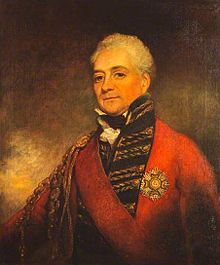
Yesterday’s précis of the life of Charlotte Biggs promised a connection to pre-Revolutionary Boston.

You remember that young man whom Charlotte fell in love with as a teenager before her marriage? The one who went off to India to make his fortune?

His name was David Ochterlony, and he came from Boston.

Ochterlony (shown here) was born on 12 Feb 1758, eldest son of a Scottish merchant captain with the same name. His mother was Katherine Tyler, a niece of the first Sir William Pepperrell. The family house from 1762 was a brick mansion on Back Street.

In 1766 David entered John Lovell’s South Latin School. The year before, however, his father had died on a voyage to the Caribbean. The estate was in debt, not paid off until well after the war.

What happened next to young David and his siblings isn’t easy to sort out. There’s evidence he spent some time studying under Samuel Moody at the Byfield school endowed by Lt. Gov. William Dummer, now the Governor’s Academy.

Katherine Ochterlony moved to Britain and in the early 1770s married Sir Isaac Heard, a Royal Navy veteran, merchant, and, of all things, heraldric official.

The Ochterlony children joined their mother in Britain, and Heard welcomed them into his family. It’s said that David developed a close relationship with his stepfather.

When the American War began, David Ochterlony showed his loyalty to the British Empire by joining the army, or pledging to. During this time in London, the teenager evidently met Charlotte Williams, and she fell in love with him.

Ochterlony shipped out to India as an army cadet. In 1778 he gained the rank of ensign, and in three years became quartermaster for the 71st Regiment. During the Second Anglo-Mysore War, connected with Britain and France’s fight on the other side of the world, Ochterlony was captured and spent two years as a prisoner. Then he returned to army staff positions.

The loss of the most populous North American colonies turned British attention to India, and Ochterlony’s career rose with the empire there. In 1812 he became a major general, and in 1816 a baronet and a Knight Grand Cross of the Order of the Bath. (Those are the sorts of honors his stepfather loved studying.) In the first quarter of the nineteenth century Ochterlony was among the British Empire’s most powerful administrators on the subcontinent.

Gen. Sir David Ochterlony was known for adopting the local aristocratic lifestyle rather than maintaining British, or Boston, ways. He had thirteen concubines or wives, who reportedly paraded around Delhi on elephants. A son by one of those women became the heir to his baronetcy after the general died in India in 1825.

Meanwhile, back in Europe, the teen-aged girl who had become Charlotte Biggs, author and intelligence source, was still carrying a torch for the aspiring officer she had met in the 1770s. When she wrote an autobiography late in life, she addressed it to Ochterlony, evidently still hoping to see him again. (That manuscript became the basis of Joanne Major and Sarah Murden’s biography, A Georgian Heroine.)

Thursday, January 03, 2019

Settling James Jackson’s Estate

The last installment of The Saga of the Brazen Head ended on 12 Sept 1735 with James Jackson drowning on a trip home from Maine. He left his wife Mary with two sons under the age of five.

James left no will, so on 25 September a probate judge appointed three people to administer the estate: William Speakman, baker; John Deacon, blacksmith; and Mary Jackson, widow. Speakman and Deacon’s names don’t appear in the probate file again.

Mary Jackson in turn appears to have hired Leonard Jarvis, whose gravestone at Copp’s Hill illustrates this posting, to inventory the estate and settle some debts.

In January 1736, Jackson submitted a six-page inventory of her husband’s property. He owned no real estate. The hardware in the store started with “36 Pair of Large Brass Candlesticks” and totaled £1,469.11.8, plus about £100 of founder’s tools and raw metals. The household goods included a mahogany card table, an “old fashioned” looking glass, and 39 pieces of pewter tableware. All told, Jackson valued her late husband’s property at a little over £1,700.

That wasn’t the end of the probate process by a long shot, however.

In August 1737 the probate judge questioned five men about the Jackson estate, asking if they knew of any property not included in the inventory. From three of those men came news of:

  • “old Iron & old brass carried into the Cellar to the value of one hundred weight”
  • “some brass Patterns which were never shown to the Apprizers by William Who is run away”
  • “old Cocks that came to be mended & a pair of old Hinges”

In November 1737 the court summoned Richard Fry, then back in Boston and feuding with Samuel Waldo. Fry owed money to the Jackson estate, with the security being a parcel of paper—“but it being So Bad that its for ye most part unvendible.” For papermaking fans, this parcel consisted of reams of “Large bag paper,” “Small Capp,” “Best Sorted Whited Brown,” “Whited Brown,” and a “Bundle.” Mary Jackson had sold most of the bag paper and best whited brown. The probate court empowered a committee to examine and value the rest.

The court had already commissioned those same men to sort out the debit side of the estate. On 24 July 1738, the Boston Gazette ran this notice:
The Commissioners to Examine the Creditors Claims to the Estate of Mr. James Jackson, late of Boston Founder, deceased, will meet once a Month at the usual time and place for Four Months longer, to Receive said Claims, of which the Creditors are to take notice.
The commissioners filed their report in October 1738. They found that the James Jackson estate owed eighty-four creditors a total of £2,696.5.10. The biggest creditor, with over £1,650 due, was the wealthy merchant Charles Apthorp. The second largest, owed only £228, was James Bowdoin.

In yet another document for the probate court, Mary Jackson reported the total amount due to her husband as £1,787.6.9, and that she had collected £221 and a penny since his death. In that filing Jackson also included a list of expenses since her husband’s death, including payments to the commissioners and others who helped settle the estate, wages for a nurse, “weeds” for mourning, and necessary household expenses. That was enough for the judge to declare the estate settled in 1739.

Mary Jackson’s expense list reveals some details of her husband’s brazier business. She paid rent to William Dummer for the shop, separate from other rent, probably for where the family lived. She reported “the Expence of maintaining 7 persons during the Shops being shut up wch. was 4 Weeks.” I’m guessing those seven people included the five men interrogated about things removed from Jackson’s estate, plus the elusive William.

The four weeks’ closure sheds new light on this advertisement that had appeared in the Boston Gazette on 27 Oct 1735:
MARY JACKSON, the Widow of the late James Jackson Founder, at the Brazen Head in Cornhill Boston, sells all sorts of Founders Ware, and all sorts of bright Braziers Ware, and likewise Casteth all sorts of Mill Brasses.
Having kept the Sign of the Brazen Head closed for a month, all the while paying the skilled staff to stay on, Mary Jackson had opened for business again.

TOMORROW: Mary Jackson, businesswoman.