J. L. BELL is a Massachusetts writer who specializes in (among other things) the start of the American Revolution in and around Boston. He is particularly interested in the experiences of children in 1765-75. He has published scholarly papers and popular articles for both children and adults. He was consultant for an episode of History Detectives, and contributed to a display at Minute Man National Historic Park.

Subscribe thru Follow.it


•••••••••••••••••


Showing posts with label Benjamin Edes. Show all posts

Thursday, December 18, 2025

“Promised on receiving a bribe, to let a person bring out £240”

Along with the other reports on life inside besieged Boston that I discussed yesterday, on 17 Dec 1775 Capt. Richard Dodge reported this dastardly deed:
Morson Scotch menster took Bribe of A Sertain Genttelmen of 36/ Starling to Gett Out of Boston and 72/ to Let him Bring Out A trunk of £240 Pound in Cash Wich when he Had it in his Power sezd the Holl and Carreed it to Boston A Gain.
In more familiar spelling, the Rev. John Morrison, a Presbyterian minister from Peterborough, New Hampshire, who had come to the siege lines as a chaplain and then defected to the British, charged a man more than £5 to slip out of Boston with cash, but then confiscated the cash.

That story soon got to printer Benjamin Edes, as reported in his next issue of the Boston Gazette on 25 December:
That one Morrison, who officiates as a Presbyterian minister, being appointed searcher of those people who were permitted to leave the town, promised on receiving a bribe, to let a person bring out £240 sterling in cash and plate: but afterwards basely deprived him of the whole of it:—
That article was reprinted in the Pennsylvania Packet on 1 Jan 1776, and here on Boston 1775 in 2008.

One of Capt. Dodge’s informants, a ship captain named Nowell, then went home to Newburyport and told the same story for the 22 December Essex Journal:
That one Morrison a Scotch minister, was appointed to search the inhabitants upon their leaving the town, who received a bribe of two Johanneses to let a small trunk pass unmolested, yet notwithstanding his engagements, he opened the trunk and took out 2400 pounds in cash and a quantity of plate, which was all the trunk contained; what we suppose induced him to this, was, because the informer is intitled to one half of the plunder.
But this time, the numbers got bigger.

(Shown above: Two Portoguese Johannes coins from the mid-1700s, courtesy of BrianRxm.)

Wednesday, December 03, 2025

“The said Short is a midling sized man”

During the siege of Boston, Benjamin Edes published the Boston Gazette out of Watertown. His main competition was the New-England Chronicle that Samuel Hall printed in Cambridge.

Geography put Edes’s print office closer to the Continental camp in Roxbury. On 13 Nov 1775, and for the next two weeks after, the Boston Gazette carried this advertisement:
DESETED [sic] from Capt. Earl Clap’s company in Col. Theophilus Cotton’s regiment, on the 12th of June last, and taken up on the 9th of this inst. [i.e., this month] at Cambridge, John Short, and in conveying him to Roxbury he ran-away again.

The said Short is a midling sized man, goes a little stooping, fresh looking, lately had the small pox, with a scarr on the right side of his face, and dark complection: Had on when he was last taken a blue coat, wash leather breeches, a surtout of a greyish colour, small brim’d hat with a white ribbon round the crown, and boots on.——

Whoever will take up said run-away, and secure or return him to the regiment he deserted from, shall receive four Dollars reward and all necessary charges paid by me.

Roxbury, Nov. 10, 1775. EARL CLAP.
“Wash leather” meant a form of chamois.

Short was evidently caught in late November or early December since the ad stopped appearing and he was court-martialed on 4 December, as recounted yesterday.

In addition to running away twice, as the ad described, Short’s trial record says he’d gotten Capt. Clapp to pay 36 shillings “for a former theft.” No wonder the army was ready to throw the book at him.

Part of Short’s sentence was to repay Clapp that sum plus £1.16s. for the “expense of advertising and apprehending him.” Most of that was probably the $4 reward, then pegged at £1.

TOMORROW: Witnessing the punishment.

Sunday, June 22, 2025

A Closer Look at the Landscape of Bunker’s Hill

Back in 2017, I shared a map of the Battle of Bunker Hill that Gen. Henry Clinton had drawn himself on the back of some sheet music (permalink).

I wrote:
One eye-catching detail is that Clinton sketched a small fortification on top of Bunker’s Hill . . . There are even lines indicating that one of the warships in the Charles River fired at that site. . . .

evidently on 17 June, Clinton perceived the provincials as having fortified themselves there
This spring Boston 1775 reader Adam Derenne sent an email shedding some light on that mystery:
I believe that Clinton misinterpreted the site — it wasn’t a partial fortification but a gravel pit operated by Charlestown resident Peter Edes.
As Mr. Derenne pointed out, Edes’s gravel pit is mentioned in Charlestown’s 1767 land survey:
Then we measurd a Gravel Pitt Enclos’d & Improv’d by Mr. Peter Edes with his land lying Bounded on the way leading over Bunker’s Hill just opposite to Temple’s Barn. We began about 8 Feet below the easterly part of his Mr. Edes’s Stone Wall, said Wall being on the Way from Temples leading over Bunker’s Hill…
This owner was probably the Peter Edes (1705–1787) whose son Benjamin became a printer of the Boston Gazette (and had a son named Peter).

Mr. Derenne also noted that the City of Boston’s G.I.S. website shows what properties Peter Edes owned in 1775, covering the odd spot in Clinton’s map. Thomas Hyde Page’s map of the battle, published in 1793, showed a blob where Clinton drew that second fortification, presumably the gravel pit.

I then went looking for a mention of this pit in accounts of the battle. Did provincials use it to shelter themselves from the Royal Navy shelling that side of Charlestown? Did British engineers incorporate it into their fortifications on Bunker’s Hill, either the quick barriers made on the evening of 19 April or the sturdy fort built over time after 17 June? But I couldn’t find any account mentioning the gravel pit. So there’s still a mystery to solve.

Saturday, May 03, 2025

“Eads escaped out of town last night”

I got interested this week in how printers exited Boston around the start of the war because of a question from a Boston 1775 reader about Benjamin Edes.

The standard understanding of Edes’s departure goes back to the 1901 biography of his son, Peter Edes, Pioneer Printer in Maine. Samuel Lane Boardman wrote:
In the spring of 1775, the town of Boston being in possession of the British troops, Mr. Edes contrived to evade the vigilance of their guards and went to Watertown with an old press and one or two imperfect fonts of type. The escape was made by night in a boat up the Charles river.
We know Edes reestablished the Boston Gazette in Watertown on 5 June 1775, and the shortest distance between Boston and Watertown is indeed up the Charles River.

But Edes’s journey was more complicated than that. Let’s start with a letter from Peter Edes that Boardman reprinted later in his biography, the same letter that I quoted a couple of days ago in regard to the Tea Party.

Writing to a grandson in 1836, Peter Edes said his father:
made his escape by disguising himself as a fisherman, and getting on board a fishing boat; and when they were a few miles from town he was landed on one of the islands, from which he made his escape to the main land.
To escape from Boston on a fishing vessel and to land on an island meant heading out into the harbor or beyond, not up the Charles River.

That detail matches a couple of contemporary reports from south of Boston, both sent to John Adams.

First, on 7 May Abigail Adams told her husband:
Poor Eads escaped out of town last night with one Ayers in a small boat, and was fired upon, but got safe and came up to Braintree to day. His name it seems was upon the black list.
On the same day James Warren wrote to his friend:
By the way I have Just heard that Edes has stole out. I wish his partner was with him. I called on Mrs. Adams as I came along. Found her and Family well.
Thus, Benjamin Edes left Boston in disguise on the night of 6 May. He may have brought out printing equipment, though these early sources don’t say that. I’d love to identify “Ayers,” but I’m not even certain of that spelling.

Edes must have landed somewhere off the south shore, given how Patriots in Braintree heard about his arrival within a day. Did Warren tell Adams, or did Adams tell Warren?

Then Edes made his way back toward the siege lines, settling in Watertown to be close to the Massachusetts Provincial Congress, its news, and its printing jobs.

Edes’s partner, John Gill, didn’t get out of Boston. Instead, in the wake of the Battle of Bunker Hill he and the teen-aged Peter Edes were arrested and held in the Boston jail for several weeks.

COMING UP: Under one roof.

Wednesday, April 30, 2025

Aritfacts Lost, Strayed, or Stolen

The Journal of the American Revolution regularly asks its contributors to share a short answer to an intriguing question—a favorite event or person, a what-if possibility, a little-known example.

Usually I get intrigued, think about possible answers, often type up something to edit down to the requisite length. And then other things land on top of the task pile and I end up never sending in an answer.

But I was able to muster a reply to the latest challenge for contributors: “an artifact from the 1765–1805 era known to have existed well into the nineteenth century, that has since been stolen or gone missing.”

The various answers include one painting and three medals stolen in the second half of the twentieth century, several items of clothing that have probably been tossed out or disintegrated, and an entire financial archive.

Plus, Elias Boudinot’s handwritten memoir (which was, thankfully, transcribed and published before disappearing from archive shelves), two cannon captured at Saratoga and recaptured one war later, and possibly an entire Hessian colonel.

Another example occurs to me now, but I’m not sure it meets the criterion of having “existed well into the nineteenth century.”

On 16 Feb 1836, the printer Peter Edes, son of Benjamin Edes of the Boston Gazette and the Loyall Nine, wrote to his grandson:
It is a little surprising that the names of the tea-party were never made public: my father, I believe, was the only person who had a list of them, and he always kept it locked up in his desk while living. After his death Benj. Austin called upon my mother, and told her there was in his possession when living some very important papers belonging to the Whig party, which he wished not to be publicly known, and asked her to let him have the keys of the desk to examine it, which she delivered to him; he then examined it, and took out several papers, among which it was supposed he took away the list of the names of the tea-party, and they have not been known since.
Benjamin Edes died in 1803, his widow Martha in 1809, and this encounter would have happened between those dates, probably earlier. There were two politically active Benjamin Austins in Boston, father and son; the first died in 1806, the second in 1820.

Did Benjamin Edes really keep such a list, and why? Did Benjamin Austin do away with that document? If so, did he act because of the names that were on it or the names that weren’t on it?

Tuesday, April 08, 2025

How Did the Sons of Liberty Bowl Gain Its Name?

Yesterday I quoted from a report of an 1873 special meeting of the Massachusetts Historical Society where a member displayed the silver bowl that Nathaniel Barber had commissioned from Paul Revere one hundred and five years before.

That year the bowl came back to Boston after decades of being owned by a man in New York.

That same page in the M.H.S. Proceedings went on to say:

The name “Sons of Liberty” is said to have been adopted here from its having been used in a speech in Parliament by our friend Colonel [Isaac] Barré. The fellowship under the name here was formed after the passage of the Stamp Act, and was first called in a Boston paper “The Union Club.” It was composed mostly of mechanics, and held secret meetings, at which the risings and other measures were planned. The principal committee met in the counting-room of Chase & Speakman’s distillery, in Hanover Square.
That report didn’t link the “Fifteen Associates” named on the bowl to the “Union Club” or “Sons of Liberty,” except in the general way that they were all on the same side of the pre-Revolutionary political divide.

Three years later, the Catalogue of the Loan Collection of Revolutionary Relics: Exhibited at the Old South Church described the same bowl this way:
Silver Bowl. For some years previous to the Revolution a number of gentlemen known as the ”Sons of Liberty” used to meet and discuss the questions of the day. In 1768, the Colonial Assembly of Massachusetts Bay voted to raise a Committee of Correspondence with her Sister Colonies on their grievances. The British Ministry demanded the repeal of this act. The Assembly voted “not to rescind,” and in commemoration of this vote the Sons of Liberty had this massive Punch Bowl made.
That description thus presented the fifteen men listed on the bowl as “the ‘Sons of Liberty.’” Not just Sons of Liberty, but the Sons of Liberty.

In 1881 The Memorial History of Boston included Edward G. Porter’s chapter on “The Beginning of the Revolution.” That weighty history mashed together the “party of Boston mechanics” who organized the first anti-Stamp Act protest in 1765 (as named by the Rev. William Gordon) with “the Sons of Liberty” who used the silver punch bowl in 1768. In fact, they were two separate groups; not one name appears on both lists.

Other authors followed suit, soon calling it “the Sons of Liberty bowl.” And after the bowl came on the market in 1949, as described by Museum of Fine Arts curator Ethan Lasser, Arts Digest referred to it as “Paul Revere’s celebrated Sons of Liberty Punch Bowl, thought by some to rank third among American historical treasures, after the Declaration of Independence and the Constitution.” [The phrase “by some” is doing a lot of work there.]

The current webpage for the artifact is titled “Sons of Liberty Bowl” and refers to “the Liberty Bowl.” The bowl does indeed have the words “Liberty” and “Librties,” and a picture of a Liberty Cap, inscribed on it. But the phrase “Sons of Liberty” was attached over a century later.

I agree that the fifteen men named on the bowl were Sons of Liberty as Boston used that term in the late 1760s. Nathaniel Barber and Daniel Malcom were particularly active in resisting royal officials. But they weren’t the only, the first, or the leading Sons of Liberty in town.

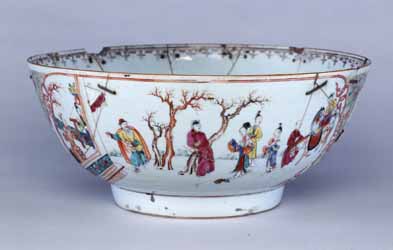
And this isn’t the only surviving punch bowl associated with Sons of Liberty in Boston, either. The Massachusetts Historical Society has a porcelain bowl owned by Benjamin Edes, one of the group Gordon credited for those anti-Stamp Act protests.

Sunday, April 06, 2025

From “Loyall Nine” to “Sons of Liberty”

We have a reasonably good idea of who eight of Boston’s “Loyall Nine” were:
In addition, the ship masters Henry Wells and Joseph Field were also lumped in with this group by different contemporaries.

Within months after they started organizing anti–Stamp Act protests, the group appears to have adopted another name. Back during Parliament’s debate over that law, opponent Isaac Barré called American colonists “Sons of Liberty,” as reported to this side of the Atlantic by Jared Ingersoll. By the fall the “Loyall Nine” started using that phrase.

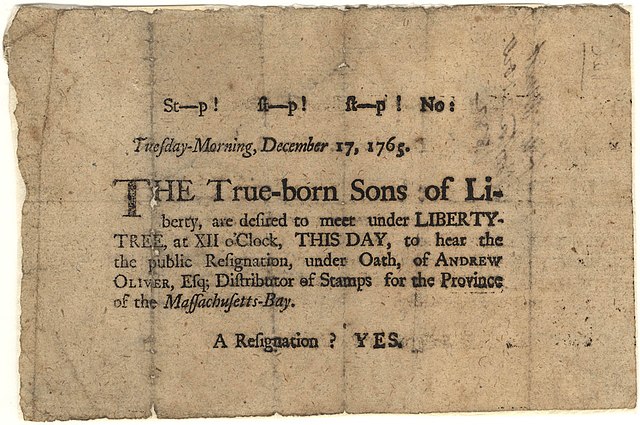
The handbills that Bass described the group printing in his December 1765 letter said: ”The True-born Sons of Liberty, are desired to meet under LIBERTY-TREE, at XII o’Clock, THIS DAY…” Evidently any man could merit that label by coming out to resist the new tax from London. In early 1766 the phrase also started to appear in newspapers in other ports.

But the group also used that term for themselves. In January 1766 John Adams called them “the Sons of Liberty.” On 15 February, Crafts wrote to Adams that “the Sons of Liberty Desired your Company at Boston Next Wensday.” Those are clearly references to a specific group, not to everyone taking a certain political stand.

It looks like the more general use won out. By August 1769, “An Alphabetical List of the Sons of Liberty who din’d at Liberty Tree [Tavern], Dorchester” included 300 names. Clearly those Sons of Liberty weren’t just the “Loyall Nine”—though all eight men listed above were there.

Nonetheless, because of some unsubstantiated claims and portrayals in popular culture, the belief persists that the Sons of Liberty was an identifiable group of activists, not a mass movement, as I’ve written before. Because of that squishiness, I tend not to use the term. But of course it’s strongly associated with the Revolution.

TOMORROW: Back to the bowl.

Saturday, April 05, 2025

Counting the “Loyall Nine”

In a 19 Dec 1765 letter divulging details about Boston’s latest Stamp Act protest, and earlier ones, Henry Bass wrote of the organizers as “the Loyall Nine.” He added:
And upon the Occasion we that Evg. had a very Genteel Supper provided to which we invited your very good friends Mr. S[amuel] A[dams] and E[des] & G[ill] and three or four others and spent the Evening in a very agreable manner Drinkg Healths etc.
On 15 Jan 1766 John Adams wrote in his diary:
Spent the Evening with the Sons of Liberty, at their own Apartment in Hanover Square, near the Tree of Liberty. It is a Compting Room in Chase & Speakmans Distillery. A very small Room it is.

John Avery Distiller or Merchant, of a liberal Education, John Smith the Brazier, Thomas Crafts the Painter, Edes the Printer, Stephen Cleverly the Brazier, [Thomas] Chase the Distiller, Joseph Field Master of a Vessell, Henry Bass, George Trott Jeweller, were present.

I was invited by Crafts and Trott, to go and spend an Evening with them and some others, Avery was mentioned to me as one.
Finally, in 1788 the Rev. William Gordon wrote in his history of the Revolution about the first anti-Stamp protest, back in August 1765:
Messrs. John Avery, jun. Thomas Crafts, John Smith, Henry Welles, Thomas Chace, Stephen Cleverly, Henry Bass, and Benjamin Edes…provide and hang out early in the morning of August the fourteenth, upon the limb of a large old elm, toward the entrance of Boston, over the most public street, two effigies,…
Those sources, which were published in reverse chronological order, all seem to refer to the same group of men. The lists of names overlap—but not exactly.

Bass said there were nine men, and seemed to treat Samuel Adams, Edes, and Gill all as guests. Gordon named eight men, including Edes among them. John Adams also listed Edes in the group, and he treated George Trott, not on Gordon’s list, as in the group.

John Adams didn’t list Henry Wells from Gordon’s list (though Tea Leaves and some subsequent books misquote him as doing so). Instead, Adams named Joseph Field, saying he was a ship captain. According to mentions in the Boston press before he died in 1768, Henry Wells was also a ship captain. Would either of them have been in town long enough to help plan protests? 

It’s therefore difficult to say exactly who the “Loyall Nine” were, but there was definitely a political club supping at the Chase distillery near Liberty Tree and organizing the protests under that tree.

TOMORROW: A change of names?

Tuesday, October 17, 2023

Hanson on Copp’s Hill Burying Ground, 22 Oct.

On Sunday, 22 October, Old North Illuminated will host two events featuring John G. S. Hanson speaking about the nearby Copp’s Hill Burying Ground.

A tour of that cemetery with Hanson is already sold out, but it’s still possible to take in his talk “The Stones Cry Out” in the church or online.

The event description says:
Many people visit Boston’s historic burying grounds to see the monuments of historical figures like Samuel Adams, Paul Revere, John Hancock, Crispus Attucks, Samuel Sewall, Prince Hall, and Cotton Mather. But few pause to read the inscriptions on the stones of other early “every day” Bostonians, whose names and lives are now long forgotten.

For those who take the time to look and “listen” closely, these gravestones convey highly personal messages that not only reveal a glimpse into their personal lives, but also the literature that they read, the hymns they sang, and the poetry that moved them. These stones also can tell us a great deal about colonial Bostonians’ attitudes toward life, death, and eternity.

Join burial ground expert John Hanson for “The Stones Cry Out” and explore the history and poignancy of the Copp’s Hill Burial Ground epitaphs, followed by a reception and multimedia presentation at the Old North Church, as we illuminate history through the artistic disciplines of poetry, verse, and music.
Most of the names in that description are buried at the Granary Burying Ground, but Copp’s Hill is the resting-place of Mather and Hall, as well as firebrand merchant captain Daniel Malcom, both men named Robert Newman, Benjamin Edes, and Shem Drowne.

John G. S. Hanson is the author of Reading the Gravestones of Old New England (McFarland, 2021), based on years of research into grave markers and the sources for their texts.

The lecture is scheduled to take place from 5:15 to 6:30 P.M. People can register for in-person or online attendance through this webpage, and Old North Illuminated asks those attendees to donate what they can.

Monday, September 04, 2023

“Strength, Spirit and Abilities so exhausted”

In the immediate aftermath of the Continental Congress’s vote for independence in early July 1776, almost all the Massachusetts delegation got sick.

As I wrote last month, on 15 July 1776 John Adams saw Elbridge Gerry off on a trip back to Massachusetts. Gerry was “worn out of of Health, by the Fatigues of this station,” Adams told his wife, Abigail.

To James Warren he wrote that Gerry “is obliged to take a Ride for his Health, as I shall be very soon or have none. God grant he may recover it for he is a Man of immense Worth.”

Eleven days later, Adams wrote to Warren more ominously:
My Health has lasted much longer, than I expected but at last it fails. The Increasing Heat of the Weather added to incessant application to Business, without any Intermissions of Exercise, has relaxed me, to such a degree that a few Weeks more would totally incapacitate me for any Thing. I must therefore return home.
And the next day:
I assure you the Necessity of your sending along fresh delegates, here, is not chimerical. [Robert Treat] Paine has been very ill for this whole Week and remains, in a bad Way. He has not been able to attend Congress, for several days, and if I was to judge by his Eye, his Skin, and his Cough, I should conclude he never would be fit to do duty there again, without a long Intermission, and a Course of Air, Exercise, Diet, and Medicine. In this I may be mistaken.

The Secretary [i.e., Massachusetts General Court clerk Samuel Adams], between you and me, is compleatly worn out. I wish he had gone home Six months ago, and rested himself. Then, he might have done it, without any Disadvantage. But in plain English he has been so long here, and his Strength, Spirit and Abilities so exhausted, that an hundred such delegates, here would not be worth a shilling.

My Case is worse. My Face is grown pale, my Eyes weak and inflamed, my Nerves tremulous, and my Mind weak as Water—fevourous Heats by Day and Sweats by Night are returned upon me, which is an infallible Symptom with me that it is Time to throw off all Care, for a Time, and take a little Rest. I have several Times with the Blessing of God, saved my Life in this Way, and am now determined to attempt it once more.

You must be very Speedy in appointing other Delegates, or you will not be represented here. Go home I will, if I leave the Massachusetts without a Member here.
I looked at Paine’s surviving correspondence from this month, and I don’t see him saying anything about being sick.

On 3 August, Gerry wrote back to both John and Samuel Adams from Massachusetts:
I have heard this Morning that Colo. Warren has received a Letter mentioning Mr. Pain’s Illness and your Intention to set off for N England in a fortnights’ Time; and that the Government would be unrepresented. I left Boston yesterday and the Letter had not then arrived, but Mr. [Benjamin] Edes mentions it as a Fact communicated to him by Colonel or rather Major General Warren and therefore I have no Doubt of it.

I should have been glad that You had tarryed untill my Return, as the Absence of so many at one Time will I fear be considered by the people as a discourageing Circumstance; but I shall at all Events Return in a Week or ten Days from hence notwithstanding It will be impossible in so short a Time to benefit much by the Journey, and to recover from a febrile State which the southern Climate has fixed upon me and within this Day or two I find increased.
On 12 August, Samuel Adams left Philadelphia. Gerry arrived back in that city by 6 September. Paine and John Adams never left.

Ironically, John Hancock, who was already becoming known for pleading ill health when he didn’t want to do something, was the one Massachusetts delegate who seems to have remained perfectly well in this period. And as chairman of the Congress, he had plenty of work to do.

Hancock did write to Thomas Cushing on 30 July: “I have Determin’d to move my Family to Boston the Beginning of September, and propose being there my self in all that month.” But that was probably because of his wife Dorothy’s health, not his own. She was pregnant with their first child.

The Massachusetts legislature didn’t send anybody new to the Continental Congress until 1777.

Sunday, January 02, 2022

“Poop for Boston towny!”

Pennsylvania had its convention to ratify the new U.S. Constitution from 21 November to 12 December 1787.

It was the first large state to approve of the new federal government. The vote was one-sided: 46 to 23.

The Anti-Federalist side didn’t simply accept that vote and shut up, however. Those politicians continued to promulgate their arguments, hoping to affect the votes in other states. The Pennsylvania Federalists doubled their efforts to talk up the new Constitution locally and elsewhere.

Pennsylvanians therefore had a surprising amount to say about the Massachusetts ratifying convention, which met 9 January to 5 February 1788.

In Philadelphia, the Continental Army veteran Eleazer Oswald (1755–1795, shown here) made the Independent Gazetteer a daily Anti-Federalist voice—one of only a dozen American newspapers to publish essays against ratification.

The 19 February issue of the Independent Gazetteer ran a pro-ratification report based on Benjamin Edes’s Boston Gazette from eight days earlier, giving it the ironic headline “The Grand Federal Edifice.”:
WITH the highest satisfaction we announce to the public, that the Convention of this commonwealth, on Wednesday at five o’clock, P. M. assented to, and on Thursday ratified the Constitution proposed by the last Federal Convention.

On this pleasing event, we beg leave to congratulate the public, and to express our sincere wishes, that the general joy which it has diffused through all ranks of citizens, may be an auspicious omen of the superior advantages which shall result from the establishment of such a Federal Government, as this Constitution provides.
Oswald added, “The motion for ratifying was declared in the affirmative, by a majority of nineteen.” The vote in Massachusetts was 187-168, a much closer outcome than in Pennsylvania. Massachusetts’s convention also started a trend of calling for specific amendments, putting implied conditions on its vote.

The Boston Gazette report continued with a detailed description of the Federalist procession that followed ratification. The Independent Gazetteer printed this:
In consequence of which the Boston folks had a GRAND Procession–

There they went up, up, up,
And there they went down, down, downy,
There they went backwards and forwards,
And poop for Boston towny!

This grand intelligence reached Philadelphia, on Saturday evening last, when the bells of Christ Church were rung–

Here they rung, rung, rung,
And here they bobb’d about, abouty.
Here were doubles and majors and bobs,
And heigh for ’delphia city!
These verses parodied a traditional Scottish song published as “The Nurses’ Song” or “Hey my kitten my kitten,” lyrics attributed to Jonathan Swift.

Pennsylvania Federalists felt that Oswald wasn’t treating the Massachusetts ratification with the respect it deserved.

TOMORROW: Two responses.

Friday, July 30, 2021

“I saw Columbia’s weeping Genius”

On 5 Oct 1778, Benjamin Edes printed a long poem on the front page of his Boston Gazette newspaper. It started:
“O TEMPORA! O MORES!”

BENEATH the lofty Pine, that shades the plain,
Where the blue Mount o’erlooks the Western Main,
I saw Columbia’s weeping Genius stand,
A black’ned Scroll hung waveing in her Hand,

The pensive Fair in broken Accents said,
Shall Freedom’s Cause, by Vice be thus betray’d;
Behold the Schedule that unfolds the Crimes
And Marks the Manners of their venal Times;
She sigh’d and wept, the Folly of the Age,
The selfish Passions and the mad’ning Rage,
For Pleasure’s soft debilitating Charms,
Running full Riot in cold Av’rice Arms.
Who grasps the Dregs of base oppressive gains,
While Luxury in high Profusion reigns.
Our Country bleeds—and bleeds at every Pore,
Yet Gold’s the Deity whom all adore,
Except a few, whose Probity of Soul
No Bribe could purchase, nor no Fears controul.
A chosen few, who dar’d to stem the Tide
Of British Vengeance in the Pomp of Pride,
When George’s Fleets with every Sail unfurl’d,
And by his Hand the reeking Dagger hurl’d,
The Furies guide, and Albia’s Offspring feel
The wounded Bosom, from the sharp’ned steel,
The purple Tide the Field and Village stain,
And the warm fluid rushes from each Vein,
Yet back recoils the Tyrant’s bloody Hilt,
And slaughter’d Millions mark the Monster’s Guilt,
But midst the Carnage the weak Monarch made,
Stern bending down his awful Grandsire’s shade,
Bespoke the Pupil of the Scottish Thane;
Why sully’d thus the Glories of my Reign?
The Western World oft for my House has bled,
And Brunswick’s Friends lie mingled with the Dead.
Years later, in 1790, Mercy Warren included a revision of that poem in her collection Poems, Dramatic and Miscellaneous, thus claiming it as her work. You can read the book’s text here.

The newspaper didn’t give that poem a title. In the book, it was called “The Genius of America weeping the absurd follies of the Day.” Curiously, it also carried the date of “October 10, 1778,” five days after it first saw print. Perhaps that was when Warren finished her revisions.

This poem is germane to the question of whether Warren also wrote the lines about Plymouth’s “prophetic egg” that Edes published in January 1777, as I discussed yesterday. The two sets of verses share some qualities:
  • Debut on the front page of Edes’s Boston Gazette.
  • Strongly supportive of the Patriot cause and critical of Loyalists.
  • Reference to “the Genius of America,” also known as “Columbia’s weeping Genius.”
Do those similarities that mean they came from the same pen?

In fact, there’s a significant difference in how the two poems discuss that “Genius of America.” The prologue to the egg poem referred to “a Hermit resembling the Genius of America, who had resided in a certain Forest from the first Settlement of the Country.” That hermit was male.

In contrast, Warren’s 1778 lines leave no doubt that the Genius was female, and more a supernatural symbol than an inspired hermit. (The first version also described a female “Albia,” but that became “Albion” later. I don’t know if anyone’s done a close reading of the two publications.)

There are also stylistic differences between the poems, such as tetrameter versus pentameter, and a generally lower tone in the 1777 lines. That’s not to say Warren couldn’t have worked in a different mode in a quick response to the prophetic egg. But with no external evidence that Warren did write the egg verse, those differences make the hypothesis less likely.

Thursday, July 29, 2021

“Plimouth has producd lately a Prophetical Egg”

Back in 2012 I wrote about the “prophetic egg” found in Plymouth at the end of 1776, forecasting victory for the Howes.

I quoted a couple of men with Plymouth roots, Dr. James Thacher and Elkanah Watson, recounting the story, plus a poem published in January 1777 which appeared to be the only comment about it.

Boston 1775 reader JPC just asked if the author of that poem might be Mercy Warren, as Alice Brown stated in her 1896 biography:
When an egg was found in Plymouth, bearing the legend, “Howe will conquer,” it was Mrs. Warren who at once sat down—possibly in an interval of needlework or brewing—and wrote a counterblast in her customary satirical vein, reducing egg and prophecy to naught.
Brown cited no evidence for that statement, so it’s possible that she merely assumed any Patriot poetry linked to Plymouth must have come from Mercy Otis Warren.

I looked into the question and, while I found no conclusive evidence, found more contemporaneous references to the egg and a provocative link.

On 14 Jan 1777, Hannah Winthrop, wife of Harvard College professor John Winthrop, wrote to her friend Warren:
I hear Plimouth has producd lately a Prophetical Egg that bodes no good to America for the year 77, but as it is said to be laid by a Tory hen I interpret it to be what is wishd, rather than what will happen. The inscription on it is said to be. Howe will Conquer America. but I believe the Prophesy will prove as Brittle as the Tablet on which it is engravd.
Thanks to the Massachusetts Historical Society, that letter can be viewed here. It shows that Mercy Warren was informed about the egg, and more importantly—since she’d surely already heard that news by word of mouth in Plymouth—that she knew people in the Boston area were discussing it.

Back in 2012, I wrote that I’d found only one newspaper commenting on the egg, the 28 January issue of The Freeman’s Journal, or New-Hampshire Gazette.

I can now report that Portsmouth newspaper reprinted almost exactly a letter and poem that Benjamin Edes had published on the front page of the Boston Gazette one week earlier, on 20 January. That appearance makes it more likely the author of that poem was based in Massachusetts instead of New Hampshire.

Furthermore, Edes had been the first to print Mercy Warren’s closet dramas The Defeat and The Group and her poem “The Squabble of the Sea Nymphs.”

Of course, Warren had supplied some of her work to other printers, such as Isaiah Thomas, and had seen some published without her approval. On his side, Edes published many other poets. So while their previous connection makes it possible Warren sent the egg poem to Edes for publication, it’s not conclusive.

To both JPC and myself, the poem about Plymouth’s prophetic egg doesn’t fit well into Warren’s usual style. But there is one phrase to examine more closely.

TOMORROW: “The Genius of America.”

Thursday, July 02, 2020

”Altering the Name of ROYAL Exchange Lane”

As I quoted yesterday, in 1796 William Cobbett, a Federalist writer based in Philadelphia, complained about Bostonians changing the name of “Royal Exchange Alley” to “Equality Lane.”

Cobbett said this showed the pernicious effect of the French Revolution on America. He thought that the name “Liberty Stump” showed the same effect even though, as discussed yesterday, that term for the remains of Liberty Tree predated the French Revolution by over a decade.

The name “Equality Lane” doesn’t appear in the records of the Boston selectmen. It’s not mentioned in the town directories of 1789 and 1796, the earliest issued. I haven’t found it on any maps of the town. In 1910 the city published A Record of the Streets, Alleys, Places, etc. in the City of Boston, and that doesn’t include “Equality Lane” as an entry or as an alternative name for Exchange Alley.

Nonetheless, Cobbett was correct. For a very short time, under the influence of news from republican France, at least some Bostonians did rename Royal Exchange Alley as Equality Lane. The new name shows up in newspapers of early 1793—and let me tell you, those newspapers are wild!

The first hint of a change appears in the 21 Jan 1793 issue of Benjamin Edes’s Boston Gazette. That paper was full of news from Europe, including a list of “Places subdued by the victorious French,” a description from London of a procession in “Stratsbourg" in which “Louis the last was personated,” and news of a “Tree of Liberty” planted in Belfast with “NO KING AND LIBERTY” inscribed on it.

A great deal of page 3 was about a Civic Feast that Bostonians were planning later that week to celebrate “the triumph of Liberty in France,” which had become a republic in September 1792. A committee was selling tickets to a banquet inside Faneuil Hall, trying to gather the banners left over from President George Washington’s visit in 1789, and urging people to close their shops at noon. There would be plenty of roast ox, the committee promised.

One of the paragraphs associated with that festival said of a volunteer militia company:
The Boston Independent Fusileers, are to celebrate the CIVIC FEAST at Bryant’s Hall, near the Exchange.—They will make their appearance with a Cockade similar to that worn by the National Guards of France, the form of which was recommended to the Company by Madame PLACIDE.
John Bryant had announced just the previous month that he had “opened a Boarding and Lodging-House, in that large, roomy, and elegant building in Exchange-Lane.”

In the midst of all that festive planning was this small item:
A correspondent submits to the Citizens Selectmen, the propriety of altering the Name of ROYAL Exchange Lane.
As I said, there’s no evidence in the selectmen’s records that they took up that question, but the newspapers of the following weeks show that John Bryant did.

COMING UP: The citizens’ feast of 1793.

Saturday, June 29, 2019

“Masters Leach and Lovell were brought to prison”

On 29 June 1775, John Leach, a mariner in Boston’s North End, began to keep a journal. He started it out of anger because he had just been arrested by the British military authorities and he wanted to document what was happening to him.

Leach wrote:
Memorandums, began Thursday, June 29th, 1775.—At 3 this afternoon, a few steps from my House, I was seized upon by Major [Edward] Cane, of the Regulars, accompanied by one [Joshua] Loring, who is lately made a Sheriff: they obliged mo to return to my House, where Major Cane demanded my Keys of my Desks, and search’d all my Drawings, Writings, &c, and told me I had a great deal to answer for.

I replyed, it was very well, I stood ready at a minute’s warning to answer any accusation; I had a drawn Hanger, I could have took hold of in a moment, and cut them both down. I had both Courage and inclination to do it, tho’ they had each their swords by their sides, but I suddenly reflected, that I could not escape, as the whole Town was a prison. God wonderfully restrained me, as I should have lost my Life, either by them, or some of their Companions.

They then conducted me from my House to the Stone Gaol, and after being lodged there 20 minutes, the said Cane and Loring brought in Master James Lovell, after searching his Papers, Letters, &c. as they had done mine.

Cane carried my drawings to show Gen. [Thomas] Gage, next day, and returned them.
Leach’s diary was printed in the New England Historical and Genealogical Record in 1864.

Already in the Boston jail since 19 June was eighteen-year-old Peter Edes, son of the radical printer Benjamin Edes. The elder Edes had slipped out of town just before the war began and set up a press in Watertown.

Peter was also keeping a diary, and on 29 June he wrote:
Masters Leach and Lovell were brought to prison and put into the same room with me and my companions.
Peter Edes’s diary, which shares text with John Leach’s, was published in 1901.

Leach and Lovell both received the title “Master” because they kept schools. Leach taught navigation and other skills privately in the North End. Lovell was actually the usher, or assistant teacher, to his father, Master John Lovell, at the South Latin School, but the town valued him enough to pay him far more than any other usher. Lovell had also delivered the first official town oration in memory of the Boston Massacre back in April 1771.

The imprisonment of Lovell and Leach is one more thread of the story of Bunker Hill. And not just because the officer who arrested them was being promoted to major in the 43rd Regiment only because Maj. Roger Spendlove had died in that battle. (Spendlove had survived wounds at Québec, Martinique, and Havana, but not Charlestown.)

Lovell and Leach were locked up after the battle because the British commanders thought one of them was a spy.

TOMORROW: Incriminating letters.

Tuesday, November 20, 2018

Pronouncing on Printers

In 1767 Benjamin Franklin’s daughter Sally married Richard Bache (1737-1811, shown here), a Yorkshireman who had moved to Philadelphia two years before.

A note in the Papers of Benjamin Franklin states:
The family’s name was originally Bêche or de la Bêche, and one tradition traces the family back to the Norman Conquest. In England the name seems to have been pronounced Beech, but in America it is pronounced to rhyme with the eighth letter of the alphabet, “H.”
Even before I saw that note, that’s how I (an American) pronounced the Bache surname.

But it appears that Bache’s American contemporaries pronounced the family name “Beech” just as the English did—at least when referring to Richard’s son, the iconoclastic printer Benjamin Franklin Bache. Here’s Thomas Jefferson in 1788:
If young Mr. Beach has begun to exercise his destined calling of a printer, he would be the best correspondent for Pissot for many reasons…
And here’s President George Washington in 1793:
The publications in [Philip] Freneau’s and Beach’s Papers are outrages on common decency…
Most tellingly, here’s Franklin himself, writing to John Adams in 1787:
My Son Beach and my Grandson are much flatter’d by your remembrance of them, & join in presenting their Respects.
I found those references during a discussion on Twitter started by Jordan E. Taylor.

But that situation prompted me to wonder about the name of one of Boston’s leading printers, Benjamin Edes. Was I pronouncing that right? Even more important, was I correct years ago in assuring Gary Gregory of the Edes & Gill Print Shop in Faneuil Hall that we were pronouncing it right?

Fortunately, we have a phonetic spelling from Abigail Adams in 1775:
Poor Eads escaped out of town last night with one Ayers in a small boat, and was fired upon, but got safe and came up to Braintree to day.
Phew!

(And speaking of names, Richard Bache’s older brother, who came to Philadelphia before him, was named Theophylact Bache. Pronounced “beech.”)