J. L. BELL is a Massachusetts writer who specializes in (among other things) the start of the American Revolution in and around Boston. He is particularly interested in the experiences of children in 1765-75. He has published scholarly papers and popular articles for both children and adults. He was consultant for an episode of History Detectives, and contributed to a display at Minute Man National Historic Park.

Subscribe thru Follow.it


•••••••••••••••••


Showing posts with label Sandemanians. Show all posts

Tuesday, September 29, 2026

“To be a liege subject of the State of Massachusetts Bay”
In May 1778, the Massachusetts General Court began a new legislative year.

On 17 September, Council member John Pitts brought the lower house “a Petition of Hopestill Capen, a Prisoner in Boston Goal, praying that he may not any longer be confined.”

This was a breakthrough. For the first time, Capen was addressing the General Court as a legitimate government. Previously he had insisted that doing so would violate his religious scruples.

Once again, the legislators formed a joint committee to consider Capen’s petition, along with a similar plea for release from the shorthand expert John Hodgson.

On 19 September, the Council approved a resolution “liberting them on certain Conditions.” This time, the House fully concurred. The official resolve stated:
that the prayer of Hopestill Capen’s petition be so far granted, that he be liberated from his confinement upon his giving bond to the Treasurer of this State for the sum of Two thousand pounds, with sufficient sureties that he will subscribe and closely adhere to the following declaration by him proposed in his petition, vizt. “I, the subscriber, acknowledge myself to be a liege subject of the State of Massachusetts Bay, and hold myself obliged to assist in supporting peace and good order in this State and when called on by lawfull authority I am ready so to do.”
Back in February 1778, the legislature had stipulated this oath of allegiance:
I, A.B., do swear (or affirm as the case may be) that I will bear faith and allegance to the state of Massachusetts Bay, and will faithfully support and maintain and defend the same against George the Third, king of Great Britain, his abettors and all other enemies and opposers whatsoever, and will discover all plots and conspiraces that shall come to knowledge, against said state or any other of the United States of America. So help me God.
Hodgson was ready to take that oath, but Capen still shied from explicitly renouncing his loyalty to George III. After all, what if the tide of war turned, and the Crown prevailed? According to his faith, he would have to be a Loyalist again. But for now, Capen would acknowledge the state of Massachusetts as his sovereign. (It’s notable he used the term “subject,” not “citizen.”)

In the fall of 1778, after twenty-five months of confinement, Hopestill Capen got out of jail.

TOMORROW: The last years.

Monday, September 28, 2026

Hopestill Capen Still in the Boston Jail

We left the Boston merchant Hopestill Capen locked up in the Boston jail in mid-1777.

As a Sandemanian, Capen had stayed loyal to the British Crown—but then he’d stayed in Boston after the British military left. He refused to pledge allegiance to the colonies declaring independence in July 1776, rendering himself suspicious.

As I previously quoted, Capen tried a public plea for his release. His wife Patience petitioned the state government. His friends in the merchant community vouched for him.

On 20 June 1777, the Massachusetts Council approved a petition from merchant Robert Pierpont and others for Capen’s release. The lower house of the General Court “concurr’d as taken into a new Draught.”

A resolution is printed in Massachusetts Acts and Resolves, stipulating that Pierpont and friends would give “Give bond to the Treasurr. of This State in the sum of five hundred Pounds” that Capen would “appear before any Court in the County of Suffolk.”

But apparently the House never agreed to that wording, or those terms. Capen remained in jail.

On 24 Feb 1778, the Council took up a new petition from Patience Capen. That board named Benjamin Austin to a committee to consider it along with whatever members the House named.

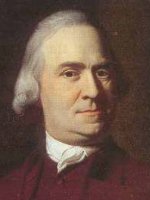
On 3 March, the Council accepted that committee’s recommendation. Moses Gill (shown above) delivered the news to the House. And the House disagreed, telling the committee instead to “enquire of the Committee of Correspondence, &c. of the Town of Boston, respecting Mr. Capen.”

A week later, there was a new report. The Council again agreed with the committee, Jabez Fisher reported. The House again disagreed, and voted to set the petition aside.

The Council, made up of richer men, was apparently inclined to be more lenient, but the House, dominated by rural delegates, was still not in a forgiving mood.

The Massachusetts government had exchanged some of its Loyalist prisoners to bring captives back from New York. That wasn’t an option for Capen since he didn’t want to go over to the enemy.

And thus the legislative term ended in the spring of 1778 with Hopestill Capen still in the Boston jail.

TOMORROW: Change of heart.

Sunday, September 13, 2026

“Mr. Capen insults the State, by denying their jurisdiction”

At the end of 1776, Hopestill Capen was still locked away from his wife Patience.

And Capen lost patience in another way. On 30 December, he sent a letter from “Boston Prison” to Joseph Greenleaf, a justice of the peace.

As transcribed in American Archives, that letter says:
It is now one hundred and forty-seven days since you, with John Hill, Joseph Gardner, and Samuel Pemberton, Esqrs., accused and judged me unfit to go at large, for no other cause whatever than my plainly and simply pleading conscience in obeying the plain Scripture commands; and for that only, you, with the other three of my accusers, committed me to close prison in a felon’s room, there to be kept until delivered by a due course of law.

Can any one with truth say this is not unjust, and against the law of the God of Heaven, who speaketh in the Scriptures? Is there any law that forbids any man’s obeying the plain commands of the great Lawgiver, who is the Maker and Judge of all men? [Multiple citations from the Bible follow] . . .

But I shall be very glad of my just liberty; and I beg that you will not persecute me any longer for that I cannot in conscience do. Can you, on a cool reflection, take any pleasure in such tyranny, while you profess to be the supporters of liberty? What liberty is dear as the liberty of conscience? And I again beg of you to release me from such cruel oppression. . . .

P.S. Surely injustice continued will not atone for past wrongs; and I most heartily entreat you not to keep me away any longer from my just and lawful liberty.
Capen sent similar letters to Sheriff William Greenleaf (not a close relative of the justice) and jailer Joseph Otis (not a close relative of the Barnstable family).

Justice Greenleaf forwarded his copy to James Warren, speaker of the Massachusetts House (and not a close relative of the Roxbury family), with this request:
I must beg the protection of the Court from the insults of Mr. Capen, who stands committed for signing an association to join the enemies of his country whenever called upon, and other crimes. Mr. Capen insults the State, by denying their jurisdiction. He disowns me as a Magistrate, because appointed by the present Administration, while he owns the jurisdiction of the other members of the Court of Inquiry, because appointed by the King’s Governour, and (as he apprehends derive) their authority from thence.
The “association” Greenleaf referred to was a Loyalist militia formed during the siege of Boston. Capen hadn’t just signed up; he’d volunteered to be a sergeant. Greenleaf had “the Books, which contain the Names of the Associations.”

This letter might help to explain why the Massachusetts General Court took no action on Patience Capen’s petition asking for her husband’s release. He was still in jail as the spring of 1777 arrived.

TOMORROW: Yet another approach.

Friday, September 11, 2026

“I am to be confined in Prison for that I cannot in Confidence do”

A month ago, Boston 1775 followed Hopestill Capen (1731–1807) to the Boston jail, suspected of being disloyal to the new U.S. of A. And left him there.

Postings veered off onto the trail of Benjamin Davis, already in the jail after being captured while sailing from Haliax to New York.

Both Capen and Davis were Sandemanians. They grounded their attitude to the new independent state on their religion. They felt bound to remain loyal to King George III, they said, until events showed that this new republican government had God’s approval. 

When the Massachusetts Council ordered that Capen and dozens of other suspected men be detained, it named seven Suffolk County magistrates to question them: Joseph Palmer, Benjamin White, Joseph Greenleaf, Samuel Niles, Thomas Penniman, Theophilus Cushing, and Thomas Crafts.

Capen wrote an address to that “Court of Enquiry” dated 29 August. It doesn’t look like he had a chance to deliver it, at least as he had imagined, because he later wrote this preface:
The following was written with an expectation that I should have the Liberty to lay the same before the Court of Enquiry, before whom I was impeached as an Enemy to my country and cast into Prison, (in Boston 6th August 1776) but it has been said by some I was not rightly understood, and if opportunity be given to me to open my simple meaning to the Court, and I am restored to my just right of Liberty, cause of Complaint will end; and if not, this will serve to inform all whom it may concern, the Principles I acted upon, and if I am to be confined in Prison for that I cannot in Confidence do, it will be happy for me if I am indeed taught to suffer with Patience.
Several copies of that text survive because Capen had his address printed—an act that probably reinforced militant Patriots’ fear that he was a troublemaker.

On the copy of that handbill offered by Sotheby’s in 2013, Capen also wrote a note to Sheriff William Greenleaf:
You have never yet shewed me by what authority you have kept me thus in prison which you ought to have dun & now demand of you a coppey of my commitment and I likewise demand of you my just liberty as I look on you answerable for all the consequences of unjust imprisonment.
Again, perhaps not the most politic way of winning over the authorities.

Capen kept a copy of his handbill sold by Heritage Auctions in 2006 with Biblical citations for his argument and notes about exactly how long he was in jail. That copy appears above.

While Boston 1775 may have just left Capen in the Boston jail for a month, 250 years ago the Massachusetts authorities kept him locked up for much longer.

TOMORROW: Another sort of plea.

Tuesday, August 18, 2026

“‘Subject’ to an authority founded on the late Declaration of Independence”

During the siege of Boston, Benjamin Davis, Sr., signed up for the Loyal American Association, which appears to have been a pro-Crown militia.

We have these companies’ rolls but little other information on what they actually did, if anything. But membership is a useful yardstick for Loyalism.

According to Todd Braisted’s On-Line Institute for Advanced Loyalist Studies website, Davis was listed as a sergeant in the Third Company, headed by Adino Paddock. Hopestill Capen, a fellow Sandemanian, was also a fellow sergeant.

Benjamin Davis, Jr., joined the Second Company under Capt. Abijah Willard at the rank of private. He was around nineteen years old, thus of prime military age.

In 1776 both father and son evacuated Boston with the British military. Then they headed back to New York to be part of the British military’s return to the newly-declared independent U.S. of A. After their ship was captured, both were locked up in the Boston jail starting in July.

In the Massachusetts state archives, and published in Peter Force’s American Archives, is a long letter dated 10 Oct 1776 to James Bowdoin, who happened to be a senior member of the Massachusetts Council. The signature as transcribed was “Benj’a Davis, Jun.” However, the writer refers to “my son” and “the property which I left in my store in Boston, in March past, worth about a thousand pounds sterling,” so it must have come from Benjamin, Sr.

This letter lays out Benjamin Davis’s religious motivation for remaining loyal to the royal government, to the extent that he refused to recognize the authority of his captors, even to ask for his release:
There is a proverb that it will be well for me to attend to, as it is applicable to one in my present situation: “The fear of man bringeth a snare.” [Proverbs, 29:25] I consider myself now to be wholly in the power of the people, and that there is no legal authority for me to apply to for relief. The present distressed situation I am in, and the method pointed out to me in order to get relieved, are such as makes it necessary for me to be much on my guard, lest I get ensnared.

I am bound by God’s law to “be subject to the higher power;” [Romans 13:1] and I have much more to dread from the disobedience of his commands than I can have to fear from those who may be offended at me because I cannot in conscience be “subject” to an authority founded on the late Declaration of Independence. I am very sorry I am placed in such a situation, as though designed to compel me to take such a step for my enlargement as would be in me a breach of God’s law.

To compel me to act or do, contrary to the dictates of my conscience, any one thing that shall carry with it any authority founded on the Declaration of Independence, until the same be recognized and fully settled so as to become my duty to be “subject,” would be the same, and I see no odds, as if I was in Spain or Portugal and committed to the Inquisition as a heretick, and they were to inflict on me the most cruel tortures in order to compel me to deny the faith.
I’m sure Bowdoin didn’t expect that!

Davis pointed out that he wasn’t demanding his confiscated property since doing so would be another form of recognizing the local courts. He probably knew that also meant fewer locals would see him as an enemy.

The letter continued:
I profess myself a liege subject of his Majesty King George III, founded on this principle, that all who are born within his dominions or realm he has a claim upon as his rightful and lawful subjects; that the Provinces and Colonies in North America make a part of his realm.

I was born in this Province; of course allegiance is due from me to him, nor can it be dissolved but by his consent, or by a revolution taking place within the Kingdom, or the Government fixed and established, in which case it would be dissolved. I am bound by God’s law to “honour the King,” and to be subject to the legislative authority of Great Britain as “the higher power.”

I cannot, in any way, be aiding or assisting in any plan or scheme for bringing about any revolution in the Empire upon any pretence whatsoever, without breaking a positive law of God. But whenever any revolution does take place within the Kingdom, and the Government becomes fixed and established, be the cause that brings it about what it may, I shall then be bound in conscience to be “subject” to its authority, for they will then become the “higher power” in the Apostle’s sense.
That’s Sandemanian doctrine.

Davis said he didn’t desire “being abroad” in Boston, lest people think he was trying to convert them or spy on them; that “would be as unbecoming as to be an informer against my neighbour, who may be concerned in an illicit trade.” But he also said he hoped to “take lodgings in town.”

Finally, Davis suggested that “my son, together with myself and servant, could be exchanged for any prisoners in the hands of his Excellency General [William] Howe, at New-York.”

TOMORROW: Petitions.

Tuesday, August 11, 2026

“We went to see Mr. Davis in Jail”

As I wrote back here, the lore in Benjamin Davis’s family was that his third wife, Alice, left him soon after their marriage in 1768 because she couldn’t stand how he worshipped with the Sandemanians.

Reportedly the men of the sect agreed that Davis could remarry if he chose. In a profile of Davis written for the Colonial Society of Massachusetts, Henry H. Edes said:
If Mr. Davis married a fourth wife, it is probable that she was Katharine Overlick, whose Intention of Marriage with Benjamin Davis was entered 24 April, 1773, but as we find no record of a marriage, and do find that Catharine Overlick,—presumably the same woman—entered her Intention of Marriage with John Clows 10 November, 1774, it is doubtful if Mr. Davis made another matrimonial alliance.
Alice (Whipple) Davis died in Cranston, Rhode Island, in 1795.

When captured on the Peggy sailing from Halifax to New York in July 1776, Benjamin Davis was accompanied only by his son and an enslaved man. In contrast, a couple of other merchants on the same ship were traveling with their wives, most notably Robert and Mary Semple, formerly Mary Wheat of Lincoln.

In her journal, published by the Essex Institute in 1868, Mary Holyoke (1737–1802, shown above) of Salem wrote:
July 28. Mr. Ben. Davis taken and put into Jail at Boston, and on the 31st Mrs. Davis spent the day with us at Mrs. Minott’s; we went to see Mr. Davis in Jail.
It appears that this “Mrs. Davis” wasn’t Benjamin Davis’s wife but a friend and/or relative of Mary Holyoke whom she mentioned many other times. But this Mrs. Davis could also have been related to Benjamin, giving him a courtesy call.

Life in the Boston jail wasn’t easy. The mates on the British transport ship Anne, James Young and John M’Kurdy, escaped from custody in Massachusetts and provided this intelligence on 24 August:
That Mr. Benjamin Davis, and several others were passengers, and that they treated Mr. Davis very ill. That they do not give the prisoners sufficient provisions, but offer them good wages to enter on board their privateers, and that many do enter.
The captain of the Peggy, James Kennedy, even petitioned the Massachusetts Council on 13 August for release on the grounds that he didn’t deserve to be associated with his passenger:
As your Petitioner had a Man on Board by the Name of Davis whose Character he did not know till he was brought into this Place, he beleives is the Occasion of his receiving different punishment from other Masters of Vessells.
Kennedy was indeed let out of the jail. According to the Naval Documents of the American Revolution editors, four other men gained release through “similar petitions.”

TOMORROW: Junior.

Friday, August 07, 2026

“The extraordinary self-denials and usages of the Sandemanians”

Hopestill Capen wasn’t the only Sandemanian clapped into the Boston jail in the summer of 1776, as discussed yesterday.

Another merchant who had joined that sect, Benjamin Davis (1729–1805), had been locked up since 26 July.

Like Capen, Davis was from an old New England family. For years he and his brother, Edward Davis (1730–1811), ran a mercantile firm located on the “South Side of the Town Dock.”

Among the European goods Benjamin and Edward Davis advertised for sale were coal, ale, cheese, snuff, salt, and stoneware. In return, they offered farmers money for flaxseed and potash.

Family sources say the Davis brothers’ partnership came apart during the non-importation campaign of 1768–70. Indeed, as of May 1771 the shop on “the South Side the Dock” was “Benj. Davis’s Store.” Having advertised their firm for many years, the brothers’ names appeared in only one more newspaper notice together: in August 1772 they offered “Two new Copper Stills & Worms,” perhaps their last joint property.

The Davis brothers definitely started to split politically in those years. On 28 Oct 1769, Edward was one of three angry merchants who confronted printer John Mein about how he was printing Customs house records. Mein stated, “Davis first made a push at me with his Cane which struck me on the left side of the belly.”

On 5 Mar 1770, Benjamin Davis was out in the evening about nine o’clock as locals faced off against soldiers at the Customs office. According to Robert Treat Paine’s notes from Capt. Thomas Preston’s trial, Davis testified: “Some body clap’d me on sholder and asked me if I would go and help fight the Soldiers. I said no.” He was a defense witness in the Boston Massacre trials.

Meanwhile, Edward Davis was watching the dispute with other merchants from the stoop of Edward Payne’s house, opposite the Customs office. At a bail hearing for Edward Manwaring in April and then at Manwaring’s trial, Davis and members of his family testified that they had seen no guns fired from the Customs building. In fact, Davis said that “soon after the firing he saw two women standing in the chamber of the Custom-house…with their hands under their aprons, in the posture of spectators.”

After the death of his wife, the former Ruth Vassall, in January 1774, Edward became a more active Whig. By the end of the year he was serving on Boston’s committee to enforce the Continental Association boycott.

In contrast, once Benjamin joined the Sandemanians in the 1760s, he appears to have sworn off actions to resist the royal government. In October 1774, John Andrews reported, “Ben Davis has let his Store on the Dock for the use of the troops.” He signed the usual Loyalist addresses and protests.

The mercantile house wasn’t the only partnership Benjamin Davis gave up for his faith. He married his third wife, Alice Whipple, daughter of a former lieutenant governor of Rhode Island, in 1768. According to family lore published by the Colonial Society of Massachusetts:
The lady’s amour propre was offended and her philosophy over-taxed by the extraordinary self-denials and usages of the Sandemanians. Following the example of the early Christian Church, it was their custom to hold a love-feast on Sunday at one another’s houses, at which only Sandemanians were present. The wives who were not members of the Sect, naturally did not take kindly to their exclusion from their own tables, and, at last, the third Madam Davis felt constrained to return to her family, thus, practically, deserting her husband.

A legal divorce being then unobtainable, the Sandemanians took the matter under consideration and concluded to sanction another matrimonial alliance on the part of Mr. Davis, declaring his to be one of those cases where voluntary abandonment by the wife justifies the dissolution of the marriage tie in the sight of Heaven.
Benjamin Davis didn’t actually remarry, though.

Unlike Capen, Davis chose to sail away to Nova Scotia with the British military in March 1776. But then he got on a ship headed to New York, presumably to help supply or administer Britain’s reinvasion.

TOMORROW: Captured at sea.

(The John S. Copley portrait above shows Anstice [Greenleaf] Davis, Benjamin’s second wife, courtesy of the Brooklyn Museum. She died in 1764, only two years after their marriage.)

Thursday, August 06, 2026

Hopestill Capen from the Cornfields to the Jail

On 6 Aug 1776, 250 years ago today, authorities in Boston locked merchant Hopestill Capen (1731–1807) in jail for “aiding and abetting those called enemies to the Colonies.”

For decades Capen had run his dry goods business at the sign of the Cornfields in a building he owned, now known as the Union Oyster House. He served as a militia officer and held minor town offices.

Late in 1769 Capen took on Benjamin Thompson as an apprentice, but that arrangement didn’t last long. The merchant later reportedly told the teenager’s mother “he oftener found her son under the counter, with gimblets, knife, and saw, constructing some little machine, or looking over some book of science, than behind it, arranging the cloths or waiting upon customers.”

From 1771 until just before the war, one of Capen’s tenants in the building was the Whig printer Isaiah Thomas.

During that time, Capen had become known as a mild Loyalist. He signed the complimentary addresses to Gov. Thomas Hutchinson and Gen. Thomas Gage, and he joined the protest against the Solemn League and Covenant.

Capen chose not to evacuate with the British military in 1776, however. Unlike many Loyalists, he had deep family roots in Massachusetts, and all his property was there.

In April 1776 the Massachusetts House directed the Suffolk County justices and sheriff to detain and question dozens of individuals suspected of disloyalty. Capen was fifth on that list, showing his prominence in town.

But it wasn’t until the summer, after Massachusetts had declared independence from the Crown, that the Council ordered those authorities to lock Capen up. No one ever appears to have ever produced evidence of him “aiding and abetting” Crown forces, but he did refuse to pledge allegiance to the new state.

Capen presented himself as a conscientious objector, motivated by religion. In the 1760s he had joined Boston’s small Sandemanian sect, and he said that his faith required him to stay out of the war.

Some analysts have described the Sandemanians as pacifist because of statements like Capen’s. But he wasn’t opposed to military action in principle. He’d been an active member of the Ancient and Honorable Artillery Company as well as the colonial militia, and during the siege he became a sergeant in a Loyal Associated Volunteers under Capt. Adino Paddock.

Rather, the Sandemanian creed said believers should be loyal to the government in control on the grounds that it must be divinely ordained. With the war still going on, and thus divine will not yet clear, Capen insisted that he couldn’t promise his allegiance to the U.S. of A.

COMING UP: Capen’s release.

Wednesday, December 05, 2018

“Likewise This Day Published”

As I reported yesterday, in February 1769 the printer Ezekiel Russell advertised the publication of Pvt. William Clarke’s play The Miser in the Boston Gazette and Boston Post-Boy.

On 6 March Russell had the Edes and Gill shop expand that ad to promote another pamphlet as well. I was amused by the juxtaposition of the two titles. The second part of the expanded notice read:
LIKEWISE THIS DAY PUBLISHED,
(Price Eight Pence,)
And Sold at the above Place,
ANOTHER High Road to Hell,—An ESSAY on the pernicious Nature and destructive Effects of the modern Entertainments from the PULPIT.—Occasioned by a Pamphlet, entitled, The Stage the High Road to Hell, &c.——Said to be wrote by the learned Mr. PIKE, one of the Author of the Twenty Six Cases of Conscience, and an eminient Sandemanian Speaker in LONDON. 

The Russell print shop was thus simultaneously marketing both a theatrical comedy and a pamphlet built on a denunciation of the theater as the quickest path to damnation.

You might think that Boston’s orthodox Congregationalists would have been in accord with English authors denouncing plays and “modern Entertainments from the PULPIT” since they also disliked theater and high-church Anglicanism. They certainly wouldn’t have favored Henry Flitcroft’s response to the first pamphlet, titled Theatrical Entertainments Consistent with Society, Morality, and Religion.

But the Russell shop presented The Stage the High Road to Hell as the work of the Rev. Samuel Pike, a convert to Sandemanianism. (I don’t see any bibliographers echoing that credit, so I don’t know how reliable it is.) Likewise, Another High Road to Hell is thought to have been written by another Sandemanian: John Chater, one of the first edition’s publisher who was also a former minister.

The Sandemanian sect was a recent arrival in New England. They weren’t yet seen as allies of the royal government, but the descendants of early Puritan settlers were nonetheless suspicious of their ideas. Another High Road to Hell is thus another example of the Russell print shop printing something unusual—and they advertised it in the radical Whigs’ favored newspaper.

Thursday, December 21, 2017

The Launch of the Boston Chronicle

This is the Sestercentennial, or 250th anniversary, of the first issue of the Boston Chronicle.

For a decade Boston had been a four-newspaper town. The oldest weekly was Richard Draper’s Boston News-Letter, founded in 1704 and almost always allied with the royal establishment. It appeared on Thursdays.

On Mondays three other papers came out: Edes and Gill’s radical Boston Gazette and the more middle-of-the-road Boston Evening-Post from the Fleet brothers and Boston Post-Boy from Green and Russell.

The Boston Chronicle joined the crowd on Mondays. It offered people a nicer reading experience with handsome typography and a little more white space on its pages. Starting in early 1769 the paper really shook things up by coming out on both Mondays and Thursdays.

The men behind the Chronicle were John Mein and John Fleeming. Unlike the printers of Boston’s other newspapers, they weren’t from old New England families. They had both moved into the colony from Scotland in 1764. Furthermore, they were both adherents of the Sandemanian or Glasite sect, which New England Congregationalists viewed with suspicion.

Mein was a bookseller while Fleeming was a printer. Together they published pamphlets, almanacs, and other items as well as the newspaper. Mein’s London Bookshop also functioned as a lending library; for “One Pound, Eight Shillings, lawful Money, per Year,” patrons could borrow any volume from his list of 1,200 titles. And by any volume, that meant one volume at a time.

Perhaps because of their closer ties to Britain, perhaps because of their church’s teaching to obey political authorities, perhaps because of political ideology, Mein and Fleeming’s Chronicle supported the Crown more strongly than any other Boston newspaper, even the News-Letter. The very first issue included an essay from London that harshly criticized William Pitt, a darling of American Whigs.

For a while the Boston Chronicle looked like a good business proposition. The Customs house and friends of the royal government supported the paper during the debates over non-importation and the Townshend duties. That support, in the form of printing contracts and advertisements, was probably what allowed the newspaper to start coming out twice a week.

In turn, Mein wrote and Fleeming printed slashing attacks on the Boston Whigs. Eventually Mein lost that fight (physically and fiscally) and had to retreat to Britain. Fleeming closed the newspaper on 25 June 1770 but stayed in town until the evacuation of 1776. Though the Boston Chronicle lasted only two and a half years, in that time it was a crucial voice in Massachusetts’s political debate.

(Front page of the 21 Mar 1768 Boston Chronicle above courtesy of Todd Andrlik’s Reporting the Revolutionary War website.)

Monday, November 19, 2012

A Schoolmaster During the Siege

I’ve shared reminiscences from Benjamin Russell and Harrison Gray Otis of how their Boston public schools closed in April 1775 with the outbreak of war (and how their stories got intertwined). That was the end of town-sponsored education in Boston until after the British military left the next March. Families probably kept up lessons for little kids, teaching them to read—which had always been a private responsibility. But I didn’t think anyone was teaching the handwriting, business math, or Latin and Greek of the public schools.

Then I found a mention of Elias Dupee in Zechariah Whitman’s 1842 history of the Ancient & Honorable Artillery Company. That eventually led me to this sentence in Caleb Snow’s 1828 History of Boston:
During the siege, the town schools were suspended: a few children attended the instructions of Mr. Elias Dupee, who remained in Boston, and gratuitously devoted himself to his employment of a teacher, in which he took peculiar delight.
A number of other books repeat that statement, sometimes in different words but without additional details. Oliver A. Roberts’s later history of the Ancients & Honorables says that Dupee was a Freemason and held several town offices, including tax collector and constable. From 1764 to 1769 he regularly advertised in Boston newspapers that he was selling goods in a “New Auction-Room,” which moved around a bit; in February 1769 he was “over Mr. John Dupee, Mathematical Instrument Maker’s Shop.”

Poking around for more information about Dupee’s pedagogical career, I found that on 9 Apr 1776 private-school teacher John Leach wrote from Boston to one of the public-school masters, John Tileston, then staying at Windham, Connecticut:
The Selectmen have been so busy that I have not had opportunity to see them in a Body. The people are flocking into Town very fast, and there are great Numbers already Come in. I see Mr. Webb, and Mr. Holmes, and Mr. Parker, and several of our Friends, and they are all of opinion that you had better return to your school as soon as you can. . . . Martin [Master? Samuel] Hunt is in Town, and Dupee still continues at your Schoole
So during the siege Dupee used the North Writing School, owned by the town. The selectmen voted to reopen the public schools on 5 June. Tileston was back by then, and the records don’t mention Dupee.

At some point Dupee set up his own school in the Sandemanian meeting-house off Middle Street (now Hanover) in the North End. The Sandemanians were a Christian sect out of Scotland that had won over some locals in the decade before the Revolution. Many left with the British troops. On 5 Oct 1785, selectmen Moses Grant and John Andrews became “a Committee to treat with Mr. [Isaac] Winslow respecting a Schoolhouse lately improved by Mr. [Elias] Dupe known by the Name of Sandemons Meeting house.”

Within a month, the selectmen and Winslow on behalf of the Sandemanians agreed to a rent of £20 per year, minus what “three indifferent Persons” judged to be the fair cost of the town’s repairs “to the Wood House & Necessarys.” That suggests Dupee may not have been teaching in that building very recently; he was the latest user, but perhaps not a recent one.

That building became known as the Middle Street Writing School and was assigned to Master Samuel Cheney. Tileston was still at the North Writing School, so it looks like the North End’s youth population was growing enough to require two schools in that part of town. In 1789 Boston undertook a big education reform, and the next year the town gave up the lease and built new schools for itself. Elias Dupee never became one of Boston’s public schoolmasters.

The 27 Dec 1800 Constitutional Telegraphe of Boston reported at the top of its list of deaths: “Suddenly, on Wednesday last at Dedham Mr. Elias Dupee, formerly a Schoolmaster in this town, Aged 74.” Dedham town records say he died “of old Age” at the house of Daniel Baldwin, where he was boarding, and was aged 76. Some sources say Dupee had been born in 1716, and was thus 84.

TOMORROW: The Constitutional Telegraphe?!

[The thumbnail above shows the historical marker for the site of teacher John Tileston’s house in the North End, courtesy of Leo Reynolds’s Flickr stream under a Creative Commons license.]

Sunday, September 30, 2012

A Dispute within the Artillery Company in 1768

Here’s an anecdote from Zachariah Whitman’s 1842 History of the Ancient and Honorable Artillery Company. As I’ve described before, that organization wasn’t a part of the provincial militia but a private organization men joined to improve their military skills and show they had what it took to be officers. According to Whitman:
In 1768, several regiments of British troops were in Boston. On a field day, under command of Capt. [William] Heath, then Lieutenant [Footnote: It was customary before the Revolution, and so continued until recently, to give the Lieutenant the privilege of command one field day during the year.], it appearing probable that the Ar. Co. would not leave the Common until after the roll-call of the troops, their commanding officer sent orders that he must retire without beat of drum, and that there must be no firing at the deposit of their standard.

The Company opposed a compliance; but Lieut. Heath, conceiving it his duty to comply with the orders of a superior officer in his Majesty’s service, marched to Faneuil Hall in silence, and without firing.

This appeared to some of the members an infringement of their privileges. One Hopestill Capen, then Orderly, resented it so highly, that he went to the top of his house, and fired his musket three times, and even many years after would not vote for Gen. Heath.
Remarkably, while Heath served in the American army from the very first day of the Revolutionary War to the very last, Capen, who had resented the orders of an army officer, became a Loyalist. He had joined the Sandemanian sect, convinced of his religious duty to obey the king. Despite the general Sandemanian teaching of pacifism, during the siege Capen joined Boston’s Association, a Loyalist militia.

The photo above, from the Boston Public Library’s Flickr collection, shows Capen’s house and rooftop as they appeared in 1930.

Sunday, January 04, 2009

“Kissed Him, Before All the Company in the Room”

After last week’s postings on Boston’s Sandemanian congregation and the theological debate they inspired, a longtime Boston 1775 reader asked me, “So there was all this fuss over kissing?”

It wasn’t just the kissing, I tried to explain. The Sandemanians irked the descendants of Puritans by challenging their claim to worship properly according to the Bible. The congregation’s political loyalty to the Crown made them suspect in another way. The kissing was just the issue that people chose to argue over.

Then I happened across this passage from John Adams’s diary. On this date, 6 June 1771, he was at Stafford Springs, Connecticut, drinking some of the mineral water there for his health. Adams kept bumping into people he knew from Boston and his travels on the legal circuit:

In the afternoon [Sandemanian merchant] Colburn Barrell and his Wife and Daughter came, and took Lodgings at our House. Drank Tea and spent the Evening with them. When the Dr. [William McKinstry of Taunton] took his Hat to go out to a Neighbours to lodge, Colburn sprung out of his Chair and went up to the Dr., took him by the Hand And kissed him, before all the Company in the Room. This is Sandemanianism.
So, yeah, I guess it was about the kissing.

Tuesday, December 30, 2008

Shippie Townsend, Author

In the spring of 1768, a pamphlet was published in Boston with the title A Modest Account concerning the Salutations and Kissings in ancient Times: In a Letter to a Friend, Requesting the same: Wherein Mr. Sandeman’s Attempt, to revive the holy and charitable kiss, and the Love Feasts, is considered. The title page gave the name of the author as “Constant Rockman, M.A.”

In fact, that essay had been written by the Rev. Samuel Mather of the North Bennet Street meeting-house (shown here, courtesy of Reformation Art). On 17 May, he sent the pamphlet to Thomas Hollis, a British philosopher and Harvard benefactor, with a cover letter that said:

I beg leave now to put into your Hands...a Letter obtained from me thro’ Importunity from Dr. [Charles] Chauncey, my Friend and Neighbour, and some others: which I have publish’d under a fictitious Name, lest some Offence might be given by my writing on such a Subject; tho’, I think, there is not any Thing justly exceptionable in it.
Mather had chosen the pseudonym “Rockman” as a contrast to the leader of the sect he was opposing, Scottish preacher Robert Sandeman. As I described yesterday, Sandeman had established a small church in Boston following his father-in-law’s unusual view of Christianity, and then moved on to Danbury, Connecticut.

On 25 July, the Boston Gazette carried the first advertisement for a response:
THIS DAY PUBLISHED,
And to be Sold by NICHOLAS BOWES, opposite the Old
Brick Meeting-House in Cornhill.
[Price 6d.]
An INQUIRY
Whether the Scriptures enjoin the Kiss of Charity, as
the Duty of the Disciples of Christ, in their Church
Fellowship in all Ages.——Or, only allowed it to the
First Disciples, in Consequence of the Customs that
then prevailed.
Occasioned by a LETTER lately Published by CON-
STANT ROCKMAN, M.A.
Intitled “a Modest Account concerning the Salutati-
ons and Kissings in ancient Times,” &c.
Containing some Remarks thereupon.
Bowes added helpfully that customers could also buy the “Rockman” letter at his shop. Which was, incidentally, right across the street from where the Rev. Dr. Chauncy preached. It was a small town. (I haven’t even mentioned that young Henry Knox was working as an apprentice at Bowes’s shop.)

The Inquiry essay was written by Shippie Townsend, a leading member of the Sandemanian meeting. He was a successful blockmaker—the period equivalent, perhaps, of the owner-manager of a tool and die shop. He hadn’t been to Latin School or college, and he was taking on the latest in Boston’s most learned line of ministers, the Mathers. So Townsend started his “letter” this way:
Apprehending something in Mr. Rockman’s Letter, about which we were lately conversing, contrary to what the Apostle glories in, in 2 Corinth. iv. 2. And fearing lest some who are exercised about the will of God in this matter, may receive a wrong bias, from the slight and craftiness wherewith the scripture texts seem to be mentioned.

Having no acquaintance with Hebrew or Greek, and scarce any with the ancient Fathers, and no common place-books, I set down, having only the Bible before me, to see if by a plain literal reading the divine will, may not been seen with controversy.
In other words, Townsend presented his lack of higher learning a virtue. He might not know about ancient languages (or complete sentences), but he could read the plain words of the Bible.

The next year, a committee from the Old South Meeting-House visited Townsend and another lapsed congregant, Col. Richard Gridley, and asked them to return to that fold. Both men convinced their visitors that their new theological views were sincere and firm, as described back here.

In fact, Townsend had discovered that he liked writing about religious questions. Four years later, in 1773, he published another tract titled An Attempt to Illustrate the Great Subject of the Psalms. This time he didn’t need an earlier essay to prompt him; he just had some theological ideas to share. The war interrupted Townsend’s publishing career, but he would resume it in the 1780s.

TOMORROW: Townsend and Gridley end up in the same faith again.

Monday, December 29, 2008

People Who Prayed in Glas Houses

In 1728, a Presbyterian minister named John Glas was asked to leave his pulpit in Tealing, Scotland, because he had published some unorthodox religious views. He then started a small Christian sect that lasted for about a century. In Scotland his adherents were called “Glasites.” In North America they became known as Sandemanians after Robert Sandeman, Glas’s son-in-law and chief disciple.

In late 1764 Sandeman arrived in Boston, come to convert people to “a return to the religious practices of the primitive Christians,” in the words of Jean F. Hankins’s article on the movement in the New England Quarterly for 1987. The Religious Creeds and Statistics of Every Christian Denomination in the United States and British Provinces, published by John Hayward in 1836, described what set the Sandemanians apart from other Protestant congregations:

They differ from other Christians in their weekly administration of the Lord’s Supper; their love-feasts, of which every member is not only allowed, but required to partake, and which consist of their dining together at each other’s houses in the interval between the morning and afternoon service; their kiss of charity used on this occasion, at the admission of a new member, and at other times when they deem it necessary and proper; their weekly collection before the Lord’s Supper, for the support of the poor, and defraying other expenses; mutual exhortation; abstinence from blood and things strangled; washing each other’s feet, when, as a deed of mercy, it might be an expression of love; the precept concerning which, as well as other precepts, they understand literally; community of goods, so far as that every one is to consider all that he has in his possession and power liable to the calls of the poor and the church; and the unlawfulness of laying up treasures upon earth, by setting them apart for any distant, future, or uncertain use.

They allow of public and private diversions, so far as they are not connected with circumstances really sinful; but apprehending a lot to be sacred, disapprove of lotteries, playing at cards, dice, &c.
Sandeman started to hold religious services in 1765, first at blacksmith Edward Foster’s house, later in the long room of the Green Dragon Tavern and the North Latin School. He eventually moved on to Danbury, Connecticut, where he died in 1771.

By then there were regular Sandemanian meetings not only in Boston and Danbury, but also in Providence, Rhode Island, which worried the Rev. Dr. Ezra Stiles. Like other Congregationalist ministers, he distrusted any form of worship that didn’t fit into his established hierarchy.

To be sure, there were significant religious differences between mainstream New England Calvinism and the Sandemanian creed. Though Glas and his followers rejected good deeds as a way to salvation, they didn’t emphasize repentance from sins like Puritans and their revivalists. Sandemanian worship services seemed strange, with all that foot-washing and kissing. And though they praised charity and brotherhood, eighteenth-century Congregationalists liked the idea of private wealth; the new sect’s emphasis on communal meals, weekly collections for the poor, and a theoretical abjuration of individual property seemed to be taking Christianity too far.

There were other, non-religious reasons that most New Englanders distrusted the Sandemanians. In the 1760s folks were suspicious about anything from Scotland. And Glas’s belief that true Christians shouldn’t get involved in politics came out as support for the established government—i.e., the Crown.

Thus, in the late 1760s the Boston Sandemanians gained a reputation as friends of the royal government. By then the group included some notable men, most drawn away from Congregationalist meetings: The royal government’s favored printer, John Mein, was also linked to Sandeman, though not apparently a member of the church.

Among the most visible Sandemanians in Boston was Shippie Townsend, who had withdrawn from the Old South congregation by 1769, as discussed yesterday. Townsend even hosted Sandemanian services in his house in the North End for a while before the group bought property for their own church. And when a Congregationalist minister published a pamphlet meant to refute Sandeman’s preaching, Townsend took up his pen.

TOMORROW: A blockmaker becomes an author.

Saturday, November 29, 2008

No, No, We Meant that Other Sect Is Contemptible!

People outside New England noticed the Boston Gazette’s criticism of “two or three weak and imbittered Persons, of the most insignificant and contemptible of all Sects,” for opening their shops on the Patriots’ Thanksgiving in December 1774. And some of those people didn’t realize, as the Rev. Dr. Ezra Stiles did, that the sect at issue was the Sandemanians rather than the Quakers.

Memories of Massachusetts’s seventeenth-century persecution of Quakers were still vivid enough to cause problems for the Massachusetts delegates to the Continental Congress. Furthermore, unlike the small and weak Sandemanians, Quakers had political power and wealth in the Middle Colonies. Therefore, the Patriots moved to correct the misunderstanding.

On 18 Feb 1775, the Pennsylvania Ledger in Philadelphia carried a “Letter from a Gentleman in Boston, to his Friend in this city, dated Feb. 1, 1775”:

The day appointed by the provincial congress for a public thanksgiving, a number of persons, in this town, showed their disapprobation thereto, by opening their shops as usual, for which they were treated in an uncivil manner, and those persons were said to be Quakers.

I therefore think it my duty, as an honest, impartial, and most unbiassed member of this community, and one who wished nothing more ardently that that a true, fair, and candid representation of facts might appear, to assure thee, and I can of my own certain knowledge assure thee, that it is a most malicious and injurious falsehood, and no doubt, propagated by the base enemies of our invaluable constitutional rights and privileges, for the most vile and malevolent purposes—for I do well know, that the Friends in this town, did not open their shops on said Thanksgiving day; nor have I heard the least unfriendly or uncivil expression uttered by any of the inhabitants of this town against them, as a people, for many year; but, on the contrary, I do most certainly know, that they are always, and on all occasions, treated with full as much (and I think more) catholic tenderness, friendly and neighbourly kindess and affection, than persons of any other sect of denomination amongst us.
I especially like how the writer dropped the Quaker “thee” into his prose.

This letter acknowledged what the earlier report in the Boston Gazette had not: that “uncivil” criticism of the shopkeepers had come from locals as well as passing British soldiers. Furthermore, while describing Bostonians’ kindness toward the Quakers—who had political power in the Middle Colonies—the writer glossed over the community’s hostility toward the Sandemanians.

One day before the date of that letter, Samuel Adams wrote on the same topic to Stephen Collins, a Quaker merchant he had met in Philadelphia, with some more detail:
It is also a Misrepresentation that the sect taken notice of for opening their Shops on our late Thanksgiving Day, was that of the People called Quaquers. They were the Disciples of the late Mr. [Robert] Sanderman, who worship God here without the least Molestation according to their own manner, and are in no other Light disregarded here but as it is said they are in general avowed Friends of the Ministerial Measures.

This is what I am told, for my own part I know but little or nothing about them. The Different denominations of Christians here (excepting those amongst them who Espouse the cause of our Enemies) are in perfect peace and Harmony, as I trust they always will be.
Adams was being disingenuous here, in several ways. First, he and his colleagues bitterly opposed Catholicism, as did most of the British Empire; the Massachusetts Thanksgiving proclamation even referred to the “Protestant Succession” as something to be thankful for.

Second, the Sandemanians’ religion and politics were intricately entwined. Their faith required them to be Loyalists, or at least loyal to whatever government was in power. And the newspaper’s criticism of them wasn’t limited to their support of “the Ministerial Measures”; it described the Sandemanians as “the most insignificant and contemptible of all Sects, (who make Pretensions to Christianity).”

Finally, some of those Sandemanians were vocal in Boston politics, so it’s hard to believe Adams when he wrote, “for my own part I know but little or nothing about them.” I’m sure he had opinions.

Friday, November 28, 2008

Not Everyone Observes Thanksgiving in 1774

Not everyone in Boston observed the Thanksgiving holiday on 15 Dec 1774, as the Massachusetts Provincial Congress had asked people to do. This report appeared in the 19 December Boston Gazette:

On the late Thanksgiving-Day two or three weak and imbittered Persons, of the most insignificant and contemptible of all Sects, (who make Pretensions to Christianity) opened their Shops; five or six Soldiers passing one of them, made a full stop, and asked the deluded Owner whether he was not ashamed so to insult his Countrymen, and advised him to shut up his Shop and hide his Head, adding, that he was an Enemy to his Country.—

As this was said by a Soldier, they may perhaps spare the cry of Persecution on the Occasion.
I have no doubt that soldier was speaking sarcastically, parodying what he expected the local political leaders to say about those shopkeepers. And the fact that radical printers Edes and Gill were able to ascribe those words to a soldier doesn’t hide the fact that they obviously agreed with them.

What “Sect” were those shopkeepers from? We find the answer in the journal of the Rev. Dr. Ezra Stiles. Five days after describing how he had held a Thanksgiving service in his Rhode Island meeting-house, Stiles wrote:
The Sandimanians opened Shops in Boston on Thanksgiving day last & the Episcopa[ls]. at Cambridge refused to observe it: the young Dr. Biles Episco. Clergyman refused to open his Church in Boston to the great Offence of his little Flock, which are more for Liberty than any Episco. Congregation north of Maryland.
The Sandemanians were a small Christian sect following the ideas of a Scotsman named John Glas (shown above, courtesy of the University of Dundee) and his son-in-law Robert Sandeman, who had moved to New England to spread the word. Part of their doctrine was obedience to government authorities, so they firmly supported the royal governor. There was a small group of Sandemanians in Boston, a small group in southeastern Connecticut, and even smaller groups elsewhere.

The other people Stiles specified as not observing the Thanksgiving were Anglicans. Cambridge was one of the few Massachusetts towns—perhaps the only one not on the seacoast—with an Anglican church and congregation. The Rev. Mather Byles, Jr., was minister at Christ Church in Boston, now also called Old North. (He was the son of the more famous Rev. Dr. Mather Byles, who remained a Congregationalist minister even as he supported the royal governors.)

Stiles’s remark about the younger Byles’s North End congregation wishing to observe Thanksgiving in church might not have been accurate. He was often a little too eager to record news that confirmed his political sensibilities, and I’ve learned not to take the reports in his diary at face value. However, as the Gazette report shows, Stiles was correct about the Sandemanians’ choice to ignore the holiday.

TOMORROW: Criticism of the Sandemanians’ non-Thanksgiving becomes a political issue.