J. L. BELL is a Massachusetts writer who specializes in (among other things) the start of the American Revolution in and around Boston. He is particularly interested in the experiences of children in 1765-75. He has published scholarly papers and popular articles for both children and adults. He was consultant for an episode of History Detectives, and contributed to a display at Minute Man National Historic Park.

Subscribe thru Follow.it


•••••••••••••••••


Showing posts with label Marlborough. Show all posts

Tuesday, July 22, 2025

Anishanslin on The Painter’s Fire in Boston, 23 June

On Wednesday, 23 June, Zara Anishanslin will speak at the Massachusetts Historical Society on her new book, The Painter’s Fire: A Forgotten History of the Artists Who Championed the American Revolution.

Zara Anishanslin is a professor at the University of Delaware. Her last book was Portrait of a Woman in Silk: Hidden Histories of the British Atlantic World, winner of The Library Company of Philadelphia’s first Biennial Book Prize.

I got to hear Prof. Anishanslin speak about The Painter’s Fire at the Dublin Seminar for New England Folklife last month. Previous studies of American-born painters in the Revolutionary world have focused on men like John Singleton Copley, Benjamin West, and Ralph Earl—all important artists but also Loyalist in that conflict.

In contrast, Anishanslin looks at three artists who actively supported the new American republic in one way or another: Robert Edge Pine, Prince Demah, and Patience Wright. Pine was a British native, Demah was born enslaved, and Wright was a woman working in wax rather than portraiture, so their lives expand the traditional scope of artists’ studies in other ways as well. Their careers also intersected in interesting ways.

When I first wrote about Prince Demah back in 2006, all that I knew was his first name, that he was enslaved to Christian Barnes in Marlborough, and that she wanted to get him some training as a painter. Research by Paula Bagger and others revealed Demah’s transatlantic career, service in the Continental Army, and more. It’s exciting to see those facts come into the light.

The talk is the society’s Annual Jack Grinold Lecture in American Art and Architecture. It will begin with a reception for in-person attendees at 5:30 P.M. Prof. Anishanslin’s talk (and the online stream) will begin at 6:00. The event is free to society members and online attendees, $10 for others. Register here.

Saturday, November 16, 2024

“The Spies in Henry Barnes’s House” at Hingham, 17 Nov.

Yesterday I wrote about Ens. Henry DeBerniere, the young mapmaking army officer.

He turned up at Henry and Christian Barnes’s house in Marlborough on 1 Mar 1775, along with Capt. William Brown.

Those two officers were “The Spies in Henry Barnes’s House” that I’ll speak about on the afternoon of Sunday, 17 November, in the Hingham Historical Society’s Revisiting The American Revolution series.

Dr. Samuel Curtis will also show up in my talk, just as he showed up at the Barnes house that night, trying to ferret out information on DeBerniere and Brown. So he was spying, too.

I may even bring in Gib Speakman and Prince Demah because of their ties to the Barnes family, even though I can’t link them to events of that night.

Why, you might ask, am I delivering this talk in Hingham rather than in Marlborough, where all the action happened?

Because another player in that night’s drama was Chrisy Arbuthnot, an orphaned ten-year-old niece living with the Barneses. She had come to them from Hingham.

In addition, Prince Demah’s portraits of Henry and Christian Barnes are now among the treasures of the Hingham Historical Society.

Like other talks in this series, this presentation will be accessible in person and online, as part of the whole series or on its town. Admission (which isn’t cheap) helps to fund the society.

Monday, July 19, 2021

Dr. Samuel Curtis Goes to War

When, last September, I left Dr. Samuel Curtis of Marlborough, his wife Lydia and their two babies had all died in December 1774.

Lydia Curtis had been married before, to Dr. Ebenezer Dexter. Three teen-aged sons from that first marriage were still alive. The oldest, William Dexter, married in Shrewsbury in early 1775, so he was probably already in that town, training under another medical doctor.

I suspect the younger two boys were living with Lydia’s parents, who were wealthy and influential in Marlborough.

Dr. Curtis had served on Marlborough’s committee of correspondence since 1772 and represented the town at the 1774 Middlesex County convention. After his wife’s death, he may have thrown himself even more into the Patriot movement. In March 1775, as I recounted here, Curtis took the lead in hunting for British army spies seeking refuge at Henry Barnes’s house.

There are no records of how Curtis responded to the outbreak of war the next month. His name doesn’t appear in militia records. He continued to serve on town committees, and in the fall of 1775 the Massachusetts legislature appointed him a justice of the peace.

(Dr. Curtis was a son of the Rev. Philip Curtis of the second precinct of Stoughton, which in 1775 became the new town of Sharon. Late the following year, Samuel’s younger sister Susanna Curtis married his former trainee, Dr. Daniel Cony [1752-1842, shown above later in life], whose family had moved out to Shutesbury. Dr. Cony spent chunks of the next few years in military service. Eventually the Conys moved up to Maine, where one of his medical colleagues was the midwife Martha Ballard. But I digress.)

William Dexter turned twenty-one in 1776. I believe that meant he came into his mother’s Marlborough property, where Dr. Curtis had been living as a widower. That gave the doctor three reasons to make a life change:
  • psychological, after his wife and children’s deaths.
  • domestic, as his stepson was taking over the family home.
  • political, to help fight the war.
And impulse control might not have been Curtis’s strength.

In March 1777, Dr. Samuel Curtis signed on to be surgeon aboard the Hancock, the first frigate built for the Continental Navy. He would serve under Capt. John Manley, who in the fall of 1775 had proved to be the most stealthy and successful naval officer in the Continental military, winning several important prizes. Manley had been granted the authority of a commodore, meaning that in company with other Continental vessels he could boss their captains.

The Hancock was an excellent product of Newburyport shipwrights. Some British officers would even deem it “the finest and fastest frigate in the world.” It carried 24 twelve-pounder cannon and 10 six-pounders, plus a crew of 290 men. Dr. Curtis spent his first two months in the navy collecting medical supplies for that vessel.

On 21 May the Hancock slipped out of Boston harbor, past the Royal Navy patrols lurking in the ocean. Along with it came the Continental frigate Boston, 30 guns, commanded by Hector McNeill; the privateer American Tartar, 24 guns, under John Grimes; and eight other, smaller privateers. Manley’s target was British fishing vessels and unaccompanied merchant ships.

TOMORROW: Dr. Curtis’s first fights at sea.

Sunday, May 02, 2021

How Maj. Abijah Brown Went to War

Abijah Brown was born in Watertown in 1736, and on 24 May 1758, at the age of twenty-one, he married Sarah Stearns of Waltham.

Their first child, Abijah, Jr., was born in Watertown the following March. By the next year they had moved to Waltham, where Sarah gave birth to:
  • Edward (1760)
  • Anna (1763)
  • Elizabeth (1765)
  • Jonathan (1767)
  • Abner (1769)
Abijah Brown became involved in town politics as a selectman and meeting moderator. He served on committees to respond to the Boston committee of correspondence, draft instructions for the town’s legislators, and attend the Middlesex Convention of late August 1774.

Brown was also active in the town militia company, rising to captain in 1773 and major at the start of the war. According to Henry Bond’s Family Memorials (1855), he was “one of the first to ascertain the proposed march of the British upon Concord and was active in giving the alarm.” I’m not sure what that means because most histories say that Waltham never got word about the British march on 19 April and had to catch up to its neighbors.

Contemporaneous evidence leaves no doubt that Brown was militarily active in the first weeks of the war. On 28 April the Massachusetts committee of safety declared “Major Brown appointed to give such repairs to the cannon at Waltham, as may be judged proper.” Three days before the committee had ordered that “three Cannon now at Marlborough, be brought to the Town of Waltham, and mounted on carriages prepared for them, till further orders.” 

In this period Maj. Brown probably supplied Col. Richard Gridley, the commander of the artillery regiment, with a horse and sulky so he could move around the siege lines as quickly as possible, overseeing fortifications and gun emplacements.

On 17 May the committee of safety issued new orders:
That the three pieces of cannon, with the stores, now at Waltham, be immediately removed to Watertown, near the bridge, by the advice of the general [Artemas Ward], and that Mr. Elbridge Gerry, one of the Committee of Supplies, be desired and empowered to remove the same.
Where did that leave Maj. Brown? On 19 May he wrote back to the committee:
Agreeable to your order I have removed the cannon under my care at Waltham, to the Town of Watertown, and have delivered them to the Committee of Correspondence for the same Town; and shall have my company in readiness to march to Cambridge to-morrow morning.

I am, gentlemen, with much respect, your most obedient and most humble servant…
TOMORROW: But was he? Was he really?

Sunday, September 20, 2020

Women Who Voted in a Colonial Massachusetts Town Meeting

Ten years ago, I noted the legend of Lydia Taft, a widow in Uxbridge who was said to have voted in a town meeting in 1756.

That statement appeared in print in 1881, in the publication of a speech delivered seventeen years before. That book cited no records from 1756 to support the claim.

I opined that it would have been very unlikely for no one to comment on a woman voting, especially when she supposedly broke a tie on a controversial tax. “It would be nice to see the official records,” I wrote.

Last month an unknown commenter stated: “Uxbridge records for the period are extant both as physical documents in the possession of the Town Clerk and as part of the Holbrook group's microfiche collection. There is no mention of Lydia having voted.”

Just now I came across this Mental Floss article by Jocelyn Sears, also based on a look at actual town records:
But according to records from Uxbridge’s town meetings, there wasn’t any meeting on October 30, 1756, and the town did not appropriate any funds that year for the war or for unspecified colonial purposes. (They did vote to raise money for the local schools, to repair the roads, and to pay the town minister’s salary.) Further, even if Lydia Taft had voted, we’d have no way of knowing, since the official minutes for the town meetings do not list the names of people voting or their votes. The minutes simply state when a vote happened and that a given measure passed or failed.
So we can file the story of Lydia Taft voting under myths.

Sears’s article also discusses a documented case of women’s votes being recorded in Sudbury in 1655. At issue was whether the selectmen had apportioned new land fairly in 1649, and whether common grazing rights should depend on the amount of (unfairly?) apportioned land. Sears writes:
Jane Goodenow and Mary Loker were both widows of men who received land in the original division of the meadow. As their husbands’ heirs, each had a stake in this question of sizing the commons. Jane Goodenow owned 25 acres of meadow land, and thus benefited from any policies that favored those with a large acreage. Mary Loker, on the other hand, only owned 5 acres of meadow, and she recognized that tying grazing rights to meadow acreage would disadvantage her. As landowners, both women were theoretically eligible to vote in Sudbury, where the access to the franchise depended on property, though according to custom, women did not vote. But on January 22, 1655, Goodenow and Loker packed into the Sudbury meeting house with over 50 other people to determine how the town commons would be sized.

Acting for herself and as a proxy for a (male) neighbor, Goodenow issued two votes in favor of tying grazing rights to meadow ownership, while Loker issued two votes against the measure (it’s unclear if she was also acting as a proxy).
The good news is that Sears’s article included links to images of Sudbury town records. The bad news is that those links have broken.

But—good news again—I found a new link through Digital Commonwealth. This is actually a handwritten transcription of the seventeenth-century original, mandated by a vote in 1857. Which is why we can, you know, read it.

The preceding page records an official town meeting on 22 Jan 1655 (1654 as British colonies dated years then) and concludes with this call for a vote:
You that judge the act of the select men, for sizing the commons to be a righteous act, and do consent with them in their act, discover it by drawing yourselves together, in the one end of the meeting house, to this vote there appeared, those that follow. (see the other side of this leaf.)
On the left side of the next page spread are the lists of people for and against the measure. Halfway down the first column is “Jane Goodenow widow for herself and Andrew Belcher.” In the right column at the same line is “Mary Luker widow two votes.”

Following the division, there were disputes about whether all the people listed were eligible to vote. As Sears points out, no one objected to the widows Goodenow and Luker participating.

In 1656, the year after this protest, three of the men who had voted against the Sudbury selectmen’s action led some families a few miles west and organized a petition to the Massachusetts General Court to start a new town. That soon became Marlborough.

I tried to find more information about Jane Goodenow and Mary Luker in the Sudbury town records. Unfortunately, because it was a young town, formed in 1638, an older couple that moved there with their children already born wouldn’t show up in the local records of marriages and births.

I believe that Jane Goodenow was the widow who died on 15 July 1666. Her will identified her late husband as named John. John Goodenow, Sr., died on 28 Mar 1654, in the crucial window between the granting of the land and the vote on the common. His will was abstracted here. The Goodenows had a daughter Jane, who married Henry Wait or Wight by 1654, and they had a son named John by the time widow Goodenow died. (This genealogy webpage contains entries for the Goodenows, but I think some of the identifications are mistaken and can’t verify others.)

Mary Luker’s husband was also named John. They had a daughter named Mary on 28 Sept 1653. Sometime in that year, John died. I can’t find any further information about Mary Luker in either Sudbury or Marlborough.

But we can remember the names of Jane Goodenow and Mary Luker as women who, by virtue of being unmarried widows with property, participated in a protest vote in the Sudbury meetinghouse in January 1655.

Saturday, September 19, 2020

Dr. Dexter’s Boys

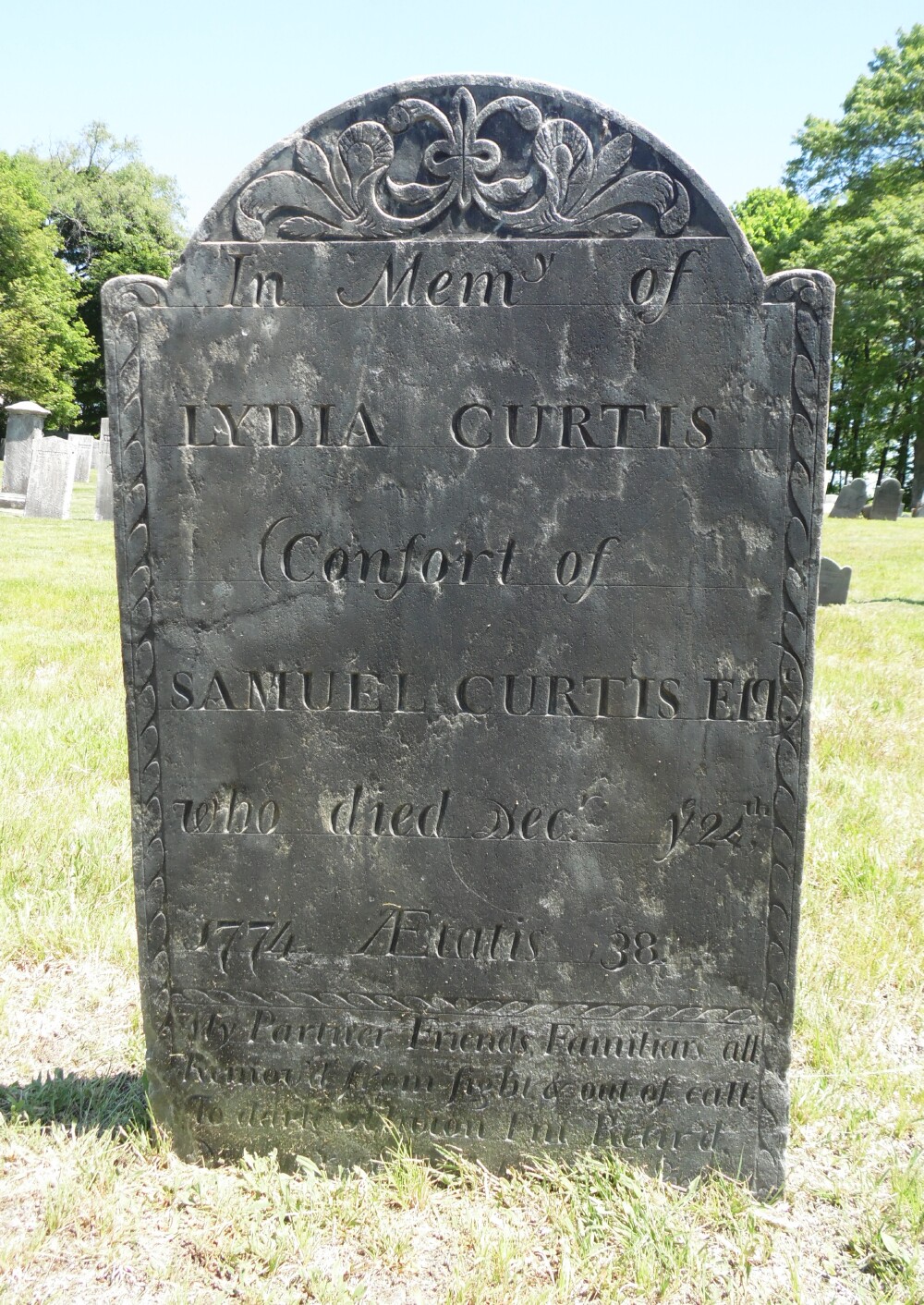
When Lydia (Woods Dexter) Curtis died at the end of 1772, her three surviving sons were all in their late teens, of age to be apprentices. They may therefore have left the household of their stepfather, Dr. Samuel Curtis.

Lydia was from a large and established family in Marlborough. The boys’ paternal relatives in Dedham were also rich enough to take them in if that seemed like the best course. (In 1771 their grandmother there offered to pay “the Charge of Rideing” for one boy so that he could recover from an illness through “moderate exercise.”)

Two of those Dexter boys went into medical professions, and it’s possible that Dr. Curtis helped to train them. But it’s also possible those sons were inspired entirely by their father, Dr. Ebenezer Dexter, and wanted little to do with Curtis. Here’s what we know about the next generation of Dexters.

William (1755-1785) went out to Shrewsbury, perhaps to train under Dr. Edward Flynt, who had treated his father in his last illness. In February 1775, at the age of nineteen, William married a local woman named Betsy Bowker, age twenty-one. Their first child, named Ebenezer after William’s father, arrived eight and a half months later.

By then, Edward Flynt and William Dexter had enlisted as surgeon and surgeon’s mate for Gen. Artemas Ward’s regiment of the Massachusetts army. The young man’s handwritten commission signed by James Warren for the Massachusetts Provincial Congress appears above. Dexter served in the Continental Army through the siege of Boston and accompanied the regiment down to New York under Col. Jonathan Ward.

Betsy Dexter, according to her 1843 application for a pension, was living at her father’s house in Shrewsbury all this time. William “returned after warm weather in 1776,” she recalled. He had reached the age of majority that April, and I wonder if he inherited his father’s estate in Marlborough. (It’s worth recalling that Dr. Curtis decided to leave town and go to sea the next spring.)

According to his wife, William brought his little family home to Marlborough in December 1776 and set up his own practice as a physician. William and Betsy had children in 1777, 1778, and 1779, all of them living to adulthood. But like his father, William Dexter died young, at age thirty. His widow Betsy remarried ten years later to a man named Edward Low and settled in Leominster, living until 1846.

Samuel Dexter (1756-1825) became an apothecary, married Elizabeth Province in Northampton in 1790, and settled in Albany, New York. She was a daughter of John and Sarah Province of Boston, and thus a sister of the David Province whom George Gailer sued for helping to tar and feather him in 1769, when she was six. How she got to Northampton is a mystery. Samuel and Elizabeth had five children, three living to adulthood. Samuel was the longest-lived of the brothers, and Elizabeth died in 1846.

John Dexter (1758-1807) worked as a quartermaster sergeant for the Continental Army for several years under Col. Timothy Bigelow of Worcester. On 3 Mar 1783 he married a woman from Marlborough named Mary Woods, likely a cousin on his mother’s side, with a justice of the peace from Stow rather than a local minister presiding. John and Mary Dexter’s first daughter arrived in late December, and three more children followed by 1794.

John was a tanner. He gained the militia rank of ensign under Gov. John Hancock. In the 1790s the Dexters moved to Berlin. Then John “went into Trade,” and in 1802 he moved the family into Boston. John died five years later, Mary in 1823. The children all lived well into the latter half of the nineteenth century, but none had children.

John Dexter’s third child was John Haven Dexter (1791-1867), who apprenticed at Benjamin Russell’s Columbian Centinel but then went to work in the mercantile firm of Amos and Abbott Lawrence. J. H. Dexter wrote two books (Mercantile Honor, and Moral Honesty and A Plea for the Horse) and also left several manuscripts of genealogical information and gossip about his family and fellow Bostonians, some helpfully transcribed and published in 1997.

Friday, September 18, 2020

The Short Marriage of Dr. Samuel and Lydia Curtis

In March 1769, as I recounted yesterday, Dr. Ebenezer Dexter of Marlborough died. He left a wife, Lydia, and four young sons.

By July a young physician named Samuel Curtis was boarding in the Dexter house, treating the late doctor’s patients.

On 30 June 1771, the widow Lydia Dexter married Dr. Samuel Curtis. The bride was almost eleven years older than the groom.

The new couple’s neighbors wouldn’t have needed medical training to understand their reason for marrying. Their first child, Anna, arrived on 5 October, or three months and one week later.

Those necessary nuptials didn’t stop Dr. Curtis from gaining his neighbors’ respect, however. In 1772 the Marlborough town meeting put him on its committee of correspondence.

Unfortunately, the Curtis marriage didn’t last long. Not because of incompatibility but because of illnesses.

In August 1772 the Dexters’ youngest son, Jason Haven Dexter, died at the age of ten.

In March 1774, Lydia Curtis gave birth to her second child by Samuel, a daughter named Christian. (Was she named after Loyalist neighbor Christian Barnes?) But within one week in December, the Curtises’ first daughter, Anna; their new baby, Christian; and Lydia all died.

Dr. Samuel Curtis was now the widowed stepfather of three teen-aged boys from Lydia’s first marriage. I don’t know how much the doctor was involved in raising them after that, though. He was putting a lot of his energy into Patriot politics, serving on the town’s committee of correspondence and as a representative to the Middlesex County convention in August 1774.

On 1 Mar 1775, when Henry Barnes tried to shelter two British officers on a clandestine scouting mission, Curtis politely pushed himself into the house and quizzed Barnes’s young niece about those family guests. That September, the Massachusetts government appointed the doctor as a justice of the peace.

In March 1777, Dr. Curtis’s Patriotism took a new turn. He enlisted as a surgeon on the Continental Navy ship Hancock under Capt. John Manley. Joseph Ross has provided a long discussion of Dr. Curtis’s adventures in the navy. It doesn’t agree in all details with the profile of Curtis in Sibley’s Harvard Biographies, so I need more time to sort those out.

But I definitely plan to come back to Dr. Samuel Curtis. He seems to have found drama wherever he went, often by making it himself.

TOMORROW: The Dexter boys.

Thursday, September 17, 2020

Young Doctors in Marlborough

Yesterday I introduced the figure of Dr. Ebenezer Dexter, Marlborough’s leading doctor in the 1760s.

On 3 May 1769, however, the Rev. Ebenezer Parkman of nearby Westborough wrote in his diary: “Dr. [Edward] Flynt came from Dr. Dexter, and says the latter will hardly live through the Night.”

Indeed, Dr. Dexter died the next day. On 6 May Parkman reported: “Dr. Dexter was buryed at Marlborough.”

The doctor’s gravestone, shown here courtesy of Find a Grave, says, “He was an Eminent Physician but was Subject unto Death even as other men.”

The doctor’s death left an opening in his town. Two young physicians soon moved into Marlborough, hoping to establish their own practices.

One was Amos Cotting, born in Waltham in 1749 (under the name Cutting, which would have been apt for a surgeon). He graduated from Harvard College in 1767 and then earned his M.A., presumably while studying medicine. Charles Hudson’s history of Marlborough said Cotting came to that town “On the death of Dr. Ebenezer Dexter, 1769,” but he wasn’t on the list of men paying the poll tax in 1770, so he may have arrived later.

The other young doctor was Samuel Curtis, eldest son of the Rev. Philip Curtis of Stoughton. He graduated from Harvard a year before Cotting and also gained an M.A. Curtis was apparently starting to practice medicine in Roxbury when he learned about the sudden opportunity in Marlborough. Hudson quoted from the town’s warning-out records to reveal what happened next:
Dr. Samuel Curtis came to town, June, 1769; came last from Roxbury. Taken in by widow Dexter.
The following month, the Rev. Mr. Parkman rode to Marlborough to see a sick relative, and he also recorded: “Visit Mrs. Dexter and Dr. Curtis who lodges there.”

Curtis had advantages over Cotting in any competition to become the town’s favorite physician. He was slightly older, and as son of a minister instead of a farmer he was probably more genteel. But the big edge appears to have been that he was now living in Dr. Dexter’s house, thus endorsed by Dr. Dexter’s wife, all ready to see Dr. Dexter’s patients.

The widow Dexter was still only in her early thirties, with four young sons to care for and an estate to maintain. Then, in early 1771, Lydia Dexter became pregnant.

TOMORROW: Can this marriage be saved?

Wednesday, September 16, 2020

Dr. Ebenezer Dexter Practicing Medicine in Marlborough

Ebenezer Dexter was born in 1729, son of the Rev. Samuel Dexter of Dedham.

Ebenezer chose to go into medicine, and after marrying Lydia Woods, daughter of a selectman in Marlborough, he set up his practice in that town. In 1754, the year of their marriage, Ebenezer was twenty-five and Lydia was eighteen.

We can glimpse Dr. Dexter at work in the diary of the Rev. Ebenezer Parkman in nearby Westborough. That minister is shown here, and his diary is fully transcribed and annotated at this website.

Westborough’s northern precinct, which would eventually split off as Northborough [stay with me here], had its own meeting and minister, the Rev. John Martyn. On 13 Aug 1756, Parkman wrote about his colleague’s fifteen-year-old son Nathaniel being ill:
Sarah and Suse undertake to go to Mr. Martyn’s: they return at Eve Well. They tell me Natty Martyn, tis feared, grows bad.
Twelve days later, the father traveled to see Dr. Dexter:
Mr. Martyn has carryed down his Son Natty, to Marlborough to Dr. Dexter’s, who gives great Encouragement concerning the Sore, that he Shall effect the Cure of it.
And indeed, almost a year later Parkman mentioned the son again, apparently healthy: “Natty Martyn brought a Letter from Leominster.” Nathaniel Martyn survived and eventually became a doctor himself.

(The trouble in Leominster was that the Rev. John Rogers had turned into an Arminian, or what a later generation would call a Unitarian. This required a council of other ministers and eventually an approval to allow the Leominster congregation to split. But I digress.)

Dr. Ebenezer and Lydia Dexter had four sons between 1755 and 1762: William, Samuel, John, and Jason Haven, the last named after the minister who had succeeded the doctor’s father in Dedham. Dexter also served Marlborough as the town clerk starting in 1768.

But in May 1769, Dr. Dexter, still only thirty-nine years old, fell seriously ill.

TOMORROW: Opening for a young doctor.

Wednesday, August 12, 2020

Paula Bagger with More on Marlborough

After my series of postings about Revolutionary conflict in Marlborough, Paula Bagger of the Hingham Historical Society filled me in on some details about the household of Loyalist merchant Henry Barnes. She has researched that family in the course of making important discoveries about the enslaved artist Prince Demah.

In particular, Paula identified the little girl whom Dr. Samuel Curtis quizzed about the two undercover British army officers who visited the house in March 1775. So I’m sharing Paula’s information as a “guest blogger” posting.


The “child” was undoubtedly Christian (“Chrisy”) Arbuthnot, the daughter of Christian Barnes’s brother William Arbuthnot from Hingham. Born in 1765, Chrisy would have been ten years old whereas the other young women who lived with the Barneses from time to time (Catharine Goldthwait and several Murray nieces of Elizabeth Inman) were older. The Barneses became Chrisy’s guardians when William Arbuthnot, a widower, died in the late 1760s.

Chrisy decamped to England with the Barneses in 1776 and died in 1782 in Bristol.

As for Catharine Goldthwait (1744-1830), who remained in Marlborough trying to preserve the estate in 1775, she traveled to England in the late ’70s or early ’80s. She spent time with her parents, Thomas and Catherine (the latter Henry Barnes’s sister), who had settled in Walthamstow outside London. But she seems to have spent some time with the Barneses in Bristol as well.

In July 1795, Catherine wrote Deborah Barker of Hingham to tell her that Christian Barnes had died in April. Henry Barnes died in London in 1808.

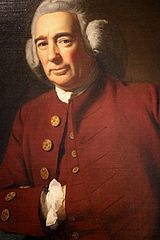
In England, Catharine Goldthwait met and married eighty-year-old Dr. Silvester Gardiner, a wealthy Loyalist widower [shown above]. They returned to America together. After Gardiner died, she married the merchant William Powell of Boston, a wealthy Patriot widower. She had no children of her own but adopted a niece and then two great-nieces.

Thanks, Paula!

One of the oddities I came across while researching this extended family is that Catharine Goldthwait’s sister Mary (1753-1825?) married Francis Archibald in Maine, was widowed, and fell into mental illness—the reason her teen-aged daughter came to live with Catharine Powell in Boston and eventually take her aunt’s last name. Mary Archibald lived on relief in the homes of various Maine householders, including now-famous Revolutionary War veteran Joseph Plumb Martin for several years.


COMING UP: Gossip about Marlborough’s Dr. Curtis.

Tuesday, August 11, 2020

“I will take your Body and I will Tar it”

When I was posting about Henry Barnes’s conflict with his Marlborough neighbors in the summer of 1770, I looked for the text of the anonymous threatening letter he reported receiving in late June.

But I couldn’t find that text and had to settle for quoting the proclamation Lt. Gov. Thomas Hutchinson issued about it.

Later I came across the text of that letter in E. Alfred Jones’s The Loyalists of Massachusetts, so I’ll quote it today.

Henry’s wife Christian had already told her friend Elizabeth Smith about the local protesters:
the first thing that fell a Sacrifice to their Mallace and reveng was the Coach which caused so much desention between us they took the cushings out of and put them in the Brook and the next night Cut the Carraig to Peices.
I first interpreted that “desention” to be between the Barneses, perhaps arguing over the expense of the coach. But in another letter Christian Barnes told Smith about “the Person that cut your Coach to Peices,” meaning that vehicle had first belonged to Smith or her late husband. So now I’m wondering if there had been some disagreement between the two ladies over that coach—perhaps Smith insisting that the Barneses take it as she left for Britain and Christian Barnes trying to resist.

The anonymous letter referred to the coach as a “booby hut,” a New England term for a carriage or coach body put on sleigh runners, as John Hancock’s coach has been preserved. Was that just a pejorative reference, or had the Smith carriage been left on runners since the winter?

In any event, Henry Barnes’s public complaints about the destruction of that vehicle spurred the anonymous writer:
I understand you are about carrying your Old dam’d Booby Hutt to the General Court and from thence Home to England to get recompence for all the damage you have sustained since you have been an infamous Importer or a common Enemy to the Country—

Therefore if you only want recompence for the damage you have done the Country in Importing goods contrary to the Agreement of Body of Merchants on this Continent I will recompence you without going there or any where else for I am determined to fetch you to terms even if I do it at the expence of my own Soul, or the Coat of a Sore Back or any other punishment in this World only for the good of my Country, for I stile myself a Son of LIBERTY,

therefore if you will Shut up your Store and Sell nothing out, nor Import any goods till the Importation takes place you shall sustain no more damage

But if not I will Fire your House and Store and destroy all your substance you have on the earth, And I will take your Body and I will Tar it, and if nothing else will do but Death you shall have it certainly, and so you will have no more Notice and if you do it by the 20th June 1770 Good and well, and if not you may depend upon my being as good as my word and so I will never write no more and so I stile myself Inspector General
I find it striking that this letter doesn’t speak in the voice of the community as Whig missives usually did. Instead, the writer emphasizes himself as an individual—willing to sacrifice for the country, to be sure, but speaking and acting on his own. That makes me inclined to think it didn’t come from Alpheus Woods or another member of the Marlborough town committee to enforce non-importation but from someone riled up by the conflict and perhaps not in his right mind.

Wednesday, July 29, 2020

Getting Out of Marlborough in 1775

When we left Capt. William Brown and Ens. Henry DeBerniere, they were in a back room of Henry Barnes’s house in Marlborough, listening as he tried to send away a member of the local committee of correspondence.

Dr. Samuel Curtis had shown up that evening of 1 Mar 1775, uninvited and asking to stay to supper. Barnes told him the doctor that he couldn’t stay because the family already had company.

Dr. Curtis then turned to a child—DeBerniere wrongly understood the girl to be Barnes’s daughter—and asked “who her father had got with him.”

According to the ensign, “the child innocently answered that she had asked her pappa, but he told her it was not her business.”

Still suspicious but unable to learn more, the doctor left. Brown and DeBerniere decided he was probably going to gather his political allies, so they should stay only a couple of hours to rest. They would leave at midnight, regardless of the snowy weather.

But even that was too leisurely, DeBerniere later wrote:
we got some supper on the table and were just beginning to eat, when Barnes (who had been making enquiry of his servants) found they [local Patriots] intended to attack us, and then he told us plainly he was very uneasy for us, that we could be no longer in safety in that town: upon which we resolved to set off immediately
The two officers had been inside for only twenty minutes, they estimated. Barnes took them “out of his house by the stables, and directed us a bye road which was to lead us a quarter of a mile from the town.”

Brown and DeBerniere hiked through the blowing snow until they reached “the hills that command the causeway at Sudbury, and went into a little wood where we eat a bit of bread that we took from Mr. Barnes’s, and eat a little snow to wash it down.”

At the next house, a man came out and asked Brown, “What do you think will become of you now?” By this time the officers were totally on edge, unable to tell whether the people they met recognized who they were and were helping to plan an assault or just thought it strange for two strangers to be out walking in the night during a snowstorm.

In Sudbury the officers encountered “three or four horsemen.” Those riders moved to either side of the road, letting the strangers pass between them while they watched silently.

Brown and DeBerniere reached the safety of Isaac Jones’s Golden Ball Tavern in Weston about 10:30 P.M., having walked 32 miles that day. The next day, the officers got into Boston, where they were safe. They wrote out a detailed report for Gen. Thomas Gage, which is our source for all this information. They turned over sketches and maps of the route out of Worcester in case the general planned a march that way.

Meanwhile, back in Marlborough, soon after the British scouts left, there was yet another knock on Henry Barnes’s door. This time the whole Marlborough committee of correspondence showed up and “demanded” to see the visitors. Barnes insisted those two men were not army officers “but relations of his wife’s, from Penobscot, and were gone to Lancaster.” According to DeBerniere’s report:
they then searched his house from top to bottom, looked under the beds and in their cellars and when they found we were gone, they told him if they had caught us in his house they would have pulled it about his ears.
Among the Marlborough committee-men was Alpheus Woods. Five years earlier, Woods had also been on the town committee to make Barnes follow the non-importation agreement. Barnes’s supporters had accused Woods of sending the merchant a letter threatening to burn down his potash works and house. Now Woods had nearly caught Barnes harboring British army spies.

Henry Barnes departed Marlborough a few days after his busy evening. His wife Christian Barnes went to stay with her friend Elizabeth Inman until past the actual outbreak of fighting in April. Taking refuge in Boston, they left the Marlborough estate in the hands of Henry’s adult niece, Catharine Goldthwait.

Under Massachusetts committee of safety guidelines, local committees weren’t supposed to confiscate property from Loyalists as long as some family members were still living peacefully on it. But the Marlborough committee including Alpheus Woods did take property from the Barnes estate, including furniture they loaned to Col. Henry Knox. Catharine Goldthwait complained about that to the General Court, to no avail.

In February 1776, Henry Barnes learned that a bequest worth almost £2,000 was awaiting him in London. He and Christian sailed that month, ahead of the end of the siege. Catharine Goldthwait followed a few years later, and Massachusetts confiscated her uncle’s property. Henry and Christian Barnes received a small Loyalist pension until he died in 1808.


Tuesday, July 28, 2020

“Safe no where but in his house”

On the evening of Wednesday, 1 Mar 1775, Henry Barnes opened the door of his large house in Marlborough (shown above, even larger after nineteenth-century expansion).

Two strangers from England stepped inside. They apologized to Barnes “for taking the liberty to make use of his house” and revealed that they were British army officers in disguise–Capt. William Brown and Ens. Henry DeBerniere.

Barnes wasn’t surprised. His Patriot neighbors had actually expected these spies to arrive in Marlborough the previous day. Alerted by Timothy Bigelow of Worcester, “a party of liberty people” had gone to [Abraham] Williams‘s tavern to meet them. Marlborough “was very violent,” Barnes warned the officers, and they “could be safe no where but in his house.”

The merchant asked Brown and DeBerniere if they had spoken to anyone on their way into town. The officers mentioned telling a baker where they were headed. “A little startled,” Barnes explained that the baker “was a very mischievous fellow, and that there was a deserter at his house.”

Indeed, the three men soon determined that that deserter, Drummer John Swain, was from Capt. Brown’s own company in the 52nd Regiment. Swain had certainly recognized his officer and confirmed everyone’s suspicions that these visitors were military spies.

There was another knock at the door. Leaving the officers in an interior room, Barnes went to see who it was. A doctor—local historian Charles Hudson later guessed that this was Dr. Samuel Curtis (1747-1822)—had come for supper. Barnes knew that Dr. Curtis:
  • hadn’t been invited for supper that evening.
  • hadn’t visited the house for two years.
  • was a member of Marlborough’s committee of correspondence.
The merchant told the physician that because there was company he “could not have the pleasure of attending him that night.”

Dr. Curtis then turned to a child in the room. (Ens. DeBerniere believed this girl was Barnes’s daughter, but other sources say Henry and Christian Barnes had no surviving children but raised a couple of nieces.) The doctor asked the girl who Barnes “had got with him.” Presumably all the other adults in the house held their breath.

TOMORROW: Leaving Marlborough behind.

Monday, July 27, 2020

“As we intended to go to Mr. Barns’s”

On Sunday, 26 Feb 1775, Capt. William Brown, Ens. Henry DeBerniere, and their bodyservant were in Worcester. They were all soldiers in the British army, but undercover in civilian dress.

Because New England colonies had laws against traveling from town to town on the Sabbath except for emergencies, the two officers stayed in their inn all day. DeBerniere later reported that “we wrote and corrected our sketches” of the roads out from Boston to Worcester. When the sun set, they went out to the hill around town and sketched some more.

Worcester was one of the places that the Massachusetts Provincial Congress had started to gather cannon for its army. The officers had seen some of those guns in town. Their mission was to spot such weapons and collect information that Gen. Thomas Gage would need in planning a march to seize them.

That same day in Essex County, Lt. Col. Alexander Leslie led just such an expedition to capture other cannon being prepared for the congress in the north part of Salem. He couldn’t move fast enough and withdrew empty-handed.

News of that confrontation appears to have riled up the Patriots of Worcester. About eight o’clock some men came to the inn to ask about Brown and DeBerniere, eventually telling the landlord they knew his guests were “officers of the army.”

Brown and DeBerniere decided to leave the next day at dawn, buying some roast beef and brandy from their landlord for the journey. Traveling east on foot, they were overtaken by a horseman who looked at them narrowly before riding off along the Marlborough road. Later generations identified this man as Timothy Bigelow, a Marlborough native who had become a successful blacksmith and political activist in Worcester.

The officers chose to turn off to Framingham, where they got to see a militia company drill outside their tavern. The next day they moved on to Isaac Jones’s Golden Ball Tavern in Weston, where they had also stayed on their hike west (shown above). Brown and DeBerniere sent their sketches back to Boston with their servant. Then they decided that, since no one had bothered them for a couple of days, it was safe to keep scouting the roads.

A snowstorm kept the officers indoors until two in the afternoon, but finally they set out for Marlborough. It was snowing again as they arrived about three miles from the center of town. DeBerniere wrote:
a horseman overtook us and asked us from whence we came, we said from Weston, he asked if we lived there, we said no; he then asked us where we resided, and as we found there was no evading his questions, we told him we lived at Boston; he then asked us where we were going, we told him to Marlborough, to see a friend, (as we intended to go to Mr. Barns’s, a gentleman to whom we were recommended, and a friend to government;)
Henry Barnes may have made peace with his Marlborough neighbors in 1770, but he was still a Loyalist. The British command in Boston expected he would provide a safe house for these scouts. So, however, did his suspicious Patriot neighbors.

The rider eventually came out and asked Brown and DeBerniere if they “were in the army.” They said they weren’t, but “were a good deal alarmed at his asking.” After some more “rather impertinent questions,” the man rode on into town.

The officers guessed that horseman intended “to give them intelligence there of our coming.” Indeed, as the two men reached the more thickly settled village, “the people came out of their houses (tho’ it snowed and blew very hard) to look at us.”

A baker asked Brown were they were going (addressing the captain as “master” to butter him up). Brown dropped Barnes’s name. That doesn’t seem like very good spycraft, but the captain probably figured everyone was watching where they would go anyway.

TOMORROW: Inside Henry Barnes’s house.

Sunday, July 26, 2020

More Mild Mayhem in Marlborough

All right, now that I’ve calmed down from spotting William Benson staying out of the political dispute/gang brawl in Marlborough on 17 July 1770, I can move on to the people who were actually involved.

The “Honest Ploughjogger” letter published in the 6 August Boston Gazette continued its finger-pointing at Henry Barnes’s political enemies:
…the said mob alias sons of liberty knowing their cause to be bad, and their best man not coming, they dare not move forward in a body, but sent out a scout of about five in number well arm’d to reconnoitre the street, among which was Waldo Woods, the young fellow said to be wounded, as ill-bred a fellow as ever existed, who came foremost armed with a tomhawk [sic] and his mouth full of oaths, imprecations and curses, and assaulted John Gott Brigham, and swore he would split out his brains, and would bring 200 people in half an hour, upon which said Brigham told him he had better go home and be peaceable or he would flog him.
As we recall, in the previous month the Boston Evening-Post had published a letter characterizing the wounded person as a “young lad.” John Waldo Woods, son of Alpheus Woods, was actually eighteen years old. Eighteenth-century society still classified him as a boy, but that’s certainly older than the first newspaper account led me to believe.

Furthermore, by this account young Waldo wasn’t just practicing “to learn to drum” before being enticed away by four men from the gathering at Simon Howe’s house. Instead, he went out looking for trouble with a tomahawk and accosted John Gott Brigham.

As for Brigham, he was nineteen years old. So we have two older teen-aged boys, each feeling politically justified, with possible local feuds, drinking, and sharp weapons added to the mix. Oh, this will end well.
Then said Woods drew out a sharp pointed knife, and swore he would stab him to the heart, and made a pass at his belly, upon which Brigham seized him by the arm, and took the knife out of his hand and thereby saved his own life; but it seems in the scuffle of taking away the knife, Woods bro’t the point of it against his own shoulder, and made a scratch equal to the scratch of a pin, not one drop of blood lost, and then he cry’d murder and run home with wet breeches, and no other person than Brigham offered to meddle with him: and neither Brigham nor any other person who was at said Simon How’s that night, had any sort of weapon, either wood or iron with them, nor did any of them attempt to meddle with or molest any Person that pass’d the street that evening.
The previous letter claimed that Brigham and a companion had dragged young Woods back to Howe’s party, where the host said “he tho’t they had carried matters a little too far.” Then there was a discussion of legal liability with more threats and promises. The “Ploughjogger” letter didn’t mention any of that, even to deny it. Which makes me think something like that happened.

Looking at court records from the next term might reveal whether either side did proceed to filing suit for assault. In addition, the “Honest Ploughjogger” closed his letter suggesting that Alpheus Woods would be hauled up for threatening Henry Barnes:
It has been surmiz’d that A——s W—ds was the author of that villainous letter threatning of Mr. Barnes that he would murder him and destroy all his substance by fire. There is now such sufficient proof, that it is thot’ the villain will soon be bro’t to the bar to receive sentence; and if justice does but take place, there is no doubt but it will prevent his further proceeding in his wickedness.
In fact, tensions eased with the collapse of the strict non-importation movement that summer. But eventually this local rivalry came to a head, and one family had to leave town.

TOMORROW: Visitors to Marlborough in 1775.

Saturday, July 25, 2020

“Pitched upon for their leader and herald”

We’re looking at two accounts of what happened in Marlborough on the night of 17 July 1770.

One, published in the Boston Evening-Post and quoted here, said that embattled importer Henry Barnes had promised free alcohol to his supporters, including young men who worked for him. They all gathered at Simon Howe’s house, and then a few went out looking for trouble.

The other was written on 25 July, 250 years ago today, and I started quoting it yesterday. Its writer, “An Honest Ploughjogger,” said the trouble started because the local Sons of Liberty gathered at Alpheus Woods’s house in order to destroy Barnes’s property and possibly him.

Both sides of the political divide therefore felt, or at least told the world that they felt, that the other side was preparing for violence, so they were justified in taking steps to defend themselves. Which is a lot like the larger political conflict in Massachusetts.

The “Ploughjogger” letter stated:
The drum beating very briskly, and the mob alias sons of liberty, collecting together, induced those persons to tarry at Mr. How’s to see the event; and about 40 of the said mob being met at said Woods with their weapons of death, waiting for orders; [but?] it seems one William Benson a negro who was pitched upon for their leader and herald being a fellow of more sense than the rest of them, did not come among them,…
Hold on—there’s a familiar name! Someone I’ve been tracking for years, in fact.

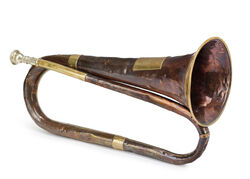
A man of African heritage named William Benson (1732-1790) was the son of Nero Benson (d. 1757) and the father of Abel Benson (1766-1843). Nero was enslaved to the Rev. John Swift of Framingham until that minister died in 1745 and then to his son-in-law in Sudbury, Dr. Ebenezer Roby. Abel grew up free in the Framingham vicinity and served in the Continental Army starting in 1781. Both grandfather and grandson played the trumpet as part of their military duties.

Locals in Framingham and Needham recalled that a black trumpeter helped to rouse local militia early in the morning of 19 Apr 1775. In 1908 a genealogist identified that trumpeter as Nero Benson, but he’d been dead for almost two decades by then. The identification then switched to Abel Benson. But no one had reported that trumpeter was only nine years old, and Abel didn’t mention military service in 1775 when he applied for a Revolutionary War pension.

I’ve posited that William, the biological link between Nero and Abel, was that trumpeter. He could have learned the instrument from his father and passed it on to his son, I suggested. He was in his early forties, of militia age, in 1775.

Now in this letter from Marlborough we have a reference to “one William Benson a negro” whom at least forty young men of the town supposedly saw as a “leader and herald”—and traditionally a herald blows a trumpet.

William Benson was born in the Swift household in Framingham. After the minister died, he probably went west with his mother to the household of another son-in-law, Joseph Collins of Southborough. By 1762 William Benson’s name appeared on the records of multiple towns in that area. He and his wife Sarah Perry, a teenager from Sudbury, were warned out of Shrewsbury. Collins tried to force Benson back into slavery, with their dispute settled in Benson’s favor by a court case in 1764.

William and Sarah Benson had their first child, Kate, in Framingham in 1763. (Kate grew up to marry Peter Salem, then going by the name Salem Middlesex.) Their subsequent children, including Abel, aren’t on the Framingham records; that might have been an oversight, but the family was probably moving around for work.

The “Ploughjogger” letter suggests that in 1770 William Benson was in nearby Marlborough, and was seen as the sort of man who could rouse the youth into patriotic action, most likely with his trumpet. Except that Benson was wise enough to stay out of the fight between the white men at Simon Howe’s and the white men at Alpheus Woods’s.

TOMORROW: When someone pulled out a knife.

Friday, July 24, 2020

“A general aversion to truth, honesty, peace and good order”

Yesterday I quoted a letter published in the Boston Evening-Post and Boston Gazette in July 1770, alleging that supporters of the Marlborough importer Henry Barnes had roughed up a “young lad” with “edged weapons.”

On 25 July someone using the pseudonym “An Honest Ploughjogger” wrote to the printers of the Gazette angrily refuting those charges. Edes and Gill waited until 6 August before running the letter, which didn’t match their usual political line. Maybe it was just to fill their extra page that day, but eventually the printers acceded to the request at the top of that letter:
Please to give the following a Place in your next, and you will oblige several of your constant Readers, as well as Friends to Peace and good Order.

IN the Boston Evening Post of the 23rd of July current, a piece was published, dated at Marlboro’, being an infamous scandalous libel, without any connection, good sense, and scarcely one word of truth in the whole. No notice would have been taken of it, had the true characters of the authors been as well known abroad as they are at home.

Every man of honesty looks upon himself even degraded, when either of them speak well of him; one of them is an old man, very enthusiastical both in religion and politics, and sometimes delirious at times, ever since he lay with a g—l at Rutland; the other, the father of the young man (said to be wounded) is a low liv’d dirty worthless fellow as ever existed, meddling with every bodies business, and much neglecting his own; deals out often scraps of latin and law; pretends to have all sorts of sense, but never yet discovered the least degree of common sense, and seems to have a general aversion to truth, honesty, peace and good order.
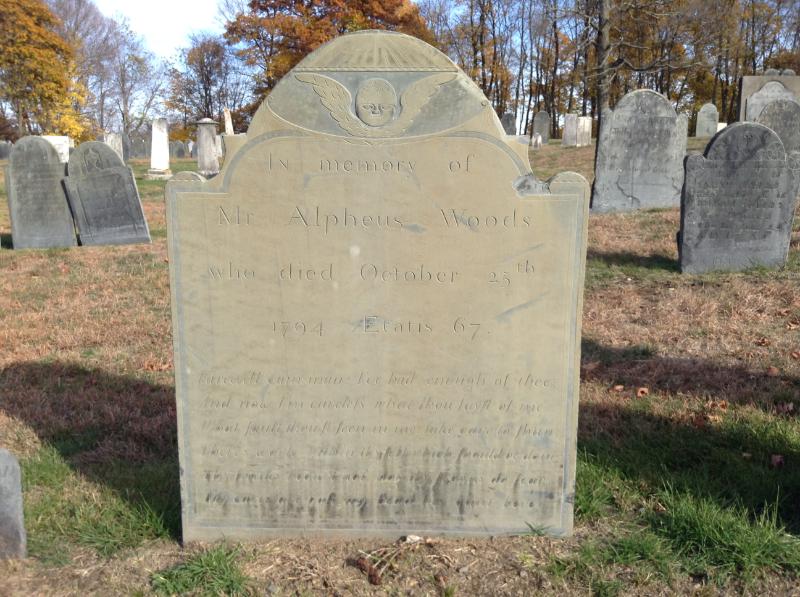
Later the letter stated the name of the second man: Alpheus Woods (1727-1794), a farmer who had just been named to Marlborough’s five-man committee to enforce the non-importation boycott. He would continue to be politically active into the 1780s. His gravestone appears above, courtesy of Find a Grave.

The letter never named the first man. People in Marlborough and neighboring towns presumably recognized the references to and “old man,” “enthusiastical…in religion” and in a relationship with a young woman in Rutland. But there were lots of “New Light” worshippers in Massachusetts, and Marlborough had lots of links to Rutland, where many younger sons had moved for fresher farmland. I looked in the records of the Marlborough meeting and the Marlborough Association of nearby ministers digitized at New England’s Hidden Histories, and didn’t spot clues to this man’s identity.

So the most I can pull out of those references is another example of how small-town feuds could intersect with imperial politics. This dispute wasn’t just about non-importation and how to protest the Townshend duties. It was also about this letter writer’s dislike of Alpheus Woods’s “scraps of latin and law” and the other neighbor’s enthusiasms.

As this passage makes clear in addressing the effigies of Henry Barnes:
As to the first part of their piece, relating to the old horse and the hay bags, &c. we shall take no further notice of it than only as one of those hay bags or men of straw was hang’d up and then burnt, it seems to be an emblem of the last describ’d author; who for his immorality is now hang’d up by the church, and whether he will be made better, or finally burnt, is at present very uncertain.
That boils down to, “Yes, people burned Barnes in effigy, but you’re even more disgraced.”

Then the letter offered a completely different narrative of the evening when the “young lad” was accosted, starting:
As to what they published relating to the affair of the 17th current, there is not one word of truth in the whole account, but quite the reverse; the truth of the case is, that divers of the persons mentioned in the aforesaid piece, accidentally came into Marlboro’ street that evening, and they being credibly informed that a mob who call’d themselves sons of liberty, were to meet that night at Alpheus Woods, in order to destroy Esq; Barnes’s buildings and substance, and had given it out freely, that if Mr. Barnes should oppose them, that they would cut the throats of all his family that night.
In sum, both sides claimed the others were looking for trouble.

TOMORROW: How the night turned violent.

Thursday, July 23, 2020

Assault on a “young lad” in Marlborough

Now to get back to events in Marlborough in July 1770.

Back here I quoted a letter published in the Boston Gazette on 30 July 1770, describing an effigy of local merchant Henry Barnes on horseback. And here I quoted the part of that article discussing the threatening letter Barnes received in the middle of the month.

I now know that letter was first published in the Fleet brothers’ 23 July Boston Evening-Post, 250 years ago today.

That anonymous correspondent didn’t end with comparing Barnes to Don Quixote. He (or she) went on to this alarming tale, naming names all the way:
proclamation is made of liquor to be given away to all that were for Barns, whereupon there assembled on the 17th of july current a great number———Capt. Nathan Brigham jun’r, Solomon Newton and Joshua Newton all of Southboro’, Joseph Parker, John Richards, Alexander Boyd, Luke How, Thomas Swann, (all Barn’s workmen) John Gat Brigham, Joshua Lamb, Simon How, Peter Wood, Joel Barnard, Joseph Lewis, Solomon Brigham and Moses Barns, and others.

In the evening they would some of them sally out with clubs &c. and collar those that passed by in the street. A young lad in the neighbourhood had beat a drum that evening, as he had sundry evenings before, in order to learn to drum, and there came to him John Richards, and inticed him to go with him, promising no harm should befall him, & after he had got him some way from home he was assaulted by Alex. Boyd, Joseph Hale and John Gat Brigham.—

One struck him with his fist,——but two others made several passes at his throat with edged weapons, and stab’d him in his shoulder thro’ his shirt; he then cried out murder and said they had stab’d him; whereupon others came running to his relief from being murdered outright on the spot; he pleaded with them to let him go home: but Hale and Brigham would not let him and hall’d him along by Barn’s to Simon How’s, the man that had kept open doors & dealt out the liquor that evening.

Mr. How expressed himself very sorry and said he tho’t they had carried matters a little too far.—Two of them said they would detain him and lick him to death if he would not promise not to prosecute them, and Thomas Swann said he would pay the fine. Some of their company not being much liquor’d procured his liberty to go home.

The young lad is like to recover, though his life has been in imminent danger. And his father is prosecuting the affair, and it is hoped that the civil authority will prevent the repetition of such a horrid Tragedy as that of the 5th of March in Boston.
The Boston Gazette typesetters wrote of the Massacre as a “Tradegy.”

By the time Edes and Gill had published that letter, there was another, contradictory report on its way to them.

TOMORROW: “an infamous, scandalous libel.”

Sunday, July 12, 2020

The Speakman Brothers at War

When we left the Barnes and Speakman families in Marlborough in the fall of 1770, they appear to have arrived at some sort of truce.

Henry Barnes continued to run a potash manufactory and general store. Older brother William Speakman probably managed the farming land while younger brother Gilbert Warner Speakman set up a tannery.

Four years later, in the summer of 1774, Parliament’s Coercive Acts radicalized the Massachusetts countryside far more than it had been before. Marlborough held a town meeting to endorse the Solemn League and Covenant, the strictest boycott yet on British goods and people selling them in America.

On 8 July, John Rowe, uncle and mentor of the Speakman brothers and then trimming toward the Crown, wrote in his diary:
I heard of the bad behaviour of the people at Marlborough; its said the Speakmans were concerned; if it proves so, they have not only behaved ill, but contrary to my sentiments, and forfeited my regard in future for them.
Then came the “Powder Alarm” of 2 September, when thousands of Middlesex County militiamen poured into Cambridge, spurred by Gen. Thomas Gage’s seizing of gunpowder from a provincial storehouse and false rumors of British military atrocities. The Marlborough militia companies were prominent in that action according to Boston merchant John Andrews:
Though they had an account at Marlborough of the powder’s being remov’d, last Thursday night, yet they were down to Cambridge (which is thirty miles) by eight o’clock Fryday morning, with a troop of horse and another of foot, both under the command of Gib. Speakman, a young fellow who serv’d his time with John Rowe.
When the real war came in April 1775, William Speakman marched with the Marlborough militia infantry. (That is, in fact, the last record I’ve found of him.)

Gilbert Warner Speakman became a captain in Col. John Glover’s regiment, drawn mostly from Marblehead, at the start of 1776. On 17 March, the British military evacuated Boston, taking many Loyalist families with them, including Henry and Christian Barnes.

The Speakmans’ uncles, John Rowe and Ralph Inman (shown above, courtesy of the Boston Athenaeum), stayed behind to tough out the change in political power. Just one week after the evacuation, with the British fleet still massed off shore, Rowe wrote in his diary:
I dined at Mr. Inman’s with him, Mrs. Inman, Genl. [Nathanael] Green, Mrs. [Catherine] Green, Tuthill Hubbard, Mrs. Forbes, Mr. Lowell [?], Mrs. Rowe, and Capt. Gilbert Speakman.
Rowe had regained his regard for his nephew, now that that nephew was on the winning side.

In May 1776, Capt. Gib Speakman advertised for deserters from his regiment. Those newspaper notices provide valuable descriptions of how Marblehead soldiers were dressing.

The next year, Capt. Speakman transitioned to being commissary of military stores at Springfield and then commissary of ordnance for the ill-fated Penobscot expedition of 1779. He offered damning testimony in the court-martial of Paul Revere. Revere was acquitted while Speakman was still petitioning the Massachusetts legislature for reimbursement for that mission in 1798.

The Speakmans expected to marry within the same class and religion, as their aunts had done by marrying Rowe and Inman. That became more difficult after the evacuation of so many genteel Anglican families as Loyalists. Gib Speakman and his sisters Hannah and Sarah all ended up marrying siblings in the Minot family of King’s Chapel, including historian George Richards Minot.