


J. L. BELL is a Massachusetts writer who specializes in (among other things) the start of the American Revolution in and around Boston. He is particularly interested in the experiences of children in 1765-75. He has published scholarly papers and popular articles for both children and adults. He was consultant for an episode of History Detectives, and contributed to a display at Minute Man National Historic Park.

Subscribe thru Follow.it


•••••••••••••••••


Showing posts with label William Herschel. Show all posts

Monday, April 10, 2023

How Americans Took Sides over Georgium Sidus
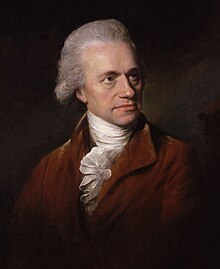
The Age of Revolutions just published M. A. Davis’s article “American Uranus: The Early Republic and the Seventh Planet.”

Like my political snakes article on the same site, this starts with eighteenth-century science and moves into the political implications of that new understanding.

In the middle of the war over American independence, the astronomer William Herschel (shown here) extended the reach of Britain in a new way: he discovered a planet beyond Saturn.

All previous planets had been known since antiquity, so this was a very big deal. Herschel himself had reported this object as a comet, just a very big one in a near-circular orbit far from Earth.

“You will find I hope that we have not been idle,” wrote Royal Society president Joseph Banks, sending the news to a member busy negotiating the Treaty of Paris: Benjamin Franklin. For those men, scientific discovery transcended new national borders.

Thomas Jefferson also admired Herschel, noting “the number of double stars” he had discovered. But he didn’t like the name that Herschel gave to that new planet, telling the Rev. Dr. Ezra Stiles that the British “foolishly call it Georgium sidus,” after King George III.

At that time Jefferson was calling that planet “Herschel,” after its discoverer. Not surprisingly, that suggestion had come from a French astronomer, Jérôme Lalande. No matter that Herschel himself had chosen the name Georgium sidus [George’s star], after his patron, who granted him £200 per year.

There were still other names proposed. The Swedish astronomer Erik Prosperin suggested “Neptune,” which some colleagues connected to the strength of Britain’s Royal Navy. Davis’s article reports that in 1791 the Jeffersonian National Gazette of the U.S. used “Cybele.” That was the mother goddess of ancient Phrygia. Anything to avoid honoring King George.

Davis writes:
Not every American hesitated to use the British term for the new planet, even in the Early Republic. In 1795, the Gazette of the United States and Daily Evening Advertiser, an vigorously Federalist paper from Philadelphia, mentions the “‘tenth muse,’ lately arrived from ‘Georgium Sidus.’”

Given the Anglophilia of the Federalist press, perhaps this is not surprising – but the divide over the new planet was not quite that simply partisan. On April 20, 1801, DC’s National Intelligencer and Washington Advertiser had no problem referring to (in Herschel’s obituary) his role as “discoverer of the new planet Georgium sidus.” And the National Intelligencer, in an age of partisan divides in the press, was an enthusiastically Republican paper and one closely affiliated with Jefferson! Jefferson’s preferred “Planet Herschel” appeared next in the Alexandria Gazette, Commercial & Political in 1811 – a Federalist paper.
Of course, 1811 wasn’t a good time for U.S.-British relations. American writers continued to call the planet “Herschel” most of the time through the 1840s. Only then did a dark horse candidate gain favor.

Back in 1781, the German astronomer Johann Elert Bode had responded to William Herschel’s announcement by going back into older star charts and finding the planet catalogued there, mistaken for a star. By stringing those sightings together, Bode calculated its slow orbit. He also proposed a name for that planet. Since the mythological Saturn was Jupiter’s father, Bode apparently reasoned, the next planet out should be Saturn’s father.

Now technically the Latin name for Saturn’s father was “Caelus.” That god’s standard Greek name was “Ouranos.” But Bode used Uranus, and that’s the name Americans came around to. Even Britain’s National Almanac Office adopted Uranus in 1850.

Wednesday, May 17, 2017

Joseph Pope’s Own Orrery

All the talk in the 1770s about David Rittenhouse’s orreries and the honor they brought to America might have inspired a young Boston watchmaker named Joseph Pope (1748-1826).

Pope married Ruthy Thayer, daughter of a tallow-chandler, on 13 May 1773. She died on 22 Aug 1775 in Braintree, at a relative’s house. Apparently the couple had evacuated there during the siege of Boston. I don’t see a record of Joseph serving in the army.

After the British military evacuated in 1776, it appears, Pope returned to Boston and started to build an orrery. At least, he later said he had started that year. But his project didn’t attract any print attention for a long time.

Pope’s plan for the orrery was ambitious. It was to show not only the Sun, the Earth, the Moon, and the known planets from Mercury to Saturn, but also all the known moons of those planets and Saturn’s rings.

In 1781, after the watchmaker had already put in years of work, astronomer William Herschel announced the discovery of Uranus (which he called Georgium sidus, after George III, who in return named him King’s Astronomer). Pope ignored that and kept to his original plan, working in his shop on the west side of Orange Street.

Then on 20 Apr 1787, as the Massachusetts Gazette reported four days later:
About sun-set,…a fire broke out in the malt house of Mr. William Patten, in Beach-street, a little to the north-east of Orange-street, at the south part of the town; and it is with real sorrow we announce, that the devastation which ensued, within about three hours time, was never equalled in this place, excepting in the years 1711 and 1760, since its settlement. . . .

The wind blowing fresh from the Northward, the coals of fire, burning shingles, &c. were, however, carried, in great quantities, and lodged on the roofs of many of the houses in Orange-street, some of which were instantly on fire, while a number of the interjacent buildings were preserved. It raged on both sides of the street, with awful fury, as long as the current of wind was nearly parallel with the direction of it; but coming to that part which inclines a little more south-easterly, and the wind tending something more to the eastward, the fire was stopped in this street, but raged on the west side of it till an opening of vacant land towards the bay, on the west side of Boston neck, prevented farther destruction. . . .

The place where the fire commenced being remote from most of the engines—the driness of the weather—10 or 15 buildings being in flames in a few minutes after the fire began, which greatly divided the attention of the inhabitants—the scarcity of water, the tide being down, and but few pumps near at hand—were circumstances which baffled the utmost efforts of the citizens for putting a stop to the devouring element for the space of upwards of three hours.
Two days later, the Continental Journal ran a list of inhabitants who had been burned out—including Joseph Pope and his brothers.

TOMORROW: And Mr. Pope’s orrery?