


J. L. BELL is a Massachusetts writer who specializes in (among other things) the start of the American Revolution in and around Boston. He is particularly interested in the experiences of children in 1765-75. He has published scholarly papers and popular articles for both children and adults. He was consultant for an episode of History Detectives, and contributed to a display at Minute Man National Historic Park.

Subscribe thru Follow.it


•••••••••••••••••


Showing posts with label John Callahan. Show all posts

Thursday, February 12, 2026

“Cast away upon the Isle of Sable”
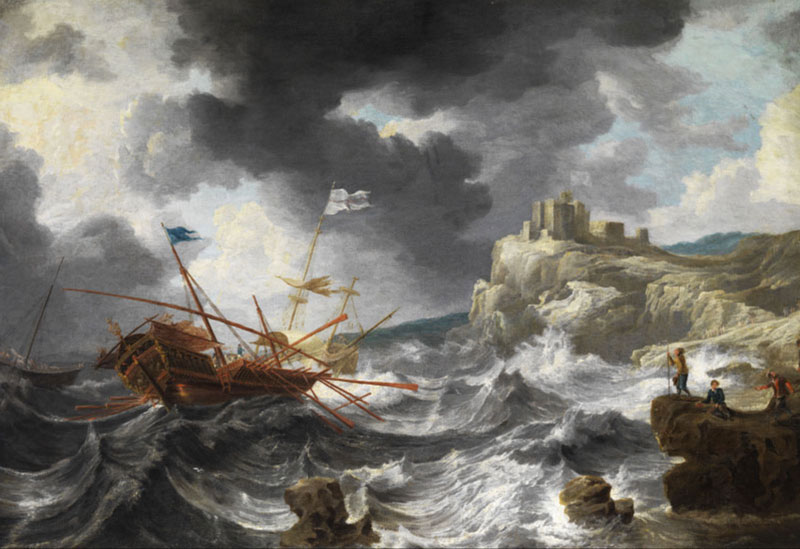
There are a lot of unanswered questions about the disappearance of Capt. Thomas Parsons, his ship, and his crew in early 1772.

As colonial newspapers show, shipwrecks happened all the time. The rocky shores of Nova Scotia were notorious for their dangers.

For example, on 16 Sept 1773, the Massachusetts Spy ran this report from John Callahan, just arrived from London:
Capt. Callahan, last Thursday se’nnight, went on shore at Cape Sable, where he saw the Wreck of a Snow, New-England built, Pink Stern, called the Kitty, loaded with Lumber, had all her Cargo on board, but her Sails, Rigging and Crew gone.
That might seem mysterious, even suspicious. But back on 10 May the Boston Post-Boy had reported:
A Fisherman, who arrived here last Week, informs, that the Snow Katy, Capt. Major, from this Port for Newfoundland, is cast away upon the Isle of Sable: The Vessel and Cargo is entirely lost; the Captain and Mate, with great Difficulty saved their Lives, and the Remainder of the Crew, (five in Number) perished.
In the case of Capt. Parsons’s schooner, within a year New Englanders suspected he’d met with foul play. What led them to that conclusion? Unfortunately, our sources don’t say.

Those sources do raise some geographic questions about this voyage. One is why, if Capt. Parsons was heading from Newburyport to the Caribbean, he’d ended up far north. Perhaps that was a way of catching trade winds. Perhaps a storm had pushed his ship off course. Perhaps people didn’t remember his destination accurately. Or perhaps Parsons’s ship was returning from the islands and overshot Cape Cod because of weather.

The March 1773 news item quoted here said a schooner had been lost “near Cape-Sable,” which is the southernmost corner of the Nova Scotia peninsula. In Newburyport people came to believe Parsons had met his fate at “St. Mary’s,” which must mean St. Mary Bay’s at the westernmost corner. Was that close enough to count as “near Cape-Sable” to a New Englander?

Yet another mystery: Near the mouth of St. Mary’s Bay sits the village of Comeauville, where Basile Boudrot was granted 300 acres in May 1772. That was three months after Capt. Parsons reportedly left Newburyport, and in that season Boudrot was supposedly busy digging up buried money. Yet somehow the people of New England came to believe that Basile Boudrot was responsible for the death of Capt. Parsons and his crew.

TOMORROW: Spotting the culprit?

[The picture above is Bonaventura Peeters’s “Shipwreck,” ca. 1652, courtesy of the Journal of Historians of Netherlandish Art.]

Monday, August 25, 2025

“No Carriage from L. & if there was—no permiso. to pass”

On 22 Apr 1775, three days after the Battle of Lexington and Concord, the Boston merchant and magistrate Edmund Quincy sat down to write a letter to John Hancock.

Quincy wasn’t just a colleague of Hancock in the Boston Patriot movement. He was also the father of Dorothy Quincy, Hancock’s fiancée (shown here).

Earlier that month, Dorothy had taken the family carriage out to Lexington and then used it to flee with Lydia Hancock from the regulars on 19 April. That left her father stuck inside Boston as the siege began.

Justice Quincy wrote to Hancock:

Dear Sir,

Referring you to a Ltr. wrote the 8th. currt: [i.e., of this month] I’m now to enclose you one I had this day out of [ship captain John] Callihan’s bag:—32 days fro. Lond: into Salem pr young Doct. [John] Sprague—who tells me [captain Nathaniel Byfield] Lyde sail’d 14 days before them wth. Jo. Quincy Esq & other passengers—that some of ye Men of War & transports sail’d also before Callihan. As to ye times [?] at home—ye Doctr. is little able to inform us—youl probably have Some papers via Salem.—————

As to my Scituation here ye unexpected extraordy. event of ye 19th: of wch. Ive wrote my thots—) now & for days past impedes my leaving town[.] No Carriage from L[exington]. & if there was—no permiso. to pass ye lines—The people will be distress’d for fresh provisions—in a Short time—

The Govr: & Genl.—is very much concern’d about ye Provl. troops without—wch. probably will be very numerous ’ere long if desired—Dorchester hill—I’m just now told, is possess’d by our provls—& I hope its true, for Ive reason to believe, ye Genl. had ye same thing in Contemplation——

Here they say & swear to it all round, in excuse of ye Regulars, proceeding at Lexinton—that they were attack’d first & I doubt not many oaths of Officers & men are taken before J. G—ley [Justice Benjamin Gridley], to confirm it—but among others who contradict ’em—Lt. [Thomas] Hawkshaw yesterday near expiring thro. his bad wounds——Call’d Several Credible persons to him & told ’em as a dying man—that he was obliged in Conscience to confess—that the first Action of ye Whole at L. was done by the Kings troops—wr. they killd & wounded eight men—but doubtless you have sufficient proof of ye Fact & every Circumstance attending near at hand—

my advice is that the Whole Matter—be forwarded at ye province expence or otherwise wth. the Greatest dispatch—that so your Advices may be in London as early as GG’s——

If the people of G:B: are not under a political Lethargy—The Account of ye late Memorable Event, will excite them to consider of their own Close Connexion wth. America; and to Suppose at length, that ye Americans especially N. Englanders will act as they’ve wrote, & engag’d—A Blessed Mistake our prudent G[ag]e has indeed made, & ye Sensible part of his Officers & Soldiers own it—& are vastly uneasie—

I had been at L— days to pay my real regards to yr. good Aunt & Dolly—but wn. we shall have ye passage clear I dont [know] we are in hopes of effecting soon. But ye Gl. is really intimidated & no wonder wn. he hears of 50.000 men &c.—Much is Confess’d of ye intripedity of ye provinls. Im much Surpriz’d to hear that the Regulars abt. 1700—were drove off & defeated by near an Equal Corps only.—

Capt. [John] Erving, at his house yesterday Gave me ye Account of Hawkshaws Confesso.-proved to him at ye No: End yesterday to be real, he also says that from all he can gather from ye Circumstances of the people of Gt. Bn. they are by this day in a State of fermentation—if we could be so happy, as to get speedily home, the necessary advices—I doubt not a Flame would soon appear—& ere its quench’d, may it burn up ye heads of the Accursed Faction fro. whence ye present British Evils spring

Genl. Gage is thrown himself into great perplexity—Ld. Percy is a thorn in his side & its said has menaced him Several times, for his late imprudence—a Good Omen

I cant nor ought I to add, but my best regards—& Love respectively & that I am
Dr. Sir Your most affecto: Friend
& H. Servt.
Ed. Quincy

youl excuse erro. for Ive not time to correct em
There are a lot of interesting bits of intelligence in this letter—Gen. Thomas Gage hoping to seize the heights of Dorchester, Col. Percy criticizing his Concord mission, Lt. Hawkshaw saying the British soldiers had fired first. Quincy urged Hancock and his colleagues to send the Patriot side of events to London as quickly as possible.

How did John Hancock respond to seeing this letter? In fact, he never saw it.

TOMORROW: Diverted mail.

Saturday, December 28, 2019

Seeing London with Nathaniel Balch

I’ve long puzzled over why hatter Nathaniel Balch chose to sail to Britain in May 1775, a month after war broke out in Massachusetts.

Balch may have been planning the trip for a while for business or personal reasons and just didn’t want to cancel, even in wartime.

But John Andrews’s letter (quoted yesterday) suggests that the price of the passage was unusually high. Passengers paid Capt. John Callahan extra to sail the Minerva across the Atlantic without a full cargo.

Like a lot of Bostonians, Balch had good reason to get out of the besieged town before it came under attack. But he didn’t take his wife and five children with him. He also still owned real estate in Providence, so he probably could have found refuge for the whole family in America.

Balch doesn’t appear to have been so deeply involved in politics that he would need to go to London to lobby for a patronage job, like his fellow traveler Samuel Quincy, or to talk with British opposition politicians on behalf of the Boston Whigs, as his friend Josiah Quincy had just done.

I know of no documents from Balch explaining his motives for the voyage—no letters, diary, business accounts, memoir.

We have a few glances of what Balch actually did in London after arriving on that ship full of Loyalists. They come from the diary of Samuel Curwen, a Loyalist from Salem who had crossed the ocean after a visit to Philadelphia. On 31 July, Curwen wrote:
Went in company with Messrs. I[saac]. Smith, N. Balch, J[oseph]. Greene Esq. and Berry [or was this John Barrell?], Colburn Barrell, a Mr. Peacock, a Glass Dealer in Fleetmarket Street, our Guide and young Oliver, to the [word?] Flintglass house over blackfryar’s bridge where we saw a drinking glass formed, completely made, ink bottles and smelling bottles, from which place returning we proceeded through a paved ally so called on this Side the Bridge to a glass grinder and polisher, whom we saw work. Dined at Kingshead Jury Lane, the glass grinder worked in a loft up 50 or 60 stairs. From dinner we repaired to St. Paul’s…
(A rumor was going around London that day that Lord North had shot himself. It was false.)

Three of those men and one more got together on 22 August:
Went to Bow with Nathaniel Balch, lying beyond White Chappell, from whence we took Coach, 2 Miles in order to see the China Manufacture, but the clerk received and dismissed us very cavalierly, with an abrupt answer, that he should not show it to us.

We met J. Berry and Mr. Silsbee at the door having trudged it afoot, returned by Bromley, stopping at Mile End, we took a bowl of punch and some bread and cheese, and from thence walked together to the Exchange, where J.B. and Mr. S. departed together.

Mr. B. and myself entered Lamp Chop House in Bartholomew Lane, took each a porringer of broth, and after taking a Survey of different rooms in the Bank, departed each for his lodgings, I being weary and lame.
Those expeditions might indicate that Balch was studying English manufactures. Then again, that might just have been a sort of sightseeing that businessmen from the provinces did.

On 24 August, Curwen, Balch, Silsbee, Isaac Smith, “John Berry and his Brother,” and “Capt. Martin” took a boat up the river to Barnes, then hiked through Kew Gardens and Richmond to Hampton Court Palace. Curwen thought the royal family should get out there more often. “Out of hatred to his grandfather the last excellent Geo. 2, the present King seems to make it a point to hate every object of his worthy grandfather’s approbation,” he wrote. The next day the men took a coach on to Windsor Castle as well.

Finally, on 28 August Balch called on Curwen “to go to Mr. Gilbert Harrison’s to dine from whence we went to puddledock.” Curwen visited the “Herald’s office” to inquire about his coat of arms, and there the men had tea.

The diary of former governor Thomas Hutchinson shows that in those same months he often saw people that Balch had sailed with, but he never mentioned meeting Balch. That might indicate a political gap between them, or perhaps just a social gap between a hatter and a governor.

The genial hatter’s reason to be in London that summer remains a mystery.

TOMORROW: Home again.

Friday, December 27, 2019

The Voyage of Nathaniel Balch

Earlier this year I introduced the figure of Nathaniel Balch, a hatter who was prominent in Boston society before and after the Revolutionary War.

Balch was close to Revolutionary leaders, particularly John Hancock. In August 1769, Balch entertained at the Sons of Liberty banquet. So I assume he was a Whig.

When the war broke out in April 1775, Balch was inside Boston. Many people who opposed the royal government spent the next few weeks working to get out to the countryside, a safe distance behind the provincial lines. Balch had other plans.

On 6 May, merchant John Andrews wrote to his relative William Barrell:
Your uncle Joe has engag’d a passage for London, at the expence of one hundred Guineas for himself and wife, to expedite her sailing without waiting for freight. Balch, brother Joe and his wife, Jno. Amory, &ca., &ca., go in her. . . . You must know, that no person who leaves the town is allow’d to return again.
That same day the young merchant David Greene sent the same news to a relative in Demerara:
I am going to London with Captain Callahan, and expect to have for fellow-passengers Mr. J[oseph]. Green and wife, of School Street; Mr. J. Barrell and lady, Mr. John Amory and lady, Mrs. Callahan, Mr. Balch, Mr. S[amuel]. Quincey, D[avid]. Sears, &c. As I have long entertained thoughts of making this voyage, as it will be impossible to do any business here, and as I may find something to do in England, I doubt not you will approve of my intention.
John Callahan sailed regularly between Boston and London in the 1770s. His name often appeared in the newspapers attached to the latest news or goods from London. When Gov. Thomas Hutchinson left Massachusetts in the spring of 1774, he traveled on Capt. Callahan’s Minerva.

The 22 May 1862 Boston Evening Transcript offered more information, tagged to Viscount Lyndhurst, the eminent British attorney who had been born in Boston as the oldest son of John Singleton and Susanna Copley:
If it is of sufficient importance to know the exact time that Lord Lyndhurst left this country for England, allow me to state that he was a passenger on board the ship Minerva, Capt. Callahan, which sailed from Marblehead May 27, 1775, with fourteen other cabin passengers; thirty-nine souls in all on board.

The cabin passengers were Mrs. Callahan, Joseph Green, Esq., and lady, Mr. John Amory and lady, Mrs. Copley and three children, Mrs. Jackson, Samuel Quincy, Esq., Lieut. Wm. Aug. Merrick, of the Royal Navy, Mr. David Green, Mr. David Sears, Mr. Nath. Balch, Mr. Isaac Smith, Jr., besides servants, and six steerage passengers.

The above is from the diary of a fellow passenger, who landed at Dover 24th June, and arrived in London 6 P. M. next day. Lord Lyndhurst was born 21st May, 1772—of course, was just 3 years and six days old.

E.
At first I doubted that the Minerva really sailed from Marblehead, thinking that was a legal fiction that the Customs service allowed because the port of Boston was still legally closed. But the 31 May Massachusetts Spy reported, “Captain Callahan is to sail this week for London from Salem.”

Balch, therefore, along with the many Loyalists in that party, got a pass to leave besieged Boston, crossed into territory held by the provincial army, and then got onto a ship to sail to Britain itself. He must really have wanted to go.

TOMORROW: Reasons for leaving.