J. L. BELL is a Massachusetts writer who specializes in (among other things) the start of the American Revolution in and around Boston. He is particularly interested in the experiences of children in 1765-75. He has published scholarly papers and popular articles for both children and adults. He was consultant for an episode of History Detectives, and contributed to a display at Minute Man National Historic Park.

Subscribe thru Follow.it


•••••••••••••••••


Showing posts with label Mary Washington. Show all posts

Monday, July 18, 2022

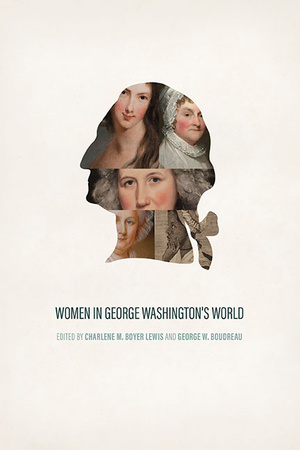
Discussing the Women in Washington’s World

In 2018, Mount Vernon hosted a symposium on the theme “‘A sensible woman can never be happy with a fool’: The Women of George Washington’s World.”

That has given rise to a collection of scholarly essays titled simply The Women of George Washington’s World, officially published later this month.

The women profiled include:
  • the first President’s mother, Mary Washington
  • his wife, Martha Washington
  • wives of significant colleagues like Margaret Arnold and Abigail Adams
  • friendly advisor Elizabeth Powel
  • poet Phillis Wheatley
  • enslaved servants Moll Judge, Ona Judge, and others
  • Ann Pamela Cunningham, the woman who preserved Mount Vernon with a nationwide fundraising campaign
The editors of this collection are Prof. Charlene M. Boyer Lewis of Kalamazoo College and George W. Boudreau of the McNeil Center for Early American Studies. The book’s publisher has shared a short interview with them.

For a longer interview, Roger S. Williams will host Boyer Lewis and Boudreau in the online History Author Talks series on Tuesday, 19 July, starting at 7:00 P.M. Register to listen to this convesation live here, or check back at History Author Talks in a few days for the video.

Tuesday, November 30, 2021

Two Talks about the Women behind the Commanders

Here are two more online talks to consider, both happening on Thursday but fortunately at different times.

Thursday, 2 December, 1:00 P.M.
New England Historic Genealogical Society
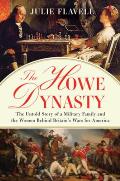
Julie Flavell, “The Howe Dynasty”

Many historians have documented the lives and exploits of Howe men including Richard Admiral Lord Howe and his younger brother British General Sir William Howe, victor in the Battle of Bunker Hill. But few have measured the influence of the Howe women including sister Caroline Howe, a friend of Benjamin Franklin, and her savvy aunt Mary Herbert Countess Pembroke.

Drawn from letters and correspondence, The Howe Dynasty sheds new light one of one of England’s most famous military families and forces us to reimagine the Revolutionary War. Don’t miss hearing about this unique and riveting narrative work and Julie Flavell’s discussion with the celebrated historian Mary Beth Norton.
Julie Flavell was born in Massachusetts and now lives in Britain. Her first book was When London Was Capital of America. Mary Beth Norton is the Mary Donlon Alger Professor of American History Emerita at Cornell University, and her latest book is 1774.

Register for this event here.

Thursday, 2 December, 6:30 P.M.
Fraunces Tavern Museum
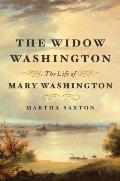
Martha Sexton, “Mary Ball Washington: George’s Good Enough Mother”
This lecture provides a sketch of the challenging life of Mary Ball Washington, who raised George and his four siblings largely alone—as well as her unfair treatment at the hands of his biographers.

Saxton’s book The Widow Washington is the first life of Mary Washington based on archival sources. Her son’s biographers have, for the most part, painted her as self-centered and crude, a trial and an obstacle to her oldest child. But the records tell a very different story.

Mary Ball, the daughter of a wealthy planter and a formerly indentured servant, was orphaned young and grew up working hard, practicing frugality and piety. Stepping into Virginia’s upper class, she married an older man, the planter Augustine Washington, with whom she had five children before his death eleven years later. As a widow deprived of most of her late husband’s properties, Mary struggled to raise her children, but managed to secure them places among Virginia’s elite. As such, Mary Ball Washington had a greater impact on George than mothers of that time and place usually had on their sons.
Martha Saxton is a professor of history and women’s and gender studies at Amherst College. She is the author of several books, including Louisa May Alcott: A Modern Biography.

This lecture will take place via Zoom. Register here by 5:30 P.M. on the day of the lecture.

Thursday, May 02, 2019

S.H.E.A.R. Comes to Cambridge, 18-21 July

On 18-21 July, the Society for Historians of the Early American Republic will have its annual meeting in Cambridge.

S.H.E.A.R. was founded in 1977 as “an association of scholars dedicated to exploring events and meanings of United States history between 1776 and 1861.” Or, as one of the founders put it, “the group between the William and Mary Quarterly and Civil War History.”

Anyone who studies “the long eighteenth century” knows the natural pressure to stretch chronological boundaries. Furthermore, while the Omohundro Institute’s conferences and journal cover colonial and Revolutionary America, it doesn’t function as an academic society affiliated with the American Historical Association. The only such society covering the period that includes the Revolution is the American Society for Eighteenth-Century Studies, and that emphasizes the interdisciplinary study of the culture of the “long eighteenth.”

As a result, the S.H.E.A.R. conference now tends to extend over the Revolutionary period. The titles of papers at this conference show they span the period of 1750 to 1874 at least. Look through the conference program (P.D.F. download) booklet for information about all the paper sessions, panel discussions, and keynote talks.

Here are some of the paper and session titles that caught my eye:
  • “Angelica Church and Caesar’s Daughter: Family and Faction in Federalist New York,” Tom Cutterham
  • “’Independence within Independence’: The Vermont Republic in the Revolutionary Atlantic,” Jacqueline Reynoso
  • “Death, Resistance, and Public Order: State Reactions to Slave Suicide in Eighteenth-Century New York,” Sarah Pearlman Shapiro
  • “The Rise and Fall of the American Fop: From John Adams to Washington [Irving?],” Irving Eran Zelnik
  • “The Modernity and Morality of the American Revolution and Early Republic as Displayed by Gouverneur Morris in France,” Emilie Mitran
  • “‘Government of the Slaves’: Recaptured Black Loyalists and the Birth of the Virginian State at the Chiswell Lead Mines, 1775-1785,” Sean Gallagher
  • “‘Out of the Jawbones of Scotch Grampius’: Scottish Merchants and Personal Identities and Personal Identities in Revolutionary North Carolina, c. 1770-1780,” Kimberly Sherman
  • “North American Quiet, West Indian Storm: The Constitutional Politics and Legacy of the Somerset Decision,” Matthew Mason
  • ”Tenacious American Indian Women: Thwarting Federal Treaty Policies and Dispossession Along the Wabash in the 1790s,” Susan Sleeper-Smith
  • “The Mother Of: Memorializing Mary Washington in Antebellum Virginia,” Kate Haulman
  • “Servants of General Washington?: Free Blacks and the Power of Imagined Social Capital,” Cassandra Good
  • “Jefferson Matters: Situating and Eighteenth-Century Founder in Twenty-First-Century America,” Annette Gordon-Reed
  • “Benjamin Rush and the Enlightenment Critique of Habit,” Joseph M. Gabriel
  • “Benjamin Banneker: Avid Astronomer, Ambivalent Abolitionist,” Eric Herschthal
Plus, there are roundtable discussions on “New Directions of Military History in the Early Republic,” “Telling the Republic’s Founding Story in Its Moment of Peril,” and “The Culture of Confederation: How Did the 1780s Make America?” Not to mention a whole three-paper session on “Vampirism, Healing, and Consumption in the Early National Era.”

Registration for the four-day conference costs $78 for members of professorial rank, $114 for non-members, and $52 for graduate students, independent scholars, and the like.


Monday, August 26, 2013

At Home with Mary Washington

At Boston 1775 headquarters we’ve been reading Where the Cherry Tree Grew: The Story of Ferry Farm, George Washington’s Boyhood Home, about the history and archeology of the farm where George Washington grew up and his mother, Mary, continued to live until 1772.

Along the way author Philip Levy explores the many legends that have grown up around Washington’s youth and how a lot of us still want them to be true. To interest reporters in the site during the excavations, he told them, “If the story of the cherry tree were true, it would have happened here.” What really happened there, he argues, is interesting in its own right.

The story includes buildings like Washington’s “Surveying Office” that went up well after his lifetime, a house found through archeology with great excitement but then dated to before the Washingtons, and a landscape that changed greatly along with the nearby Rappahannock River.

Yesterday was the anniversary of Mary Washington’s death in 1789. One of the Mount Vernon Twitter feeds linked to this article by Laura J. Galke from the Fredericksburg Free Lance-Star about how she’s remembered:
“[C]rude and illiterate,” “self-centered,” “slovenly” and a “veteran complainer” were just a few of the adjectives that Ron Chernow used to describe Mary in his 2010 book, “Washington: A Life.”

He went on to suggest that she suffered from “some mild form of dementia.”

This, despite a 1789 letter penned by George Washington himself after the death of his mother that stated that she possessed “the full enjoyment of her mental faculties and as much bodily strength as usually falls to the lot of four score.” . . .

Mary Washington remained a widow, a decision that some have criticized. Yet there were real consequences for Mary and her children had she married a second time. Her children and their land would have come under the control of their stepfather: He could construct buildings on their plantations, put up fences, take down fences and keep the plantations’ proceeds.

It was not uncommon for children to be split up between family members upon the death of the father, but Mary kept the family together. Financially, this was challenging since the money generated by their two largest plantations and by the mine was no longer part of the family’s revenue after her husband’s death.
We have rather little information about Mary Washington, despite her son being so important in American history. Authors have therefore used her as a vessel for their times’ conception of motherhood. She was nearly sainted in the nineteenth century: Benson Lossing even titled the book he wrote about her and her daughter-in-law Mary and Martha.

Then in the twentieth century, around the same time psychiatrists were saddling mothers with the blame for autism and schizophrenia, Mary Washington became a burden and a shrew. Now Galke is making a case for her as a sort of career woman managing her family’s economic resources.