J. L. BELL is a Massachusetts writer who specializes in (among other things) the start of the American Revolution in and around Boston. He is particularly interested in the experiences of children in 1765-75. He has published scholarly papers and popular articles for both children and adults. He was consultant for an episode of History Detectives, and contributed to a display at Minute Man National Historic Park.

Subscribe thru Follow.it


•••••••••••••••••


Showing posts with label Hadley. Show all posts

Monday, May 25, 2026

“The services of their father in repairing certain cannon”

Preserved Clap was born in Hadley, lived in the part of that town which became Amherst, and ultimately died at age eighty up the Connecticut River in Claremont, New Hampshire.

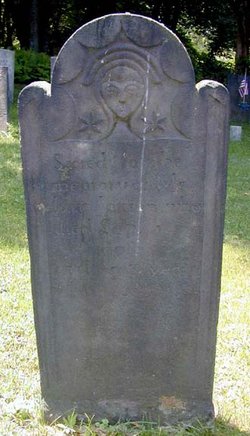
His headstone appears here courtesy of Find a Grave. His wife Eunice’s stone is nearby.

Clapp probably had earlier ties to that region. The Preserved Clap listed as serving in 1775 in a provincial company recruited largely from Bolton was said to come from Charlestown, New Hampshire, next to Claremont.

There’s also this curious anecdote related by Jaazaniah Crosby in his History of Charlestown in New Hampshire (1833):
On the 18th of June, 1756, while Lieut. Moses Willard was endeavoring to extinguish the fire, which had been kindled in his fence, he was attacked by the Indians, and killed behind the barn of the late Capt. John Willard, and near the academy. At the same time, his son Moses was wounded in the hip by a spear, which is said to have remained in the wound till after his retreat into the fort. It is further said that a Mr. Preserved Clap carried the same spear into the revolutionary war.
Preserved and Eunice Clap’s son Roswell was living in Claremont by 1790, per the first U.S. Census.

Dr. Clap’s children followed in his footsteps in at least one way: asking to be paid for his inventions during the Revolutionary War.

In 1837, the U.S. Senate took up “the petition of Roswell Clapp and Charlotte Reed, children and heirs of Preserved Clapp, praying compensation for the services of their father in repairing certain cannon belonging to the United States.” That referred to work sixty-one years before, just after the siege of Boston.

And the Clap family kept up that plea until 1841, thirty years after the doctor had died.

Friday, May 22, 2026

A Long Line of Preserved Claps

Dr. Preserved Clap, the man who stepped forward to render Boston’s broken cannon useful again in the spring of 1776, came from a long line of Preserved Claps.

According to The Clapp Memorial (1876), the doctor’s ancestors Roger Clapp and Joanna Ford arrived in Massachusetts in 1630, settling in Dorchester.

(This genealogy preferred the spelling “Clapp,” even changing how the name appeared in the period sources it quoted.)

Those Clapps named their first children Samuel, William, and Elizabeth, but then went full Puritan for most of the rest: Experience, Waitstill, Preserved, Hopestill, Thanks, Desire, Thomas, Unite, and Supply.

Preserved Clapp (1643–1720) moved to Northampton and had a son named Preserved Clapp (1675–1757), who likewise had a son named Preserved Clapp (1705–1758). That last man moved to Hadley. He married Sarah West in August 1730, and they had their first son the following May: Preserved Clap (1731–1811).

Histories of Northfield and Deerfield say that in the fall of 1754 our Preserved Clap was in charge of a small force—nine or ten men—guarding the settlement of Huntstown, now Ashfield.

The genealogy above didn’t have this information, but more recent researchers have found that in 1756 this Preserved Clapp married Eunice Atherton of Lancaster, and they started having children by 1760. His name appears a couple of times in the Amherst town records in the following decade.

On 1 Jan 1770 the Connecticut Courant of Hartford ran this notice:
CLOCKS and Watches made in the best Manner, by
PRESERVED CLAP
of Amherst.

Likewise all Kinds of Instruments in Surgery.
That’s the first surviving sign that the latest Preserved Clap had ambitions to be more than a country farmer.

The Colonial Society of Massachusetts published the image of a clockface above in an article about the engraver Thomas Johnston (1708–1767). At the top it says: “Preserved Clapp / New England.”

Did Clap order this plate from Johnston for a clock he planned to build, or for one he planned to own? And did he pay for it? Johnston kept that sheet of copper and used the other side to engrave a musical score for his publication of Daniel Bayley’s A New and Compleat Introduction to the Grounds and Rules of Musick (Boston, 1766).

Massachusetts Soldiers and Sailors of the Revolutionary War records that in 1775 a man named Preserved Clap served a few months as a private in the company of Capt. Benjamin Hastings of Bolton. I haven’t found anyone else named Preserved Clap of military age at the time. But it seems unusual for a forty-three-year-old man with military experience, social ambition, and some connection to medicine to serve in the ranks. In any event, Hastings’s company saw action at Bunker Hill.

The next time Preserved Clap surfaces in the records I’ve found is the Rev. Dr. Samuel Cooper’s 29 Apr 1776 letter to Samuel Adams, which refers to him as “a Country Surgeon in our Army.” By this time he was evidently using those “Instruments in Surgery,” not just making them. However, I haven’t found any record of Clap being surgeon for a Continental regiment. Perhaps he had taken that role in one of the militia regiments that Massachusetts raised in early 1776.

TOMORROW: Claiming credit.

Monday, August 19, 2024

“Claimed to be Burgoyne in order to get better quarters”?

Sherman Lohnes left a helpful comment on these lines in yesterday’s posting about Elisha Porter:
He later served in the Saratoga campaign as a militia colonel and escorted Gen. John Burgoyne east. According to the Porter family, Burgoyne left his host a dress sword.
Since December 2022 Lohnes has shared a blog on The 1777 March of the Saratoga Convention Army, the prisoners of war in Continental custody after the Saratoga battles.

Using sources and reminiscences of that journey, the blog reexamines a lot of the lore and local traditions about it.

Lohnes commented:
It's highly unlikely that General Burgoyne gave Elisha Porter his sword - or even that Porter accompanied Burgoyne from Saratoga to Cambridge.

Burgoyne offered his sword in surrender to General Horatio Gates on October 17th at Saratoga, who graciously allowed him to keep it. Prior to the surrender, Burgoyne took pains to negotiate terms with Gates that allowed all of his officers to not only keep their swords, but wear them while they were being held in Massachusetts.

Finally, Burgoyne didn't stay with Porter in Hadley. New Hampshire Militia Brigadier-General William Whipple, who did travel with Burgoyne and kept a journal of their trip, indicates that they crossed the Connecticut River south of Hadley, from West Springfield into Springfield, before continuing on through Palmer to Brookfield, and eventually Cambridge…
In this blog post, Lohnes wrote:
Though Porter was a colonel, and commanded the 4th Hampshire County Regiment of the Massachusetts Militia, which marched on September 24, 1777, to reinforce the Northern Army and served until October 17, 1777, Brigadier-General William Whipple’s Journal indicates Burgoyne did not pass through Hadley.

If Burgoyne didn't stop in Hadley (or Northampton), what may have led its residents think that he did? Perhaps the source of these tales is explained by British Ensign (and author) Thomas Anburey. According to Anburey, at some point along the march one of the officers with the British column went on ahead, and claimed to be Burgoyne in order to get better quarters. Being the first to reach "a small village, he personated General Burgoyne, and with such an air of confidence..." that his hosts being "compleatly outwitted, they assigned him the best quarters."
Another possibility is simply that the Porter family’s understanding of what happened grew in the telling from one generation of children to another. Marching out to Saratoga and back again in parallel with some prisoners from Burgoyne’s army could have become escorting the British general himself. A British officer’s dress sword acquired in any sort of way could have become connected to the most famous officer in that army.

Family and local historians writing in the 1890s and 1900s described seeing that sword, and they didn’t use the same language, indicating they observed independently. That strongly suggests the Porter family did own such an artifact. But evidently not an accurate knowledge of where it came from.

Thursday, August 15, 2024

“The General would be glad to confer with you”

Yesterday I started to profile Elisha Porter, as of July 1775 Hadley’s representative in the Massachusetts General Court and militia colonel.

Porter helped fellow lawyer Joseph Hawley of Northampton write this letter to the Continental Congress waxing eloquent on the need for more gunpowder:
Were you now in the Continental Army which invests Boston, it would beget unutterable vexation and torment in your hearts, to behold so large a body of so active brave men as that army consists of, insulted by the fire and blaze of the enemy’s cannon and mortars from their lines, ships, and floating batteries; and the same brave men, although possessed of divers good pieces of great ordnance, and willing, at any hazard, to improve them, yet wholly restrained from returning any fire of the kind, lest, by so doing, their little stock of gunpowder should soon be exhausted, and they reduced to the fatal necessity of laying down their arms or flying into the woods, leaving their houses to be burnt, their fields wasted; in short to give up and abandon the just claims of all America, and in effect to resign themselves and the lives of all the children of liberty in this whole Continent, to the arbitrary pleasure of a haughty Administration, instigated and influenced by enraged tories of our own breeding.
I couldn’t resist quoting that sentence, as transcribed by Peter Force.

In mid-July, Porter made a trip to New York, seeking “2 hhds Flints & 10 Tons Lead,” as the general wrote. He returned on 2 August, having succeeded in arranging for ”80,000 Flints & eight Tons of Lead.”

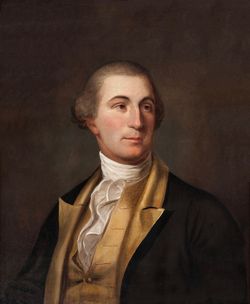
The next day, a council of war disclosed how little gunpowder the army had. Joseph Reed (shown above), Gen. George Washington’s military secretary, sent Porter a quick note:
If you could spare Time to ride down to Head Quarters this Afternoon the General would be glad to confer with you on a Matter of some Importance which you mentioned to him on your Return from New York
Porter made the short trip from Watertown to Cambridge. Later that day Washington wrote to Rhode Island governor Nicholas Cooke about the urgent need for gunpowder and the possibility of obtaining it from Bermuda, as quoted here. He concluded:
Col: Porter has undertaken to assist in the Matter or to provide some suitable Person to accompany [William] Harris to you who will communicate all Circumstances to you.
Porter personally carried that letter to Cooke. There was a brief glitch when they lost track of Harris, a sea captain who was continuing to shuttle among American ports. On 11 August, Cooke sent Porter back to Washington with a letter.

Gov. Cooke had already expressed his position: reports suggested that Bermudans were inclined to sell that powder to Continental forces, so there was no need to send a ship to the island, and besides Rhode Island didn’t have the resources for such a mission, anyway.

TOMORROW: The general’s response.

Wednesday, August 14, 2024

Elisha Porter: Widower, Militia Officer, Legislator

I’ve been writing about Gen. George Washington’s wish to obtain gunpowder from Bermuda in August 1775.

Today I’ll focus on one man involved in that effort: Elisha Porter (1742–1796) of Hadley.

Son of a member of the Council, Porter graduated from Harvard College in 1761 before going home to establish himself as a lawyer. In 1773 he became a captain in the Hampshire County militia.

Because of his college degree, there’s an entry for Porter in Sibley’s Harvard Graduates, but it says little about his personal life, blaming how “the collection of his manuscripts at the Massachusetts Historical Society consists chiefly of commissions and like documents.” Even so, I think that profile omitted some important events.

In 1762 Porter married Sarah Jewett, daughter of the minister in Rowley, and they had six children together. Then Sarah Porter died on 5 Apr 1775. Thus, Porter was a single father of six, still grieving, when news of the Concord battle arrived.

Porter marched east with the men of Hampshire County as a colonel, arriving in Cambridge on 25 April. Then came the transition from militia force to a Massachusetts army enlisted for the rest of the year. Still in his early thirties, Porter was probably one of the more junior of the provincial colonels. According to committee of safety records, Porter raised some men for the army, but as of 10 June they had still not arrived. “Col. Porter said he was willing to resign, rather than the public service should be hindered.”

Hadley showed its continued support for Porter by electing him to the Massachusetts Provincial Congress for the session starting on 31 May. In Watertown, colleagues addressed him by his militia rank, and he served on several committees on army matters, including trying to sort out issues for the artillery regiment.

Then on 8 June, according to Sylvester Judd’s History of Hadley, Porter’s son David drowned at the age of seven. We have no accounts of how he took this news, but he had “leave of absence” by the next day. Losing two members of his family in a little over two months must have been profound.

Porter soon returned east to throw himself into the war. Among the anecdotes of the Battle of Bunker Hill that the Rev. Jeremy Belknap wrote down in 1787 was: “Col Porter…conveyed 2 Hhd of Liquor to ye. Men in ye. works thro’ showers of shot from ye. floating batteries.” Porter also lost a gun on that battlefield.

On 24 June, after the congress learned that Gen. Washington was on his way, Porter was one of six members delegated to organize a reception “with proper respect, and to provide a house for him.” Later that same day the congress authorized him “to procure a scythe, and carry it to a blacksmith, to be fitted for a spear, in such a manner as he thinks fit, and bring it before this Congress, when fixed.” Porter was evidently a man of ideas.

Three days later, the congress added Porter to the committee on supplies, meeting in the Edmund Fowle house, shown above. He was also put on a committee to write to the Continental Congress and to Gov. Jonathan Trumbull of Connecticut, “requesting their aid in furnishing us with gunpowder.” On 10 July, Porter was the first man named to a committee to confer with Gen. Washington about adding to what was now the Continental Army.

Massachusetts held elections for a new General Court to meet on 19 July. Hadley must have elected Porter to this official legislature, but his name doesn’t appear in its records until late August. Evidently he was traveling out of the province on special assignments for some of that time.

TOMORROW: Working with the general.

Saturday, October 09, 2021

Tracking Down Diaries of the Québec Expedition

Earlier this week I mentioned Stephen Darley’s 2011 book Voices from a Wilderness Expedition, a bibliography of all known diaries and first-person accounts of Col. Benedict Arnold’s trek to Québec in 1775 and a listing of all the men on that march.

That book also included the transcripts of five diaries not previously published or noted in the last edition of Kenneth Roberts’s March to Quebec.

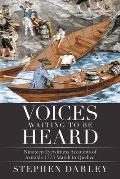
This year Darley published a new collection, Voices Waiting to Be Heard, with transcriptions of nineteen accounts of the expedition, some discovered in the last decade. The earliest actually appeared in the Pennsylvania Packet in March 1779.

In 2013, Darley and Stephen Burk published an article in Early American Review, which can be read here. It tackled the question of who wrote a diary of the expedition published in The American Antiquarian and Oriental Journal in 1900 without a name, still anonymous at the time of Darley’s first book.

Burk and Darley wrote:
From the pages of his journal it is apparent that the anonymous author was a Massachusetts soldier and that he had been in a Captain Smith’s company prior to transferring to Captain Hubbard’s company for the March to Quebec. He also mentions having a brother on the March although it is not evident whether both men were in the same company. The journal states that the author’s brother died “with fever and flux” on Dec. 28, 1775 near Quebec. Also, journal entries make clear that the author was not among the many that were taken prisoner during the Dec. 31 assault on the walled city of Quebec.
Using the listing of men in Darley’s book, the researchers found three named Pierce (or Peirce) in Capt. Jonas Hubbard’s company. David Pierce died during the march. John and William Pierce avoided both death and capture. But did either of them keep a diary?

In fact, they both did. Ens. John Pierce’s journal was published in Roberts’s compilation. One entry reads: “David Peirce…was taken again all on a sudden and died in a few days he had no senses after he was taken the last time –Adiu to my Friend and Namesake.” That doesn’t sound like a brother, just a man with the same last name.

Furthermore, Ens. Pierce was from Worcester, but David and William Pierce enlisted together from Hadley. They both served in Capt. Eliakim Smith’s company starting with the Lexington Alarm.

Those details confirmed William Pierce as the anonymous diarist first published in 1900. Knowing his name, Burk and Darley could fill out more details of the brothers’ lives. William was born in 1752, David two years later. Their father, a Harvard graduate, represented Hadley in the Massachusetts Provincial Congress.

David Pierce died just before Gen. Richard Montgomery led his doomed attack on Québec. William Pierce was sick that day, thus unable to fight. He remained with the Continental Army during its withdrawal in 1776 and was back in Hadley that summer. Pierce never married, dying in Hadley in 1832. Burk and Darley even found his gravestone.

All told, there are now thirty-eight known first-person accounts of the Arnold expedition, making it one of the most individually documented campaigns of the war. All the more striking since we usually hear about it as an event that took place in the wilderness under conditions that don’t seem conducive for keeping a diary.

Saturday, April 03, 2021

Locating “Revolution Happened Here”

Here’s a digital public history project to keep an eye on the coming years: Revolution Happened Here: Our Towns in the American Revolution, from the Pioneer Valley History Network.

This website invites local history organizations from western Massachusetts to upload pictures of Revolutionary-era items and the stories behind them.

As the project description says:
This website will become a place where visitors can discover how the American Revolution, while globally seismic in its consequences, was at its heart intrinsically local and intensely personal.
To be sure, there’s some regional rivalry or healthy resentment involved:
In the conventional, top-down history of the Revolution, western Massachusetts towns simply reacted to the ideas, decisions and actions of elites from Boston, the presumed hub of Revolutionary activity. Revolution Happened Here will enrich and complicate this narrative by sharing the debates and experiences in our towns.
Because of the Connecticut and Hudson Rivers, many towns in western Massachusetts had more business and other interaction with the colonies of Connecticut and New York than with Boston. Plus, the issues of import tariffs and military occupation that roiled Boston from 1767 to the start of the war had less direct impact on farming communities.

That makes the developments at the end of summer 1774 all the more striking. While Bostonians chafed under the return of troops, most other communities were free to organize and protest against the Massachusetts Government Act. The westernmost county began the court-closing movement in August, and it spread eastward.

Western Massachusetts returned to that tactic after the war, “regulating” courts again in protest of what the region’s small farmers saw as economic and legal hardships. The Boston trading class responded by dubbing that movement “Shays’ Rebellion” and raising funds for a militia force to put it down.

Some of the interesting artifacts on display on the Revolution Happened Here site include:
And this online collection should grow as the Sestercentennial proceeds.

Wednesday, January 08, 2020

A Double Exhumation in 1784 Connecticut

On 22 June 1784, the Connecticut Courant ran an article which has become highly significant for hunters of vampires and vampire lore. It read:
WHEREAS of late years there has been advanced for a certainty, by a certain Quack Doctor, a foreigner, that a certain cure may be had for a consumption, where any of the same family had before that time died with the same disease; directing to have the bodies of such as had died to be dug up, and further said that out of the breast or vitals might be found a sprout or vine fresh and growing, which, together with the remains of the vitals being consumed in the fire, would be an effectual cure to the same family:----

And such direction so far gained credit, that in one instance, the experiment was thoroughly made in Willington, on the first day of June instant, two bodies were dug up which belonged to the family of Mr. Isaac Johnson of that place, they both died with the consumption, one had been buried one year and eleven months, the other one year, a third of the same family then sick---

on full examination of the then small remains by two doctors then present, viz. Doctors Grant and West, not the least discovery could be made; and to prevent misrepresentations of the facts, I being an eye witness, that under the coffin was sundry small sprouts about one inch in length then fresh, but most likely was the produce of sorrel feeds which fell under the coffin when put in the earth.

And that the bodies of the dead may rest quiet in their graves without such interruption, I think the public ought to be aware of being led away by such an imposture.

MOSES HOLMES.
June 1784.
The Connecticut Courant had mentioned vampires back in 1765, as described here. Sometime around then, printer Thomas Green brought on little George Goodwin (1757-1844) as an apprentice, and by 1784 Goodwin was co-publisher of the paper. However, Green and his first partner, Ebenezer Watson, had died, and there’s no indication that anyone in the print shop remembered the earlier article. It’s significant that this item did not include the word “vampyre,” though the belief in the value of digging up, examining, and burning a body was the same.

Moses Holmes’s report was reprinted in the Pennsylvania Packet and Salem Gazette on 29 June, and possibly in other American newspapers. It’s the earliest evidence that any New Englanders seriously entertained a belief in vampires of the sort described by European authors earlier in the century—as dead people who sapped the lives of those close to them from within their graves.

In the expanded edition of Food for the Dead, Michael Bell described finding records of Isaac Johnson of Willington, Connecticut. This man was born in Windham in 1735, married in Willington in 1756, and died in Hadley, Massachusetts, in 1808. His gravestone appears above, courtesy of Find a Grave.

Isaac and his wife Elizabeth had two children die within the specified period: Amos (1760-1782) and Elizabeth (1764-1783). There may have been other children sick at the time; this genealogy page for Isaac doesn’t include all the names that appear in Willington baptismal records published in the New England Historic and Genealogical Register in 1913.

Amos Johnson was the right age to have fought in the Revolutionary War. Unfortunately, there were multiple men of that name in Connecticut records, so I can’t connect him with any particular company.

Bell reported that he couldn’t find the Johnson children’s graves in Willington. He did, however, find that on the 1790 U.S. census the household included two white males over age sixteen, no white males under sixteen, two white females, no slaves, and seventeen “other free persons”—far more than any other home in the town. That’s unusual, but what it means is unclear.

This newspaper article also offers evidence for Brian Carroll’s thesis that the vampirism belief was brought to America by Hessian military surgeons. As The Travels of three English Gentlemen, from Venice to Hamburgh account shows, belief in such vampires was established in Hesse by 1734. Hessian prisoners of war were housed in Tolland, next to Willington, during the war. Was the unnamed “Quack Doctor, a foreigner,” mentioned in the article one of those Germans?

TOMORROW: The other doctors on the scene.

Tuesday, April 28, 2015

Going Back to School with the Dublin Seminar, 19-21 June

The Dublin Seminar for New England Folklife will hold its fortieth annual conference on Friday through Sunday, 19-21 June, at Historic Deerfield.

This year’s theme is schools and education in early New England, and I’ll start off the papers with a look at the competitive culture of Boston’s pre-Revolutionary public schools.

Here’s the conference description:
Schooldays in New England, 1650-1900 is a three-day conference of nineteen lectures and related field trips on the culture of education in New England and adjacent areas of New York and Canada from the seventeenth through the nineteenth centuries.

The lecture program begins Friday evening with talks on the larger objectives of New England’s common schools; it continues Saturday morning with special purpose education for religious minorities and abolitionists and for blind, deaf, and disenfranchised students. Saturday afternoon will address the teaching experience and school architecture. After-dinner talks will cover one-room schoolhouse museums and “pen-pictures” of New England schools and schooling. Sunday morning will address curriculum standards and female education.

The Seminar is designed for educators, historians, collectors, authors, scholars, librarians, groups who preserve historic schoolhouses, and museum curators, as well as students and the general public. A selected and edited transcript of this conference will appear as the 2015 Annual Proceedings of the Dublin Seminar for New England Folklife, to be issued about two years after the conference.
For a complete schedule and registration information, you can download a P.D.F. file of the brochure.

This year the conference is also scheduling a field trip on Friday afternoon to four historic schoolhouses in the Pioneer Valley:
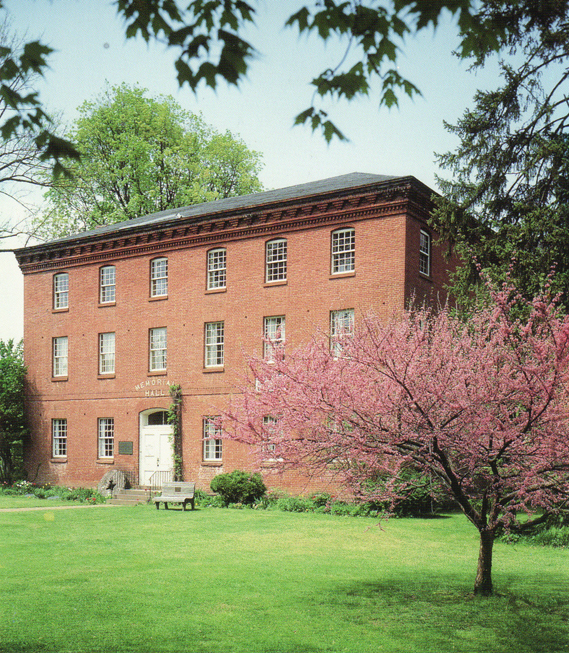
  • The original Deerfield Academy building, designed by Asher Benjamin and dedicated in 1799—now known as Memorial Hall, shown above.
  • The Wapping Schoolhouse, built on the outskirts of Deerfield in 1839 and moved in 1968 to Old Main Street by Historic Deerfield.
  • “The Little Red Schoolhouse,” or North Center School, built as a model school in 1810 in Whately and moved in 1930 to the Storrowton Village Museum in West Springfield.
  • The Hockanum School House in Hadley, built in 1840 and in active use until 1936.

Sunday, July 07, 2013

Through Colonial Women’s Eyes at Historic Deerfield

Historic Deerfield’s Summer Lecture Series for this year is titled “Through Her Eyes, In Her Words: The Lives and Writings of Three Colonial Women.” It will feature three authors describing the surviving writing of women from colonial New England, one lecture on each of the remaining Thursdays in this month.

11 July: “One Colonial Woman’s World: The Life and Writings of Mehetabel Chandler Coit,” presented by Michelle Marchetti Coughlin. I heard Coughlin speak at the New England Historical Genealogical Society in February. Her book One Colonial Woman’s World: The Life and Writings of Mehetabel Chandler Coit explores what seems to be Coit’s commonplace book, along with other documents. Coit was born in Roxbury in 1673 and moved to Connecticut, where she died in 1758.

18 July: “Writing Her Way to Salvation: the Role of the Pen in the Life of Elizabeth Porter Phelps,” presented by Elizabeth Pendergast Carlisle. Phelps kept a diary and letters over many years in Hadley, providing Carlisle with the material for her 2007 book, Earthbound and Heavenbent: Elizabeth Porter Phelps and Life at Forty Acres (1747-1817).

25 July: “Re-introducing Phillis Wheatley: A Genius in Bondage,” presented by Vincent Carretta. His recent biography of Wheatley is a fine feat of reconstructing a life both celebrated and shadowed.