J. L. BELL is a Massachusetts writer who specializes in (among other things) the start of the American Revolution in and around Boston. He is particularly interested in the experiences of children in 1765-75. He has published scholarly papers and popular articles for both children and adults. He was consultant for an episode of History Detectives, and contributed to a display at Minute Man National Historic Park.

Subscribe thru Follow.it


•••••••••••••••••


Showing posts with label John Gore. Show all posts

Saturday, September 06, 2025

“He Lieut. Thos. Hawkshaw did affirm this to be the Fact & Truth”

On 23 Apr 1775, Lt. Thomas Hawkshaw of the 5th Regiment was lying near death.

He’d been shot through the throat during the Battle of Lexington and Concord. He’d lost a lot of blood, not only from that wound but from supposedly therapeutic bleeding. He was suffering spasms of pain. He had trouble swallowing pain relief, much less solid foods.

And his commander-in-chief, Gen. Thomas Gage, had just intercepted a letter from justice Edmund Quincy to the Patriot leader John Hancock saying Hawkshaw had been heard saying that British troops had fired first and started the war.

Hawkshaw’s regimental commander, Lt. Col. William Walcott, and other officers came to speak to him. They went away with this document, now in Gage’s papers. It said:
Boston, 23d. April 1775

Lieut. Thos. Hawkshaw of the 5th: Regt. of Foot, declares in the most solemn Manner to Lt. Col. Walcott, in the Presence of Capt. Smith & Lieut. Ben. Baker All of the same Regimt.,

That, he, Lieut. Thos. Harkshaw, never did say to any Person whatsoever, that, the King’s Troops gave the first Fire upon the People of this Country in the Affair which happened between the said Troops & the said Country People on Wednesday last the 19th. April;

that, so far from knowing or believing that the Troops were the first who fired, he, Lieut. Thos. Harkshaw, knows & believes that the Country People did fire first upon His Majesty’s Troops, & that he Lieut. Thos. Hawkshaw did affirm this to be the Fact & Truth to Lt: Col. [Francis] Smith of the 10th: Regt. of Foot who commanded the Grenadiers & Light Companies, upon the Spot, and that he, Lt. Thos. Harkshaw, did again upon his being brought into Boston, make the same Declaration to Capt. [John] Gore of the 5th. Regt. of Foot, That, to the best of his Knowledge & Belief, the Country People fired first upon His Majesty’s Troops.

Thomas Hawkshaw
Lieut 5th Regt. Foot

Wm: Walcott, Lt: Col. 5th. Foot.
John Smith Capt: 5th. Foot
Ben Baker, Lt. & Adjt. 5th. Foot
The regiment contained lieutenants named Benjamin Baker and Thomas Baker, so they used first names to sort out those men. The handwriting of the document looks like Walcott’s.

The detail about Hawkshaw telling Lt. Col. Smith (shown above) that the provincials in Lexington had fired first suggests the lieutenant was on or near the common during that shooting while Smith was still back with the grenadiers.

However, the document doesn’t add any detail about what Hawkshaw actually heard or saw there, and Gage was collecting such detail from other officers at this time. That makes me think Hawkshaw had passed on what he’d heard from other officers. (If Hawkshaw turns out to have been a light-infantry officer, then that’s off.)

In any event, from his sickbed Lt. Hawkshaw was insisting that he’d consistently blamed the provincials for shooting first.

TOMORROW: Corroborating witnesses.

Monday, January 13, 2025

“Growing Up in the Gore Family” in Waltham, 19 Jan.

On Sunday, 19 January, I’ll speak at Gore Place in Waltham on “Growing Up in the Gore Family: Class and Conflict in Revolutionary Boston.”

That estate was built by Christopher and Rebecca-Payne Gore in the early republic after they returned from a diplomatic mission. Christopher had made his fortune as an early corporate lawyer, setting up some of the region’s first large industrial companies.

Among those companies was a glass factory co-owned by Christopher’s older brother Samuel and their twice-over brother-in-law Jonathan Hunewell. That factory supplied the glass for the mansion’s first windows.

But I’m going to talk about the American Revolution before America’s Industrial Revolution. As the event description says:
Christopher Gore grew up in a family on the verge of entering Boston’s genteel class. The Gores were active in the Revolutionary resistance—organizing protests at Liberty Tree, hosting spinning bees for Daughters of Liberty, and even being hurt in a riot before the Boston Massacre. But as that conflict heated up, Christopher’s father chose to side with the royal government and left America in 1776. This talk explores the difficult choices that one family worked through.
If that sounds staid, rest assured there’s bloodshed, bigamy, effigies, and weapons theft along the way.

This event is scheduled to start at 3:00 P.M. After we’re done with questions, attendees will have a chance to walk through the mansion. The cost is $10, free to Gore Place members and through Card to Culture. Reserve tickets through this link.

Thursday, March 23, 2023

“Twas Expected The Troops would have embarkd this night”

On 15 March 1776, merchant John Rowe was expecting the British military to sail away from Boston. Any minute now.
This night my Store on the Long Wharff broke open & almost A hhd of Sugar & A hog head of Ware Stole—

Twas Expected The Troops would have embarkd this night but they still Remain in Town

I din’d at home with Genl. [James] Robertson Colo. Clark Richd. Green An Officer of the 5th Regt. Mrs. Rowe & Jack Rowe—

after dinner Capt. [John] Haskins gave me Notice that several officers were in Mrs. [Mary] Hooper’s House committing Violence & breaking Everything Left they Broke a Looking Glass over the Chimney which cost Twenty Guineas such Barbarous Treatment is too much for the most Patient man to bear.
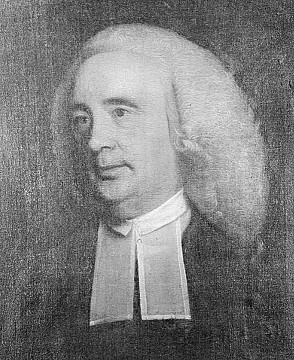
Mary Hooper was the widow of the Rev. Dr. William Hooper (1702–1767, shown above), an Anglican minister Rowe admired. She was also the mother of the William Hooper who represented North Carolina in the Continental Congress and signed the Declaration of Independence.

“Rainy Weather” came on 16 March, and the preparations for departure went on.
The Troops are getting every thing in order to depart.

My store on Long Wharff broke open again this night—the Behaviour of The Soldiers is to bad—tis almost Impossible to believe it

I din’d at home with Mrs. Rowe & Capt. [John] Gore & Spent the Evening at home with Richd. Greene Mr. [Samuel] Parker Mr. [Jonathan] Warner & Mrs. Rowe & Jack.

Two officers of the 5th: came to Mee for Wine they wanted to be Trusted I Refused them since I have heard nothing only they Damned me & swore they would take it by Force—One of them nam’d Russell of the 5th. Regmt. the Other I dont know
There was a Boston paint merchant and official, about to evacuate, called Capt. John Gore for his militia rank. Just to make things fun, there was also a captain named John Gore in His Majesty’s Fifth Regiment of Foot. Rowe could conceivably have dined with either.

As for Russell of the Fifth Regiment, no officer of that name appears in the Army Lists of 1773 or 1778. Then again, Rowe forgot the name of the officer from that regiment whom he hosted at dinner the day before. So he didn’t know them that well. Certainly not enough to extend credit for wine.

TOMORROW: The country people come in.

Tuesday, November 23, 2021

Meeting the Clerks of the Market

Last week at dinner, the conversation turned to the question of what colonial Boston’s clerks of the market did. This is the kind of the dinner I like.

The post of clerk of the market was established in English law well before the kingdom colonized America, and it came to the colonies in different ways. In Philadelphia, the city charter of 1701 gave the mayor the power to appoint those officials. In contrast, the Boston town meeting elected clerks of the market, starting with two men in 1649. By the mid-1700s, there were twelve, one for each ward.

Clerks of the market were among the town’s lowest-ranking elected offices. But the post was a stepping-stone for young gentlemen seeking higher positions in politics or society. Many prominent men once served as clerks of the market for a year.

In March 1769, for example, the new clerks of the market included John Singleton Copley, Elisha Hutchinson, John Bernard, and John Gore, Jr. In 1770 the nod went to John Pulling, John Andrews, Nathaniel Wheatley, and Henry Jackson, among others.

The main stated duty of the clerks of the market was to ensure that the loaves of bread and the butter sold at the town market conformed to the selectmen’s stipulations. Each year, those officials announced what would be a fair weight for a loaf of bread of a standard price and quality. The price stayed the same, but the weight varied depending on the cost of grain, with a fair profit for the bakers mixed in.

For instance, in February 1773 the selectmen
Ordered that the Assize of Bread be set at Wheat at 7/ [seven shillings] p. bushel, and that 6d. [sixpence, or about 7%] p. bushel be allowed to the Bakers for their Charges Pains and Livelihood, which is computed as follows Vizt.
  • A Loaf of Brown Bread 3/4 Wheat 1/4 Rye meal must weigh 2 [lbs.] 8 [oz.]
  • a 4d. Ditto not above 1/2 Indian Meal must weigh 3 [lbs.] 8 [oz.]
  • Bisket of a Copper price 4 [oz.] 2 [drachms]
This was a long-established form of price-fixing, designed to avoid food riots like those in the 1710s. The selectmen tried to balance the needs of the populace against those of the bakers, as we can see in this extract from the town records in 1789:
On the application of Majr. [Edward] Tuckerman & Mr. [William] Breed two of the Town Bakers — It was agreed by the Selectmen that there should be 4 ounces instead of 2 ounces difference in the weight between 4d. white Loaf Bread & 4d. Superfine Brick Bread — and the Clerks of the Market were accordingly acquainted with this alteration, for their government in the weighing the same —
As that entry shows, the clerks of the market were supposed to enforce the bread rules. The law empowered them to seize loaves that were underweight, and even to go into any bakery or house where they knew bread was being baked for sale and check on how heavy the loaves were.

But did the elected clerks of the market really do that work? Usually a few of the men selected on the first round excused themselves by pleading inability and/or paying a fine, necessitating a second round. That suggests that many of those gentlemen weren’t actually that keen on the honor of serving their town that way.

Boston already had a full-time clerk of Faneuil Hall Market administering the rent on stalls, maintaining the infrastructure, and overseeing the maintenance staff of one. So were the gentlemen chosen to be clerks of the market actually out inspecting the bakers’ stalls every week? 

TOMORROW: Reading a clerk of the market’s diary.

[The image above comes from Food and Streets’ posting about making and tasting bread from an eighteenth-century recipe.]

Saturday, July 03, 2021

“The Marriage was a nullity”

Yesterday I followed Sarah Gore and the uncle who raised her, the Rev. Henry Caner, from Boston to London after the end of the siege of Boston.

In April 1777 Caner gladly married the young woman to a Englishman named Richard Manser. The minister anticipating leaving her in Britain with her husband while he returned to America as soon as all the troubles were over.

However, by the summer Caner was referring to his niece once again by her first married name, as in his 5 August leter to Dr. John Jeffries: “Mrs. Gore & Nurse desire to be remembered in this.”

Finally on 10 Jan 1778 Caner broke the news to Sarah Gore’s father, deacon Thomas Foster of Boston:
By a Line from your Son Wm inclosing a Letter to our Dear Sally, I am inform’d of the Death of your Son John. I sincerely condole with you & Mrs. Foster on so melancholy an event. And am sorry that I must add to your affliction by acquainting you with an expected misfortune that had befallen your & our dear Child.

In a former Letter I acquainted you that Sally was married, & we thought happily to a Gentleman of very promising appearance, but to my grief has turn’d out a villain.

They had been married but 5 Weeks, when Lord Dartrey [an Irish baron, shown above as painted by Mather Brown] called upon me & acquainted me that Mr. Mansor had a Wife living in a remote part of London at the time when he was married to Sally. This you may believe was like a Thunder Clap to me.

However as soon as Mansor came home I acquainted him with it, & turnd him immediately out of Doors.

The same Evening I made the matter known to Sally in the tenderest manner I was able. She fainted & with much difficulty could we recover her. To be short it went very near to cost her her life. With great Care & Attention, & the Assistance of several kind Ladies of rank & quality, she has in some measure got the better of it. Her health & flesh & strength & spirits are return’d & she is now Sally Gore again.

The Marriage was a nullity, as he had a wife at the time of his marrying Sally, so she has reassumd the Name of Gore, by which she is now known to all her friends & Acquaintance.

The former Wife is since dead & the Villain has had the Assurance to write me several insolent Letters…demanding my Sally as his lawful Wife. A Number of worthy friends have offer’d their service to vindicate her against his impudent Claim. Among others Lord Percy, & particularly the Noble Lord & Lady Dartrey, are so exceedingly obliging that they have offer’d to foot [?] the whole Expence if Mrs. Gore finds it necessary to prosecute the vilain.

In short, I am greatly comforted under this misfortune to find that the dear Child is restor’d to her health & spirits again.
In the end, the Rev. Mr. Caner never returned to America. Though strapped for funds without a pulpit, he took a second wife and settled in Cardiff in 1778; she was notably younger, but then he was in his late seventies, so she almost had to be. Later he moved to a town near Bristol and died in 1792.

Sarah Gore and her young son John did return to Boston, as did her father-in-law, John Gore. The younger John grew up to be a merchant, factory investor, and Federalist. In 1805 he managed to get three volumes of King’s Chapel records back from Caner’s heirs. He died in 1817.

(Incidentally, the “Lady Dartrey” who offered help to Sarah Gore in her time of trouble was a granddaughter of William Penn with the given name of Philadelphia Hannah Freame.)

Friday, July 02, 2021

“My Daughter, which she really is, tho’ but an adopted one”

This story came up (in my head at least) during yesterday’s online presentation from King’s Chapel about how the Revolution affected members of that Anglican congregation. I realized I hadn’t shared it here before. 

The minister of that church was the Rev. Henry Caner. He raised a niece named Sarah Foster, whom he called Sally. I don’t know how that arrangement came about since Sarah’s father, a deacon of Boston’s First Meetinghouse named Thomas Foster, was alive. Perhaps he had remarried.

The minister was very fond and protective of his niece, telling Earl Percy that he “took the Liberty of introducing [her], as my Daughter, which she really is, tho’ but an adopted one.”

In March 1768 Sarah Foster married John Gore, Jr., a dry goods merchant. His father had risen from the trade of decorative painter to become a paint merchant, militia captain, and Overseer of the Poor—moving from the ranks of mechanics to the ranks of gentlemen.

John and Sarah Gore had a baby, also named John, in 1769. He was baptized at the West Meetinghouse, which the Gore family attended. Evidently being raised by an Anglican minister hadn’t made Sarah an Anglican.

In 1771 John, Jr., unexpectedly died. That left Sarah Gore as a young widow with a baby son. I don’t know if Sarah Gore moved back in with her uncle then, but the Caner household was undoubtedly less crowded than the Gore household.

Then came the Coercive Acts and the war. The Rev. Mr. Caner was always one of the strongest supporters of the royal government. When the lines were drawn in 1774, Capt. John Gore also declared himself loyal to the king while most of his family, including son Samuel and son-in-law Thomas Crafts, were not only Patriots but active Patriots.

In March 1776, the British military evacuated Boston. Among the Loyalists leaving at the same time were Henry Caner, John Gore, Sarah Gore, and her little boy. “I was crowded with my Daughter & an old Houskeeper on board a small Vessel with forty people,” the minister wrote.

That extended family then moved on to London. The letters of Henry Caner, which were collected and published in 1972, show that in London Sarah Gore lived with Caner and that “old Houskeeper.” John Gore shared space with his friend Adino Paddock.

Caner spent a lot of effort trying to find a new income for himself as an Anglican cleric. Sarah Gore explored high social circles, visiting Lady Rockingham, meeting the Duke and Duchess of Northumberland. Her uncle hoped these connections would lead to a living, but in July 1776 complained, “I meet with many ‘good Morrows’ & compassionable expressions, but that is all except a share of the Donations…for the suffering Clergy.”

On 22 Apr 1777, the Rev. Mr. Caner had big news for Deacon Thomas Foster:
Sally, who will write you by this Opportunity, has never been from me a Day since we left Boston. She had far’d as well as my Self, & has been fully attentive to me as to her Father, having never taken a step which I did not approve.

I have preserv’d her from a Connection with the Army, which I knew would be disagreeable to you, & in right of a Guardian or Father am about to dispose of her within a day or two to a Gentleman here in London, one Richard Manser, who appears to be a sober, well-bred young man, with whom I hope she will be happy.

They will live in the same house with me while I stay in England, & when we return to America I assure you I shall leave her behind me with regret.
A postscript to that letter reports the deed had been done: “Yesterday I parted with your Daughter, my dear Child & companion, Sarah Gore, having married her to Mr. Richard Manser, of London. I performed the Ceremony myself at St Martin’s Church, Westminster.”

That’s the famous church of St. Martin-in-the-Fields, rebuilt in the 1720s and shown above in a photo by Robert Cutts. [It has a lovely café in the crypt.]

However, by 30 June the Rev. Mr. Caner was once again referring to Sally as “Mrs. Gore.”

TOMORROW: Can this marriage be saved?

Sunday, February 21, 2021

Dealing Out the Cards at the B.P.L.

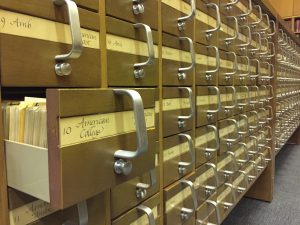
Earlier this month, the Boston Public Library’s Rare Books and Manuscripts department announced that it had finished scanning its entire card catalogue and uploading the result to the Internet Archive.

“With this project now complete,” the department’s blog said, “information about nearly every manuscript in the BPL’s collections is available online in at least some form — a major first.”

Curator and cataloguer Jay Moschella explained further on Twitter:
The BPL manuscript card catalog is a collection of almost a quarter million index cards, each of which describes a specific manuscript or collection of manuscripts that the BPL holds. . . .

John AdamsBoston Massacre notes, Boston’s early town records, the Frederick Douglass letters, the William Lloyd Garrison papers and the anti-slavery collection — all are parts of BPL’s overall manuscript collections. Think of the card catalog as a *blueprint* to all this. . .

Each card in the catalog was typed by hand and describes a single item in the collection. Taken as a whole, the manuscript card catalog represents well over a century (100 years!) of painstaking work by BPL librarians.
The cards have been digitized as images, not sent through an optical character recognition system to be converted into 98%-accurate searchable text. That means finding what one might be interested in investigating further requires treating the card catalogue like a, well, card catalogue. You choose a topic, usually a proper noun; go to the right drawer alphabetically; and then thumb through the cards to one that catches your eye.

Those cards have varying levels of detail to alert users into what the actual manuscript holds. For example, here’s a letter from the young lawyer Christopher Gore in 1780, talking about how Boston had been frozen in and discussing prisoner of war exchanges.

Here’s Gore’s father, John Gore, Sr., billing John Hancock for painting his—or rather his aunt Lydia’s—carriage in 1765. I’ve actually looked at that document. That carriage was vermilion.

And speaking of Hancock’s carriage, here’s another bill he received, this one from carriage-maker Adino Paddock in December 1774. That’s interesting because by that time the Boston Patriots were ostracizing Paddock (and the older Gore, a good friend) for siding with the Crown. Yet until recently Hancock had still been doing business with him.

Some of the papers came into the collection through the Boston town government, such as Richard Clarke’s 5 Nov 1773 letter saying he really can’t cancel his order of East India Company tea.

Others reflect private correspondence. Nearly all the documents filed under the name of William Molineux involve the bankruptcy of Nathaniel Wheelwright as Molineux became one of the agents of Wheelwright’s brother-in-law and principal creditor, Charles Ward Apthorp.

Again, these cards don’t transcribe the manuscript but describe them in greater or less detail. For researchers looking for all clues about particular people, or planning a trip when the pandemic ends, being able to flip through those descriptions outside the library will be a great convenience.

Tuesday, February 25, 2020

“A youth, son to Captain John Gore”

The older boy wounded by Ebenezer Richardson’s shot on 22 Feb 1770 was nineteen-year-old Samuel Gore.

He appears here in his early-1750s portrait by John Singleton Copley, a detail from a painting now at Winterthur. Of course, this when Sammy was still a toddler and Copley was still developing his technique.

In contrast to Christopher Seider, a servant born to poor German immigrant parents, Sammy Gore came from an old New England Puritan family that was rising swiftly in society. The portrait of the kids was one sign of that social ambition, even if the young artist might have done it for practice or in barter for paints.

Sammy’s father John Gore had started as a decorative painter. Specializing in heraldic designs, he developed an upper-class clientele and began to move into that class himself—as a paint merchant, a militia officer, and eventually an Overseer of the Poor, one of the most respected town offices. By 1770 he was considered a gentleman.

Capt. John Gore’s oldest child, Frances, married Thomas Crafts, Jr., another decorative painter. (I suspect he was one of Gore’s early apprentices, but I can’t confirm that.) Crafts became an active member of the “Loyall Nine” who organized the first anti-Stamp Act protests and looked after Liberty Tree. He, too, was rising through militia service and town offices.

Capt. Gore’s first son, also named John, became a dry goods merchant. He married the niece of the Rev. Henry Caner, minister of King’s Chapel. Both John, Jr., and Samuel had tried schooling at the South Latin School, which would have prepared them for Harvard, but decided to drop out for more practical education. Their little brother Christopher (Kit), however, was sailing through the Latin School curriculum.

In August 1769, Capt. Gore, his son John, and his son-in-law Crafts all dined with the Sons of Liberty at Lemuel Robinson’s tavern in Dorchester, as described here. At the time John, Jr., advertised that he was sticking to the non-importation agreement in the cloth he sold from his shop.

Of course, it was hard for a paint merchant to take that stance and stay in business—the Townshend Act put a tariff on painter’s colors. Sammy, training under his father in decorative painting, had a close-up look at that situation. In late January 1770, the Boston Chronicle published Customs house documents revealing that Capt. Gore had paid duties on “4 barrels Painters colours” that had arrived on the Abigail and more goods that had later come on the Thomas.

That revelation might have motivated the family to demonstrate their commitment to non-importation. In the third week of February, the Gores—more probably, Frances Gore and her daughters and perhaps daughters-in-law—hosted a spinning bee at their house on Queen Street. This was a social occasion, but it also showed the women’s support for local manufacturing.

Most spinning bees took place in rural towns, usually in ministers’ houses, with the host accepting the gift of the spun yarn to benefit the poor. Of ten spinning bees that Laurel Thatcher Ulrich counted in and around Boston in 1766-70, the Gores’ was one of only two not in a minister’s home.

Early in its local news roundup, the 26 Feb 1770 Boston Gazette put a strong political spin on the Gores’ event:
One Day last Week a Number of Patriot Ladies met at the House of John Gore, Esq; of this Town, when their Industry at the Spinning Wheel was at least equal to any Instance recorded in our Paper.

It is principally owing to the indefatigable Pains of Mr. William Mollineux; and it will be said to his lasting Honor, that the laudable Practice of Spinning is almost universally in Vogue among the Female Children of this Town; whereby they are not only useful to the Community, but the poorer Sort are able in some Measure to assist their Parents in getting a Livelihood—

The Use of the Spinning-Wheel is now encouraged, and the pernicious Practice of Tea-drinking equally discountenanced, by all the Ladies of this Town, excepting those whose Husbands are Tories and Friends to the American Revenue-Acts; and a few Ladies who are Tories themselves.
By the time that item was published, Sammy Gore had made his own political statement about non-importation by showing up outside Ebenezer Richardson’s house on 22 February. We don’t know if he was among the boys who organized the demonstrations at Theophilus Lillie’s shop or if he threw garbage and rocks at Richardson’s house. But we do know Sammy Gore was close enough to the front of the crowd to be struck by pellets from Richardson’s gun.

The Boston Gazette stated, “A youth, son to Captain John Gore, was also wounded in one of his hands and in both his thighs.” The Boston Evening-Post reported:
Dr. [Joseph] Warren likewise cut two slugs out of young Mr. Gore’s thighs, but pronounced him in no danger of death, though in all probability he will lose the use of the right forefinger, by the wound received there, much important to a youth of his dexterity in drawing and painting.
As it turned out, Samuel Gore would enjoy a long and healthy career as a painter and manufacturer. In the 1830s a Boston barber recalled that he would show young people his scarred fingers and describe how he’d been wounded in the Revolution “with some relish.”

(For more about Samuel Gore’s Revolutionary activities and reminiscences, see The Road to Concord.)

TOMORROW: A grand funeral.

Tuesday, January 22, 2019

“By what Means this Riot was introduced”

While the king’s army held a public court of enquiry into the violence on the night of 20 Jan 1775, the Massachusetts civil authorities did the same.

Town watchmen swore out a legal complaint against certain army officers. According to John Eliot, witnesses “were examined in the Court House before Justice [Edmund] Quincey,” shown here. Or, as the 30 January Boston Gazette reported:
On Tuesday and Wednesday last there was a full and impartial Examination of Witnesses before the Worshipful Edmund Quincy and John Hill, Esquires, two of his Majesty’s Justices of the Quorum for this County.—
Back in 1768-70, the first time the army patrolled the streets of Boston, Justice Quincy became known for his hostility to any soldiers brought before him. Justice Hill had been one of magistrates most involved in collecting testimony for the town report on the Boston Massacre. So, despite the Boston Gazette’s assurances, friends of the royal government must have been dubious those men were conducting a “full and impartial Examination.”

The army board sat that whole week in “the New Court House,” according to John Andrews, so what “Court House” did these two justices of the peace use? The Town House had served as a courthouse for many years, so perhaps that’s what Eliot meant. It’s hard to imagine the two inquiries taking place side by side.

Edes and Gill published the outcome of the magistrates’ inquiry this way:
By the Evidence it appeared, that previous to the Riot the following Circumstances took place: A little after Ten o’Clock two young Men passing down Milk-Street, near the Entrance into Long Lane, they were accosted by an Officer, not in the English, but as they supposed in another Language, which they did not understand; they asked him what he meant; he said he meant to tell them to go about their Business.
That detail about the officer not speaking in English might have been a dig at Scotsmen in the army. Or he might just have been speaking in another language, or incoherently.
They said they were going, and passed along into Long-Lane. They had not gone far before the Officer called them to stop—they stopped till he came up to them, and angry Words ensued. The young Men, however, parted from him the second Time and went on their Way towards their Homes.

The Officer followed and overtook them near the Head of the Lane, and stopped them again, telling them he supposed they were stiff Americans; to which one of them said, he gloried in the Character.—Here again Words ensued, and the Officer drew his Sword, flourished it and struck one of the young Men on the Arm, who immediately seized him.—

At this Juncture, three or four of the Town Watch, who were upon the Patrole, came up and separated them, advising them to go Home. The two young Men did so, but the Officer refused, saying, he was the Prisoner of the Watch and would go with them; they told him he was not their Prisoner, but might go where he plea’d, and if he desired it, they would see him safe Home; but he insisted upon it, that he was their Prisoner ——

The Watchmen went down the Lane towards their Head Quarters in King-Street, where they had been going before, and the Officer accompanied them. In the Way they met with several Persons, whom they took to be Servants of Officers, who supposing this Officer to be in the Custody of the Watch, attempted to rescue him, but he insisted upon being a Prisoner, and said the Watchmen were his Friends, and he would go with them.

They then went forward, and in Quaker-Lane, which leads into King-Street, they were met and assaulted by more than twenty Officers of the Army, who took several of their Watch-Poles from them and wounded some of them.

We thought it necessary thus far to give a Detail of the Affair, that our Readers might know by what Means this Riot was introduced.——

The Particulars that happened afterwards are too many to be enumerated in a News-Papers. It is sufficient to say, that upon the Evidence the Justices thought proper to bind eight of the Officers, and a Sadler, named Sharwin, who had lived a few Years in Town, to answer for their Conduct at the Superior Court, and in the mean Time to be on good Behavior…
The newspaper clearly painted Sharwin the saddler as a troublemaking outsider. I just hunted for information about him and ended up tracking Richard Sharwin’s career over two decades, followed by his widow’s involvement in the sale of an enslaved woman that linked the Long Island spy Robert Townsend to the Massacre witness Richard Palmes. Someday I may tell that story.

As for the story of what happened on the night of 20 Jan 1775, Eliot supplied this understanding:
Betwixt ten & eleven in the evening an officer in liquor desired the watch to go home with him. A young gentleman of the town, seeing him with two men & thinking him abus'd, went to the British Coffee House, & acquainted the officers collected there that one of their companions was involuntarily led away & made prisoner by the watch. They rushed out, attacked the watchmen with drawn swords, & held the battle till orders were received from the Governor [Thomas Gage] to disperse.
Plus, at some point the main guard turned out under Capt. John Gore, though he was allegedly as drunk as any of the officers from the coffee-house or the first officer who kept cheerfully insisting he was a prisoner of his friends, the watchmen.

TOMORROW: The results of the two investigations.

Monday, January 21, 2019

“Five field Officers, to enquire into the circumstance of the Riot”

The morning after the fight between British army officers and town watchmen that I reported yesterday, the higher authorities swung into action.

That morning six selectmen met at Faneuil Hall: John Scollay, John Hancock, Thomas Marshall, Samuel Austin, Oliver Wendell, and John Pitts. The record of that session says: “Mr. [Benjamin] Burdick & other Constables of the Watch, appeared and complained to the Selectmen of great abuses received from a number of officers of the Army, the last Night.”

The selectmen must have asked the watchmen to produce sworn testimony because that afternoon “Mr. Isaac Pierce, Mr. Joseph Henderson & Mr. Robert Peck & Mr. Constable Burdick gave in their Depositions.”

Gov. Thomas Gage, who was also the general in charge of the soldiers, took steps the same day—a politic move to calm the town. Lt. John Barker wrote in his diary, “A court of Enquiry is order’d to set next Monday, consisting of five field Officers, to enquire into the circumstance of the Riot.”

The prospect of punishment might, however, have made some officers more resentful. The merchant John Andrews wrote on 22 January:
The Officers’ animosity to the watch still rankling in their breast, induc'd two of them to go last night to the watch house again at about 10 o’clock and threaten the watch that they would bring a file of men and blow all their brains out.

The watch thereupon left their cell and shut it up, and went and enter’d a complaint to the Selectmen—some of whom waited on the Governor at about 12 o’clock, who was very much vex’d at the Officers’ conduct, and told the Gentlemen that he had got the names of three that were concern'd in Fryday night’s frolick, and was determin’d to treat them with the utmost severity—and likewise order’d a guard to patrole through every street in town and bring every officer to him that they should find strolling or walking.
Fortunately, the 22nd was a Sunday, so nobody really expected to be out having fun in Boston, anyway.

On Monday, 23 January, the court of enquiry met. It was headed by Lt. Col. George Maddison of the 4th regiment, with two other lieutenant colonels and two majors on the bench. They took testimony every day from Monday to Saturday, according to records in Gen. Gage’s files.

Barker wrote, “it is supposed it will be a tedious affair, and will not be finished for some time.” Andrews also reported:
Yesterday the Officers were all examin’d at the New Court house, respecting fryday night’s affair, being carried there under arrest, nine in number (after which the General is to deal with them): being a great number of evidences they were oblig’d to adjourn till [to] day.
The list of witnesses included:
  • five army captains, including Hugh Maginis of the 38th, who had fought with the watch back in November.
  • twelve lieutenants from the army and Marines, including Gage’s aide de camp Harry Rooke; Lt. House of the 38th, who had sustained a cut on his forehead; William Pitcairn of the Marines, son of the major commanding that unit; and William Sutherland of the 38th, who would later leave a detailed report on the Battle of Lexington and Concord.
  • seven ensigns, including Ens. King of the 5th, whose sword had been taken.
  • a sergeant and at least five privates.
  • “Mr. Winslow,” who had been escorting Lt. Gov. Thomas Oliver’s wife Elizabeth home from “Mr. Vassall’s,” probably her brother, John Vassall.
  • watchman William McFadden.
  • “Thomas Ball Esqr. late Capt. in the Royal Irish Regt. of Foot,” who testified that townspeople were yelling at the soldiers to fire.
At the start of the inquiry John Andrews had high expectations: ”the Captain of the Guard [John Gore] at least will be broke, for being drunk when on duty.”

Meanwhile, some of the town’s justices of the peace held their own hearings.

TOMORROW: The magistrates’ findings.

Sunday, January 20, 2019

“Drunken Officers attacked the town house watch”?

On 20 Jan 1775, there was a confrontation between the Boston town watch and several British army officers.

I’ve written before about such conflicts, especially during the 1768-70 occupation, and how they reflect differences in class and disagreements about sources of authority. Did British military gentlemen need to defer to working-class Bostonians who had been empowered by local law, especially if those gentlemen were in Boston in the first place because of alleged disrespect for Parliament’s law?

Naturally, there was disagreement about the nature and fault of this fracas, too.

The merchant John Andrews wrote to a relative on 21 January:
Last evening a number of drunken Officers attacked the town house watch between eleven and 12 o’clock, when the assistance of the New [i.e., West] Boston watch was call’d, and a general battle ensued; some wounded on both sides.

A party from the main guard was brought up with their Captain together with another party from the Governor’s [i.e., from Province House]. Had it not been for the prudence of two Officers that were sober, the Captain of the Main Guard would have acted a second Tragedy to the 5th March, as he was much disguis’d with Liquor and would have order’d the guard to fire on the watch had he not been restrain’d.

His name is [John] Gore, being a Captain in the 5th or Earl Peircy’s regiment. He was degraded not long since for some misdemeanour.
On the other side, Lt. John Barker of the 4th Regiment wrote in his diary for the same day:
Last night there was a Riot in King Street in consequence of an Officer having been insulted by the Watchmen, which has frequently happen’d, as those people suppose from their employment that they may do it with impunity; the contrary however they experienc’d last night: a number of Officers as well as Townsmen were assembled, and in consequence of the Watch having brandished their hooks and other Weapons, several Officers drew their Swords and wounds were given on both sides, some Officers slightly; one of the Watch lost a Nose, another a Thumb, besides many others by the points of Swords, but less conspicuous than those above mention’d.
As for Andrews’s statement that Capt. Gore had been “degraded” in rank, Barker had already noted when Gore was “removed from the light Infantry” company of the 5th. That wasn’t for “some misdemeanour” but after “having complained to the Comr. in Chief [Thomas Gage] of the insufficiency of some of the accoutrements of the Company.

Barker added that Gore, Lt. Col. William Walcott, and Col. Percy “have long been upon ill terms.” And going over his regimental commanders’ heads hadn’t helped Gore’s standing.

TOMORROW: Higher authorities step in.

[Let me just note that this Capt. John Gore of the royal army was completely different from the militia captain John Gore who headed the family profiled in The Road to Concord. But colonial Boston being what it was, of course there would have to be two men called Capt. John Gore in a community of only 20,000.]

Wednesday, January 02, 2019

“Fashioning the New England Family” in Boston

The “Fashioning the New England Family” exhibit will be on display at the Massachusetts Historical Society through 6 April. It’s well worth a visit, especially because it’s free.

The webpage on the exhibit explains:
Fashioning the New England Family explores the ways in which the multiple meanings of fashion and fashionable goods are reflected in patterns of consumption and refashioning, recycling, and retaining favorite family pieces. Many of the items that will be featured have been out of sight, having never been exhibited for the public or seen in living memory. . . .

For the public, it is an opportunity to view in detail painstaking craftsmanship, discover how examples of material culture relate to significant moments in our history, and learn how garments were used as political statements, projecting an individual’s religion, loyalties, and social status.
The garments on display range from the seventeenth to the nineteenth centuries. The ways they’re displayed are often as interesting as the clothing itself. In a couple of cases, beside the garment is a portrait of its owner wearing it. One quilted petticoat is a recreation by Colonial Williamsburg tailors based on a pattern copied from the original—which was destroyed in the San Francisco earthquake and fire of 1906. Tools show how clothing was made and repaired. Examples highlight how garments were remade or their fabrics reused.

The exhibit also features fashionable accessories, such as jewelry, shoes, and Abigail Adams’s pocket. One case is devoted to a rare example of a wig, wig case, powder, and related utensils. I was particularly struck by a walking stick that belonged to Thomas Hancock, shown here; I hadn’t known “fist canes” were a thing.
Given the expense of fashionable, high-quality clothing; the resources necessary to preserve those goods; and the Massachusetts Historical Society’s traditional supporters, upper-class fashion dominates the exhibit. But of course I looked for traces of “my guys,” the striving mechanics on the front line of pre-Revolutionary protests and military preparations, as discussed in The Road to Concord. Many of those men made it into the genteel class, but they struggled to get in and to solidify that status. Understanding fashion helped.

One item from “my guys” is shown at top: a hatchment that a young woman in the Pierpont family embroidered following the design of heraldic painters John and Samuel Gore. And there’s a whole display case devoted to objects from the family of William Dawes. He was a fashion icon in colonial Boston—the first time Dawes’s name appeared in the newspapers, it was because he got married in a suit of Massachusetts-woven cloth. That suit doesn’t survive, but the display includes homespun cloth from the Dawes family earlier in the century, a silk muff, bags and purses, and a kidskin bag that Dawes used to hold legal papers when he died in 1799.

For folks who can’t visit the exhibit before April, there’s also a Fashioning the New England Family book by guest curator Kimberly S. Alexander.

Wednesday, June 10, 2015

Gore Place’s Open Carriage House, 14 June

On Sunday, 14 June, Gore Place in Waltham is inviting the public to view its newly renovated (and recently relocated) carriage house.

This structure dates to 1793, thus making it even older than the brick mansion that defines the Gore Place estate.

Christopher and Rebecca Gore bought that property starting in 1789, then tore down the existing house and had their first mansion and outbuildings erected in 1793. After their wooden house burned while they were in Europe in 1799, they replaced it with the grander, more modern brick mansion in 1806.

The carriage house strikes me as particularly symbolic given Christopher Gore’s rise to wealth. His father, John Gore, was a decorative painter in pre-Revolutionary Boston. The Gore shop specialized in heraldic devices, so the elder Gore and his apprentices and at least one son, Samuel, no doubt painted coats of arms on richer men’s carriages. In particular, the Gores were close to Adino Paddock, a coachmaker with a large workshop opposite the Granary Burying-Ground, and Paddock’s customers included John Hancock.

After a Harvard education, training in the law, and lucrative investments in Continental bonds and many of Massachusetts’s earliest corporations, Christopher Gore could afford a grand carriage himself. His equipage even became a campaign issue when he ran for governor in the first decade of the nineteenth century.

In a 1790 letter to Samuel Adams, John Adams used the Gores as one of four examples of Boston families that had risen from the ranks of mechanics into genteel status as a “natural aristocracy.” Rebecca Gore’s family, the Paynes, was another.

The Gore Place open house, or open carriage house, is scheduled to take place from 3:00 to 5:00 P.M. It is free, and light refreshments will be served. To know about how many people to expect, the site asks visitors to reserve a space through goreplace@goreplace.org.

Thursday, July 30, 2009

“Gossiping about the Gores” Now Online!

In January, I had the honor of speaking at Old South Meeting House in a series of lunchtime lectures on the Loyalists of the Revolution. My talk was “Gossiping about the Gores,” telling the stories of the family of decorative painter and paint merchant John Gore and his many children.

After participating in political protests against Parliament’s new taxes in the 1760s, John Gore sided with the Crown in 1774. As a result, he sailed away with the British military in 1776. But his wife and children stayed behind; in fact, several of the younger generation were very active Patriots. In addition to that political division, the family also had to deal with business challenges, riots, sudden death, stolen cannons, and at least one dicey marriage. Intrigued?

My talk has now been archived in audio form at the WGBH Forum. The videotape ran into technical problems, I understand, but really you didn’t miss anything. In fact, I can offer much better visuals than me talking.

Above is part of John Singleton Copley’s picture of the Gore children in the mid-1750s; John, Jr., is on the left, and Samuel on the right. The full image, including two older sisters, appears on Flickr and The Atheneum, and the original is at the Winterthur Museum in Delaware.

Below is part of the handout I prepared for the talk and alluded to a few times. It charts out John and Frances Gore’s many children and their spouses. Clicking on the image should take you to a larger version. Download and follow along!

Friday, January 23, 2009

Looking in on the Loyalists in London

I had a fine time talking about Capt. John Gore and his family at Old South Meeting House yesterday afternoon. I want to thank the folks from Old South, the Bostonian Society, the Friends of the Longfellow House, Boston by Foot, and Loyalty & Liberty who came to listen, as well as all the individuals and the poor folks who just wandered in.

Next Thursday at 12:15 P.M., Prof. Brendan McConville of Boston University will wrap up Old South’s series of talks on Loyalists. Eventually all four of the month’s presentations will be available on the web.

The handout I created for that program offered a look at this item from Isaiah Thomas’s Massachusetts Spy for 25 Dec 1777 (though it might have appeared in a Boston newspaper two days before). It shows how bitter New Englanders felt about Loyalist absentees at that difficult stage of the war:

By a gentleman lately arrived from London, (Old-England) we learn, that a number of those miserable devils called tories, who fled with the British troops from this town, have received a pension from the English King, for their firm attachment to his crown and dignity.

Among this despicable class, are, Capt. Adino Paddock, and John Gore, late of this town, (who our informant very well remembers) with a large train of etcaetera’s. The tyrant’s pension settled on these wretched creatures, is, one hundred pounds sterling only per annum.
Just to rub it in, the paper referred to Paddock with the title captain even though he’d been promoted to major in the Massachusetts militia before the war, and I think to colonel during the siege.

Who, I wondered, was the gentleman arriving from London in the middle of the war between Britain and America? He must have come from Boston originally since the paper said he “very well remembers” Paddock and Gore, a coachmaker and a paint merchant who were sharing a house in London to save expenses.

Gore had a nephew and apprentice named George Searle. In September 1777, Searle had recently arrived in London, according to Samuel Cutler’s diary about being a prisoner of war at Plymouth. Searle’s address during his visit was “Mr. Paddock’s, No. 8 Charlotte Street, Buckingham Gate, London.” The editor of that diary suspected Searle as having supplied the money Cutler used to bribe his guards and escape on 26 September.

So did Searle visit his uncle John Gore in London, use the occasion to smuggle money to Cutler, and then return to Boston with the news of Loyalists receiving a “pension”? (It was really more like a welfare allowance.) I didn’t have enough hard facts about this situation to gossip about it yesterday, but I hope to uncover more.

Eventually Paddock got a royal appointment on the Isle of Jersey, Gore returned to his family in Boston, and Searle went mad. But that’s another story.

Monday, January 19, 2009

J. L. Bell Speaks on the Gores, Old South, 22 Jan

This Thursday, 22 January, I’ll be speaking on Revolutionary Boston at Old South Meeting House. My talk is part of this month’s “Middays at the Meeting House” series on Loyalists. These events run from 12:15 P.M. to 1:00, so bring your lunch and your questions. The admission is free for Old South members, $5 for others.

Depending on which brochure you look at, my talk is titled “The Gores: One Family Divided” or “Gossiping about the Gores.” Whichever turns out to be official, I won’t be able to stay away from the juicy gossip. This is, after all, a family whose members:

  • secretly helped to organize America’s first public protests against the Stamp Act.
  • hosted a spinning bee for women objecting to new Customs regulations.
  • suffered a wound in a riot eleven days before the Boston Massacre.
  • patrolled the docks before the Boston Tea Party—and on that dramatic night.
  • snuck cannons out of an armory under British army guard.
  • were split by the war, with some family members going to Britain and others staying in Boston.
  • included two sisters who married the same man, and one sister-in-law who married a married man.
  • helped launch the Industrial Revolution in Massachusetts, and suffered a sudden bankruptcy.
The thumbnail picture here is John Singleton Copley’s portrait of the oldest four surviving Gore children in about 1755. From left, they are Frances, Elizabeth, John, and Samuel (in the pink). The painting is now in the Winterthur Museum in Delaware, and this snapshot comes from Jay Glenn’s Flickr site.

Wednesday, December 17, 2008

Courting Indifference

I’ve been enjoying Caitlin GD Hopkins’s studies of early American gravestones at the Vast Public Indifference blog. Two easy ways to find those postings are to read the entries labeled gravestones and 101 Ways to Say “Died”. The 18th century track is fun, too.

Above all, there are Caitlin’s quotations from young printer John Boyle (1746-1819). Boyle kept a marvelously miscellaneous and gossipy “Journal of Occurrences in Boston” between 1759 and 1778. He probably started it in the early 1760s while apprenticed to John Green, then went back and filled in what he’d missed. The New England Historical and Genealogical Register published the whole in 1930-31. An entry that probably interests both Caitlin (for her interest in deathways) and me (for my interest in Gores) appeared on 3 Sept 1771:

This Morning (Tuesday) Mr. John Gore, Junr. intending an Excursion in the Country with his Friends arose vigorous and cheerful: being casually detained longer than he expected, his friends Set out without him, with the expectation that he would soon overtake them, but alas! his bounds were determined that he could not pass He was seized with an Apoplectic Fit at ten o’Clock, and expired at four in the Afternoon.
After looking at lots of colonial and Federalist gravestones, you’ll be ready to take this Vast Public Indifference quiz:
I’ll give you some names and you tell me whether they belong to people born in Connecticut between 1701 and 1800 or to Muppets who have appeared on Sesame Street.
1. Herbert Birdsfoot
2. Sherlock Doolittle
3. Hannah Hobby
4. Vincent Twice
5. Herman Bird
6. Orange Wedge
7. Alice Braithwaite Goodyshoes
8. Bathsheba Bird
9. Bathsheba Bugbee
10. Appleton Osgood . . .
Follow the quiz link for the rest of the list, and the answers.

Saturday, October 13, 2007

Pillars of the Brattle Street Meeting

In September 1775, Timothy Newell had to deal with an order from the governor to let a Presbyterian minister take over the Brattle Street Meeting-House, where he was deacon. But that was nothing compared to the threat he dodged 237 years ago today.

From Newell’s journal:

Colonel [Samuel] Birch of the Lighthorse Dragoons went to view our Meetinghouse which was destined for a Riding School for the Dragoons. It was designed to clear the floor, to put two feet of tan covered with horse dung to make it elastic.—But when it was considered that the Pillars must be taken away, which would bring down the roof, they altered their mind,—so that the Pillars saved us.
(But the dragoons still needed a place in besieged Boston to practice their riding over the winter.)

At some point, the British military did seize the Brattle Street Meeting-House, and converted the 1772 building into a barracks for soldiers. Newell’s diary doesn’t mention that event, oddly enough, but other sources say that he arranged with congregant John Gore to protect as much of the furniture as they could. The men “encased” the pulpit and those valuable pillars, and removed the pews to Gore’s nearby paint warehouse. Perhaps Newell was too busy with that work to write it down.

John Gore was a militia captain and Overseer of the Poor who had been active in the Patriot movement in 1769-70, but in 1774 he chose to support the royal governors. He evacuated Boston with the British army in March 1776, leaving most of his family behind. Gore’s eldest surviving son, Samuel, helped deliver the pews back to the church on Brattle Street, and eventually became a deacon there. John Gore returned to Boston in the late 1780s, after the war.