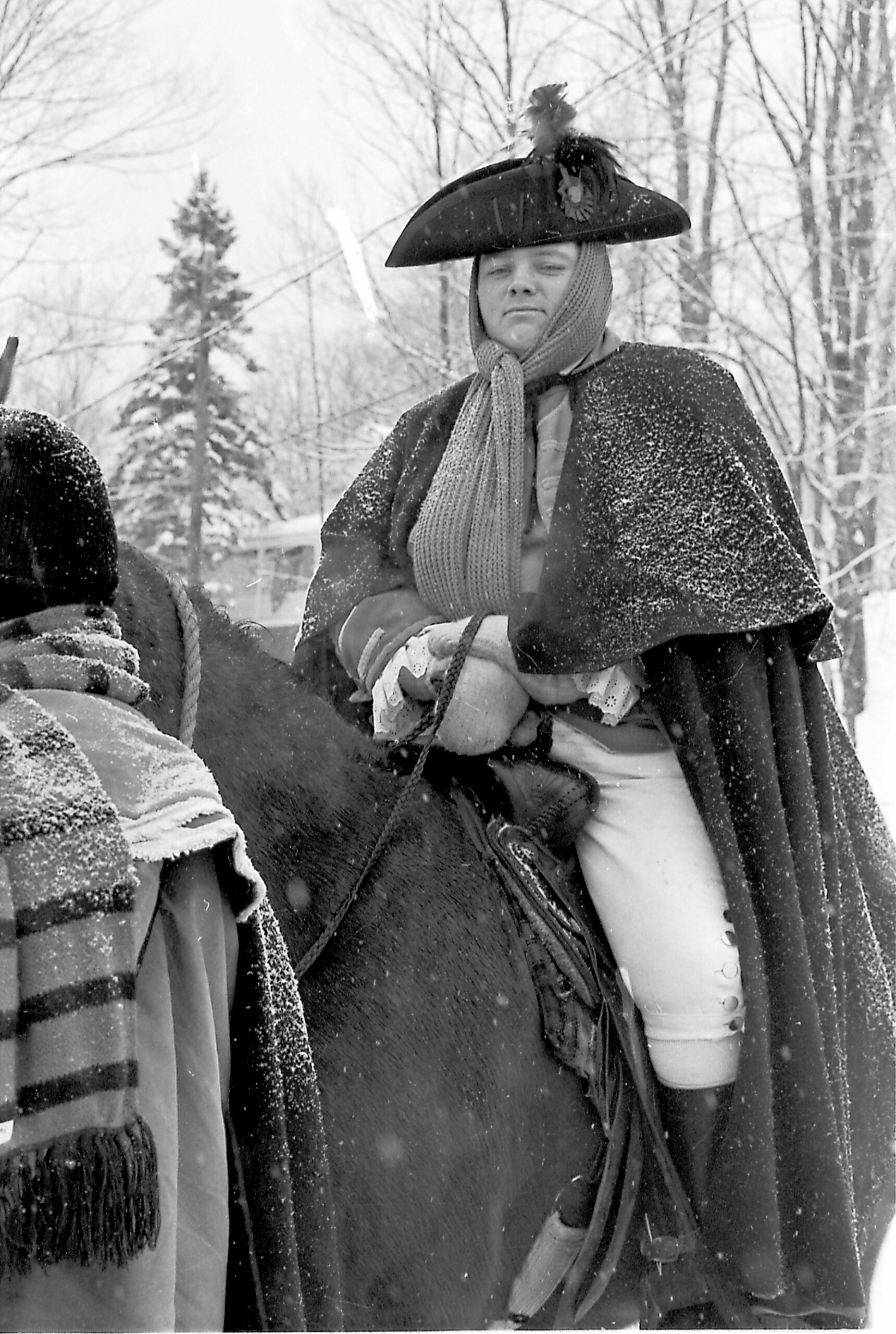
J. L. BELL is a Massachusetts writer who specializes in (among other things) the start of the American Revolution in and around Boston. He is particularly interested in the experiences of children in 1765-75. He has published scholarly papers and popular articles for both children and adults. He was consultant for an episode of History Detectives, and contributed to a display at Minute Man National Historic Park.

Subscribe thru Follow.it


•••••••••••••••••


Showing posts with label Henry Knox. Show all posts

Sunday, May 24, 2026

“Acquainted with the conduct of Doctor Preserved Clap”

I lose track of Dr. Preserved Clap after 1776 until 5 Feb 1781, when the Continental Congress referred a petition from him to its board of war.

On 20 February, board members Richard Peters of Pennsylvania and Ezekiel Cornell of Rhode Island met and formulated a response to that petition:
The Board having considered the reference with which they were honored on the memorial of Preserved Clap, beg leave to observe, That it appears from his memorial and General [Henry] Knox’s letter that he hath been with the Army as a volunteer for eighteen months without pay or any emolument.

That it farther appears by General [Benjamin] Lincolns and Knox’s letters that Mr Clap was sole inventor of stocking the Cannon that were supposed to be rendered useless by the enemy at Boston, and in the vicinity, in the spring of 1776; from which the Continent at large received a real benefit; for which he received no emolument but barely day wages.

From the foregoing state of facts it may be proper for Congress to resolve,

Resolved, That the supreme executive of the State of Massachusetts examine into the merit and services of Preserved Clap, and order payment on the account of the United States, for such sum as they think he may justly deserve; provided it shall not exceed one thousand dollars in bills of the new emissions:

That Preserved Clap be informed, that Congress cannot employ him in public service, consistent with their arrangements.
The Congress approved that response the next day. Clap’s petition, which might include the letters from Knox and Lincoln, is preserved in the Congress’s files but not published.

There is, however, a second published letter from Henry Knox on the doctor. On 13 March, Gen. John Sullivan wrote to Knox about him, and on 22 March the artillery commander replied:
I received your favor of the 13th instant, requesting a certificate from me, & such of my officers who were best acquainted with the conduct of Doctor Preserved Clap, & how he employed himself in the Army.

The result of my knowledge & information is that the said Preserved has great mechanical abilities, & that he joined himself to the Army in ’79, as a volunteer, ready to do any kind of work in his power, either for officers or soldiers, sometimes with & sometimes without pay.

When the Continental troops were principally withdrawn from West Point last August, the Doctor attached himself to the Post, but he declined to the best of my remembrance to be enrolled as an artificer, & apply himself to public work entirely.

Sometime in November he applied to me for a letter to Mr. Hodgson [Samuel Hodgdon, shown above], D[eputy].C[ommissary].G[eneral].M[ilitary]. Stores, the intent of which he informed was to procure assistance or permission to work with the artificers’ tools at Philadelphia to execute some design of a machine to destroy shipping, which he intended to present to Congress or the Board of War.

But I had not the least idea of his intending to claim pay for the time he had been with the army.
This looks like the second time Dr. Clap threw himself into devising equipment for the army without arranging an official rank or contract, and without discussing pay. Not the wisest way to operate, especially when good money was scarce.

The Congress referred Clap’s case to Massachusetts, where the “supreme executive” was now Gov. John Hancock. The state archives might therefore contain more sources on Dr. Clap. However, I’ve found no evidence of pay for him on either state or national level.

TOMORROW: Last traces.

Sunday, February 22, 2026

“Henry Knox’s Trek from Ticonderoga” in Acton, 26 Feb.

On Thursday, 26 February, I’ll return to the Acton 250 lecture series to speak about “Henry Knox’s Trek from Ticonderoga: Myths, Realities, and Results for Boston.”

Our event description says:
In early 1776, the young Continental Army colonel Henry Knox moved dozens of heavy cannons and mortars from Lake Champlain to the siege lines around Boston; one of the most famous stories from the Revolutionary War. And like many famous stories, it embodies a fair amount of legend and lore.

This talk sorts out what we know, what we only think we know, and what we should know about how Knox brought this “noble train of artillery” that helped to make all of Massachusetts independent.
The day on which I’ll speak will be the 250th anniversary of when Gen. George Washington informed the Massachusetts Council and the Continental Congress about the plan to fortify Dorchester Heights. On that same day the Boston official Ezekiel Price, then living as a refugee in Milton, wrote in his diary:
It is said that the heavy cannon which were left at Framingham are brought down to Cambridge;…every thing getting in readiness to make a push by our army.
For a month the fifty-eight artillery pieces which Col. Knox had managed to bring from Fort Ticonderoga had stayed in Framingham, being equipped with the necessary carriages and tools. Now they were moving forward to the siege lines. How would the Continentals use them?

This talk is scheduled to start at 7 P.M. in Room 204 of the Town Hall, 472 Main Street in Acton. It will also be shown live and recorded on Acton cable television.

(The photo above shows a cannon carriage being completed at the Hartwell Tavern in Lincoln. I took this photo during yesterday’s Minute Man Park/Fort Ti event.)

Thursday, February 19, 2026

The “Noble Train” at Hartwell Tavern, 21 Feb.

On Saturday, 21 February, Minute Man National Historical Park and Fort Ticonderoga will present a special event titled “To Win The Siege: The Noble Train Arrives.”

The park says:

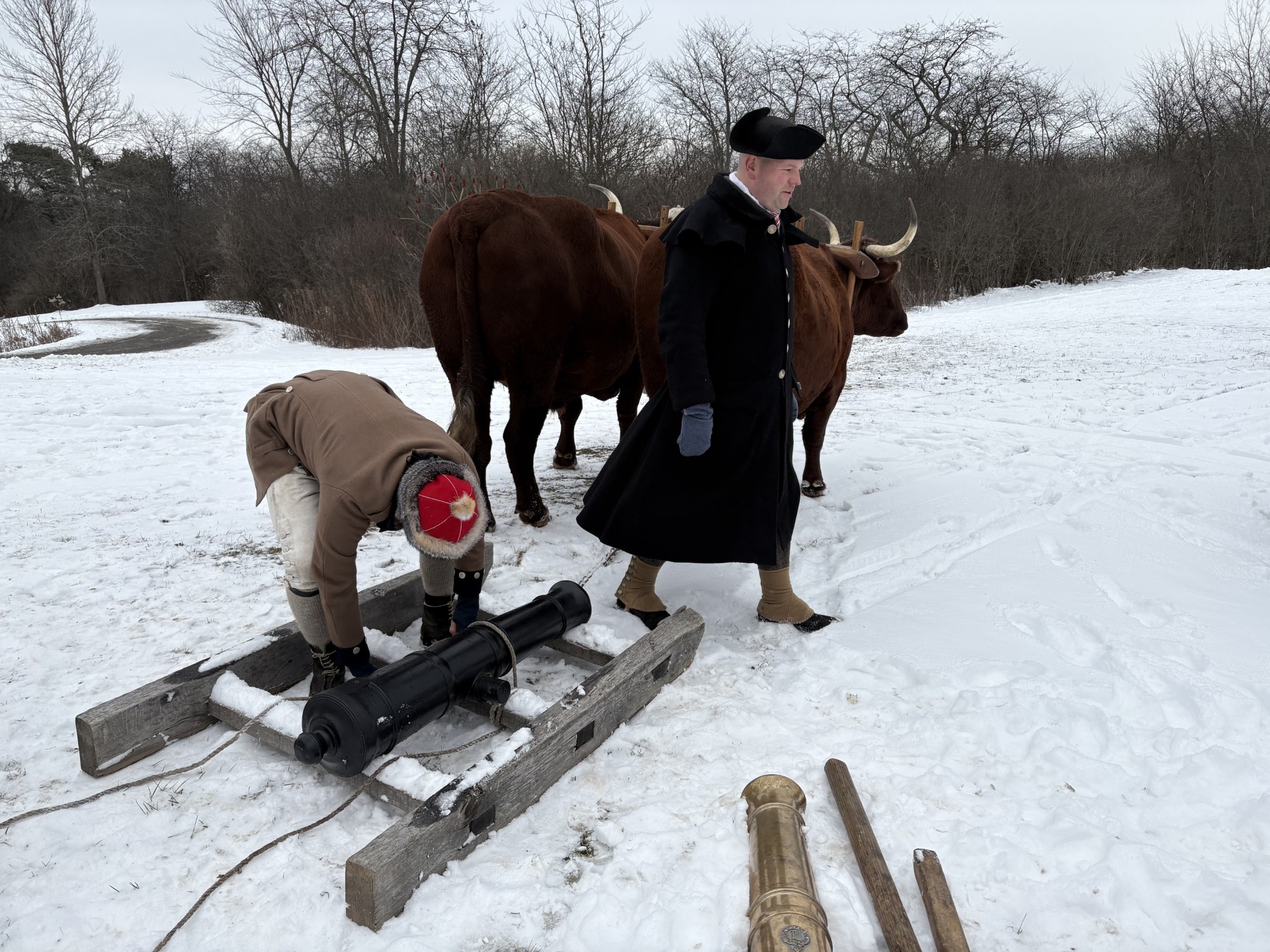
We invite you to join us…at the Hartwell Tavern to commemorate the 250th anniversary of Knox’s Noble Train of Artillery arriving and outfitting for battle. Witness history come to life as the artillerists of Washington's army haul cannon via oxen, prepare supplies, and conduct artillery firing demonstrations.

Inside Hartwell Tavern we welcome you to enjoy the warmth and learn about the ways everyday people confronted the immense difficulties of surviving a siege of their own.
The living history encampment at the Hartwell Tavern site will be open from 10 A.M. to 4:30 P.M. During that time there will be demonstrations of:
  • Moving cannon with oxen, 11 A.M. and 3 P.M.
  • Firing artillery, 2 and 4 P.M.

Friday, February 06, 2026

Knox Trail Commemorations on 8–9 Feb.

Two hundred fifty years ago, the fifty-eight artillery pieces that Col. Henry Knox had convoyed from Fort Ticonderoga were in Framingham, being mounted on carriages and prepared for use.

The Sestercentennial celebrations of that event continue.

Sunday, 8 February, 2 to 4 P.M.
Knox Trail 250th Commemorative Program
Framingham History Center, Village Hall on the Common

This free, family-friendly event is part of a four-community commemoration presented by Revolution250. The program is scheduled to begin at 2 P.M. with a winter procession across the Framingham Centre Common, featuring cannons mounted on draft-animal-pulled sleds, a fife and drum unit, and colonial reenactors portraying a welcoming party.

The event will continue inside with a commemorative program highlighting Framingham’s role and the shared history of nearby Knox Trail communities. Peter Salem will be portrayed alongside a display of the original muster roll that records his service. Another highlighted artifact will be one of only twelve known handwritten fife tune books from the era. The MA250-sponsored “Stitching Revolution in Massachusetts” quilt will be unveiled.

Because of frigid temperatures and snow, most of the program will take place indoors. Parking will be available at Plymouth Church (87 Edgell Road) and First Parish (24 Vernon Street). For more details, see this webpage.

Monday, 9 February, 7 to 8:30 P.M.
The Noble Train Arrives: Knox, Washington and the End of the Siege
Aeronaut Brewing Company, Somerville

As sponsored by the Somerville Museum, Dan Breen concludes his two-part saga by recounting how the cannon from Ticonderoga were hauled over the Berkshires, across the Connecticut River and finally to Dorchester Heights, where they would help to cue Gen. William Howe to abandon Boston. Learn more and reserve tickets through this page.

In addition, a video of my talk in Cambridge at the end of last month on “A Fine Train of Artillery” and how the siege ended is now online here.

Friday, January 30, 2026

Knox Trail Commemorations on 31 Jan.–1 Feb.

This weekend brings another set of commemorations of Col. Henry Knox’s artillery train, including a couple of events displaced by last weekend’s snow.

Saturday and Sunday, 31 January–1 February, 10 A.M. to 4 P.M.
Knox Train of Artillery
Old Sturbridge Village

In partnership with Fort Ticonderoga, this unique event explores the Noble Train as it went through central Massachusetts. For regular museum admission, join staff from the village and Fort Ti and reenactors from Knox’s Regiment of Artillery to learn about the 300-mile journey. Examine reproduction artillery tools and ammunition. Explore the historic village and interact with costumed historians as they demonstrate daily life after the Revolution. Highlights include:
  • See oxen in action hauling cannons. 
  • Watch Knox’s Regiment of Artillery demonstrate cannon firing. 
  • Learn about American artillery of the Revolution compared to the Massachusetts Artillery of the 1830s. 
  • Try using an artillery engine, lifting reproduction cannon from Fort Ticonderoga. 
  • Handle reproduction cannon ammunition and explore their types and use. 
  • See cabinetmakers building a log sled. 
  • Learn about using draft animals and their importance to 19th-century farmers. 
  • See blacksmiths forging cannon carriage hardware. 
  • Hear stories from a recreated patriot who marched on the Knox Trail from Pittsfield to Cambridge in 1976. 
For more details, including the schedule of events on each day, see the Old Sturbridge Village webpage.

Saturday, 31 January, 1 to 4 P.M.
250th Anniversary of Henry Knox & the Noble Train of Artillery
185 Salisbury Street, Worcester

Join Revolution 250, Boston Celebrations, the AC Marriott Hotel Worcester, and citizens of the towns of Brookfield, Leicester, Spencer, Worcester, Shrewsbury, and Northborough for a commemoration of the epic 1776 adventure of Henry Knox and his “Noble Train or Artillery” trekking across Massachusetts on their way to Boston. A procession will step off from Elm Park about 1 P.M. and end at City Hall. An indoor commemorative program will begin at 2 P.M.

Sunday, 1 February, 1:30 to 3 P.M.
“Were so lucky as to get the Cannon out of the River”: Henry Knox and His Noble Train of Artillery
Westford Museum

Alexander Cain will discuss Knox’s journey and its impact on the Continental Army’s firepower and the American cause. At Fort Ticonderoga, the colonel selected 58 artillery pieces, including immense 12-, 18-, and 24-pounders. Once they were ready, some of that artillery was positioned on Dorchester Heights, forcing the British evacuation of Boston. Cain explores Knox’s mission transformed the Continental Army’s firepower while embodying the ingenuity and determination that defined the American cause. Learn more about this presentation.

Sunday, 1 Febuary, 4 to 6 P.M.
Henry Knox: Presentation and Cannon Firing
Martha Mary Chapel, Wayside Inn, Sudbury

Local writer Steven Glovsky explores the improbabilities and inconsistencies of Henry Knox’s story, leading up to his undertaking the transport of urgently needed cannon in the winter of 1775–76. The presentation will be followed by cannon fire from Crane’s Third Artillery. For more information.

For those wanting to-the-date exactitude, as of 250 years ago, the fifty-eight cannon and mortars were parked in Framingham, being equipped for use. Col. Knox had taken command of the artillery regiment on the siege lines, issuing his first regimental orders.

Friday, January 23, 2026

“A Fine Train of Artillery” Talk in Cambridge, 29 Jan.

On Thursday, 29 January, I’ll contribute to the discourse about Col. Henry Knox’s artillery trek with the talk on “‘A Fine Train of Artillery’: Henry Knox and the End of the Siege of Boston” at the Longfellow House–Washington’s Headquarters National Historic Site in Cambridge.

In the past few months I’ve already shared my take on the myths and realities of the Knox saga, and on Knox’s political profile before the war and how that might have contributed to his rise to command the artillery regiment.

For this new talk, therefore, I’m focusing on what Knox accomplished on his first military mission and how that affected the siege of Boston. Here’s our event description:
On January 18, 1776, Gen. William Heath wrote, “Col. Knox, of the artillery, came to camp. He brought from Ticonderoga a fine train of artillery.” Those 58 guns would nearly double the size of the Continental artillery force. But Gen. George Washington and his commanders still had to figure out the best way to use their new ordnance before they could drive the British military out of Boston.
Gen. Washington’s first proposal appears in his 18 February letter to John Hancock as chairman of the Continental Congress:
The late freezing Weather having formed some pretty strong Ice from Dorchester point to Boston Neck and from Roxbury to the Common, therby affording a more expanded and consequently a less dangerous Approach to the Town, I could not help thinking, notwithstanding the Militia were not all come In, and we had little or no Powder to begin our Operation by a regular Cannonade & Bombardment, that a bold & resolute Assault upon the Troops in Boston with such Men as we had (for it could not take Many Men to guard our own Lines at a time when the Enemy were attackd in all Quarters) might be crown’d with success . . .

from a thorough conviction of the necessity of attempting something against the Ministerial Troops before a Re-inforcement should arrive, and while we were favour’d with the Ice, I was not only ready, but willing and desirous of making the Assault; under a firm hope, if the Men would have stood by me, of a favourable Issue; notwithstanding the Enemy’s advantage of Ground—Artillery—&ca.
An infantry charge across the flat ice of the inner harbor against the British army’s fortified batteries on the Common and in the South End. What could go wrong?

This talk is due to start at 6 P.M. It’s free and open to the public, but because of limited seating the site asks people to register in advance. We’re working on how to record and/or livestream the talk as well.

Thursday, January 22, 2026

Knox Trail Commemorations on 24–26 Jan.

By this date 250 years ago, Col. Henry Knox had checked in with his commander, Gen. George Washington, in Cambridge.

The artillery that Knox had moved from Fort Ticonderoga was, Gen. William Heath wrote, “ordered to be stopped at Framingham.”

Those guns needed to be mounted and equipped for use, a process that would take a few more weeks.

This weekend, the commemoration of Knox’s artillery train will continue with events in several Massachusetts towns.

Saturday, 24 January, noon to 2 P.M.
Demonstration of Knox’s Noble Train
Bidwell Park, Stockbridge

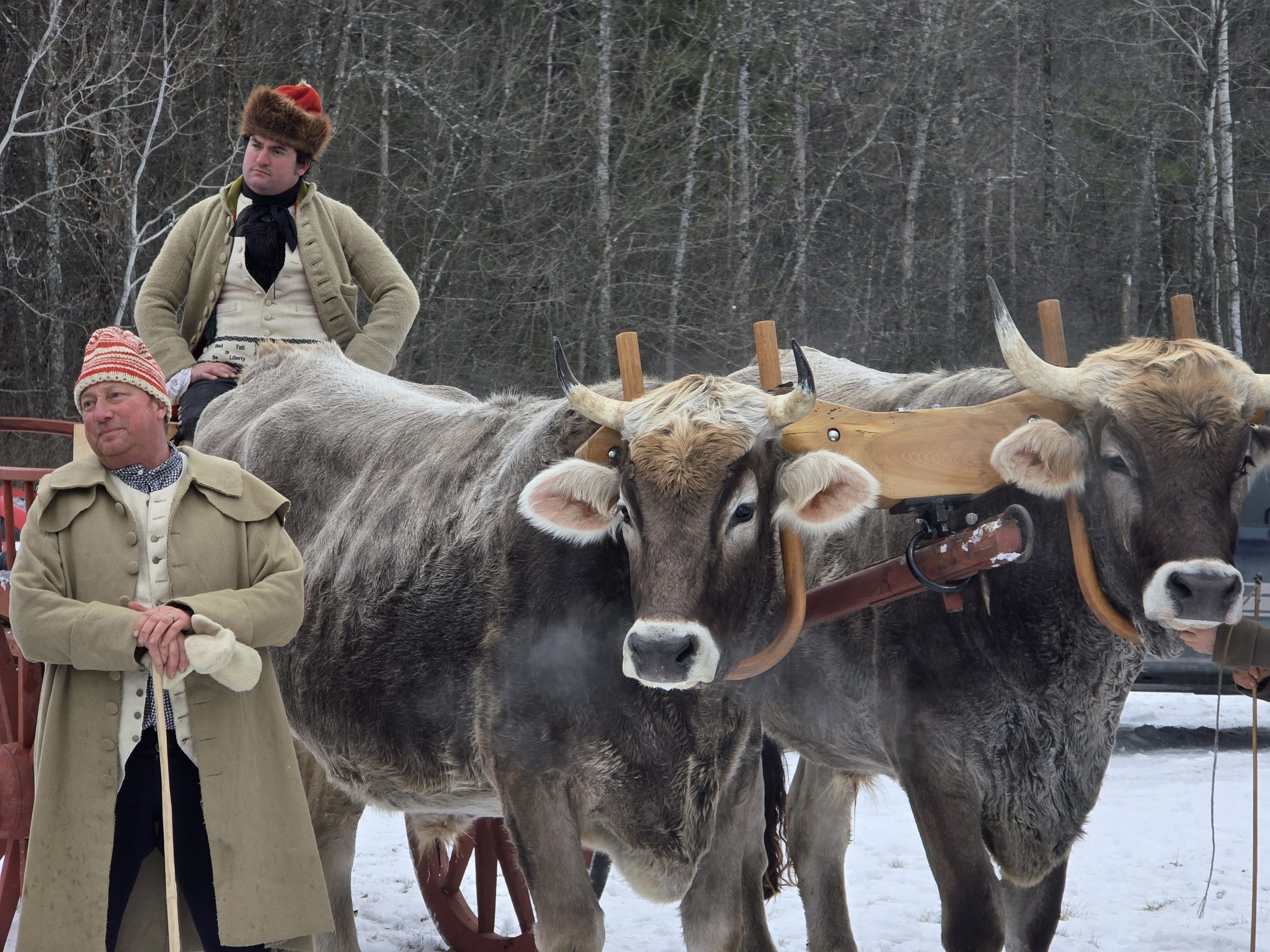
This display of costumed educators from Fort Ticonderoga, a non-firing reproduction cannon, and two friendly oxen is part of “A Day In Revolutionary Stockbridge (1775-1783),” which runs from 10 A.M. to 4 P.M. and marks several moments during the war.

The Mission House will be set up as a tavern with tea, hot chocolate, and baked goods. At the town library, Dennis Picard will discuss eighteenth-century food. Outside the library, Prado del Lana will show her Lincoln Longwool sheep. At the Bidwell Museum and Procter Gallery, museum staff will discuss cooking and other domestic tasks.

Multiple first-person historic interpretations are scheduled from 10 A.M to 1:30 P.M.:
  • Theodore Sedgwick preparing for the Elizabeth Freeman case (Bement Room)
  • Anna Bingham and Abigail Dwight discussing taverns and doing business as women (Red Lion Inn small parlor)
  • Thomas Williams, highest-ranking military officer from Stockbridge to die during the war, recounting the siege of Boston (various locales)
  • Timothy and Rhoda Edwards, storekeepers, community leaders, and relatives of Col. Aaron Burr (Mission House)
  • Members of the 2nd Massachusetts Regiment (various locales)
The afternoon will bring two larger presentations:
  • Stockbridge Committee of Safety court scenario (2 to 3 P.M. in the library lobby)
  • Gregg Duffek and JoAnn Schedler on Mohican Veterans (3 to 4 P.M. in the Bement Room)
Cards with a map and a list of programs will be available at the Stockbridge library and Red Lion Inn. For what’s currently planned, see this page.

Saturday, 24 January, 11 A.M.
Noble Train of Artillery: The Knox Expedition
Bartlett Park and Jacobs Hall Masonic Lodge, Marlborough

The Marlborough Historical Society commemorates Knox’s mission with the town’s own newly acquired cannon and J. Archer O’Reilly III portraying the general and secretary of war. Organizers ask attendees to register in advance so there will be enough refreshments for all.

Sunday, 25 January, 1:30 to 3 P.M.
“Were so lucky as to get the Cannon out of the River”: Henry Knox and His Noble Train of Artillery
Westford Museum

Alexander Cain will discuss Knox’s journey and its impact on the Continental Army’s firepower and the American cause. At Fort Ticonderoga, the colonel selected 58 artillery pieces, including immense 12-, 18-, and 24-pounders. Once they were ready, some of that artillery was positioned on Dorchester Heights, forcing the British evacuation of Boston. Cain explores Knox’s mission transformed the Continental Army’s firepower while embodying the ingenuity and determination that defined the American cause. Learn more about this presentation.

Sunday, 25 January, 4 to 6 P.M.
Henry Knox: Presentation and Cannon Firing
Martha Mary Chapel, Wayside Inn, Sudbury

Local writer Steven Glovsky explores the improbabilities and inconsistencies of Henry Knox’s story, leading up to his undertaking the transport of urgently needed cannon in the winter of 1775–76. The presentation will be followed by cannon fire from Crane’s Third Artillery.

Monday, 26 January, 7 to 8:30 P.M.
Ethan Allen, Benedict Arnold and the Gibraltar of North America
Aeronaut Brewing Company, Somerville

The Somerville Museum presents the first of two talks by Dan Breen on the subject of “Henry Knox and His Noble Train of Artillery” in the sociable space of a brew pub. This evening will cover the story of Fort Carillon/Ticonderoga, its improbable capture, and Col. Knox’s arrival six months later. The second installment, scheduled for 9 February, will complete the tale with “The Noble Train Arrives: Knox, Washington and the End of the Siege.”

Wednesday, January 14, 2026

Knox Trail Commemorations on 15–18 Jan.

Sestercentennial commemorations of the progress of Col. Henry Knox’s artillery convoys across western Massachusetts continue this weekend.

(I’m trying to list all of these events, but there are so many that I might miss some being promoted locally.)

Thursday, 15 January, 6:30 to 7:30 P.M.
The Most Proper Spot in America: The Continental Arsenal at Springfield
Alex MacKenzie
Captain Charles Leonard House, 663 Main Street, Agawam

The winter meeting of the Agawam Historical Association will hear from Alex MacKenzie, curator of collections at the Springfield Armory National Historic Site. Having visited the region in 1776, Col. Knox chose Springfield to be the site of the Continental Army’s laboratory, or depot for building and repairing ordnance and other military supplies. Starting in 1777, that operation eventually grew into the Springfield National Armory, now a national park. This event is free and open to the public.

Friday, 16 January, 6 to 8 P.M.
250th Anniversary of Henry Knox in Monterey
Monterey Library, 452 Main Road

A new exhibit opens at the town library with a reception and remarks by Mark Makuc, Heather Kowalski, Rob Hoogs, and Jonathan Barkan, including presentations on the Bicentennial and current reenactments of Knox’s trek. These presentations will be repeated at the library on Saturday morning.

Saturday, 17 January, 2 to 3 P.M.
250th Anniversary Commemoration of the Henry Knox Trail
Springfield Armory National Historic Site

Revolution 250, Boston Celebrations, the Springfield Armory National Historic Site, and citizens of the towns of Westfield, West Springfield, Springfield, Wilbraham, Palmer, and Warren join to commemorate the “Noble Train of Artillery” on its way to Boston. Attendees can take in the site’s exhibit “The Continental Arsenal at Springfield During the Revolution” and ongoing display of weaponry through the decades.

Saturday, 17 January, 2 to 4 P.M.
Walk the Old Knox Trail
Bidwell House Museum, Monterey

After an outdoor gathering with a bonfire and hot mulled cider, Rob Hoogs will lead attendees along a segment of old road that Knox’s teamsters used, about half a mile each way.

Saturday, 17 January, 7 to 8:30 P.M.
Panel Discussion on Ye Trodden Path
Monterey Library, 452 Main Road

As the Berkshire County Historical Society publishes a new booklet on the trails through the region in 1775, titled Ye Trodden Path, local historians Rob Hoogs, Bernie Drew, Gary Leveille, Ron Bernard, and Tom Ragusa discuss the research going into that publication.

Sunday, 18 January, shows at 1:30 and 4 P.M.
For Love! For Liberty!
Springfield Performing Arts Venture

This new musical theater production by Vana Nespor and Clifton (Jerry) Noble tells the story of Henry Knox, his young wife Lucy Knox, and his mission to bring cannon to the Continental forces around Boston. Middle school history students help the U.S. Park Service, teachers, and grandparents explore this tale. Tickets available through this webpage.

(The photograph above shows William Wilber portraying Henry Knox during the 1976 reenactment, courtesy of Gerry Francis and the Berkshire Edge.)

Wednesday, January 07, 2026

Knox Trail Commemorations on 10–11 Jan.

The Sestercentennial commemorations of Col. Henry Knox’s mission to bring more heavy artillery to the siege lines around Boston will move from New York into Massachusetts this upcoming weekend.

There are both outdoor and indoor events in the works, with contingency plans for especially bad weather.

Saturday, 10 January, 10 to 11 A.M.
Massachusetts & New York State Line Commemoration
General Henry Knox Cannon Trail Marker, Route 71, Alford

Revolution 250, Saratoga 250, the Daughters of the American Revolution, many state and local officials, miltiia reenactors, and a Henry Knox interpreter will commemorate the Noble Train’s passage from New York into Massachusetts. A wreath-laying ceremony at the marker will conclude the joint observance. There is limited parking and access at this site, so members of the public are urged to attend one of the other events planned for the day. Link

Saturday, 10 January, 11:30 A.M. to 1 P.M.
The Knox Train of Artillery
Hillside Firehouse, Hillsdale, New York

The town will host costumed re-enactors from Fort Ticonderoga in an entertaining, educational program about how the train of artillery passed through North Hillsdale (then called Nobletown) in 1776. Free food and beverages. Link

Saturday, 10 January, 2 to 3 P.M.
250th Anniversary Commemoration of the Henry Knox Trail
Mahaiwe Performing Arts Center, Great Barrington

Join Revolution 250, Boston Celebrations, the Daughters of the American Revolution, and citizens of the towns of Alford, North Egremont, Great Barrington, Monterey, Otis, Russell, Blandford, Sandisfield, and other towns for a commemoration of the epic 1776 trek through the Berkshires on the way to Boston. Link

Sunday, 11 January, 3:30 to 5 P.M.
Knox 250 – Blandford Cannon Salute & Bonfire Celebration
Blandford Fair Grounds

Hear a 30-minute account of Knox’s journey through Blandford told by a colorful cast of characters in their own words, including General Knox, locals, and citizen Solomon Brown, who stepped in with his oxen to help. A Revolutionary War guard will fire several cannon rounds. Free event, including refreshments.

Attendees can also go inside the Blanford Historical Society to see a slideshow of the 200th anniversary reenactment in 1976 and meet locals who participated. Check the society’s website for any changes due to weather. Link

Saturday, December 13, 2025

Was Gen. Schuyler’s Wagon Master One of His Enslaved Workers?

As quoted yesterday, on 29 Dec 1775 Col. Henry Knox wrote that Gen. Philip Schuyler “sent out his Waggon Master & other people to all parts of the Country” to hire teams of horses for transporting heavy ordnance to Springfield.

Back in 2016 Ian Mumpton at the Schuyler Mansion wrote:
It is unclear who the “Waggon Master” refers to, but as mentioned in a previous article, many of the men enslaved by the Schuyler family were skilled at driving carts and sleds. As there is no surviving record of Schuyler hiring a wagon master, it is likely that this person was one of the enslaved servants, possibly Lisbon or a man named Lewis who, five months later, was lent to Benjamin Franklin as a driver for a trip from the Schuyler’s home to New York City.
That previous article, also posted by Mumpton, analyzed a 1771 document which mentioned enslaved workers and said:
Lisbon and Dick are both mentioned in other Schuyler documents as carters or wagoners, conveying goods and people for the Schuyler family. Lisbon in particular is mentioned in at least four other sources, always in regards to his driving goods back and forth between Albany and Saratoga. These men’s ability to drive carts and sleds was a large part of their value to the Schuylers, as this was a specialized skill-set that involved being able to work with draft animals, manage tack and harness, and maintain the carts and sleds in their charge.
A comment noted another wagon driver named Anthony, Tony, or Tone.

I wouldn’t be surprised if Gen. Schuyler assigned some of his enslaved wagon drivers to the operation moving cannon toward Boston (and collected the same pay he was offering to other farmers for himself).

However, I’m not convinced that one of those men could have been Schuyler’s “Waggon Master.” That was an official designation within the Continental Army’s quartermaster department. On 9 August, Gen. George Washington appointed John Goddard of Brookline “Waggon Master General to the Army of the Twelve United Colonies.” (That count included Georgia but not Delaware, still officially a subset of Pennsylvania.)

In the fall of 1775 Schuyler had overseen preparations for Gen. Richard Montgomery’s invasion of Canada, an operation that probably required a convoy of wagons and thus an official to oversee them.

And that’s a crucial aspect of the job of wagon master. It required more than driving a wagon—indeed, the wagon master might not do any actual driving at all. The job involved making deals on behalf of the Continental Army with a large number of independent contractors and then overseeing a force of teamsters. The word “master” was even in the name. Did any enslaved man, however skilled, have the legal standing and social authority to do that job in 1775?

TOMORROW: Glimpses of Schuyler’s wagon master in spring 1776.

Friday, December 12, 2025

“After a considerable degree of conversation”

On Christmas 1775, Col. Henry Knox was making his way on horseback to Gen. Philip Schuyler’s mansion in Albany, New York.

Knox has just called off his deal with George Palmer of Stillwater to supply eighty pair of oxen to transport heavy cannon into Massachusetts.

Palmer was in his late fifties. Born in Connecticut, he had bought mills and other real estate in Stillwater in 1764 and become a big man in that town. He didn’t like being dismissed, as shown by the letter I quoted yesterday.

Since we have only one side of the correspondence, we don’t know if Knox had revealed that he’d canceled the deal on a direct order from Gen. Schuyler, who insisted he’d started making his own arrangements for moving the cannon.

Schuyler was in his mid-forties, scion of a family of Dutch landowners in Albany. He was a big man in the whole colony. He’d been elected to the Second Continental Congress and then appointed a general of the Continental Army in charge of the Northern Department.

In between those two local bigwigs was Knox, a twenty-five-year-old from Boston who hadn’t yet received his official commission as colonel. He was following orders direct from Gen. George Washington, but that mentor was very far away.

On the afternoon of 26 December, Knox reached Schuyler’s house. Evidently he persuaded the general to at least talk with Palmer. The next day Knox wrote in his journal: “Sent off for Mr Palmer to Come immediately down to Albany.”

On 28 December Knox recorded the result of that meeting:
Mr Palmer Came Down & after a considerable degree of conversation between him & General Schuyler about the price the Genl Offering 18/9. & Palmer asking 24/. P[er] day for 2 Yoke of Oxen the treaty broke off abrubtly & Mr Palmer was dismiss’d
It seems clear from the way Knox described that long conversation as between Palmer and Schuyler that he was left out—perhaps he even wanted to be left out. We don’t know what price he had offered Palmer and thus how that fit into this conversation. Did Schuyler bargain Palmer down, or did Palmer insist on sticking to the original deal?

Authors describe Knox scrapping his initial plan to use Palmer’s oxen as purely a matter of cost. That makes the situation seem entirely reasonable, especially on the part of the men commemorated with statues—Schuyler and Knox. But Schuyler had told Knox to dismiss Palmer more than a week before this sit-down, before he knew anything about prices.

That suggests Schuyler made his decision on something besides 5s.3d per day. He and Palmer might have been rivals for influence in the county. He might have assumed Palmer wouldn’t offer the best price. He might have felt he’d sunk too much money into his own preparations to stop now. The general might simply have wanted more control.

Whatever his motivation, on 29 December Schuyler sent his wagon master and other agents “to all parts of the County to immediately send up their slays with horses,” as Knox wrote. The price would be “12/. P[er] day for each pair of horses or £7. P[er] Ton for 62 miles.” At the end of the year the wagon master brought back a list of 124 teams. That number of horses would cost £74.8s. per day.

In contrast, Palmer had offered 80 yoke of oxen. Knox wrote that he ultimately quoted 24s. per day “for 2 Yoke of Oxen.” If that’s correct, using Palmer’s oxen would have cost £48 per day, considerably less than Schuyler’s arrangement. However, if Knox really meant that price to apply to each yoke of two oxen (the usual way of calculating), then Palmer was indeed asking for more than Schuyler.

There might well have been other costs and factors involved, such as the number of teamsters needed or how quickly the animals and equipment could be assembled. But whatever the details, it seems clear that Schuyler was making the decisions at this point, not Knox.

Indeed, Knox confided some worries about the final arrangement in his journal, meant for himself and perhaps for showing Gen. Washington later. On 31 December he wrote about the “Slays which I’m afraid are not Strong enough for the heavy Cannon If I can Judge from the sample Shewn me by Genl Schuyler.”

Nonetheless, those sleighs and those horses were what he had to work with.

TOMORROW: The wagon master.

Thursday, December 11, 2025

“You will therefore Countermand any directions you may have given Mr. Palmer”

As discussed back here, as of 13 Dec 1775 Col. Henry Knox and George Palmer of Stillwater, New York, had agreed on how to transport heavy ordnance to Springfield.

Knox wrote to Gen. George Washington about those arrangements on 17 December:
I have made forty two exceeding strong sleds & have provided eighty yoke of Oxen to drag them as far as Springfield where I shall get fresh Cattle to carry them to Camp.
This is the letter in which Knox promised “to present to your Excellency a Noble train of Artillery,” a phrase authors still use to describe the guns.

On the same day, Knox wrote to Gen. Philip Schuyler (shown above) in Albany. He had thought Schuyler had gone south to Philadelphia, so he might have made decisions thinking that he didn’t have to clear them with his superior officer. Knox told Schuyler:
I have agreed with Capt. Palmer of Stillwater to get proper Conveyances for them from hence to Springfield— . . . I expect Capt. Palmer up with the Teams on Tuesday & on Wednesday or Thursday I hope to move as far as Saratoga if the sleding continues as at present from thence we must wait for Snow—
The next day, Schuyler wrote back:
I am happy to hear that all the Military stores you had in charge to bring from Ticonderoga are arrived at Fort George,— I have taken Measures to forward them to Boston as soon as we shall be favoured with a fall of Snow— but I am Informed that you have Applied to Mr. Palmer to Construct Carriages for the purpose, this is a very unnecessary Expence as there are a Sufficiency of Carriges Suitable for the purpose in this County Sufficient to Carry ten times the quantity, you will therefore Countermand any directions you may have given Mr. Palmer on this head.
Note how Knox referred to Palmer as a captain, probably a militia rank, while Schuyler called him only “Mr. Palmer.”

Having received a direct order, Knox wrote to George Palmer saying that his services were no longer needed.

Palmer had been making arrangements with his network of farmers around Stillwater. He didn’t take this news well. On 25 December he responded to Knox:
Since your Departure from this I have an oppertunity with Many of the inhabitants with whom I have Contracted for the Removal of the artillery and Stores, I find all Determined To A Man to fulfill on their Part & that I Shall on mine or Be answerable for the Consequences of A Disapointment which is More than I Shall be able to Do,

Depend Sir the People (& Not only those Employed in Service But others General) are Not indifferent, they are Sensible of the importance of the Grand Cause

they are Sensible To the Minutest Degree of the insult offered in Counteracting your Measures, I take this Earliest opportunity To inform you of the Disposition of the People among whom I Live with whom I am Concerned Particularly in this afair,

your Penetration will Easily Dissern the Consequences that will follow Disapointing Such A Number of People So Resolutely Determined as you may Depend Those are, with Regard to what you mentioned of our Carrying the heavy [space] they are Determined Since there is Such an they are Determined Since there is Such an attempt made To Supplant them To fulfill the whole Contract

I am Sir with all Possible Respect your most obedient hume. Sert/.
I get the impression that Palmer no longer had complete respect for young Col. Knox.

TOMORROW: A sit-down in Albany.

Sunday, December 07, 2025

Following the Knox 250 Trail through New York, 13–14 Dec.

On the weekend after my 11 December talk at the Saratoga battlefield park, many local historic sites and communities in New York will host commemorations of Henry Knox’s mission to transport more ordnance to the siege of Boston.

The first leg of that journey involved floating and dragging heavy cannon and mortars south on Lake George and then to greater Albany in December 1775.

The Saratoga 250 website lists these celebrations.

Saturday, 13 December
Sunday, 14 December
The celebrations appear to culminate in this event.

Sunday, 14 December, 1 to 5 P.M.
Knox’s Noble Train of Artillery Layover at Albany
Schuyler Mansion State Historic Site, Albany

In the early afternoon, the ceremonial linstock will arrive at Gen. Philip Schuyler’s home. Historical reenactors and 18th-century refreshments will be on hand. This outdoor event will be free and open to the public.

From 2 to 4 P.M., visitors with tickets can go inside the mansion for guided dramatic tours. Witness Knox’s stay at the mansion, his impact on the household, and Schuyler’s role as host and facilitator of the wagon train’s passage through Albany and over the Hudson River. Space is limited. Purchase timed tickets through this site or by calling 518-434-0834.

The Knox Trail 250 events will pick up again in January.

Saturday, December 06, 2025

“Knox’s Mission to Lake Champlain” in Saratoga, 11 Dec.

On Thursday, 11 December, I’ll be in Saratoga, New York, to share thoughts on “Myths and Realities of Col. Henry Knox’s Mission to Lake Champlain.”

Our event description:
In November 1775, Gen. George Washington gave Henry Knox a mission to travel to New York and bring back cannons for the Continental Army. Knox was a 25-year-old bookseller with no military rank. His trek back to Cambridge has become a beloved part of the American saga. This talk digs deeper into that story, examining such questions as who first had the idea to fetch cannon from Lake Champlain, how Knox had contributed to the Patriot movement, the ways weather affected the mission, and how much those cannon changed the British army’s plans.
This talk will take place in the Saratoga National Historical Park visitor center starting at 6:30 P.M. It is free, but because seating is limited, the park asks people to make reservations by email to SARA_Reservations@nps.gov. The Friends of Saratoga Battlefield supports this and other fall lectures at the park.

The Saratoga battlefield park is within the town of Stillwater, New York. Exactly two hundred and fifty years before the date of this talk, Knox wrote in his diary, he sent a man from Fort George “to Squire Palmer of Stillwater to prepare a number of Sleds & oxen to drag the Cannon presuming that we should get there.”

According to the Gilder Lehrman Institute’s abstract of Knox’s letter to Palmer, the colonel asked for forty sleds. Since he would soon refer to “eighty Yoke of oxen,” that meant he was planning to use four beasts per sled. (The institute also says that letter was dated 12 December, so it’s possible Knox was off by a day in his journal.)

George Palmer (1719–1809) was a local bigwig, more than twice Knox’s age. According to Stillwater’s website, he had “at his own expense equipped a company of militia which marched to Crown Point and Ticonderoga, arriving just after Ethan Allen had taken the fort.”

Palmer came to Fort George on 13 December and “agreed to provide the necessary number of sleds & oxen & they to be ready by the first snow.”

COMING UP: Making other plans.

Tuesday, October 21, 2025

“A Sett of Globes (which came over by Mistake)”?

In eighteenth-century New England, booksellers sold more than books, pamphlets, and magazines. 

As the business letters of Thomas Hancock and Henry Knox show, they also purveyed medicines, tea, “Instruments,” quills, stationery, snuff, and other genteel goods.

In the spring or summer of 1773, Knox received a set of globes from one of his London suppliers. This set probably consisted of a terrestrial globe—the spherical representation of Earth that we’re used to—and a celestial globe showing the constellations and other stars.

We have a bunch of Knox’s incoming correspondence, published by the Massachusetts Historical Society in 1928, but I don’t see a clue about who sent those globes.

Some London merchants, such as the publisher Thomas Longman, just shipped Knox the latest magazines and the books reviewed in those magazines without waiting for an order. So it’s possible one of the young bookseller’s suppliers put those globes on a ship expecting he would find a market for them.

Fortunately, a customer appeared. On 6 August, the schoolmaster John Vinal wrote to Knox from Newburyport:
Mr. [Tristram?] Dalton informed me that you had a Sett of Globes (which came over by Mistake) that you would dispose of at the Sterling Cost and Charges. I was just going to write to London for such a Sett; but if you have not disposed of yours, and the price is agreeable, and they are the right sort I will purchase them. I should be glad of a Line immediately; you may inclose one to me directed to my Friend Mr. Wm. Miller Collector.

I should be glad to know the following particulars, vizt. Whither they are Senex’s Globes—who they are made by, if they have a Magnetic Needle and Card, if they have a Nonius Scale and Analemma, Quadrant of Altitude, etc. and what Cases they are in. . . .

Please to express the Price either in Sterling or L[awful] M[one]y.
As published, this letter told Knox to send mail through “Wm. Millen,” but the deputy collector of customs in Newburyport was another of Knox’s customers, William Miller. Since Vinal was officially a handwriting master, you’d think he’d render his friend’s name unmistakably.

As a teacher of adult classes in navigation, among other subjects, Vinal’s wanted to know this product’s features. “Senex’s Globes” meant those modeled on the work of cartographer John Senex (1678–1740). A “Nonius Scale” was the invention of the Portuguese scientist Pedro Nuñez (1492–1577). An “Analemma” is the figure-8 pattern traced by the Sun when viewed from the same spot day after day over a full year.

As for the price, that probably depended on how large these globes were. Sets ranged from small enough to fit in a pocket to large enough to count as furniture, and their price tags were proportional.

Did Knox and Vinal close the deal? We don’t know because we don’t have both sides of the bookseller’s correspondence. But on 27 June the Rev. John Murray had written to Knox from Boothbay in Maine asking for “one pair of 18 inch Globes.” (Murray also complained about how Knox had supplied “Copies of the Classical authors,” nonetheless ordered some other books, and asked how to reach Knox’s childhood friend the Rev. David McClure.) So if those globes from London were 18 inches across, they were probably on their way past Newburyport to Boothbay.

TOMORROW: Mr. Vinal’s notices.

Sunday, October 12, 2025

Studying Henry Knox with Fort Ti

The Sestercentennial of Col. Henry Knox’s mission to Lake Champlain in the winter of 1775–76 is coming up, and Fort Ticonderoga is on it.

That site naturally feels some ownership of that saga since some of the artillery pieces Knox hauled to the siege of Boston came from there. Some, however, came from other fortifications along the lakes, such as Crown Point. Fort Ti is the best restored and most active of those historic locales, so it gets almost all the attention.

For more on that ordnance, I recommend this video with Fort Ti curator Matthew Keagle. He describes how Continental authorities moved artillery around in the summer and fall of 1775, preparing for Gen. Richard Montgomery’s push into Canada and also laying the ground for an idea that Benedict Arnold had floated back in the spring—trucking some of those guns toward Boston.

In addition, Fort Ticonderoga is offering a free virtual teacher institute on the topic “Noble Train!: Henry Knox and the Siege of Boston” on Saturday, 15 November, from 10 A.M. to 2 P.M.

The presentations will include:
  • “Henry Knox: Beyond the Noble Train of Artillery” by Fort Ticonderoga’s Director of Academic Programs, Rich Strum
  • “The Revolutionary Lives and Letters of Lucy and Henry Knox” by Dr. Phillip Hamilton from Christopher Newport University
  • “The Ticonderoga Soldiers Project” by Kate Tardiff, Archivist at Fort Ticonderoga
  • “The Siege of Boston and Evacuation Day” by Dr. Robert Allison from Suffolk University
  • “Real Time Revolution®: Bringing Henry Knox into the Classroom” by Tim Potts from S.U.N.Y. New Paltz and Rich Strum
Participants must register in advance, though the session is free for educators. 

Sunday, August 31, 2025

“He died with the Effects of the Measles”

Henry Marchant (1741–1796, shown here) was a rising young lawyer in Rhode Island.

Born on Martha’s Vineyard, Marchant grew up in Newport and attended the College of Philadelphia (one of the schools that became the University of Pennsylvania in 1791).

In 1771 Marchant was appointed to be Rhode Island’s attorney general. He set sail for London to observe judicial practices there. His notes on James Somerset’s freedom case are an important document of that episode.

Marchant headed home in November 1772. On arriving in Boston, he received a boatload of bad news, as he told Benjamin Franklin in a letter. One loss was particularly close:
Mr. [Tuthill] Hubbart next informed me of the Death of my Third and only Son a Child of Three years old. He died with the Effects of the Measles, the Day after I left London. My two Daughters had been very ill with the same Disorder but are since happily recovered.
Measles was a common disease in colonial America. Martha Washington and other people at Mount Vernon caught it in 1760, and some of her enslaved workers in 1773. Benjamin Franklin’s grandson Benny caught measles in 1772, like little William Marchant. In 1788 Henry Knox reported that he had five children going through the disease.

In 1783 Abigail Adams reported that her son Charles had came down with the measles, adding: “it has proved very mortal in Boston. Tis said 300 children have been buried since last March.” Abigail’s sister Mary Cranch included a cousin’s descriptions of his symptoms in a letter in 1790:
I know you Will rejoice to hear that cousin Tom has got comfortable through the Measles. He caught them at Cambridge the day he arriv’d from new york— He came here the Monday after & told me he thought he had them but return’d the next day—promising to return as soon as he felt the Symtoms The Monday following his cousin William brought him home in a close carriage but he did not break out till Wednesday.

he was pretty sick but not very bad till they came out. He had Several faint turns before & sometimes felt as if he did not weigh a pound after they broke out— The rash came first but the measles soon follow’d thick enough, his cough was troublesome & his Fever pretty high but upon the whole I think he has had them light to what people in general have or to what you & I had. There are many People Who have them now extreamly bad & many have died with them—
Measles was overshadowed by smallpox, another disease that produced fever and spots, because smallpox was much deadlier. On the other hand, measles is much more contagious—spreading far more quickly and easily than Covid-19, H.I.V., and other viruses we’ve faced in recent decades.

We don’t have to worry about measles as much as past generations did because in 1954 medical scientists developed a vaccine. Cases in the U.S. of A. dropped precipitously after the government approved regular immunizations in 1963.

Unfortunately, the Trump administration’s Secretary of Health and Human Services, Robert Kennedy, Jr., has cockamamie ideas about vaccines. In fact, Kennedy was chosen for his cockamamie ideas—he has no other connection to health services. In particular, experts blame Kennedy for promoting a measles epidemic in American Samoa in 2019.

During his confirmation hearings Kennedy made noises about believing in vaccines, pointing out that all his children have been immunized. But as soon as he was in office and a media outlet gives him free rein to talk, Kennedy returned to spouting all sorts of lies about the nature of the vaccine, its effectiveness, and its side effects.

This past month, Kennedy demanded that the Centers for Disease Control adapt to his anti-vaccine beliefs, cancel highly promising research, and curtail the availability of Covid-19 boosters for Americans. When the head of the C.D.C. refused to go along, Kennedy and Trump forced her out, prompting the next level of managers to resign in protest.

There are many ways the Trump administration is harming people and causing deaths around the globe. The effects of Kennedy’s anti-vaccine crusade, if not stopped, will be among the most damaging. Parents will once again be feeling the same grief as Henry Marchant for no good reason.

Saturday, July 05, 2025

“Siege and Liberation of Boston,” 7–8 Aug.

Registration is open for the third Pursuit of History Weekend that I’ve helped to program, this one on “The Siege and Liberation of Boston” on 7–8 August.

Organized with the folks who manage History Camp, these sessions are designed to offer in-depth looks at developments 250 years ago through expert speakers and visits to the actual sites where the history happened.

We’ll start on the slope of Breed’s Hill in Charlestown, exploring what turned out to be the decisive battle of the first campaign of the Revolutionary War. Sam Forman and Mary Adams will introduce two of the leaders of the American forces, Dr. Joseph Warren and John Stark. We’ll walk the battlefield and hear about ongoing investigations of the landscape from Boston City Archaeologist Joe Bagley. Then we’ll take a road trip to other places that the Continental Army fortified, which few visitors see. That day we plan to have meals at two restaurants that go back to the eighteenth century.

On the following day, we’ll move into the North End, collaborating with the Paul Revere House, the Old North Church, and veteran tour guide Charles Bahne to offer an in-depth look at the experience of living inside besieged Boston. Finally, I’ll speak about George Washington as a new commander-in-chief, what he thought his job was, and what he really learned.

The Pursuit of History webpage for this event has a video of me explaining more. Sam Forman and I are also scheduled to talk about the siege and this event in the History Camp discussion series on Thursday, 10 July, at 8:00 P.M.

This Pursuit of History Weekend is not, in fact, on a weekend but on a Thursday and Friday. That’s to allow people to also attend History Camp Boston on Saturday, 9 August, and even the related tours the next day if their history interests are still unsated.

And speaking of History Camp Boston 2025, I’ll be speaking there, too. My topic is related to the end of the Boston siege. That talk is called “Henry Knox, Loyalist?” It offers a new interpretation of that American general’s rise to prominence.

Tuesday, June 17, 2025

“The Memorialist should apply to that source for relief”

In 1787, the Confederation Congress was meeting in New York, at City Hall and the Fraunces Tavern (shown here).

When Henry Howell Williams asked for more than £3,600 in compensation for losses from Noddle’s Island twelve years earlier, the Congress referred his request to its Board of Treasury. (This must have happened after 10 Apr 1787, when Williams wrote to Secretary of War Henry Knox asking for his help with this petition.)

That treasury board consisted of three men, all recent Congress delegates:
These were the same three men who considered Richard Gridley’s request for payment for a horse killed in the Battle of Bunker Hill (fought 250 years ago today).

On 1 Aug 1788 that board told the Congress:
the damage done to the property of the Memorialist, and the articles stated to have been applied to the benefit of the United States, was previous to the formation of an Army, under the authority of the Union.

The Board are therefore of opinion, that if the evidence adduced in proof of the value and quantity of the articles stated to have been applied to the public use was more satisfactory than in fact it is, it would be improper to establish a Precedent, in the present instance, for an admission of numerous Claims, on the merits of which it would be impossible for the Officers of the Treasury to form any competent judgement.

The general fact, of a very valuable property belonging to the Memoralist, having been either destroyed or used for the benefit of the Army assembled at Boston in the month of May 1775, by order of a Board of General Officers, appears by the Certificate of the late Commissioner of Accounts for the State of Massachusets, marked A, to have been well established:

Inasmuch however as the aforesaid property appears to have been applied for the immediate benefit of the State, and as the merits of the Claim can be best ascertained under their authority, The Board are of opinion, that the Memorialist should apply to that source for relief; and should Claims of a similar description be hereafter allowed by the general Board of Commissioners, the State will obtain reimbursement for such sums as shall appear an equitable compensation for the real damage sustained by the Memorialist.
In short, the Congress sent Williams back to Massachusetts since the Battle of Chelsea Creek happened before any Continental Army legally existed.

It’s probably also significant that the Confederation Congress was on its last legs. It didn’t have enough money to pay all its bills. So few delegates were coming to New York that the body often lacked a quorum—hence the use of commissioners for day-to-day administration, and the long delay in actions. By the time this board submitted its report, a new Constitution was being publicly debated.

TOMORROW: Back to Massachusetts.

Monday, May 19, 2025

Visiting Henry Howell Williams on Noddle’s Island

For the last third of the eighteenth century, Henry Howell Williams (1736-1802) leased Noddle’s Island in Boston harbor for farming.

Williams married Elizabeth Bell, daughter of the previous lessee, in 1762, and they moved onto the island. They had a large house on the western end.

The Williamses started raising a family there: six children born between 1765 and 1772, and another due to arrive on 6 July 1775.

Henry Howell Williams’s runaway advertisements in the Boston newspapers showed his household sometimes included other people as well: an eighteen-year-old Irish servant named Joseph Sullivan in 1764; a twenty-three-year-old “Negro Girl Servant, named PHILLIS,” in 1778.

Williams periodically advertised a stallion raised on the island as available “to cover.” That horse was named “the Young Barbe.”

In several summers Williams ran ads chastising people for coming onto the island to shoot birds, enumerating the harm they did:
  • “killed a Number of my Sheep” (1768).
  • “treading down the Grass on the mowing Ground” (1769).
  • “to conceal it, throw the [dead] Sheep into the Wells or Pond Holes” (1769).
  • “putting my Family in Danger of their Lives” (1770).
  • “bringing on Dogs, and driving my Stock from one End of the Island to the other” (1772).
The apex of these complaints appeared in August 1784:
the 9th Inst. as a number of men were mowing, a scoundrel of a gunner fired his piece and covered one of the men with a shower of small shot, which providentially did but little damage
Williams forbade other people from hunting on Noddle’s Island. Of course, the fact that he kept placing the ads meant people kept ignoring his ban.

I didn’t find any notices about hunting from Henry H. Williams in 1773. But the 26 July Boston Evening-Post ran this news item:
Last Saturday…Afternoon, Mr. Henry Knox, of this Town, Stationer, being a Fowling on Noddles Island, in discharging his Piece at some Game, it burst near the Breech, whereby his left Hand was shattered in a very dangerous manner; his little Finger entirely tore away, and the two adjoining ones were obliged to be cut off at the middle Joints, his Thumb and Fore Finger only remaining, and his Hand being otherwise so much hurt that it is feared whether even these will be saved.
I quoted the letter Knox wrote to one of his surgeons in the following March back here.

It’s possible that Henry H. Williams had given Knox special permission to go hunting on Noddle’s Island that July. And it’s possible Williams heard about the young bookseller’s accident and muttered, “Serves him right.”