J. L. BELL is a Massachusetts writer who specializes in (among other things) the start of the American Revolution in and around Boston. He is particularly interested in the experiences of children in 1765-75. He has published scholarly papers and popular articles for both children and adults. He was consultant for an episode of History Detectives, and contributed to a display at Minute Man National Historic Park.

Subscribe thru Follow.it


•••••••••••••••••


Showing posts with label Elizabeth Powel. Show all posts

Saturday, November 02, 2024

“Apprehensive, that the Government of these States, may in future times, end in a Monarchy”

Last month the Journal of the American Revolution published Ray Raphael’s article “A Kingly Government?: Benjamin Franklin’s Great Fear.”

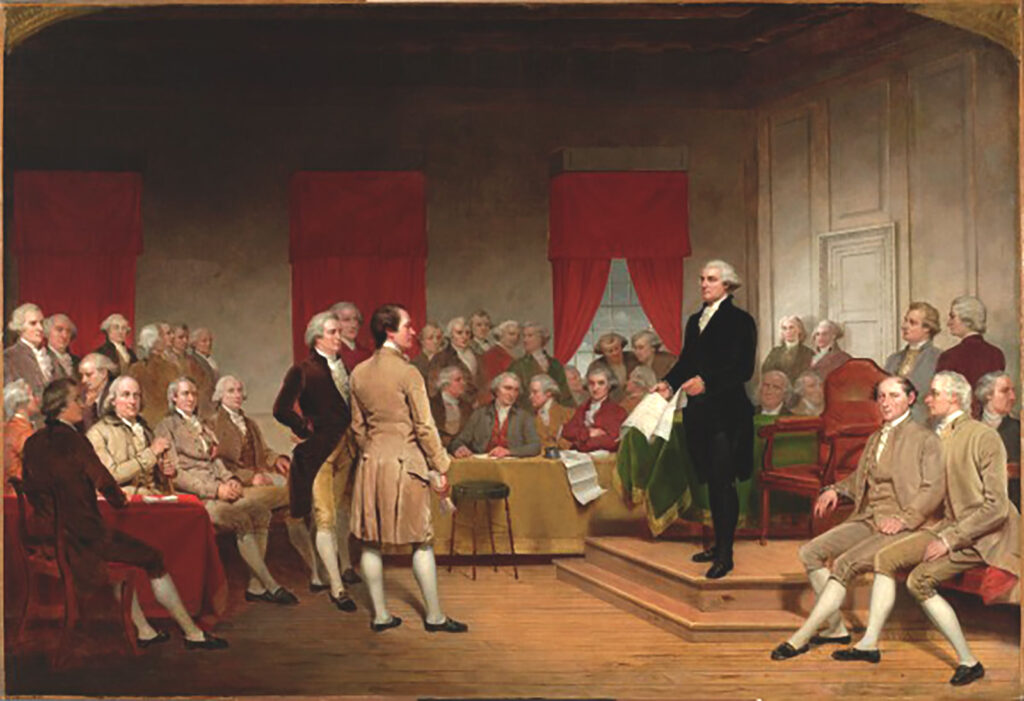
Franklin and James Madison were among the most vocal of the men at the Constitutional Convention wary of assigning too much power to the executive branch, or investing too much of that power in one man.

Ray Raphael writes:
Madison opened the bidding. Wouldn’t it be “proper,” he asked, “before a choice should be made between a unity and plurality in the Executive, to fix the extent of the Executive authority?” Madison proposed minimal powers: “to carry into execution the national laws” and “to appoint offices in cases not otherwise provided for.” With little dissent, state delegations agreed. Executive authority was subservient to legislative demands, save only for some lesser appointments. Most significantly, he/they would not possess the “powers of war and peace.”
Later the debate turned to whether there would be a single executive and how long one man would hold that office:
Franklin stewed over the prospect of a single executive serving for seven years. “Being very sensible of the effect of age on his memory,” he told the Convention the next morning, he carefully wrote down his objections. Saddled with a weakened voice and failing eyes, he would find it difficult to read aloud what he had just penned, so James Wilson offered to read it for him:
It will be said, that we don’t propose to establish Kings. I know it. But there is a natural inclination in mankind to Kingly Government. It sometimes relieves them from Aristocratic domination. They had rather have one tyrant than five hundred. It gives more of the appearance of equality among Citizens, and that they like. I am apprehensive therefore, perhaps too apprehensive, that the Government of these States, may in future times, end in a Monarchy.
I’d like to refute Franklin’s belief in “a natural inclination in mankind to Kingly Government.” However, too many people speak of U.S. Presidents as solely responsible for laws, court decrees, wars, and other actions that the Constitution explicitly assigns to other branches. And a smaller but still too large number of people are attracted to obvious strongmen.

Back in 1787, as the convention went on, however, most delegates seem to have let those worries subside a bit. The example of George Washington in the chair probably had an influence. No better solutions presented themselves.
We know that Franklin and Mason opposed a single executive, fearing the extent of his powers. They had sounded the alarm at the outset of the convention, and [George] Mason’s opposition to ratification would highlight the dangers of a single executive as well as the absence of a bill of rights. But Madison’s concern has received scant attention. A chief architect of the Constitution’s checks and balances, he failed to gain traction for this protection against an executive who put himself over country. Convention fatigue might well have played a role.
The Constitution did explicitly reserve “powers of war and peace” for the legislature, and limited the single executive to a four-year term. While the British Crown could veto legislation, a U.S. President’s veto could be overridden. Still, the fear of a President taking on monarchical powers and the rest of the government being unable or unwilling to stop it remained.

Ray Raphael’s article ends with Franklin’s exchange with Elizabeth Powel, as recorded by James McHenry:
Well Doctor what have we got a republic or a monarchy. A republic replied the Doctor if you can keep it.
(I’ve discussed that anecdote at length since 2017.)

Sunday, September 24, 2023

“An innocent Baby may become the Victim of strife”

Little Betsy Bache wasn’t alone in waiting a long time for a toy to arrive from France, as related yesterday.

On 15 Apr 1785, Adrienne, the Marquise de Lafayette (shown here), wrote to her husband’s dear friend George Washington:
how happy should I be, to meet with mrs [Martha] Washington, to recall together, all the circumstances of the war, every period of our anguish, and of your glory, and to see our children playing together.

wishing for so happy a moment, anastasie and Georges beg Leave, to send to the two youngest, miss Custis a toilett and a doll that is two play things with which my daughter is more delighted since two months, she is in possession of that she hopes, that her remembrance being some time mingled, with their entertainements, she may obtain some part in their frienship, whose she is so desirous of.

for the eldest miss Custis, we have so exalted an idea, of her reason and gravity, that we have only dared send to her a neeting bag, because she may with it, keep mrs Washington company, because I hear that she Likes this kind of work.

we send master Georges also, an optick with different wiews; but we have been moved by a personal interest, making him this gift. I hope that Looking at it, he will become fond of travelling that his travels will conduct him, into france, and perhaps he may bring you and mrs Washington here.
In that year the eldest of Martha’s grandchildren, Elizabeth Parke Custis, turned nine years old. Martha turned eight, Eleanor six, and little George Washington Parke Custis four. The two eldest lived with their widowed mother while George and Martha Washington were raising the two youngest at Mount Vernon. To the marquise’s credit, she sent something for everyone.

Lafayette himself alerted Washington that those things were on their way, writing the next day: “By mr Ridout’s Vessel my children Have Sent to yours at Mount Venon a few trifles which are very indifferent But may Amuse them two or three days.”

Unfortunately, due to various postal mix-ups, those gifts didn’t arrive at Mount Vernon until May 1786, thirteen months later.

Also to be lamented, we don’t appear to have any letters or other accounts from Mount Vernon describing how the children received those playthings from France.

But there may be a little hint in what Washington learned from watching children in letters he wrote in December 1798. By then two of the Custis sisters had married; settled in Washington, D.C.; and had babies named after them:
  • Martha Peter, born in January 1796.
  • Eliza Law, born in January 1797.
Meanwhile, Washington was serving as President in Philadelphia. There he often met with Elizabeth Powel, and she promised to help him pick out gifts for his female relatives. On 4 December Washington wrote:
let me tresspass upon your goodness to procure the second edition of the present (on my acct) that you intend for Eliza Law. Without which, a contest (regardless of right—no unusual thing)—in which an innocent Baby may become the Victim of strife.
Three days later Washington told Powel: “Your letter to Mrs Law shall be safely delivered to her and I will endeavor to do the same by the Doll to Eliza.” The doll cost $2.50.

So it looks like Powel told Washington she was going to supply a doll for Eliza Law, and he asked her to buy another for him to give to someone else, who I’m guessing was her older cousin Martha. That way both little girls, and both mothers, would be content.

Sunday, September 17, 2023

The Case of the Adapted Anecdote

Today is Constitution Day, declared to commemorate the date on which the delegates at the Constitutional Convention signed off on their work.

Not the day on which that proposed constitution for the new U.S. of A. was ratified by a supermajority of the people’s representatives, nor the day on which it went into effect. But that’s another story.

Speaking of stories, I’m continuing to investigate the anecdote that James McHenry wrote and then rewrote about Benjamin Franklin telling Elizabeth Powel that the convention provided for a “a republic—if you can keep it.”

Two Supreme Court justices have written books using that phrase as their title. The more recent is by Neil Gorsuch, who alluded to the story only in passing.

The earlier was by Earl Warren in 1972, after he had retired from the bench. It offers this page at the start:

After a detailed description of Franklin encountering a woman outside the meeting hall, Warren cited the “Notes of Dr. James McHenry, one of the delegates,” adding, “Adapted from Documents Illustrative of the Formation of the Union of the American States, Government Printing Office, 1927.”

When I looked up that government publication, however, I found only the transcription of what McHenry wrote at the end of his convention notes, as published in Max Farrand’s The Records of the Federal Convention of 1787 in 1911.
A lady asked Dr. Franklin Well Doctor what have we got a republic or a monarchy. A republic replied the Doctor if you can keep it.

The lady here aluded to was Mrs. Powel of Philada.
Warren accurately quoted Elizabeth Powel’s question about “a republic or a monarchy.” He didn’t insert the word “Madam” into Franklin’s response as some authors did.

However, none of the emotional detail in Warren’s anecdote—how the “delegates trudged out,” the “anxious woman in the crowd waiting at the entrance”—came from the source he cited. The phrase “Adapted from” shows that Warren must have realized how his telling differed from the original. Most likely, he had been influenced by other detailed retellings and imagined the scene that way.

American authors had been setting this exchange on the street for at least thirty years by then. (McHenry wrote that it happened indoors, and Powel insisted that it had happened in her salon if it had happened at all.)

Previous writers had described the questioner as “eager,” “concerned,” and “inquisitive.” This is the earliest version that I’ve found using the word “anxious,” an adjective repeated in reviews of this book and in later narrations. (Powel would have hated that characterization.)

This version of the anecdote appeared in a book by a former Chief Justice of the United States, with what appears to be a citation to a highly authoritative source. But tracing back that citation shows how many details of this tale were spun out of nothing.

Tuesday, February 28, 2023

History Camp Boston 2023—Time to Propose Your Presentation!

History Camp Boston 2023 has been scheduled for Saturday, 12 August, at Suffolk University.

Now’s the time to submit proposals for presentations. Slots get filled in as qualifying presentations arrive, so while the final submission deadline is 12 June it’s likely that all the spaces will be reserved before then.

If, therefore, you have a historical topic you want to share with fellow history buffs, public historians, reenactors, educators, students, and others in the field, visit History Camp’s call for presentations page. That explains the process in great detail and what organizers need to hear from you before they can assign a slot.

When I say spaces might fill up early, I’m thinking about the first History Camp Valley Forge, which will take place on Saturday, 20 May. The announced final deadline for presentations was 10 April. However, all the slots were filled by 15 February, or almost two months ahead of time!

Check out the current lineup on the History Camp Valley Forge webpage.

Among those scheduled sessions is mine:
“A Republic, If You Can Keep It”: Franklin’s Warning and How It’s Been Misused

According to an oft-retold anecdote, at the end of the Constitutional Convention in 1787 a woman asked Benjamin Franklin what the result was. “A republic,” he replied, “if you can keep it.” This talk looks at the evidence for that exchange, as recorded by another convention delegate in Philadelphia. It then traces how that anecdote has been distorted in the retelling, starting with that delegate’s own newspaper essays in the early republic and blossoming in the twentieth century. As a result, we have lost sight of the circumstances of the conversation, the accomplished woman Franklin spoke with, and the real political concern they shared.
Yes, in May I’m taking Boston 1775 on the road to Pennsylvania.

Monday, July 18, 2022

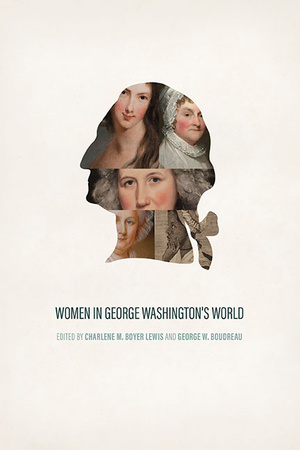
Discussing the Women in Washington’s World

In 2018, Mount Vernon hosted a symposium on the theme “‘A sensible woman can never be happy with a fool’: The Women of George Washington’s World.”

That has given rise to a collection of scholarly essays titled simply The Women of George Washington’s World, officially published later this month.

The women profiled include:
  • the first President’s mother, Mary Washington
  • his wife, Martha Washington
  • wives of significant colleagues like Margaret Arnold and Abigail Adams
  • friendly advisor Elizabeth Powel
  • poet Phillis Wheatley
  • enslaved servants Moll Judge, Ona Judge, and others
  • Ann Pamela Cunningham, the woman who preserved Mount Vernon with a nationwide fundraising campaign
The editors of this collection are Prof. Charlene M. Boyer Lewis of Kalamazoo College and George W. Boudreau of the McNeil Center for Early American Studies. The book’s publisher has shared a short interview with them.

For a longer interview, Roger S. Williams will host Boyer Lewis and Boudreau in the online History Author Talks series on Tuesday, 19 July, starting at 7:00 P.M. Register to listen to this convesation live here, or check back at History Author Talks in a few days for the video.

Wednesday, May 11, 2022

How I Spent My Spring Vacation

For the past week I was on a road trip to visit family for the first time in more than two years.

Of course, I also squeezed in some visits to historical archives—my first in-person visits to those archives in even longer.

I was working again on how James McHenry recorded what’s become a famous exchange between Elizabeth Powel and Benjamin Franklin at the end of the Constitutional Convention:
[Powel:] Well, Doctor what have we got—a republic or a monarchy?

[Franklin:] A republic, if you can keep it.
And how McHenry used that memory in essays during the early 1800s in a way that changed the story’s implications to fit his political fears. And finally how Powel responded to having her name invoked.

The first question I had to answer on this trip was whether the essays signed “The Mirror” in the Baltimore Republican in 1803 which I attributed to McHenry were indeed his work. I was 95% sure, but I sought certainty in the McHenry Papers at the Library of Congress.

Indeed, those papers contain two drafts of the essays that later appeared in print, complete with the footnotes (which few other newspaper essayists used).

Reading McHenry’s drafts told me little that I didn’t already know from the printed texts. He didn’t, for example, write down the anecdote exactly as he had in 1787 and then cross out crucial words to make it confirm his interpretation.

After the Philadelphia Aurora newspaper dismissed the Franklin anecdote as false, McHenry tried to invoke Powel’s authority as a participant without divulging her name because she was female. He wrestled with how to explain that half-disclosure to readers, as shown by some crossed-out text. But McHenry’s handwriting was sketchy enough that I could make out only the phrase “motives of delicacy.” There’s no indication he wrote out Powel’s name and then removed it.

In 1811 McHenry finally did name Powel as the woman in the anecdote in a pamphlet titled The Three Patriots, Or, the Cause and Cure of Present Evils. I didn’t find a draft of that essay, but an 1876 biography identified it as McHenry’s.

I also visited the Historical Society of Pennsylvania to look at the correspondence of Elizabeth Powel and her family.

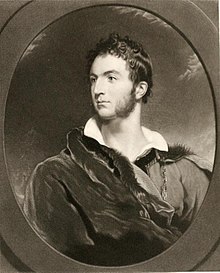
In 1814, that family reacted to what McHenry had said about Elizabeth Powel. Her favorite nephew, John Hare Powel (shown above), wrote to her wondering if the story was true. Powel asked a niece to review that letter with her because the man’s casual handwriting was so bad she wanted to be sure she read it properly. (There are multiple John Hare Powel letters in the archive on which someone has penciled in words that are hard to decipher.) The niece then took down Aunt Elizabeth’s reply, and finally there was a response from John Hare Powel.

I’d already examined Elizabeth Powel’s dictated letter and her nephew’s response, but I wanted to find John Hare Powel’s initial letter about the anecdote—if it survived. That would tell us exactly what story Mrs. Powel was responding to.

I also looked for any document showing James McHenry and John Hare Powel interacting. Powel worked in Baltimore for the Philadelphia militia and U.S. army during the War of 1812, so the two men could well have met, but did they exchange letters? Mention each other? Anything?

Those quests turned up nothing. I wasn’t surprised since David W. Maxey and others have already examined the Powel papers and no doubt looked for the same documents. Nonetheless, I needed to turn over those stones. That meant paging or cranking through the folders of undated and unidentified correspondence in both the McHenry and the Powel Family Papers. I can report that Elizabeth Powel’s handwriting was clear and regular, and that she corresponded with an awful lot of nephews.

Also, I enjoyed John Hare Powel’s carefully written response to another man’s demand:
The voice of your creditors whom you have not paid—the Bills of the Grand jury by whom you were indicted—the books of the Commissioners by whom you were employed—the docket of the Office whence you have been expelled—the facts shown to the Legislature before whom you were arraigned are better evidence of “your standing” than any proofs you could bring if I had either leisure or disposition to engage in the discussion which you have the insolence to propose

Monday, January 27, 2020

Elizabeth Powel and James McHenry Revisited

I’ve gotten some messages about this, so I might as well address it for posterity.

Back in March 2017, I wrote a series of postings about the anecdote of Benjamin Franklin telling a woman we the Constitutional Convention had established “A republic, if you can keep it.”

Some authors have been skeptical about that anecdote, but it appears at the end of the diary of convention delegate James McHenry, and he left enough notes to let us identify the woman as Elizabeth Powel. In his 2006 article “A Portrait of Elizabeth Willing Powell (1743-1830),” David W. Maxey quoted a letter Powel wrote about the anecdote in 1814.

That’s where I came in. By looking at newspapers, I identified why Powel was addressing the story—because McHenry had published it in the early 1800s during his political disputes with the Jeffersonian press. In fact, I discovered, McHenry had reshaped the anecdote for publication so that it reflected his Federalist fears about the republic falling to democracy rather than to monarchy.

Since then, I’ve gone to Philadelphia to look at Powel’s letter in full and determined that she was responding (in a roundabout way) to an inquiry from her nephew John. I didn’t find John Powel’s initial letter, which would show exactly what tale he was presenting to his aunt for her reaction. I hope to take another look.

In the meantime, McHenry’s use of the anecdote got some attention. In November, as I noted back here, Prof. Zara Anishanslin of the University of Delaware published an essay in the Washington Post citing the anecdote as an example of women participating in the American political discussion from the start. She couldn’t convince the Post editors to cite Boston 1775 by name, but she did include a link back to this posting. She alerted me by email and tweeted the original links.

Then the impeachment process heated up. Lots more people started quoting Frankin’s “A republic, if you can keep it.” On 18 December, the Post published a “factcheck” article by Gillian Brockell, staff writer for the paper’s history blog. It addressed the question, “Did Ben Franklin really say Impeachment Day’s favorite quote?” (Here’s a syndicated version in case the original is behind a paywall.)

In that article, Brockell cited what Zara Anishanslin wrote in her essay about McHenry’s publications. But the link back to my postings didn’t make the transition, leaving no way for readers to see the sources. Or, some observers noted, who had uncovered them.

Just last week I was wrestling with this same problem in newspapers from 1841, pondering whether Philadelphia’s Public Ledger was the first to publish a couple of anecdotes about the signing of the Declaration of Independence. One printer after another published those paragraphs without reporting where they’d come from. I found the Public Ledger only by using a newspaper database. And perhaps this posting will help someone track back the story of McHenry’s anecdote.

Sunday, November 03, 2019

The Story Behind “a familiar anecdote”

This past week, historian Zara Anishanslin published an op-ed essay in the Washington Post headlined “What we get wrong about Ben Franklin’s ‘a republic, if you can keep it’.”

It begins:
Last month, when House Speaker Nancy Pelosi (D-Calif.) announced a formal impeachment inquiry of President Trump, she used a familiar anecdote to back her arguments. As Pelosi told it, “On the final day of the Constitutional Convention in 1787, when our Constitution was adopted, Americans gathered on the steps of Independence Hall to await the news of the government our founders had crafted. They asked Benjamin Franklin, ‘What do we have, a republic or a monarchy?’ Franklin replied, ‘A republic, if you can keep it.’ Our responsibility is to keep it.”

Franklin’s “a republic, if you can keep it” line is as memorable as it is catchy. It is a story that appeals across partisan lines. The same month Pelosi referenced it, Supreme Court Justice Neil M. Gorsuch released a book titled “A Republic, If You Can Keep It.” It’s a recognizable national origin story with broad appeal; Pelosi was savvy to use it.

But she got the story wrong. So did Gorsuch.
Pelosi did something many other people telling this story don’t, correctly quoting the question that political hostess Elizabeth Powel asked Franklin about “a republic or a monarchy.” After all, we’re facing that choice today. However, Pelosi didn’t give Powel individual credit for the question.

As Anishanslin acknowledged by link and tweet, she based her analysis on the series of Boston 1775 posts about the original exchange between Franklin and Powel, and about how James McHenry recorded and used that anecdote. You can read the whole twisting story, from 1787 to today, starting here.

Friday, September 07, 2018

Symposium on Washington and Women at Mount Vernon, 2-3 Nov.

Last year I had the honor of speaking at the George Washington Symposium at Mount Vernon, organized by the Fred W. Smith National Library for the Study of George Washington.

This year’s symposium, to take place on 2-3 November, has the theme “‘A Sensible Woman Can Never be Happy with a Fool’: The Women of George Washington’s World.”

The event description:
“When the fire is beginning to kindle, and your heart growing warm, propound these questions to it… Is he a man of good character? A man of sense? for be assured a sensible woman can never be happy with a fool.”

Thus wrote George Washington in a heartfelt 1796 letter to his step-granddaughter Eleanor (Nelly) Parke Custis on the subjects of love and marriage. Although the Father of Our Country was a leader among leaders in a male-dominated world, we know that he enjoyed a number of complex and meaningful relationships with women from all stations of the socially-stratified eighteenth century. Join leading historians and academics for an enlightening look at a wide variety of women from the General’s personal orbit, including his often misunderstood mother, an admiring poet, social confidants, a traitor to the Revolution, and a defiant runaway slave. We will also examine the memory of Washington through the legacies of his adoring step-granddaughters and the Southern Matron who led the charge in the 1850s to rescue his home and final resting place.
The lineup of presentations is:
  • “Mary Ball Washington: Tales of Motherhood,” Martha Saxton
  • “A Rare Commitment: The Friendship of George Washington and Elizabeth Willing Powel,” George W. Boudreau
  • Roundtable on “Women” and “Mothers” across Eighteenth-Century America, moderated by Karin Wulf of the Omohundro Institute 
  • “True Republicans: The Relationship between George Washington and Mercy Otis Warren,” Rosemarie Zagarri
  • “George Washington and Phillis Wheatley: The Indispensable Man and the Poet Laureate of the Founding Era,” James G. Basker
  • “‘The tender Heart of the Chief could not support the Scene’: General Washington, Margaret Arnold, and the Treason at West Point,” Charlene Boyer Lewis
  • “‘She should rather suffer death than return to Slavery’: The Escape of Oney Judge,” Mary V. Thompson
  • “Daughters of the Pater Patriae: The Custis Step-Granddaughters’ Relationships with George Washington,” Cassandra Good
  • “Coming to the Rescue with Ann Pamela Cunningham,” Ann Bay Goddin
These symposiums are designed to bring the latest findings and analyses of historians to the community of Mount Vernon and its supporters. Attendees fill a large auditorium, reflecting the interest in all things Washington.

Friday, March 31, 2017

“The story is told…”

As I’ve been discussing, James McHenry recorded in his diary an anecdote about Benjamin Franklin, Elizabeth Powel, and the results of the Constitutional Convention of 1787. And then he changed that story when he published it over a decade later.

McHenry wasn’t the last author to reshape the anecdote. His original notes were published in 1906 and reprinted in 1911, both times in authoritative publications. The tale those notes told was stark and simple:
A lady asked Dr. Franklin Well Doctor what have we got a republic or a monarchy. A republic replied the Doctor if you can keep it. [Footnote:] The lady here aluded to was Mrs. Powel of Philada.
But when authors retold that story in the twentieth and twenty-first centuries, they added unsubstantiated details which gave new coloring to the exchange. Here’s a sampling of reteilings culled from Google.

The University of Chicago Magazine in 1940:
When the delegates were going out onto the cobble streets of Philadelphia, prepared to celebrate on “capon and wine,” as the record reads, Ben Franklin walked ahead. A window opened and a lady put her head out and said, “Dr. Franklin, what is it—a monarchy or a republic?” He stopped and said, “A republic, Madam, if you can keep it.”
At the 1940 Republican Convention:
As soon therefore as the sage appeared upon the steps of this historic building a woman stepped out of the watching crowd, approached him eagerly and asked “Well, Doctor, what have we got—a republic or a monarchy?”
[In 1940 Franklin D. Roosevelt’s decision to run for a third term raised the specter of monarchy again. Ironically, Powel was the person who had convinced George Washington to serve more than one term as President in 1792.]

Sarah Watson Emery, Blood on the Old Well (1963):
When a lady asked Benjamin Franklin as he left the Convention, “What have you given us, Mr. Franklin?” he replied, “A republic, Madam, if you can keep it!”
At the 1968 Republican National Convention:
When they got ready to go home, Benjamin Franklin, over eighty years old, was the first to leave Constitution Hall. A concerned citizen was there and said to him, “Dr. Franklin, what have we got—a monarchy or a Republic?” Without hesitation that venerable old sage said, “A Republic—if you can keep it.”
Michael P. Riccards, A Republic, If You Can Keep It (1987):
Legend has it that as the aged statesman shuffled down the streets of Philadelphia, an inquisitive woman stopped him and asked, "What have you given us?” And Franklin is supposed to have responded, “A Republic, Madam, if you can keep it.”
Richard Labunski, James Madison and the Struggle for the Bill of Rights (2006):
The story is told that when Franklin left the Assembly Room, a woman approached him and asked, “Well, Doctor, what have we got, a republic or a monarchy?” To which Franklin replied, “A republic, madam, if you can keep it.”
Walter Isaacson, Benjamin Franklin: An American Life (2003):
According to a tale recorded by James McHenry of Maryland, he [Franklin] made his point in a pithier way to an anxious lady named Mrs. Powel, who accosted him outside the hall. What type of government, she asked, have you delegates given us? To which he replied, “A republic, madam, if you can keep it.”
Eric Metaxas, If You Can Keep It (2016):
McHenry wrote that when Benjamin Franklin emerged from the building that day, he was accosted by a certain Mrs. Powell of Philadelphia. Whether she was a young women or a dowager we don’t know. He was then eighty-one years old, the oldest delegate. . . . for all we know, he knew this now-mythical and otherwise forgotten Mrs. Powell, who has come to stand for all of America since the day when she spoke to Franklin in a tone that seems to bespeak some degree of familiarity.

According to McHenry, Mrs. Powell put her question to Franklin directly: “Well, doctor,” she asked him, “what have we got? A republic or a monarchy?“

Franklin, who was rarely short of words or wit, shot back: “A republic, madam—if you can keep it.”
What are the major trends in these retellings?
  • Powel’s position as wife of a Philadelphia politician, host of important political discussions, and trusted advisor to Washington is erased. She instead appears as a “concerned citizen,” “inquisitive woman,” or “anxious lady”—plus “now-mythical.”
  • The exchange, rather than happening in Powel’s salon, takes place out in the street, sometimes with a crowd watching. The woman’s role is often transgressive. In one case, she calls out her window. In two others she “accosted” the elderly Franklin with her question.
  • In a couple of versions, Powel doesn’t ask, “What have we got?” but “What have you given us?” That suggests a top-down grant to the nation from the delegates rather than a milestone in an ongoing political process.
  • Powel’s original worry about “a republic or a monarchy” is dropped, as in McHenry’s own retellings, in favor of worry about the fragility of republics.
All in all, I’m inclined to believe that the exchange between Powel and Franklin happened as McHenry first recorded it, with the additional detail he published in 1811 that it happened on Franklin “entering the room”—most likely a room where Powel was hosting a political conversation. I think Elizabeth Powel deserves to be remembered a bit more. And I think we have to be careful about all the other things we’ve probably read about this oft-told story.

Thursday, March 30, 2017

“The all important Subject was frequently discussed at our House”

On 21 May 1814, Elizabeth Powel wrote to a relative named Martha Hare, commenting about an exchange with Benjamin Franklin from twenty-seven years before.

I haven’t seen this letter in full, only the phrases that David W. Maxey quoted in his article “A Portrait of Elizabeth Willing Powell (1743-1830),” published in Transactions of the American Philosophical Society in 2006. So I don’t know what Powel was responding to—what question or version of the story.

Maxey wrote:
Elizabeth Powel admitted embarrassment in denying “a conversation supposed to have passed between Dr. Franklin and myself respecting the goodness, and probable permanence of the constitution of these United States.” A similar version of the tale had been published to her knowledge “in Poulson’s Paper, I forget of what date,” while another she traced to “the late secretary of War.”
Powel was right in linking the story to a “late secretary of War”—that was James McHenry’s role in the Adams administration, and he was the author of The Three Patriots, an 1811 political pamphlet that featured the anecdote. I haven’t found the story reprinted in Zachariah Poulson’s Daily Advertiser, but it did appear in at least one other Philadelphia newspaper eleven years before Powel wrote, so she might easily have misremembered.

Maxey’s summary resumed:
Though she had no memory of accosting Franklin in this manner or of his memorable rejoinder, if indeed he delivered it, she retained a clear recollection of having “associated with the most respectable, influential Members of the Convention that framed the Constitution, and that the all important Subject was frequently discussed at our House.” If so, a hostess always intrigued by political matters may have been complicit in a breach of the rule of strict secrecy that bound the delegates in their deliberations. And if such indiscreet disclosures had occurred in her drawing room, what need would there have been to descend in the public street on “the justly venerated patriotic, philanthropist Dr. Franklin” for information already obtained at home?
I’m not sure whether Powel was really addressing the idea of a conversation “in the public street” or if that was Maxey responding to how the story was told in the 1900s. Likewise, Maxey appears to have been more concerned with the Convention’s “rule of strict secrecy” than Powel.

McHenry’s 1811 telling of the story said the exchange started with Franklin “entering the room.” (His 1803 version specified no setting.) That fits just fine with Powel’s recall of conversations “at our House.” McHenry set the anecdote after the Framers had voted to publish their proposal for a new Constitution at the Convention’s close. Secrecy was therefore no longer an issue.

All in all, Maxey’s presentation suggests the exchange with Franklin never happened. Maybe there are sentences in Powel’s letter to confirm that point. But the quoted lines say simply that she didn’t remember that conversation because she had been part of so many discussions with so many delegates.

It’s also possible that Powel didn’t recall the exchange because the version she had been presented with was so different from the conversation that actually took place in 1787. As I’ve noted, McHenry originally recorded a question of whether the new Constitution would turn the American republic into a monarchy; that had morphed into a question of whether the American people could withstand the temptations of a democracy.

Another possible factor in Powel’s response was her own political positioning. She had been a close friend and advisor of President George Washington. McHenry probably knew that, and may therefore have expected her to share his Federalist understanding of the exchange with Franklin. But Powel tried to keep the President above the sniping between the Hamiltonian and Jeffersonian factions of the 1790s. And in the way McHenry had published the story, he was pulling her onto one side.

Because Powel’s letter wasn’t published until Maxey’s article in 2006, it probably didn’t affect discussion of the anecdote in the preceding century. But Powel would indeed have been displeased by how authors have portrayed her.

TOMORROW: The anxious lady.

Wednesday, March 29, 2017

“Dr. Franklin…met with Mrs. Powel”

In 1811, an anonymous pamphlet appeared in Baltimore titled The Three Patriots, Or, the Cause and Cure of Present Evils: Addressed to the Voters of Maryland. It was an attack on Thomas Jefferson, James Madison, and James Monroe.

Sixty-five years later, Frederick J. Brown’s Sketch of the Life of Dr. James McHenry identified the author of The Three Patriots as James McHenry, Secretary of War in the Federalist administration of John Adams. As I’ve discussed in the past few days, McHenry also appears to have written a series of newspaper essays in 1803 titled “The Mirror.”

And, just as in “The Mirror,” in The Three Patriots McHenry pulled out the anecdote he’d written in his 1787 journal about Benjamin Franklin commenting on the Constitution. And the story had changed yet again:
The day the convention finished their labours, and before the constitution was promulgated, Dr. Franklin, who was a member of that body, met with Mrs. Powel, of Philadelphia, a lady remarkable for her understanding and wit.

“Well, Doctor,” said the lady on his entering the room, “We are happy to see you abroad again: pray what have we got?”

“A republic, madam, if you can keep it.”

“And why not keep a good thing,” said the lady, “when we have got it?”

“Because madam,” replied the Doctor, “there is in all republics a certain ingredient, of which the people having once tasted, think they can never get enough.”
The twenty-six-word anecdote that McHenry had written into his journal of the Constitutional Convention had, after nearly a quarter-century, grown into a firmly spelled out warning against popular democracy. This version gave more words to both Franklin and the lady from Philadelphia.

Most striking, The Three Patriots publicly named “Mrs. Powel” as a figure in this exchange for the first time, and politically savvy readers would have immediately recognized that to mean Elizabeth Powel, widow of a Philadelphia mayor.

What’s more, that story didn’t just stay in The Three Patriots. The 1 Nov 1811 Salem Gazette reprinted the anecdote (with slightly different wording and punctuation, and the name spelled “Mrs. Powell”). Other newspapers might also have picked it up. Which meant Elizabeth Powel could not ignore it.

TOMORROW: The lady from Philadelphia responds.

Tuesday, March 28, 2017

“We pronounce it to be an impudent forgery”

Two days ago I quoted an article signed “The Mirror” from the 15 July 1803 Republican newspaper of Baltimore.

Over the next month the same essay was reprinted in other Federalist periodicals:
  • Middlebury (Vermont) Mercury, 3 Aug 1803.
  • Spectator (New York), 7 Aug 1803.
  • Alexandria Advertiser, 8 Aug 1803.
  • Newburyport Herald, 9 Aug 1803.
(Five years later, on 18 Aug 1808, the piece reappeared in Baltimore’s North American and Mercantile Daily Advertiser, possibly pulled out of a leftover copy of the original newspaper.)

The target of the essay, the Aurora of Philadelphia, was not so positive about it, of course. On 18 August it published the third in the series titled “A Vindication of the Democratic Constitutions of America.” This was probably the work of the newspaper’s editor, William Duane (1760-1835, shown here). The essay’s main point was, “there is no disagreement on the fact that a democracy is a republic.” [And indeed, even today people have difficulty defining the difference between a republic and any form of democracy that’s not a pure democracy.]

The “Mirror” essayist had foolishly claimed those were different, the Aurora stated, and:
The writer who could be capable of such disingenuity and fraudulent misquotation, is open to the reasonable suspicion of every other fraud which would tend to serve his purpose. Of this character we consider an anecdote, which the Anti Democrat gives in the paper of the 15th June [sic], and which we shall copy here at once to protest against it as spurious and to show that its hostility is aimed at republican government, and, at the reputation of the man above all others least likely to belie the principles and political pursuits of his whole life.
The Aurora then quoted the Republican’s anecdote about Benjamin Franklin and the lady at the end of the Constitutional Convention before responding:
The republic here alluded to is the constitution of the U. States now existing. It is well known that Dr. Franklin tho he approved of the constitution altogether, would have preferred a variation in its parts. He held that the president should be elected directly by the people, in the same mode as members of congress are elected; and that the senate should have been chosen not by the filtration of the state legislature, but that an extra number of members, from each state should be chosen to the house and representatives and that the senate should be elected out of that house.

Any man who refers to the former constitution of Pennsylvania, will find that Dr. Franklin did not think a free people could have too much or more than would do them good of republicanism. The anecdote has no foundation, we pronounce it to be an impudent forgery. But it shews that the Anti Democrat is as hostile to American republicanism under one name as under another.
The Aurora had some claim to know what Franklin would have said since it had been founded by his grandson and protégé, Benjamin Franklin Bache. Duane himself wasn’t a Franklin descendant, but he had married Bache’s widow.

The Aurora’s attack on “The Mirror” essay, and the anecdote about Franklin in particular, produced this defense in the 9 December Republican:
This anecdote “The Editor” pronounces to be “without foundation, and an impudent forgery;” though no more than a mere concurrence with the universally received opinion, that men are more inclined to extend than to shorten the line of the liberty.

Who is this “Editor”? and how did he come by this information? The Doctor [Franklin] is dead, but the lady who related the anecdote is yet living, and of unsullied veracity. We should mention her name were it proper for us, to bring it into collision with his. We feel, however, assured, that she will, of her own free motion, confirm the anecdote, should accident at any time, bring to her knowledge that it had been questioned.

It is foreign to the nature of our subject to discuss the merits or demerits of Doctor Franklin’s politics. We shall only observe, that the Doctor was often happy in the adaptation of short and pithy sayings to passing events; and that the one in question, was not the only good thing the constitution drew from him. We still remember his story with the French lady, related in the convention, who, like “the Editor”, was, some how or other, always in the right.
That response was clearly from the same author as the 15 July article—Dr. James McHenry. Like the original essay, it carried the headline “The Mirror” and was festooned with classical footnotes.

Furthermore, McHenry came close to dropping the façade of pseudonymity to invoke personal authority. By writing, “We still remember his story with the French lady, related in the convention,” he hinted that he had been at the Convention himself. And he was publicly inviting Elizabeth Powel to “of her own free motion, confirm the anecdote.” But at this point, the argument was a draw.

TOMORROW: The story evolves again.

Monday, March 27, 2017

How Dr. McHenry Operated on His Anecdote

As Dr. James McHenry first recorded the story of Elizabeth Powel, Benjamin Franklin, and the new Constitution in his journal, it was only twenty-six words. This was the entire exchange he wrote down (exact words, different formatting):
Powel: Well, Doctor what have we got—a republic or a monarchy?

Franklin: A republic, if you can keep it.
However, when McHenry made the story public in the 15 July 1803 Republican, or Anti-Democrat newspaper, it had evolved. Now the exchange was:
Powel: Well, Doctor, what have we got?

Franklin: A republic, Madam, if you can keep it.

Powel: And why not keep it?

Franklin: Because the people, on tasting the dish, are always disposed to eat more of it than does them good.
In 1787, Powel was concerned that the new Constitution, with its new national executive, would produce a “monarchy” instead of a republic. But by 1803 the word “monarchy,” which critics had thrown at the Washington and Adams administrations in the 1790s, had vanished from McHenry’s story.

The new version also added a lot more words: an explicit warning that “the people” could ruin the republic if they “eat more of it than does them good.” Again, that reflects Federalist thinking. A story of Powel worrying about monarchy had become a story about Franklin (now conveniently dead) worrying about democracy.

Now it’s true that eighteenth-century political thinkers, especially those who favored more aristocratic government, perceived a slippery path from democracy to monarchy. With too much power, they warned, the people would become prey to a demagogue who would then become a dictator and eventually set up a new dynasty. They saw examples of that danger in classical republics.

But in this case, it looks like McHenry was projecting his anti-Jefferson worries onto the story he remembered from up to sixteen busy years before. I suspect he was working off memory instead of digging out his old journal. But he may have knowingly reshaped the anecdote to what he thought it should say.

Either way, that story was now out in the political arena.

TOMORROW: Pushback in the press.

Saturday, March 25, 2017

“A republic…if you can keep it.”

This is the launch of a deep dive into one of the most popular and portentous anecdotes from the Constitutional Convention of 1787. I wrote about that story before, but a prodding tweet from Zara Anishanslin sent me further into the depths.

The earliest appearance of the anecdote is on the last page of Dr. James McHenry’s journal of his experience as a convention delegate. Here’s the text, as transcribed at Yale Law School’s Avalon Project:
A lady asked Dr. [Benjamin] Franklin Well Doctor what have we got a republic or a monarchy. A republic replied the Doctor if you can keep it.
To which McHenry added this footnote:
The lady here aluded to was Mrs. Powel of Philada.
As I wrote back here, that meant Elizabeth Powel, host of a political salon and wife of the city’s once and future mayor.

We can even see the story in McHenry’s own writing courtesy of the Library of Congress (from which I cribbed the image above).

This is the last entry in McHenry’s journal. The Convention had broken up on 17 Sept 1787, and delegates were heading home. If the story had appeared in the journal between two dated entries, we could be sure of when McHenry wrote it down. But as it is, all we know is that he wrote it down after 17 September—perhaps the next day, perhaps when he got home to Maryland and put his papers away, perhaps years later.

And then at some further moment in time, McHenry went back into this document and added the footnote naming Powel. His writing was a little larger then. The reference to her as “Mrs. Powel of Philade.” suggests he had left that city.

I suspect that McHenry wrote down the anecdote in 1787, soon after the Convention ended. There’s no clue as to whether he witnessed the exchange himself or simply heard about it from Franklin or Powel or another direct witness. It seems unlikely that McHenry wrote down a story that lots of people were circulating because there don’t seem to be any other tellings.

As for the footnote, that might well date from years later when the anecdote and its source were being questioned.

McHenry’s diary was published in the American Historical Review in 1906. Five years later, Max Farrand quoted his stories in The Records of the Federal Convention of 1787. That made the anecdote close to canonical in our national history of the Convention, and many authors have quoted it since—though often with some unexplained doubt that it really took place.

There are some interesting points to consider about how authors retold and used the story in the 1900s, but first I want to discuss the preceding century. Google Book turned up no versions of the story from book published in the 1800s, leading me to think it was buried in McHenry’s papers until 1906.

But I found it was actually deployed—almost certainly by McHenry himself—in political debate during the Jefferson and Madison administrations.

TOMORROW: The anecdote resurfaces.

Tuesday, January 19, 2016

“What have we got, a republic or a monarchy?”

Yesterday I had a Twitter discussion about a well-known anecdote about the Constitution—whether it was equally well-founded in documents, less well-founded in reminiscences, or most likely myth.

In this, case, the story falls into the first category. James McHenry, who started the Revolutionary War as an army surgeon and ended up as one of Gen. George Washington’s aides, represented Maryland at the Constitutional Convention. He kept a diary during those weeks, and in 1906 the American Historical Review published that document. Yale’s Avalon Project put the transcript online.

Here is McHenry’s entry for 18 Sept 1787, the day after the convention’s sent its work to the Continental Congress and lifted its secrecy rule:
A lady asked Dr. [Benjamin] Franklin Well Doctor what have we got a republic or a monarchy. A republic replied the Doctor if you can keep it.
In a footnote McHenry added, “The lady here aluded to was Mrs. Powel of Philada.”

That almost certainly meant Elizabeth Powel (1743-1830), wife of the once and future mayor of Philadelphia, Samuel Powel. She was an active political hostess. Mount Vernon gives her credit for helping to convince Washington he should run for a second term as President. In 1808 a friend wrote that Powel
will animate and give a brilliancy to the whole Conversation, you know the uncommon command she has of Language and her ideas flow with rapidity . . . I sometimes think her Patriotism causes too much Anxiety. Female politicians are always ridiculed by the other Sex.
Above is Powel’s portrait, subject of a 2006 article/booklet by David W. Maxey, published by the American Philosophical Society.