J. L. BELL is a Massachusetts writer who specializes in (among other things) the start of the American Revolution in and around Boston. He is particularly interested in the experiences of children in 1765-75. He has published scholarly papers and popular articles for both children and adults. He was consultant for an episode of History Detectives, and contributed to a display at Minute Man National Historic Park.

Subscribe thru Follow.it


•••••••••••••••••


Showing posts with label John Sullivan. Show all posts

Sunday, May 24, 2026

“Acquainted with the conduct of Doctor Preserved Clap”

I lose track of Dr. Preserved Clap after 1776 until 5 Feb 1781, when the Continental Congress referred a petition from him to its board of war.

On 20 February, board members Richard Peters of Pennsylvania and Ezekiel Cornell of Rhode Island met and formulated a response to that petition:
The Board having considered the reference with which they were honored on the memorial of Preserved Clap, beg leave to observe, That it appears from his memorial and General [Henry] Knox’s letter that he hath been with the Army as a volunteer for eighteen months without pay or any emolument.

That it farther appears by General [Benjamin] Lincolns and Knox’s letters that Mr Clap was sole inventor of stocking the Cannon that were supposed to be rendered useless by the enemy at Boston, and in the vicinity, in the spring of 1776; from which the Continent at large received a real benefit; for which he received no emolument but barely day wages.

From the foregoing state of facts it may be proper for Congress to resolve,

Resolved, That the supreme executive of the State of Massachusetts examine into the merit and services of Preserved Clap, and order payment on the account of the United States, for such sum as they think he may justly deserve; provided it shall not exceed one thousand dollars in bills of the new emissions:

That Preserved Clap be informed, that Congress cannot employ him in public service, consistent with their arrangements.
The Congress approved that response the next day. Clap’s petition, which might include the letters from Knox and Lincoln, is preserved in the Congress’s files but not published.

There is, however, a second published letter from Henry Knox on the doctor. On 13 March, Gen. John Sullivan wrote to Knox about him, and on 22 March the artillery commander replied:
I received your favor of the 13th instant, requesting a certificate from me, & such of my officers who were best acquainted with the conduct of Doctor Preserved Clap, & how he employed himself in the Army.

The result of my knowledge & information is that the said Preserved has great mechanical abilities, & that he joined himself to the Army in ’79, as a volunteer, ready to do any kind of work in his power, either for officers or soldiers, sometimes with & sometimes without pay.

When the Continental troops were principally withdrawn from West Point last August, the Doctor attached himself to the Post, but he declined to the best of my remembrance to be enrolled as an artificer, & apply himself to public work entirely.

Sometime in November he applied to me for a letter to Mr. Hodgson [Samuel Hodgdon, shown above], D[eputy].C[ommissary].G[eneral].M[ilitary]. Stores, the intent of which he informed was to procure assistance or permission to work with the artificers’ tools at Philadelphia to execute some design of a machine to destroy shipping, which he intended to present to Congress or the Board of War.

But I had not the least idea of his intending to claim pay for the time he had been with the army.
This looks like the second time Dr. Clap threw himself into devising equipment for the army without arranging an official rank or contract, and without discussing pay. Not the wisest way to operate, especially when good money was scarce.

The Congress referred Clap’s case to Massachusetts, where the “supreme executive” was now Gov. John Hancock. The state archives might therefore contain more sources on Dr. Clap. However, I’ve found no evidence of pay for him on either state or national level.

TOMORROW: Last traces.

Tuesday, March 17, 2026

“This Convinced me that they were Actually fled”

Gen. John Sullivan of New Hampshire wrote this description of how experienced the end of the siege of Boston for John Adams:

We Saw the Ships under way about 8 in the morning and the River full of Boats with Armed Soldiers. This gave an Alarm as Some Suspected they were about to Land at Dochester but having a full view of them with a Glass from Plowed Hill I found they were going on board the Ships.

I then took my Horse and Rode Down to Charlestown Neck where I had a Clear view of Bunkers Hill. I Saw the Sentrys Standing as usual with their Firelocks Shouldered but finding they never moved I Soon Suspected what Regiment they belonged to and upon taking a Clear view with my Glass found they were only Effigies Set there by the flying Enemy. This Convinced me that they were Actually fled for if they meant to Decoy us they would have taken away Every appearance of Men.

By this time I was Joined by Colo. [Thomas] Mifflin who with my Brigade Major [Alexander Scammell] agreed to go up[;] Sending two persons Round the works to Examine whether there was any of them in the Rear of the works while we went up in the front. I at the Same time Sent for a Strong party to follow us on to the Hill to assist us in Running away (if necessary).

We found no persons there and bravely Took a fortress Defended by Lifeless Sentries. I then brought on the party to Secure what we had So bravely won and went Down to the other works where we found all Abandoned but the works not Injured in any part.

We hailed the ferry Boat which came over and Informed us that they had abandoned the Town. We then gave Information to the General who ordered me with the Troops under my Command to take possession of Charlestown and General [Israel] Putnam with 2000 men to take possession of the works in Boston
Samuel Hall’s New-England Chronicle for 21 March offered the public this account of the action at the other end of Boston on the Neck:
About the same time General [Artemas] Ward, attended by about 500 troops from Roxbury, under the command of Col. Ebenezer Learned, (who unbarr’d and opened the gates) entered the town on that quarter, Ensign [Samuel] Richards carrying the standard.

The command of the whole being then given to General Putnam, he proceeded to take possession of all the important posts, and thereby became possessed, in the name of the Thirteen United Colonies of North-America, of all the fortresses in that large and once populous and flourishing metropolis, which the flower of the British army, headed by an experienced General, and supported by a formidable fleet of men of war, had, but an hour before, evacuated in the most precipitate and cowardly manner.
That’s rubbing it in, don’t you think?

TOMORROW: Ens. Richards’s perspective.

Saturday, March 07, 2026

“A more interesting and bloody scene is apprehended”

The Rev. William Gordon’s account of the end of the siege of Boston continues, picking up (in the present historical tense) just after Gen. William Howe has spotted the Continental Army positions on the hills of the Dorchester peninsula:
The admiral [Molyneux Shuldam] informs him, that if the Americans possess those heights he cannot keep one of his majesty’s ships in the harbour. A council of war determines to attempt dislodging them.

General [George] Washington has settled his plan of defence and offence. Boston is so surrounded on every land side by neighbouring hills, that nothing can take place on the wharves or next to the water, but it may be noted by the help of glasses. Proper signals having been agreed on, by means of the hills, which are in view one of another, intelligence can be conveyed instantly from Dorchester heights to Roxbury, and from Roxbury to Cambridge and so the reverse. This mode of communicating information is the speediest and safest.

General Washington’s plan is, in case any number of the enemy leave Boston to attack the heights and are defeated, to communicate such defeat by the proper signal, when 4000 provincials are to cross over from Cambridge side, and attempt the town in the confusion that the regulars will be under. The boats are prepared, and the men paraded ready to embark. General [John] Sullivan commands the first division, and general [Nathanael] Green the second. Gen. [William] Heath objected to the command when offered, and remains in perfect safety with the troops left in Cambridge. The whole force which the commander in chief now has, including all the militia, is not much short of 20,000.

All is hurry and bustle in Boston. General Howe orders the ladders in town to be cut to ten feet lengths, that they may be fit for scaling. A large body of troops are to embark on board the transports, and to proceed down the harbour, with a view of landing in the hollow between the furtherest of the two fortified hills and the castle.

The men are observed by one, at whose door they are drawn up before embarking, to look in general, pale and dejected; and are heard to say, “It will be another Bunker’s Hill affair, or worse”—they have adopted the prevailing mistake of Bunker’s for Breed’s Hill. Some show great resolution and boast of what they will do with the rebels. When these troops, amounting to about 2,000, and designed to be under the command of lord Percy, are upon the wharves, and passing in the boats to the transports, the Americans expect they are intended for an immediate attack, clap their hands for joy, and wish them to come on.

General Washington happens at that instant to be on one of the heights; thinks with his men; and says to those who are at hand, “Remember it is the fifth of March, and avenge the death of your brethren.” It is instantly asked by such as are not near enough to hear, “What says the general?” His words are given in answer. They fly from man to man through all the troops upon the spot, and add fuel to the martial fire already kindled, and burning with uncommon intenseness.

The surrounding hills and elevations about Boston, affording a secure view of the ground on which the contending parties are expected to engage, are alive with the numerous spectators that throng them. A more interesting and bloody scene is apprehended to be just upon commencing, than what presented at Charlestown. They wait, as do the troops, officers and privates, the morning through; and till far into the afternoon, when they are convinced of the tide’s being so far ebbed, that no attack can be made by general Howe on the Tuesday, which indeed is not his intention, for he is preparing to do it on the Wednesday.

The transports go down in the evening toward the castle, a floating battery is also towed down, but the wind is unfavorable, and before they reach their destination blows up fresh, and forces three of the vessels ashore on Governor’s Island. A storm succeeds at night, such as few remember ever to have heard; and toward morning it rains excessively hard.

[March 6.] The design of general Howe was hereby frustrated, and a deal of bloodshed providentially prevented. A council of war, was called in the morning, and agreed to evacuate the town as soon as possible. The time that had been gained by the Americans for strengthening their works, before any attempt could be now made upon them, took away all hope of success…
And with that return to the past tense, Gordon signaled that the height of suspense was past. The siege would not end with a second mighty battle.

TOMORROW: When is an exchange of messages not an exchange of messages?

Sunday, December 14, 2025

“I Enquired for the waggon master”

On 16 May 1776, Gen. John Sullivan was at Albany, New York, trying to organize the remnants of the Continental Army’s invasion of Canada.

He sent a letter to Gen. George Washington complaining of the Northern Department’s wagon master, among other things:

Early on the 15 Inst. to my Surprize I found three hundred Barrels (which I had Sent forward) Lying on the Beach without any teams to Carry them to Still water about twelve miles further

I Enquired for the waggon master & was Informed he was at his own House About Six miles off

I Immediately wrote him of the Necessity of his Exerting himself at this time
Two days later Sullivan sent off another complaint about the wagon drivers:
I found at Still water a Number of Barrells of Pork that the Waggoners had Tap[p]ed & Drawn off the pickle to Lighten their Teams. This pork must Enevetably be Ruin’d before it can reach Canada,

as Genl [Philip] Schuyler was Absent I Order’d the Commissary not to Receive any Such from the Waggoners & the Commissary at half moon not to receive out of the Boats any or Deliver out such to the Waggoners.

I order’d the Waggoners not to Receive any such as it would Eventually be thrown on their hands I then Directed the Commissary here not to Send any Barrels forwards that had lost the Pickle which would be only taking up Batteaus & Waggons to Cary Provisions which when brought to Canada Could not be Eaten.

By this Step I hope to prevent any further fraud in the Waggoners who (it is said) Learnt this piece of Skill in the Last War, for which Some of them were well flogged, and I hope Some of them may Share the Same fate—again.
Washington passed on word of those complaints to Schuyler, who responded a month later:
As to the Waggon master he is an Industrious Active and I believe an honest Man, But It is not in his Power, nor any Mans whatsoever to procure Waggons at all Times & at that Time It was peculiarly difficult both on Account of the Scarcity of Forrage the Badness of the Roads and the extravagant Abuses the Waggoners had met with from some of the Troops that preceded General Sullivan’s Brigade.
Neither general named the wagon master, which might reflect how he wielded authority over the teamsters but wasn’t at the level of a gentlemen. Their letters do offer some clues about the man: He had his own house about six miles from where Sullivan was in Albany. He was literate. He was independent.

Now that man in May 1776 wasn’t necessarily the same official whom Schuyler oversaw in December 1775. Nonetheless, he was clearly not one of Schuyler’s slaves.

TOMORROW: Names at last.

Thursday, July 31, 2025

“General Folsom proposes also to retire”

On 30 June 1775, Gen. Artemas Ward received word of his new commission as major general in the new Continental Army.

Ward immediately wrote back to John Hancock, chair of the Continental Congress, accepting the post. He also warned that “the Appointments in this Colony [Massachusetts]” might “create Uneasiness.”

They did, along with those for Connecticut generals, as I wrote last month.

And what about Nathaniel Folsom, who’d just solidified his authority over the New Hampshire colonels at the siege? His letter dated 1 July indicates no one had told him about the Continental Congress’s commissions yet.

As I’ve stated, the New Hampshire Provincial Congress had named Folsom as the colony’s general officer in April, and then reaffirmed that choice in May.

Yet New Hampshire’s delegates to the Continental Congress apparently didn’t pass on that news. Nor did those men, John Sullivan and John Langdon, suggest that the senior New Hampshire officer already at the siege, John Stark, be made a brigadier general.

Instead, they apparently looked around and told their colleagues in Philadelphia that the very best choice of a general from New Hampshire was…John Sullivan.

Sullivan (shown above, nominally) didn’t have any military experience from the last war, unlike Folsom, Stark, and the next two colonels, Enoch Poor and James Reed. He was younger than all those men. But Sullivan was in Philadelphia, and he was enthusiastic. So on 22 June he got the nod.

Gen. George Washington left Philadelphia the next day and arrived in Cambridge on 2 July, carrying commissions for his subordinates. His first general orders, issued the next morning, acknowledged the presence of “General Falsam.” But the conversations were probably awkward.

Sullivan arrived in Massachusetts a week later. So far as I know, there are no documents preserving his interactions with Folsom and the colonels.

On 20 July, Washington told Hancock and the Congress that “General Folsom proposes also to retire.” The older man returned to New Hampshire. On 24 August, its provincial congress “Voted That Nathaniel Folsom; Esqr. be the General Officer over the Militia in this Colony.” So he got to keep the rank of general.

Folsom remained active in New Hampshire politics, and he also served a second stint in the Continental Congress from 1777 to 1780. He presided over his state’s constitutional convention in 1783. And then, because that constitution forbade plural office-holding, he resigned his post as militia general in favor of being chief judge of his county.

Nathaniel Folsom exercised unchallenged command of New Hampshire’s army from 24 June to 3 July 1775, or a little over a week. He oversaw New Hampshire’s wartime militia for eight years.

Monday, July 28, 2025

A Hero of Lake George

The Battle of Lake George on 8 Sept 1755 probably involved fewer than 3,500 men, a little more on the British side than the French. Each commander reported that his force had faced a much larger foe, however.

Each commander also reported inflicting more casualties than his force suffered, and more casualties than the rival commander reported. In fact, it seems impossible to pinpoint the number of dead and wounded.

Both sides lost leaders, however. On the French side, Baron Dieskau was wounded and captured, and Canadian commandant Jacques Legardeur de Saint-Pierre was killed. The British lost Col. Ephraim Williams and Mohawk ally Hendrick Theyanoguin. Among the provincial officers who died of their wounds was Capt. William Maginnis of New York.

Gen. William Johnson was wounded early in the fighting near Lake George and had to sit out the rest of the battle. Not that he mentioned the last detail in his report to the Crown. Nor did he name Col. Phineas Lyman as the officer who took over and completed that part of the fight. But of course Johnson portrayed the battle as a great victory for Britain.

It probably was a British victory, though limited and costly. Crown forces could now move safely from Fort Lyman to Lake George, and the lakefront was clear enough to build another fort there.

But that clash was an even bigger win for William Johnson, Britain’s liaison to the Iroquois and new provincial general. He was made a baronet, thus Sir William Johnson. Eventually Benjamin West painted Johnson nobly sparing a French officer from attack by a Native warrior, as shown above.

The new baronet returned the king’s favor, renaming the nearby landmarks for the royal family: Lac du Saint-Sacrement became Lake George after George II, Fort Lyman became Fort Edward after one of the king’s grandsons (another slight for Phineas Lyman), and the new fort was dubbed Fort William Henry after the king’s younger son and another grandson. Since the territory remained in British hands, those names prevail.

As the senior (and surviving) British captain in the last part of this battle, Nathaniel Folsom enjoyed some of that glory. He rose within the New Hampshire military establishment, ranked as a colonel within a couple of years. Folsom’s businesses in Exeter prospered.

In 1774 the province chose Nathaniel Folsom as a representative to the First Continental Congress, alongside John Sullivan. His son, Nathaniel, Jr., participated in the first raid on Fort William and Mary that December. Decades later a veteran named Gideon Lamson stated (using military titles the men acquired later):
At nine, Colonel [John] Langdon came to Stoodley’s and acquainted General Folsom and company with the success of the enterprise,—that General Sullivan was then passing up the river with the loaded boats of powder and cannon.
Folsom took charge of one barrel of gunpowder removed from the fort.

Given Nathaniel Folsom’s success in the last war, his support for the Patriot resistance, and his activity in the New Hampshire Provincial Congress, it’s no surprise that that body voted to make him commander of the province’s troops on 21 Apr 1775. The legislators reaffirmed that decision on 23 May.

The problem was that no one had checked with the officer who was actually leading the New Hampshire troops around Boston.

TOMORROW: Stark divide.

Tuesday, December 24, 2024

Tales of the Cochran Family

The 8 Sept 1845 Exeter News-Letter followed up the tale of James Cochran’s captivity and return with remarks about his son—though it got that man’s name wrong.

The 8 November Portsmouth Journal of Literature and Politics reprinted the first paragraph of that account, correctly naming the man as John Cochran:

He led a sea-faring life in his younger days, and sailed out of Portsmouth a number of years, as a ship-master, with brilliant success. A short period before the war of the Revolution broke out, he was appointed to the command of the fort in Portsmouth harbor. The day after the battle of Lexington, he and his family were made prisoners of war by a company of volunteers under the command of John Sullivan, afterwards the distinguished Major General Sullivan of the Revolution, President of New-Hampshire, &c. Captain Cochran and his family were generously liberated on parole of honor.
That paragraph, flattering to both Cochran and Sullivan, now came with the endorsement of one of John and Sarah Cochran’s daughters, who had moved back to Portsmouth, New Hampshire.

It was, however, wrong. The move on Fort William and Mary led by John Sullivan (shown above) happened four months before the Battle of Lexington and Concord, not the day after. And to read John Cochran’s own accounts from December 1774, it was much less friendly than this retelling describes.

The Portsmouth Journal didn’t name the Cochran daughter or state her age, so we don’t know if she was old enough to recall these events herself or had heard about them from her parents and older siblings.

She provided some new anecdotes:
Not far from this time Gov. J[ohn]. Wentworth took refuge in the Fort, and Captain Cochran attended him to Boston. In his absence the only occupants of the fort were Mrs. Cochran, a man and a maid servants [sic], and four children.

At this time all vessels passing out of the harbor, had to show their pass at the Fort. An English man-of-war one day came down the river, bound out. Mrs. C. directed the man to hail the ship. No respect was paid to him. Mrs. C. then directed him to discharge one of the cannon. The terrified man said, “Ma’am I have but one eye, and can’t see the touch-hole.” Taking the match, the heroic lady applied it herself; the Frigate immediately hove too [sic], and showing that all was right, was permitted to proceed.

For this discharge of duty to his Majesty’s Government, she received a handsome reward.
Again, the timing of this event seems off. Sarah Cochran appears to have been on the family farm rather than at the fort when Gov. Wentworth departed in August 1775. The New Hampshire Patriots would hardly have let her take charge of the guns, and there was little gunpowder left anyway. If something like this story happened, it was probably earlier, under royal rule.

The daughter’s account continued:
It was thought by some of the enemies of Gov. Wentworth that he was still secreted at the fort, after he had left for Boston. A party one day entered the house in the Fort, (the same house recently occupied by Capt. Dimmick), and asked permission of Mrs. Cochran to search the rooms for the Governor.

After looking up stairs in vain, they asked for a light to examine the cellar. “O yes,” said a little daughter of Mrs. C. “I will light you.” She held the candle until they were in a part of the cellar from which she well knew they could not retreat without striking their heads against low beams, when the roguish girl blew the light out.

As she anticipated, they began to bruise themselves, and they swore pretty roundly.—The miss from the stairs in an elevated tone cried out, “Have you got him?” This arch inquiry only served to divide their curses between the impediments to their progress and the “little Tory.”
Was this “little daughter” the same one telling the story or an older sister of the narrator? Was this an anecdote from the militia raids on the fort in December 1774 or truly a search for the departed governor months later?

The Portsmouth Journal then returned to the text from the Exeter News-Letter, adding only one parenthetical correction:
Captain John Cochran, (who was a cousin, and not the father, as has been stated, of Lord Admiral Cochran) immediately joined the British in Boston; and, as it was believed, being influenced by the double motive of gratitude towards a government that had generously noticed and promoted him to offices of honor, trust, and emolument, and for the sake of retaining a valuable stipend from the Crown, remained with the British army during the war. It is due to his honor to state, however, that he was never known to take an active part in the conflict.

At the close of the war, he returned to St. Johns’, New-Brunswick, lived in the style of a gentleman the remainder of his days, and died at the age of 55.
John Cochran’s sister and then his daughter, both living in America, apparently didn’t want people to think he was too fervent in his loyalty to the Crown. Therefore, they insisted he was “never known to have taken an active part in the conflict.”

That’s a direct contradiction to what Sarah Cochran told the Loyalists Commission back in 1787. She described her husband as working for both the British army and the Royal Navy, including in the invasion of Rhode Island, and Abijah Willard backed her up.

The stories offered to American readers in 1845 didn’t say anything about Patriots taking the Cochrans’ property, or the years of separation on opposite sides of the war, or the journey of Sarah Cochran and her chldren to New York.

The tale of Sarah Cochran forcing a British warship to “hove to” and show a pass may also have been shaped to appeal to American readers. Though she reportedly “received a handsome reward” from the Crown for that action, that anecdote depicted a woman in America bossing around a frigate.

Sarah Cochran had told the Loyalists Commission about her husband’s debilitating strokes. Again, a fellow refugee in New Brunswick confirmed that. But John Cochran’s sister, followed by his daughter, didn’t mention his health at all, instead emphasizing how he had “lived in the style of a gentleman.”

Much of the Portsmouth Journal’s article went into Lorenzo Sabine’s compendium of stories on American Loyalists. It was thus an early source on the Patriot raids on Fort William and Mary, but not a very reliable one.

Sunday, December 22, 2024

“What is all history but facts or falsehood”?

On 8 Sept 1845, the Exeter (New Hampshire) News-Letter and Rockingham Advertiser published an item signed “G.” and dated one week earlier.

Titled “Truth Is Stranger Than Fiction,” it told the story of how at age fourteen “Captain James Cochran” was captured by a Native couple, killed and scalped them, and returned to his family’s settlement on the Penobscot frontier.

The first two paragraphs and the last of this article were all about whether people should believe this story. “I have it only by tradition,” the writer said at the start before concluding, “But what is all history but facts or falsehood, having, at a time, a legendary existence?”

That article also made two claims about James Cochran’s descendants:
  • His “second son, James,” was a ship captain, put in “command of the fort in Portsmouth harbor,” and “made prisoners of war by a company of volunteers under the command of John Sullivan” on “The day after the battle of Lexington.” 
  • One of that man’s sons was “now high in office and renown in the British Navy, adorning the title of—Lord Admiral Cochran.”
The first item was obviously a garbled version of the story of John Cochran, commander of Fort William and Mary, as I’ve explored it this past week.

The second might be a wishful reference to Adm. Thomas Cochrane or Adm. Thomas John Cochrane, neither of whom had any discernible family connection to the New Hampshire Loyalist John Cochran.

Two months later, on 8 Nov 1845, the Portsmouth Journal of Literature and Politics published a new version of the tale:
ADVENTURE OF CAPT. JAMES COCHRAN.
“Truth Stranger Than Fiction.”
This newspaper assured its readers:
The statements published we have submitted to a daughter of Capt. John Cochran, who is a resident of Portsmouth, and we are enabled from these traditions, and from conversation with that lady, to present a more full account of the historical incidents of the family, which may be relied upon as accurate.
Unfortunately, this newspaper didn’t name that woman or say how she had come to live in Portsmouth seventy years after her father had been driven away. I haven’t found other mentions of her.

TOMORROW: The daughter’s story.

(The picture above shows Adm. Sir Alexander Inglis Cochrane, father of Adm. Thomas John Cochrane and uncle of Adm. Thomas Cochrane as well as brother-in-law of Maj. John Pitcairn. Born in 1758, this man served in the navy during the American War for Independence. That we can rely on.)

Monday, December 16, 2024

The Cochrans of New Hampshire

The Cochran family came to New England from northern Ireland. They settled in towns named to attract such migrants: Belfast in what would be Maine and Londonderry in New Hampshire.

At least that’s according to a family history recorded in Lorenzo Sabine’s American Loyalists, based on the account of a daughter of John and Sarah Cochran living in Portsmouth, New Hampshire, in 1845.

However, some details of that account don’t match what contemporaneous documents tell us about the confrontations over Fort William and Mary in 1774 and 1775. That daughter might have been too young to grasp the details and chronology.

It’s also not clear how the daughter (never named, alas) came to be in Portsmouth when her parents had moved with four of their children to New Brunswick, Canada, in 1783.

Multiple Cochran households settled in the region in the early 1700s. Leonard A. Morrison’s History of Windham in New Hampshire (1883) has an extensive genealogy for one family, but focuses on descendants that remained in the U.S. of A. The Cochrans I’m interested in may have been related, and they certainly used the same common given names, but I have no hope of sorting them all out.

The best I can say is that it looks like John’s father James was born in Ireland about 1710 and made the trip across the Atlantic. John was born in America in 1730. He went to sea for some years. The New-Hampshire Gazette reported a captain of his name in charge of the Berwick in 1762, the Onondaga in 1763, and the Londonderry in 1769 and 1770.

John Cochran then returned to the family farm in Londonderry. His wife Sarah and their children lived there—possibly as part of an extended clan. They ultimately held deeds for well over a hundred acres of land.

In 1770 John accepted the post of commander of Fort William and Mary from Gov. John Wentworth, which took him back to the sea—or at least to an island in Portsmouth harbor. On St. John’s Day in 1771 and 1774, Brother Cochran hosted a Freemasons’ dinner at the fort.

As I recounted here, John and Sarah were in the fort on the afternoon of 14 Dec 1774 when John Langdon led in a militia force that took away all but one barrel of gunpowder.

James Cochran joined his son at the fort, perhaps brought by news of that confrontation. He was still there the next night when John Sullivan, recently returned from the First Continental Congress, showed up with more militiamen to collect artillery pieces and ordnance.

According to Gov. Wentworth, the older Cochran laid into Sullivan:
The honest, brave old Man stop’d him short, call’d him and his numerous party perjur’d Traitors & Cowards, That his Son the Capt. Shou’d fight them two at a time thro their whole multitude, or that He would with his own hands put him to death in their presence, Which the Son readily assented to, but none among them wou’d take up the challenge, relying on and availing themselves of their numbers to do a mischief which they never wou’d have effected by Bravery.
Sullivan had been struggling all day to figure out how to handle this event, pushed by more radical militiamen while trying not to go too far in defying the king. He probably didn’t care to hear James Cochran’s opinion.

But the New Hampshire forces left the Cochrans alone. John continued to command the fort, soon protected and probably rearmed by the Royal Navy. Sarah and their children, and probably James, continued to farm in Londonderry, even as war began down in Massachusetts.

On 23 Aug 1775, as I said yesterday, Gov. Wentworth and John Cochran sailed away from Fort William and Mary for Boston. That left Sarah and the children behind. And the environment had changed.

TOMORROW: Cochrans on the move.

Tuesday, May 21, 2024

“How large the shell was”

This anecdote comes from a 17 Sept 1775 letter by Dr. Hall Jackson, tending to New Hampshire troops during the siege of Boston:
A shell the other day happening to fall in the Marsh, the fuse was extinguished;

some of our Country fellows pick’d it up, which was observed by one of our Generals (no matter for his name) who perhaps is well acquainted with the world, and mankind in general as any on the Continent, tho’ somewhat petulant in his temper; he called one of the men and asked him how large the shell was

he answered as big as a pumpkin,

pumpkins being of different sizes, it was no answer to the question;

the General dam’nd him for a pumpkin headed, Son of a Bitch, and repeated his question,

the fellow answered that he believed it would hold six quarts,

as the shell might be thicker or thinner this could not determine the bigness,

the General in a great passion demanded the diamiter of the shell from outside, to outside,

he might as well have demanded of the fellow to demonstrate the fictions of a Cone, or any other problems in Euclid,

the fellow however in great confusion made a rough guess at the General’s meaning, answered, something less than thirty inches (the shell was exactly ten).

The poor innocent fellow was order’d under guard for insulting the General, but our good natured Brigadier soon had him released.
I’m guessing the general “well acquainted with the world” was Charles Lee, and “our good natured Brigadier” was John Sullivan.

Dr. Jackson told this story to support his case against Dr. Benjamin Church’s centralized military hospitals. Soldiers from rural New Hampshire, he argued, needed to be treated by regimental surgeons who knew how to communicate with them.

Tuesday, March 26, 2024

Lt. Ragg in Captivity

The Battle of Brooklyn on 27 Aug 1776 didn’t end well for the Continental Army. Gen. Sir William Howe’s forces inflicted heavy casualties and drove the Americans off Long Island.

At eight o’clock that evening, Gen. George Washington’s military secretary, Robert Hanson Harrison (shown here), wrote to John Hancock as chair of the Continental Congress:
a Smart engagement ensued between the Enemy and our Detachments, which being unequal to the force they had to contend with, have sustained a pretty considerable loss—At least many of our Men are missing, among those that have not returnd are Genls [John] Sullivan & Lord Stirling

The Enemy’s loss is not known certainly, but we are told by such of our Troops that were in the Engagement and that have come in, that they had many killed and wounded—Our party brought off a Lieutt, Sergt, and Corporal with 20 privates prisoners.
Sullivan and Stirling were prisoners, but at least they survived. Hundreds of other Americans were dead.

Continental commanders hoped this would prove to be a Pyrrhic victory for the Crown, like Bunker Hill. Gen. Henry Knox wrote to his wife Lucy, “The enemy lost nearly 1000 kill’d among whom was General [James] Grant and Capt. [Andrew] Neilson of the 52d.”

In fact, Gen. Howe reported only 63 dead from the Crown forces, and fewer than 400 casualties in all. Gen. Grant was fine; a lieutenant colonel of the same name died.

Later American writers seeking actions to praise in that battle had to content themselves with gallant ways to lose. The noble sacrifice of the Marylanders holding off the enemy! The sly evacuation across the river to Manhattan!

Among the few solid successes Knox could firmly claim was, “We took a Lt. Ragg whom I knew at Boston and 25 Grenadiers of the marines.” And even that overstated the details slightly. Harrison’s numbers were closer.

Lt. John Ragg had led Sgt. David Wallace, Cpls. Thomas Pike and Edward Gibbon, and twenty marine privates into captivity because he and his superiors had mistaken the Delaware Continentals for Hessians.

Behind the American lines, on 29 August Gen. William Heath ordered Lt. Nathan Umstead to conduct those prisoners of war to Fairfield, Connecticut.

A month later, Thaddeus Burr of the Fairfield committee of inspection wrote back to Gen. Washington, reporting that they had sent Ragg and his servant, Pvt. Benjamin Jones, on to Middletown. The other twenty-one men were taken to Wallingford and “placed in the Parishes in the interior part of the County agreable to Rules of Congress.”

There was just one more thing, Burr told the commander-in-chief: Who would pay for “the charges of marching them”? The committee had fed those prisoners for eleven days and paid “a Sergeant and Six from our Battery…a penny a Mile” to lead them on to Wallingford. How was the town to be reimbursed £14.6.½?

The Washington Papers editors wrote, “No reply to that letter has been found.”

TOMORROW: The last of Lt. Ragg.

Wednesday, January 24, 2024

“Breathe their Last within the walls of his Detestable General Hospital”

As I quoted yesterday, in September 1775 commanders of the northern wing of the Continental Army besieging Boston were upset with how Surgeon-General Benjamin Church was ordering sick and wounded men moved to his hospitals in Cambridge.

Gen. John Sullivan and Dr. Hall Jackson complained that there were sick people at those hospitals! Meaning men would be more likely to catch infections there than anywhere else.

In addition, the doctors looked down on New Hampshire men as country bumpkins, and Dr. Church and his assistant surgeons weren’t as skilled as Jackson himself.

Well, Jackson didn’t come right out and say that last part (Sullivan did), but on 16 September he lambasted the central army hospitals this way:
Not an Officer or Soldier [from New Hampshire] will go to the Cambridge Hospital, they had much rather provide for themselves at Mistick at any expense, or even die in Camp with their friends than be forced into a General Hospital cram’d with the sick of 25,000 Troops; and attended by strangers from polite Places, who have never been used to the inquisitiveness and impatience of poor Country People, and are in general to apt to conster their simplicity into impertinence: it is the mind of General Sullivan, and all the Officers from New Hampshire, that unless some alteration is made, another Regiment will never be raised in that Colony.

Capt. [Henry] Dearbourn, with many others, are gone to Canada, for no other reason than to avoid the Sickness of our Camp, and dread of the general Hospital.

The arts, contrivance, and hypocricy, of some of the M—u—setts Patriots is dam—a—ble to the last degree. “A Struggle for Liberty”!—good God! my Soul abhors the Idea! If methodically to kill the wounded; to starve the sick, and languishing because they cannot Diet on Salt Pork, or will not submit to be severed from their dearest friends and relations, if these (my Dear Friend) are the Characteristicks of an Army raised for the defence of Liberty, I frankly confess I have no claim to an employment in the glorious Cause.
When Jackson wrote those words, however, the army had already formally looked into the dispute. On 7 September, Gen. George Washington laid set out a formal process in his general orders:
Repeated Complaints being made by the Regimental Surgeons, that they are not allowed proper Necessaries for the Use of the sick before they become fit Objects for the General Hospital: And the Director General of the hospital complains, that contrary to the Rule of every established army, these Regimental Hospitals are more expensive than can be conceived; which plainly indicates that there is either an unpardonable Abuse on one side, or an inexcusable neglect on the other—

And Whereas the General is exceedingly desirous of having the utmost care taken of the sick (wherever placed and in every stage of their disorder) but at the same time is determin’d, not to suffer any impositions on the public;

he requires and orders, that the Brigadiers General with the commanding Officers of each Regiment in his brigade; do set as a Court of enquiry into the Causes of these Complaints, and that they summon the Director General of the hospital, and their several Regimental Surgeons before them, and have the whole matter fully investigated and reported—This enquiry to begin on the left of the Line to morrow, at the hour of ten in Genl Sullivan’s brigade.
That inquiry ended a week later with Church being cleared of all charges. Jackson’s letter was thus carrying on an argument he had already officially lost.

There must have been similar disputes in other parts of the army because Washington ordered the same sort of inquiry in Gen. William Heath’s brigade in the central part of the lines, then in the brigades on the south wing. The commander-in-chief evidently felt that this process would force everyone to an agreement.

The second inquiry likewise ended in praise for Church. But by then the surgeon-general had left the front, pleading illness. Church even sent in his resignation from Taunton. Adjutant-General Horatio Gates wrote the doctor a flattering letter urging him to come back.

Then suddenly the conflict was resolved by an outside factor: The baker Godfrey Wenwood came to Washington’s headquarters from Newport with a ciphered letter that his ex-wife had asked him to send into Boston. Under questioning, that woman, née Mary Butler, admitted she had handled the letter for her lover—Dr. Church!

The 30 September inquiry in Gen. Joseph Spencer’s brigade was called off “on account of the Indisposition of Dr Church.” That phrase in Washington’s general orders was cover for the fact that Church was under arrest in one of his hospital buildings (shown above) for secretly corresponding with the British military.

On 4 October, Sullivan wrote in triumph:
You will by this Post Receive Intelligence from head-Quarters of Dr. Church’es having been detected in holding a Treasonable Correspondence with the Enemy—his Behaviour Towards our Sick & wounded long since Convinced me that he either was void of humanity and Judgment, or that he was Determined by untimely Removals & Neglect of Duty to Let all those under his care breathe their Last within the walls of his Detestable General Hospital.
On 17 October, Dr. Hall Jackson returned to Portsmouth. Since June, he had been working with no rank or salary. The next month, New Hampshire’s provincial government recognized his service with a commission as chief surgeon for the colony’s troops and back pay.

COMING UP: Back to Capt. Sylvanus Lowell, wounded in 1773. But first, a Sestercentennial event.

Tuesday, January 23, 2024

“Jackson was obliged to take the knife”

Yesterday I left Pvt. William Simpson of Pennsylvania grievously wounded in the leg by a British cannon ball in late August 1775, and two of the top doctors in the American lines arguing over his care.

Dr. Hall Jackson of New Hampshire was treating the troops north of Boston in Medford/Mistick without official commission or pay.

Dr. Benjamin Church, Jr., was overseeing the Continental Army’s medical wing, centered on hospitals in Cambridge.

Both doctors actually agreed that Simpson’s only hope was to have his wounded leg amputated. But Dr. Church insisted that first the man must be moved from Dr. Jackson’s hospital to the army hospital. And as Surgeon-General, Church outranked every other military surgeon.

Here’s Gen. John Sullivan’s story of what Church did next:
he went home himself—Eat his Dinner—Drank his Glass—then went to meet the wounded voluntier who, by the Loss of Blood, The Tearing and Lacerating his flesh by the Fractured Bone had become happy by growing Insensible of his pain—

Jackson had fortold this, but Church Determining to Kill the man Secundem Artem, called his Subs around him assigns each one his post, and then requests Jackson to take off the Limb—

he Refused, Informing them that the only reason was that the Man’s life could not be saved by amputating the Limb or by any other methods, & agreeable to his predictions the Man Died on the Second day.
And that wasn’t the only amputation case Sullivan said that Church’s administration had botched. He also wrote:
a man in my Brigade…was wounded in the Leg—Dr. Jackson was by—said his Leg must be taken off, but he did not dare to do it till Church was sent for—

he sent down two of his Subs, who Complimented Jackson with the Liberty of using the Saw—one of them was to cut the flesh—the other to take up the Arteries. The first failed, leaving some of the muscles untouched, & the other would not if left to himself have taken up the Arteries till the man had Bled to Death—

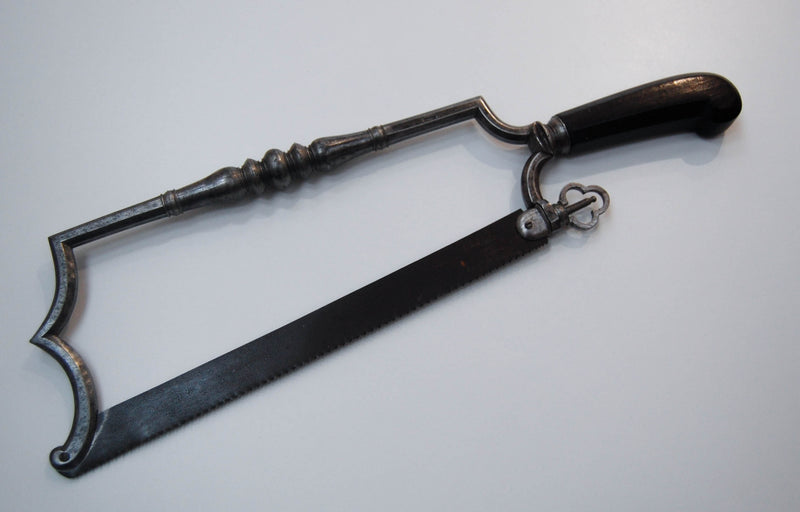
Jackson was obliged to take the knife from one & the needle from the other—performed the operation—Drest the man & tended him three Days—every symptom was favourable & Doubtless the man would have soon Recovered, but on the Fourth day Doctor Church sent for him & ordered him to the Hospital.

Jackson told them that the fourth being the Day on which the Inflammation was at the highest he would assuredly die if removed—he was not regarded—the man was removed & died accordingly.
Sullivan wrote those stories in early October, after Church had fallen under a shadow. The general was a bit of a hothead and a strong partisan for Dr. Jackson, so he might have slanted the stories against Church.

Back in early September, shortly after Pvt. Simpson’s death, Gen. George Washington had actually ordered inquiries to settle the disagreement about regimental hospitals versus Dr. Church’s centralized army hospitals.

TOMORROW: The results of those inquiries.

Monday, January 22, 2024

“They were hurried Volens Nolens to a general Hospital at Cambridge”

On 27 July 1775, the Continental Congress created a hospital department for its army outside Boston.

It also appointed Dr. Benjamin Church, Jr., to be Director-General of that department—though he was often called the army’s Surgeon-General.

Church had impressed Congress delegates with his years of work in the Boston Patriot leadership, his genteel bearing during a visit to Philadelphia, and his renowned surgical skills.

Receiving the news in August, Church quickly began to develop hospitals in Cambridge and Roxbury. He started to insist that regimental surgeons send their worst sick and wounded to those hospitals instead of maintaining smaller hospitals near their stations.

That policy soon became a bone of contention between Church and Dr. Hall Jackson, who until then had been working as respectful colleagues.

On 5 September, Jackson wrote to New Hampshire politician John Langdon:

I had established a Hospital for General [John] Sullivan’s Brigade had near a hundred Patients for more than a month, under as good regulations as could be desired, provided with every necessity that prudence and economy would dictate. When all of a sudden they were hurried Volens Nolens [willingly or not] to a general Hospital at Cambridge without a single compliment paid either to them, or their former attendants.
Jackson was ready to return home to Portsmouth—he was a volunteer, after all, with no commission or salary. He stated:
General [Charles] Lee, General Sullivan with all the Officers and Surgeons of his Brigade, will not suffer me to hint an intention to leave them; as not a Surgeon in the whole Brigade has ever had the small Pox, or ever performed a Capital Operation. Some Officers in the Army have offered me a substitution equal to anything I would expect, but this I should dipise, their pay being little enough to support their own Commissions with Honour and decency. Gratitude to them, obliges me to continue with them, until the pleasure of the Continental Congress is known…
On 4 September, Sullivan himself had told Langdon:
I know Doctor Church complains of those Regimental Hospitals as having been very expensive, which the Regimental Surgeons Deny, & say he cannot prove the assertion. How that is I cannot say, but am very certain that good Brigade Surgeons may assist in preventing extraordinary expense as well as Doctor Church or any other person, & give great satisfaction to both Officers & Soldiers in the Army.
That conflict had grown worse after the Continental move onto Ploughed Hill on 26 August. William Simpson, a Pennsylvania rifleman, “had his Foot and Ankle shot off by a Cannon Ball as he lay behind a large Apple Tree, watching an Opportunity to Fire at the Enemy’s Advanced Guards.”

It looks like nobody expected Pvt. Simpson to live, but all agreed that his only hope was an amputation. And, as we’ve seen, Hall Jackson considered himself an expert on amputations.

According to Sullivan, “Doctor Jackson…was there, & had every thing prepared to take off the Limb—Doctor Church happened to come in—forbid him to proceed & ordered the man to be sent to the Hospital.”

TOMORROW: How the operation turned out.

Sunday, January 21, 2024

“I am hurried thro’ the whole Army”

Yesterday I wrote about Dr. Hall Jackson’s career as colonial New Hampshire’s premier amputator (if he did say so himself).

Today I’m skipping ahead, past his treatment of Sylvanus Lowell’s dire injuries, to follow Jackson to the siege of Boston.

In addition to being Portsmouth’s leading apothecary, physician, surgeon, and inoculator, Dr. Jackson was a local military expert. He was a militia captain. His modern biographer, J. Worth Estes, wrote that he “helped design the defenses of Portsmouth Harbor,” though I don’t know if that was before or after the Revolutionary War.

In December 1774 Dr. Jackson reportedly led one of the militia companies that stormed Fort William and Mary in Portsmouth’s harbor, arguably the first fight of that war. That raid yielded gunpowder and cannon for the Patriots.

After the first undeniable fight of that war, in April 1775, the doctor went to Cambridge and, he wrote, “lent my assistance to the wounded.” He returned to Portsmouth with “a plan of [Adino] Paddock’s Field Pieces, Carriages, and mounted the three Brass pieces found in Jno. Warner’s Store, belonging to Col. [David?] Mason.” On the night of 30–31 May, the doctor led scores of men to the undefended battery at Jerry’s Point in New Castle and seized eight more large cannon for the Patriot cause.

In June 1775, Jackson received word of the Battle of Bunker Hill. He immediately rode down to the siege lines north of Boston, arriving thirteen hours after hearing the news and about forty-eight hours after the fight.

Jackson offered medical help to Gen. Nathaniel Folsom, then commanding the New Hampshire regiments. Later he wrote about the young regimental surgeons he found on duty:
not one of these were possessed of even a needle, or any other proper Instruments, had they been ever so well equipped, the matter would not have been much mended. I amputated several limbs and extracted many balls the first night,

the next day I was hurried to all quarters Dr. [Benjamin] Church having got notice of my being at Mistick, [he] the best Surgeon on the Continent being obliged to supply poor [Dr. Joseph] Warren’s place at the Congress forced the principal of the wounded on me . . . .

I went on with this fatigue 15 days, when a violent inflammation in my eyes forced me to return to Portsmo’. I lost only two of my patients one Col. [Thomas] Gardiner, of Cambridge wounded in his groin, the other one [James] Hutchinson a man from Amhurst [New Hampshire] whose thigh I amputated close to his body. He survived 7 days, and would have finally recovered had not the fates took exceptions to his name.
After Jackson was home about ten days, several regimental commanders stationed north of Boston wrote, asking him to return. The doctor was back on the front by mid-July, writing:
tho’ I act in capacity of Surgeon General to [Gen. John] Sullivan’s Brigade more particularly, I am hurried thro’ the whole Army. Every other day I attend Church to Waltham to dress Coll’s. [Jonathan] Brewer and [William] Buckminster, who are still languishing with the wounds they received at Bunker’s Hill.

Once in a while a person breaks out with the small Pox and are removed. Not a Surgeon in Sullivan’s Brigade has had the Disease.

I receive my authority to act from the General, but when or how much my pay will be, I know not.
Sullivan, now in charge of the New Hampshire troops, and others were trying to get Jackson some sort of official commission and salary.

TOMORROW: The Continental surgeon general.

Tuesday, August 22, 2023

A Revolution in Relating to the Environment

Last month the Journal of the Early Republic’s Panorama website published an essay by Blake McGready titled “Searching for a Reusable Past: Public History and the Revolutionary Origins of the Climate Crisis.”

McGready argues that historical sites are missing an opportunity to alert visitors to the effects of environmental changes, particularly the oncoming climate change.
Revolutionary-era sites can reach their audiences and remind them of the fearsome stakes of this moment by asking different, environmentally focused questions: How do ecological processes challenge understandings about space and boundaries? How has the natural, nonhuman world shaped the past, and how does it continue to shape our present? And what kinds of environmental relationships did the American Revolution produce?

Valley Forge rangers are already working to direct visitor attention towards the ways human-made environmental change exacerbates parkwide flooding. The Washington’s Headquarters railway embankment, erected for the Pennsylvania Railroad, now prevents the sloping land from reaching the riverside. During storms these tracks become a levee, pinning floodwaters into the lowlands around the structure. The construction of upriver single-family housing developments, which has accelerated during COVID-19, continues to clear trees and fill open space, intensifying runoff during storms. Structures like Washington’s Headquarters that sit at the confluence of creeks and rivers have become targets as water levels rise.
That example doesn’t strike me as ideal. Most people go to historic sites to feel transported back to the period when those places were “important,” not to hear about subsequent changes—like railway embankments and suburban development, in this case. Now I happen to like learning about both the history and the preservation of a site, but the latter is still the chocolate syrup, not the ice cream.

People would probably think about environmental change more if they’re part of the story from the start, as in perhaps a comparison of how the Valley Forge landscape was suddenly altered by the arrival of thousands of men building huts in 1777. How does that compare to the area’s current population? 

I know there are environmental historians working on integrating those factors into the larger Revolutionary narrative, as McGready discusses later:
public historians might reimagine the Revolution as a contest over environmental relationships. In 1779 General John Sullivan led the Continental Army’s invasion of Iroquoia, an expedition whose torrent of destruction devastated Seneca and Cayuga agroecosystems. Haudenosaunee women’s farming techniques produced superior yields compared with those of white colonists, nurtured healthier soils, supplied more nutritious diets, and cultivated sustainable practices for generations. Colonists, fastened to seasonal cycles of subsistence and profit, applied abusive farming practices to their lands. . . . By discussing the Sullivan Campaign, public historians can pull environment into their conversations about the American Revolution’s legacies, and invite audiences to think about how environmental relationships have been made and can be remade.
We do a lousy job of discussing the Sullivan Campaign already, though. Its sites aren’t preserved like others. We’re uncomfortable remembering the vicious attacks on civilian communities. The campaign’s success at breaking the Iroquois Confederacy makes it easy to treat it as a sideshow.

Examples aside, I think McGready’s main point is worth considering. It made me remember a visit to Bodiam Castle in southern England over a decade ago. Back then, U.S. media was still treating the likelihood of climate change as worthy of debate. In contrast, between the car park and the castle I came across a sign baldly stating that all the lovely riverine landscape in front of me was going to be underwater in a quarter-century or so.

That sort of message—coming with the authority of the site, tied to the visitor’s immediate experience, and linked to the hope to preserve that place—might be the most powerful approach.

Monday, February 13, 2023

“We had not one half lb: of powder left that night”

Returning to Dr. Benjamin Church’s intelligence report dated 24 Sept 1775, he had a couple more things to say about the Continental Army’s gunpowder shortage.

Having addressed that topic at length at the start, Church returned to it with this remark:
If you will believe me Mr. Pidgeon the Commessary General then, now declairs that we had not one half lb: of powder left that night the bunker hill was taken and had you pursued, the Camp must have been broken up—this they Confess.
John Pigeon was a Boston merchant and insurance broker who had moved out to Newton several years before the war. (I wish I knew where he and his family, as Anglicans, went to church. There weren’t a lot of options in rural Massachusetts. Did he ride to Cambridge or into Boston?)

As a country gentleman, Pigeon pushed his new town toward supporting the Whig cause. He bought the local militia company two cannon. He served in the Massachusetts Provincial Congress, becoming clerk of the committee of safety in November 1774, commissary of stores in February 1775, and commissary of the provincial army as it officially formed on 19 May.

During the Battle of Bunker Hill, Pigeon was, as Church wrote, “the Commessary General then.” He submitted a resignation shortly afterward, only for the provincial congress to reject it on 20 June. Gen. Artemas Ward sent Pigeon a letter listing the army’s needs ten days later. Pigeon responded by requesting a larger staff. James Warren decided he was becoming “petulant.”

A few weeks later the Continental Congress took responsibility for the New England army and appointed Joseph Trumbull, son of Connecticut’s governor, as commissary general. Pigeon soon went home, which caused problems toward the end of the year when the army needed his account books.

Church’s 24 September letter suggests that he had been in touch with Pigeon recently, and that Pigeon felt the New England army’s supply chain hadn’t been working back in June.

Another remark on gunpowder from later in the letter:
I heard General [John] Sullivan say at a Court of inquiry where I was that had they only powder Sufficient they would keep up a Continual fire on the town, and force you and your ships to go off, but says he what can we do without it, and that it was a happy thing that General [Thomas] Gage was not made acquainted with our matters.
By writing that, Church was of course making Gen. Gage acquainted with the gunpowder situation. The British commanders knew that they were in no danger of “Continual fire.”

TOMORROW: Internal disputes.

Friday, September 25, 2020

“Less fortunate in my Military reputation than some others”

As I recounted yesterday, Gen. George Washington dismissed Maj. Scarborough Gridley from the Continental Army on 24 Sept 1775.

Dealing with the major’s father, Col. Richard Gridley, was harder. It took a lot of maneuvering by the commander-in-chief, Continental Congress delegates, and the young man Washington wanted in Gridley’s place, Henry Knox.

In November, Col. Gridley was kicked upstairs to the post of Chief Engineer of the Continental Army. When Washington moved south to New York in April 1776, he left the colonel behind in the “Eastern Department,” fortifying Boston harbor.

What happened to Scarborough Gridley? In 1781, he petitioned the Massachusetts General Court for back pay, evidently for service in Gen. John Sullivan’s push against the British in Newport in 1778. That April, the state legislature resolved to pay Gridley “forty five Pounds New England” and asked Gov. John Hancock to write to Gen. Washington asking what rank Gridley had held in the Continental Army and “from whence he is to receive his pay.”

Nothing happened. On 21 Feb 1784 Gridley penned a letter to Elbridge Gerry, one of Massachusetts’s delegates to the Confederation Congress. In it he stated:
At the evacuation of the Town of Boston by the British troops my Father was stationed here by his Excellency General Washington for the purpose of Fortifying the Town and Harbour; the Extension of the Works made it necessary that he should have an Assistant; he appointed me and reported the appointment to His Excellency who confirmed it and order’d me pay accordingly—

I continued in service and received pay as long as any General Officer remained to grant me Warrants—My last warrant for June & July 1779 for 40 dollrs. pay and three rations subsistance was given by General [Horatio] Gates a[t] Providence: since which I have received neither pay nor Subsistance excepting one ration of Provisions to January 1781—

When Military opperations commenced at Rhode Island I repaired to General Sullivans Camp, and on my return to the works in Boston, received the Public thanks of the General for my services on that Expedition. . . .

Notwithstanding my repeated and assiduous application Governor Hancock has not written on the subject. At some times he informed me that he had written at others that it had escaped his memory. . . . that I should be kept from the reward given in common to others by the Neglect of an individual (however high in Office) is humiliating—

If in the early days of the War I have been less fortunate in my Military reputation than some others, I hope it will not be esteemed presumption in me to believe that my subsequent services and the Assiduity with which I have executed every order I have received have entirely effaced every disadvantageous impression on my Character.
That last paragraph was clearly a reference to how Gridley had been cashiered from the army for his behavior during Bunker Hill.

Scar Gridley closed by asking Gerry to request a certificate of his service from Gen. Washington so he could “settle my accounts with the publick and the State.”

TOMORROW: Oh, this will go well.

Saturday, August 04, 2018

2018 Seminar at Fort Ticonderoga, 21-23 Sept.

The 2018 Fort Ticonderoga Seminar on the American Revolution is coming up on 21-23 September 2018. This is the fifteenth annual seminar in that august and scenic location.

Sessions on the schedule are:
  • “‘Why does the Almighty strike down the tree with lightning?’: The Sullivan Campaign of 1779, William Tecumseh Sherman, and the Creation of Memory,” Dean Bruno, North Carolina State University.
  • “The White Sands of Freedom: The Patriot-Spanish Alliance to Capture British West Florida,” Brady J. Crytzer, Robert Morris University.
  • “‘Live in love with, and in the exercise of kindness to my fellow-soldiers’: The Continental Army as America’s First Band of Brothers,” Rachel Engl, Lehigh University.
  • “The Court-Martial of Paul Revere,” Michael Greenburg.
  • “A Coat Not My Own: Uniform Substitution in the Revolutionary Era,” Matthew Keagle, Fort Ticonderoga.
  • “General Charles Lee in New York: Confronting Tories as well as the Boundaries of Military Authority,” Timothy Leech, Ohio State University.
  • “Cook’s and Latimer’s Connecticut Militia Battalions and the Battles of Saratoga,” Eric Schnitzer, Saratoga National Historical Park.
  • “John Trumbull’s Revolution in the North Country,” Paul Staiti, Mount Holyoke College.
  • “‘This Horrid Trade of Blood’: The Revolutionary Transformation of Anthony Wayne,” Mary Stockwell.
  • “‘Convinced of the Necessity of preventing…Anarchy and Confusion’: Benedict Arnold’s Declaration of Principles and Its Place in Early Revolutionary History,” Richard M. Strum, Fort Ticonderoga.
Last year’s seminar attracted about 120 people.

Fort Ti has also issued its call for papers for next year’s seminar, to be held 20-22 September 2019, saying:
The 250th anniversary of the American War of Independence looms on the horizon, but the anniversary of the political, social, and military events of the broader American Revolution are already upon us. Reflecting on the antecedents to the War itself may help scholars and historians to frame new approaches and contextualize the period better in the coming years.

The Fort Ticonderoga Museum seeks proposals for new research on this critical period of the 18th century from a variety of perspectives and participants. Established scholars, graduate students, and others are encouraged to submit abstracts of papers broadly addressing the origins, conduct, or repercussions of the War for American Independence. We are especially interested in topics and approaches that engage the international nature of the conflict, representing the variety of peoples and places involved.

We welcome interdisciplinary backgrounds and approaches covering the period from the 1760s to the 1780s. Papers may include or engage:
  • Material Culture
  • Biographical Analysis
  • Social and Cultural Histories
  • Global Theatres of War
  • Archaeological Studies
  • Indigenous Perspectives
Sessions are 30 minutes in length followed by 10 minutes for audience questions. Fort Ticonderoga may provide speakers with partial travel reimbursement.
To be considered as a presenter in 2019, sent a 300-word abstract and c.v. by 1 September 2018 to Richard M. Strum, Director of Academic Programs.