J. L. BELL is a Massachusetts writer who specializes in (among other things) the start of the American Revolution in and around Boston. He is particularly interested in the experiences of children in 1765-75. He has published scholarly papers and popular articles for both children and adults. He was consultant for an episode of History Detectives, and contributed to a display at Minute Man National Historic Park.

Subscribe thru Follow.it


•••••••••••••••••


Showing posts with label John Pitcairn. Show all posts

Monday, March 23, 2026

“The troops quitting the town was a beautiful sight”

From yesterday we continue with Robert Woolf’s reminiscence of being a teen-aged businessman caught in the siege of Boston in the spring of 1775:
I had not been many days settled with the family of a gentleman in the custom house when, early on the morning of June the 17th (1775), we were awakened by a smart cannonade from one of the ships of war!

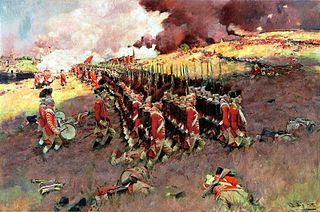
This was no less than the prelude to the famous and bloody battle of Bunker’s Hill, so well recorded in all the public documents of the time that it requires no comment. I, however, lost a valuable friend, Major [John] Pitcairn, killed on the field, and the cries and groans of the great number of wounded brought into the town, as they passed our house, were heart-rending.

Affairs now remained quiet until the following year, the town strictly blockaded by the Americans, the troops and remaining inhabitants suffering many privations up to the beginning of March, 1776. Then began a heavy cannonade and bombardment, many of the shot falling so close to my quarters that we were obliged to remove to a more distant part of the town, and soon afterwards orders were issued by the Governor [actually Gen. William Howe] for the troops and loyal inhabitants to evacuate the place.

This was accordingly done without molestation by the enemy, and all embarked safely in transports provided for the occasion. The troops quitting the town was a beautiful sight, the whole coming off at one and the same time by signal!
I hadn’t seen anyone praise the British soldiers’ departure that way before. In fact, contemporaneous sources are clear that the some troops went on board ships days before others. Perhaps Woolf was remembering one particular day, such as the last embarkation on 17 March, and all the redcoats left in town at that time.
All then proceeded to Halifax, Nova Scotia, which, being a small place, caused no little confusion. The troops, however, remained but a few days [more like weeks] and then proceeded to attack the Americans at New York, leaving two battalions in Halifax, with whom I was stationed, and became one of the mess of the second battalion, and there I remained for two years, thus having an opportunity of exploring some parts of that wild and (at that time) unsettled country, the extensive and impenetrable woods coming within two miles of the town.

At last we embarked for England with part of the marines, and after a most boisterous passage (at one time being five days unable to carry any sail, or to cook any victuals) we landed safely at Plymouth, where I remained a week, and then, proceeding to Portsmouth, a few days more saw me safely set down again in London! October, 1778.
By 1779 Woolf moved on to India, eventually becoming accountant-general for the East India Company. He married Anna Maria Smart, whose father painted the miniature of her shown above. They had nine children.

In 1848 a granddaughter of the couple moved to the province of New Brunswick, bringing some family papers and art. That’s why the portrait is in the National Gallery of Canada and Woolf’s memoir was published by the Women’s Canadian Historical Society despite having no mention of women.

Sunday, March 22, 2026

“On our arrival at Boston we were surprised to find the town blockaded”

Here’s an account of the siege of Boston first published in 1909 by the Women’s Canadian Historical Society of Toronto.

It’s said to be “From the Diary of Robert Woolf,” later a high official in the East India Company, and bears the date of October 1778 at the end. However, internal clues show Woolf wrote down this reminiscence later in life, so that date refers only to the last event he described.

Woolf began:
In April, 1775, although only nineteen years of age, I was intrusted by a London merchant (Sir George Wombwell), in whose counting-house I had been placed, with a sum of £4,000 (four thousand pounds), to proceed to Boston, Mass., U.S., to pay some part of the King’s troops there. I accordingly embarked at Portsmouth on the frigate Cerberus, and found Generals [William] Howe and [Henry] Clinton, with their aides-de-camp, were also passengers.
Gen. John Burgoyne was on the same ship but didn’t rate a mention.

The Parliamentary Register for 1776 states that £400 sterling was entrusted to Woolf to pass on to Capt. John Chads of H.M.S. Cerberus “for his extraordinary expences occured in the passage” with those three generals. Here’s the receipt for that sum, signed by Chads, Wombwell, and Woolf, from Gen. Thomas Gage’s papers.

I can’t find any mention of the amount of £4,000 or any other reference to Wombwell supplying money for the British army in America. (Later he victualed the garrison at Gibraltar.) So Woolf might have misunderstood, misremembered, or exaggerated his mission. Even so, sending a teenager across the Atlantic to reimburse one ship captain seems like a big investment. Was this trip supposed to insert Woolf and his employer into the business of supplying the British military?

Some of that £400 probably went to nice food and liquor on the ship—not that young Woolf got to enjoy it.
The captain of the frigate apologised for thus not being able to accommodate me at his own table, and placed me with the lieutenants, one of whom was afterwards the late Admiral [James] Burney [shown above about fifteen years later], who also accompanied Captain [James] Cook on his voyage round the world; and I carry the remembrance of that gentleman’s musical skill on the violin, frequently dissipating, as it did, the melancholy occasioned by the monotony of the voyage.

Nothing remarkable occurred worthy of observation beyond the swiftness of our frigate’s sailing, compared with that of other vessels with which we fell in, and the extremely thick fog on the banks of Newfoundland, with the astonishing abundance of fine codfish caught there by the sailors.

On our arrival at Boston we were surprised to find the town blockaded and surrounded by the rebels (as they were then called), cutting off all communication with the country, and the town nearly deserted by its inhabitants; those who remained with the King’s troops thus deprived of all supplies, with reason to dread an approaching famine, which would in all probability have occurred had not the approach by sea been kept open.

A first and severe action had taken place a few weeks before in the neighbourhood, when several lives were lost on both sides. This unexpected state of affairs threw me into much perplexity, from which I was partly relieved by Captain [Christopher] Horsfall, of the Welsh Fusiliers, to whom I had letters. He kindly took me to his quarters and gave me both board and lodging. I also received very friendly attention from Major [John] Pitcairn, commanding the second battalion of marines on shore.
Young Woolf has arrived in a besieged town, but he’s recovered from his surprise and found protectors. What was left to worry about? 

TOMORROW: A more severe action.

Saturday, November 29, 2025

Slocum’s “Authentic Narrative”

In 1844, John Slocum published An Authentic Narrative of the Life of Joshua Slocum: Containing a Succinct Account of His Revolutionary Services through a printer in Hartford.

This book fit into a growing genre: memoirs of unheralded Revolutionary War veterans looking back from old age. The most vital of these was Joseph Plumb Martin’s Narrative of Some of the Adventures, Dangers and Sufferings of a Revolutionary Soldier (1830), but I have a fondness for The Revolutionary Adventures of Ebenezer Fox, of Roxbury, Massachusetts (1838).

U.S. pension laws had encouraged veterans to write down their memories in order to authenticate their claims. I posit that that led men toward composing and then publishing these longer autobiographies. 

Joshua Slocum had died in 1816, at about the age of fifty-six, so he didn’t feel that impetus. Instead, his son John set down the veteran’s stories, shifting between third person, first person, and quoted documents.

Or so John Slocum claimed. He acknowledged pulling large sections of the book from other sources, such as the chapter on the capture of Fort Ticonderoga, which his father had no part in. But in truth he borrowed a great deal more. Over and over, the details in this Authentic Narrative just don’t add up, exposing a later perspective shaped by borrowed details and wishful thinking.

The book starts out by saying: “The subject of this sketch was born in the town of Franklin, Franklin county in the State of Massachusetts, in 1760.” The town of Franklin was never in Franklin County, and neither of those places legally existed in 1760. It’s possible Joshua Slocum was born in the town of Wrentham, which calved off Franklin during the war; there was a Slocum/Slocomb family there, but his birth doesn’t appear in the surviving vital records.

On the day after the town received news of the fighting at Lexington, the Authentic Narrative says, the “Franklin company” set out toward Boston. By the time those men made camp, “The intelligence of the surrender of Ticonderoga and Crown Point, with all their valuable stores, had already reached Roxbury.” That would mean the company took more than a month to travel fifty miles.

Somehow Joshua Slocum wrote a dramatic letter to his Loyalist father from Roxbury on 16 June 1775 but was also in one of the regiments based north of the Charles River that fought the Battle of Bunker Hill the next day.

In fact, Joshua was wounded—but he refused to leave his post! And a good thing, too:
Among the [British] killed was Major [John] Pitcairn, one of the flower of their army. I shall always believe that it was my rifle that sent him to his final account—for, as the enemy ascended the hill, I selected an officer answering his description, for a target, and as I took good aim, and my rifle seldom missing its object, I am very certain I killed him.
This account, then, is yet another claim to have killed Maj. Pitcairn. The narrator almost always refers to his weapon as a “rifle,” though such guns were almost unknown in New England at the time.

A month later, the narrator claims to have been about to volunteer for Col. Benedict Arnold’s expedition to Québec when he received a letter from a family friend dated 20 July. Since Arnold started to recruit in early September, that letter must have traveled even more slowly than the “Franklin company.”

The letter invited Slocum to leave the Continental Army camp, go out to the recruiting station at Worcester, and become a clerk in the friend’s company. Like most armies, the real Continentals frowned on soldiers deciding all by themselves where they’ll serve, but that’s what this account said Slocum did. 

And on it goes. Massachusetts Soldiers and Sailors of the Revolutionary War states that a Joshua Slocumb of Franklin served in the Rhode Island campaign of 1779–80. Ironically, the Authentic Narrative never mentions Rhode Island—most likely the one stint of military service by John Slocum’s father.

In 1882 Dr. Charles Elihu Slocum published A Short History of the Slocums, Slocumbs and Slocombs of America. Ordinarily such family histories are credulous toward sources that offer information and reflect well on members of the clan. But Dr. Slocum wrote of the Authentic Narrative:
This little book—of which but few copies can now be found—is written in a style interesting to the young, but it is open to criticism in some of its references to contemporaneous history.
In other words, don’t believe a word of it.

TOMORROW: The arrival of Washington through Slocum eyes.

Friday, June 27, 2025

“Crying most pitifully all exceeping one”

This is a portrait of Mary Hubbard (1734–1808) painted by John Singleton Copley about 1764 and now owned by the Art Institute of Chicago.

According to the institute, Hubbard’s “pose, gown, and background were precisely copied from a British engraving of a noblewoman, yet Copley distinguished the work as his own by capturing the figure’s individual features as well as the surfaces and colors of the luxurious fabrics.”

Mary Greene had married Daniel Hubbard (1736–1796) in 1757. Their mothers were first cousins. What’s more, her widowed father had married his widowed mother in 1744. That was one way mercantile families retained their money.

The Hubbards were Loyalists, particularly invested in importing sugar from the slave-labor plantations in Demarara. Daniel Hubbard signed the merchants’ addresses to the last royal governors, and the family remained in town during the siege

On 18 June 1775, Mary Hubbard wrote this description of the the Battle of Bunker Hill to her half-brother, David Greene (1749–1812):
once more at my Pen I can scarcely compose myself enough for any thing nor will you wonder when you know the situation we are in at present

Yesterday another Battle fought Charlestown the Scene of action they began early in the Morning & continued all day fighting. in the afternoon they set fire to the town & it is now wholy laid in ashes we could view this Melancholy sight from the top of our house

one poor Man went on the top of the meeting house to see the Battle was not able to git down again but perished in the flames.

about five in the afternoon they began to send home their wounded here my dear Brother was a Scene of woe indeed to see such numbers as pass’d by must have moved the hardest heart, judge then the fealings of your Sister, some without Noses some with but one Eye Broken legs & arms some limping along scarcely able to reach the Hospital, while others ware brought in Waggons, Chaise, Coaches, Sedans, & beds on mens Shoulders

the poor Women wringing their hands & crying most pitifully all exceeping one who on seeing her Husband in a cart badly wounded vou’d revenge went of but soon return’d compleatly Equip’t with her gun on her Shoulder her Knapsack at her back march’d down the street & left the poor Husband to try how many she could send along to tell he was comeing.

there is a vast Number of our Men killd & wound a great many Oficers two are sent to their long homes amongst the rest one fine looking Man much about your age who stopt against our windows to have his leg which was sliping moved a little he lived till this morning the poor fellow came a shore but yesterday or the day before, Perhaps his Mothers darling & his Fathers Joy cut of in the midst of his days his Sisters two if he had any must weep his untimely fate

hope it will never be my lot to have any of my near connections follow the Army.

Major [John] Pitcarn & Mr. Gore* both dead with many more that I dont know. we cannot yet learn how many of the enemy are kill’d, think it likely Mr. Hubbard who I supose will give you a particular account of the Battle will be able to write you word, to his Letter I refer you.

* have since heard Mr. Gore is a live
I don’t know who “Mr. Gore” is, not seeing such a British officer on the list of wounded. Hubbard wrote as if that man had been in the battle and thus not from the civilian family of Gores I’ve studied. (Samuel Gore was arrested after the battle for cracking a joke about the British deaths.)

The Hubbards didn’t evacuate Boston with the British military. Daniel kept at his business, and in 1792 was one of the founders of the Union Bank. He died on St. Croix during a voyage back from Demarara in 1796.

Mary Hubbard’s letter was first published by the Charlestown historian Richard Frothingham in 1876 and then as transcribed here in the D.A.R.’s American Monthly Magazine in 1894.

(The correspondent who sent the text to the magazine was Anita Newcomb McGee, a military doctor in the Spanish-American and Russo-Japanese Wars.)

Monday, June 23, 2025

“Major Pitcairn was a brave and good man”

Laying the ground for Tuesday’s online presentation for Old North Illuminated about the legends associated with Maj. John Pitcairn, here are some articles that appeared in the British press in the latter part of 1775 which were then reprinted in American newspapers.

Pennsylvania Packet, 2 Oct 1775:
Extract of a letter from Chatham, July 31.

“The chief topic in this town for several days past has been concerning the death of the unfortunate Major Pitcairn, who died of his wounds in the late engagement in America. He was late Major of his Majesty’s division of Marines at this place. He was a Gentleman of universal good character, and beloved by his officers and men, and much esteemed by all ranks of people here for his affability and genteel address. He was a tender husband, and an affectionate father.

[“]On the news being brought to his lady last Thursday evening, she immediately dropped down, and for several hours it was thought she was dead; she has not spoke since, and her life is not expected; their mutual happiness was beyond conception. The unfortunate Lady’s character is no ways deficient to that of the Major.”
Pitcairn had married Elizabeth Dalrymple, and she lived until 1809.

Pennsylvania Gazette, 4 Oct 1775:
A letter from Boston, dated July 18, says, “Lieutenant [William] Pitcairn, son to our Major of that name, was standing by his father when that noble officer fell, and expired without uttering a word; he looked very wishfully at the Lieutenant, who kneeled down, and cried out, “My father is killed: I have lost my father!”

This slackened the firing of our corps for some minutes, many of the men echoing the words, “We have all lost a father!”
When Frank Moore sampled this item as a footnote in his Diary of the American Revolution, he changed “our corps,” which seems to point to the marines, to “the regulars,” a larger group.

As an anecdote it’s quite touching, but the description of Pitcairn having “expired without uttering a word” is contradicted by many contemporaneous reports of the major lingering after being shot. For example, Gen. John Burgoyne wrote:
Major Pitcairn was a brave and good man. His son, an officer in the same corps, and near him when he fell, carried his expiring father upon his back to the boats, about a quarter of a mile, kissed him, and instantly returned to his duty. This circumstance in the hands of a good painter or historian, would equal most that can be found in antiquity.
Gen. Thomas Gage listed Pitcairn as mortally wounded, not immediately dead. There’s a story from Boston of the major’s long dying conversation with Dr. Thomas Kast.

Pennsylvania Mercury, 13 Oct 1775:
It is said that a pension of 200l. per annum is settled on the Widow of the late Major Pitcairn, who has eleven children.
New-York Gazette, 16 Oct 1775:
Extract of a letter from Plymouth, August 15.

“Lieut. Pitcairn, of the marines, (who brought his father, Major Pitcairn, when mortally wounded at Boston, off the field of action) is appointed a Captain Lieutenant and Captain in the said corps, (though not in his turn) as an acknowledgement of the services of his gallant father.”
Virginia Gazette, 19 Oct 1775:
July 28. Major Pitcairne, of the marines, who was killed in the late action in America, has left 7 children. Four balls were lodged in his body, and he was taken off the field upon his son’s shoulders.
The History of the Fife Pitcairns says John and Elizabeth had nine children, one of whom had been lost at sea in 1770.

Saturday, June 21, 2025

“The Ghost of Major John Pitcairn,” 24 June

Sticking with the saga of Henry Howell Williams and his quest for (over?)compensation meant I mustered only a brief mention of the Battle of Bunker Hill on its Sestercentennial.

But today I’m watching the reenactment of that battle in Gloucester, and I’ll discuss some aspects of the event in the coming days, both on this site and live.

On Tuesday, 24 June, I’ll speak on “The Ghost of Major John Pitcairn” for Old North Illuminated’s digital speaker series.

Our event description:
After Major John Pitcairn was killed in the Battle of Bunker Hill, he was remembered in Britain as “a Gentleman of universal good character.” In Massachusetts, however, people still accused Pitcairn of having ordered redcoats to fire at the Lexington militia two months earlier. The major’s body was laid in the crypt of the Old North Church, but his memory haunted American history through stories, rumors, and artifacts linked to his name.

In this talk, J. L. Bell, proprietor of the history blog Boston 1775, sifts through the evidence behind those legends before digging into how a church warden with a shaky reputation sent Maj. Pitcairn’s body back to Britain—or did he?
I suppose I should make clear that I know of no stories about Pitcairn’s spirit haunting people or places. Rather, his memory and Americans’ hunger to make meaning of that memory have produced several oft-repeated narratives.

I’ll talk about several legends of Maj. Pitcairn: his pistols and horse, who shot him at Bunker Hill, how Bostonians remembered him, and what happened to his body in the decades after his death. Some of those stories might even be true.

Register to hear this talk online with a donation through this Eventbrite page. It’s scheduled to begin at 7:00 P.M., and there will be time for questions afterward. Assuming the recording goes well, a video will appear online afterward.

Tuesday, December 31, 2024

Battling Myths and Misinformation about 1775

As we reach the cusp of the Sestercentennial year of 2025, I’m highlighting some articles I’ve written for the Journal of the American Revolution discussing myths and mistaken beliefs about the events of 1775.

Some of these articles were published in the past year, some more than a decade ago.

Here are the tl;dr versions with links to the full-length originals.

American Patriots didn’t call the laws that Parliament passed in 1774 to reform Boston (and Massachusetts as a whole) the “Intolerable Acts.” That term arose decades later in U.S. history textbooks. George III’s blanket term for those laws was “Coercive Acts.” Full article.

Tarring and feathering was a painful and humiliating public punishment, but it wasn’t fatal. Full article.

Dr. Joseph Warren didn’t obtain inside information about the British army march to Concord in April 1775 from Margaret Gage, Gen. Thomas Gage’s wife. Instead, he consulted with a man we’ve never heard of: a knife-maker named William Jasper. Full article.

Israel Bissell didn’t carry news of the fighting at Lexington south, and no single courier rode went all the way to Philadelphia. The first rider was named Isaac Bissell, and he carried the news to Hartford, Connecticut. Full article.

There’s solid evidence that Col. Israel Putnam (not Col. William Prescott) issued the order “Don’t fire till you see the whites of their eyes” at the Battle of Bunker Hill in June 1775. That phrase didn’t come from the Prussian army but from the Royal Navy. Full article.

Maj. John Pitcairn wasn’t fatally shot as he topped the wall of the provincial redoubt at Bunker Hill. Of the many men credited with that fatal shot, the best evidence points to Salem Poor, but he probably shot a different British officer. Full article.

Gen. George Washington didn’t respond to news of a gunpowder shortage in August 1775 by creating a false rumor of an adequate supply and feeding it to the British inside Boston. That was a novelistic touch created by a biographer misreading his sources. Full article.

Finally, my article for Age of Revolutions on how the “Join Or Die” snake evolved into the “Don’t Tread on Me” snake remains one of that site’s most read. While this essay doesn’t refute a clearly mistaken belief, I argue that those were two different species of American snakes: the glass snake and the rattlesnake.

If more people avoid repeating those myths and errors in the coming year, then my work will have benefited the world. And we can all move on to repeating new myths and errors.

Sunday, December 22, 2024

“What is all history but facts or falsehood”?

On 8 Sept 1845, the Exeter (New Hampshire) News-Letter and Rockingham Advertiser published an item signed “G.” and dated one week earlier.

Titled “Truth Is Stranger Than Fiction,” it told the story of how at age fourteen “Captain James Cochran” was captured by a Native couple, killed and scalped them, and returned to his family’s settlement on the Penobscot frontier.

The first two paragraphs and the last of this article were all about whether people should believe this story. “I have it only by tradition,” the writer said at the start before concluding, “But what is all history but facts or falsehood, having, at a time, a legendary existence?”

That article also made two claims about James Cochran’s descendants:
  • His “second son, James,” was a ship captain, put in “command of the fort in Portsmouth harbor,” and “made prisoners of war by a company of volunteers under the command of John Sullivan” on “The day after the battle of Lexington.” 
  • One of that man’s sons was “now high in office and renown in the British Navy, adorning the title of—Lord Admiral Cochran.”
The first item was obviously a garbled version of the story of John Cochran, commander of Fort William and Mary, as I’ve explored it this past week.

The second might be a wishful reference to Adm. Thomas Cochrane or Adm. Thomas John Cochrane, neither of whom had any discernible family connection to the New Hampshire Loyalist John Cochran.

Two months later, on 8 Nov 1845, the Portsmouth Journal of Literature and Politics published a new version of the tale:
ADVENTURE OF CAPT. JAMES COCHRAN.
“Truth Stranger Than Fiction.”
This newspaper assured its readers:
The statements published we have submitted to a daughter of Capt. John Cochran, who is a resident of Portsmouth, and we are enabled from these traditions, and from conversation with that lady, to present a more full account of the historical incidents of the family, which may be relied upon as accurate.
Unfortunately, this newspaper didn’t name that woman or say how she had come to live in Portsmouth seventy years after her father had been driven away. I haven’t found other mentions of her.

TOMORROW: The daughter’s story.

(The picture above shows Adm. Sir Alexander Inglis Cochrane, father of Adm. Thomas John Cochrane and uncle of Adm. Thomas Cochrane as well as brother-in-law of Maj. John Pitcairn. Born in 1758, this man served in the navy during the American War for Independence. That we can rely on.)

Thursday, March 21, 2024

Two Lieutenants and the Battle of Bunker Hill

Lt. John Ragg of the Royal Navy’s marines entered our scene back here, in an anecdote from the Shaw family of Boston about how he got into an affair of honor with twenty-year-old Samuel Shaw.

I suspect that conflict happened before the war began, while Ragg, Maj. John Pitcairn, and perhaps other officers were boarding with the Shaw family in the North End.

It definitely happened before the Battle of Bunker Hill because Pitcairn died of his wounds that day, and the anecdote credited him with mediating the dispute.

By the date of that battle, Lt. Ragg had gotten into another argument, this time with one of his fellow British officers.

Lt. John Clarke was a veteran marine, having “served thirty six years with great credit” according to Adm. Samuel Graves. That said, Clarke had become a second lieutenant only in 1757 and a first lieutenant in 1771 (with a brief retirement on half-pay in between). He was assigned to H.M.S. Falcon.

According to British military documents that Allan French quoted in an article for the Colonial Society of Massachusetts, on the evening of 19 April (i.e., the day the war began) Clarke got drunk.

Lt. Clarke was arrested “for being very much in Liquor and unfit for Duty on the Morning of the 20th of last April, for breaking his Arrest, and for grossly abusing and challenging Lieutenant John Ragg of the Marines to fight.”

On 7 June, Graves wrote, Clarke was “tried and dismissed for being in Liquor upon duty on the 19th of April last.” The admiral ordered the former lieutenant back to England.

Then, on 17 June, came the big battle in Charlestown. Lt. Ragg’s grenadier company was in the thick of the fight. Gen. Thomas Gage’s report included this casualty list from the first battalion of marines:
1st battalion marines. — Major Pitcairn, wounded, since dead; Capt. Ellis, Lieut. Shea, Lieut. Finnie, killed; Capt. Averne, Capt. Chudleigh, Capt. Johnson, Lieut. Ragg, wounded; 2 sergeants, 15 rank and file, killed; 2 sergeants, 55 rank and file, wounded.
While Lt. Ragg recovered from his wound, former lieutenant Clarke traveled back to London on H.M.S. Cerberus, which also carried Gage’s report.

Not being in the Battle of Bunker Hill, or even in the British military at the time, didn’t stop Clarke from publishing An Authentic and Impartial Narrative of the Battle when he arrived back in London. That short book, credited to “John Clarke, First Lieutenant of Marines,” was one of the first descriptions of the battle to reach print and went through a second edition in London before the end of the year.

Many historians have tried to rely on Clarke’s Narrative, which offered details not found elsewhere, like Gen. William Howe’s speech to his soldiers and a description of Dr. Joseph Warren’s death. But ultimately most authors realized that Clarke was just piecing stuff together and making it up. French concluded, “it seems likely that it was written to relieve the tedium of his voyage to London, from such material as he could gather from his own observations and from the talk of the ship’s company.”

Despite his dispute with Ragg, Clarke described the first battalion of marines “behaving remarkably well, and gaining immortal honour, though with considerable loss, as will appear by the number of the officers killed and wounded.”

TOMORROW: Lt. Ragg, back in the fight.

Thursday, March 14, 2024

The Politics of Francis Shaw

As I discussed yesterday, despite how Josiah Quincy characterized the situation in his biography of Samuel Shaw, the Shaw family was not forced to host British marine officers under the Quartering Act.

Rather, in all likelihood, the merchant Francis Shaw (1721–1784) chose to rent rooms to Maj. John Pitcairn, Lt. John Ragg, and perhaps other men.

We don’t have enough sources about Francis Shaw to know what his motivations might have been: money, a sense of obligation or deference to the military, a wish to mollify the royal authorities?

Shaw wasn’t a Loyalist. He didn’t sign either of the addresses to the royal governors in 1774, nor leave town at the evacuation in 1776. In preceding years, he hadn’t stood up to complain about any of the Whigs’ measures.

Nor, however, was Francis Shaw an active Patriot. He had joined the Boston Society for Encouraging Trade and Commerce back in the early 1760s. That was an early chamber of commerce, speaking for the merchant community, and it opposed the Sugar Act and what its members saw as overeager enforcement of that law. In 1770 the Boston town meeting added Shaw’s name to a committee to promote non-importation, particularly by not selling tea.

But other than those moments, the name of Francis Shaw doesn’t appear in connection with Whig politics. He didn’t dine with the Sons of Liberty in 1769. He wasn’t on the committee to promote the Continental Association of 1774. (He may have been a member of the St. Andrew’s Lodge of Freemasons, meaning he knew some Whig leaders, but wasn’t forward in supporting them. Or that Freemason might have been Francis Shaw, Jr.)

The town meeting elected Shaw as a fireward in the North End in 1772. The North End Caucus endorsed his reelection the next year, and he kept at that job until 1784. Boston thanked him for his long service a few months before he died. But that was an apolitical job.

My impression is that Francis Shaw chose to stay out of the larger debate. His son Samuel, in contrast, was fervent for the Patriot cause in 1775. We can see hints of that difference in the anecdote about Samuel getting into an argument with Lt. Ragg, quoted back here.

Francis Shaw had chosen to host British marine officers. The anecdote suggests he didn’t speak out against Ragg calling Americans “cowards and rebels” and then apparently moving toward a duel with twenty-year-old Samuel. The father didn’t, for instance, demand that his tenant leave his son alone—or if he did, it didn’t become part of the family lore. It was up to Maj. Pitcairn to calm matters.

Furthermore, I think the evidence suggests Francis Shaw told his son not to join the Continental Army. Only on his twenty-first birthday, when he was no longer legally under his father’s control, did Samuel leave Boston and seek a commission in the artillery regiment.

Once that happened, letters show that Francis Shaw supported his son, financially and otherwise. After the siege, the merchant served on Boston committees to collect taxes and record citizens’ military service. He may have invested a bit in privateers (or this could have been a man of the same name from Salem). In sum, Francis Shaw became a Patriot, even if he didn’t start out as one.

COMING UP: Lt. Ragg’s war.

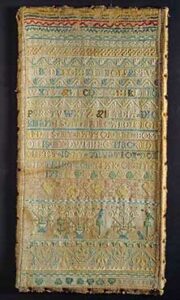
(The picture above, courtesy of Old North, shows a sampler made by twelve-year-old Lydia Dickman in 1735. Nine years later she married Francis Shaw. They had one child together, but Lydia died in 1746 and her son the following year. Francis Shaw remarried and had more children, including Samuel. The sampler is now in the collection of the National Museum of American History.)

Tuesday, March 12, 2024

“Arrangements for a duel were in preparation…”

Earlier this month I had an online discussion with Kevin M. Levin, creator of Civil War Memory (now on Substack) and author of an upcoming book on Col. Robert Gould Shaw.

It concerned a passage from the third Josiah Quincy’s biography of Samuel Shaw (1754–1794, shown here)—Continental officer, early American diplomat, and brother of Col. Shaw’s great-grandfather.

I discussed that passage years ago in a comment but never in a posting until now. It describes young Shaw’s experience in 1774–75, when he was twenty years old:
The northern part of Boston, where he resided, was also the abode of some of the most active and ardent spirits who gave character and impulse to the first movements of the American Revolution.

Troops, sent from the parent state to awe the colonies into submission, and parading the streets of Boston, were continual causes of excitement and anger; giving intensity to feelings which it was difficult to restrain, and impossible to allay. Boston being at that time regarded by the British as a garrison town, the officers of the army were billeted on the inhabitants. The house of Francis Shaw was assigned for quarters to Major Pitcairn and Lieutenant Wragg.

A tradition in the family states, that, the latter having at the table, in the presence of Samuel Shaw, spoken of the Americans as “cowards and rebels,” he immediately resented the reproach, and transmitted to the lieutenant a challenge. While arrangements for a duel were in preparation, the fact came to the knowledge of Major Pitcairn, who interfered, and, either by influence or authority, obtained from the lieutenant such an apology for the offence as Mr. Shaw was willing to accept, and the affair was thus terminated.

On the 2d of October, 1775, Samuel Shaw attained the age of manhood, and, with the assent of his father, immediately took measures to insure his enrolment in the army, then collecting at Cambridge under the auspices of Washington.
The immediate question was: Who was this “Lt. Wragg”? I looked in published Army Lists from the 1770s and found no officer with that last name. But there was a Lt. John Ragg in the marines. So that must have been the man sharing quarters with Maj. John Pitcairn.

Pitcairn arrived in Boston in November 1774, part of Gen. Thomas Gage’s build-up of the royal military after the rest of the province slipped out of his control in September. Ragg presumably arrived at the same time, though it’s conceivable he came with another set of marines in March 1775.

Although this anecdote appears in Quincy’s book after mentions of the Battles of Lexington and Concord and Bunker Hill, it definitely didn’t happen that late. Pitcairn died from his wounds right after the second battle. The story feels like something that would have happened before the shooting war actually began, during the tense winter of 1774–75.

TOMORROW: Reading between the lines.

Wednesday, April 20, 2022

The First British Army Casualty of the Revolutionary War

In describing the skirmish at Lexington, the senior British officer on the scene, Maj. John Pitcairn of the Marines, wrote:
…some of the rebels who had jumped over the wall fired four or five shots at the soldiers, which wounded a man of the Tenth and my horse was wounded in two places, from some quarter or other, and at the same time several shots were fired from a meeting house on our left.
Reporting that the provincials had shot “a man of the Tenth” was significant for Pitcairn and army commander Gen. Thomas Gage. They wanted to portray the locals as starting the fight. But British officers typically didn’t care much about enlisted men as individuals. Maj. Pitcairn gave that wounded private about as much space as his horse.

Not until 1782, when a younger British army officer named Jeremy Lister wrote out his memoirs of army life, did our sources record the name of the wounded man—the first British casualty of the Revolutionary War.

Back in 1775 Lister was an ensign, the lowest-ranking officer, in the 10th Regiment of Foot. He volunteered to go with that regiment’s light infantry company on the 18–19 April expedition to Concord. That company became part of the vanguard of the British column. As they passed through the center of Lexington, they found a large portion of the town’s militiamen lined up on their common with firearms.

Ens. Lister’s account of that event was:
we saw one of their Compys. drawn up in regular order Major Pitcairn of the Marines second in Command call’d to them to disperce, but their not seeming willing he desired us to mind our space which we did when they gave us a fire then run of to get behind a wall.

we had one man wounded of our Compy in the Leg his Name was Johnson also Major Pitcairns Horse was shot in the Flank we return’d their Salute, and before we proceeded on our March from Lexington I believe we Kill’d and Wounded either 7 or 8 Men.
One curiosity about Lister’s report is that the 10th Regiment’s light infantry company didn’t have anyone named Johnson on its muster roll for 19 Apr 1775. So did Lister just make up that name seven years later, or assign a common name to a soldier he dimly remembered?

In Paul Revere’s Ride, David Hackett Fischer noted that muster rolls show a private named Thomas Johnson transferred into the light infantry company from another part of the 10th Regiment just five days after that battle. Was that date just an artifact of the paperwork, and Pvt. Thomas Johnson was already with the company on the 19th? That seems like the most likely explanation for Lister’s statement, though it would be nice if the evidence were more definite.

Whatever injury Johnson sustained, it didn’t stop him from proceeding with the column all the way to Concord. The lights of the 10th Regiment were among the companies deployed to guard the area around the North Bridge while other soldiers proceeded to James Barrett’s farm to search for artillery. Pvt. Johnson thus got to participate in the first two fatal exchanges of fire in the war.

As the redcoats left Concord, the provincial militia companies began a more concerted attack. Ens. Lister wrote, “I recd a shot through my Right Elbow joint which efectually disabled that Arme.” A military surgeon removed the ball at Lexington, but for weeks the ensign thought he would lose that arm.

The British soldiers made their way under fire to Charlestown by evening. Ens. Lister rode a couple of miles on a horse, but decided that made him too big a target, so he walked most of the way. We don’t know if Johnson made the whole journey on foot or became one of the wounded soldiers who crowded onto horses, artillery carriages, and confiscated vehicles. At the end of the day the 10th Regiment reported seventeen wounded, one killed, and one missing.

Parts of the 10th Regiment also fought at the Battle of Bunker Hill in June. Ens. Lister was still recovering from his wound in Boston. Pvt. Thomas Johnson went into the battle and was killed.

[The photograph above shows a member of the recreated 10th Regiment, which has been portraying the soldiers at the start of the Revolutionary War for over fifty years.]

Wednesday, October 13, 2021

“Many were the disputes” with Duncan Ingraham

As part of my ongoing investigation of the cannon in Concord in April 1775, I’ve been gathering information about the merchant Duncan Ingraham, a recent arrival in the town.

Ingraham had made his fortune in business in Boston, then married the widow Mary Merrick and moved into her house in Concord. (A detail of her gravestone appears here.)

Back in Boston, Ingraham had left four iron cannon in his stable. His son sold them to the aggressive Patriot William Molineux in early October 1774 without Ingraham’s approval. A few months later, two of those guns were brought out to Concord to be mounted on carriages.

By that time, Gov. Thomas Hutchinson had made Ingraham a justice of the peace for Middlesex County. His neighbors suspected him of supporting the Crown. Indeed, as related by George M. Brooks in Memoirs of Members of the Social Circle in Concord (1888), Ingraham’s stepson Tilly Merrick (1755-1836) recalled arguing over politics: “many were the disputes on the issues of the day with his Tory father-in-law [i.e., stepfather].”

Merrick even described Ingraham welcoming British army officers into his wife’s home on the fateful 19th of April in 1775. The Ingraham/Merrick family lived at the corner of what became Main and Sudbury Streets, with a house, store, warehouse, and other outbuildings.

According to Merrick, when the British column arrived in Concord on 19 April, Maj. John Pitcairn called on Ingraham, leading to this anecdote:
During his call, the major went out of the back door of the house, and seeing one of Mr. Ingraham’s negroes standing by the large pear-tree in the rear of the house, with his hands behind him, commenced on him, as he did on the rebels at Lexington Common a few hours previously, by pointing a pistol at his head, and, in a loud tone of voice, ordering him to give up his arms; but as the unfortunate bondsman replied to order by holding up both his hands over his head, and saying, “Dem is all the arms I have, massa,” the serious consequence of the Lexington order was not repeated in Mrs. Ingraham’s back yard.

At this moment the report of the firing at the North Bridge was heard, and the major precipitately left, having more important business to attend to the remainder of the day than making social calls and bullying half-scared negroes.
For nineteenth-century audiences, this was mainly an entertaining story that bridged two genres: arrogant British officer thwarted and black slave too stupid (or too sly?) to answer a question correctly. Quite early Pitcairn became the subject of stories about British officers getting their comeuppance, even when the evidence points to other men. Need this anecdote have much basis in fact?

Examined against the background of the secret activities in Concord that spring, Pitcairn’s questioning might take on more significance. James Barrett was collecting cannon, gunpowder, and other military supplies for the Massachusetts Provincial Congress. Barrett’s family and some of his Concord neighbors were helping in that effort.

At the same time, someone in Concord was sending Gen. Thomas Gage secret notes detailing where those supplies were being hidden around the town. In March 1775 Gage dispatched two army officers in disguise, Capt. William Brown and Ens. Henry DeBerniere, to Concord to confirm that information. The intelligence that Gage gathered guided his orders to Lt. Col. Francis Smith and Maj. Pitcairn about searching the town.

Because of Ingraham’s political leaning, personal interest in provincial artillery pieces, and genteel standing (Gage’s first intelligence reports from Concord arrived in French), he’s a leading suspect to be the Concord spy.

It might make sense, therefore, for Pitcairn to visit Ingraham on arriving in Concord and collect up-to-the-minute information on where his neighbors were holding the provincial weapons.

Or does it? Going to Ingraham’s house while the whole town was watching would make the neighbors even more suspicious about the squire than they already were. And if Ingraham was ready to share information, why interrogate his human property at pistol point?

I can concoct scenarios in which this story makes perfect sense. For example, imagine the enslaved man had grown up in the household of Mary Ingraham and was plugged into the Concord gossip network. He might have gleaned information about where folks were hiding weapons and talked about that at home, and his new master Ingraham might have collected all that intelligence and sent it to Gage. When the redcoats arrived, Pitcairn sought out Ingraham for the latest, and he answered, “You’ll have to ask my man.”

Conversely, I can also imagine a scenario in which Tilly Merrick simply made up this story to entertain people in Concord in the early 1800s. Or one in which he took an actual visit to his parents’ house by British army officers and tacked on a fictional encounter between Pitcairn and the enslaved man for the sake of a laugh.

Wednesday, June 26, 2019

Did Isaac Freeman Kill Maj. John Pitcairn?

The centerpiece of Isaac Freeman’s 1780 petition to the Massachusetts General Court, the basis of his request for compensation and the setting for his expression of ultra-patriotism, is his description of having fought at the Battle of Bunker Hill:
Your memorialist would beg leave to acquaint your honors, that in the second battle that was fought in June following, on Bunker’s Hill, he in the retreat, lost a very good fire-arm, his knapsack, containing one handkerchief, shirts, hose, &c. &c. which cost him in that day, forty or fifty hard dollars…

That your memorialist was the happy man (tho’ a poor negro) that put an end to the life of that bold, and of course, dangerous man, Major [John] Pitcairn, with eight or ten others that day, besides wounding a number of other villains; in the execution of which service, your memorialist received three very bad wounds from the British pirates; in this wounded and bleeding condition, he continued like a bold soldier, fighting for the country, till he was obliged with the heroes of the day, to retreat, which was worse than death to a soldier, and give up the ground to those (British hell-hounds,) and all for want of the help of those cowardly commanders and the poltroon fellows under their command, whose i[n]f[amou]s names I conceal, who lay during the whole action at the back of the hill out of danger:

Had they like men come on, instead of the shame and disgrace of that day, a most compleat victory would have taken place, and the whole of the British army would, by the close of that day, been snuggly sent DOWN DOWN to the abode of shame, disgrace and despair; whose just fate they would have received my hearty amen and amen, as those did which I sent there in battle.—
Freeman’s petition is thus the first surviving written statement that a black man killed the infamous Maj. Pitcairn.

In my J.A.R. article on who killed Pitcairn, I quoted letters from a British marines officer near the major when he was shot. I concluded that Pitcairn was wounded and taken out of action well before he reached the redoubt on Breed’s Hill. The traditional American account of Pitcairn being struck down as he mounted the walls was thus a product of wishful thinking; soldiers wanted to believe they killed an important officer, and chroniclers wanted to believe the officer who supposedly ordered the firing at Lexington was killed in dramatic fashion.

Part of that drama was that an African-American soldier shot the major. My article quoted two early sources saying so. First, in 1787 the Rev. Dr. Jeremy Belknap wrote in his notes on the battle: “A negro man belonging to Groton, took aim at Major Pitcairne, as he was rallying the dispersed British Troops, & shot him thro’ the head…”

Decades later, Samuel Swett credited John Winslow with the information that on the walls of the redoubt “mounted the gallant Major Pitcairn, and exultingly cried ‘the day is ours,’ when a black soldier named Salem, shot him through and he fell.” Swett said Winslow also told him “a contribution was made in the army for Salem and he was presented to [George] Washington.” I found no confirmation of such a presentation, but it does date the report to when the commander-in-chief was in Massachusetts in 1775-76.

It seems likely, therefore, that rumors about a black soldier killing Pitcairn circulated soon after the battle. Isaac Freeman identified himself as that soldier five years later. I doubt his claim just as I doubt every other claim to that kill. But Freeman might sincerely have believed he shot the major. Or he (and anyone who helped him prepare his petition) might just have decided to try for the credit. The petition doesn’t offer any supporting details, such as when Freeman made the shot or how he recognized Pitcairn.

What’s more, Freeman’s petition should prompt some skepticism. It said he killed not only Pitcairn but “eight or ten others that day, besides wounding a number of other villains.” That’s nearly a dozen fatal shots, plus others that found their mark, not to mention misses. That’s an awful lot of shooting when the provincials at Bunker Hill were under orders to hold their fire as long as possible because gunpowder was scarce.

Nonetheless, the Massachusetts General Court responded to Freeman’s story with an award of £5. Should we take that as a contemporaneous endorsement of his claim to having killed Pitcairn? Should Isaac Freeman’s name replace Salem Poor’s and Peter Salem’s (and a bunch of others)? Or was that small payment rapidly devaluing currency simply how the legislature sent away a poor black man with some powerful connections?

I wish there were more information about Isaac Freeman beyond the 1780 petition and the 1782 probate file. (I should acknowledge that it’s not even certain those sets of documents pertain to the same man.) Unfortunately, those sources don’t mention Freeman’s home town, age, family, and so on.  We don’t know if his surname came from a family that enslaved him or reflected his status as a free man. We don’t know if he had always gone by the name of Isaac. (Peter Salem, for example, also lived under the name of Salem Middlesex.) Perhaps someone will spot some new dots and we can see a little more of this picture.

Monday, June 24, 2019

Isaac Freeman’s Petition

This item appeared in the 1 Jan 1781 Boston Gazette, issued by Benjamin Edes:

Messrs. PRINTERS,

Your publishing the following Copy of a Petition presented to the General Assembly in their late Sessions, may probably amuse some of your Readers, at this barren Season of the Year for News.

The Commonwealth of MASSACHUSETTS.

To the Honorable Senate, and Honorable House of Representatives, in General Court assembled.

November 1st, 1780.

The memorial of Isaac Freeman, (a poor negro) humbly sheweth,

That your memorialist, in the face of death and danger, enter’d the service of this country, on that auspicious and ever memorable, and thrice happy day, the 19th of April, 1775, which glorious morn gave birth to the independence of America. No sooner was the alarm given, that a band of the British villains, robbers, and cut-throats had begun the horrid slaughter, by sheding the blood of a number of the worthy inhabitants of Lexington; but their blood cryed from the ground for vengeance, and demanded of all the Sons of Freedom, to repair to arms, and revenge the injury done their bleeding country—I enter’d the service on that blessed occasion, and have fought and bled in the cause of the country; and remain a faithful soldier to this hour.

Your memorialist would beg leave to acquaint your honors, that in the second battle that was fought in June following, on Bunker’s Hill, he in the retreat, lost a very good fire-arm, his knapsack, containing one handkerchief, shirts, hose, &c. &c. which cost him in that day, forty or fifty hard dollars, for which be never has received one farthing; tho’ others have been fully and generously rewarded for their losses by former Houses of Assembly, whose noble example of rewarding merit, and doing justice, he doubts not will ever be the paths your honors will delight to step in, and hereby encourage good soldiers in your Honors service; his losses and services, he thinks, ought to go hand in hand, and therefore humbly begs leave further to observe to your Honors——

That your memorialist was the happy man (tho’ a poor negro) that put an end to the life of that bold, and of course, dangerous man, Major [John] Pitcairn, with eight or ten others that day, besides wounding a number of other villains; in the execution of which service, your memorialist received three very bad wounds from the British pirates; in this wounded and bleeding condition, he continued like a bold soldier, fighting for the country, till he was obliged with the heroes of the day, to retreat, which was worse than death to a soldier, and give up the ground to those (British hell-hounds,) and all for want of the help of those cowardly commanders and the poltroon fellows under their command, whose i[n]f[amou]s names I conceal, who lay during the whole action at the back of the hill out of danger:

Had they like men come on, instead of the shame and disgrace of that day, a most compleat victory would have taken place, and the whole of the British army would, by the close of that day, been snuggly sent DOWN DOWN to the abode of shame, disgrace and despair; whose just fate they would have received my hearty amen and amen, as those did which I sent there in battle.—

And very happy happy would it have proved to the United States, if that infallible rule had been adopted on this occasion, of the Great, the Wise and ever memorable General and Protector OLIVER CROMWELL, Esq; of Blessed Memory———(To PAY WELL and HANG WELL.) And had their frighted commanders been made an example of, with some of their hen-peck’d comrades
Would not those wretches, who now in triumph sing,
Have grac’d a gibbet, and adorn’d a string?
Sure I am that justice would have taken place, and the world been rid of a very tame set of J—k–ss–s, who live only to discourage better solders, and much time saved which has been taken up in court-marshals, to try cowardly leaders; and at this day, not one British officer, or British soldier, would have been found in any part of America.

By the conduct of the above frighted fellows, I was deprived that pleasure which I so earnestly wished to see, which was, to have seen the Britons turning their backs, cover’d with shame, disgrace and slaughter, as with a garment,—with everlasting destruction tripping at their heels, to enclose Tom Gage, & the remainder of his army in the same net.

Your memorialist now looks up to the seat of justice, which your Honors now fills with dignity, under a new, and he trusts, is the happiness Constitution now in being under Heaven, and which he prays GOD to establish to the end of time, and crown your Honors with eternal glory.

——And notwithstanding the loss of blood and treasure, &c. &c. has not yet been rewarded: I stand ready whenever call’d into the field by your Honors command, to step forth and spill the last drop of blood in the defence of your Honors lives, estates, and this much injured country, and resign my life as every good soldier ought to do, when I hope to join those noble Martyrs who are inroll’d in the catalogue of fame, in the other world, who fought, bled and died in the cause freedom and liberty, and there to mix (tho’ a poor negro) with a Charles the XII, a Cromwell and a Warren, who are now set down in peace, crown’d with everlasting joy and glory.

I now close with hoping your Honors will take into your most serious consideration, my case, with my wounds and loss of blood and treasure; and grant a poor negro such recompence as your Honors, in your great wisdom and goodness shall seem meet; and he, in duty bound, will ever pray.

ISAAC FREEMAN.
The two lines of poetry that appear in the midst of this petition were derived from a couplet in “Cruelty and Lust” by John Pomfret (1667-1702):
Does not that wretch, who would dethrone his king,
Become the gibbet, and adorn the string?
Those words might appear to declare the importance of royalty, but Pomfret presented them as coming from the mouth of a cruel, lustful monarch. So even though this petition had to rewrite them for a republican context, the underlying sentiment was compatible.

TOMORROW: How did the Massachusetts legislature respond to this petition? What can we make of it as a historical document?

Wednesday, June 19, 2019

The Myths of Lt. Col. James Abercrombie’s Death

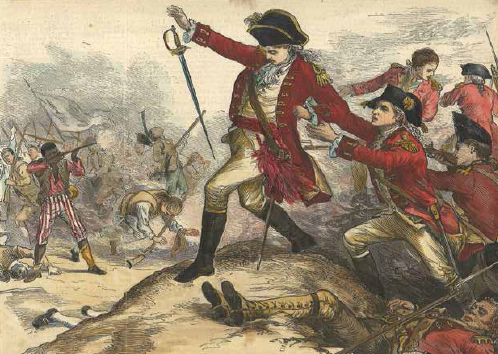
Lt. Col. James Abercrombie (1732-1775) led the battalion of British grenadiers, detached from their regiments, at the Battle of Bunker Hill. He was mortally wounded, becoming the most senior British officer to die in the fight.

Not only did Abercrombie outrank all the other British dead, but he was known to be close to Gen. Thomas Gage and he was a Scotsman. Some combination of those factors meant that his death almost immediately began to accrete myths like barnacles on an underwater wreck.

Don Hagist wrote about Abercrombie at the Journal of the American Revolution, quoting from a letter the lieutenant colonel dictated to solidify the real story:
The grenadiers and light infantry were the first to land on Charleston Neck at a point out of American musketry range. Here they formed, the grenadiers into a line facing the rail-fence breastwork that extended from the redoubt down to the shore, the light infantry into a column for their advance along the beach to the right. Two regiments formed on the left facing the redoubt. While the grenadiers advanced with deliberate slowness as a distraction, the light infantry trotted along the beach. It was expected that the narrow beach would provide an avenue around the end of the breastwork. Unknown to the attackers, the Americans had constructed a barrier across the beach and manned it. . . .

It is not clearly exactly when the grenadiers became aware of the failure of the flanking movement, but they fatefully continued their advance towards the breastworks. Progress was perilously slow…because of a series of fences, brick kilns, enclosures and other obstructions. . . . The battered light infantry battalion, having withdrawn from the barricade on the beach, reformed into a line near their initial staging area. The shape of the coastline put them behind the advancing grenadier battalion. From this disadvantageous position they opened fire. The distance was too great to have any material effect on the enemy, but the impact on the grenadier battalion was disastrous.

This friendly fire incident is occasionally mentioned by historians, but the importance of it is largely overlooked. . . . In a letter dated three days after the battle, Abercrombie indicated that “our Light Infantry killed many of the Grends.” After ordering them to desist, the friendly fire abated for eight or ten minutes, but then the light infantry “gave me a plumper & killed two officers & 3 private.” He used the vernacular “plumper” to refer to a volley of lead. . . . Of particular importance was that the grenadiers’ commander, Abercrombie himself, was among the wounded.
In my own J.A.R. article about who really killed Maj. John Pitcairn, I quoted an 1880 Massachusetts local history which said Salem Poor shot Abercrombie “As that officer sprang on the redoubt.” That was how American sources described his death. But the lieutenant colonel had been taken out of action much earlier, before the final British push against the main provincial position. In addition, from 1775 the British press reported that Abercrombie was a victim of what we now call friendly fire—shot “supposed accidentally from some of his own soldiers.”

As with Pitcairn, Americans wanted to believe that their soldiers killed such an important officer at the climax of the battle. Therefore, Abercrombie was listed among the officers shot storming the redoubt on Breed’s Hill. And after both Peter Salem and Salem Poor got credit for killing Pitcairn, one American author decided that Salem Poor must have killed Abercrombie instead.

John Trumbull’s painting of the death of Dr. Joseph Warren reflects the American belief that Abercrombie should have died at the end of the battle and near the center of the action. The detail above portrays the lieutenant colonel lying dead at the redoubt as Maj. John Small steps over (on?) him. In the key that identified figures in the painting, Trumbull acknowledged that he didn’t know what Abercrombie actually looked like.

Another legend of Abercrombie’s death appeared in the 14 Oct 1775 Pennsylvania Ledger, quoting the Public Ledger of London:
A letter from an officer who was wounded at the late engagement at Boston, says, that when the troops were very near the trenches, the rebels called out to Col. Abercrombie, who was among the first of the troops, “Abercrombie, we won’t miss you.” However, the Colonel got into the trenches unhurt, and was run through the body. When he was dying, he told the officers about him, that if they took Gen. [Israel] Putnam prisoner, not to hang him as he was a brave fellow.
That story was reprinted in many American newspapers and, through Samuel Swett’s early history of the battle, many history books. It’s attached to inaccurate information—Abercrombie wasn’t “run through” but shot—and seems unlikely.

Lt. Col. Abercrombie didn’t die until 22 June. At first doctors didn’t think his wound would be fatal, but then infection set in. Back in 2014, I quoted a description of his death from the British press. The August 1775 Scots Magazine said the musket ball had pushed “a toothpick-case, which he had in his waistcoat pocket, along with it. . . . part of the toothpick being got so far, it baffled the art of the surgeons, and began to mortify.” Don’s article quotes the 17 Aug 1775 Edinburgh Advertiser saying something very similar except that the fatal foreign body was “part of the pen case…which he had in his side pocket.” I have no idea why those reports differed.

The Pennsylvania Ledger also quoted a speech that Abercrombie supposedly delivered two hours before his death:
My friends, we have fought in a bad cause, and therefore I have my reward, as the rest have had that have gone before me; had I fell in fighting against the enemy, I had died with honour, but posterity will brand us for massacreing our fellow subjects; therefore, my friends, sheath your swords till you have an enemy to engage with.
I’ve found this printed in the 27 July 1775 Middlesex Journal and Evening Advertiser, so it definitely circulated in Britain. It’s almost certainly propaganda from someone supporting the Americans, using Abercrombie’s good name to discourage men from joining the British military.

Sunday, May 19, 2019

“The said Marr further declared…”

As Don Hagist showed yesterday, it’s unlikely that Pvt. John Bateman was close enough to the Lexington common on 19 Apr 1775 to see the first shots there. As a grenadier of the 52nd Regiment, he was probably in the middle of the British column, not up front.

Multiple people nonetheless reported hearing Bateman as a prisoner blame the regulars for shooting first, which was definitely what his provincial captors wanted to hear. Whether he was speaking honestly, or planning to defect, or felt he had to curry favor with the local doctors to get his wound treated, that’s what he said.

However, another captured redcoat, Pvt. James Marr of the 4th Regiment, almost certainly was at the common at the crucial time. The light infantry company of the 4th was near the front of the British column. What’s more, Marr told the Rev. William Gordon that he was part of “the advanced guard, consisting of six, besides a sergeant and corporal.”

Marr told Gordon:
They were met by three men on horseback before they got to the meeting-house a good way; an officer bid them stop; to which it was answered, you had better turn back, for you shall not enter the Town; when the said three persons rode back again, and at some distance one of them offered to fire, but the piece flashed in the pan without going off. I asked Marr whether he could tell if the piece was designed at the soldiers, or to give an alarrm? He could not say which.
That matches the report of Lt. William Sutherland, riding at the head of the column. He wrote:
I went on with the front party which Consisted of a Serjeant & 6 or 8 men, I shall Observe here that the road before you go into Lexington is level for about 1000 Yards, Here we saw Shots fired to the right and left of us, but as we heared no Whissing of Balls I conclude they were to Alarm the body that was there of our approach. On coming within Gunshot of the village of Lexington a fellow from the corner of the road on the right hand Cock’d his piece at me, burnt priming…
Sutherland and Lt. Jesse Adair of the marines reported this encounter to Maj. John Pitcairn, who in turn informed Gen. Thomas Gage a few days later:
When I arrived at the head of the advance Company, two officers came and informed me, that a man of the rebels advanced from those that were assembled, had presented his musket and attempted to shoot them, but the piece flashed in the pan.
Pvt. Marr thus confirmed a Crown talking-point about the battle, though he probably didn’t know Gage and his officers were making a big deal about that early shot. (It’s also striking that Gordon wrote down Marr’s remark and had it published within a few weeks of the battle, even though it didn’t help his side of the conflict. He left that detail out of his History of the Rise, Progress, and Establishment of the Independence of America, however.)

As for the shots on the Lexington common, Gordon went on:
The said Marr further declared, that when they and the others were advanced, Major Pitcairn said to the Lexington Company, (which, by the by, was the only one there,) stop, you rebels! and he supposed that the design was to take away their arms; but upon seeing the Regulars they dispersed, and a firing commenced, but who fired first he could not say.
Marr’s account agrees with what a lot of British eyewitnesses described—but not with the testimony that the Massachusetts Provincial Congress published in April 1775. Those depositions, collected from provincials and Pvt. Bateman, chorused that Maj. Pitcairn had ordered the regulars to fire the first shots. In contrast, Marr said Pitcairn yelled something else, and he didn’t know which side fired first.

Marr was at the front of the British column at Lexington and thus had an excellent view of what happened. He cooperated with the magistrates collecting evidence for the congress, but his description was of no value to those Patriot authorities. As a result, they published a deposition from Marr—but about the first shots at Concord instead.