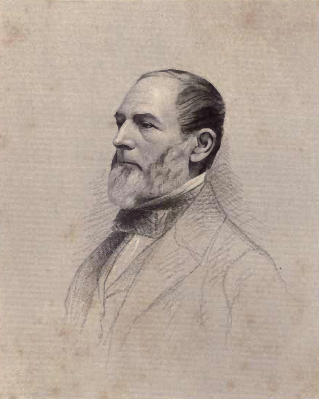
J. L. BELL is a Massachusetts writer who specializes in (among other things) the start of the American Revolution in and around Boston. He is particularly interested in the experiences of children in 1765-75. He has published scholarly papers and popular articles for both children and adults. He was consultant for an episode of History Detectives, and contributed to a display at Minute Man National Historic Park.

Subscribe thru Follow.it


•••••••••••••••••


Showing posts with label Salem. Show all posts

Wednesday, April 22, 2026

“They were much insulted by the people”

Yesterday we left William Jackson on the road from Portsmouth, New Hampshire, to Boston, having reached the town of Newburyport on 11 April 1776.

Jackson and dozens of fellow Loyalists had been captured aboard the brig Elizabeth while trying to sail to Halifax with the rest of the British evacuation fleet.

Most of the king’s army, and most of the Loyalists inside Boston, had managed to get away. Which meant popular anger about those people focused on the prominent few remaining—like Jackson.

In Newburyport, an angry crowd surrounded the tavern where the captives were eating, objecting to how they were riding in carriages. Carriages that Jackson, ship captain Peter Ramsey, and the others had hired.

Jackson later recounted:
we sent for the Committe of safety to Appease them, but all to no purpose, finding our selves in such a situation we comply’d, the Committe not thinking it safe they Appointed a Guard of five Men and Obliged us to pay the Expence the rest of the Journey,

as soon as we came out of the Inn we received Blow’s, mud, stones, Eggs, and every other abuse and proceeded to Boston being 40 miles on foot
In Salem, the lawyer William Pynchon (1723–1789) wrote in his diary:
Wm. Jackson, merchant, and others, with some regular soldiers, went thro’ Salem on foot for Boston, under guard; ’t is said they were much insulted by the people (it must be presumed to be the rabble) at Newburyport, in their way hither; that Jackson was stopped and obliged to leave his carriage, and walk on foot from Newbury to Salem, and thence to Boston
Pynchon then said: “in Newbury street he was stopped again and obliged, after his hat was knocked off, to fall on his knees and beg pardon of the mob and of the Country, and to say whatever was required of him.” At first I thought that might be a reference back to the streets of Newbury, but the placement suggests this story described when Jackson reached Newbury Street in Boston’s South End. Jackson himself didn’t specify such an incident.

Fellow gentlemen—merchants, professionals, landowners—sympathized with Jackson for coming under fire from crowds of poorer citizens. On 16 April, Isaac Smith, Sr., wrote to John Adams from Salem:
You have heard of Bill Jackson’s being taken. He received some Insult on the road which am sorry for and lamented by all, persons of any consequence. He is in Boston goal, but I dont learn he has behavd any way Ill att Boston dureing the seige.
Indeed, Jackson’s letter complained that after reaching Boston:
we was again carried to Wartertown 9 miles before the late Councill and being each seperately ask’d a few Question’s and not properly Examined was sent back to Boston and committed on a supposed Crime of being concern’d with Crean Brush denied the Use of pen Ink and paper and Candle light not suffer’d to speak to any one but in presence of the keeper whare we have been ever since 13th April
That accusation must have been especially galling to Jackson since one month before he’d been trying to stop Crean Brush from taking away Cyrus Baldwin’s goods.

TOMORROW: In the Boston jail.

Monday, November 10, 2025

“Writing this has employed a day”

Dr. Benjamin Church, Jr., used a variety of ways to send messages into Boston after the start of the war, including:
  • crossing the siege lines himself in April 1775 and pretending to have been placed under arrest.
  • having a letter “sewed in the waist of [a paid confederate’s] breeches.” That unnamed man was stopped and “confined a few days,” but the letter wasn’t found.
  • possibly piggybacking on a letter from Gen. Charles Lee that Church arranged to be sent into Boston in early July.
  • meeting a Crown agent in Salem. William Warden told the Loyalists Commission “he was sent by General [Thomas] Gage to Salem and Marblehead to receive intelligence from Dr. Benjamin Church, but failed to execute his business.” Church wrote in July, “I have been to Salem to reconnoitre, but I could not escape the geese of the capitol.”
  • asking Gen. George Washington’s staff to send in a letter through the channel they established to communicate to their agent, John Carnes. That document was sent through the hands of military secretary Joseph Reed, Lt. Col. Loammi Baldwin, a man named Tewksbury raising sheep what’s now Winthrop, and a waterman going into Boston.
  • And of course asking his mistress, Mary (Butler) Wenwood, to arrange for someone she knew in Newport, Rhode Island, to deliver a letter to a royal official there to pass into Boston. Unluckily for them, she chose her ex-husband, Godfrey Wenwood.
Of those communications, only the last letter survives and can be connected with a transmission route because it was intercepted, proving to be Church’s undoing.

For that letter through Newport, Dr. Church used a cipher for added security. One of the many fine questions asked after yesterday’s presentation on Dr. Church was if there were any other ciphered letters from him in Gen. Gage’s papers. I don’t think there are others. And in fact, since the one that incriminated Dr. Church was never delivered, there aren’t any at all.

As part of his defense Dr. Church displayed and translated a letter from his brother-in-law, John Fleeming, written using the same cipher. The doctor said Fleeming had asked him to use the cipher. That letter survives only in printed translations. Earlier Church told Washington that he had received and destroyed another ciphered letter from Fleeming, but that might have been the same one he later displayed.

In General Gage’s Informants, Allen French identified other letters from Dr. Church in the general’s papers on the basis of internal detail (the writer was about to leave for Philadelphia) or handwriting. Those were all in plain English.

As is the long letter written on 24 Sept 1775 and published in Henry Belcher’s The First American Civil War, which I identified in this post as probably Church’s last report to his royal handlers.

It appears, therefore, that Church used the cipher only in exchanges with Fleeming. Why not all the time?

One reason is that having a cipher and sending lots of coded letters might have raised questions. In one of those letters in Gage’s files Church said that an encounter with an angry man named Timothy had prompted him to destroy his cipher lest people suspect him.

Another factor may simply have been time. It took extra effort to copy each letter symbol by symbol. In the intercepted letter the doctor complained, “Writing this has employed a day.”

We might say that using every means to conceal a spy letter would be time well spent. But in Church’s case, the cipher roused Godfrey Wenwood’s suspicions and was soon broken, but the letters the doctor sent in other ways remained secret for over a century.

Monday, October 27, 2025

“Great Trade to Bilbao” Symposium in Salem, 8 Nov.

On Saturday, 8 November, Salem State University will host a symposium titled “’To Drive a Great Trade to Bilbao’: Rediscovering New England’s Iberian Ties, 1640s–c.1830.”

This scholarly event coincides with the Marblehead Museum’s ongoing exhibition “Bilbao Bound,” created with the Itsasmuseum Bilbao (Bilbao Maritime Museum).

The symposium brings together an international group of historians and curators to examine a largely forgotten aspect of early New England history: the trading connections between Boston’s North Shore and the Spanish Basque port of Bilbao. Those commercial ties played a part in securing Spanish Crown support for the American Revolution.

10 to 11:30 A.M.
“Bilbao Bound” exhibit tour
Donald C. Carleton, Jr., guest curator
Marblehead Museum

All the symposium presentations will take place in the Petrowski Room of Marsh Hall at Salem State University.

1:30 to 1:45 P.M.
Greetings and Welcome
Brad Austin, Chairman, History Department, Salem State University
Rafael Orbegozo Guzmán, Advisor to the Chairman, Iberdrola

1:45 to 2:05 P.M.
“James G. Lydon and the Rediscovery of New England’s Iberian Trade(s)”
Donald C. Carleton, Jr., exhibit curator

2:15 to 3:45 P.M.
New England and Iberia: Peoples, Ports, Perspectives
  • “Dowries of Cod and Prayers against Shipwreck: Women and Their Atlantic World in the Early Modern Basque Country” by Amanda L. Scott, Associate Professor of History and Women’s, Gender, and Sexuality Studies, The Pennsylvania State University
  • “El papel de cádiz en las primeras redes comerciales atlántico-mediterráneas de nueva inglaterra (1770–1820)” [“The Role of Cádiz in the early Atlantic-Mediterranean Commercial Networks of New England (1770–1820)”] by Guadalupe Carrasco-Gonzalez, Profesora Titular, Universidad de Cádiz via Zoom
  • “Fish for Faience: Archaeological Evidence of Early New England’s Trade with Portugal” by Emerson Baker, Professor of History, Salem State University
Moderator: Donald C. Carleton, Jr.

4:00 to 5:15 P.M.
Yankees, Cod, Spain, and Revolution
  • “Spain and the American Revolution: The View from Madrid” by Larrie D. Ferreiro, George Mason University
  • “Fish to Firearms: How Lee, Gerry, and Gardoqui Helped Arm a Revolution” by José Manuel Guerrero Acosta, Project Director and Curator, Spain and the Support for the American Revolution, a Project by Iberdrola
Moderator: Dane Morrison, Professor Emeritus of Early American History, Salem State University

5:15 to 5:30 P.M.
Concluding Remarks
Brad Austin

The symposium is free, but attendees must register in advance. For in-person seats, sign up here. To watch the presentations online, use this link.

Sunday, October 26, 2025

A New Job for the Rev. Edward Bass

As the Revolutionary War wore on, the Rev. Edward Bass of Newburyport sent letters to the Society for the Propagation of the Gospel in Foreign Parts (S.P.G.) in London, begging to remain in good standing as an Anglican minister.

Bass asked congregants and colleagues to write and even speak to people in London on his behalf. They argued that he’d never embraced the new American governments and merely compromised on small matters for the good of his congregation.

By the end of 1781 the S.P.G. had considered Bass’s case three times, and each time it came to the same conclusion: he was no longer behaving like a loyal representative of the Church of England.

In 1786 the minister appears to have given up on getting anything but the last word since he paid to publish his side of the case in London:
A Brief Account of the Treatment which Mr. Bass, Late Missionary from the Society for the Propagation of the Gospel in Foreign Parts, at Newburyport, New England, Hath Received from Said Society. Drawn up by Himself, with Remarks upon Particular Parts of It, and Addressed to the Impartial Public.
Even as Bass burned his personal bridges, other American Anglicans were trying to build new ones before the supply of priests ran out.

American ministers were casting about for how to institute a national church hierarchy while being independent from the British Crown. Previously all aspiring Anglican priests had gone to England to be ordained since there were no bishops in North America. (Indeed, the threat of a bishop had kept many New Englanders in a state of alarm for years before the war.) And as part of that ordination, men swore the Oath of Supremacy, promising loyalty to the monarch of Great Britain.

In 1783 the formerly Anglican clergymen of Connecticut gathered and elected their first bishop: Samuel Seabury (1729–1796, shown here). Yes, this was the same pamphleteer who serves as the voice of Loyalism in Hamilton. Seabury went to Britain, seeking people in authority to consecrate him as an American bishop, and eventually found those officials in the Scottish Episcopal Church, which had slightly different rites.

In 1785 Seabury began to ordain new ministers in America, and a general convention of former Anglicans drafted a constitution and proposed an American Book of Common Prayer. American representatives negotiated with Church of England officials. To preserve some authority, the English episcopate decided to make some compromises.

In February 1787 bishops in London consecrated two American ministers as bishops. A second general convention in Philadelphia in July–August 1789, with delegations from New York south to South Carolina, approved an Episcopal Church constitution and formed a House of Deputies and House of Bishops.

Meanwhile, in May 1789 formerly Anglican ministers from New England had convened in Salem. They elected a bishop for Massachusetts and Rhode Island. And the man they chose was the senior minister in the state, the chair of their convention, a man who had stuck it out through the war: the Rev. Edward Bass.

The convention in Philadelphia approved of that choice. However, New Englanders had come to value having some say in the choice of their clergy, and only ministers had voted for Bass. Therefore, there was another, broader election for a bishop of Massachusetts, Rhode Island, and New Hampshire seven years later in 1796. The Right Rev. Mr. Bass was officially consecrated the following year.

Wednesday, May 14, 2025

“Willard Gibbs free”?

One ciphered line in the diary of Thomas Newell was still mysterious to me, even after being transcribed and published by the Massachusetts Historical Society.

This entry is dated 30 Sept 1773, and it reads:
Willard Gibbs free
I doublechecked those words with the original pages and the cipher, and they’re accurate. (The transcriber did regularize Newell’s spelling, capitalization, and punctuation, deeming him “illiterate.”)

Figuring out what that meant was hampered by the visibility of Josiah Willard Gibbs, the great engineer at Yale, and his father, a Yale professor of theology. But several other members of the extended family also had that name.

Pushing back far enough, we find the first Josiah Willard Gibbs (1752–1822), not a direct ancestor of those two famous men but an uncle.

The Gibbs Family Papers are at the Clements Library, and its finding aid has a lot to say about that man’s father, Henry Gibbs (1709–1759, shown above courtesy of Geni).

Son of a minister, Henry went to Harvard College and “came into a considerable inheritance from both sides of the family.” He was the college librarian from 1730 to 1734, then settled in Salem as a merchant. His first wife died young, and he then married Katharine Willard (1724–1769), daughter of the province secretary, Josiah Willard.
This marriage further cemented the prominent place of the Gibbs in Salem society but brought comparatively little lucre, and only the fortunate bequest of £500 from a friend, William Lynde, helped the Gibbs maintain their lifestyle and social obligations. A theological liberal and political supporter of the power of the crown and broad colonial obligations, Gibbs held several important local and provincial offices during the next several years, including justice of the peace (appt. 1753), judge, delegate in the House of Representatives (three terms, beginning in 1753), and Clerk of the House (1755-1759). In February, 1759, at what should have been the peak of his career, he contracted measles, leaving five children and an insolvent estate with a meager 10s allotted to each child.
Evidently Katherine Gibbs moved her family back to Boston, where she died on 31 May 1769. At that point her son Josiah Willard Gibbs was sixteen, not yet of legal age. He had a prestigious name and probably little else.

On 14 July, merchant and selectman Timothy Newell became Josiah’s guardian. (The probate judge overseeing this arrangement was Thomas Hutchinson. Newell’s sureties were Richard Clarke and John Amory. The witness to this action was William Cooper. Just showing what a tight little community colonial Boston was.)

It looks like Josiah Willard Gibbs became part of Timothy Newell’s household, probably learning business alongside that merchant’s nephew Thomas (who was three years older). Young Gibbs turned twenty-one on 30 Sept 1773—the day of Thomas Newell’s mysterious line.

Thus, “Willard Gibbs free” meant that Josiah Willard Gibbs had come of age. He could manage his own property and no longer answered to Timothy Newell. As to whether that was cause for celebration or mere acknowledgement, the diary didn’t say.

According to the Memoir of the Gibbs Family of Warwickshire, England, and United States of America (1879), compiled by (naturally) Josiah Willard Gibbs, this Willard Gibbs went on to marry Elizabeth Warner in 1779; she was just about to turn sixteen.

These Gibbses had ten or eleven children between 1780 and 1801. Their son George was born in Trenton, New Jersey, in 1793, and the family settled in Philadelphia. Josiah died in that city in 1822, Elizabeth in 1842. Their son Josiah Willard Gibbs was a merchant there. His son Josiah Willard Gibbs went out to Sacramento in the Gold Rush and died in 1850.

Saturday, April 19, 2025

Counterfactual 4: If No One Had Died at Lexington or Concord

Building on my counterfactual of what might have happened if Paul Revere and William Dawes had never brought their warning to Lexington, I reached the moment when the militiamen of Concord saw smoke rising above their town.

Under the scenario so far, the lack of urgent alerts out of Boston had no effect on the safety of John Hancock and Samuel Adams (who were never in great danger, despite their worries) or the quantity of military supplies the redcoats found (since James Barrett and his crew had already moved most of that stuff).

But that counterfactual situation would have delayed the response from towns around Concord, meaning fewer militia companies would have joined the local men on the hill overlooking the North Bridge.

We know those men were of two minds about confronting the regulars. They stayed on that hill for about two hours, marching down only after thinking other soldiers had set fire to the center of town. Then, after a fatal exchange of fire had chased the company from the bridge, they pulled back for another couple of hours.

Given those real-life details, I posited yesterday that the militia men would have been more wary about marching down on the bridge if there had been fewer of them. And eventually the smoke from town would have stopped, lessening the urgency.

In real life, after the shooting the militia companies moved around the north side of Concord and then massed east of the town. At Meriam’s Corner, once the regulars had left the most populated area, the provincials started to shoot at the column. Would that have happened the same way in this what-if scenario?

The very big difference in this counterfactual is that no one has yet been killed. There was no shooting in Lexington or at the North Bridge. Neither side had seen deaths to avenge. As long as the two groups of armed men remained at a distance, neither would have felt themselves to be under imminent threat.

In that case, the afternoon might have proceeded like the end of Lt. Col. Alexander Leslie’s raid on Salem in February: with the regulars marching in order back to where they came from while the local militia regiments watched sullenly to be sure they left. Lt. Col. Francis Smith’s men would have met Col. Percy’s reinforcement column somewhere in west Cambridge, and they would all have returned to Boston.

As it happened in April 1775, the bloodshed along the Battle Road motivated a militia siege of Boston. The committee of safety and its generals didn’t have to choose that policy; it came about naturally as militia companies massed off the peninsulas of Boston and Charlestown. Without deaths, the provincials wouldn’t have felt so much fervency, so the situation might have remained as it was: no military siege, but the countryside beyond Boston outside of royal control.

In the ensuing days, the Patriot press would have made the most of the army incursion into people’s homes while also trumpeting how the raid had found so little. The newspapers would have celebrated the escape of Hancock and Adams. They would have lauded the strong unified response of the Massachusetts militia.

As for Gen. Thomas Gage, he would have been pleased not to lose any men but frustrated at not capturing all the artillery pieces and other weapons he wanted to destroy. And how would he explain the mission to his superiors in London after they’d advised him to do something else?

Of course, that scenario doesn’t include any of the near-random events that can ignite violence, like the first shot at Lexington. What if British troops and Massachusetts militia did bump into each other somewhere? What if military patrols stopping Revere or Dawes before they got to Lexington meant that one of those popular Bostonians had wound up dead?

And even if the 18–19 April expedition did end without bloodshed, the conflict and tensions in Massachusetts would have remained unresolved. Gen. Gage’s next mission could have started the war instead, just a few weeks later.

Thursday, April 10, 2025

“That the leaning of the writer of the above might not be mistaken…”

Yesterday I quoted most of the Boston News-Letter’s 22 Aug 1765 report on the first anti-Stamp Act protest the week before.

In 1856 Samuel Gardner Drake (shown here) quoted the same article at length in his History and Antiquities of Boston. He appears to have missed printer Richard Draper’s sarcastic jibes at the crowd, however. Drake wrote:
That the leaning of the writer of the above might not be mistaken, he closed by a memorable saying of Lord Burleigh, much in use in those days, “England can never be undone but by a Parliament.” Thus the mob was encouraged, and, as by the sequel it will appear, a very partial account was given of what had taken place. The course taken by the papers under the control of the Government had some effect in producing the above, for the News-Letter had been jeered by them because it had not come out with early denunciations of the proceedings of the mob.
The criticism of the News-Letter appeared in an Whiggish newspaper, not in one “under the control of the Government.” The Boston Whigs faulted Draper for not reporting on the demonstration at all; if he’d “come out with early denunciations of the proceedings of the mob,” they’d have faulted him even more vigorously.

Drake’s extract included these lines from the News-Letter (with modernized capitalization and punctuation):
The populace after this went to work on the barn, fence, garden, and dwelling-house, of the gentleman against whom their resentment was chiefly levelled [Andrew Oliver], and which were contiguous to said hill. And here, entering the house, they bravely showed their loyalty, courage, and zeal, to defend the rights and liberties of Englishmen. Here, it is said by some good men that were present, they established their Society by the name of the Union Club.
In context, coming right after describing rioters breaking into Oliver’s house “to defend the rights and liberties of Englishmen,” the reference to the “Union Club” looks like another bit of Draper’s sarcasm.

Whigs in Bristol, England, had formed a Union Club by 1750, pushing for political reform and the protection of liberties. In the 1760s a ship of that name was visiting Boston. New Englanders would have known what the “Union Club” stood for—and should have seen the irony of forming one in somebody else’s house.

In 1865 William V. Wells quoted that line about the “Union Club” without its context in his Life and Public Services of Samuel Adams. He went on to say those men were doubtless the same group as the “Sons of Liberty” who had organized the protest.

Later authors repeated that equation: the Sons of Liberty, the Union Club, and the “Loyall Nine” (a term from yet another source, published later) were all names for the same protest organizers identified by the Rev. William Gordon.

In fact, I haven’t found a single source besides the Boston News-Letter using the name “Union Club” that way. It doesn’t reappear in the newspapers. It doesn’t show up in John Adams’s or Samuel Adams’s writings. It doesn’t show up in John Rowe’s or John Tudor’s diaries. Given the sarcasm in the initial report, I doubt the “Loyall Nine” ever really adopted the term.

(By December 1774 a Union Club was established in Salem. It contributed something for the poor after the Boston Port Bill, and on 16 December Samuel Adams sent a thank-you letter to Samuel King. I can’t find any other period mention of that organization.)

Tuesday, March 18, 2025

William Browne, John Glover, and a Farmhouse in Swampscott

Save the Glover is a campaign by several historic organizations in Swampscott and neighboring towns to preserve an eighteenth-century farmhouse.

The house was originally built in the third quarter of the 1700s by William Browne (1737–1802), a wealthy and respected lawyer. It was his country estate since he already owned a mansion in Salem, as well as part of a family seat in what’s now Danvers.

Browne was elected to the Massachusetts General Court in 1762. Though he joined the Customs service in 1762 as collector for the port of Salem, he favored local merchants enough to keep getting reelected—until he voted to rescind the Circular Letter of 1768.

After that, Browne was firmly on the side of the royal government. Gov. Thomas Hutchinson rewarded him with appointments: as colonel of the Essex County militia, as judge in the county court, and eventually as the last royal appointment to the Massachusetts superior court in 1774. That same year, the London government named him to the mandamus Council.

Refusing to resign from the Council made Browne unpopular locally. Dozens of militia officers refused to serve under him. He moved to Boston late in 1774, to Britain in 1776, and to Bermuda as royal governor in 1781. The state of Massachusetts confiscated Browne’s real estate, including that country house and land.

Gen. John Glover (1732–1797) of the Continental Army bought the property and moved in with his second wife in 1782. He lived there for the rest of his life, welcoming fellow veterans and serving in local offices.

In 1793 the Rev. William Bentley recorded how “the general received us with Great Hospitality” when a committee came through to settle the boundaries of Marblehead, Salem, and Lynn. Glover evidently felt he still lived in Marblehead, but surveyors determined that his house stood in a narrow splinter of Salem which later became part of Swampscott.

The property remained a farm through the nineteenth century. The photo above shows how it looked about 1910. In the twentieth century, the original house became the core of a larger inn and then restaurant, both named, in fine Colonial Revival fashion, for Gen. Glover. For the last thirty years or so, however, that complex has been abandoned.

Originally the Save the Glover campaign sought to preserve the house from being taken down for a new residential development (to be called Glover Residences, naturally). However, the developer has scrapped that project. Now weather and decay are the biggest dangers to the Glover house.

Thursday, February 13, 2025

“Leslie’s Retreat” Commemorations in Salem and Marblehead

Essex County is gearing up to commemorate the Sestercentennial of “Leslie’s Retreat,” the frustrated British army expedition on 26 Feb 1775 to seize cannon that Patriot rebels were collecting in north Salem.

Redcoat troops landed in Marblehead and marched through town to Salem. The militia companies of other nearby towns mobilized in response. That confrontation could have led to serious violence in the midst of Massachusetts’s second-largest settlement, but fortunately it was resolved peacefully.

Here are all the commemorations that I’ve learned about through Salem 400, the Marblehead Museum, and partner organizations.

Saturday, 15 February, 10 A.M.
Leslie’s Retreat: Salem on the Brink of Revolution
Salem Armory Visitor Center, 2 New Liberty Street, Salem

The National Park Service opens its exhibit on why Crown soldiers under Lt. Col. Alexander Leslie came to Salem on February 26, 1775, who were the major players in the event, and how this event has been remembered and celebrated in Salem in the last 250 years. This free exhibit wlll be on display through 27 April.

Saturday, 15 February, 11:30 A.M.
250th Anniversary of Leslie’s Retreat Forum and Discussion
Pickering House, 18 Broad Street, Salem

Local historians David Moffatt, Benjamin Shallop, Jeff Swartz, and Vijay Joyce discuss the British army expedition and the local reaction. $25 admission, $20 for Pickering House members. (Currently listed as sold out.)

Sunday, 16 February, noon to 3 P.M.

Tours of the Pickering House
18 Broad Street, Salem

The caretaker of the oldest house in Salem will introduce eleven generations of Salem history, including the Patriot activist Timothy Pickering, later a Continental Army general and U.S. Secretary of War and Secretary of State. The tour will cover the oldest parts of the house and end with tea and coffee. Order tickets here.

Friday, 21 February, 6:30 P.M.
Leslie’s Retreat exhibit opening reception and lecture
Salem Armory Visitor Center, 2 New Liberty Street, Salem

Emily Murphy, Ph.D., curator of this exhibit and for the Salem Maritime National Historic Site and Saugus Iron Works National Historic Site, will speak about the history and its interpretation at this free event.

Saturday, 22 February
Commemorative March and Tours
Salem
  • 9:30 A.M.: Presentation at St. Peter’s San Pedro’s Episcopal Church, 24 St. Peter’s Street, Salem.
  • 11 A.M.: Redcoat March to North Bridge. The public will view the reenactors from the site of the bridge. Spectaors should plan to be at the North Bridge at 11 A.M. sharp.
  • Noon to 4 P.M.: Self-guided tours of St. Peter’s San Pedro Episcopal Church.
  • 12:30 P.M. and 2:30 P.M.: Salem-Marblehead Trolley Tour lead by local architectural historian Judy Anderson. Reservations encouraged. The trolley starts boarding fifteen minutes before the tour, and everyone with a reservation must be aboard by 12:20 or 2:20. Then the remaining seats will be made available on a first-come first-served basis.
  • 2:30 P.M.: Fashion in the Season of Revolution: A Panel Discussion & Revolutionary Reenactor Promenade, Peabody Essex Museum, 161 Essex Street, Salem, free with museum admission.
  • 7:30 P.M.: Revolution Ball, Hamilton Hall, 9 Chestnut Street, Salem. An evening of live music, dancing, food, and drinks, with attendees in colonial dress or black-tie fashion. General admission $150.

Sunday, 23 February
Indoor Commemorations
Salem
  • 10:30 A.M.: “A Revolutionary Reckoning,” a joint religious service led by First Church in Salem, Unitarian Universalist, and Tabernacle Congregational Church. All ages and denominations welcome. Attendees can stay for a special Fellowship Hour of coffee, tea, and refreshments.
  • Noon to 3 P.M.: Tours of the Pickering House, 18 Broad Street, Salem (see above).
  • 12:30 to 1:30 P.M.: Norumbega Harmony concert, First Church, 316 Essex Street, Salem. Norumbega Harmony is a choral ensemble founded in 1976 and dedicated to the preservation, promotion, and performance of New England psalm singing from the colonial and early American periods.
  • 3 to 5 P.M.: “In Open Rebellion,” Old Town Hall, 32 Derby Square, Salem. World premiere of a drama written by Kristina Wacome Stevick, directed by Samantha Searles, and produced by History Alive. In the fall of 1774, Salem’s Patriots, Loyalists, and enslaved Africans debate the meanings of liberty and loyalty. Free, but attendees must reserve tickets.

Thursday, 27 February, 7 P.M.

When Redcoats Marched in Marblehead
Marblehead Museum, 170 Washington Street, Marblehead, and online

I’ll speak about both the history and the mythology of “Leslie’s Retreat,” drawing on eyewitness accounts and primary sources to illuminate a day the Revolutionary War might have begun, but didn’t. This talk will put the event in the context of the maneuvering between Gov. Thomas Gage and the Massachusetts Provincial Congress, and cut away some of the myths that have stuck to it. $15 admission, $10 for museum members.

Saturday, January 25, 2025

Hiring Freeze in National Parks May Curb 250th Events

Yesterday National Parks Traveler reported that the new administration has ordered the National Park Service to rescind seasonal job offers made to up to 1,400 people.

Per the Washington Post, the new administration’s hiring freeze was explicitly not supposed to include “seasonal employees and short-term temporary employees necessary to meet traditionally recurring seasonal workloads.”

The Park Service has long depended on seasonals and interns, as everyone in the federal government knows. Every year the agency hires more people to cover the busiest months. Even so, its staffing level is pretty skeletal.

The Post story, filed by an environmental reporter, focuses on the big nature parks like Yellowstone and Yosemite. But a hiring freeze will also affect the historic parks, which get less attention.

Here in Massachusetts, we have several Sestercentennial anniversaries coming up. Local governments and organizations are planning events for their communities and expecting large influxes of tourists. In most cases, those events involve or require fully staffed national parks.

The Salem Maritime National Historic Site will have an exhibit on “Leslie’s Retreat,” due to open on 15 February, to complement events around the city.

Minute Man National Historic Park offers a full slate of events about the Battle of Lexington and Concord, running from presentations on spies on 22 March through a Battle Road Anniversary Hike on 21 April—with the big military reenactment in between on 19 April, of course.

The weeklong series of events in Charlestown to celebrate the 250th anniversary of the Battle of Bunker Hill on 17 June will of course be centered around the Monument, under the care of the National Parks of Boston. Even before then, the parks are sharing events like this 27 February talk on how Boston harbor helped to shape that battle.

Longfellow House–Washington’s Headquarters National Historic Site in Cambridge is preparing to commemorate the anniversary of the arrival of Gen. George Washington in July.

Looking further ahead, we’re all eagerly awaiting the reopening of the Dorchester Heights Monument to people visiting that crucial site in the siege of Boston.

I don’t know how much each of those initiatives depends on seasonal hires. But I know some parks absolutely need augmented staffing to handle their ordinary schedules, much less special events for larger crowds in an anniversary year.

Nobody in Washington is saying how long this hiring freeze will last. Hopeful N.P.S. managers have told people who’d received offers for seasonal jobs only to see those yanked away that the positions might open up again. But of course those managers thought they’d finally gotten through the federal hiring process and found qualified and eager staffers, only to have to pull back. As of this evening, the only N.P.S. job openings at USAJobs.gov are in security, firefighting, and other public-safety departments.

Thursday, January 09, 2025

“Capt Chever who submitted to the Plaster of the Cancer Doctor”

Here’s another glimpse of cancer and its treatment from Massachusetts in 1790.

On 28 April, the Rev. William Bentley of Salem wrote in his diary:
A Mr. Newman has appeared, who is celebrated for his success in Cancers. The Physicians allow that he has wrought strange effects upon a Mrs. [Sarah] Sheheen, & he has undertaken for Capt S. Chever, & others. He allows merit in his own way to Mr. [John] Pope of Boston, is a man of years, & belongs to Rhodeisland. The Physicians encourage his experiments.
This visiting doctor was John Newman of Newport—more about him tomorrow. The patient was probably Samuel Chever. There were a lot of Che(e)vers in Salem at this time, but one appears to have been consistently given the title of captain.

Unfortunately, only two days later Bentley reported:
Capt Chever who submitted to the Plaster of the Cancer Doctor mentioned p. 191. was by the violent pains of a second experiment lasting 20 minutes, so shocked that he has since been speechless, & is supposed, paralytic. As his family have been sufferers in the same way, we can only say, his disorder followed this operation.
On 2 May, the minister recored a request for prayers from “S. Chever & Wife for him dangerously sick.” He also wrote, “Saml. Chever. Paralytic.” (Much of Bentley’s diary in this stretch was taken up with recording deaths, illnesses, and crimes.)

The next day, the situation looked better:
This evening I sat through the night with Capt Chever, who seems upon the recovery. A blister on the throat assists him to articulate better, than he ever has done.
This “blister” doesn’t appear to have been a natural phenomenon. Rather, someone applied a plaster with substances on it to inflame the skin or even used a suction cup to create a blood blister—either way, the idea was to pull blood away from the real trouble spot.

In late June, Bentley and Cheever rode to Danvers together, so the captain was more clearly on the mend.

Finally, on 4 Feb 1791 Bentley recorded:
Last Wednesday Capt. S. Chever submitted to an amputation on account of a cancerous humour which had resisted every method of cure.

In the summer there came along from Rhode island a Mr. ——, a Quack who pretended cures of Cancers. He applied to an inveterate Cancer on the breast of Mrs. Shehane, wife of him lately deceased [Daniel Shehane, died on 28 January]. Beyond all expectation he succeeded and at present the patient is free from complaint.

Capt. S. Chever being long indisposed, on various accounts applied to this Adventurer, & submitted to his operations. They were caustic, & after 20 minutes extreme pains they occasioned paralytic affections very violent, & of which the patient has not recovered. But as he has been recruiting the Cancer has become more troublesome.

He consented at last with great reluctance, & Dr [John] Warren of Boston performed the amputation.
I can’t tell what was actually amputated.

Assuming I’ve identified the right Samuel Chever, this patient lived for another twenty-three years, until 1814, dying at the age of seventy-six. His gravestone appears above, courtesy of Find a Grave.

(That webpage assigns Chever two wives whose lifespans overlap each other. I suspect Deborah Osborn married a younger Samuel Chever; the intention gives him the label of “3d.”)

Monday, November 11, 2024

Looking at Lexington and Concord through Eighteenth-Century Eyes

Last month Alexander Cain at Historical Nerdery announced a resource for people researching the Battle of Lexington and Concord ahead of next spring’s Sestercentennial: a list of links to eyewitness accounts of the day.

That listing will be very useful, and it can grow. Perforce these are texts that have been digitized in one way or another. I’m sure that more lurk within books, newspapers, and letters. It’s a matter of ferreting them out and/or digitizing them in usable forms.

For instance, here is the list’s link to Gen. Thomas Gage’s instructions to Lt. Col. Francis Smith for the march to Concord on 18–19 April.

We also have what appears to be Gage’s notes or first draft of those instructions, quoted in General Gage’s Informers (1932) by Allan French. A digital version of that book can be borrowed from the Internet Archive, at least for now. Look on pages 29–30.

Since the Massachusetts Historical Society has scanned merchant John Rowe’s diaries, we can see his response to the news coming into Boston here. A transcription of what a descendant thought were the most important parts of that diary was published a century ago. Among the details one can find only in the handwritten journal is that on 20 April Capt. John Linzee, R.N., dined and spent the evening at Rowe’s house after fending off an attack on his ship on the Charles River.

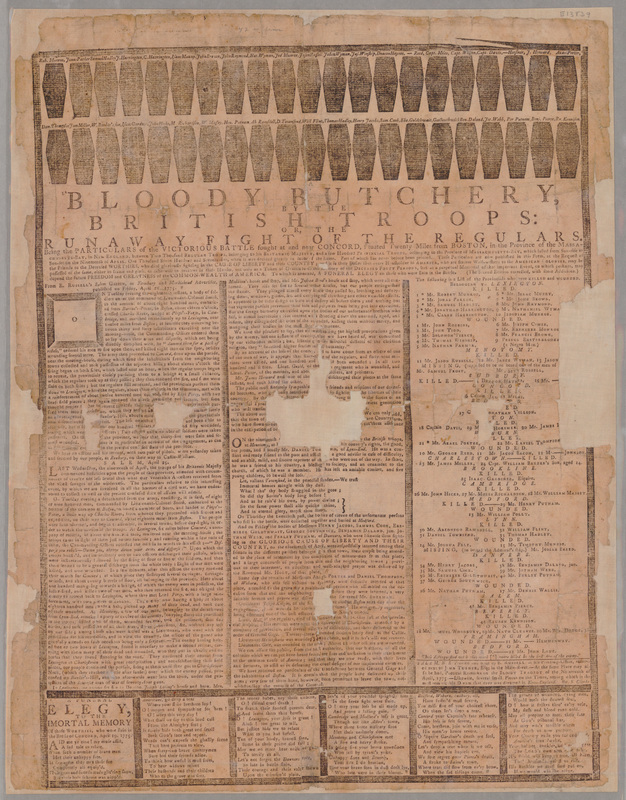
It’s possible to identify the sources of some anonymous accounts. One resource on the list, Ezekiel Russell’s “Bloody Butchery by the British Troops” broadside, includes text headlined “SALEM, April 25.” Those paragraphs commence: “LAST Wednesday, the nineteenth of April, the troops of his Britannic Majesty commenced hostilities upon the people of this province…”

The preceding paragraphs come with a source citation—not coincidentally, to Russell’s own Salem Gazette newspaper. But Russell didn’t give his competition publicity by revealing that he took the second and longer passage from Samuel Hall’s Essex Gazette for 25 April. That text was later imperfectly transcribed in Peter Force’s American Archives.

The 3 May Massachusetts Spy on the list includes an unsourced story about what happened “When the expresses [from Boston] got about a mile beyond Lexington.” That story matches one that William Dawes’s family recalled hearing from him, revealing that Dawes was probably printer Isaiah Thomas’s source.

Among the lately revealed visual resources is this hand-drawn map in the Library of Congress. I’m convinced by Ed Redmond’s hypothesis that Ens. Henry DeBerniere created this map ahead of the march to Concord. It thus offers a look at what British army officers knew of the countryside west of Boston. (I discussed details of that map starting here.)

TOMORROW: A source from May 1775.

Friday, October 25, 2024

“With Geat diffickalty We Exaped With our Lives”

Ebenezer Richardson and George Wilmot evidently met with Gen. Thomas Gage in Salem in the middle of September 1774.

The royal governor moved back to Boston in the last week of that month after an unsuccessful confrontation with the local committee of safety.

Richardson and Wilmot went to the Stoneham home of Kezia and Daniel Bryant, Richardson’s sister and brother-in-law, as I recounted yesterday. They were there on 3 September.

When I first wrote about Wilmot’s story for what was then New England Ancestors magazine, I didn’t realize the significance of that date. That was the day after the “Powder Alarm.”

That event showed how powerless Gov. Gage was outside of Boston. Up to five thousand militiamen had marched into Cambridge, demanded that royal appointees resign, chased Customs Commissioner Benjamin Hallowell for miles, and surrounded Lt. Gov. Thomas Oliver’s mansion until he signed a resignation. And there was no response from the royal government.

If Gage couldn’t protect high officials in Cambridge, right across the Charles River, he certainly couldn’t protect an infamous child-killer up in Stoneham. And on 3 September, a rural mob came for Richardson.

According to Wilmot’s petition to Secretary of State Dartmouth:
about Eleven a Clock at Night thee came forty men armed with Goons and Suronded the house of Mr. Brayant—and broke his Windows Strocke out on of his Wife Eyes, and swore they would distroy us for we Ware Toary and Enemys to there Countery—and With Geat diffickalty We Exaped With our Lives and Came to Boston under the protection of the fourth Rigment of foot Quartred there.
His Majesty’s 4th Regiment of Foot was camped on Boston Common.

Richardson and Wilmot must eventually have gotten on board H.M.S. St. Lawrence as planned. They were in London on 19 January when they signed their petitions to Lord Dartmouth. Judging by the handwriting (and spelling), Wilmot wrote both petitions, and Richardson added his signature.

On January, undersecretary John Pownall sent those papers to his counterpart at the Treasury Office, Grey Cooper. He wrote:
As the inclosed Petitions relate to Services performed and Hardships sustained by the Petitioners as Officers of the Revenue, I am directed by the Lord of Dartmouth to transmit them to you and to desire that you will communicate them to Lord North.
In other words, this is a Customs service problem, so it’s up to your department to deal with it.

Treasury officials read the papers on 26 January, and a note on the outside of the bundle states that the two men were paid £10 each.

And with that, “the rank, bloody, and as yet unhanged Ebenezer Richardson” departed from the historical record.

Thursday, October 24, 2024

“The infamous murderer Richardson, resided last week at Stoneham”

As of the summer of 1774, Ebenezer Richardson was back in Massachusetts.

We know that from two January 1775 petitions to Lord Dartmouth, one from Richardson and the other from George Wilmot.

Wilmot was Richardson’s co-defendant for murder back in April 1770. A sailor on the Customs ship Liberty, he went into Richardson’s house on 22 February to help defend it from a young mob. However, the gun he held was defective and therefore couldn’t have fired the shot that killed Christopher Seider. The jury acquitted him.

But Wilmot was still an outcast. Or, as his petition said:
And after your Lordships petitioner Stood a fare tryal for his Life and was discharged by there own Laws, they would not Lett him live Quaiett in boston but drove him from his house and famely.

And he was forced to Go to the Castell under the protection of the forteenth Rigment Quarterd thear—Where he remaind Nine Months before he dared Venter abroad—and since that tyme he Could Get No Imployment from them to suporte himself and famely.
Wilmot’s name didn’t appear in the press like Richardson’s, but he may still have been chased around.

Late in the summer of 1774, Wilmot wrote, he and Richardson went “to Salam to Petition Gineral [Thomas] Gagge—for a passeg to Great britton.” According to Richardson, the governor advised them “to Go to England, and procured a passage for them in the Scooner St: Larance.”

That was the Royal Navy warship St. Lawrence, discussed back here. It wouldn’t sail for London until November, so Richardson and Wilmot had to lay low for several more weeks.

On 3 Sept 1774, Wilmot stated, he and Richardson were both “at the house of Mr. Daniel Brayant at Stonham.” Daniel Bryant (1731–1779) had married Ebenezer’s younger sister Kezia (1732–1784). (Yes, Ebenezer also had a wife and a daughter named Kezia.)

Back on 26 Mar 1772, a couple of weeks after Richardson had received his royal pardon, the Massachusetts Spy reported:
We are well informed, that the infamous murderer Richardson, resided last week at Stoneham, at his sister-in-law’s. It is said he intends to come and tarry in Boston very shortly.
I don’t know if that’s a garbled reference to Richardson’s sister Kezia Bryant, or if one of Richardson’s brothers had also married and settled in Stoneham. Either way, people knew the man had relatives north of Boston, and the emphasized word “tarry” looks like a threat of tar and feathers.

Daniel Bryant was a respected member of his community. During the Battle of Lexington and Concord, he was sergeant of one of Stoneham’s militia companies. Soon he would rise to the rank of lieutenant. But was that local standing enough to protect his infamous brother-in-law?

TOMORROW: Yet unhanged.

Sunday, October 20, 2024

”No other than the notorious Richardson”

As I quoted back here, on 24 May 1773 Edes and Gill’s Boston Gazette closed an item about Ebenezer Richardson with the line: “Balf, McQuirk & Kennedys are not the only Instances of the unexampled Goodness of George the Third.”

By invoking those London legal controversies from a couple of years before, this newspaper linked Richardson’s pardon after killing Christopher Seider in a riot to two cases that London radicals had held up as examples of government corruption.

In the same way, they treated the Boston Massacre of 1770 as the local equivalent of the Massacre of St. George’s Fields in 1768. American Whigs viewed and presented their efforts as part of reforming the whole British Empire.

John Wilkes, Catharine Macaulay, and a few other radicals wrote back to the Bostonians, but they didn’t win over many other people in Britain.

The Boston Whigs had more success building solidarity in other mainland British colonies. Case in point: They were able to convince Philadelphians to dislike Ebenezer Richardson.

That invocation of the Kennedy brothers, McQuirk, and Balfe came a paragraph below a report that the Customs service was seeking a new berth for Richardson in Philadelphia.

About six weeks later, on 5 July, the Boston Gazette shared this anecdote:
A correspondent has sent the following, viz.

“Notwithstanding the art made use of to conceal the appointment of that pardoned murderer, the infamous and ever to be detested Ebenezer Richardson, this may certify, that said Richardson lately employed a friend to bespeak a passage for him in a vessel bound from Salem to Philadelphia.

The master enquiring who the intended passenger was, and being told it was one belonging to the customs and no other than the notorious Richardson, he refused carrying him on any consideration.[”]
That item was reprinted in the Pennsylvania Journal on 14 July.

Richardson did eventually make it to Philadelphia, but the city was ready for him.

TOMORROW: In the city of brotherly love.

Saturday, October 05, 2024

Honoring Massachusetts’s First Provincial Congress

As I’ve been writing, in early October 1774 the elected representatives of Massachusetts’s towns gave Gov. Thomas Gage one last chance to resume regular legislative sessions and then formed themselves into a Provincial Congress instead.

The congress carefully didn’t claim to be that official legislature. It gave some of its officers different titles, for instance. John Hancock was president instead of speaker, and Henry Gardner was receiver instead of treasurer. (Benjamin Lincoln was still clerk.)

The Provincial Congress also couched its acts as recommendations to the towns instead of requirements. Thus, it was up to the towns to decide to send their tax revenue to Gardner instead of to royal treasurer Harrison Gray. It was up to the towns to reorganize their militia companies, which is why some towns formed minute companies, others didn’t, and the terms for those companies’ training were different.

Nonetheless, this was a big and unmistakable step toward self-government. The congress was the de facto government of Massachusetts until July 1775, when a newly elected General Court took over, acting as if the governor was absent (instead of holed up inside besieged Boston).

Next week we’ll see two commemorations of the first convening of the Massachusetts Provincial Congress, on the 250th anniversaries of the inaugural session in Salem and the day when a larger group got down to business in the Concord meetinghouse (shown above, as rendered by Ralph Earl and Amos Doolittle).

Monday, 7 October, 6:00 to 8:00 P.M.
250th Anniversary of the First Massachusetts Provincial Congress
Hawthorne Hotel, Salem

Essex Heritage is the main host of this event. The program promises:
  • welcome remarks from Jonathan Lane, executive director of Revolution 250 Massachusetts.
  • brief lecture on the significance of the date by local historian Alexander Cain.
  • presentation of federal, state, and local citations commemorating the bravery of those who met at Salem in 1774.
  • keynote address by Robert A. Gross, author of The Minutemen and Their World.
  • brief question-and-answer session with the speakers.
There will be light refreshments and a cash bar. Register for this free event here; space is limited.

Friday, 11 October, 9:30 A.M. to 4:30 P.M.
The 2024 Massachusetts Provincial Congress: “Exploring Democracy—Our Rights and Our Responsibilities”
First Parish and the Wright Tavern, Concord

The featured speakers will be four noted scholars:
  • Robert A. Gross
  • Woody Holton
  • Manisha Sinha
  • Lawrence Lessig
The event flyer says attendees can buy boxed lunches and there will be a reception afterwards. It’s not clear when the presentations will be. Register here to attend.

Friday, October 04, 2024

“Now resolve themselves into a Provincial Congress”

The ninety men assembled in Salem on Wednesday, 5 Oct 1774, as described yesterday, waited for Gen. Thomas Gage or another royal official to appear.

No one did.

So the next day they met under their own authority, and the day after that they approved their first resolves. These said, in part:
The members aforesaid so attending, having considered the measures which his excellency [the governor] has been pleased to take by his said proclamation, and finding them to be unconstitutional, unjust, and disrespectful to the province, think it their duty to pass the following resolves: . . .

2dly. That the constitutional government of the inhabitants of this province, being, by a considerable military force at this time attempted to be superseded and annulled: and the people, under the most alarming and just apprehensions of slavery, having, in their laudable endeavors to preserve themselves therefrom, discovered, upon all occasions, the greatest aversion to disorder and tumult, it must be evident to all attending to his excellency’s said proclamation, that his representations of the province as being in a tumultuous and disordered state, are reflections the inhabitants have by no means merited; and, therefore, that they are highly injurious and unkind. . . .

4thly. That some of the causes assigned as aforesaid for this unconstitutional and wanton prevention of the general court, have, in all good governments, been considered among the greatest reasons for convening a parliament or assembly; and, therefore, the proclamation is considered as a further proof, not only of his excellency’s disaffection towards the province, but of the necessity of its most vigorous and immediate exertions for preserving the freedom and constitution thereof.

Upon a motion made and seconded,

Voted, That the members aforesaid do now resolve themselves into a Provincial Congress, to be joined by such other persons as have been or shall be chosen for that purpose, to take into consideration the dangerous and alarming situation of public affairs in this province, and to consult and determine on such measures as they shall judge will tend to promote the true interest of his majesty, and the peace, welfare and prosperity of the province.
Back at the start of August, Virginian politicians had gathered as an unofficial legislature in defiance of Gov. Dunmore, who was conveniently off prosecuting his war in the west. They called that gathering the Virginia Convention.

In North Carolina, the royal governor, Josiah Martin, and his appointed Council had made clear they wouldn’t convene the legislature until the spring of 1775. Therefore, towns sent delegates to New Bern to meet on 25–27 August. This was the first body to call itself a provincial congress. That gathering sent delegates to the First Continental Congress in Philadelphia, condemned the Coercive Acts on Massachusetts, promised a boycott, and asserted loyalty to the king.

The new Massachusetts Provincial Congress delegates did two official things on Friday, 7 October:
TOMORROW: Commemorating the legislating.

Thursday, October 03, 2024

“My intention not to meet the said general court”

On 17 June 1774, as I recounted back here, Gen. Thomas Gage dissolved the Massachusetts General Court.

Gage acted under his authority as the royal governor. The Massachusetts charter of 1691 let him decide when the legislature would meet besides “upon every last Wednesday in the month of May,” which it had already done.

On 1 September, Gov. Gage sent out messages to the towns to elect representatives to a new General Court, to convene in Salem on 5 October.

By that time, the Massachusetts Government Act had arrived, and the governor had started to swear in his new appointed Council.

However, resistance to that law was also heating up. Western counties were closing their courts. Towns were demanding that Council members resign or driving them away. Even Salem defied the governor by holding a town meeting and choosing delegates to an Essex County convention despite troops camped nearby.

Gage apparently felt that reconvening the legislature would mollify enough of the population while that morning’s operation to remove gunpowder from the Charlestown storehouse would limit the potential for insurrection by the rest.

Instead, his soldiers’ action prompted the “Powder Alarm” mobilization. The general finally realized the opposition was widespread, not just a layer of troublemakers in the ports. Within a couple of days he was fortifying Boston against the countryside.

It therefore couldn’t have surprised anyone in the colony that on 28 September Gen. Gage issued this proclamation:
Whereas, on the first day of September instant, I thought fit to issue writs for calling a great and general court, or assembly, to be convened and held at Salem, in the county of Essex, on the fifth day of October next; and whereas, from the many tumults and disorders which have since taken place, the extraordinary resolves which have been passed in many of the counties, the instructions given by the town of Boston, and some other towns, to their representatives, and the present disordered and unhappy state of the province, it appears to me highly inexpedient that a great and general court should be convened at the time aforesaid; but that a session at some more distant day will best tend to promote his majesty’s service and the good of the province; I have, therefore, thought fit to declare my intention not to meet the said general court, at Salem, on the said fifth day of October next.

And I do hereby excuse and discharge all such persons as have been, or may be elected and deputed representatives to serve at the same, from giving their attendance: any thing in the aforesaid writs contained to the contrary notwithstanding: whereof all concerned are to take notice and govern themselves accordingly.
By then, however, lots of towns had already met to elect representatives. (Given the new law, it made sense to grab every excuse for a town meeting, after all.)

Furthermore, many of those towns also authorized men to represent them at a provincial congress. Some chose different delegates for the official legislature and this unofficial body. Others, foreseeing Gage’s about-face, told their General Court representatives to attend such a congress if necessary.

On 5 October, ninety men gathered in Salem. This was a small number compared to the usual legislative opening session. But then no one expected there to be a real legislative session.

Instead, the men waited out that Wednesday. By the end of the day, neither Gov. Gage nor an official representative, such as Lt. Gov. Thomas Oliver, had appeared. So they felt free to act on their own.

TOMORROW: Thursday and Friday.